
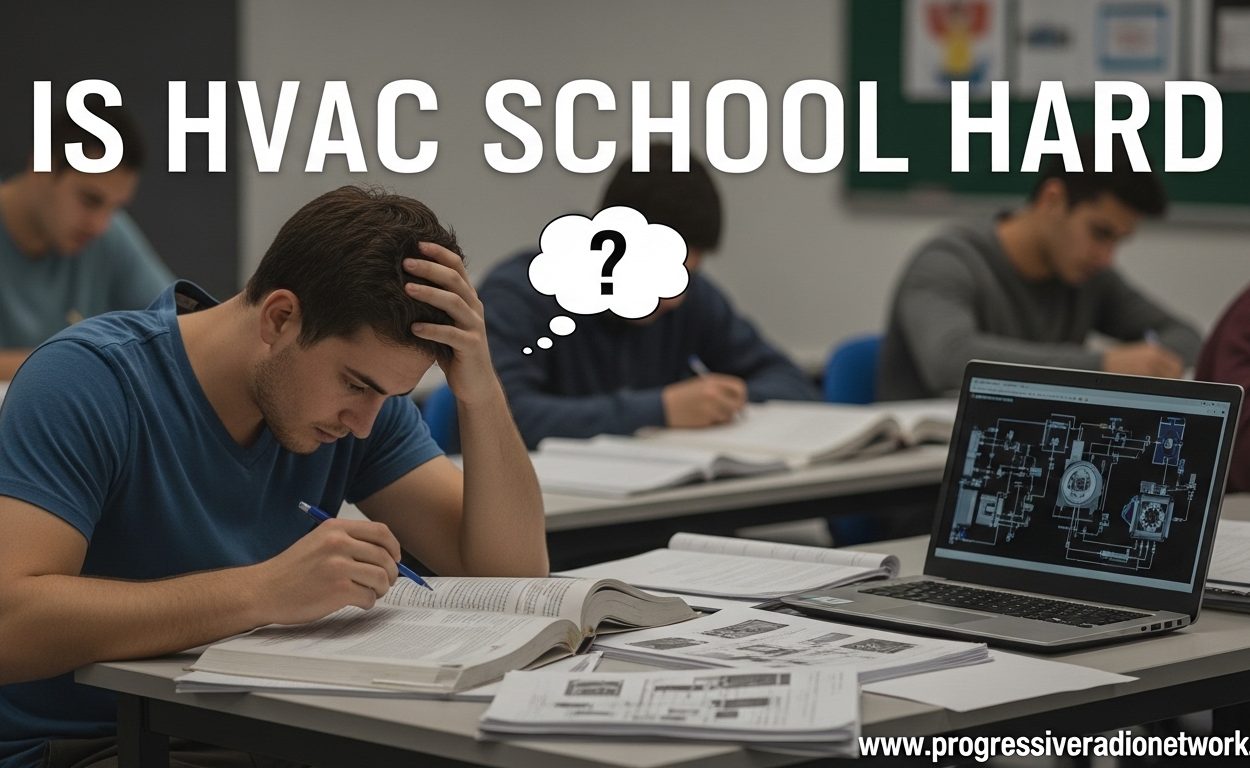
HVAC school presents a real challenge, but it is no more difficult to learn than any other skilled trade. The difficulty largely depends on your background in math and science, your ability to grasp technical concepts, and whether you thrive in hands-on learning environments.
If you are considering a career as a heating, ventilation, and air conditioning technician, you probably have one major question on your mind: is HVAC school hard? The honest answer is that HVAC training requires effort and dedication, but most students with mechanical aptitude and a willingness to learn can complete it successfully.
Our team spent time researching what actual students and working technicians say about their training experiences. We also analyzed curriculum requirements and compared different learning paths to give you a realistic picture of what to expect.
What Makes HVAC School Challenging
Several factors contribute to the difficulty of HVAC school. Understanding these challenges upfront helps you prepare mentally and develop strategies to overcome them.
Technical Knowledge and Theory
HVAC work is built on scientific principles. Students must understand thermodynamics, which deals with heat transfer and energy systems. You will learn about refrigeration cycles and how refrigerants absorb and release heat to cool or warm spaces.
Electrical systems knowledge is essential because HVAC units contain motors, capacitors, and control boards that require wiring comprehension. Blueprint reading teaches you to interpret technical diagrams and understand building codes for proper installation.
Math and Science Requirements
You do not need advanced calculus to work in HVAC, but basic to intermediate math skills are necessary. Students work with algebra, fractions, decimals, and conversions regularly when sizing equipment or calculating load requirements.
One Reddit user who completed HVAC training put it this way: “Math wise, it’s really tough but you can overcome it. It’s thermodynamics and conversions that’s it.” They mentioned being assessed at a grade 8 math level initially and still succeeding through focused study.
Science concepts like heat transfer, pressure relationships, and airflow dynamics form the foundation of HVAC theory. These ideas are straightforward when taught practically, which is how most programs approach them.
Hands-On Skills Development
Classroom learning only takes you so far in this field. HVAC technicians work with their hands, installing pipes, connecting electrical components, and troubleshooting malfunctioning systems. Lab work and practical exercises make up a significant portion of most programs.
The gap between online learning and real-world application concerns some students. Reading about refrigerant handling differs from actually recovering, evacuating, and charging a system. Quality programs bridge this gap through extensive lab time with real equipment.
Skills You Need to Succeed in HVAC School
Certain abilities help students excel in HVAC training. While you can develop many of these skills during your program, having a foundation in the following areas gives you an advantage.
Technical Skills
Mechanical aptitude ranks high on the list of important traits. Understanding how machines work, enjoying problem-solving, and feeling comfortable working with tools all contribute to success in this field.
Electrical knowledge helps significantly since modern HVAC systems rely heavily on circuitry and controls. If you have experience with home wiring or electronics, you will find this portion more accessible.
Problem-Solving Abilities
Troubleshooting is a core part of being an HVAC technician. When a system fails, you must diagnose the issue quickly and accurately. This requires logical thinking and systematic approaches to problems.
Critical thinking skills develop throughout your training as you learn to evaluate different scenarios and choose the best solutions. Customer service abilities matter too, since you will interact with homeowners and building managers regularly.
Physical Requirements
The job involves physical demands that affect some students. Technicians crawl into tight spaces, lifting heavy equipment, and standing for extended periods. Hand dexterity and coordination matter when working with small components.
Some students wonder if HVAC is hard on the body. The work can be strenuous, but proper lifting techniques and physical conditioning help manage these demands. The career is more active than desk jobs, which appeals to many people.
HVAC Training Options: School vs Apprenticeship
Prospective HVAC technicians can choose between different training paths. Each has advantages and drawbacks depending on your situation, learning style, and career goals.
Trade School Programs
Trade schools and community colleges offer HVAC certificate and degree programs. Certificate programs typically last 6 to 12 months, providing focused training on core skills. Associate degrees take two years and include more comprehensive education along with general education courses.
The main advantage of trade school is structured learning with experienced instructors. Small class sizes at quality schools allow for personalized attention. Programs include both classroom instruction and hands-on lab work with professional-grade equipment.
One student shared their experience: “A lot of people who struggled in traditional school actually do really well in HVAC because the learning is practical and job-focused.” This sentiment resonates with many who find traditional academic settings challenging but thrive in technical training environments.
Apprenticeship Path
Apprenticeships combine paid work with training over 3 to 5 years. You earn wages while learning under experienced technicians, gaining real-world experience from day one. This path suits people who prefer learning by doing and need income during training.
The drawback is a slower start. Apprentices spend more time learning overall, and the structured curriculum varies by program quality. You also depend on the employing company for your training consistency.
Some students pursue a hybrid approach, completing a certificate program first and then entering an apprenticeship with a stronger foundation. This combination provides both theoretical knowledge and practical experience.
Certifications That Shape Your HVAC Career
Credentials matter in the HVAC industry. While not all certifications are mandatory for entry-level positions, they significantly impact your employability and earning potential.
EPA 608 Certification
The Environmental Protection Agency requires Section 608 certification for anyone who handles refrigerants. This is the most important entry-level credential. The exam tests knowledge of refrigerants, environmental issues, and proper handling procedures.
Preparation for this certification is included in most quality HVAC programs. The exam is manageable for students who complete their coursework and understand fundamental refrigeration principles.
NATE Certification
North American Technician Excellence certification demonstrates advanced knowledge and skills. While optional, NATE certification is highly regarded by employers and can lead to better job opportunities and higher pay.
Technicians with NATE credentials have proven they meet industry standards for installation and service. Preparing for NATE exams reinforces what you learn in school and provides a competitive edge in the job market.
Career Outlook for HVAC Technicians
Understanding the career potential helps put the training difficulty into perspective. A career with strong demand and good earning potential may be worth the effort of completing HVAC school.
Job Growth and Demand
The Bureau of Labor Statistics projects steady growth for HVAC technician positions through 2026. New construction, system replacements, and stricter energy efficiency regulations drive demand. Experienced technicians with proper training find job security in this essential trade.
Residential and commercial buildings need functioning climate control systems year-round. This creates consistent work opportunities across different economic conditions compared to some other industries.
Salary Expectations
HVAC technicians earn competitive salaries that increase with experience and certifications. Entry-level positions provide solid starting wages, while experienced technicians can earn significantly more, especially with specialized skills or business ownership.
The combination of good pay and job security makes HVAC an attractive career option. Many technicians report high job satisfaction from solving problems and helping customers stay comfortable in their homes and workplaces.
Tips for Succeeding in HVAC School
Your success in HVAC training depends largely on your approach. Strategies exist to help you manage the workload and master difficult concepts.
First, stay consistent with your studies. Cramming before exams does not work well for technical subjects. Regular review and practice reinforce learning better than last-minute preparation.
Second, use all available resources. Instructors, tutors, study groups, and online materials supplement your coursework. If you struggle with a particular topic, seek help early rather than falling behind.
Third, embrace hands-on practice. Lab sessions and practical exercises are where theory becomes real understanding. Take advantage of every opportunity to work with equipment and develop your skills.
One student advice: “I spent a lot of time outside of class reviewing my notes, studying and practicing.” This proactive approach separates successful students from those who struggle.
Fourth, manage your time effectively. Many HVAC students work while attending classes. Creating a schedule that balances work, school, and personal life prevents burnout and helps you stay on track.
FAQ’s
Is HVAC school hard for beginners?
HVAC school can be challenging for beginners, especially with math and thermodynamics concepts, but most students with mechanical aptitude succeed. The key is consistent study habits and hands-on practice. Many students who struggled in traditional classrooms find success in HVAC because the learning is practical and job-focused.
Is it difficult to be an HVAC technician?
Being an HVAC technician requires learning technical skills and solving problems daily. The difficulty depends on your background and aptitude. Many who struggled in traditional classrooms excel in HVAC because the work involves practical problem-solving rather than abstract theory.
How long does HVAC school take?
HVAC certificate programs typically take 6-12 months. Associate degrees span 2 years. Apprenticeships combine paid work with training over 3-5 years. Your choice depends on whether you need immediate income or can dedicate full time to education.
Do I need to be good at math for HVAC?
HVAC requires basic to intermediate math skills, including algebra, fractions, and conversions. Students assessed at grade 8 math level have succeeded with dedicated study. Focus on understanding practical applications rather than mastering advanced mathematics.
Final Thoughts: How Hard Is HVAC School?
HVAC school presents real challenges, particularly in math, thermodynamics, and the volume of new information to absorb. However, it is a manageable challenge for committed students. The trade offers practical learning that appeals to people who may have struggled in traditional academic settings.
The difficulty is worth considering when planning your career. Training takes 6 months to 2 years depending on your chosen path. After completing your education and certifications, you enter a field with strong demand, competitive pay, and opportunities for advancement.
If you enjoy problem-solving, working with your hands, and understanding how systems function, HVAC could be an excellent fit. The key is going in with realistic expectations and committing to the effort required to succeed.


Leave a Comment