
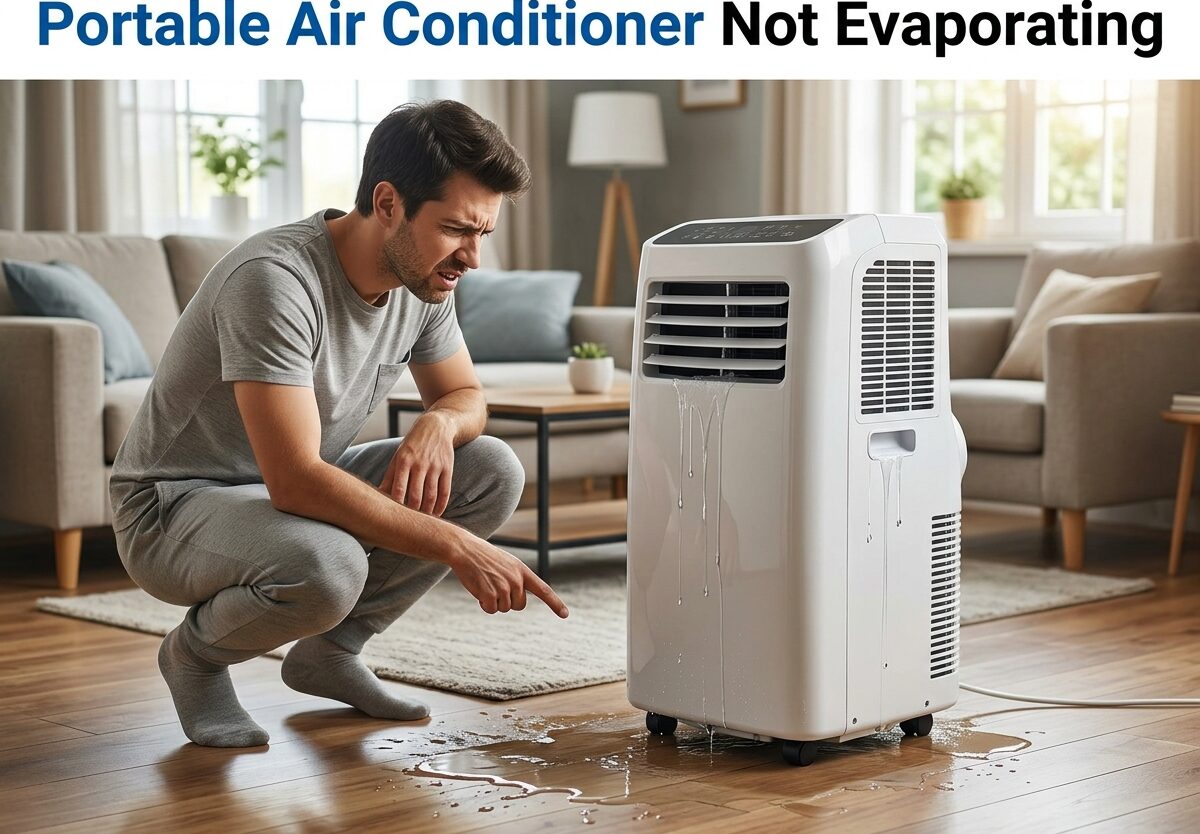
A portable air conditioner not evaporating means the self-evaporation system that turns collected moisture into vapor has stopped working properly. When this happens, water fills the tank faster than normal, triggers frequent “tank full” alerts, or worse, leaks onto your floor.
We’ve researched hundreds of user reports and consulted HVAC technicians to bring you the most comprehensive troubleshooting guide for fixing a portable AC that won’t self-evaporate. Whether you’re dealing with a sudden issue or a gradual problem, this guide will help you diagnose and resolve it.
How Self-Evaporation Works in Portable AC Units
Self-evaporating portable air conditioners use a clever mechanism called a condensate slinger to eliminate most of the water they collect from the air. This small plastic ring sits on the condenser fan motor and splashes collected water onto the hot condenser coils, where it instantly turns into vapor.
The vapor then mixes with the hot exhaust air and exits through the main exhaust hose, carrying the moisture outside. This process typically eliminates 60-80% of the water collected during normal operation, meaning you rarely have to manually drain the unit.
Manual drain units lack this slinger system entirely. They rely entirely on gravity drainage or require you to empty a collection bucket regularly. If you have a self-evaporating model that suddenly stops evaporating, something is interfering with this process.
Environmental Factors That Affect Evaporation
High humidity is the biggest enemy of self-evaporation systems. When indoor humidity exceeds 60%, the unit pulls so much moisture from the air that the slinger simply can’t keep up. This is normal during extremely humid weather, even for well-functioning units.
Temperature also plays a role. The condenser coils need to be hot enough to flash water into vapor quickly. If the outdoor temperature is too cool, or if the exhaust hose is too long or poorly insulated, the coils won’t reach optimal temperature for evaporation.
Portable Air Conditioner Not Evaporating: Common Causes
1. Dirty or Clogged Air Filter
A dirty air filter is the most common cause of evaporation problems. When the filter is clogged with dust and debris, restricted airflow reduces the cooling capacity and prevents the condenser coils from reaching the temperature needed for efficient evaporation.
Check your filter weekly during heavy use seasons. If you can see dust buildup through the filter material, it’s time to clean it. Most portable AC filters are washable with mild soap and water, but always check your manual first.
2. Condensate Slinger Malfunction
The condensate slinger can fail in several ways. The plastic ring may crack or break from age and heat exposure. It can slip off the fan motor shaft, or the motor itself may fail to spin at the correct speed.
You can often hear a healthy slinger working—a faint splashing sound when the unit is running. If this sound is missing, or if you hear the fan running but no splashing, the slinger may be the culprit.
3. Drain Pan or Drain Line Clogs
Algae, mold, and mineral deposits can build up in the drain pan or drain lines over time. This prevents water from reaching the slinger properly or causes it to overflow before it can be evaporated. This is especially common in areas with hard water.
Regular maintenance can prevent these clogs. Using a mixture of vinegar and water to flush the drain system every few months helps break down mineral buildup and prevents algae growth.
4. Unit Not Level
Portable AC units need to be level to function properly. If the unit tilts forward or backward, water may pool in areas where the slinger can’t reach it, or it may overflow the drain pan unevenly.
Check the level of your unit with a bubble level. Most portable ACs have adjustable feet that can help you achieve a level position on slightly uneven floors.
5. Exhaust Hose Damage
A surprising number of users report that birds or rodents have chewed holes in their exhaust hoses, especially where the hose exits through a window. These holes disrupt the airflow needed to carry vapor outside and can cause moisture to back up into the unit.
Inspect your entire exhaust hose for any signs of damage, particularly at connection points and where it passes through walls or windows. Replace damaged hoses immediately with manufacturer-approved replacements.
6. New Unit Adjustment Period
If your portable AC is brand new, it may simply need time to break in. Some users report that self-evaporation efficiency improves after the first few weeks of use as the components settle and the system establishes proper airflow patterns.
Step-by-Step Troubleshooting Guide
Follow these steps in order to diagnose and fix your portable air conditioner not evaporating issue. Start with the simplest solutions before moving to more complex repairs.
Step 1: Check and Clean the Air Filter
Turn off the unit and unplug it. Locate the air filter—usually behind a front panel or grille. Remove the filter and inspect it for visible dirt, dust, and debris.
Wash reusable filters with mild soap and warm water. Let them air dry completely before reinstalling. Replace disposable filters with new ones of the same size and type. This simple fix resolves evaporation issues in about 40% of cases.
Step 2: Verify Unit Placement
Ensure the unit sits on a level surface. Use a bubble level to check both front-to-back and side-to-side positioning. Adjust the feet as needed to achieve perfect level.
Check that the unit has at least 12 inches of clearance on all sides for proper airflow. Move any furniture, curtains, or obstacles that might restrict air circulation to the unit.
Step 3: Inspect and Clear Drain Lines
Locate the drain port on the back or bottom of the unit. Use a wet-dry vacuum to suck out any clogs from the drain opening. Flush the drain with a mixture of equal parts white vinegar and water to dissolve mineral deposits.
For stubborn clogs, carefully use a pipe cleaner or flexible brush to gently break up the blockage. Avoid using sharp objects that could damage the drain lines.
Step 4: Test the Condensate Slinger
With the unit running, listen carefully near the back or side panel closest to the condenser. You should hear a faint splashing or trickling sound—this is the slinger in action.
If you hear no splashing, or if the sound changes suddenly, the slinger may have failed. This typically requires professional repair or replacement parts. Contact the manufacturer or a qualified HVAC technician for service.
Step 5: Use a Drain Hose as a Temporary Solution
While troubleshooting or awaiting repair, you can connect a drain hose to the unit’s drain port. Route the hose to a floor drain, sink, or outdoor area lower than the unit.
Most portable ACs include a drain hose in the box, or you can purchase one separately. Using continuous drainage eliminates the immediate problem of tank overflow while you address the underlying evaporation issue.
Step 6: Monitor Humidity Levels
Use a hygrometer to measure indoor humidity. If levels consistently exceed 60%, consider running a separate dehumidifier in conjunction with your portable AC. This reduces the moisture load on the AC and improves evaporation efficiency.
In extremely humid climates or weather events, even properly functioning self-evaporating units may struggle. This is normal and doesn’t indicate a malfunction with your unit.
When to Call a Professional vs Replace
Some evaporation problems require professional expertise. Compressor problems, refrigerant leaks, and failed fan motors typically cost between $100 and $300 to repair. Before investing in repairs, consider the age and condition of your unit.
Portable air conditioners typically last 5-10 years with proper maintenance. If your unit is over 7 years old and requires a major repair, replacement may be more cost-effective than repair. Newer models also offer improved energy efficiency that can offset the purchase price over time.
Brand-specific parts availability varies significantly. Major brands like LG, Haier, and De’Longhi typically have better parts availability than lesser-known manufacturers. Check parts availability and pricing before committing to repairs.
If you’re uncomfortable performing any troubleshooting steps, or if you’ve tried all the solutions above without success, it’s time to call a professional HVAC technician. They have specialized tools and expertise to diagnose complex issues that may be causing your portable air conditioner not evaporating problem.
FAQs
Why is my portable AC not evaporating water?
The most common causes include a dirty air filter restricting airflow, high humidity overwhelming the system, a malfunctioning condensate slinger, clogged drain lines, or the unit not being level. Start by cleaning the filter and checking if humidity levels are above 60%.
Why does my portable AC need to be drained every hour?
Frequent draining usually means the self-evaporation system isn’t keeping up. This happens when humidity is very high (over 60%), the air filter is dirty, the condensate slinger isn’t working, or the unit is new and needs an adjustment period. Using a drain hose for continuous drainage provides a temporary solution.
What is the 3 minute rule for air conditioners?
The 3 minute rule refers to waiting at least 3 minutes after turning off an AC before restarting it. This allows pressure in the system to equalize, preventing compressor damage. Most modern ACs have built-in timers that enforce this rule automatically.
Can I use a drain hose with a self-evaporating portable AC?
Yes, absolutely. Connecting a drain hose to your self-evaporating unit is recommended during high humidity or if the evaporation system isn’t working perfectly. The hose simply provides an alternate drainage path and doesn’t interfere with normal self-evaporation operation.
Conclusion: Keeping Your Portable AC Evaporating Properly
A portable air conditioner not evaporating is usually solvable with simple maintenance and troubleshooting. Start with the basics: clean the filter, ensure the unit is level, and check for clogs in the drain system. These three steps resolve most issues without requiring professional service.
Prevent future problems by performing regular maintenance every few months. Clean filters monthly during heavy use, flush drain lines with vinegar solution, and inspect the exhaust hose for damage. These small efforts can extend your unit’s lifespan by years and prevent frustrating evaporation issues.
If you’ve tried everything and your portable air conditioner is still not evaporating, it’s time to decide between professional repair and replacement. Consider the unit’s age, repair cost versus replacement cost, and parts availability for your specific brand before making your decision.


Leave a Comment