
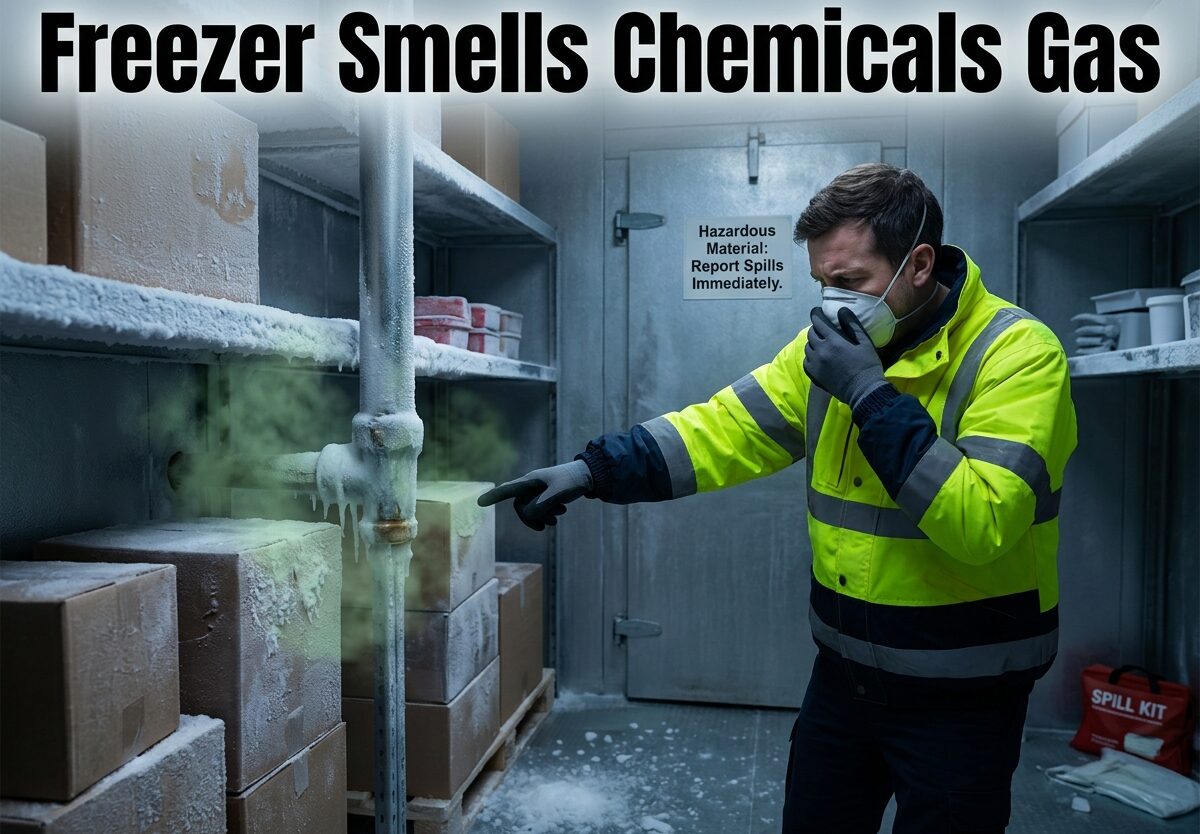
Noticing your freezer smells like chemicals or gas can be alarming. When that sharp odor hits you every time you open the door, it’s natural to worry about dangerous refrigerant leaks or whether your food is safe to eat. I’ve researched this issue extensively, and I’m here to help you understand what’s really happening.
Most chemical or gas-like smells coming from your freezer have benign causes that are easily fixable. While it’s important to take certain odors seriously, the majority of these issues stem from everyday problems like food spoilage, microbial growth, or new appliance off-gassing rather than dangerous refrigerant leaks.
In this guide, I’ll walk you through all the possible causes of chemical odors in your freezer, help you identify what’s causing your specific situation, and provide step-by-step solutions to eliminate the smell for good.
Why Does My Freezer Smell Like Gas? Understanding the Real Causes
A chemical or gas odor in your freezer can stem from several sources, but actual refrigerant leaks are rarely the culprit. The most common causes include food spills and spoilage, microbial growth producing volatile organic compounds (VOCs), plastic components off-gassing in newer units, contaminated water filters, or dirty drip pans and condenser coils.
Understanding which cause matches your situation is the first step toward eliminating the odor. Let me break down each possibility so you can identify what’s happening in your freezer.
The Truth About Refrigerant Leaks and Freon Smells
Here’s something most people don’t know: modern refrigerants are actually odorless. If your freezer was manufactured in the past decade, it likely uses R600a (isobutane) as a refrigerant, which has no smell whatsoever. This contradicts what many homeowners believe, but it’s an important fact that should ease your concerns.
Older refrigerants like R12 and R22 did have distinct odors reminiscent of chloroform or ether, but these have been largely phased out. When users report smelling gas or chemicals from their freezers, it’s almost never a refrigerant leak. Real refrigerant leaks show themselves through other signs like oil residue around connections, frost buildup on the back panel, or the freezer simply not cooling properly—not through smell alone.
I’ve seen countless forum posts from panicked users convinced their freezer is leaking dangerous Freon, only to discover the real cause was something as simple as a forgotten spill or a dirty drip pan. Don’t let fear drive you to expensive repairs before checking the more common causes first.
Most Common Causes of Chemical Odors in Your Freezer
New Appliance Off-Gassing
If your freezer is brand new, that chemical smell is likely normal off-gassing from plastic components, insulation, and manufacturing residues. New appliances release volatile organic compounds as materials cure and adjust to their environment. This typically lasts 2-4 weeks and is more pronounced in budget units with less premium materials.
To speed up the process, leave the freezer door open when empty (safely), run it empty for a few days, and clean all surfaces with a mild baking soda solution. The smell should gradually diminish and disappear completely within the first month of use.
Microbial Growth and VOCs
Believe it or not, bacteria, yeasts, and molds can survive in freezing temperatures. These hardy microbes produce volatile organic compounds that create sharp, chemical-like odors. Even microscopic amounts of food residue provide enough fuel for microbial growth, which then releases VOCs that circulate throughout your freezer and get absorbed by frozen foods and ice.
This is one of the most common causes of persistent chemical smells, especially in freezers that haven’t been thoroughly cleaned in a while. The smell might resemble ammonia, acetone, or other cleaning chemicals—hence the confusion with refrigerant leaks.
Food Spillage and Spoilage
Hidden spills are often the culprit behind mysterious freezer odors. Leaking containers, thawing and refreezing food, or items pushed to the back and forgotten can all create awful smells as food breaks down. Even microscopic spills from months ago can cause persistent odors that seem to have no source.
Freezer burn also creates off-odors as food dehydrates and oxidizes. While not dangerous, heavily freezer-burned food can impart strange smells to everything else in the freezer. I’ve seen cases where a single package of freezer-burned fish made the entire unit smell like chemicals.
Contaminated Water Filter
If your freezer has an ice maker or water dispenser, a contaminated water filter could be causing chemical tastes and smells. Filters can harbor bacteria and mold that then contaminate your ice. Many users report this issue immediately after changing filters—either the new filter is defective, or old contaminants weren’t fully flushed from the system.
Reddit users frequently complain about chemical-tasting ice that persists despite filter changes. The problem can be the filter itself, but it can also be bacterial growth in the water lines or ice maker assembly that needs professional attention.
Dirty Drip Pan and Condenser Coils
The drip pan beneath your freezer collects condensation and debris. Over time, this creates a perfect environment for bacterial growth and mold. As these microorganisms multiply, they release foul-smelling gases that can circulate back into your freezer compartment.
Similarly, dirty condenser coils can cause your freezer to work harder and run hotter, which may cause plastic components to break down faster and release unusual odors. Both issues require some effort to address but are completely fixable with proper cleaning.
When to Worry: Signs of Actual Refrigerant Problems
While rare, genuine refrigerant issues do occur. Watch for these warning signs: your freezer isn’t maintaining temperature, you hear hissing sounds from the back, you notice oil residue around connections, or your energy bills have spiked suddenly. These symptoms, combined with an odor, warrant professional attention.
Health symptoms like headaches, dizziness, or nausea when near the appliance also indicate a potential problem that needs immediate professional assessment. Don’t attempt to repair refrigerant issues yourself—these require specialized tools and training to address safely.
How to Get Rid of Chemical Smell in Freezer: Step-by-Step Guide
Follow these steps to eliminate chemical odors from your freezer:
Step 1: Empty your freezer completely and place frozen food in a cooler with ice to keep it safe.
Step 2: Unplug the unit and let it defrost completely if you have significant ice buildup.
Step 3: Remove all shelves, drawers, and removable parts. Wash them with warm water and dish soap.
Step 4: Mix a solution of baking soda and warm water (1 tablespoon per cup of water). Wipe down all interior surfaces thoroughly, paying special attention to corners and crevices where spills might hide.
Step 5: For stubborn odors, place an open box of baking soda or a bowl of activated charcoal inside the empty freezer. Leave it for 24-48 hours to absorb lingering smells.
Step 6: Clean the door gasket with the baking soda solution, as mold often grows in the folds.
Step 7: Vacuum or clean the condenser coils beneath or behind the unit according to your manufacturer’s instructions.
Step 8: Locate and clean the drip pan if accessible to your model.
Step 9: Plug the unit back in, let it reach proper temperature, then return your food.
This process addresses 90% of chemical odor issues. If the smell persists after thorough cleaning, you may need professional service to check for more serious problems.
Preventing Future Chemical Smells
Prevention is always easier than treatment. Establish a regular cleaning schedule every 3-6 months, wiping down surfaces with baking soda solution and checking for spills. Store food in airtight containers to prevent spills and contain odors. Label and date everything so nothing gets forgotten in the back.
Check your door seals regularly for cracks or debris that might prevent proper closure. Replace water filters according to manufacturer recommendations—usually every 6 months—and flush the system thoroughly after replacement. Ensure your freezer has proper ventilation and isn’t pushed too close to the wall, which can cause overheating and component stress.
If you notice any changes in your freezer’s performance or new odors developing, address them immediately rather than waiting. Small problems are always easier to fix than big ones.
FAQs
How to get rid of chemical smell in freezer?
Mix baking soda with warm water (1 tablespoon per cup) and wipe all interior surfaces. For stubborn odors, place an open box of baking soda or activated charcoal inside the empty freezer for 24-48 hours. Clean removable parts separately, scrub door gaskets, and ensure the drip pan and coils are clean.
How long does Freon stay in the air?
Freon and other refrigerants are heavier than air and tend to settle near the ground in poorly ventilated spaces. In a well-ventilated area, refrigerant dissipates within a few hours. However, in enclosed spaces with limited airflow, it can linger for 24 hours or more. If you suspect a refrigerant leak, ventilate the area immediately and contact a professional.
Can a Freon leak make you sick?
Yes, refrigerant exposure can cause health issues. Symptoms include headache, dizziness, nausea, throat irritation, and in severe cases, difficulty breathing. However, significant exposure typically requires direct contact with leaking refrigerant in an enclosed space. If you experience symptoms near your freezer, turn off the unit, ventilate the area, and seek professional assistance.
Why does my freezer smell like gas?
Gas-like odors in freezers rarely come from actual refrigerant leaks since modern refrigerants are odorless. More likely causes include microbial growth producing volatile organic compounds, food spills breaking down, plastic components off-gassing in new units, contaminated water filters affecting ice taste, or dirty drip pans harboring bacteria.
Is it safe to eat food from a freezer that smells like chemicals?
If the smell comes from benign sources like food spoilage, spills, or microbial growth, the food is likely safe if it has been maintained at proper freezing temperature (0°F or -18°C). However, if you suspect a refrigerant leak or if food has absorbed strong odors, it’s better to discard it. When in doubt, throw it out—your health is worth more than the cost of replacement food.
Why does the ice from my freezer taste like chemicals?
Chemical-tasting ice usually indicates a contaminated water filter, bacterial growth in the water lines, or odors absorbed from the freezer compartment. Try replacing the water filter and flushing the system according to manufacturer instructions. If the problem persists, the issue may be in the ice maker assembly or water lines, requiring professional service.
How long does off-gassing last in a new freezer?
New freezer off-gassing typically lasts 2-4 weeks as plastic components and insulation cure. The smell is strongest in the first week and gradually diminishes. To speed up the process, clean all surfaces with baking soda solution, run the unit empty for a few days, and ensure good ventilation. If the smell persists beyond 6 weeks, contact the manufacturer.
Conclusion
A chemical or gas smell from your freezer is undoubtedly concerning, but in most cases, the cause is benign and easily remedied. By understanding that modern refrigerants are odorless and learning to identify the real culprits—microbial growth, food spills, off-gassing, or contaminated components—you can address the problem effectively without unnecessary worry or expense.
Regular maintenance and prompt attention to spills and odors will prevent most issues from developing in the first place. When you do notice unusual smells, follow the cleaning steps outlined above to eliminate them quickly and thoroughly.
Remember that while this guide covers the vast majority of cases involving freezer smells, chemicals, or gas-like odors, some situations do require professional assessment. If your freezer isn’t cooling properly, you notice oil residue, or you experience health symptoms when near the appliance, don’t hesitate to contact a qualified appliance repair technician.
Have you dealt with a mysterious chemical smell in your freezer? What turned out to be the cause in your case?
Leave a Comment