
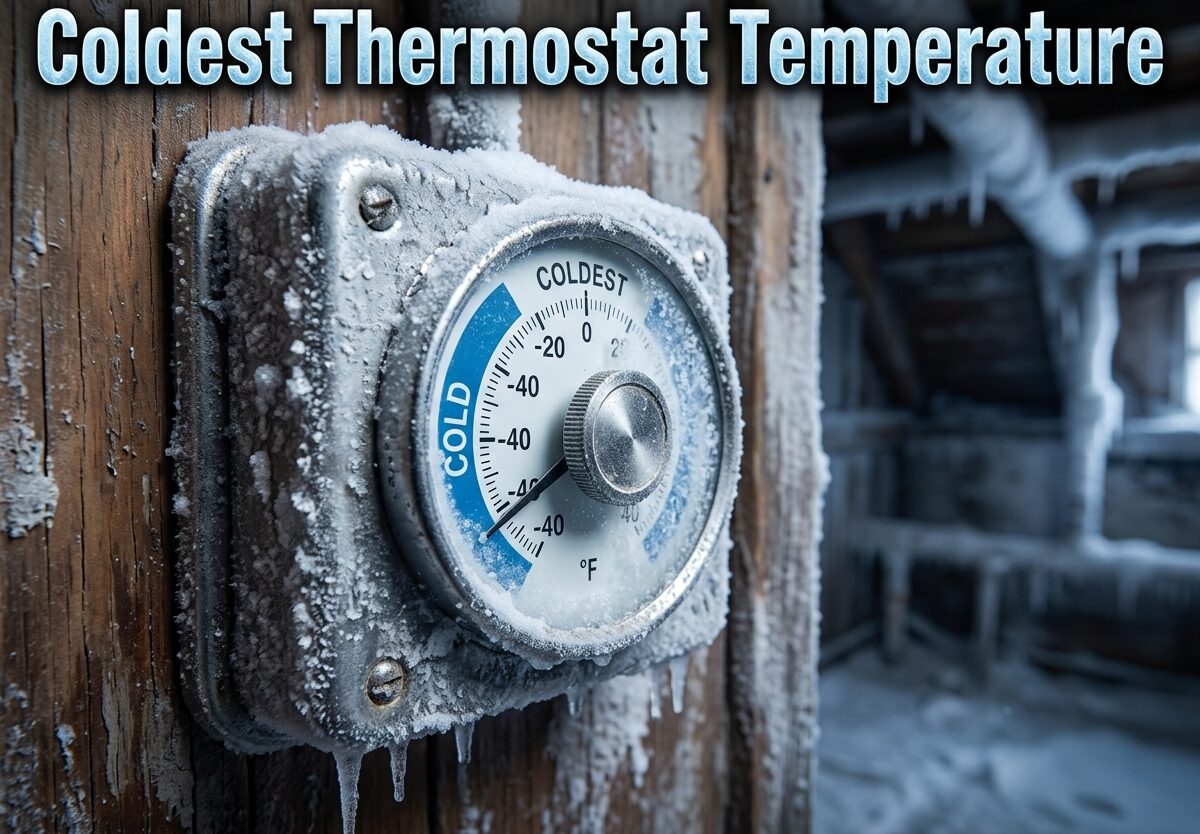
Finding the right thermostat balance means staying warm without wasting energy. The coldest thermostat temperature recommended by the U.S. Department of Energy is 68degF (20degC) for winter heating. However, the absolute minimum safe temperature is 55degF to prevent pipes from freezing.
Understanding these temperature thresholds helps you make smart decisions about your home heating. Whether you’re trying to reduce energy bills or preparing for winter vacation, knowing the coldest thermostat temperature limits protects both your wallet and your home.
What Is the Coldest Thermostat Temperature?
The coldest recommended thermostat temperature for comfortable winter heating is 68degF when you’re home. This setting, endorsed by the U.S. Department of Energy, balances comfort with reasonable energy consumption. Most people find this temperature comfortable with a sweater or light layer.
The absolute minimum safe thermostat temperature is 55degF. Going below this threshold significantly increases the risk of frozen pipes, especially in exterior walls or unheated areas like basements and crawl spaces. Frozen pipes can burst and cause thousands in water damage.
Between these two temperatures lies the “set-back zone” where energy savings happen. Lowering your thermostat by 7-10 degrees for 8 hours per day can save up to 10% annually on heating costs, according to Department of Energy research.
Recommended Winter Thermostat Temperature
For optimal comfort and efficiency in winter, set your thermostat to 68degF when you’re awake and home. This temperature keeps most rooms comfortable without forcing your heating system to work overtime. The Department of Energy specifically recommends 68degF as the ideal balance between comfort and energy savings.
Many homeowners wonder if 68degF is actually cold for a house. The answer depends on your personal preference and activity level. If you’re moving around, cooking, or doing light housework, 68degF feels comfortable. If you’re sedentary or sensitive to cold, you might prefer 70-72degF.
Here’s what temperature matters: every degree above 68degF increases your heating bill by approximately 3-5%. Setting your thermostat to 73degF instead of 68degF can add 15-25% to your heating costs over the winter season.
Daytime vs. Nighttime Settings
Your thermostat should reflect your daily patterns. During waking hours at home, maintain 68degF for comfort. When everyone is asleep, lower the temperature to 62-65degF. Most people sleep better in cooler temperatures anyway, and your heavy bedding provides the warmth you need.
The key is consistency. Your heating system works most efficiently when maintaining a steady temperature rather than constantly cycling to recover from deep setbacks. However, the 8-hour nighttime setback offers enough duration to justify the energy savings.
Minimum Temperature to Prevent Frozen Pipes
The minimum thermostat temperature to prevent frozen pipes is 55degF. This threshold applies even when you’re away from home for extended periods. Pipes located in exterior walls, unheated basements, or crawl spaces are most vulnerable to freezing.
Water expands when it freezes, creating tremendous pressure inside pipes. This pressure can cause both plastic and copper pipes to crack or burst. A single burst pipe can release hundreds of gallons of water per day, causing extensive structural damage and mold growth.
The 55degF minimum provides a safety buffer. Outdoor temperatures might drop well below freezing, but keeping your home at 55degF or above ensures interior walls stay above the freezing point. This is especially important during cold snaps when temperatures remain below freezing for days.
Pipe Freeze Prevention Tips
Beyond maintaining 55degF minimum temperature, take these precautions during extreme cold. Open cabinet doors under sinks to allow warm air to circulate around pipes. Let faucets drip slightly during extreme cold spells; moving water freezes less easily than standing water.
Insulate pipes in unheated areas with foam pipe sleeves. Heat tape provides additional protection for vulnerable sections. Seal gaps where cold air enters near pipes, especially around exterior faucets and where pipes pass through exterior walls.
Thermostat Settings When Away or Sleeping
When you’re away from home for work or errands, lower your thermostat to 62-65degF. This set-back reduces energy consumption without risking frozen pipes. Your heating system won’t work as hard to maintain the lower temperature, yet it can quickly recover when you return.
For sleeping hours, 62-65degF is ideal for most people. Cooler temperatures promote better sleep by helping your body’s natural temperature regulation. Heavy blankets and comforters provide the necessary warmth in bed while the overall house temperature stays lower.
Going away for winter vacation requires different settings. The lowest thermostat temperature when away for extended periods is 55degF. This minimum protects your pipes from freezing while significantly reducing energy consumption. Never set your thermostat below 55degF, even for short trips, unless you’ve fully winterized your home.
Summer Cooling Recommendations
While this guide focuses on heating, summer cooling follows similar principles. The recommended summer thermostat temperature is 78degF when you’re home. This setting balances comfort with reasonable air conditioning costs.
Like winter heating, you can set back your cooling when away. Raising your thermostat to 85-88degF during work hours saves significant energy. Program your thermostat to return to 78degF about 30 minutes before you typically arrive home.
The relationship between heating and cooling temperatures reflects the comfort zone most people prefer. The 78degF summer setting and 68degF winter setting both represent reasonable compromises between comfort and efficiency.
Smart and Programmable Thermostat Benefits
Smart and programmable thermostats automate temperature adjustments based on your schedule. Rather than remembering to change settings manually, these devices maintain optimal temperatures throughout the day. This automation ensures energy savings without sacrificing comfort.
Programmable thermostats let you set different temperatures for different times of day. Create schedules for weekdays, weekends, and vacations. The thermostat learns your routine and adjusts heating automatically, so you never come home to a cold house.
Smart thermostats offer additional features like remote control via smartphone apps. This capability proves invaluable when vacation plans change unexpectedly. You can adjust your home temperature from anywhere, ensuring pipes stay safe while minimizing energy waste. Many models also integrate with other smart home devices for comprehensive home automation.
Frequently Asked Questions
Is 73 a good temperature for heat in the winter?
73degF is warmer than necessary and costs significantly more to maintain. The Department of Energy recommends 68degF as the ideal balance. Each degree above 68 adds 3-5% to heating bills, so 73degF costs roughly 15-25% more than 68degF.
Is 68 degrees cold for a house in winter?
68degF feels comfortable for most people when moving around or dressed in light layers. It’s the standard recommendation because it balances comfort with energy efficiency. People who are sedentary or sensitive to cold might prefer 70-72degF, but this increases heating costs.
How low can you set your thermostat before pipes freeze?
The minimum safe thermostat temperature to prevent frozen pipes is 55degF. This threshold provides a safety buffer for pipes in exterior walls and unheated areas. Never set your thermostat below 55degF in winter unless you’ve completely drained and winterized your plumbing system.
What is the lowest temperature I can set my thermostat in winter?
The absolute lowest safe winter temperature is 55degF to prevent pipe freezing. For comfortable living when home, maintain 68degF. When sleeping or away, set back to 62-65degF for energy savings. The 55degF minimum applies even during extended absences.
What temperature should I set my thermostat when away on vacation?
Set your thermostat to 55degF when leaving for winter vacation. This minimum protects pipes from freezing while maximizing energy savings. Never go below 55degF unless your home is fully winterized with drained pipes and antifreeze in the system.
Does lowering thermostat at night save money?
Yes, lowering your thermostat at night saves significant money. Setting back 7-10 degrees for 8 hours (while sleeping) can reduce annual heating costs by up to 10%. The recommended nighttime setting is 62-65degF, which also promotes better sleep quality.
What is the best thermostat setting for energy savings?
The most energy-efficient setting is 68degF when home, 62-65degF when sleeping or away, and 55degF minimum during extended absences. This approach saves up to 10% on heating costs while maintaining comfort and preventing pipe damage. Programmable thermostats automate these adjustments for maximum efficiency.
Conclusion
The coldest thermostat temperature for comfortable winter living is 68degF, as recommended by the U.S. Department of Energy. This setting balances comfort with reasonable energy costs. The absolute minimum safe temperature is 55degF, which prevents pipe freezing even during extended absences.
Smart temperature management means adjusting based on your schedule and needs. Set back the thermostat when sleeping or away to maximize energy savings. Use a programmable or smart thermostat to automate these adjustments and ensure your home stays safe and efficient throughout the winter.
Remember that the coldest thermostat temperature isn’t about being uncomfortable; it’s about finding the right balance between comfort, cost savings, and home safety. Following these guidelines helps you maintain a warm, safe home while minimizing energy waste during the heating season.
Leave a Comment