
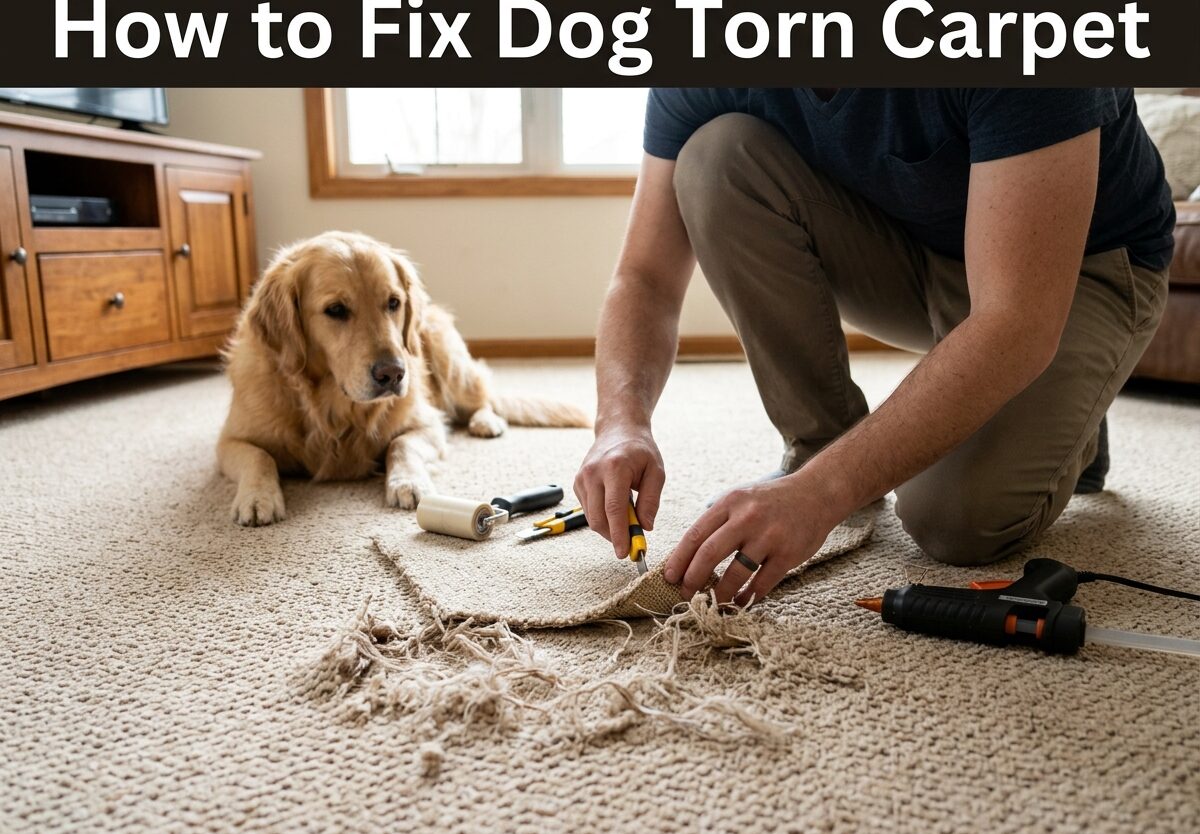
It happens to the best of us. You come home to find your favorite carpet fraying at the edges, loose threads pulled up, or worse yet an actual hole where your dog decided to dig. I’ve been there, and I know that sinking feeling when you wonder if the carpet is ruined forever. The good news? Most dog-torn carpet can be fixed, and you don’t need to replace your entire floor.
In this guide, I’ll walk you through exactly how to fix dog torn carpet, from simple loose thread repairs to patching holes. I’ve tested these methods over years of dealing with my own destructive dogs, and I’ll help you determine which approach works for your specific damage.
Can Torn Carpet Be Repaired?
Yes, most torn carpet can be repaired successfully. The key is matching the right repair method to your damage type. Minor fraying and pulled loops are quick fixes, while holes and shredded sections require patching. Only when the carpet has extensive damage across large areas or the backing is completely destroyed should you consider replacement.
Assessing Your Carpet Damage
Before you grab any tools, take a close look at what you’re dealing with. I learned the hard way that not all dog damage requires the same fix. Spending five minutes assessing can save you hours of frustration.
Start by examining the damage type. Loose threads and frayed edges mean your dog caught the carpet fibers but didn’t reach the backing. Pulled loops are common with Berber and loop pile carpets where entire loops have been pulled up. Holes or missing sections mean your dog chewed through to the backing, and this requires patching. Loose or buckled carpet around the damage suggests your dog’s scratching has loosened it from the tack strips.
Next, check your carpet type. Cut pile carpets (the most common type) have cut fiber ends and are easier to blend repairs. Loop pile carpets like Berber have continuous loops that run differently when cut or pulled. Knowing your carpet type helps you choose the right technique.
Finally, measure the damage area. Anything under 2 inches typically qualifies as minor damage. Between 2-6 inches means you’ll likely need patching. Larger than 6 inches might require professional help or even replacement.
Essential Tools and Supplies
Gathering the right tools before you start makes the job much smoother. I’ve made the mistake of jumping in without everything I need, and it’s frustrating to stop mid-repair. Here’s what you’ll need based on your damage type:
For Minor Damage (Loose Threads, Fraying):
- Sharp scissors or carpet shears
- Carpet seam adhesive or clear fabric glue
- Tweezers for pulling loose fibers
- Small brush for applying adhesive
For Seam and Pull Repairs:
- Hot-melt carpet seam tape
- Seam iron or regular clothes iron
- Carpet knife or utility knife
- Carpet adhesive
- Knee kicker (optional but helpful)
For Patch Repairs:
- Carpet knife or utility knife with fresh blades
- Donor carpet piece (from closet remnants or hidden area)
- Hot-melt seam tape
- Seam iron
- Carpet adhesive
- Heavy object or carpet roller
- Double-sided carpet tape
Method 1: Fixing Minor Damage (Loose Threads and Frayed Edges)
This is the easiest fix and works great for surface-level damage. I’ve used this method countless times when my dogs have caught the carpet fibers with their claws but haven’t done serious damage. The whole process takes about 15 minutes.
Step 1: Trim the loose threads. Use sharp scissors to carefully cut away any frayed or pulled fibers. Don’t pull them as this can cause more damage. Cut flush with the surrounding carpet. For pulled loops in Berber carpet, don’t cut the loop—instead, use tweezers to pull it back through to the back side if possible.
Step 2: Apply carpet adhesive. For areas where fibers are missing or the backing is exposed, apply a small amount of carpet seam adhesive. Use a small brush to work it into the backing. This prevents further unraveling and helps neighboring fibers stay in place.
Step 3: Blend the area. Gently fluff the surrounding carpet fibers toward the repaired spot to blend it in. For cut pile carpets, you can lightly trim any fibers that stand taller than the rest. The goal is making the repair disappear into the surrounding carpet.
This method works best for damage under 1 inch where the backing is intact. If you can see the carpet backing or there’s a hole, move to Method 2 or 3.
Method 2: Repairing Seams and Pulled Sections
When your dog has pulled up a section of carpet or damaged a seam, you need to re-secure it properly. This is common around door thresholds where dogs scratch to get out. I’ve fixed this exact problem three times in my own home.
Step 1: Lift the affected carpet section. Gently pull back the carpet to expose the damaged seam or loose area. If the carpet has pulled away from tack strips, you may need to use a knee kicker to stretch it back into position.
Step 2: Prepare the subfloor. Clean any debris or old adhesive from the subfloor. If the carpet padding is damaged, cut away the affected section and replace it with a new piece cut to size.
Step 3: Apply hot-melt seam tape. Cut a piece of seam tape slightly longer than the damaged area. Place it under the carpet seam with the adhesive side facing up. Center the seam over the tape.
Step 4: Heat and seal. Using a seam iron (or a regular clothes iron on low heat), activate the adhesive by running the iron over the tape through the carpet. Move slowly and apply firm pressure. The heat melts the adhesive and bonds the carpet edges to the tape.
Step 5: Press and cool. Place a heavy object over the repaired seam and let it cool for at least 30 minutes. This ensures a strong bond. Avoid walking on the area for a few hours if possible.
Door Threshold Specific Repair:
Threshold damage is especially common since dogs scratch at doors. If the carpet is torn at a metal or wood transition, first try tucking the carpet back under the threshold. If the carpet is too frayed, cut a straight edge and tuck it under. For severely damaged thresholds, consider installing a wooden transition strip that covers the damaged area completely. Reddit users have had great success with this approach when carpet patching wasn’t feasible.
Method 3: Patch Repair for Holes and Missing Sections
This is the most involved repair but yields the best results for significant damage. I’ve used this method when my dog chewed a 3-inch hole in the carpet right in the middle of the room. With careful technique, the patch becomes nearly invisible.
Step 1: Find donor carpet. You need a piece that matches your damaged carpet exactly. Check closets, under furniture, or save remnants from installation. If you don’t have donor carpet, consider taking a piece from a hidden corner like inside a closet. Yes, it means damaging another area, but it’s better than a visible hole in your main room.
Step 2: Cut out the damage. Using a carpet knife, cut a square or rectangle around the damaged area. Cut through the carpet but not the padding. Make clean, straight cuts. Remove the damaged section.
Step 3: Cut your patch. Use the removed piece as a template to cut your donor carpet. The patch must be exactly the same size as the hole you cut. Pay attention to carpet pile direction—the patch should run the same direction as the surrounding carpet.
Step 4: Prepare the hole. Clean out any debris or loose fibers from the hole. Cut a piece of seam tape slightly larger than your hole. Place it in the hole with the adhesive side up.
Step 5: Install the patch. Place the patch into the hole, ensuring it fits snugly. The pile direction should match the surrounding carpet. Press firmly to activate the adhesive on the tape.
Step 6: Heat seal. Use your seam iron to heat the patch through the carpet, activating the adhesive underneath. Work from the center outward to avoid air bubbles.
Step 7: Blend and finish. Use a carpet roller or heavy object to press the patch firmly. Let it cool completely. Trim any fibers that stand taller than the surrounding carpet, and fluff the edges to blend the seam.
Berber and Loop Pile Considerations:
Berber and loop pile carpets require extra care. Don’t cut the loops when trimming damage—instead, secure loose loops with adhesive and work them back into place. When patching loop pile, you must align the loops perfectly or the patch will be obvious. Consider hiring a pro for Berber repairs if you’re not confident in your skills.
When to Call a Professional
DIY repairs save money, but sometimes professional help is the smarter choice. After years of fixing my own carpet damage, I’ve learned to recognize when a job is beyond my skills.
Consider hiring a professional if the damage covers more than 1 square foot, the carpet is a specialty type like woven wool or intricate patterns, the damage is on stairs (which require different techniques), the carpet has extensive water damage alongside the tears, you’ve tried DIY repairs and they’re not holding, or you’re a renter facing a security deposit situation and need guaranteed results.
Professional carpet repair typically costs between $150-300 depending on the damage size and your location. Large holes or entire room re-stretching can cost $500 or more. Get multiple quotes and ask specifically about their experience with pet damage. Some pros specialize in this type of repair.
The advantage of hiring a pro is they have access to professional tools and techniques that yield nearly invisible repairs. They can also match carpet types more precisely than most homeowners. For rental properties or high-visibility areas, the investment might be worth it.
Preventing Future Carpet Damage
Fixing the carpet is only half the battle. If you don’t address why your dog is damaging it, you’ll be repairing the same spot again next month. I learned this the hard way after fixing the same threshold three times before finally addressing the root cause.
Understanding Why Dogs Damage Carpet:
Dogs dig and scratch carpets for several reasons. Boredom and excess energy lead to destructive behaviors. Anxiety, especially separation anxiety, causes dogs to scratch at doors and carpets. Instinctual den-making behavior triggers digging motions. Attention-seeking behavior works when you react to the damage. Medical issues like skin allergies can cause increased scratching. Lack of proper exercise outlets redirects energy to your floors.
Identifying which trigger applies to your dog helps you choose the right prevention strategy.
Training and Behavior Modification:
Increase your dog’s exercise before leaving them alone. A tired dog is less likely to destroy your floors. Provide mental stimulation with puzzle toys and chews. Use positive reinforcement to reward appropriate chewing on designated items. Don’t punish after the fact—dogs can’t connect delayed punishment to the action. Consider crate training or confining to dog-proof areas when unsupervised.
Environmental Modifications:
Place scratching posts or mats near doorways where your dog scratches. Use deterrent sprays on problem areas (test first to avoid carpet discoloration). Apply double-sided tape or carpet protectors to favorite digging spots. Keep nails trimmed to reduce snagging potential. Provide comfortable, designated sleeping areas away from doorways.
Rental Property Considerations:
If you’re renting, communicate with your landlord about the damage promptly. Many landlords prefer you attempt repairs rather than leaving it. Document the damage with photos before and after repairs. Keep receipts for any materials purchased. Consider negotiating a professional repair as a compromise between full replacement cost and your security deposit.
Frequently Asked Questions
How do you repair a dog’s ripped carpet?
Start by assessing the damage type. For loose threads and fraying, trim the fibers and apply carpet adhesive. For pulled seams, lift the carpet and secure with hot-melt seam tape. For holes, cut out the damaged section and install a matching patch using seam tape and adhesive. Always match carpet pile direction when patching, and allow repairs to cool completely before walking on them.
Can torn carpet be repaired?
Yes, most torn carpet can be repaired successfully. Minor fraying and pulled threads are simple fixes that take minutes. Holes up to 6 inches can be patched with donor carpet. Only extensive damage covering large areas or completely destroyed backing requires replacement. The key is matching the repair method to your specific damage type.
Why would a dog tear up carpet?
Dogs tear up carpet for several reasons. Boredom and excess energy often lead to destructive scratching. Anxiety, especially separation anxiety, causes scratching at doors and thresholds. Instinctual den-making behavior triggers digging motions. Some dogs learn it gets attention. Medical issues like skin allergies can also increase scratching behavior. Identifying the trigger helps prevent future damage.
How much does it cost to fix carpet damaged by a dog?
DIY repairs cost between $10-50 for materials like adhesive, seam tape, and tools you may not already own. Professional carpet repair typically costs $150-300 for standard damage. Large holes or re-stretching entire rooms can cost $500 or more. The investment in professional repair may be worth it for high-visibility areas or rental properties where security deposits are at risk.
Will my dog damage the carpet again after repair?
Unfortunately, yes—if you don’t address the underlying cause. Dogs often return to the same spot out of habit. To prevent recurrence, increase exercise and mental stimulation, provide appropriate chewing outlets, use deterrents on repaired areas, and consider confinement when unsupervised. The repair is only half the solution—behavior modification is equally important.
Conclusion
Learning how to fix dog torn carpet has saved me hundreds of dollars over the years. Whether you’re dealing with minor fraying, pulled seams, or a full-blown hole, there’s a repair method that works. Start with a thorough assessment, gather the right tools, and match your technique to the damage type.
Remember that the repair is only half the battle. Understanding why your dog is damaging the carpet and addressing that behavior is essential for preventing future problems. With the right combination of repair skills and prevention strategies, you can keep your carpets looking great even with dogs in the house.
Have you successfully repaired dog-damaged carpet? I’d love to hear about your experience or any tips you’ve discovered along the way.






Leave a Comment