
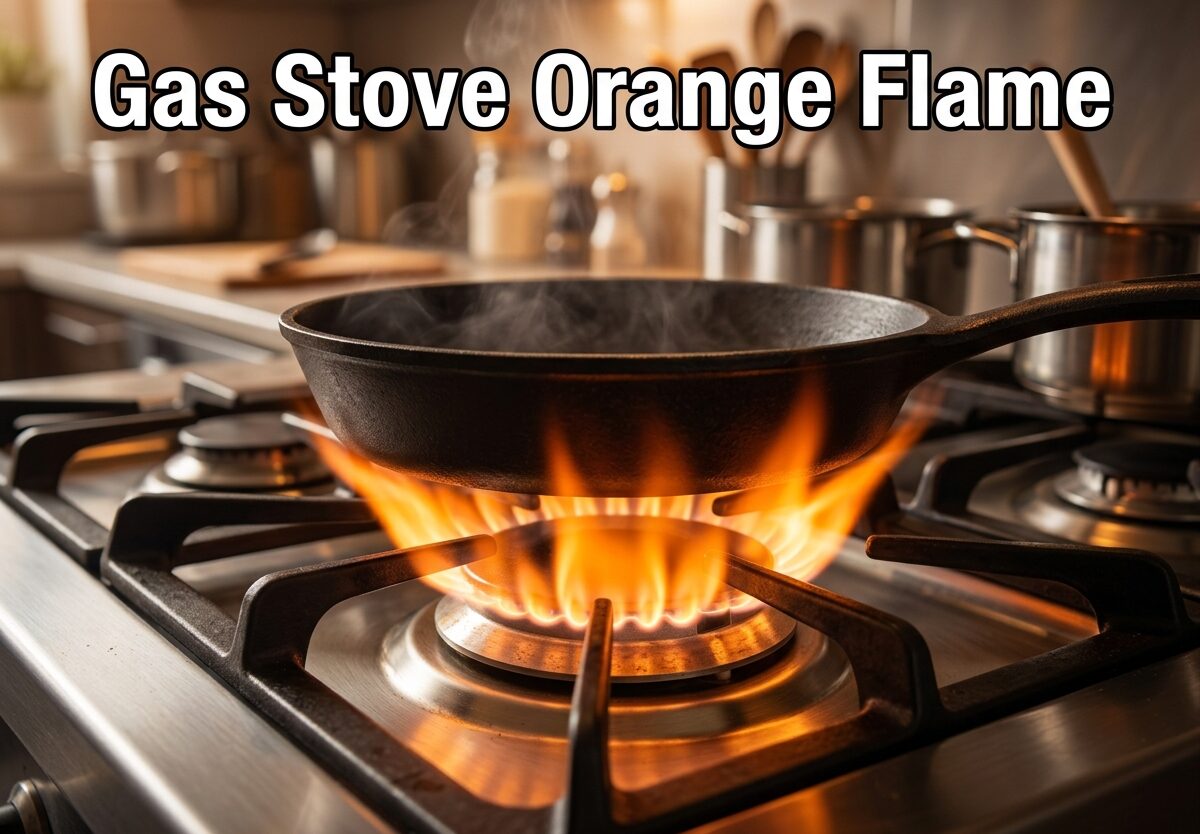
Have you noticed an orange flame flickering on your gas stove instead of the familiar steady blue? This small change might seem harmless, but it can signal something important about your stove’s operation and your home’s safety. A gas stove orange flame typically indicates incomplete combustion, which happens when there isn’t enough oxygen mixing with the gas fuel.
In this guide, I’ll walk you through everything you need to know about orange flames on gas stoves, why they occur, the potential safety risks, and exactly how to fix the issue yourself or determine when it’s time to call a professional.
What a Gas Stove Orange Flame Means
An orange flame on your gas stove means the combustion process isn’t happening efficiently. When gas burns properly, it should produce a clean, blue flame with minimal flickering. This blue color indicates complete combustion, where the gas fuel mixes with the right amount of oxygen and burns cleanly, producing mostly carbon dioxide and water vapor.
When the flame turns orange or yellow, it’s a sign of incomplete combustion. This happens when there’s not enough oxygen reaching the flame, or when something is interfering with the combustion process. The orange color comes from tiny particles of soot glowing in the flame, similar to how a ember glows in a fireplace.
A healthy gas stove flame should be blue with a slightly lighter blue tip. The flame should be steady, not flickering excessively, and should burn cleanly without producing visible smoke or unusual odors. If you’re seeing orange, yellow, or red flames, or if the flame appears weak and unstable, something needs attention.
Key Causes of Orange Flame on Gas Stove
Understanding what’s causing your orange flame is the first step toward fixing it. Based on my research and homeowner experiences, here are the most common culprits:
- Dirty burners and clogged ports – Food spills, grease, and debris can accumulate in the burner ports, blocking the flow of gas and air. This is the most common cause I see in forum discussions.
- High humidity levels – Excess moisture in the air, especially from running humidifiers nearby, can interfere with combustion. Many Reddit users report orange flames appearing after setting up a humidifier in their home.
- Air shutter misalignment – The air shutter controls the air-to-gas ratio. If it’s not adjusted correctly, too little air mixes with the gas, causing incomplete combustion.
- Gas pressure issues – Problems with your gas regulator or supply line can cause pressure that’s too low or too high, both of which can affect flame color and quality.
- Particulate matter and airborne debris – Dust, pollen, or other particles in the air can get drawn into the burner and temporarily affect flame color.
- New stove installation residue – Brand new stoves often have manufacturing oils or residues that burn off initially, causing temporary orange flames that typically resolve after a few uses.
- Moisture in gas lines – Particularly with propane systems, condensation can form in gas lines and affect combustion quality.
Safety Risks of Orange Gas Stove Flame
Let me be direct about this: an orange flame isn’t just a cosmetic issue. It can pose real safety risks that you need to take seriously. The primary concern is carbon monoxide production. Incomplete combustion produces carbon monoxide (CO), a colorless, odorless gas that can be deadly at high concentrations.
When your stove burns inefficiently with an orange flame, it’s producing more carbon monoxide than it should. While your kitchen may have some ventilation, extended cooking with a poorly burning stove can increase CO levels in your home. This is why every home with gas appliances should have working carbon monoxide detectors installed near sleeping areas.
Beyond carbon monoxide, orange flames often produce soot. You might notice black deposits forming on your cookware, burner grates, or around the burner area. This soot can build up over time, affecting your stove’s performance and potentially becoming a fire hazard if it accumulates near electrical components.
There’s also the question of gas efficiency. When your stove isn’t burning properly, you’re essentially wasting gas and not getting the full heating output you’re paying for. Over time, this inefficiency adds up.
Safety Warning: If you experience headaches, dizziness, or nausea while cooking with your gas stove, immediately turn off the stove, open windows, leave the area, and call your gas company or a qualified technician. These are symptoms of carbon monoxide exposure.
How to Fix an Orange Flame on Gas Stove
The good news is that most orange flame issues can be resolved with some basic troubleshooting and cleaning. Here’s the step-by-step approach I recommend:
Step 1: Clean the Burner Thoroughly
Start with a thorough cleaning of the affected burner(s). Remove the burner cap, grate, and any removable parts. Wash these in warm, soapy water to remove grease and food residue.
For the burner ports (the small holes where gas comes out), use a straight pin, paperclip, or specialized burner cleaning tool to gently clear any blockages. Be careful not to damage the ports or enlarge them. Many homeowners find success with welding tip cleaners, which are designed for this purpose.
Compressed air can also help dislodge debris from ports that are difficult to reach with tools. Spray the ports from multiple angles to ensure thorough cleaning.
Step 2: Check and Adjust the Air Shutter
The air shutter is located near where the burner connects to the gas line. It’s a movable sleeve or collar that controls how much air mixes with the gas before it reaches the flame.
Locate the air shutter on your affected burner. You should see a screw or mechanism that allows you to open or close the shutter. Opening it wider allows more air to mix with the gas.
Make small adjustments and test the flame after each change. You’re looking for a steady blue flame with minimal orange tips. Turn the stove off before making adjustments to avoid accidental burns.
Step 3: Address Humidity Issues
If you use a humidifier, try turning it off for a day and see if the flame color improves. Many homeowners find that the minerals from tap water used in humidifiers get drawn into the burner and cause orange flames.
If you need to use a humidifier, consider using distilled water instead of tap water. This reduces mineral deposits that can affect combustion. Also, try to position the humidifier as far from the stove as practical.
Step 4: Check All Burners
Look at all the burners on your stove, not just the one that seems problematic. If all burners show orange flames, the issue is likely systemic (gas pressure, whole-house humidity, or a main air supply issue).
If only one burner is affected, the problem is localized to that specific burner (clogged ports, individual air shutter issue, or debris).
Step 5: Test After Cleaning
After cleaning and making adjustments, test the flame again. Light the burner and observe the flame color and behavior. A healthy flame should be predominantly blue with a stable, cone shape.
Minor orange or yellow tips (less than 1/4 inch) are generally acceptable, especially on older stoves. But if the entire flame is orange or yellow, or if there’s significant soot production, you haven’t resolved the issue yet.
When to Call a Professional for Orange Flame Issues
While many orange flame problems can be resolved through DIY cleaning and adjustment, there are situations where professional help is necessary. Don’t hesitate to call a qualified gas technician if:
- The orange flame persists after thorough cleaning and air shutter adjustment
- All burners are affected simultaneously, suggesting a gas supply or pressure issue
- You smell gas anywhere near the stove – this is potentially dangerous and requires immediate attention
- The flame is unstable or makes unusual sounds like hissing or popping
- You notice soot buildup in areas beyond the immediate burner area
- Your carbon monoxide detector alarms when using the stove
- You’re uncomfortable performing any of the troubleshooting steps
A qualified technician will check your gas pressure, inspect the regulator, examine the venting system, and ensure all safety mechanisms are functioning properly. They have specialized tools and training to diagnose issues that aren’t visible to the naked eye.
Professional service typically costs between $100-200 depending on your location and the nature of the problem. Consider this an investment in your family’s safety.
Preventing Orange Flames on Your Gas Stove
Once you’ve resolved your orange flame issue, some basic maintenance can help prevent it from returning:
Clean burners monthly – Make it part of your regular kitchen cleaning routine. A quick wipe-down and port clearing takes just a few minutes but prevents significant buildup.
Wipe up spills immediately – When food boils over or grease splatters, clean it up before it has a chance to bake onto the burner components.
Use appropriate cookware – Pots and pans that are significantly larger than the burner can restrict airflow and affect combustion. Match your cookware size to the burner size.
Maintain proper ventilation – Run your range hood when cooking, especially for extended periods. This helps remove moisture and combustion byproducts from your kitchen.
Install and maintain CO detectors – Place carbon monoxide detectors on each level of your home, especially near sleeping areas. Test them monthly and replace batteries at least once a year.
Consider seasonal effects – Many homeowners report more issues during winter months when indoor heating reduces air exchange and humidifiers run more frequently. Be extra vigilant about cleaning during these times.
Schedule professional inspections – Have your gas appliances inspected by a professional every 1-2 years, especially if you have an older stove or notice gradual performance decline.
Frequently Asked Questions About Gas Stove Orange Flame
How do you fix an orange flame on a gas stove?
Start by thoroughly cleaning the burner ports with a pin or compressed air to remove debris. Then adjust the air shutter near the burner base to allow more air to mix with the gas. If using a humidifier, turn it off or switch to distilled water. Test the flame after each adjustment. If the orange flame persists after cleaning, call a professional technician to check gas pressure and regulator function.
Is it safe to use a gas stove with an orange flame?
An orange flame indicates incomplete combustion and potential carbon monoxide production. While brief use may not be immediately dangerous, prolonged cooking with an orange flame increases CO risk in your home. If you must use the stove before repairing, ensure excellent ventilation and keep a CO detector nearby. However, I recommend addressing the issue promptly rather than continuing to use a stove with an improperly burning flame.
What is the reason for orange flame in a gas stove?
The primary reason is incomplete combustion caused by insufficient oxygen mixing with the gas fuel. Common causes include dirty burner ports blocked by food debris or grease, high indoor humidity levels (especially from humidifiers), misaligned air shutters that restrict airflow, gas pressure problems, or particulate matter in the air. New stoves may also show temporary orange flames from manufacturing residues that burn off after initial uses.
Does an orange flame mean carbon monoxide?
Yes, an orange flame typically indicates incomplete combustion, which produces carbon monoxide as a byproduct. While not every orange flame situation generates dangerous CO levels, the risk is real. Carbon monoxide is odorless and colorless, making it impossible to detect without proper alarms. This is why every home with gas appliances should have working carbon monoxide detectors installed. If your CO detector alarms while using your stove, immediately turn off the appliance, ventilate the area, and call a professional.
Why is my gas stove flame orange only sometimes?
Intermittent orange flames are often related to environmental factors. High humidity days, running a humidifier, or cooking with large amounts of moisture can temporarily affect combustion. Seasonal changes, especially winter heating that reduces air exchange, also play a role. Airborne dust or particulate matter can cause temporary orange flames. If the issue comes and goes, focus on controlling humidity, ensuring good ventilation, and maintaining a consistent cleaning schedule for your burners.
Can a humidifier cause orange flames on a gas stove?
Yes, humidifiers are a common cause of orange flames, especially when they’re placed near the stove or when they run continuously. The issue is often the minerals in tap water that become airborne and interfere with combustion. Many homeowners report that switching from tap water to distilled water in their humidifier resolves the orange flame issue. If you suspect your humidifier is the culprit, try turning it off for a day to see if the flame returns to blue.
Conclusion
A gas stove orange flame is more than just a cosmetic issue – it’s a warning sign that your stove isn’t burning efficiently and could be producing carbon monoxide. The most common causes are dirty burners, high humidity, and air shutter misalignment, all of which can often be addressed with basic cleaning and adjustment.
Remember to prioritize safety above all else. If you’re unsure about any aspect of troubleshooting or if the problem persists after your efforts, don’t hesitate to call a professional technician. The cost of a service call is minimal compared to the peace of mind that comes with knowing your gas appliances are operating safely.
By following the steps in this guide and maintaining a regular cleaning schedule, you can keep your gas stove burning blue and your home safe. Here’s to safe and efficient cooking in 2026!





Leave a Comment