
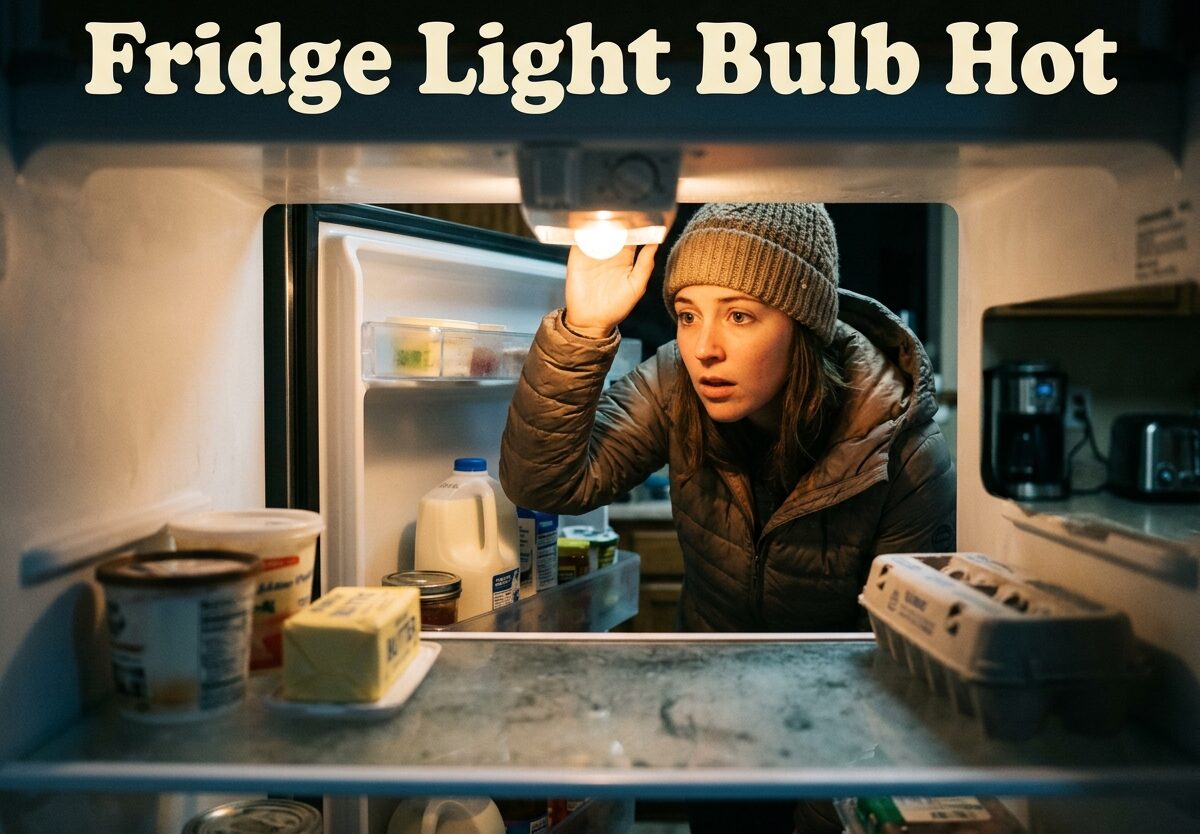
Some warmth from your refrigerator light bulb is normal, especially if you’re using an older incandescent bulb. However, if your fridge light bulb hot enough to burn your fingers or melt surrounding plastic, you have a problem that needs immediate attention.
A mildly warm bulb after the door has been open for a minute is typically nothing to worry about. The real concern is when the light stays on continuously because of a faulty switch or when you’ve installed the wrong type of bulb. Both situations can create dangerous heat buildup inside your refrigerator.
I’ve seen the damage firsthand. One forum user reported their fridge temperature rose to 60 degrees because the light stayed on for days, while another discovered melted plastic surrounding their mini fridge’s light assembly. Let me walk you through exactly what’s happening and how to fix it safely.
Why Is My Fridge Light Bulb Hot?
Several issues can cause excessive heat from your refrigerator light, ranging from simple mistakes to component failures. Understanding the root cause helps determine whether this is a quick fix or requires professional repair.
The most common culprit is a malfunctioning door switch. This small plastic switch inside your fridge frame tells the light when to turn on and off. When it fails, the light stays on continuously, generating heat 24/7. Since refrigerators are designed to remove heat, this creates a battle between your cooling system and the constantly running light.
Using the wrong bulb wattage is another frequent issue. Most refrigerators are designed for appliance bulbs rated at 15-40 watts maximum. Installing a standard 60-watt household bulb can generate significantly more heat than the light assembly was built to handle.
Control board relay failures affect newer refrigerators with electronic controls. The relay that controls power to the light can stick in the “on” position, keeping the light running even when the door is closed. This issue often requires professional repair.
Poor ventilation around the light assembly can trap heat, especially in compact refrigerators where components are packed tightly together. Some mini fridge models are particularly prone to overheating due to their smaller size and enclosed design.
Is It Normal for Fridge Light Bulbs to Be Hot?
Yes, some warmth is completely normal. Incandescent bulbs work by heating a filament until it glows, so generating heat is part of their basic operation. A bulb that feels slightly warm after being on for a minute or two is functioning as designed.
The key distinction is between “warm” and “hot.” A normally operating bulb should be uncomfortable to touch for more than a second but not cause actual pain. If you can’t keep your finger on the bulb for even a moment, or if you smell burning plastic, that’s excessive heat.
LED refrigerator bulbs run significantly cooler than traditional incandescent options. While they still generate some warmth at the base, an LED bulb should never feel hot to the touch throughout its surface. This temperature difference is why many appliance manufacturers have switched to LED lighting in newer models.
The safe temperature range for a properly functioning appliance bulb is typically 100-130 degrees Fahrenheit at the bulb surface. Anything above 150 degrees indicates a problem that should be addressed promptly.
Dangers of an Overheating Fridge Bulb
An overheating refrigerator light bulb poses several serious risks beyond just being annoying to touch. The heat can damage your appliance, create fire hazards, and compromise your food safety.
Fire danger is the most significant risk. While rare, extremely hot bulbs can ignite nearby materials like paper goods stored on top of the refrigerator or plastic components within the light assembly itself. The confined space and continuous operation create conditions where heat builds up faster than it can dissipate.
Plastic melting is a common consequence. Many refrigerators use plastic light covers and housings that can warp or melt when exposed to excessive heat for extended periods. I’ve seen numerous reports of brown, warped plastic around light fixtures from users who didn’t realize their light was staying on.
Food spoilage occurs when the constant heat from the light fights against your refrigerator’s cooling system. Your compressor works harder to maintain temperature, potentially shortening its lifespan. More immediately, food in areas near the light may reach unsafe temperatures, leading to spoilage and potential foodborne illness risks.
Frequent bulb burnout becomes expensive when bulbs overheat. Excessive heat significantly shortens bulb life, leading to repeated replacements. One user reported going through four bulbs in a month before realizing the door switch was broken and the light was never turning off.
Step-by-Step Troubleshooting: How to Fix Hot Fridge Light Bulb
Before attempting any repairs, safety should be your priority. Always unplug your refrigerator before working on electrical components. This eliminates shock risk and prevents the compressor from starting while you’re working.
Step 1: Verify the Problem
Open and close your refrigerator door while watching the light. If it stays on when the door is fully closed, you’ve confirmed the issue. You can also place a piece of tape on the door frame and light housing, then check if the light remains illuminated after closing.
Step 2: Check Your Bulb Type
Remove the bulb and examine its wattage rating. It should clearly state “15W” or “40W maximum” for appliance use. If you see “60W” or higher, replace it immediately with a proper appliance bulb rated for refrigerator use.
Step 3: Test the Door Switch
Locate the door switch along the interior frame. Press it manually with your finger. If the light doesn’t respond, or if the switch feels loose or stuck, the switch likely needs replacement. These switches are inexpensive and typically straightforward to replace.
Step 4: Inspect for Damage
Look closely at the plastic light housing and surrounding area for discoloration, warping, or melting. Brown or blackened plastic indicates prolonged overheating. If damage is severe, the entire light assembly may need replacement.
Step 5: Consider LED Conversion
Replace your incandescent bulb with an LED appliance bulb. LEDs generate significantly less heat, use less energy, and last much longer. Just ensure the bulb is specifically rated for refrigerator use, as cold temperatures can affect some LED electronics.
Step 6: Monitor After Repair
After making changes, monitor your refrigerator for 24-48 hours. Check that food stays cold and the light turns off properly. If problems persist, especially with electronic control boards, contact a qualified appliance repair technician.
LED vs Incandescent Fridge Bulbs: Which Is Safer?
LED bulbs are the superior choice for refrigerator lighting from a safety and efficiency standpoint. While incandescent bulbs convert most of their energy into heat rather than light, LEDs operate at much lower temperatures while producing equivalent illumination.
The heat difference is substantial. A typical 40-watt incandescent appliance bulb can reach 200+ degrees at the filament, while an equivalent LED bulb rarely exceeds 100 degrees even after hours of operation. This dramatically reduces the risk of melting plastic or fire hazards.
Energy savings add up quickly. An LED bulb uses approximately 80-90% less electricity than its incandescent counterpart. For a light that may run for several hours daily as you open and close your fridge, this can save $15-25 annually in electricity costs.
Lifespan comparison heavily favors LEDs. Incandescent appliance bulbs typically last 1,000-2,000 hours, while quality LED bulbs can last 15,000-25,000 hours. You might change an incandescent fridge bulb multiple times over the life of your refrigerator, but an LED could very well outlast the appliance itself.
Compatibility is worth noting. Most refrigerators with standard Edison-base sockets can accept LED bulbs without issue. However, some very old refrigerators or specific models may have dimming circuits or other features that require incandescent bulbs. Check your owner’s manual if unsure.
FAQs
Are refrigerator light bulbs supposed to be hot?
Some warmth is normal for incandescent bulbs, but they should never be too hot to touch briefly. If your fridge light bulb is painfully hot or melting plastic, that indicates a problem with the door switch, wrong bulb wattage, or control board issue that needs immediate attention.
Do LED bulbs get hot enough to start a fire?
LED bulbs run much cooler than incandescent bulbs and rarely pose fire risk from heat alone. While the base of an LED bulb may feel warm during operation, it typically won’t exceed 100 degrees Fahrenheit. However, any electrical device can malfunction, so always use properly rated appliance bulbs and inspect for damage.
Do refrigerator light bulbs burn out?
Yes, refrigerator light bulbs do burn out eventually. Incandescent appliance bulbs typically last 1,000-2,000 hours, while LED bulbs can last 15,000-25,000 hours. If your bulbs are burning out frequently (within weeks or months), you likely have a door switch problem keeping the light on continuously or voltage issues.
Do I have to unplug my fridge to change the light bulb?
Yes, you should unplug your refrigerator before changing the light bulb. While the socket voltage is low, unplugging eliminates shock risk and prevents the compressor from starting unexpectedly. It only takes a moment and ensures you can work safely without the door closing on you or the light activating.
Can LED bulbs be used in refrigerators?
Yes, LED bulbs can be used in most refrigerators and are actually recommended for their lower heat output and energy efficiency. However, ensure the LED bulb is specifically rated for cold environments and appliance use. Some standard LED bulbs may not perform well in refrigerator temperatures or may have compatibility issues with certain refrigerator models.
Conclusion
If your fridge light bulb is running hotter than normal, start by checking the bulb wattage and testing the door switch. These two issues account for most overheating problems and are simple to fix yourself. Switching to an LED appliance bulb provides a permanent solution that virtually eliminates heat concerns while saving energy.
For complex issues like control board problems or severely damaged light assemblies, contact a qualified appliance repair technician. The cost of professional repair is far less than replacing a damaged refrigerator or dealing with potential fire hazards.



Leave a Comment