
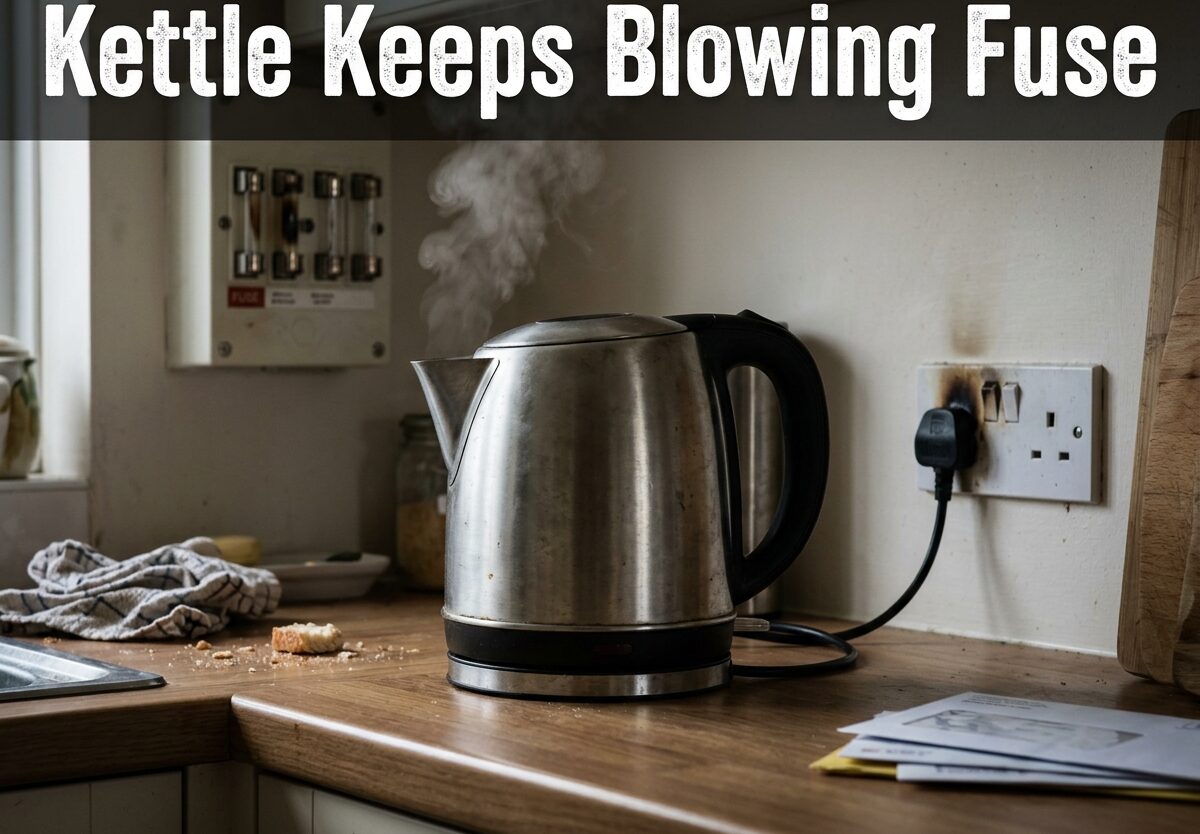
You reach for your kettle to make morning coffee, flip the switch, and click – darkness. The circuit breaker has tripped again. If your kettle keeps blowing fuse after fuse, you’re not alone. This frustrating problem affects countless homeowners, and it usually points to one of two issues: either your kettle has developed a fault, or something’s wrong with your home’s electrical system.
Before you reach for the breaker switch again, read this guide. Repeatedly resetting a tripped circuit without identifying the cause can be dangerous. I’ve spent years troubleshooting electrical issues and seen homeowners replace perfectly good kettles when the real problem was in their walls. Let’s work through this systematically.
What Does It Mean When Your Kettle Keeps Blowing Fuse?
When your kettle blows a fuse or trips a circuit breaker, your electrical system is doing its job. Kettles draw massive power – typically 2000 to 3000 watts – to heat water quickly. This high wattage means kettles are one of the most demanding appliances in your kitchen.
A blown fuse or tripped breaker is a safety mechanism preventing electrical fires. It means the circuit is carrying more current than it should, or electricity is flowing somewhere it shouldn’t. Something needs attention before you use the kettle again.
Kettle Keeps Blowing Fuse: 6 Common Causes
Faulty Heating Element (Most Common)
The heating element is the most frequent culprit. Over time, these coiled metal elements can develop microscopic cracks or breaks. When this happens, electricity can arc or short circuit through water or the metal casing instead of flowing through the intended path.
You might notice your kettle takes longer to boil, makes unusual noises, or the heating element has visible discoloration. Once an element fails internally, it needs replacement – there’s no safe way to repair it.
Circuit Overload From Multiple Appliances
Modern kitchens often have multiple high-wattage appliances plugged into the same circuit. Your toaster, microwave, coffee maker, and kettle might all share the same 20-amp circuit. When you run several simultaneously, the combined draw exceeds the circuit’s capacity.
This is especially common in older homes where electrical circuits weren’t designed for today’s appliance load. The breaker trips to prevent overheating and potential fire.
Short Circuit in Kettle Wiring
Internal wiring can become damaged from repeated heating and cooling cycles. Frayed insulation or loose connections inside the kettle create a short circuit path. Electricity bypasses the heating element entirely, causing an immediate surge that trips the breaker.
Short circuits are dangerous and should be addressed immediately. Never continue using a kettle that shorts out, even intermittently.
Damaged Power Cord or Plug
The power cord takes constant abuse – bending, pulling, and accidental damage. A frayed or exposed wire creates a direct path for electricity to arc. Similarly, a damaged plug with bent or corroded prongs can cause intermittent connections that trip breakers.
Inspect your cord carefully. Any signs of wear, fraying, or exposed copper mean it’s time for professional repair or replacement.
Moisture Inside the Kettle
Water and electricity don’t mix. If water has leaked into the base or internal components of your kettle, it creates an electrical path that shouldn’t exist. This is particularly common with kettles that have been dropped or have damaged seals.
Moisture-related issues can sometimes resolve after the kettle completely dries out, but if water has reached internal wiring or electronics, permanent damage may have occurred.
Faulty Circuit Breaker or RCD
Sometimes the kettle is fine – the problem lies with your electrical panel. Breakers can become sensitive over time, tripping at lower currents than they should. Residual Current Devices (RCDs) can also malfunction, detecting phantom earth faults.
A professional electrician can test your breakers and determine if they’re functioning correctly. Replacing a faulty breaker is typically less expensive than replacing multiple kettles.
RCD vs MCB: What’s Actually Tripping?
Understanding which device tripped can help identify the problem. Your electrical panel contains two types of protection devices:
MCB (Miniature Circuit Breaker) – These protect against overload and short circuits. If an MCB trips, something is drawing too much current or has shorted. This often points to the kettle or circuit overload.
RCD (Residual Current Device) – These detect earth leakage, which happens when electricity flows to ground instead of returning through the neutral wire. If your RCD trips, there’s likely insulation damage or water contact somewhere. This could be in the kettle, socket, or home wiring.
Pay attention to which device trips when using your kettle – it’s an important diagnostic clue.
How to Fix Kettle Keeps Blowing Fuse: Step-by-Step Troubleshooting
Step 1: Test the Kettle in a Different Socket
Move your kettle to a different room or circuit entirely. If it trips the breaker there too, the problem is almost certainly the kettle itself. If it works fine, you’re dealing with a circuit or socket issue in the original location.
Step 2: Unplug All Other Appliances on the Circuit
Turn off or unplug everything else on the same circuit as your kettle. Toasters, microwaves, and other kitchen appliances can collectively overload the circuit. Try the kettle alone – if it works, you were simply overloading the circuit.
Step 3: Inspect the Power Cord and Plug
Carefully examine the entire length of the cord. Look for fraying, cuts, kinks, or any signs of damage. Check the plug for bent prongs, corrosion, or heat marks. Any damage here requires professional repair – don’t attempt to tape or patch a damaged cord.
Step 4: Check the Kettle for Visible Damage
Look at the kettle’s exterior for cracks, dents, or damage around the base. Check the heating element for discoloration, scaling, or visible breaks. Look for any signs of water leakage around the base or in the cord connection area.
Step 5: Test With a Different Appliance
Plug a different high-wattage appliance into the same socket. A hair dryer or space heater works well for this test. If the other appliance trips the breaker too, the socket or circuit has a problem. If it doesn’t, your kettle is the likely culprit.
Step 6: When to Stop and Call an Electrician
If multiple appliances trip the same breaker, or if you notice burning smells, scorch marks, or feel heat at the socket, stop immediately. These are signs of serious electrical problems that require professional attention. Your safety isn’t worth saving the cost of a service call.
When Should You Call an Electrician?
Some situations absolutely require professional help. If you’ve tried multiple kettles and all trip the same breaker, your home’s wiring or electrical panel has an issue. This could be a loose connection, damaged wiring, or a faulty breaker.
If your home has older aluminum wiring or you’ve recently had electrical work done, those factors could contribute to the problem. Older homes may not have sufficient capacity for modern kitchen appliances.
Never attempt to open your electrical panel or work on household wiring unless you’re qualified. Electrical fires cause thousands of house fires annually – this isn’t a DIY project.
Repair or Replace Your Kettle? Cost Guide
The decision to repair or replace depends on your kettle’s age and the specific problem. Kettles under 1 year old are likely still under warranty – contact the manufacturer first. They may repair or replace it at no cost.
For kettles 2-3 years old, a heating element replacement might cost $30-50 if you can find a service center. Compare this to the price of a new kettle, which typically ranges from $25-150 depending on features.
Kettles over 4 years old are usually candidates for replacement. The cost of professional repair often approaches or exceeds the price of a new unit, and other components may fail soon after one repair.
Consider also that electrician call-outs typically cost $75-150 minimum. If you’re unsure whether the problem is your kettle or your home’s wiring, it might be worth testing with a borrowed kettle first.
FAQs
Why is my kettle tripping my fuse?
Your kettle is tripping the fuse because it’s drawing more current than the circuit can handle, or there’s an electrical fault. Common causes include a faulty heating element, short circuit, damaged power cord, or moisture inside the kettle. The circuit breaker is protecting you from potential electrical fire.
Is it dangerous if my kettle keeps blowing fuse?
Yes, it can be dangerous. A repeatedly tripping breaker indicates an electrical problem that needs attention. While the breaker is doing its job by preventing fire, the underlying cause – whether faulty kettle or damaged wiring – could create a hazardous situation if ignored. Don’t keep resetting the breaker without finding the cause.
Can a kettle cause an RCD to trip?
Yes, a kettle can trip an RCD if there’s earth leakage. This happens when electricity flows to ground through damaged insulation, water contact, or internal short circuits. RCDs are designed to detect these potentially dangerous conditions and trip immediately. If your RCD trips with the kettle, there’s likely insulation damage or moisture somewhere.
How do I test if my kettle is faulty?
Test your kettle in a different socket outlet, preferably on a different circuit. If it trips there too, the kettle is faulty. You can also test by plugging a different high-wattage appliance into the original socket – if that doesn’t trip the breaker, your kettle is likely the problem. Inspect the cord and element for visible damage too.
Can I use a kettle on an extension cord?
Generally, you shouldn’t use a kettle on an extension cord. Kettles draw high power (2000-3000W) that can overload most extension cords, causing overheating and potential fire. If you must use an extension cord temporarily, ensure it’s rated for high wattage, is short and thick, and fully unwound during use.
Should I call an electrician if my kettle keeps blowing fuse?
Call an electrician if multiple kettles trip the same breaker, if you notice burning smells or scorch marks, if the socket feels hot, or if your home has older wiring. Also seek professional help if you’ve tried the troubleshooting steps and can’t identify the cause. Electrical problems can be serious and should be addressed by qualified professionals.
What’s the average lifespan of a kettle?
The average kettle lasts 4-6 years with regular use. Higher-quality models may last longer, while budget kettles typically fail sooner. The heating element is the component most likely to fail first. If your kettle is over 4 years old and having electrical problems, replacement is usually more cost-effective than repair.
Why does my kettle trip the fuse box every time?
If your kettle trips the fuse every single time you use it, you likely have a serious fault. This could be a completely failed heating element creating a direct short circuit, severe water damage inside the kettle, or damaged wiring. Don’t keep trying to use it – the kettle needs professional inspection or replacement.
Conclusion
A kettle that keeps blowing fuse is your home’s electrical system telling you something needs attention. Whether it’s a faulty heating element, overloaded circuit, or damaged wiring, the problem won’t resolve itself and could become dangerous if ignored.
Start with the troubleshooting steps above to identify whether your kettle or your home’s electrical system is the cause. Test in different sockets, inspect the cord, and try the kettle alone on the circuit. If you’ve tried these steps and the problem persists, or if you notice any signs of burning, heat, or visible damage, call a qualified electrician.
Your morning coffee isn’t worth risking electrical safety. Identify the problem, fix it properly, and enjoy your hot water without the constant interruption of tripped breakers.







Leave a Comment