
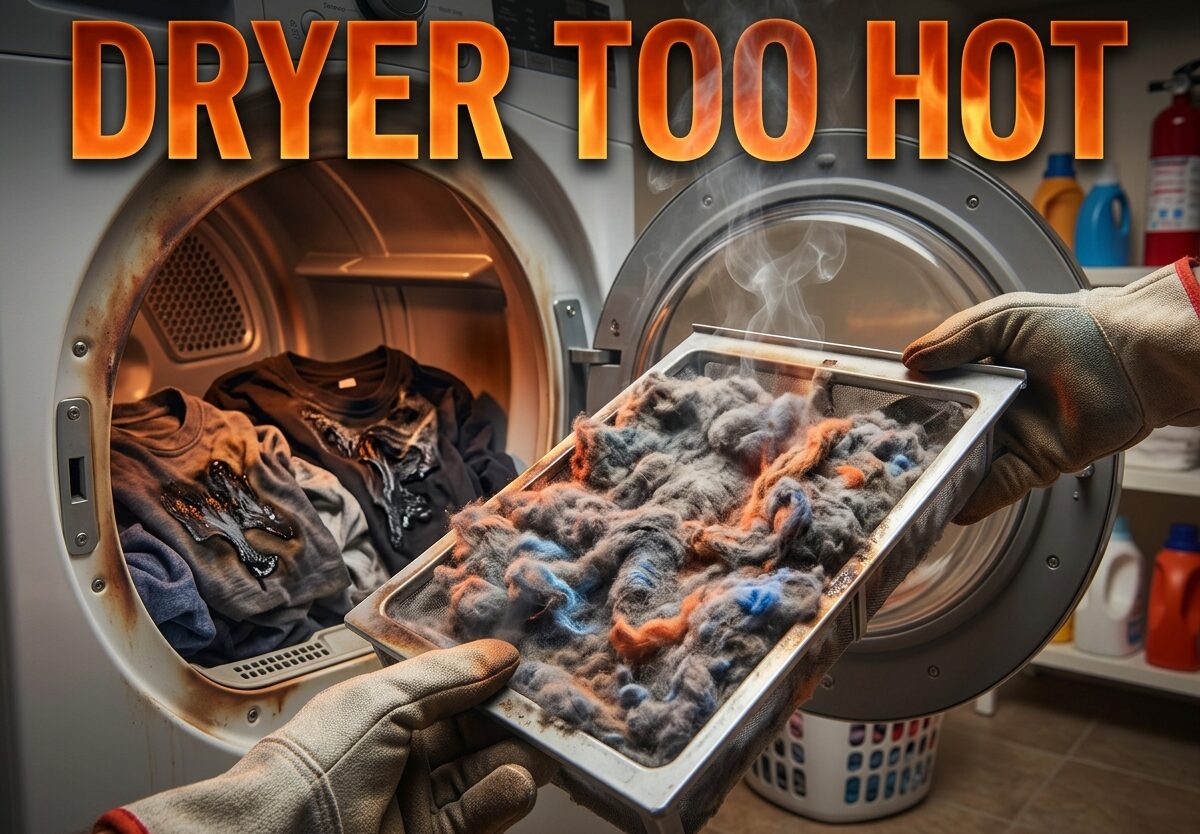
If your dryer feels like it could burn your hand when you touch it, or your clothes come out scorching hot and smelling like they’ve been near a fire, you’re dealing with a serious problem. A dryer too hot is more than just an annoyance—it’s a potential fire hazard that puts your home and family at risk.
In this guide, I’ll walk you through exactly why your dryer is overheating and what you can do about it. We’ll cover the most common causes, how to test components yourself, and when it’s time to call in a professional. Fire safety starts with understanding the warning signs.
Signs Your Dryer is Too Hot
Before we dive into the causes, let’s make sure we’re on the same page about what “dryer too hot” actually looks like. Here are the telltale signs that your dryer is running hotter than it should:
Exterior feels dangerously hot: The top, sides, or door of your dryer are too hot to touch comfortably. While some warmth is normal, it shouldn’t burn your hand.
Clothes come out scorched: You’re noticing burn marks on your laundry, or fabrics feel uncomfortably hot to the touch immediately after the cycle ends.
Burning smell: There’s an unmistakable odor of something overheating—like burning lint or electrical components—when the dryer is running.
Dryer shuts off unexpectedly: Some dryers have safety mechanisms that will shut down the machine if it gets too hot, triggering before a fire can start.
Clothes take longer to dry: Paradoxically, an overheating dryer often has poor airflow, which means clothes actually take longer to dry despite the excess heat.
Dryer Too Hot: Common Causes
Understanding why your dryer is overheating is the first step toward fixing it. Based on my research and real-world experiences from appliance repair forums, here are the most common culprits:
1. Restricted Airflow from Clogged Vents
This is the number one cause of dryer overheating. Your dryer needs to breathe hot, moist air out and fresh air in. When either path is blocked, heat builds up inside the drum and the machine itself.
Lint trap neglect: I’ve seen dryers where the lint screen hasn’t been cleaned in months. The accumulated lint prevents proper airflow, causing heat to build up dangerously.
Clogged vent hose: The flexible or rigid duct that connects your dryer to the outside vent can become packed with lint over time. In some cases, I’ve found vents that were 80% blocked.
Blocked exterior vent: The vent cap on the outside of your home might be obstructed by a bird’s nest, debris buildup, or even a closed damper that won’t open.
2. Faulty Cycling Thermostat
The cycling thermostat is your dryer’s primary temperature regulator. It turns the heating element on and off to maintain the correct temperature. When this component fails, your dryer can’t regulate heat properly.
A defective cycling thermostat might fail to turn off the heating element, causing continuous heat buildup. Based on forum discussions, this is a frequent cause of overheating that many homeowners overlook.
3. Defective Heating Element
The heating element itself can malfunction in ways that cause overheating. If the element partially shorts out or grounds to the dryer’s metal frame, it can produce heat even when it’s supposed to be off.
Some users report their dryers getting hot even on the “air fluff” or “no heat” setting—a clear sign the heating element is receiving power when it shouldn’t be.
4. Failed High-Limit Thermostat
The high-limit thermostat is your dryer’s last line of defense against overheating. It’s designed to shut off the heating element if temperatures exceed safe limits. When this safety component fails, the dryer has no protection against runaway heat.
5. Worn Blower Wheel
The blower wheel is responsible for pulling air through the drum and pushing it out the vent. Over time, the wheel can slip on its shaft or become damaged, reducing airflow significantly.
When air can’t circulate properly, heat builds up in the drum instead of being exhausted. A failing blower wheel often makes a rumbling or whining sound before it completely fails.
6. Thermal Fuse Issues
The thermal fuse is a one-time safety device designed to blow if the dryer gets dangerously hot. Unlike a thermostat, it can’t be reset—it must be replaced. If your thermal fuse has blown, it’s a symptom of overheating, not the cause itself.
7. Drum Seal or Felt Seal Damage
The drum seals keep air from leaking out of the drum where it shouldn’t. When these seals wear out or become damaged, air escapes through gaps instead of being properly exhausted through the vent system.
How Your Dryer Regulates Heat (And Why It Matters)
Understanding how your dryer is supposed to work can help you identify what’s going wrong. Your dryer uses a team of components working together to maintain safe temperatures:
Cycling thermostat: This is the primary regulator. It continuously monitors temperature inside the drum and cycles the heating element on and off to maintain the selected heat level.
High-limit thermostat: This is your backup safety. It only activates if temperatures exceed safe limits, cutting power to the heating element to prevent fire or damage.
Thermal fuse: The final failsafe. If temperatures reach dangerous levels despite the other safeguards, this fuse blows and completely shuts down the dryer.
Cool down cycle: Many modern dryers have a cool-down period where the drum continues tumbling without heat for the last few minutes. This allows fabrics to cool gradually and prevents residual heat buildup.
When any component in this system fails, the whole temperature regulation system breaks down. That’s when you get a dryer that’s too hot.
How to Test Dryer Components with a Multimeter
If you’re comfortable with basic DIY repairs, you can test many of these components yourself using a multimeter. This diagnostic tool costs about $15-30 and can save you hundreds in repair bills.
Before testing: Always unplug your dryer or shut off the gas supply. For electric dryers, wait at least 30 minutes after unplugging to allow capacitors to discharge.
Testing the Cycling Thermostat:
Locate the cycling thermostat (usually a small round component with two wires attached near the heating element or blower housing). Set your multimeter to the lowest ohms setting and touch the probes to the thermostat terminals.
You should see a reading near zero ohms if the thermostat is working. If you see infinite resistance (OL or 1), the thermostat has failed and needs replacement. For a more thorough test, use a heat gun to warm the thermostat—it should show continuity at room temperature and open when heated to its rated temperature.
Testing the Heating Element:
Disconnect the wires from the heating element and test for continuity across the terminals. A working element should show a reading between 8-12 ohms for most dryers.
Also test each terminal to the metal casing of the element. You should see infinite resistance. If there’s any continuity to the case, the element has shorted and is grounding to the frame—this causes overheating even on no-heat settings.
Testing the Thermal Fuse:
The thermal fuse is typically located near the heating element or blower housing. It’s a small plastic or ceramic component with two wires. Test for continuity—if it shows infinite resistance, the fuse has blown and must be replaced.
Remember: A blown thermal fuse is a symptom, not a cause. Replace it only after identifying and fixing the underlying problem that caused it to blow.
Testing the High-Limit Thermostat:
Test for continuity like the other components. It should show continuity at room temperature. Unlike the cycling thermostat, the high-limit shouldn’t open under normal testing conditions—it only opens at extreme temperatures.
When to Call a Professional
While many dryer overheating issues can be addressed DIY, some situations call for professional help. Here’s when you should pick up the phone instead of your toolbox:
Gas dryer issues: If you have a gas dryer and suspect problems with the gas valve, burner assembly, or gas line, call a professional. Gas appliances require specialized knowledge and improper repairs can be dangerous.
Complex electrical problems: If you’ve tested the obvious components and everything checks out, the problem might be with the dryer’s control board or timer—complex repairs that often require professional diagnosis.
Repeated thermal fuse failure: If your thermal fuse keeps blowing after replacement, there’s a deeper issue that needs professional troubleshooting. Continuing to replace fuses without finding the root cause is a fire risk.
Extensive vent cleaning: If your dryer vent runs through walls, floors, or crawl spaces, professional cleaning might be necessary. Professionals have specialized equipment to clear long or complex vent runs.
Cost consideration: As a general rule, if the repair will cost more than 50% of a new dryer’s price, replacement might be the better option. Professional repairs typically run $150-300 depending on the issue and your location.
How to Prevent Your Dryer from Overheating
Prevention is always better than repair. Here’s how to keep your dryer running safely and efficiently:
Clean the Lint Trap Before Every Load
This simple habit can prevent most overheating issues. I make it part of my laundry routine—remove the lint screen, pull off the accumulated lint, and toss it. Every single time.
Once a month, give the lint screen a deeper cleaning. Use warm water and mild soap to remove fabric softener residue that can build up and block airflow even when the screen looks clean.
Inspect and Clean the Vent Hose Quarterly
Every three months, disconnect the vent hose from both the dryer and the exterior vent. Use a vent cleaning brush or vacuum to remove accumulated lint.
While you’re at it, check for kinks or crushing in flexible vent hoses. If you’re using a white plastic or foil vent hose, replace it with a rigid metal vent—they’re more fire-resistant and less prone to crushing.
Check the Exterior Vent Annually
Go outside and inspect the vent cap. Make sure the damper opens freely and isn’t obstructed by debris, nests, or other blockages. If you notice reduced airflow even after cleaning the vent hose, the exterior vent might need professional cleaning.
Schedule Professional Maintenance Every 2-3 Years
Just like your car needs regular oil changes, your dryer benefits from professional maintenance. A technician can clean internal components you can’t access, test all safety systems, and catch problems before they become dangerous.
Never Leave the Dryer Running Unattended
This is especially important if you already know your dryer has been running hot. Being home means you can respond quickly if you smell something burning or hear unusual sounds.
Brand-Specific Considerations
While the general principles apply to all dryers, some brands have known issues worth mentioning:
Whirlpool dryers: Some models have known issues with cycling thermostat failure. The thermostat is relatively affordable ($15-30) and easy to access on most Whirlpool models.
Samsung dryers: Certain Samsung models have experienced issues with the thermistor (temperature sensor) failing, which can cause inaccurate temperature readings and overheating.
LG dryers: Some LG models have had recalls related to the power cord connection overheating. Check if your model is affected if you own an LG dryer.
The Fire Risk: Why You Shouldn’t Ignore an Overheating Dryer
I’ve mentioned fire risk several times because it’s serious. According to the National Fire Protection Association, dryers account for nearly 17,000 home fires each year, with failure to clean the dryer being the leading cause.
Lint is highly flammable. When it accumulates in your dryer or vent system and is exposed to excessive heat, it can ignite. The fire can then spread to the rest of your home through the vent system.
Even without ignition, prolonged overheating can damage your dryer’s internal components, leading to premature failure. It can also ruin your clothes—literally. Scorch marks and melted fabrics aren’t just unsightly, they’re evidence of a dangerous situation.
FAQ
Why is my dryer extremely hot?
Your dryer is extremely hot most commonly due to restricted airflow from clogged vents or lint buildup. Other causes include a faulty cycling thermostat that can’t regulate temperature, a defective heating element that won’t turn off properly, or a failed high-limit thermostat safety switch. The heating element may also be grounding to the frame, producing continuous heat regardless of settings.
How to make a dryer less hot?
Start by cleaning the lint trap thoroughly and checking for vent obstructions. Disconnect and clean the vent hose, then inspect the exterior vent for blockages. If airflow is clear, test the cycling thermostat and high-limit thermostat with a multimeter and replace any faulty components. Consider scheduling professional vent cleaning if your vent runs through walls or floors.
Will a dryer still work if it overheats?
Many dryers have safety mechanisms that will shut them down if they overheat, typically through a thermal fuse that blows to prevent fire. Once this fuse blows, the dryer won’t run at all until the fuse is replaced and the underlying overheating cause is fixed. Continuing to run an overheating dryer is dangerous and can lead to fire or complete failure.
How long does it take a dryer to cool down?
A properly functioning dryer typically cools down within 30-60 minutes after completing a cycle. Many modern dryers include a built-in cool-down period in their cycle where tumbling continues without heat. If your dryer remains hot to the touch hours after use, this indicates a cooling problem that needs attention.
How do I know if my dryer is too hot?
Signs your dryer is running too hot include an exterior that’s uncomfortably or painfully hot to touch, clothes that come out scorching hot with scorch marks, a burning smell during operation, the dryer shutting off unexpectedly during cycles, or clothes taking longer than usual to dry despite the excess heat.
Can a dryer overheat and cause a fire?
Yes, absolutely. Dryers cause nearly 17,000 home fires annually according to the NFPA. Lint is highly flammable, and when exposed to excessive heat from restricted airflow or failed safety components, it can ignite. The fire can then spread through the vent system to the rest of your home. An overheating dryer should never be ignored.
Conclusion
A dryer that’s running too hot is telling you something is wrong. The issue might be as simple as a clogged lint trap or as complex as a failed thermostat, but in every case, it deserves your immediate attention.
Start with the easy fixes—clean the lint trap, check for vent obstructions, and ensure proper airflow around the dryer. If the problem persists, use a multimeter to test the thermostat, heating element, and thermal fuse. Replace any faulty components promptly.
Most importantly, know your limits. Gas dryer repairs, complex electrical issues, and extensive vent cleaning are jobs for professionals. There’s no shame in calling for help when safety is on the line.
Your dryer is one of the hardest-working appliances in your home. Treat it well with regular maintenance, and it will keep your clothes dry and your family safe for years to come. If you’re dealing with a dryer too hot situation, don’t wait—address it today before it becomes a more serious problem.





Leave a Comment