
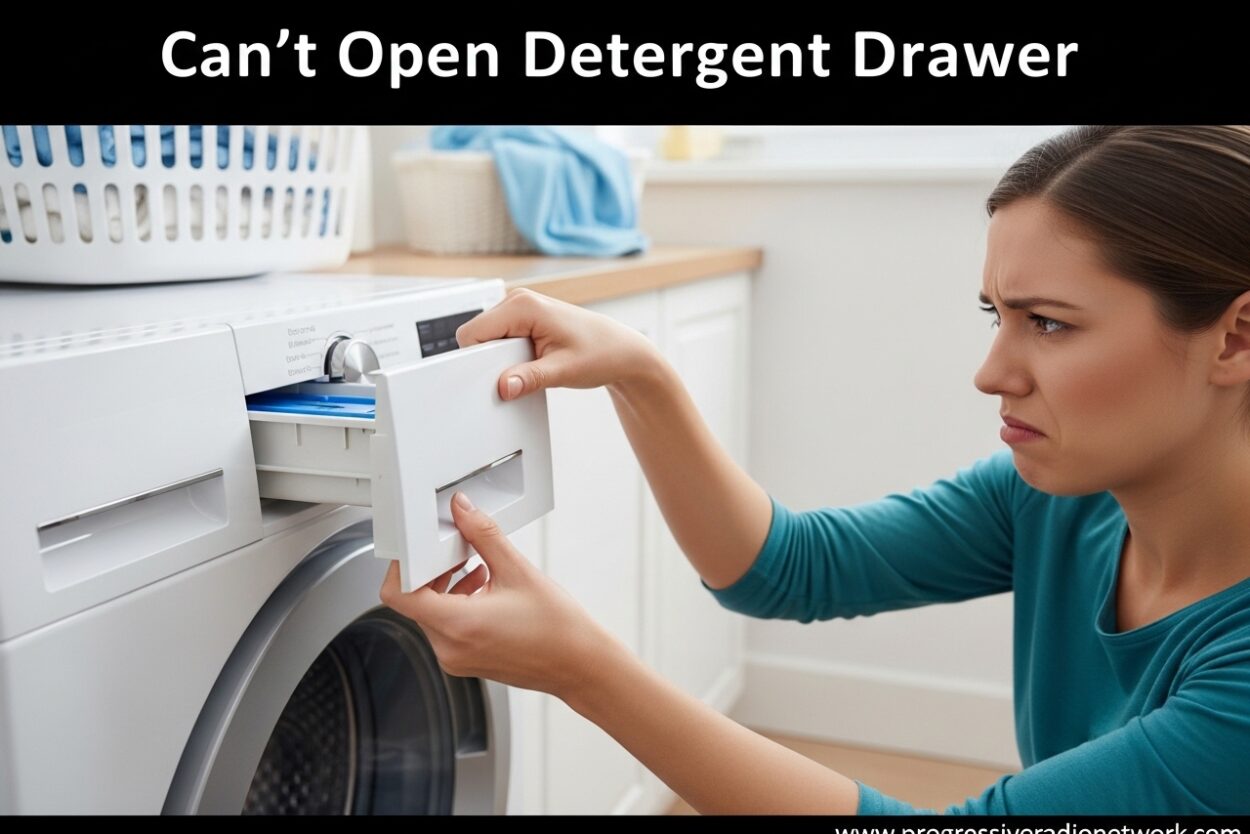
There’s nothing more frustrating than going to start a load of laundry and realizing you can’t open the detergent drawer. I’ve been there, standing in front of my washing machine with a bottle of detergent in one hand and growing impatience in the other. This guide covers exactly what to do when you can’t open detergent drawer compartments, whether it’s completely stuck or only opens an inch.
Before trying any of these methods, I need to emphasize one critical safety step: unplug your washing machine. Working on any appliance while it’s connected to power poses unnecessary risks.
Why Your Detergent Drawer Won’t Open
A stuck detergent drawer usually happens for one of several reasons. The most common culprit is residue buildup from liquid detergent, fabric softener, or bleach accumulating over time. This gunky residue can act like glue, fusing the drawer to its housing.
Mechanical issues are also frequent. The catch mechanism that holds the drawer closed can become misaligned, especially if the drawer was forced shut previously. Some users discover that the plastic components have warped from heat exposure or age, causing the drawer to bind against the housing.
Foreign objects like fallen clothing, lint, or even detergent caps can lodge behind the drawer, preventing it from opening fully. In some cases, the internal detergent tray has come loose and is jamming the main drawer mechanism.
How to Fix a Stuck Detergent Drawer: Step-by-Step Methods
These methods are ordered from gentlest to most forceful. Start with the first approach and work your way through if needed. Remember, forcing a stuck drawer often causes breakage that requires replacement parts.
Method 1: The Wiggle Technique
This gentle approach works best for drawers that move slightly but won’t fully extend. Grasp the drawer handle firmly and apply steady outward pressure while gently wiggling the drawer side to side. The goal is to help the catch mechanism release without forcing anything.
Try pulling at a slight upward angle as you wiggle. Many drawer mechanisms are designed to release when lifted slightly during withdrawal. If you feel resistance, stop and reposition your grip rather than pulling harder.
Method 2: Locate and Press the Release Tab
Most washing machine detergent drawers have a release mechanism built into the design. Look for a small tab, button, or lever located either at the top center of the drawer opening or on the drawer itself near the top edge.
Pressing or sliding this release tab while pulling the drawer should disengage the catch. If you can’t see a release tab, consult your owner’s manual or look online for your specific model’s drawer removal instructions.
Method 3: Warm Water Soak Approach
For detergent drawers stuck by residue buildup, warm water can dissolve the hardened detergent acting as adhesive. Fill a cup with warm (not boiling) water and slowly pour it around the edges of the drawer where it meets the housing.
Let the water sit for 5-10 minutes to soften any residue. Then attempt to pull the drawer using the wiggle technique. The warm water helps dissolve the detergent glue while lubricating the tracks.
You can repeat this process several times if needed. For stubborn cases, add a small amount of mild dish soap to the warm water to help break down detergent residue.
Method 4: The Hair Dryer Trick
This method comes from real-world solutions shared by appliance repair enthusiasts. The concept is simple: gently warming the plastic components can help them expand slightly, potentially freeing a warped or binding drawer.
Set your hair dryer to low heat and hold it about 6 inches away from the drawer area. Warm the plastic housing around the drawer edges for 2-3 minutes, being careful not to overheat any single spot.
While the plastic is still warm, try pulling the drawer using the wiggle technique. The slight expansion can be enough to free a binding mechanism. This method works particularly well for older machines where plastic components may have warped over time.
Method 5: Partial Removal and Repositioning
Sometimes a drawer opens partially but stops before fully extending. This often indicates the internal tray has shifted or an object is blocking complete removal. If you can get the drawer out at least an inch, you might be able to access the problem area.
Look inside the opening with a flashlight to identify what’s blocking the drawer. You may see a misaligned internal tray, a fallen piece of clothing, or accumulated residue. Use a long tool like a wooden spoon to gently reposition or remove the obstruction.
Some users have success reaching in through the partially opened drawer to press the internal release mechanism that’s otherwise inaccessible when the drawer is closed.
How to Remove a Detergent Drawer from a Washing Machine
Once you’ve freed the stuck drawer, knowing how to properly remove it for cleaning and maintenance is essential. Most detergent drawers use one of several removal methods depending on the brand.
Standard Pull-Out Method: Most drawers pull straight out after pressing a release tab or button. Some require lifting slightly while pulling. Extend the drawer fully until it stops, then look for the release mechanism.
Push-Button Release: Some models, particularly newer machines, have a dedicated button near the drawer that you press to eject the drawer fully.
Lever or Slide Release: Certain brands use a sliding mechanism where you push or slide a lever to disengage the drawer catch before pulling.
If you’re unsure about your specific model, search online for “remove detergent drawer [your washer brand and model]” to find exact instructions or video tutorials.
Cleaning and Prevention Tips
Once the drawer is removed, you’ll likely see the buildup that caused your problem. Clean all compartments thoroughly using warm water and mild dish soap. A soft brush or old toothbrush helps scrub away stubborn residue in corners and siphon tubes.
Pay special attention to the siphon caps or tubes in each compartment. These small parts regulate water flow and easily clog. Remove them if possible and clean both the caps and their openings.
Wipe down the drawer housing inside the machine as well. Residue accumulates here too and can cause future sticking issues. Dry everything completely before reinstalling.
Monthly Prevention: Wipe down your detergent drawer with a damp cloth monthly to prevent buildup. Use liquid products rather than powder when possible, as powders tend to harden more quickly. Leave the drawer open slightly between washes to allow air circulation and drying.
When to Call a Professional
Sometimes DIY methods aren’t enough, and attempting further fixes could cause more damage. Call a professional appliance repair technician if you notice any of these signs:
Cracked or broken plastic components on the drawer or housing. The catch mechanism appears physically damaged or disconnected. You’ve tried all methods and the drawer remains completely immobile. The drawer works but makes unusual grinding or clicking sounds. You can see internal components that appear disconnected or misaligned beyond simple repositioning.
Professional repair typically costs between $100-200 depending on your location and the specific problem, but this is often preferable to causing more extensive damage by forcing broken components.
FAQ
How do you unjam a soap dispenser?
Start by unplugging the washer for safety. Try the wiggle technique first while gently pulling outward. If that doesn’t work, pour warm water around the drawer edges to dissolve residue buildup. After 10 minutes, try wiggling and pulling again. For stubborn cases, locate the release tab and press it while pulling. Never use excessive force as this can break the plastic mechanism.
How do I pull out a detergent drawer that’s completely stuck?
First, unplug the washing machine. Try the hair dryer method on low heat for 2-3 minutes to slightly expand the plastic. While warm, attempt the wiggle technique with steady pressure. If still stuck, use warm soapy water around the edges and wait 10 minutes. Look for a release button or tab to press while pulling. If nothing works, consult a professional to avoid breaking the mechanism.
Why is my detergent dispenser not opening?
The most common cause is residue buildup from detergent, softener, or bleach acting like glue. Mechanical issues include misaligned catch mechanisms, warped plastic from heat, foreign objects lodged behind the drawer, or a loose internal tray jamming the mechanism. Older machines are more prone to warping and wear-related issues.
Can I force open a stuck detergent drawer?
No, never force a stuck detergent drawer. The plastic components break easily, and replacement parts can be expensive. Forcing often causes more damage than the original jam. Use gentle methods like wiggling, warm water soaking, or warming with a hair dryer instead. If DIY methods fail, professional repair is safer than force.
How often should I clean my detergent drawer?
Clean your detergent drawer thoroughly every 1-2 months with warm water and mild dish soap. Use a soft brush for siphon tubes and corners. Wipe down the housing inside the machine too. Between cleanings, wipe with a damp cloth weekly and leave the drawer slightly open to air dry. This prevents the residue buildup that causes sticking.
Conclusion
Dealing with a stuck detergent drawer is frustrating, but with patience and the right approach, most issues resolve without professional help. The key is starting with the gentlest methods and working toward more involved solutions only as needed. Regular cleaning and proper maintenance will prevent most recurrence, keeping your laundry routine running smoothly.




Leave a Comment