
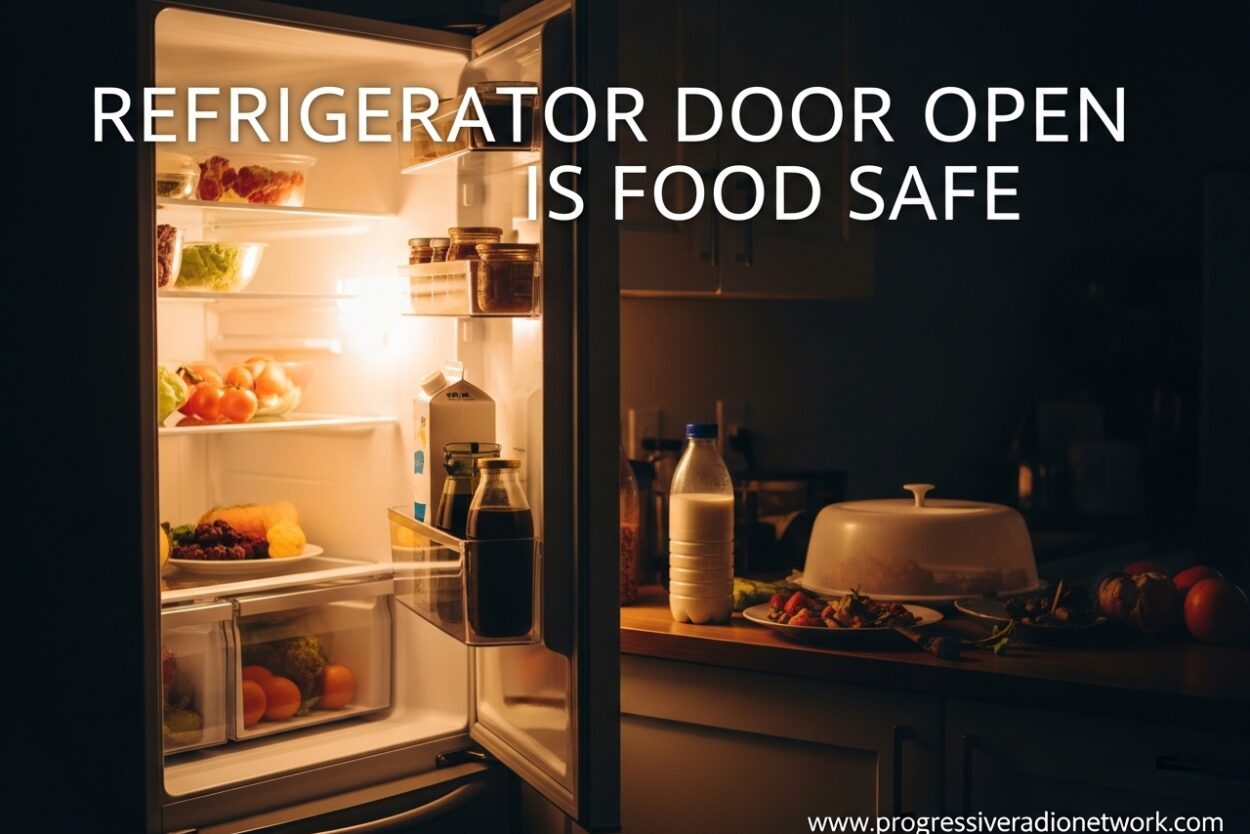
Discovering your refrigerator door has been left open triggers immediate worry about food safety and potential waste. I’ve been there – that moment of panic when you realize the fridge door was left cracked open overnight or for hours during the day. The good news is that food is often safe even after the refrigerator door has been open, depending on how long it was open and what types of food you’re storing.
According to USDA guidelines, refrigerated food remains safe for up to 4 hours when the refrigerator door is left open, as long as the temperature stays below 40°F. After 4 hours above 40°F, perishable foods enter the danger zone where bacteria multiply rapidly. Understanding these time thresholds and knowing which foods are most at risk can help you make informed decisions about what to keep and what to discard.
Refrigerator Door Open Is Food Safe: Quick Answer
The short answer depends on two factors: time elapsed and temperature reached. If your refrigerator door was open for less than 2 hours, your food is almost certainly safe. Between 2-4 hours, you’ll want to check the temperature and inspect perishable items. After 4 hours above 40°F, you should discard most perishable foods including meat, dairy, eggs, and prepared foods.
The most reliable way to determine safety is by using an appliance thermometer to check if the internal temperature remained below 40°F. If you don’t have a thermometer, you’ll need to assess based on how long the door was open and which foods were stored. When in doubt, the safest approach is to discard questionable items rather than risk foodborne illness.
Understanding the Time Thresholds: How Long Is Too Long?
Food safety authorities established the 4-hour rule based on how bacteria multiply at different temperatures. Bacteria grow most rapidly between 40°F and 140°F, doubling in number in as little as 20 minutes. This is why the 4-hour threshold matters – it’s the point where bacterial growth reaches levels that can cause illness.
The 2-hour mark represents a secondary warning zone. After 2 hours above 40°F, some foods begin developing higher bacterial loads, though they may still be safe. This is when you should start paying closer attention to high-risk items like raw meat, fish, dairy products, and prepared foods. Foods that have been above 40°F for more than 2 hours should be evaluated carefully before consumption.
These time limits aren’t arbitrary – they’re based on extensive food safety research. The USDA and CDC consistently recommend these thresholds because they represent the point where the risk of foodborne illness increases significantly. Following these guidelines helps protect against common pathogens like Salmonella, E. coli, and Listeria that can cause serious illness.
Hour-by-Hour Breakdown: What Happens at Different Time Intervals
Every hour your refrigerator door remains open, the internal temperature rises and your food safety decreases. Here’s what typically happens at different time intervals so you can assess your specific situation.
2 Hours: At this point, most refrigerators will still maintain safe temperatures below 40°F, especially if the door was only partially open. Your food is almost certainly safe, but you should check perishable items like milk and meat. This is a good reminder to close the door promptly and consider purchasing an appliance thermometer if you don’t have one.
5 Hours: After 5 hours with the door open, most refrigerators will have warmed above 40°F. High-risk foods like raw meat, fish, dairy products, and eggs should be discarded. Hard cheeses, butter, and condiments may still be safe. If foods feel cool to the touch and show no signs of spoilage, they might be safe, but use caution.
7-8 Hours (Overnight): This is a common scenario – discovering the fridge door was left open overnight. At this point, most perishable foods should be discarded. Reddit users consistently report that milk, cream, fish, and raw meats are the items most likely to spoil after 7-8 hours. If the temperature stayed below 40°F, you might be able to save some items, but it’s better to err on the side of caution.
12+ Hours: After 12 hours with the door open, nearly all perishable foods should be discarded. The refrigerator has likely reached room temperature, creating ideal conditions for bacterial growth. At this point, only very durable items like hard cheeses, sealed condiments, and certain vegetables might still be safe. When in doubt, throw it out.
The Temperature Danger Zone: Why 40°F Matters
The temperature danger zone (40°F to 140°F) is critical for understanding food safety. Below 40°F, bacterial growth slows significantly. Above 140°F, most bacteria are killed. Between these temperatures, bacteria thrive and multiply rapidly, reaching dangerous levels within hours.
When your refrigerator door is left open, cold air escapes and warm ambient air enters. The rate of temperature increase depends on several factors: how fully open the door was, how much food was in the refrigerator (full refrigerators stay cold longer), the ambient room temperature, and how long the door remained open. A refrigerator packed with food will maintain safe temperatures longer than an empty one because the thermal mass of the food helps maintain cold temperatures.
Using a food thermometer is the only reliable way to know if your food stayed safe. Simply feeling if food is cool isn’t enough – it might feel cool but still be above 40°F. Appliance thermometers are inexpensive and provide peace of mind. Place one in your refrigerator permanently so you can always monitor the temperature, especially after accidents like leaving the door open.
Foods at Highest Risk: What to Check First
Not all foods are equally susceptible to spoilage when your refrigerator door is left open. Understanding which foods are most at risk helps you prioritize what to check first and what to discard without hesitation.
Raw Meat, Poultry, and Fish: These are the highest-risk items and should be discarded after 2 hours above 40°F. Raw animal products provide ideal conditions for bacterial growth and can cause serious illness if consumed after temperature abuse. Even if they look and smell fine, they may not be safe.
Dairy Products: Milk, cream, soft cheeses, and yogurt are highly perishable and should be discarded after 4 hours above 40°F. These are consistently mentioned as problem foods in online discussions about refrigerators left open overnight. Hard cheeses and butter are more durable and may survive longer periods.
Eggs: Raw eggs in their shells are relatively durable and may survive 4-6 hours above 40°F if they haven’t been washed. However, hard-boiled eggs are much more susceptible and should be discarded after 2 hours. When in doubt, check eggs for signs of spoilage before using.
Prepared Foods and Leftovers: Cooked foods, deli meats, and prepared dishes should be discarded after 4 hours above 40°F. These items have already been handled and cooked, making them more susceptible to bacterial contamination. Pizza, casseroles, and similar items should be evaluated carefully.
Fruits and Vegetables: Whole fruits and vegetables are generally more durable. Items like apples, carrots, and broccoli may be fine even after extended periods. However, cut fruits and vegetables should be treated like prepared foods and discarded after 4 hours above 40°F.
Signs Food Has Gone Bad: Beyond the Sniff Test
Many people rely on smell to determine if food has spoiled, but this isn’t always reliable. Some dangerous bacteria don’t produce noticeable odors, and some foods can smell off but still be safe. Learning to recognize multiple signs of spoilage helps you make better decisions.
Visual Changes: Look for obvious signs like mold growth, discoloration, or texture changes. Meat that has turned brown or gray, dairy that has separated, or produce that has become slimy should be discarded immediately. These visual indicators often appear before odors become noticeable.
Texture Changes: Food that has become slimy, sticky, or developed an unusual texture should be discarded. This is particularly important for meat, fish, and dairy products. Changes in texture often indicate bacterial growth even if the food doesn’t smell bad.
Smell: While not foolproof, smell is still a useful indicator. Sour, off, or unusual odors suggest spoilage. However, remember that some dangerous bacteria don’t produce noticeable smells, so food that passes the sniff test isn’t automatically safe – especially if it has been in the danger zone for more than 4 hours.
Temperature: The most reliable indicator is whether the food stayed below 40°F. If you don’t know the temperature and the food has been above 40°F for more than 4 hours, it’s safest to discard it regardless of how it looks or smells.
The 2 2 2 Rule for Food Safety Explained
The 2 2 2 rule is a simple mnemonic that helps remember key food safety timelines. While not officially endorsed by government agencies, this rule provides easy-to-remember guidelines that align with USDA recommendations.
The first “2” refers to 2 hours – the amount of time perishable foods can safely remain in the danger zone (40°F to 140°F). After 2 hours above 40°F, bacterial growth accelerates and food safety becomes questionable. This is why you should refrigerate perishable foods promptly and discard them if they’ve been left out.
The second “2” refers to 2 days – the recommended time to keep leftovers in the refrigerator. After 2 days, leftover food should be frozen or discarded. While some leftovers may last longer, the 2-day guideline provides a safety margin to ensure food remains safe to eat.
The third “2” refers to 2 months – the recommended time to keep frozen foods at peak quality. While frozen foods remain safe indefinitely at 0°F, quality begins declining after 2 months. This guideline helps you use frozen foods while they’re still at their best.
Door Open Scenarios: Cracked vs Fully Open
The position of your refrigerator door significantly affects how quickly temperatures rise. Understanding the difference between a cracked door and a fully open door helps assess your specific situation.
Cracked Door (1-2 inches): When the door is slightly ajar, cold air escapes more slowly. The refrigerator may maintain safe temperatures for 6-8 hours or longer, especially if it’s full. However, this depends on how long it remains cracked and the ambient temperature. Foods near the door will warm faster than those in the back.
Fully Open Door: A fully open door allows cold air to escape rapidly. Temperatures can rise above 40°F within 2-4 hours, depending on room temperature and how full the refrigerator is. This scenario requires more immediate attention and more aggressive food disposal decisions.
Repeated Openings: Even if the door isn’t left continuously open, repeated openings throughout the day can accumulate temperature exposure. Each time the door opens, cold air escapes and warm air enters. While normal use is designed for this pattern, excessive opening can still compromise food safety over time.
What to Do Immediately: Step-by-Step Actions
When you discover your refrigerator door has been left open, taking the right steps immediately can help salvage safe food and prevent illness. Follow this action plan to assess the situation and make informed decisions.
Step 1: Close the Door. First, close the door immediately to stop further temperature rise. Don’t start removing food yet – give the refrigerator time to begin cooling down again. This prevents additional warming while you assess the situation.
Step 2: Check Temperature. If you have an appliance thermometer, check the current temperature immediately. This gives you crucial information for making decisions. If the temperature is still below 40°F, your food is likely safe regardless of how long the door was open. If it’s above 40°F, move to the next steps.
Step 3: Assess Time Duration. Try to determine how long the door was open. Check with household members, look for clues about when you were last in the kitchen, or consider when you last remember the door being closed properly. The duration is crucial for deciding which foods to keep.
Step 4: Inspect High-Risk Foods. Check raw meat, fish, dairy, and eggs first. These items should be discarded if they’ve been above 40°F for more than 2-4 hours. Don’t taste these foods to determine safety – when in doubt, throw them out.
Step 5: Evaluate Remaining Foods. Check other perishable items like leftovers, cut produce, and prepared foods. Discard anything that shows signs of spoilage or has been above 40°F for more than 4 hours. Hard cheeses, butter, condiments, and whole produce may still be safe.
Step 6: Clean If Necessary. If the door was open for an extended period, check for any condensation or moisture buildup that might encourage mold growth. Wipe down surfaces if needed and ensure the door seals properly when closed.
Preventing Future Accidents: Door Seal Maintenance
Preventing refrigerator door accidents saves food, money, and worry. Understanding why doors get left open and maintaining your refrigerator’s sealing mechanism can help avoid future incidents.
Check Door Gaskets: The rubber seal around your refrigerator door (gasket) is crucial for maintaining cold temperatures. Over time, these seals can crack, tear, or lose their elasticity, allowing cold air to escape even when the door appears closed. Inspect your gasket regularly for signs of wear and replace if damaged.
Test Door Seal: To test if your door seal is working properly, close the door on a dollar bill and try to pull it out. If it slides out easily, your seal may need attention. Repeat this test around the entire door perimeter to identify any weak spots.
Prevent Accidental Openings: Many door-open accidents happen during cooking, unloading groceries, or when children are in the kitchen. Being mindful during these activities and developing habits to double-check the door can prevent accidents. Some households place a reminder note on the door or use door alarms that alert when the door remains open too long.
Organize for Visibility: A well-organized refrigerator makes it easier to see what you need without prolonged door opening. Group items logically and keep frequently used items near the front. This reduces the time the door stays open and makes it less likely to be accidentally left ajar.
FAQ
How long can a freezer door be open before food spoils?
A full freezer can keep food safe for 48 hours with the door closed, and 24 hours if half-full. When left open, food in a freezer compartment will begin thawing within 2-4 hours depending on how full it is and how wide the door is open. Once food begins thawing and reaches temperatures above 40°F, the same 4-hour rule applies – use it or discard it.
Is food good if the refrigerator door is open all night?
Food safety after leaving the refrigerator door open overnight depends on several factors. If the door was only slightly ajar and the refrigerator is full, food may remain safe. However, if the door was fully open, most perishable foods (meat, dairy, eggs, leftovers) should be discarded after 7-8 hours. Hard cheeses, condiments, and whole vegetables may still be safe. Always check temperature if possible – below 40°F means food is likely safe.
What happens if the fridge door is left open for 5 hours?
After 5 hours with the refrigerator door open, most foods will have entered the danger zone (above 40°F). Raw meat, fish, dairy products, and eggs should be discarded as they’re no longer safe. Hard cheeses, butter, and condiments may still be safe if they feel cool to the touch. If you’re uncertain about any food item, it’s safer to discard it than risk foodborne illness.
What is the 2 2 2 rule for food?
The 2 2 2 rule is an easy-to-remember food safety guideline: 2 hours is the maximum time perishable foods should remain in the danger zone (40°F to 140°F), 2 days is the recommended time to keep leftovers in the refrigerator, and 2 months is how long frozen foods maintain peak quality. This rule helps simplify food safety decisions.
How do I know if my food is safe after the refrigerator door was left open?
The most reliable way to determine food safety is by checking if the refrigerator temperature stayed below 40°F using an appliance thermometer. If you don’t have a thermometer, assess based on time duration – under 2 hours is usually safe, 2-4 hours requires evaluation of perishables, and over 4 hours means most perishables should be discarded. When in doubt about any food item, throw it out rather than risk illness.
Conclusion
Discovering your refrigerator door open is food safe situation doesn’t have to result in throwing away everything. By understanding the 4-hour rule, recognizing which foods are most at risk, and knowing how to assess temperature and spoilage signs, you can make informed decisions about what to keep and what to discard. When in doubt about any food item after the refrigerator door has been left open, remember that it’s always better to discard questionable food than to risk foodborne illness. Investing in an appliance thermometer and practicing good refrigerator habits can prevent these situations and provide peace of mind.





Leave a Comment