
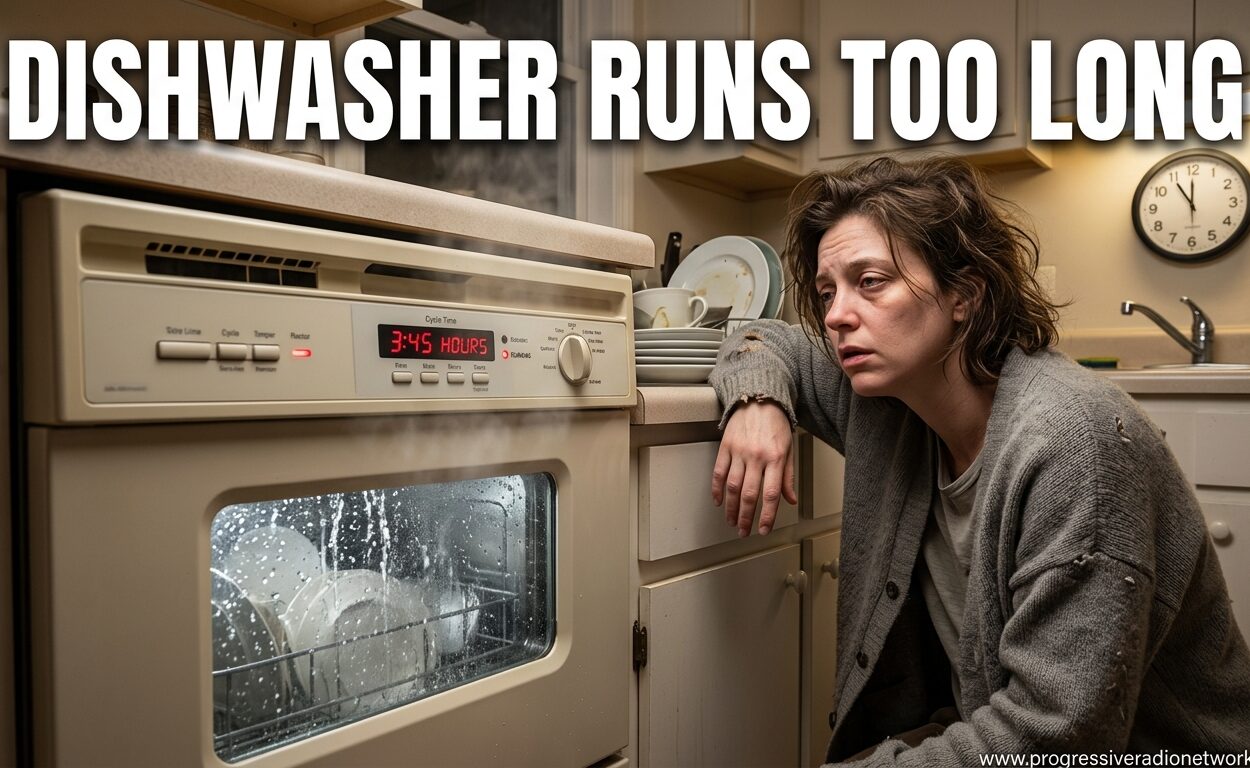
I walked into my kitchen at 11 PM to find the dishwasher still humming along after starting it at 7 PM. Four hours on a normal cycle seemed excessive, even for a modern appliance. If your dishwasher runs too long and leaves you wondering what’s wrong, you’re not alone. This guide covers the most common causes and practical fixes to get your dishwasher running efficiently again.
How Long Should a Dishwasher Run?
Modern dishwashers typically run between 1.5 to 4 hours depending on the cycle selected. This is normal for 2026 models and doesn’t necessarily indicate a problem. Older dishwashers from the 1990s and early 2000s often completed cycles in 45-90 minutes, but efficiency standards have changed dramatically since then.
| Cycle Type | Typical Runtime | Best For |
|---|---|---|
| Quick/Express | 30-60 minutes | Lightly soiled dishes, pre-rinsed loads |
| Normal | 1.5-2.5 hours | Everyday mixed loads with typical food soil |
| Heavy/Pots & Pans | 2.75-4 hours | Heavily soiled cookware, baked-on food |
| Sanitize | 3-4+ hours | Baby bottles, cutting boards, germ reduction |
If your normal cycle consistently exceeds 3 hours, or if your quick wash takes more than 90 minutes, there’s likely an issue requiring attention.
Why Do Modern Dishwashers Run So Long?
Your new dishwasher runs longer than your old one because it uses significantly less water. Modern Energy Star-compliant models use just 3-5 gallons per cycle compared to 10-15 gallons in older machines. With less water, the dishwasher must spray for longer periods and use more sophisticated cleaning methods to achieve the same results.
Federal energy guidelines implemented over the past decade require dishwashers to meet strict efficiency standards. Manufacturers achieve this by extending cycle times rather than increasing water usage. The trade-off is lower energy and water bills at the expense of longer wait times.
Another factor is the removal of phosphates from detergents in 2010. Phosphates helped break down food particles quickly, but their elimination means detergents now need more contact time with dishes to work effectively. This naturally extends the required cycle duration.
Cycle Settings That Add Extra Time
Many dishwashers run too long simply because of the options you’ve selected. Understanding which settings extend cycle time can help you make informed choices.
The sanitize cycle is the biggest time offender, requiring water to reach 150°F and maintain that temperature for several minutes. If your incoming water isn’t hot enough, the dishwasher enters an extended “temperature hold” mode that can add an hour or more to the cycle.
Heated dry and Dry Boost settings add significant time as well. Some models include a “Dry Boost High” option that can extend the cycle by over an hour. I’ve personally seen this setting turn a 2-hour cycle into a 3.5-hour marathon. Try running without heated dry and see if your cycle time drops dramatically.
Heavy wash cycles use more water and higher temperatures, naturally extending runtime. If you’re running heavy wash for everyday loads, switch to normal or auto settings to save time and energy.
The delay start feature doesn’t make the cycle longer, but it can make it feel that way. If you’ve accidentally set a delay, your dishwasher might not start for hours, creating confusion about why it’s “taking so long.”
Water Temperature Problems That Extend Cycles
Low water temperature is one of the most common reasons a dishwasher runs too long. Your dishwasher needs water at least 120°F to clean effectively. If incoming water is cooler, the appliance must heat it to the required temperature, which can add substantial time to the cycle.
Test your water temperature by running the hot water at your kitchen sink for 60 seconds and using a thermometer. If it reads below 120°F, your water heater may be set too low. Most water heaters have an adjustable thermostat that can be increased to the recommended 120-125°F range.
The distance between your water heater and dishwasher also matters. Long pipe runs allow water to cool before reaching the appliance. Running the kitchen sink hot water for 30-60 seconds before starting the dishwasher helps ensure hot water is available from the beginning of the cycle.
Some dishwashers display a temperature hold message when they’re trying to reach the required heat. If you see this frequently, water temperature is likely your culprit.
Clogged Filters and Spray Arms
Dirty filters and spray arms can cause your dishwasher to run too long as the appliance works harder to clean dishes. When water can’t circulate properly, the cycle extends to compensate for reduced cleaning power.
Locate your dishwasher filter, typically at the bottom of the tub under the lower spray arm. Remove it and rinse under running water to remove food particles and debris. For stubborn buildup, use a soft brush and warm soapy water. Most manufacturers recommend cleaning filters monthly for optimal performance.
Check spray arms for clogged holes. Food particles and mineral deposits can block the small spray openings, reducing water pressure. Use a toothpick or small brush to clear any obstructions. Ensure the spray arms spin freely when manually rotated.
I’ve found that regular filter maintenance can reduce cycle times by 15-30 minutes in some cases. It’s a simple fix that many homeowners overlook.
Faulty Heating Element and Thermostat
A malfunctioning heating element is a common cause of extended dishwasher cycles. When the element can’t heat water to the required temperature, the dishwasher compensates by running longer or may not complete the cycle at all.
Signs of a failing heating element include dishes that aren’t clean, water that feels cold after the cycle, or the dishwasher never advancing past certain cycle phases. You can test the element with a multimeter by checking for continuity. If there’s no continuity, the element needs replacement.
The thermostat regulates water temperature and tells the control board when the water has reached the correct heat level. A faulty thermostat may signal that water is cold when it’s actually hot, or fail to signal when water needs heating. Both scenarios can lead to excessively long cycles.
Testing and replacing heating elements and thermostats requires some technical skill. If you’re not comfortable working with electrical components, this is a job best left to a professional appliance technician.
Sensor Malfunctions and Calibration
Modern dishwashers use soil sensors and optical wash sensors to detect how dirty your dishes are and adjust cycle time accordingly. When these sensors malfunction or become dirty, they can cause the dishwasher to run too long.
Soil sensors are typically located near the bottom of the tub and measure water clarity. If they’re coated with mineral deposits or food residue, they may incorrectly detect heavy soil and extend the cycle unnecessarily. Clean sensor areas with a soft cloth and mild detergent monthly.
Some dishwashers have a first-run calibration cycle that takes longer than normal. If you recently installed a new dishwasher, the first few cycles may be extended as the appliance learns your water conditions and usage patterns. This typically resolves after 5-10 cycles.
Hard water can cause mineral buildup on sensors and internal components, leading to inaccurate readings. Using a dishwasher cleaner monthly or running a cycle with white vinegar can help remove mineral deposits and restore proper sensor function.
If sensor problems persist after cleaning, a reset procedure might help. Turn off the dishwasher at the breaker for 5 minutes, then restore power and run a normal cycle.
Drainage Issues Causing Extended Cycles
Proper drainage is essential for dishwasher performance. If water can’t drain efficiently, the dishwasher may extend the cycle to compensate or enter a repeated drain sequence that adds significant time.
Check the drain hose for kinks, bends, or clogs. The hose should run from the dishwasher to either the garbage disposal or a dedicated drain standpipe. Ensure there are no sharp bends that restrict water flow and that the hose isn’t crushed behind the appliance.
Inspect the air gap if your installation includes one. Located near the sink, the air gap prevents drain water from flowing back into the dishwasher. Remove the cover and check for debris that might be blocking proper drainage.
A clogged garbage disposal can also cause drainage problems. Run the disposal to clear any obstructions, and ensure the knockout plug was removed from the dishwasher inlet connection when the disposal was installed.
Listen for unusual drain pump sounds during the cycle. Grinding or humming noises may indicate a failing drain pump that requires replacement.
Energy Cost of Extended Dishwasher Cycles
Running a dishwasher for extended periods does increase energy consumption, but the impact may be smaller than you expect. A typical dishwasher uses 1.2-1.8 kWh per cycle, with longer cycles using slightly more energy.
To calculate your cost: Multiply the kWh rating by your electricity rate per kWh. For example, if your dishwasher uses 1.5 kWh and you pay $0.15 per kWh, a 4-hour cycle costs approximately $0.23. Extending from 2 to 4 hours might add $0.10-0.15 to your energy bill per cycle.
While longer cycles use more energy, they also clean more effectively, reducing the need for rewashing. Modern dishwashers are designed to optimize energy use during extended cycles, so the overall impact may be minimal compared to running multiple shorter, less effective cycles.
When to Call a Professional
Many dishwasher issues can be resolved with basic troubleshooting, but some problems require professional expertise. If you’ve tried the fixes above and your dishwasher still runs too long, it may be time to call an appliance repair technician.
Control board issues are particularly difficult to diagnose and repair without specialized knowledge. Symptoms include unresponsive buttons, error codes, or the dishwasher behaving erratically. Control board replacement requires matching the exact part to your model and careful installation.
If your dishwasher is more than 8-10 years old and requires expensive repairs, replacement might be more cost-effective than fixing. Newer models offer improved efficiency and features that can offset the purchase price over time through energy savings.
For brand-specific issues with Bosch, Whirlpool, Samsung, or Frigidaire dishwashers, consulting the manufacturer’s support resources or authorized service providers can provide targeted troubleshooting guidance.
FAQ
Why is my dishwasher cycle running too long?
Your dishwasher cycle may run too long due to low water temperature (below 120F), a faulty heating element, clogged filters or spray arms, malfunctioning sensors, or selected cycle settings like sanitize or heavy wash that add extra time. Most modern dishwashers running 2-3 hours on normal cycles are operating normally.
How much electricity does it cost if a dishwasher runs for 2 hours?
A 2-hour dishwasher cycle typically costs between $0.18-0.27, assuming an electricity rate of $0.15 per kWh and energy usage of 1.2-1.8 kWh. Extended 4-hour cycles may cost $0.05-0.10 more due to additional heating time, but the difference is often minimal compared to running multiple shorter cycles.
Should a dishwasher run for 2 hours?
Yes, a 2-hour cycle is normal for most modern dishwashers on the normal setting. Energy Star-compliant models from 2026 typically run 1.5-2.5 hours for everyday loads. This extended runtime is intentional and designed to clean effectively using less water and energy than older, shorter-cycle models.
Why do newer dishwashers run so long?
Newer dishwashers run longer because they use 60-70% less water than older models. Federal energy guidelines require extended cycle times to achieve proper cleaning with reduced water usage. The elimination of phosphates from detergents in 2010 also requires longer contact time for effective cleaning, further contributing to extended cycle durations.
Conclusion
If your dishwasher runs too long, start with the simplest fixes: check your water temperature, clean the filters and spray arms, and review your cycle settings. These basic maintenance tasks resolve most extended cycle issues without requiring professional help. Regular maintenance and understanding your appliance’s normal operating range can prevent future frustrations and keep your dishwasher running efficiently for years to come.




Leave a Comment