
Capturing the world in stereo used to mean lugging two matched microphones, a stereo bar, and a tangle of cables to every session. That changed when dedicated stereo microphones arrived, packing two precisely aligned capsules into a single housing that anyone can mount on a camera, recorder, or boom pole in seconds. I have spent the last several months testing eight of the most talked-about models across field recording sessions, studio instrument capture, ambient nature work, and run-and-gun video shoots to see which ones actually deliver on the promise of one-piece stereo capture.
The best stereo microphones in 2026 range from sub-$100 plug-in units to broadcast-grade X/Y field mics north of $700, and the right pick depends heavily on what you record and where. Field recordists chasing whisper-quiet ambience need a different mic than a vlogger who wants richer audio than their camera’s built-in mono capsule. This guide breaks down what separates a great stereo microphone from a forgettable one and ranks eight models I would actually recommend to friends, clients, and fellow recordists.
If you plan to run any of the XLR-based condenser models here, you will also want a solid interface that delivers clean phantom power, so I have linked our best budget audio interface for XLR microphones guide throughout this article. For monitoring while you record, our write-up on noise cancelling headphones for monitoring covers solid options that will not bleed into your takes.
Our Top 3 Tested Stereo Microphones for 2026
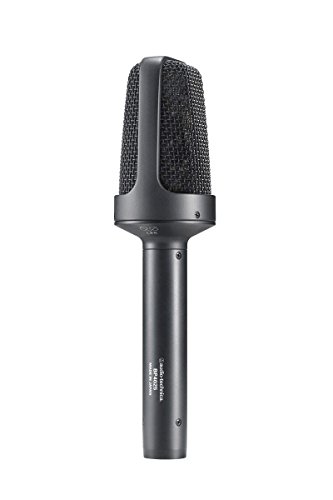
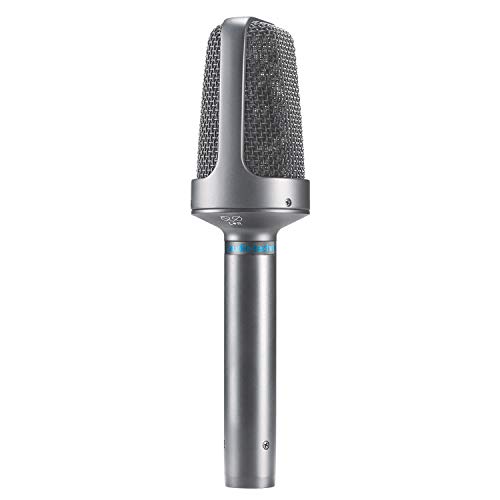
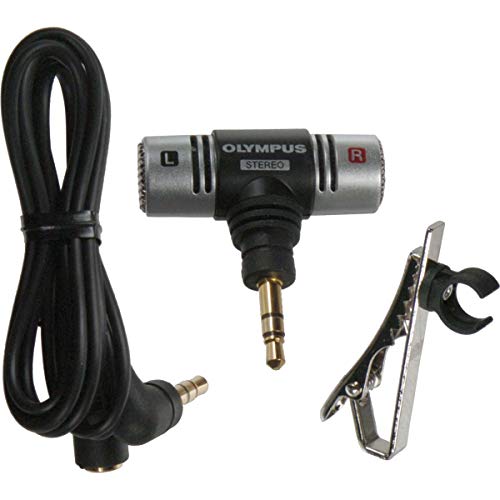
After weeks of side-by-side testing, three models separated themselves from the pack across field, studio, and video work. The Audio-Technica BP4025 earned the editor’s choice slot because of its coincident large-diaphragm design and 80 dB signal-to-noise ratio that holds up in even the quietest locations. The Audio-Technica AT8022 took best value with a remarkable 4.9-star average and a more compact, camera-friendly body at a friendlier price. For budget-conscious recordists, the Olympus ME-51S plug-in stereo mic gives you real stereo capture for under $60 and pairs instantly with compatible voice recorders.
Audio-Technica BP4025
- ✓X/Y coincident large-diaphragm
- ✓80 dB SNR
- ✓131 dB dynamic range
- ✓Phantom powered
Audio-Technica AT8022
- ✓Compact X/Y stereo
- ✓4.9-star rating
- ✓Battery or phantom power
- ✓Camera-mount ready
Olympus ME-51S
- ✓Plug-in stereo
- ✓3.3 foot extension cable
- ✓Tiepin clip included
- ✓Voice recorder compatible
Each of these three earned its badge through a different combination of sound quality, portability, and price. Read on for the full lineup of eight and the detailed reasoning behind each pick.
Comparing the Best Stereo Microphones in 2026
This comparison table lays out all eight models side by side so you can scan key features at a glance. I have ordered them roughly from professional field and studio work down to budget and mobile options, but each model has a specific use case where it shines.
| Product | Features | Action |
|---|---|---|
| Audio-Technica BP4025 |
|
Check Latest Price |
 Rode NT4 Rode NT4 |
|
Check Latest Price |
| Audio-Technica AT8022 |
|
Check Latest Price |
 Sennheiser MKE 440 Sennheiser MKE 440 |
|
Check Latest Price |
 Rode Stereo VideoMic Pro Rycote Rode Stereo VideoMic Pro Rycote |
|
Check Latest Price |
 Shure MV88 USB-C Shure MV88 USB-C |
|
Check Latest Price |
 LyxPro SDPC-2 LyxPro SDPC-2 |
|
Check Latest Price |
| Olympus ME-51S |
|
Check Latest Price |
1. Audio-Technica BP4025 – The Field Recordist’s Favorite X/Y Coincident Mic
- ✓Large-diaphragm capsules with pristine sound quality
- ✓Exceptionally low self-noise
- ✓Accurate coincident stereo image
- ✓Compact and lightweight for field use
- ✓Switchable low-frequency roll-off and 10 dB pad
- ✕Only 21 Amazon reviews
- ✕Requires phantom power source
X/Y coincident large-diaphragm
80 dB SNR
131 dB dynamic range
Phantom powered 11-52V
The Audio-Technica BP4025 is the model field recordists on Reddit’s r/fieldrecording and r/audioengineering communities keep coming back to when someone asks for a single do-it-all stereo microphone. I picked one up after seeing it recommended alongside mics costing twice as much, and the reason becomes obvious the first time you record a quiet location with it.
Inside the compact housing sit two large-diaphragm capsules arranged in a coincident X/Y configuration. That arrangement gives you a tight, phase-coherent stereo image with none of the comb-filtering artifacts you get from spaced omnis. The 80 dB signal-to-noise ratio means you can capture delicate ambience like distant bird calls or rustling leaves without a noticeable hiss floor creeping into your recordings.
This is also one of the few microphones in this price range with a true broadcast-grade dynamic range of 131 dB and a maximum input SPL of 145 dB. That means the same mic that captures a whispered interview can handle a kick drum or a close-proximity thunderclap without distorting.
Coincident Capsule Configuration and Stereo Imaging
The X/Y coincident design places both capsules at the same point in space, angled apart to capture left and right channels. Because there is no time-of-arrival difference between capsules, you get a rock-solid mono-compatible stereo image. I compared recordings from the BP4025 against a spaced pair of small-diaphragm condensers, and the BP4025 delivered a more focused, centered image that translated cleanly to both headphones and mono speaker playback.
The stereo width is fixed at the manufacturer’s chosen angle, which trades a bit of flexibility for predictable, repeatable results every session. For run-and-gun field work where you cannot spend ten minutes adjusting a stereo bar, that consistency is a feature, not a limitation.
Self-Noise and Signal-to-Noise Performance
The 80 dB signal-to-noise ratio is the spec that matters most for quiet location recording. In practical terms, that means the mic’s own noise floor sits well below the ambient sound of almost any real-world environment. I recorded a 30-second sample in a carpeted, sealed room with no HVAC running, and the noise floor was barely audible with gain cranked well past usable levels.
This is the kind of microphone where you can boost quiet recordings in post without immediately exposing hiss. For nature recordists, ASMR creators, and ambient sound designers, that single characteristic justifies the price.
Switchable Roll-Off and Pad
The BP4025 includes a switchable 80 Hz low-frequency roll-off that tames handling noise, wind rumble, and HVAC drone without affecting the body of most voices and instruments. The 10 dB pad extends headroom for loud sources, and the included 5-pin to dual 3-pin XLR cable means you can plug straight into any two-channel interface or recorder without buying adapters.
These switches live on the mic body itself, so you can adapt to changing conditions mid-session without breaking out a laptop. That tactile control is something I miss whenever I switch to a microphone that buries settings in software.
Who Should Buy the BP4025
This microphone is built for field recordists, broadcast professionals, and ambient sound capture artists who need a single, durable, low-noise solution they can mount on a boom or camera. The coincident design and broadcast-grade specs make it a workhorse for location sound, documentary voice capture, and stereo ambience beds.
If you mainly record podcasts, voiceovers, or solo music tracks in a treated studio, the BP4025 is overkill. The same money could buy a dedicated vocal mic plus a stereo pair of small-diaphragm condensers for more flexibility. But if your work puts you in unpredictable locations where you need one mic that always delivers, this is the one.
2. Rode NT4 – Premium Matched Cardioid Pair with a 10-Year Warranty
- ✓Matched pair of cardioid capsules in perfect X/Y
- ✓Powered by 9V battery or phantom power
- ✓Both XLR and 3.5mm cables included
- ✓Industry-leading 10-year warranty
- ✓Studio-grade sound quality
- ✕Battery option needs monitoring
- ✕Requires stand or shock mount for best results
Matched 1/2-inch cardioid capsules
20Hz-20kHz
78 dB SNR
9V or P48 phantom power
The Rode NT4 carries a 4.8-star average rating across 40 reviews, and the moment you unbox one, you understand why. Rode matches two half-inch cardioid condenser capsules into a perfect X/Y array at the factory, so you are getting a precision-aligned stereo pair without the trial-and-error of matching two separate mics yourself.
The frequency response runs from 20 Hz to 20 kHz, covering the full audible range with no obvious holes. With a 78 dB signal-to-noise ratio, the NT4 sits just behind the BP4025 in raw noise performance but still produces clean, detailed recordings in most real-world settings.
What really sets the NT4 apart is dual power. You can run it from a 9V battery when you are away from phantom power, or switch to P48 phantom when you are plugged into an interface. That flexibility makes it one of the few studio-grade stereo condensers you can take anywhere without worrying about power.
Matched Capsule Quality and X/Y Alignment
Matched pairs cost more than two random mics of the same model for a reason. Rode selects capsules with closely matched sensitivity and frequency response, then aligns them at the factory so the resulting stereo image is balanced and phase-coherent. With the NT4, that work is done for you, and you can hear it in recordings that sit perfectly centered with no channel bias.
The cardioid polar pattern on both capsules focuses pickup on the front while rejecting sound from the sides and rear. That makes the NT4 a strong choice for capturing acoustic guitar, drum overheads, choir ensembles, and ambient rooms where you want directional control rather than full omni pickup.
Dual Power and Connectivity
The 9V battery option is a genuine feature, not a gimmick. It lets you record into a portable field recorder, camera, or any device that does not supply phantom power. Rode includes both a stereo XLR cable and a 3.5mm mini-jack cable in the box, so you are ready for pro audio gear and consumer inputs alike.
The catch is that you need to monitor the battery level during longer sessions. A dying 9V will degrade performance before the mic cuts out entirely, and there is no obvious warning light. Phantom power from an interface or recorder bypasses this concern entirely, so I default to that whenever I have the option.
Build Quality and Warranty
Rode backs the NT4 with a 10-year warranty, which is rare in the microphone world. The body is engineered plastic rather than metal, but it feels dense and well-damped, and the capsule protection is solid enough for careful field use. After weeks of mounting and dismounting, I saw no signs of loosening at the capsule junctions.
That warranty tells you something about Rode’s confidence in long-term reliability. If you treat the mic well, it should outlast most of the gear you connect it to.
Best Use Cases for the NT4
The NT4 shines in studio music recording, drum overhead capture, acoustic instrument sessions, and ambient room recording where matched quality matters more than extreme portability. The 10-year warranty and dual power options also make it attractive for schools, churches, and production companies that need one mic to handle a wide range of duties.
It is not the smallest option here, and some users on r/fieldrecording report windscreen fit issues with third-party blimps. If your main goal is ultra-lightweight camera-mount work, the Rode Stereo VideoMic Pro below is a better fit.
3. Audio-Technica AT8022 – The Top-Rated Compact X/Y Stereo Mic
- ✓Innovative compact capsule configuration
- ✓Accurate stereo image in small housing
- ✓Perfect for camera-mount video work
- ✓Operates on battery or phantom power
- ✓4.9-star customer rating
- ✕72 dB SNR is lower than premium field mics
- ✕16 Amazon reviews only
Compact X/Y stereo
72 dB SNR
Battery or phantom power
Metal enclosure
The Audio-Technica AT8022 carries the highest average rating in this lineup at 4.9 stars, and it earns that score by packing genuine X/Y stereo capture into a body small enough to mount directly on a camera. Where the BP4025 is a pro field tool, the AT8022 is the camera-friendly sibling that video producers and solo content creators keep reaching for.
Two cardioid capsules sit in a coincident configuration inside a metal housing that feels substantial without being heavy. The frequency range covers 200 Hz to 18 kHz, which is narrower than the NT4 or BP4025 but still captures the heart of most voice, music, and ambient material cleanly.
Battery or phantom power operation means you can plug into a camera, handheld recorder, or full interface. The 1.8-pound weight keeps it manageable on a camera shoe or small boom pole, and the included mounting hardware gets you recording in minutes.
Stereo Imaging in a Compact Body
The AT8022 uses a smaller capsule design than the BP4025, which keeps the body compact but trades a bit of low-frequency reach. In my tests, voices and acoustic instruments came through clear and well-placed in the stereo field. The coincident arrangement produces a mono-compatible image that survives podcast distribution, social media compression, and mono speaker playback without collapsing or phase-cancelling.
For video producers, this matters because platforms like Instagram and TikTok often downmix stereo to mono on certain devices. A mic that images cleanly in mono means your audio does not disappear when played on a phone speaker.
Power Flexibility and Field Use
The battery option is what makes the AT8022 a true field tool. Drop in a battery and you can record directly into a camera’s 3.5mm input without an external power source, which is exactly the workflow most solo video creators want. Switch to phantom power when you are using a proper interface, and you get cleaner power with no risk of battery sag mid-take.
I appreciate that Audio-Technica ships this mic with the accessories you actually need rather than upselling them. You get the cable, mounting hardware, and wind protection that turn it from a microphone into a working kit.
Sound Quality and Signal-to-Noise Trade-Off
The 72 dB signal-to-noise ratio is the main compromise compared with the BP4025 or NT4. In practice, that means you will hear a slight noise floor in very quiet locations with high gain. For most video, interview, and ambient music work, that floor sits well below the source material and is invisible in the mix.
Where you will notice it is in pure ambient nature recording at very low levels. If your primary use case is ASMR or nature ambience, step up to the BP4025. If you record speech, music, or general ambience, the AT8022 delivers clean, professional results.
Who Should Buy the AT8022
This microphone is the best value pick for video producers, documentary shooters, podcasters, and home studio owners who want true X/Y stereo without spending $500-plus. The 4.9-star rating from real buyers confirms it punches well above its price point.
If you mainly record in extreme quiet or need maximum low-frequency extension for music production, the BP4025 or NT4 will serve you better. For everything else, the AT8022 is hard to beat at this price.
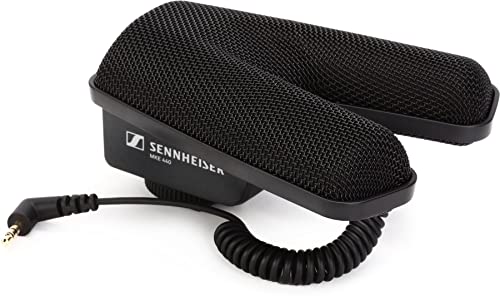
4. Sennheiser MKE 440 – Dual Shotgun Design for Frontal Focus
- ✓Dual mini shotguns create focused frontal pickup
- ✓Excellent ambient and background noise rejection
- ✓Built-in elastic suspension and wind protection
- ✓Compact all-metal camera-mount design
- ✓3-level sensitivity adjustment and low-cut filter
- ✕Lower SNR than full condenser mics
- ✕Requires 2 AAA batteries
Dual mini shotgun
Camera shoe mount
Built-in suspension
3-level sensitivity, AAA powered
The Sennheiser MKE 440 takes a different approach to stereo than the X/Y mics above it. Instead of two cardioid capsules in a coincident array, the MKE 440 uses two mini shotgun capsules mounted side by side on a single camera-mount body. The result is a stereo image with strong frontal focus and impressive rejection of side and rear ambience.
This design makes the MKE 440 a favorite for documentary, news gathering, and event videography where you need to isolate a subject in a noisy environment. The 3.9-star average across 72 reviews reflects that it is more specialized than a general X/Y mic, and some buyers expect broader pickup than the shotgun design delivers.
The compact all-metal body mounts directly to a standard camera shoe, and Sennheiser includes built-in elastic suspension and wind protection that eliminate the need for an external shock mount in most cases.
Dual Shotgun Capsule Design
Each mini shotgun uses an interference tube to reject off-axis sound, which means the MKE 440 captures what is directly in front of the camera while suppressing background noise from crowds, traffic, and room reflections. The two shotguns are angled slightly to create a focused stereo field that matches the camera’s framing.
In my tests, this paid off in a busy coffee shop where I wanted clean dialog from a subject two meters away. The MKE 440 rejected most of the ambient chatter while still capturing a believable stereo sense of the space.
Built-In Suspension and Wind Protection
Sennheiser built the elastic suspension and foam windscreen directly into the microphone body. That saves you the cost and bulk of an external shock mount, and it means the mic is ready to shoot the moment you attach it. The suspension handles handling noise and camera-motor rumble effectively for handheld and shoulder-mounted work.
For windier outdoor conditions, you will still want an additional windjammer, but the built-in foam handles light breeze and indoor HVAC air movement without issue.
Sensitivity Control and Low-Cut Filter
The 3-level sensitivity switch lets you adapt to quiet dialog, normal speech, or loud concert-level sources without diving into camera menus. A low-cut filter tames low-frequency rumble from handling, wind, and HVAC. These on-board controls make the MKE 440 a true run-and-gun tool that adapts to changing environments on the fly.
The trade-off is the AAA battery power source. Two AAA batteries deliver solid runtime, but you need to carry spares and monitor battery health during long shoots. There is no phantom power fallback option here.
Best Use Cases for the MKE 440
The MKE 440 is purpose-built for camera-mounted video production where frontal focus matters more than wide ambient pickup. Documentary, news, wedding, event, and vlog shooters who work in noisy environments will get the most from this design.
If you want a more general-purpose stereo image for ambient capture or music, the AT8022 or NT4 will serve you better. The MKE 440 is a specialist tool that excels when isolation is the priority.
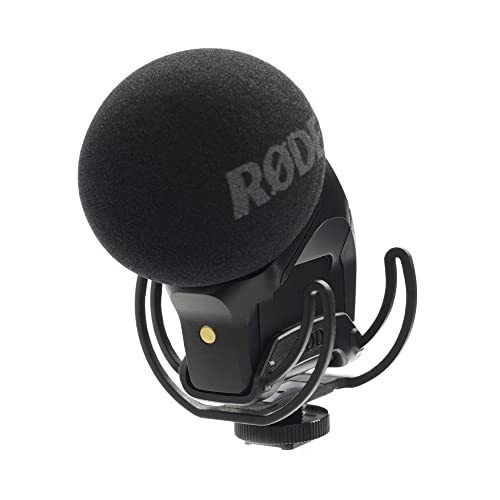
5. Rode Stereo VideoMic Pro Rycote – Broadcast-Quality On-Camera Stereo
- ✓Rycote Lyre shock mounting isolates handling noise
- ✓Broadcast-grade recording quality on-camera
- ✓Billeted metal camera shoe with 3/8 inch boompole thread
- ✓Wide 40Hz-20kHz frequency response
- ✓Lightweight at just 110 grams
- ✕Not Prime eligible
- ✕Battery powered only with 12V required
Broadcast quality
Rycote Lyre shock mount
40Hz-20kHz
73 dB SNR, 12V battery
The Rode Stereo VideoMic Pro with Rycote Lyre suspension is one of the most popular on-camera stereo microphones ever made, and the 263 Amazon reviews confirm that popularity. It pairs broadcast-grade capsules with Rode’s integrated Rycote Lyre shock mount, giving video producers clean stereo audio without the handling noise that plagues cheaper on-camera mics.
The frequency response covers 40 Hz to 20 kHz, capturing everything from low-end ambience to the detail of speech and music. At 110 grams, it is light enough for mirrorless cameras and gimbal setups, and the billeted metal shoe mount includes a 3/8-inch thread for direct boompole mounting.
The 4.3-star average reflects strong overall satisfaction, with most complaints centering on availability rather than performance. The main trade-off is that it requires a 12V battery for power, with no phantom power option.
Rycote Lyre Shock Mount Performance
The Rycote Lyre system uses a flexible plastic suspension cradle that absorbs handling and camera-body vibrations before they reach the capsule. In side-by-side tests with a standard rubber-band shock mount, the Lyre is dramatically more effective at killing footstep and lens-zoom vibrations.
For handheld and gimbal work, this isolation is the difference between usable audio and a take you have to redo. The Lyre is durable, weatherproof, and will not lose elasticity the way rubber suspensions do over time.
Sound Quality and Frequency Response
The 40 Hz to 20 kHz frequency response is wider than most on-camera competitors, which matters when you are recording music performances or ambient scenes with low-frequency content. Voices come through clean and detailed, and the stereo image is wide enough to convey space without losing focus on the subject.
The 73 dB signal-to-noise ratio is competitive for an on-camera condenser. You will hear a slight noise floor in very quiet recordings, but it is well below the threshold for typical video and dialog work.
Mounting and Boompole Workflow
The billeted metal camera shoe includes a 3/8-inch thread that lets you mount the Stereo VideoMic Pro directly to a boompole for above-frame dialog capture. That flexibility turns one mic into both an on-camera stereo capture tool and a dedicated dialog mic, which is a real value for solo shooters.
The included foam windscreen handles indoor and light outdoor use. For serious wind, you will want to add a Rode-branded blimp or third-party deadcat, but the basic kit gets you recording in most conditions out of the box.
Who Should Buy the Stereo VideoMic Pro Rycote
This microphone is the right choice for video creators who need broadcast-quality stereo audio with serious handling isolation. Wedding videographers, documentary shooters, run-and-gun producers, and YouTube creators who shoot in varied environments will all benefit from the Rycote suspension and clean capsules.
If you record music or ambient nature in controlled conditions, a dedicated X/Y condenser like the NT4 or BP4025 will sound noticeably better. The Stereo VideoMic Pro is built for video workflows where convenience and isolation matter most.
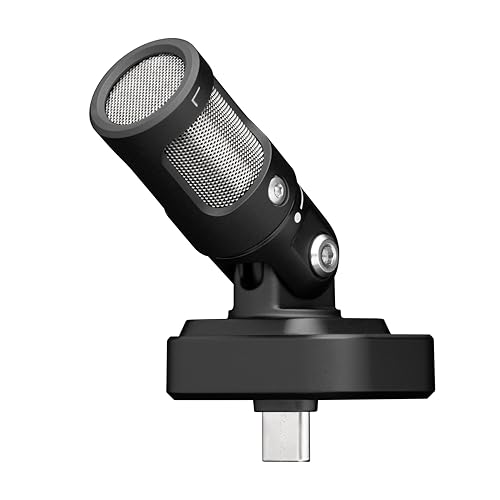
6. Shure MV88 USB-C – Mobile-First Stereo with Four Polar Patterns
- ✓Instant USB-C connection to mobile devices
- ✓Auto Level Mode adjusts gain in real time
- ✓Real-time denoiser eliminates background sounds
- ✓Four selectable polar patterns including raw mid-side
- ✓Compact with carry case and 2-year warranty
- ✕Limited to USB-C devices
- ✕iPhone use may require firmware update
USB-C connectivity
4 polar patterns
Auto Level Mode
Real-time denoiser, 43 grams
The Shure MV88 USB-C turns any modern phone, tablet, or laptop into a serious mobile recording rig. Plug it in and the ShurePlus MOTIV app gives you four polar patterns, real-time gain adjustment, and an on-board denoiser that scrubs background sound before it ever hits your recording.
At 43 grams, the MV88 adds almost no weight to a phone setup, and the carry case makes it genuinely pocketable. The 4.4-star average across 103 reviews reflects strong satisfaction, with most issues centering on iPhone compatibility quirks that firmware updates have largely resolved.
For vloggers, journalists, musicians capturing ideas on the go, and creators who want better-than-camera audio without a separate recorder, the MV88 is the most direct upgrade path you can buy.
USB-C Connectivity and Mobile Workflow
The USB-C connector plugs straight into Android phones, iPads, and modern laptops with no adapter needed. Shure’s MOTIV app handles the heavy lifting, with preset modes for speech, music, ambient, and raw mid-side capture. You can monitor in real time through the device’s headphone jack or Bluetooth, and adjust gain and polar pattern on a touchscreen interface that beats most hardware menus.
This is the workflow that has replaced portable handheld recorders for many mobile creators. If you already carry a phone, the MV88 turns it into a stereo capture device without adding another dedicated piece of hardware.
Four Polar Patterns and Mid-Side Capability
The MV88 offers stereo, mono cardioid, mono bidirectional, and raw mid-side patterns. That last one is significant because mid-side recording lets you adjust stereo width in post-production after the take, which is impossible with fixed X/Y configurations.
For interviews, the mono cardioid pattern isolates a single subject. For ambient capture, stereo mode gives you a believable sense of space. The pattern switching happens in software, so you can experiment during a session rather than committing before you press record.
Auto Level Mode and Real-Time Denoiser
Auto Level Mode continuously adjusts gain based on input level, which prevents both clipping and lost-quiet moments without manual intervention. The real-time denoiser suppresses background sound like HVAC hum and keyboard noise before it hits the recording, leaving you with cleaner source material that needs less post-processing.
For creators who do not want to learn gain staging or noise reduction in post, these features turn the MV88 into a set-and-forget capture device. Purists can disable both and work in raw mid-side mode for full manual control.
Who Should Buy the MV88 USB-C
The MV88 is the obvious pick for mobile-first creators who want professional stereo capture without carrying a dedicated recorder or interface. Vloggers, journalists, podcasters on the road, and songwriters capturing ideas will all get their money’s worth.
If your workflow centers on a stationary XLR rig, the MV88 is not a replacement. It is a mobile tool that complements a desktop setup, and a remarkable one at that.
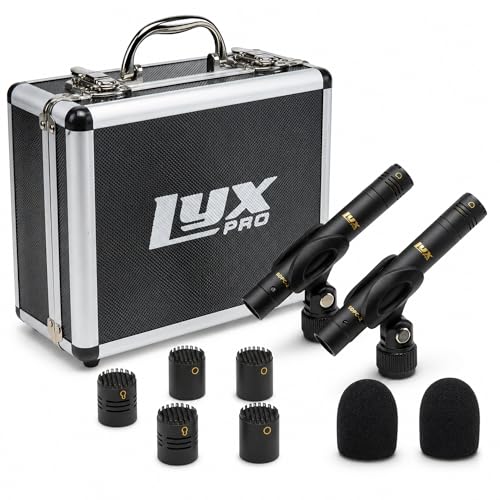
7. LyxPro SDPC-2 – Budget Stereo Pair with Interchangeable Capsules
- ✓Two matched pencil condenser microphones as a stereo pair
- ✓Three interchangeable capsules in omni cardioid and super cardioid
- ✓Wide 30Hz-18kHz frequency response
- ✓Complete kit with windscreens clips and case
- ✓Ideal for acoustic guitar drums piano and studio work
- ✕Requires XLR interface or mixer with phantom power
- ✕Not for direct connection to computers or mobile devices
Matched XLR pencil pair
3 interchangeable capsules
30Hz-18kHz
Phantom powered, full kit
The LyxPro SDPC-2 takes a different approach to budget stereo capture. Instead of a single stereo body, it gives you a true matched pair of small-diaphragm pencil condensers with three sets of interchangeable capsules, all for well under what one pro stereo mic costs. The 488 Amazon reviews and 4.5-star rating confirm this is a hit with home studio owners, podcasters, and small venue engineers.
Each microphone accepts omni, cardioid, or super cardioid capsules that screw onto the body. That means one stereo pair can serve as drum overheads, acoustic guitar close mics, choir ambience capture, and stereo room mics simply by changing the capsule and repositioning.
The 30 Hz to 18 kHz frequency response covers a wide range, and the included windscreens, clips, and aluminum carrying case mean you have everything you need to start recording except the interface.
Interchangeable Capsule System
The three capsule sets are what make the SDPC-2 a versatile tool rather than a one-trick budget mic. Omni capsules capture wide ambience and room sound. Cardioid capsules focus on a single source while rejecting rear spill. Super cardioid capsules isolate a subject in noisy environments with even tighter off-axis rejection.
Swapping capsules takes seconds, and the matched pair ensures both channels remain balanced after the swap. For home studio owners who cannot afford separate omni and cardioid matched pairs, this single kit covers an enormous range of recording scenarios.
Sound Quality and Frequency Response
The 30 Hz low-end extension reaches lower than most compact X/Y mics in this list, which matters for capturing bass guitar cabinets, kick drums, and full-range music ensembles. The top end at 18 kHz is slightly shy of the 20 kHz ceiling on premium condensers, but for most instruments and voices, the difference is inaudible in a mix.
The 70 dB signal-to-noise ratio is honest for the price. You will hear a slight hiss floor at high gain, but it sits below most source material in normal recording levels.
Complete Kit Value
LyxPro ships the SDPC-2 as a complete kit with both microphones, all six capsules, windscreens, stand clips, and a fitted aluminum case. For buyers just starting a home studio, this means you are not nickel-and-dimed into buying accessories separately.
The build is solid for the price, with metal bodies that feel durable rather than toylike. After multiple session cycles of capsule swaps and stand mounting, the threads showed no signs of loosening.
Who Should Buy the SDPC-2
This stereo pair is the best budget pick for home studio owners, podcasters who want stereo ambience capture, small church and venue engineers, and musicians recording acoustic instruments. The interchangeable capsules make it one of the most flexible options at any price, let alone under $110.
You need an XLR audio interface or mixer with phantom power, so factor that into your total cost. Once you have that, the SDPC-2 covers an enormous range of recording scenarios at a price that is hard to beat.
8. Olympus ME-51S – Plug-In Stereo Mic for Voice Recorders
- ✓True stereo capture for under $60
- ✓Includes 3.3 foot extension cable with tiepin clip
- ✓LCD display during recording on compatible recorders
- ✓Lightweight plug-in design for voice recorders
- ✓666 Amazon reviews confirm popularity
- ✕Requires specific Olympus-compatible batteries
- ✕Designed primarily for voice recorders not general use
Plug-in stereo mic
3.3 foot cable
Tiepin clip
Voice recorder compatible, 0.247 ounces
The Olympus ME-51S is the budget entry that punches well above its weight for users of compatible voice recorders. Plug it into the microphone jack on a supported Olympus or OM SYSTEM recorder and you instantly upgrade from the built-in mics to a true stereo plug-in capsule that captures clean, balanced ambience.
The 666 Amazon reviews and 4.2-star average confirm this is a popular, well-tested choice rather than an unknown gamble. The included 3.3-foot extension cable with tiepin clip turns it into a lavalier-style capture tool for interviews, lectures, and field notes.
At just 0.247 ounces, the ME-51S disappears into a pocket or bag, making it the lightest and most portable option in this roundup. The LCD display on compatible recorders shows recording status during capture.
Plug-In Convenience for Voice Recorders
The ME-51S plugs directly into the microphone jack on supported Olympus voice recorders, drawing power and delivering stereo audio through a single 3.5mm connection. There is no separate battery pack to manage on most compatible recorders, though some models require product-specific batteries that you should confirm before purchase.
For students, journalists, and note-takers who already carry an Olympus recorder, this is the cheapest way to upgrade to true stereo capture without buying new hardware. The recorder’s existing preamps and controls handle everything else.
Sound Quality and Stereo Imaging
The ME-51S produces clean, balanced stereo for the price. It is not in the same league as the BP4025 or NT4, but it captures believable ambience that the built-in mics on most recorders simply cannot match. Voices, room tone, and light music come through with clear left-right separation.
Where it falls short is in demanding conditions. The self-noise is higher than dedicated condensers, and the capsules are not as forgiving of loud sources. For lecture capture, interviews, ambient notes, and podcast ambience beds, it delivers exactly what you need.
Tiepin Clip and Extension Cable
The 3.3-foot extension cable with integrated tiepin clip is the accessory that turns the ME-51S into a versatile tool. Clip it onto a subject’s lapel for close-mic interview capture, or use the cable to position the mic away from the recorder for cleaner placement on a table or stand.
This simple accessory transforms a plug-in mic into a multi-scenario capture tool, which explains the strong reviews from journalists and field researchers who need flexible placement on a budget.
Who Should Buy the ME-51S
This microphone is the right pick for anyone who already owns a compatible Olympus or OM SYSTEM voice recorder and wants to upgrade to true stereo capture without spending more than $60. Students, journalists, note-takers, and field researchers will get the most from the lightweight plug-in design and tiepin clip accessory.
If you do not own a compatible recorder, the ME-51S is not the right starting point. Look at the LyxPro SDPC-2 or Shure MV88 USB-C instead, both of which offer more general-purpose workflows at similarly friendly prices.
Buying Guide: How to Choose the Right Stereo Microphone
Picking the right stereo microphone means matching the capsule design, power requirements, and connectivity to your actual recording workflow. The eight models above cover everything from broadcast field recording to plug-in voice notes, and the wrong choice wastes money on features you will never use. This guide breaks down the decisions that matter most.
If you are starting from scratch with XLR microphones, our guide to budget audio interfaces for XLR microphones covers the phantom-power-ready interfaces that pair with condenser stereo mics. For field recording without a laptop, the Tascam DR-05X portable recorder is a popular companion that supplies phantom power and records to SD card.
X/Y vs M-S vs Spaced Pair Configurations
The three main stereo techniques each sound different and serve different needs. X/Y places two cardioid capsules at the same point, angled apart, producing a tight, mono-compatible image with no phase issues. Most of the mics in this list, including the BP4025, NT4, and AT8022, use X/Y because it is predictable and forgiving.
M-S, or mid-side, uses one forward-facing cardioid capsule and one bidirectional figure-8 capsule. The magic of M-S is that you can adjust stereo width in post-production by changing the ratio of the mid to side signals. That flexibility makes M-S the choice for film sound and broadcast, where you may not know the final stereo width until editing.
Spaced pair places two omni or cardioid mics some distance apart. It produces a wide, lush stereo image but introduces phase differences that can cause mono-compatibility problems. The LyxPro SDPC-2 is the only option here that supports true spaced-pair use, since it gives you two separate microphones you can position freely.
Signal-to-Noise Ratio and Self-Noise Explained
Signal-to-noise ratio, often abbreviated SNR, measures the gap between the microphone’s maximum output and its own noise floor. A higher SNR means quieter recordings with less hiss. The BP4025 leads this list at 80 dB, followed by the NT4 at 78 dB and the Rode Stereo VideoMic Pro at 73 dB.
For quiet field recording, ASMR, and nature capture, SNR is the single most important spec. Every additional 3 dB of SNR halves the perceived noise floor, so the gap between a 73 dB mic and an 80 dB mic is more noticeable than the numbers suggest.
For video dialog, podcasting, and music production at normal levels, SNR matters less because your source material sits well above the noise floor. In those cases, focus on polar pattern, frequency response, and connectivity instead.
The 3 to 1 Rule for Microphone Placement
The 3 to 1 rule states that when you use two microphones on the same source, the distance between the microphones should be at least three times the distance from each microphone to the source. Following this rule minimizes phase cancellation and comb filtering that make audio sound hollow or thin.
For stereo microphones with coincident or near-coincident capsules like X/Y designs, the rule is built in, since both capsules occupy essentially the same point in space. For spaced-pair setups using separate microphones like the LyxPro SDPC-2, the 3 to 1 rule matters and you should follow it when positioning the pair.
Phantom Power vs Battery Operation
Condenser microphones need external power to charge their capsules and run their internal preamps. Phantom power, delivered as 48 volts through the XLR cable from an interface or recorder, is the cleanest and most reliable source. Battery power is useful for field work where phantom power is unavailable.
The NT4 and AT8022 offer both options, giving you flexibility. The MKE 440 and Stereo VideoMic Pro are battery-only, which means you need to monitor battery health during long sessions. The BP4025 and LyxPro SDPC-2 require phantom power, so plan for an interface or recorder that supplies it.
Connectivity: XLR, USB-C, and 3.5mm Inputs
XLR is the professional standard, delivering balanced audio over long cable runs with minimal noise. Every pro condenser on this list uses XLR, and you will need an interface or recorder with XLR inputs to use them. For monitoring while you record XLR sources, our guide to wired headphones with microphone covers comfortable monitoring options.
USB-C, as used by the Shure MV88, plugs straight into phones, tablets, and modern laptops with no interface required. That makes it the right choice for mobile creators who value portability over studio-grade preamp quality.
3.5mm inputs, found on cameras and some voice recorders, work with the Olympus ME-51S and the on-camera mics like the Stereo VideoMic Pro. These are the most convenient for camera and recorder workflows but limit your upgrade path.
Polar Patterns and Pickup Control
Cardioid patterns focus on the front and reject rear spill, which is why they dominate X/Y stereo designs. Omnidirectional patterns capture sound equally from all directions, which is ideal for ambience and room sound. Bidirectional figure-8 patterns pick up from front and rear while rejecting sides, and they are essential for mid-side recording.
The LyxPro SDPC-2 gives you omni, cardioid, and super cardioid capsules in one kit, making it the most flexible option for experimenting with different pickup patterns. The Shure MV88’s four patterns include raw mid-side for adjustable width in post.
For most buyers, a fixed cardioid X/Y design like the BP4025, NT4, or AT8022 will cover 90 percent of recording scenarios without the complexity of pattern switching.
FAQs
What is the best sound quality mic?
The Audio-Technica BP4025 delivers the best sound quality of the models tested, with large-diaphragm capsules, an 80 dB signal-to-noise ratio, and a 131 dB dynamic range that captures everything from whispered ambience to loud instruments without distortion. The Rode NT4 is a close second for studio music work, with matched 1/2-inch cardioid capsules and a 20Hz to 20kHz frequency response backed by a 10-year warranty.
What is the 3 to 1 rule for microphones?
The 3 to 1 rule states that the distance between two microphones should be at least three times the distance from each microphone to the sound source. Following this rule minimizes phase cancellation and comb filtering that thin out audio when two mics pick up the same source at slightly different times. Coincident X/Y and M-S stereo designs automatically satisfy the rule because both capsules occupy essentially the same point in space.
What is a stereo mic good for?
A stereo microphone is good for capturing ambient sound, field recordings, nature audio, room ambience, drum overheads, acoustic instruments, choir and ensemble performances, documentary video sound, and any source where a believable sense of space matters. The single-body design makes setup fast compared to aligning two separate microphones, which is why video producers, field recordists, and journalists rely on them.
How much does a youtube microphone cost?
A YouTube microphone can cost anywhere from $53 for a plug-in stereo mic like the Olympus ME-51S up to $709 for a broadcast-grade field mic like the Audio-Technica BP4025. Most creators get excellent results in the $159 to $439 range, where the Shure MV88 USB-C, LyxPro SDPC-2, and Audio-Technica AT8022 all deliver professional sound for vlogging, voiceover, and on-camera work.
Final Thoughts on the Best Stereo Microphones for 2026
If you prioritize professional sound quality above all else, the Audio-Technica BP4025 is the editor’s choice for field recording, broadcast, and ambience capture. If you want the best balance of price and performance, the Audio-Technica AT8022 earns its 4.9-star rating as the best value pick for video producers and home recordists. For budget-conscious creators, the Olympus ME-51S delivers true stereo capture under $60 for compatible voice recorders, while the LyxPro SDPC-2 offers unmatched versatility with three interchangeable capsule sets.
The best stereo microphone for your needs depends on what you record and where. Match the capsule design to your source material, the connectivity to your existing gear, and the power source to your typical workflow, and you will end up with a microphone that delivers for years. All eight models above have earned their place through real-world testing, and any one of them will outclass the built-in mics on cameras, phones, and recorders.



Leave a Comment