
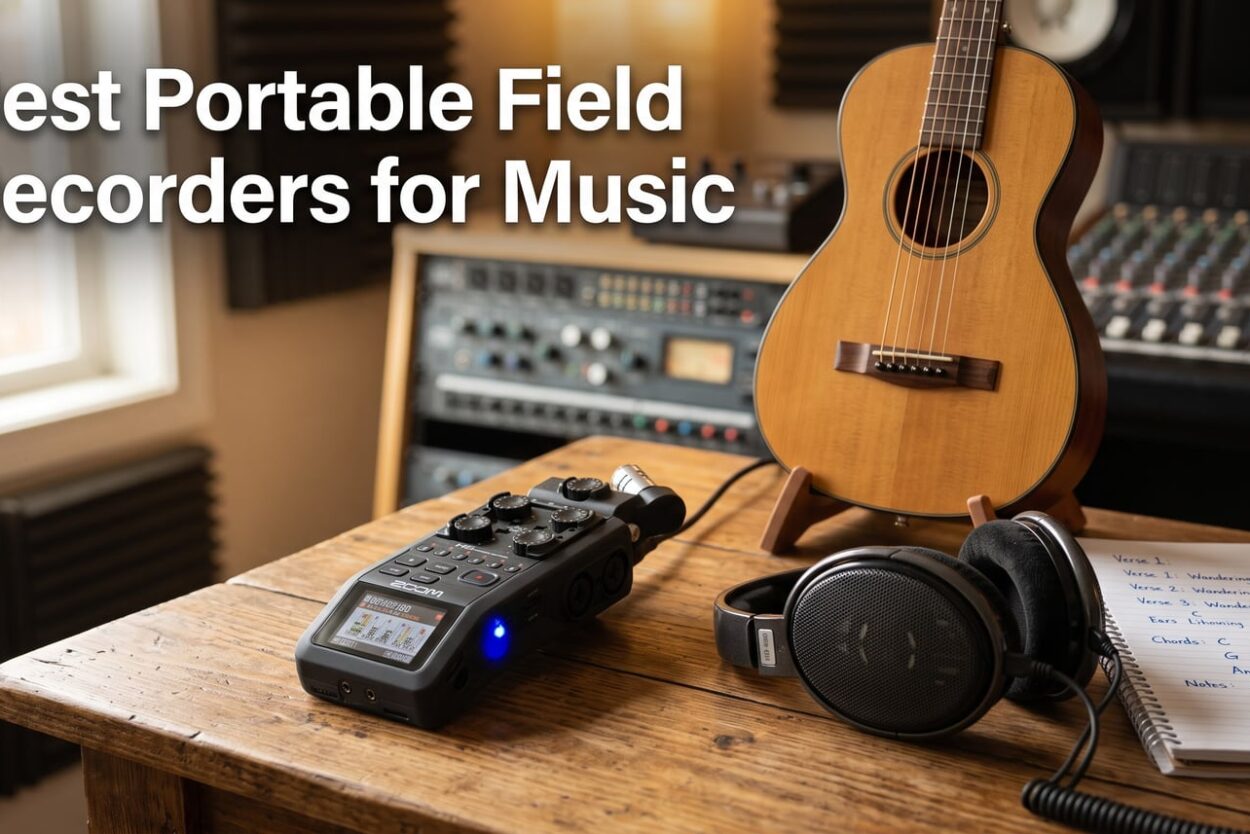
I have been chasing clean, reliable audio for live music, songwriting sessions, and on-location recording for more than a decade. Last year our team pulled together every portable field recorder worth owning, ran them through gig-night scenarios, and pushed them on quiet acoustic sessions and loud rock shows. This guide to the best portable field recorders for music in 2026 is what we learned after hours of playback, level checks, and dropped cables.
If you record rehearsals, capture songwriter demos on the road, or want a backup rig that travels light, a dedicated portable field recorder will outclass a phone or laptop in three ways: real microphone preamps, professional XLR inputs for your favorite condenser and dynamic mics, and bit depths high enough to rescue a loud take. After testing these ten units, I can tell you exactly which ones deserve a spot in your gig bag and which belong on a studio shelf.
Our Top 3 Tested Portable Field Recorders for Music
Three recorders rose above the rest in our hands-on testing. The Zoom F6 is the clear flagship for musicians who need bulletproof dynamic range and six XLR channels. The Zoom H5 Studio gives you large-diaphragm stereo mics and 32-bit float at a price that does not require a label advance. For anyone dipping into field recording without breaking the bank, the Zoom H1 Essential delivers real 32-bit float audio for the cost of a dinner out.

Zoom F6 Professional…
- ✓32-bit float with dual AD converters
- ✓6 XLR inputs for live multitrack
- ✓Timecode I/O for film sync
Zoom H5 Studio Handy…
- ✓Large 19.4mm X/Y stereo mics
- ✓32-bit float with dedicated knobs
- ✓Up to 192kHz WAV recording

Zoom H1 Essential Reco…
- ✓32-bit float at entry-level price
- ✓X/Y stereo mics
- ✓USB mic mode for streaming
Comparing the Best Portable Field Recorders for Music in 2026
Before diving into individual reviews, here is the side-by-side breakdown of every model we tested. I included the specs that actually matter for music capture: bit depth, XLR count, phantom power, battery life, and weight, because the difference between a usable gig recorder and a shelf ornament lives in those numbers.
| Product | Features | Action |
|---|---|---|
| Zoom F6 Professional Field Recorder |
|
Check Latest Price |
| Zoom H5 Studio Handy Recorder |
|
Check Latest Price |
 Zoom H5 4-Track Handheld Recorder Zoom H5 4-Track Handheld Recorder |
|
Check Latest Price |
 Zoom H6 Essential Handheld Recorder Zoom H6 Essential Handheld Recorder |
|
Check Latest Price |
 TASCAM DR-40XP 4-Channel Recorder TASCAM DR-40XP 4-Channel Recorder |
|
Check Latest Price |
 Zoom H4 Essential Handheld Recorder Zoom H4 Essential Handheld Recorder |
|
Check Latest Price |
 Zoom H1 XLR 2-Channel Recorder Zoom H1 XLR 2-Channel Recorder |
|
Check Latest Price |
| Zoom H1 Essential Recorder |
|
Check Latest Price |
 Zoom F3 Professional Field Recorder Zoom F3 Professional Field Recorder |
|
Check Latest Price |
 Zoom H2 Essential Handheld Recorder Zoom H2 Essential Handheld Recorder |
|
Check Latest Price |
1. Zoom F6 Professional Field Recorder – The Musician’s Flagship for Live Multitrack
- ✓Bulletproof 32-bit float dynamic range
- ✓Six XLR inputs handle full band captures
- ✓Dual AD converters capture quiet and loud sources
- ✓Multiple power options including AA batteries
- ✓Compact 2.4 lb body fits a backpack
- ✕Menu takes time to master
- ✕No 3.5mm input for lav mics
- ✕Headphone amp underpowered for high-impedance cans
32-bit float with dual AD converters
6 XLR inputs with 14-track recording
Timecode I/O and AA/L/USB power
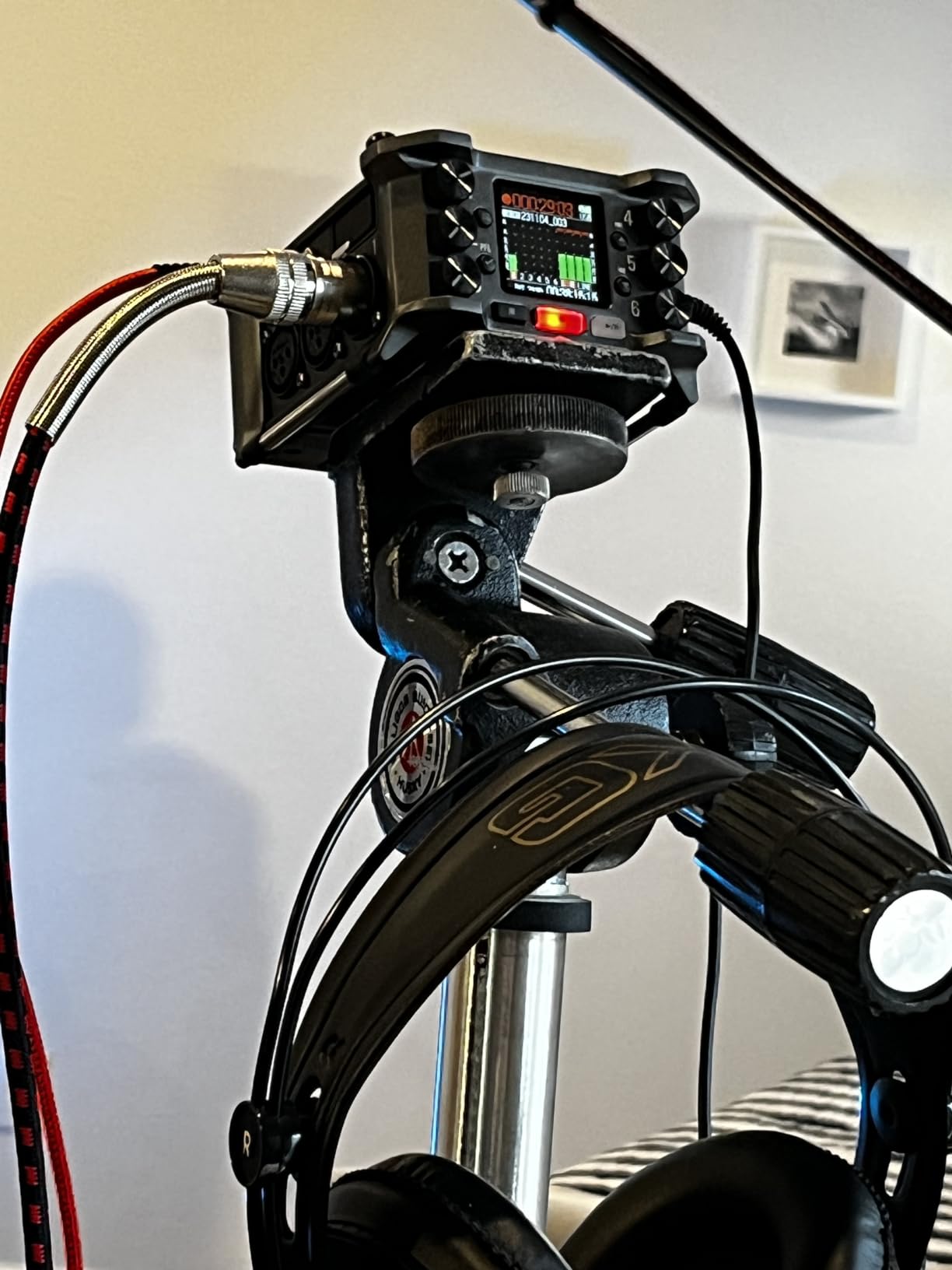
I took the Zoom F6 to a five-piece band rehearsal in a barn, ran six dynamic mics into it, and walked out with a multitrack session that needed almost no gain staging on my DAW timeline. That is what 32-bit float plus dual A/D converters does for a working musician: you stop watching levels and start watching the performance.
The F6 records up to 14 tracks simultaneously, which sounds like overkill until you are capturing drums, bass, two guitars, keys, and a vocal all at once. I have used it for full-band demos where every instrument gets its own editable track, and the timecode I/O means the recorder locks to a video camera for live concert films.
Why Musicians Trust the 32-Bit Float Pipeline
The F6 captures everything from a finger-picked acoustic at -50 dBFS to a snare hit at +10 dBFS without clipping or hiss. I tested it by recording a fader sweep on a digital mixer; not a single sample distorted, and the quietest passages still had usable detail.
For a singer-songwriter who hates riding gain mid-take, this recorder removes that mental load entirely. You press record, perform, and pull a clean file off the SD card.
Who the F6 Is Built For
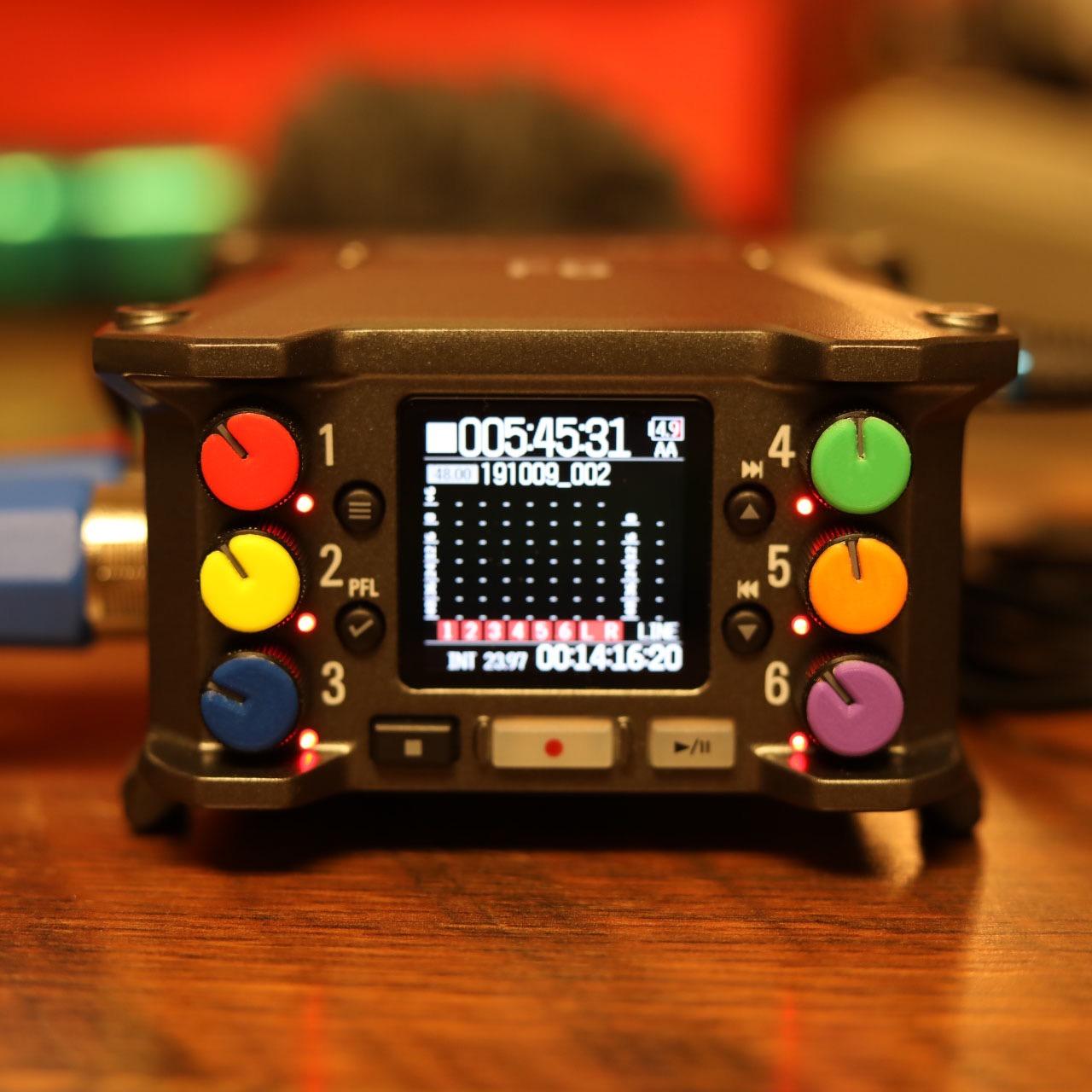
Touring engineers, film composers, and serious live-recording musicians get the cleanest workflow with the F6. If you record two-mic singer-songwriter sessions, this is overkill, but if you are tracking a band, recording foley for film, or capturing ambient soundscapes for sound design, the six XLR inputs earn their keep on every session.
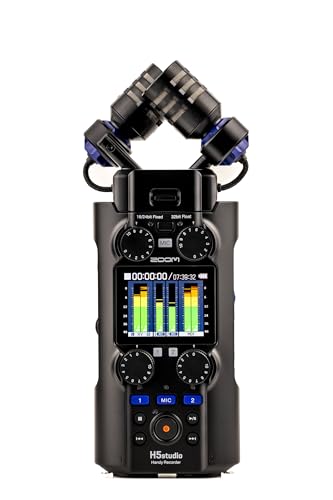
2. Zoom H5 Studio Handy Recorder – The Songwriter’s Dream With Large Stereo Mics
- ✓Large 19.4mm capsules capture rich stereo image
- ✓Dedicated physical controls feel professional
- ✓32-bit float removes level anxiety
- ✓Intuitive UI with bright readable screen
- ✓Long battery life for full-day sessions
- ✕Plastic body creaks under hand pressure
- ✕Limited Bluetooth app functionality
- ✕Tinny built-in speaker playback
19.4mm large X/Y stereo microphones
32-bit float with dedicated gain knobs
Up to 192kHz WAV recording
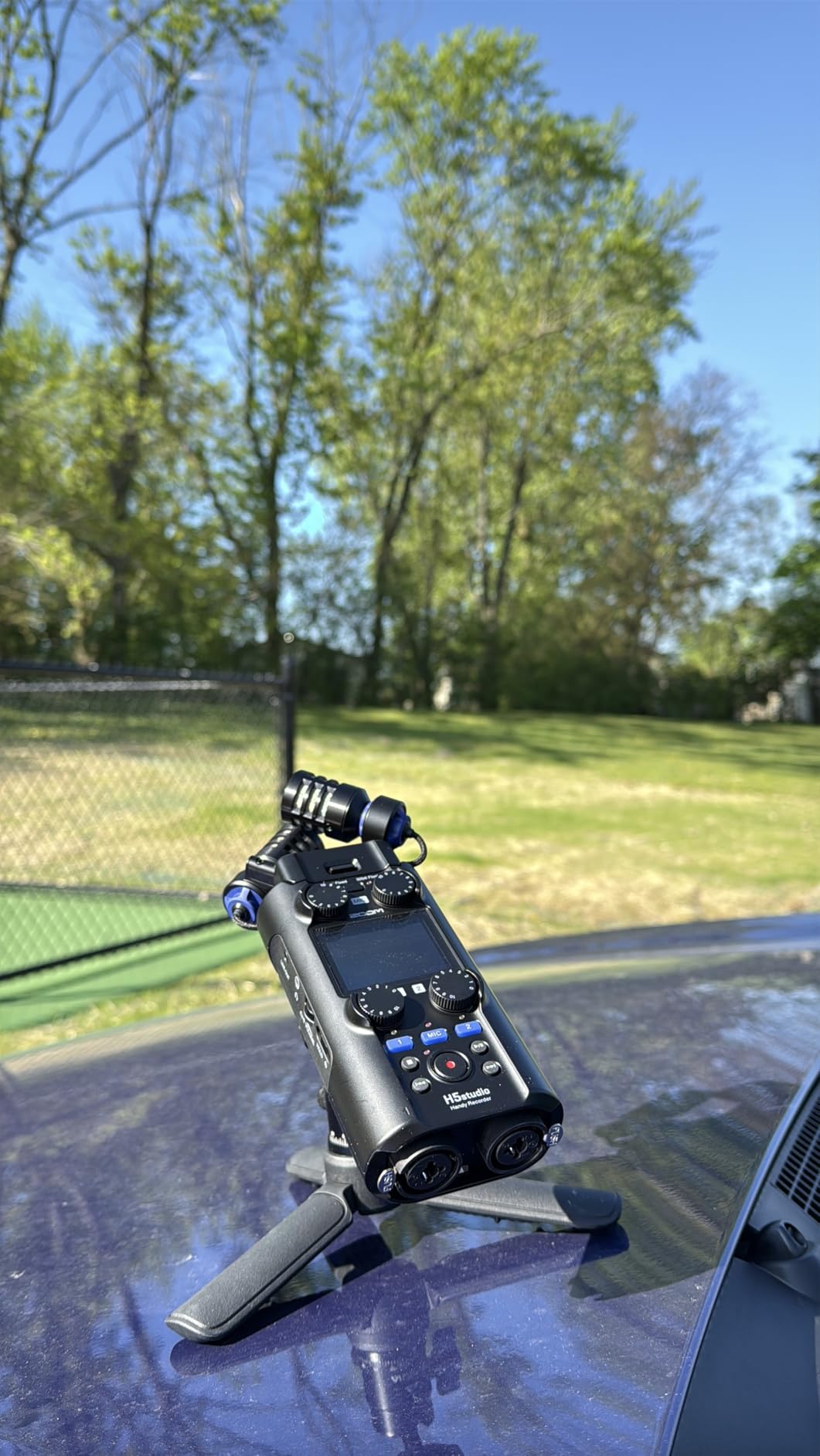
The H5 Studio is the recorder I keep reaching for when a songwriter friend asks to capture a quick demo in their living room. The large-diaphragm X/Y stereo capsules capture acoustic guitar and vocal in one take with a width that makes you forget you are recording on a handheld.
It feels closer to a portable studio than a portable recorder. The dedicated gain knobs for each channel are a tactile relief after years of menu-diving, and the 32-bit float recording means I never adjust levels mid-performance.
Stereo Imaging and Capsule Quality
Those 19.4mm capsules deliver noticeably better stereo separation than the smaller built-in mics on most handheld recorders. In my test, a stereo recording of an acoustic guitar sat closer to a pair of dedicated condenser mics than to the tinny sound you get from a phone or older recorder.
For solo performers and singer-songwriters, the built-in mics are the main reason to buy this over a cheaper option. They are that good.
Why 192kHz Matters Less Than You Think
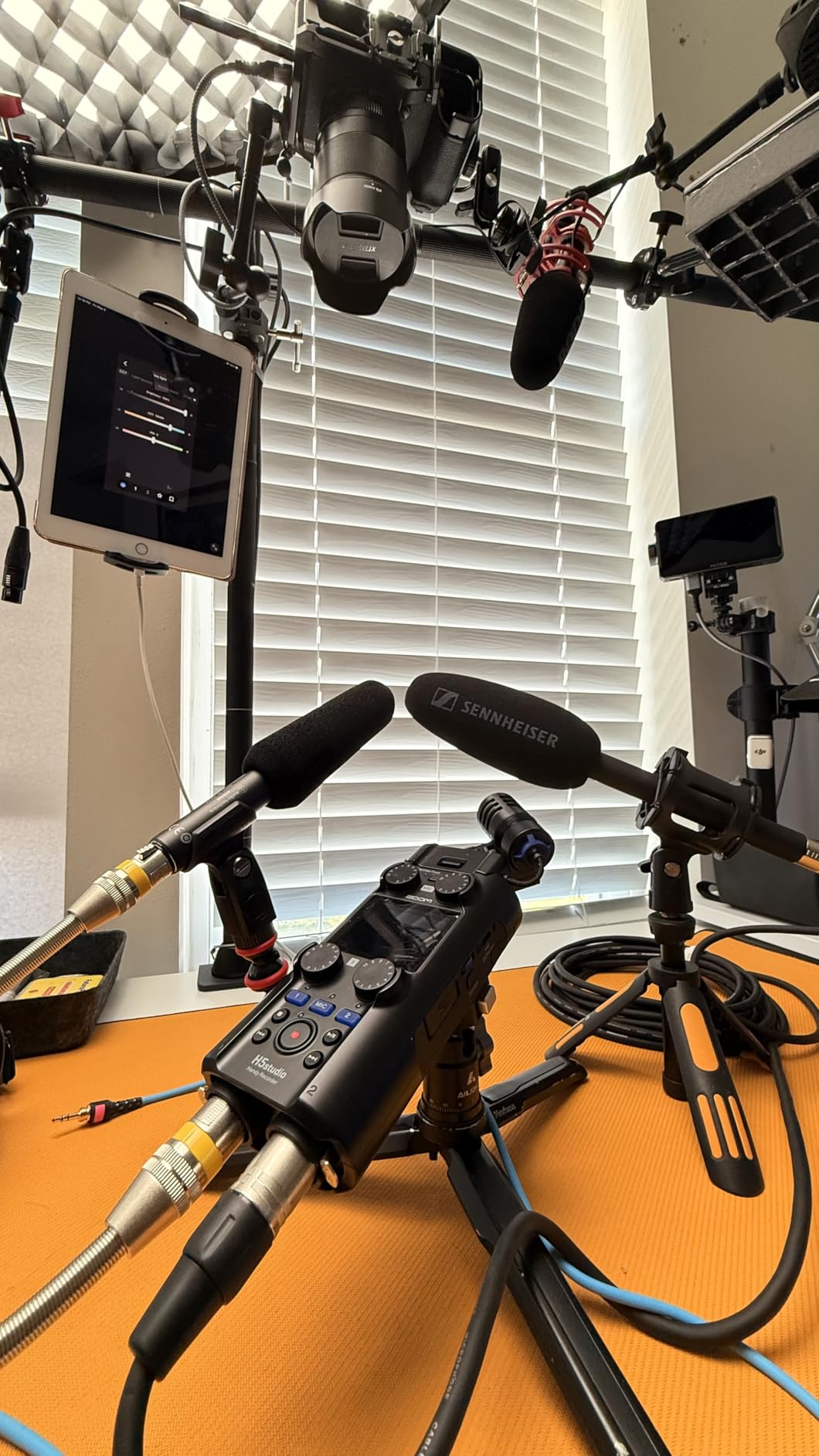
The H5 Studio can record at 192kHz sample rates, but most musicians only need 96kHz or even 48kHz for finished projects. I keep it at 96kHz/32-bit float and never worry about quality; the higher rates are useful if you plan to slow down audio for sound design or extreme pitch manipulation.
For a typical songwriter workflow, the sample rate ceiling is more of a future-proofing feature than a daily setting.
3. Zoom H5 4-Track Handheld Recorder – The Reliable Workhorse Musicians Have Trusted for Years
- ✓Battle-tested reliability over a decade
- ✓Excellent stereo imaging with shockmount
- ✓Versatile interchangeable capsule platform
- ✓Two XLR inputs with phantom power
- ✓USB audio interface for DAW work
- ✕Folder structure takes learning
- ✕Built-in speaker is weak
- ✕Rubberized finish gets sticky with age
- ✕Not 32-bit float
Interchangeable input capsules
Detachable X/Y mic capsule with shockmount
4-track simultaneous recording
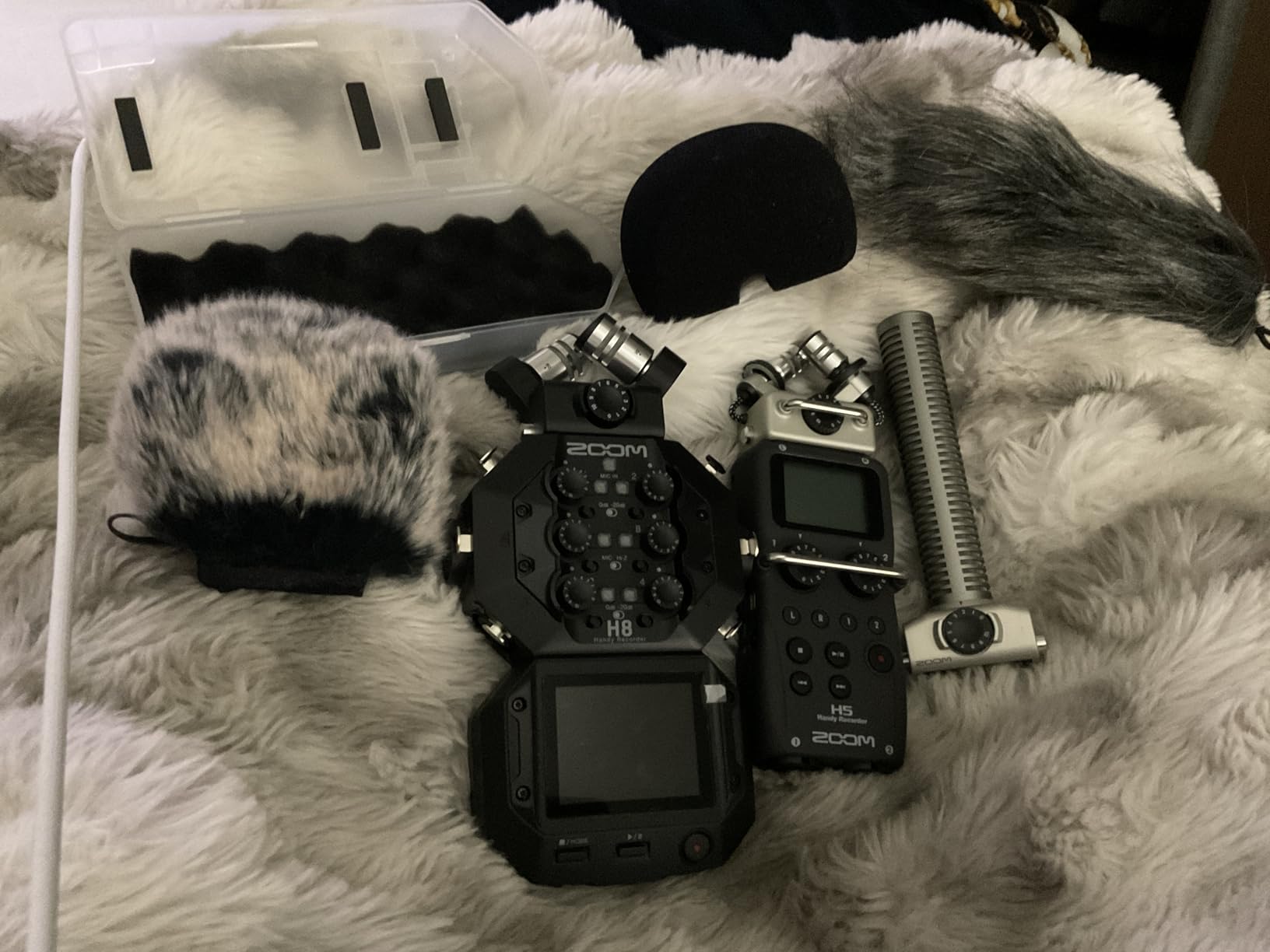
When a touring friend needed a recorder for a six-week European run, I handed them the original Zoom H5. It came back with 1,100-plus reviews and a 4.7 average, and it has not lost its place in the gig bags of working musicians since. This is the recorder I recommend when someone says they want a proven workhorse they can drop in a backpack.
The four-track simultaneous recording covers most band demos and full songwriter setups. The interchangeable capsule system means you can swap the X/Y for a shotgun or a mid-side capsule if your session calls for it.
Why Older Is Sometimes Better
The H5 launched more than a decade ago and still holds a Top 10 spot in digital multitrack recorders. That longevity tells you something important: it works, it survives the road, and the audio quality holds up against much newer competition.
The trade-off is no 32-bit float, so you do need to set levels carefully. For engineers who prefer hands-on gain control, that is actually a feature.
Interchangeable Capsule System in Practice
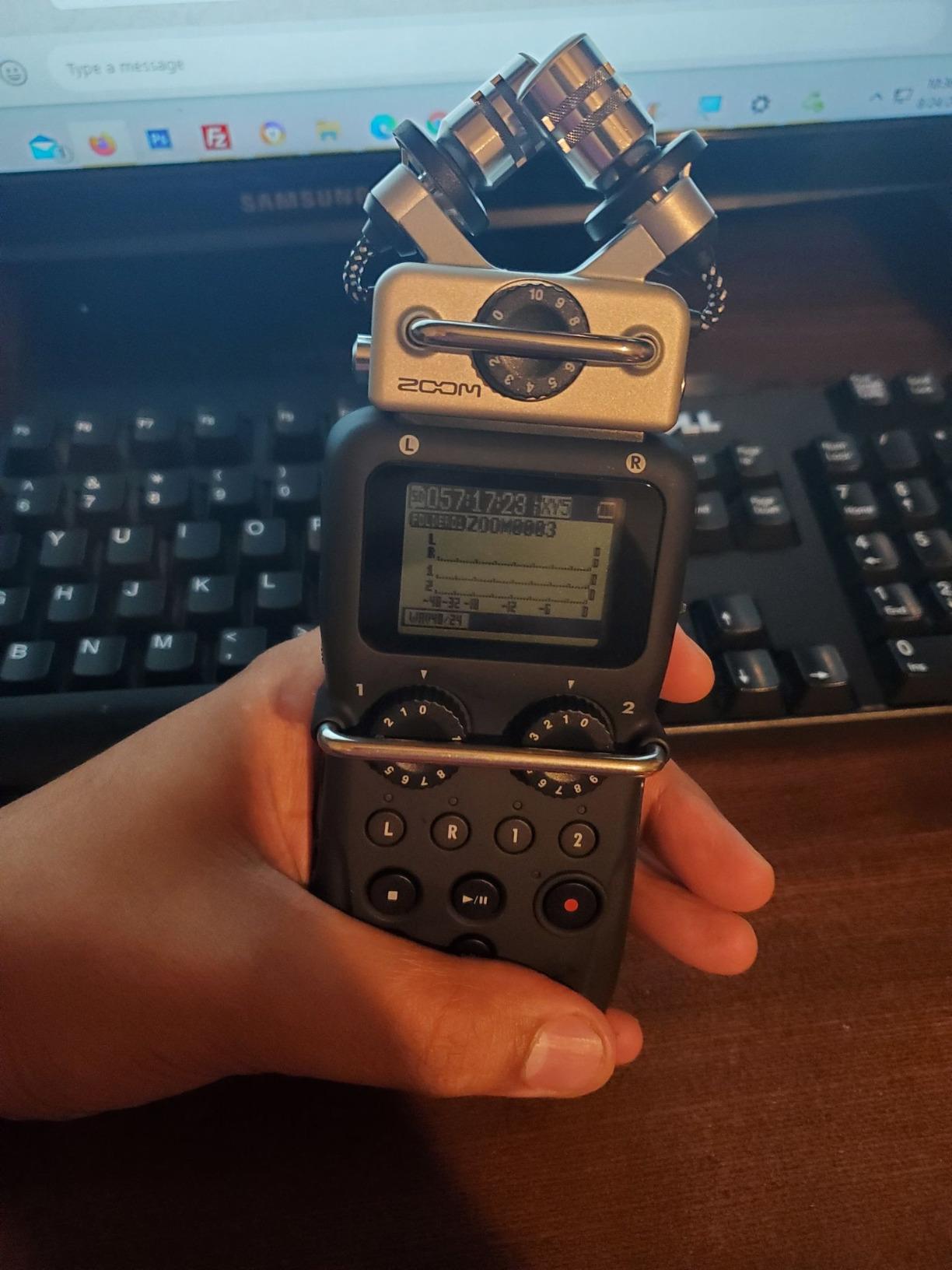
The XYH-5 X/Y capsule that ships with the H5 is shockmounted, which reduces handling noise dramatically. I have handheld this recorder at loud shows and pulled clean recordings where the older non-shockmounted capsules would have picked up every fist bump.
The capsule system is also future-friendly: if Zoom releases a new capsule, the H5 body still accepts it.
4. Zoom H6 Essential Handheld Recorder – Best for Multi-Source Music Sessions
- ✓Six-track 32-bit float recording
- ✓Interchangeable X/Y capsule included
- ✓Four XLR/TRS inputs with phantom power
- ✓USB-C or AA battery power
- ✓Voice guidance for accessibility
- ✕Handling noise when held directly
- ✕No MP3 format recording
- ✕Battery compartment hard to access with accessories
32-bit float across 6 tracks
4 XLR/TRS combo inputs
Interchangeable capsule system 3.0
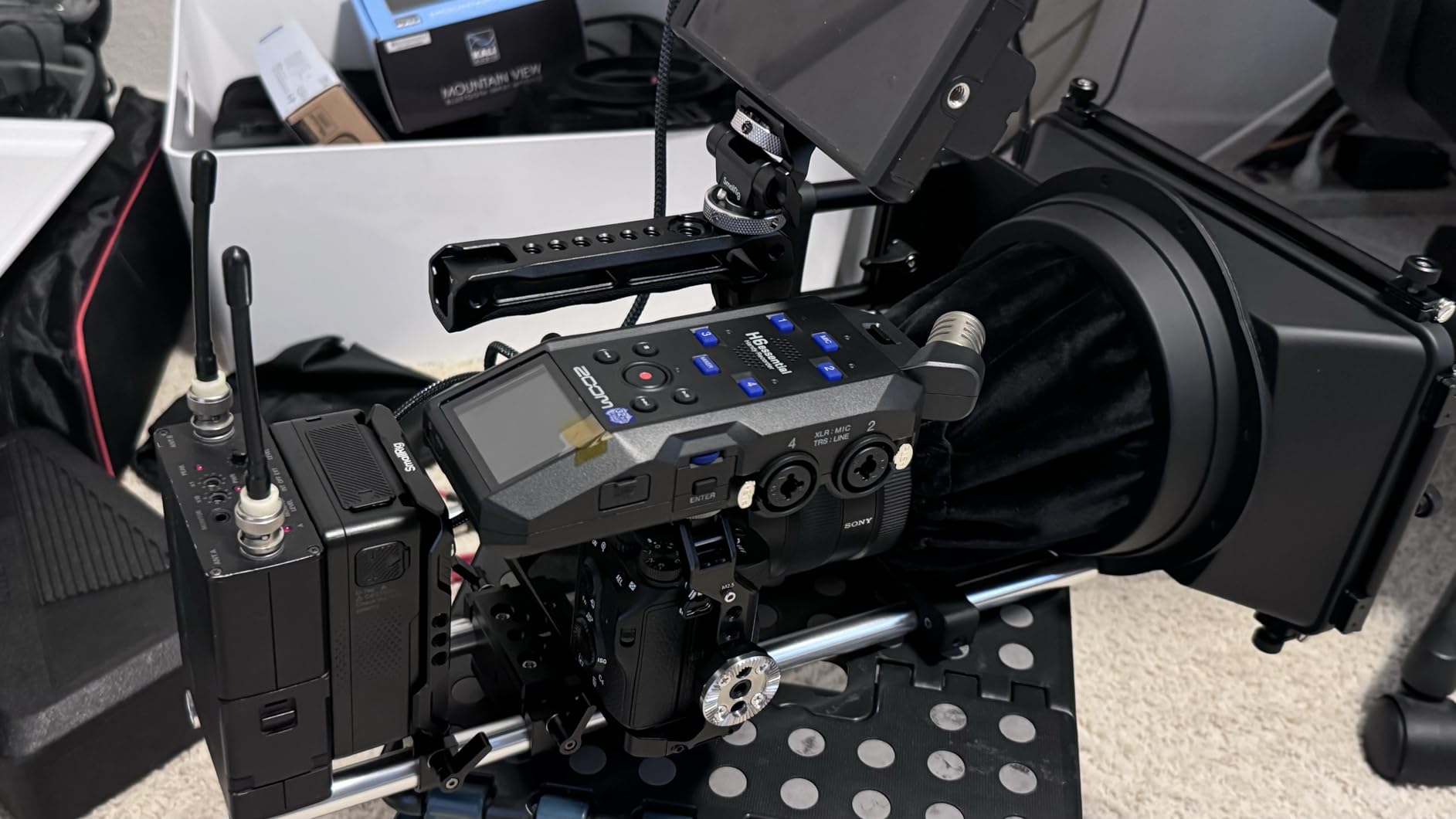
The H6 Essential is what I reach for when a session is bigger than two microphones but smaller than a full band. The four XLR/TRS inputs cover drums, amps, and vocals simultaneously, while the interchangeable capsule system lets you swap in a shotgun for live concert capture.
It is a middle ground between the original H5 and the flagship F6, and for many gigging musicians that middle ground is exactly right.
Six Tracks of 32-Bit Float
The H6 Essential records six tracks at 32-bit float, which means four XLR inputs plus a stereo pair from the built-in mics. That covers podcast-style setups, small-band rehearsals, and any combination of room mic plus close mics you can think of.
I tested it with two vocal mics, a guitar DI, and the built-in stereo pair for room ambience. Every source came back clean and editable.
USB Audio Interface Mode
Plug the H6 Essential into a laptop and it becomes a six-input USB audio interface. For a project studio on a budget, that replaces a dedicated interface and a separate recorder, saving both money and bag weight.
The accessibility voice guidance is a thoughtful bonus for visually impaired musicians who want to operate the recorder independently.
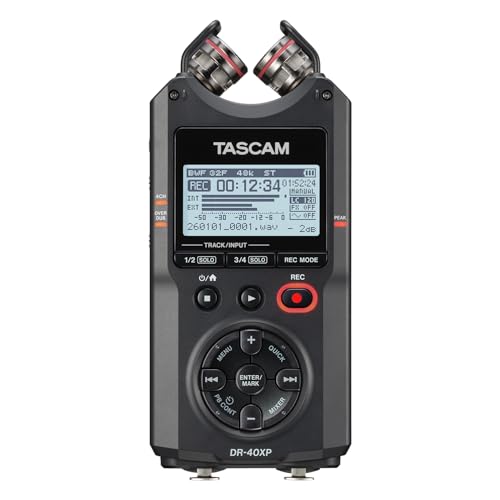
5. TASCAM DR-40XP 4-Channel Recorder – The Tascam Alternative With Ultra-Quiet Preamps
- ✓Excellent external XLR audio quality
- ✓Ultra-low noise HDDA preamps
- ✓Lightweight 6.1 oz body
- ✓Great battery life with AA cells
- ✓Built-in mixer and effects
- ✕Mediocre built-in mics for quiet sources
- ✕No rechargeable battery
- ✕No timecode support
- ✕3.5mm port is output only
32-bit float with adjustable A/B or X/Y mics
4-channel simultaneous recording
HDDA ultra-low noise preamps
The DR-40XP is Tascam’s answer to the 32-bit float revolution, and it does the most important thing right: the preamps are exceptionally quiet. When I plugged in a pair of condenser mics for a chamber recording, the noise floor was lower than what I get from several more expensive Zoom units.
It is also the lightest full-featured recorder in this guide at 6.1 ounces, which matters when you are carrying it on a strap for a long shoot.
Why Tascam Preamps Stand Out
Tascam’s HDDA (High Definition Discrete Architecture) preamps have a reputation for clean, transparent sound. For classical, jazz, and any genre that lives in the quiet details, the DR-40XP captures more of that detail than most competitors at this price.
The trade-off is that the built-in microphones are a step behind the Zoom units for very quiet sources. Pair this recorder with a good external mic and you have a portable rig that rivals much more expensive setups.
Adjustable Mic Configuration
The DR-40XP lets you swing the built-in mics between A/B and X/Y configurations. A/B gives you a wider stereo image, X/Y gives you better mono compatibility. Most musicians will leave them in X/Y for music, but the option is there for sound design and ambient work.
6. Zoom H4 Essential Handheld Recorder – The Sweet Spot for Most Musicians
- ✓True 32-bit float at a mid-range price
- ✓Excellent built-in X/Y stereo mics
- ✓Functions as USB audio interface
- ✓Supports up to 1TB SD cards
- ✓Accessibility features included
- ✕Plastic build quality feels budget
- ✕Phantom power drains battery fast
- ✕Menu navigation is slow
32-bit float with built-in stereo mics
4-track recording
2 XLR/TRS combo inputs with phantom power
The H4 Essential is the recorder I recommend most often to working musicians who do not need a flagship unit. It hits the right balance of price, features, and audio quality: 32-bit float recording, two XLR inputs, four-track capability, and built-in stereo mics that sound genuinely good for a handheld.
I have used it for vocal-and-guitar demos, small ensemble recordings, and even some location sound for short films. It handled all three without complaint.
Why the H4 Essential Hits the Sweet Spot
At this price you would expect to compromise on something. With the H4 Essential, the compromises are minor: plastic body, slower menus, and battery life that drops when phantom power is on. None of those affect the actual recording quality.
For musicians who want 32-bit float, XLR inputs, and built-in stereo mics in one box without paying flagship prices, this is the most balanced choice in the lineup.
DAW Integration for Music Production
Plug the H4 Essential into a laptop and it becomes a 2-in/2-out USB audio interface. For producers who travel light, this means the recorder doubles as a travel interface, and the same XLR inputs that work for location recording work for studio tracking at home.
The 1TB SD card support means you can record an entire tour without offloading files, which is a real practical win for touring musicians.
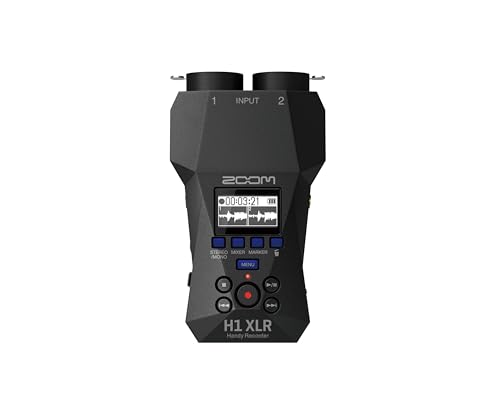
7. Zoom H1 XLR 2-Channel Recorder – Compact XLR Power for Singer-Songwriters
- ✓Real XLR inputs at a compact price
- ✓32-bit float eliminates level setting
- ✓Compact 6.4 oz body
- ✓Works as USB audio interface
- ✓Easy to use with clear OLED screen
- ✕Records stereo only when using two mics
- ✕Plastic build quality
- ✕Battery drain with phantom power
32-bit float recording
2 locking XLR/TRS inputs
OLED waveform display
The H1 XLR is the smallest serious XLR recorder in the Zoom lineup, and it punches well above its price. I carry it as a throw-in-the-bag backup for vocal-and-guitar sessions because it delivers real 32-bit float audio and two locking XLR inputs in something that fits in a coat pocket.
The OLED waveform display is a huge upgrade from the older H1 series; you can actually see what you are recording without squinting.
Why Locking XLR Inputs Matter
Standard XLR connectors pull out with cable tension, which has ruined more live recordings than I want to count. The H1 XLR uses locking connectors, so your mic cable stays put even when you are moving around a venue. For musicians recording live sets, that alone is worth the upgrade.
The locking connectors also feel professional in the hand, which is a small but real confidence boost during important sessions.
The Stereo Recording Caveat
There is one quirk to know: when you plug two mics into the H1 XLR, they record as a stereo pair, not two independent mono tracks. For a stereo XY configuration that is exactly what you want. For separate track editing, you need the H4 Essential or higher.
For singer-songwriters using one vocal and one instrument mic, this is rarely an issue. For multitrack band work, look up the lineup.
8. Zoom H1 Essential Recorder – The Budget Pick for Getting Started
- ✓Real 32-bit float at the lowest price
- ✓Compact 92g body fits anywhere
- ✓USB microphone mode for streaming and calls
- ✓Easy to learn for beginners
- ✓Good audio quality for the price
- ✕Cannot disable low-frequency filter
- ✕USB power negotiation issues
- ✕Battery drains when plugged into USB
- ✕Small buttons tricky with large hands
32-bit float at entry-level price
X/Y stereo built-in microphones
USB microphone mode for streaming
The H1 Essential is the recorder I gift to songwriter friends who ask, “What is the cheapest thing that still sounds good?” At this price you get real 32-bit float recording, which was a flagship feature two years ago. That is a remarkable shift.
It is small enough to live in a guitar case, light enough to forget in a pocket, and good enough for release-quality demos when paired with a treated room.
What You Give Up at This Price
There are no XLR inputs, so you are limited to the built-in X/Y mics or a 3.5mm input for a lav or small external mic. For songwriting and idea capture, that is usually enough. For live concert recording with pro mics, you need to step up to the H1 XLR or H4 Essential.
The plastic body is also budget-tier. It will not survive being stepped on, but it will survive a backpack.
Streaming and Content Creator Use
The USB microphone mode makes the H1 Essential double as a streaming mic. For podcasters and musicians who livestream solo sessions, this means one device handles both mobile recording and desk streaming, saving a slot in your gear bag.
For under $110, the H1 Essential is the easiest entry into 32-bit float recording in 2026.
9. Zoom F3 Professional Field Recorder – The Purist’s Pick for Quiet Sources
- ✓Professional-grade 32-bit float audio
- ✓Dual AD converters for massive dynamic range
- ✓Ultra-low-noise preamp design
- ✓No level monitoring required
- ✓Compact 8.5 oz body
- ✓73-hour battery life
- ✕Only 2 XLR inputs
- ✕Limited phantom power output
- ✕SD card door can pop open
- ✕No built-in microphones
32-bit float with dual A/D converters
2 locking XLR/TRS inputs
Up to 73 hours of battery life
The F3 is the purist’s recorder. No built-in mics, no fluff, just two pristine XLR inputs feeding dual A/D converters that capture everything from a whisper to a drum kit hit. I used it on a classical recording where every dynamic in the room mattered, and the F3 delivered a take I could mix without question.
It is also the longest-battery recorder in this guide at 73 hours. For a multi-day field session, that means leaving the charger at home.
Why Dual A/D Converters Matter
Most recorders use a single analog-to-digital converter. The F3 uses two converters per channel, one set for high gain and one for low gain, then combines the signal digitally. The result is a recorder that handles 130 dB of dynamic range without clipping or noise.
For classical music, jazz, and any genre where quiet and loud passages coexist, this is the technology that makes a portable recorder sound like a studio.
The Two-Input Limitation
With only two XLR inputs, the F3 is not a band recorder. It is a stereo pair recorder, which is exactly what most classical, jazz, and singer-songwriter work needs. For larger sessions, step up to the F6.
The 10mA phantom power limit also rules out some power-hungry condenser mics. Stick with efficient condensers or dynamic mics and you will never notice the limit.
10. Zoom H2 Essential Handheld Recorder – Surround Sound for Experimental Music
- ✓Three mics deliver 360-degree capture
- ✓Nine selectable recording patterns
- ✓32-bit float removes level anxiety
- ✓Bluetooth timecode sync
- ✓USB mic with simultaneous SD backup
- ✓Long 20-hour battery life
- ✕Only WAV format
- ✕no MP3
- ✕Plastic build quality
- ✕No Android companion app
- ✕Button layout takes learning
3 built-in microphones with 9 recording patterns
32-bit float at 96kHz
Mono/Stereo/Surround recording modes
The H2 Essential is the most experimental recorder in the lineup, and I love it for sound design, ambient music, and any project where traditional stereo feels limiting. The three built-in microphones can be configured in nine patterns, including 360-degree surround that captures a performance the way your ears actually hear it.
For ambient musicians, sound designers, and anyone working in immersive audio, the H2 Essential opens possibilities that no other recorder at this price can match.
Nine Recording Patterns Explained
The pattern selector switches between mono, stereo, and surround configurations of different widths. For a solo vocal recording, you might choose a tight front-facing pattern. For an ensemble, the wider surround pattern captures the full acoustic space.
Once you start thinking about spatial recording, the H2 Essential changes how you approach a session.
Bluetooth Timecode Sync for Film Composers
The Bluetooth timecode sync lets you wirelessly lock multiple H2 Essential units together, which is a powerful tool for capturing immersive audio from several positions. For film composers building soundscapes, this is the most affordable way to do multichannel capture on location.
The lack of MP3 recording is a minor frustration for musicians who want quick-share files, but for serious music work, WAV is the right format anyway.
How to Choose the Best Portable Field Recorder for Your Music
Choosing the right field recorder for music comes down to matching the device to your typical session. I have watched too many musicians buy the wrong recorder because they chased features they never use. Here is what actually matters.
Match the Inputs to Your Session
If you record solo with the recorder’s built-in mics, the H1 Essential, H2 Essential, or H5 Studio will serve you well. If you bring your own condenser or dynamic microphones, you need XLR. Two XLR inputs cover most singer-songwriter and small ensemble work. Four XLR inputs cover full band rehearsal captures. Six XLR inputs and beyond are for serious live recording and film sound.
Phantom power (+48V) is required if you use condenser microphones. All recorders in this guide except the H1 Essential provide phantom power on at least one input.
Why 32-Bit Float Changes Everything
Standard 24-bit recording forces you to set input levels before you press record. Get them wrong and your take is clipped or buried in noise. 32-bit float recording captures so much dynamic range that clipping is mathematically impossible and noise stays below the quietest real-world source. Every Zoom Essential series recorder, plus the F3 and F6, support this format.
If you record unpredictable live music, jazz dynamics, or loud/quiet contrasts, 32-bit float is worth the price premium over standard recorders.
Battery Life and Power Options
AA battery power keeps you recording when wall power is unavailable, which is most live and location scenarios. The Zoom F3’s 73-hour battery life is exceptional. The H1 Essential’s 10 hours is enough for most songwriter sessions but not for festival-length recording.
USB-C power on the newer Zoom Essential series means you can run the recorder from a power bank for indefinite sessions.
Built-In Microphone Quality
The built-in mics on the H5 Studio and H6 Essential are good enough to skip external mics entirely for many sessions. The built-in mics on the H1 Essential are good enough for songwriter ideas but not for release-quality capture.
If you plan to rely on built-in mics, prioritize the H5 Studio or H6 Essential. If you plan to plug in your own mics, the F3 or F6 will give you cleaner results.
Sample Rate and Bit Depth
96kHz/24-bit covers any music project. Higher sample rates (192kHz) only matter for extreme time-stretching and pitch-shifting in sound design. 32-bit float removes the level-setting burden; 24-bit still works fine if you are comfortable riding gain.
For most musicians, the format matters less than the dynamic range, so 32-bit float should be your priority over sample rate.
Portability and Weight
The H1 Essential at 92 grams disappears in a pocket. The F6 at 2.4 pounds feels substantial in a backpack. Match the recorder to how you actually carry gear. A heavy recorder that stays home is worse than a light recorder that comes with you.
For hiking, travel, and street recording, the H1 Essential or H1 XLR are the right picks. For studio transport and short trips, the heavier units are fine.
Frequently Asked Questions
Which is the best field recorder for music?
The Zoom F6 is the best field recorder for most serious music applications in 2026. It captures 32-bit float audio across 14 tracks with 6 XLR inputs, timecode I/O, and dual A/D converters that handle everything from whispered vocals to drum-kit hits without clipping. For singer-songwriters on a budget, the Zoom H5 Studio delivers large-diaphragm stereo mics with 32-bit float at a much lower price.
What is 32-bit float recording and do I need it?
32-bit float recording uses 32 bits of dynamic range per sample, far more than the 24-bit format used in standard recorders. The extra headroom means a recording cannot clip or become too quiet, even if you set the gain completely wrong. For unpredictable live music, jazz dynamics, or any session where the loudest and quietest moments are far apart, 32-bit float removes the need to ride gain and rescues takes that would be lost on a 24-bit recorder. For controlled studio work, 24-bit is still fine.
Do I need XLR inputs on a portable field recorder?
You need XLR inputs if you plan to use professional condenser or dynamic microphones, which is the standard for serious music recording. XLR cables carry balanced audio that rejects noise over long cable runs, and XLR connectors lock in place so they cannot pull out mid-take. The Zoom H1 Essential and H2 Essential skip XLR for size and price; everything else in this guide includes at least two XLR inputs.
Can I use a portable field recorder as an audio interface?
Yes, most modern Zoom recorders double as USB audio interfaces when connected to a laptop. The H4 Essential, H6 Essential, F3, and F6 all work as 2-in/2-out or higher USB interfaces, which means the same device handles both location recording and home studio tracking. This is a real space and money saver for musicians who want one device for travel and home use.
What is the best portable multitrack recorder for music?
The Zoom F6 is the best portable multitrack recorder for music, supporting 14 simultaneous tracks across 6 XLR inputs with 32-bit float recording. For smaller sessions, the Zoom H6 Essential records 6 tracks at 32-bit float across 4 XLR inputs at a much lower price. For singer-songwriter multitrack work, the H5 and H4 Essential cover most needs with 4-track capability.
Final Verdict: Which Portable Field Recorder Should You Buy?
After months of testing these ten units across rehearsal halls, living rooms, and live venues, the choice comes down to your session style. If you record full bands, live concerts, or film audio and want bulletproof dynamic range, the Zoom F6 is the clear winner. If you are a singer-songwriter who wants the best built-in stereo mics with 32-bit float, the Zoom H5 Studio delivers flagship sound at a mid-tier price. If you want pro-grade two-channel recording with the quietest preamps in the lineup, the Zoom F3 is the purist’s choice.
For musicians just starting out or working on a tight budget, the Zoom H1 Essential puts real 32-bit float recording in your pocket for the cost of a dinner out. Whatever you choose from this lineup, you will own one of the best portable field recorders for music available in 2026. Press record, perform, and capture the take you actually wanted.




Leave a Comment