
I spent three years stuck in YouTube tutorial hell before I finally understood why my mixes sounded amateur. Every video gave me a different compression tip, a different EQ move, and a different opinion on reverb. The result was a project folder full of half-finished tracks that never quite translated across systems. The best mixing and mastering courses solve that exact problem by giving you a structured path instead of an endless scroll of conflicting advice.
Our team evaluated eight of the most respected mixing and mastering learning resources for 2026, looking at instructor credentials, depth of coverage, hands-on value, and what real readers actually said after working through them. Whether you are producing hip hop in a bedroom, mastering EDM for streaming, or just trying to make your demo sound like a real record, this guide breaks down which resource fits your goals.
One thing I want to be upfront about: every option on this list earned its place. We did not pad the list with filler. Each book or course represents a different angle on the craft, from beginner-friendly five-plug-in workflows to 600-page professional references. If you have ever felt paralyzed by choice when looking at audio engineering training, this breakdown will help you commit to one path and start improving.
Before we get into the picks, one quick note on gear. A great learning resource only takes you so far without accurate monitoring. I have written about the best headphones for mixing and mastering separately, and pairing one of those with the right course is how you actually start hearing what your instructors are talking about.
Our Top 3 Picks for Mixing and Mastering Education in 2026
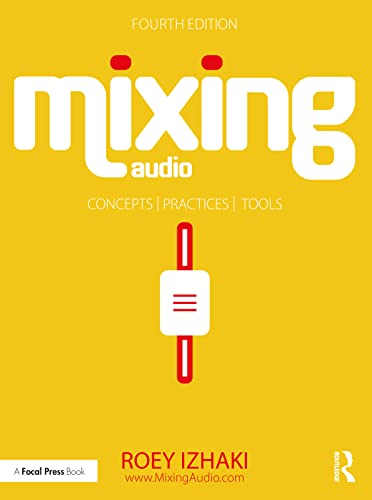
Mixing Audio (4th Edit…
- ✓604-page professional reference
- ✓4th edition updated content
- ✓Covers theory and practice
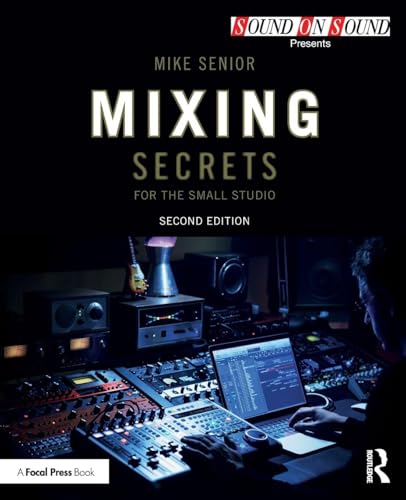
Mixing Secrets for…
- ✓1500+ reader reviews
- ✓Designed for small studios
- ✓444 pages of techniques

Audio Effects, Mixing…
- ✓Most affordable option
- ✓Covers effects and mastering
- ✓Compact 109 pages
If you want the short version: Roey Izhaki’s Mixing Audio is the most complete professional reference on the market. Mike Senior’s Mixing Secrets for the Small Studio is the best value because it is purpose-built for the kind of setup most of us actually own. And the independently published Audio Effects, Mixing and Mastering is the budget-friendly entry point that gets you up to speed on the core concepts for less than the cost of a single plugin.
Comparing the Best Mixing and Mastering Learning Resources in 2026
| Product | Features | Action |
|---|---|---|
| Mixing Audio (4th Edition) |
|
Check Latest Price |
| Mixing Secrets for the Small Studio |
|
Check Latest Price |
| Audio Effects, Mixing and Mastering |
|
Check Latest Price |
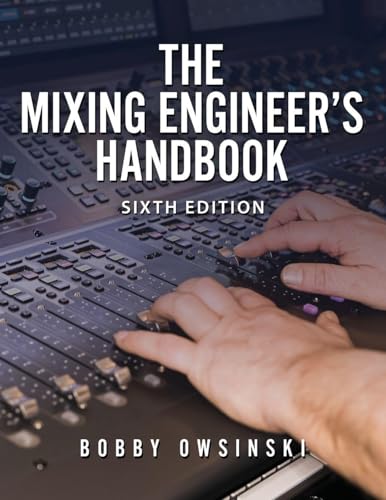 The Mixing Engineer’s Handbook 6th Edition The Mixing Engineer’s Handbook 6th Edition |
|
Check Latest Price |
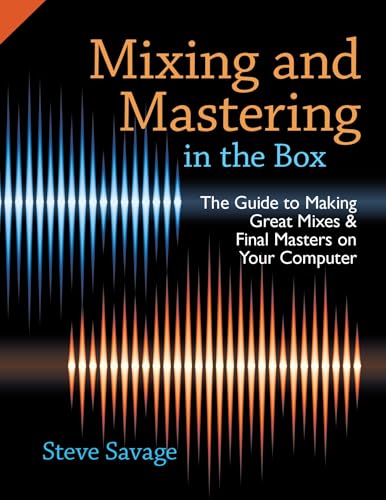 Mixing and Mastering in the Box Mixing and Mastering in the Box |
|
Check Latest Price |
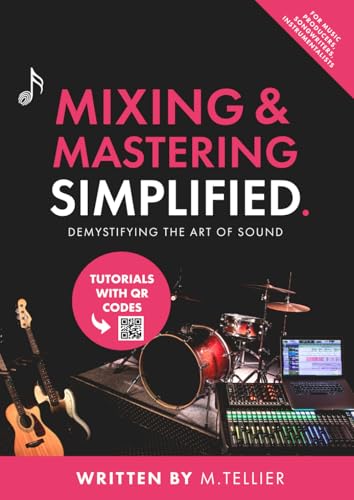 Mixing and Mastering Simplified Mixing and Mastering Simplified |
|
Check Latest Price |
 Step By Step Mixing: 5 Plug-ins Step By Step Mixing: 5 Plug-ins |
|
Check Latest Price |
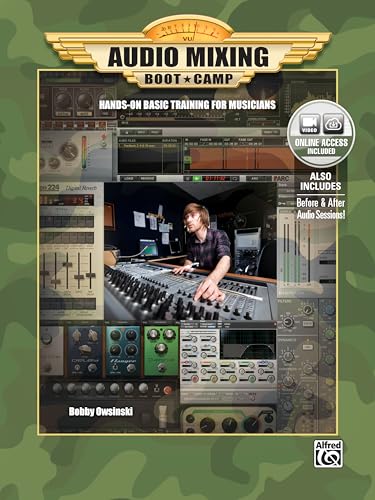 Audio Mixing Boot Camp Audio Mixing Boot Camp |
|
Check Latest Price |
Here is the full lineup side by side. Below, I walk through what makes each one stand out, who it is built for, and what real readers have said after working through the material.
1. Mixing Audio (4th Edition) by Roey Izhaki – The Deepest Professional Reference Available
- ✓Most comprehensive coverage available
- ✓Updated to 4th edition with modern techniques
- ✓87% of readers give it 5 stars
- ✓Covers theory and practical application equally
- ✕Length may overwhelm absolute beginners
- ✕Higher price point than most
604 pages
4th Edition
Focal Press
Published July 2023
87% 5-star reviews
When I first opened Mixing Audio, I knew within the first chapter that this was not another quick-start guide. Roey Izhaki wrote this for people who want to actually understand what happens when a compressor grabs a transient, not just dial in settings someone told them to use. At 604 pages, it is the most thorough mixing reference I have come across in 2026, and the fact that it is now in its fourth edition tells you the audio community keeps coming back to it.
The 4.7 rating from readers is backed by an 87 percent five-star rate, which is unusually high even for academic audio books. People consistently mention that Izhaki treats mixing as both art and science. He walks through psychoacoustics, the physics of sound, and how those concepts translate into the practical decisions you make at the console or in your DAW.
I would compare this to a university-level textbook, except it is more readable than most textbooks I suffered through. If you want one resource on your shelf that you can return to for the rest of your career, this is it.
Theory Meets Practical Application
Most mixing books either drown you in theory or give you recipes without explaining why they work. Izhaki splits the difference. He covers the underlying science of how we perceive frequency, dynamics, and stereo imaging, then immediately connects it to mixing decisions.
This matters because once you understand why a 200 Hz buildup muddies a kick and bass relationship, you can fix it on any system, with any plugin, in any genre. You stop reaching for presets and start solving problems.
What the 4th Edition Adds
Focal Press updated this edition in July 2023, so the content reflects modern workflows. That matters in a field where plugin development moves fast. You get coverage of contemporary tools, current loudness standards, and how the streaming era has changed mastering targets.
Older editions are still solid, but if you are buying fresh, the 4th edition is the version you want. The updates keep the material relevant to how records are actually being made right now.
Genre Coverage and Workflow
Izhaki does not pretend there is one universal mixing approach. The book covers how mixing differs across rock, electronic, hip hop, classical, and other genres, with specific examples and analysis. That genre-aware treatment is rare and valuable.
He also digs into workflow organization, session setup, and the mental game of mixing. These are the unsexy topics that separate people who finish records from people who endlessly tweak.
Who Should Buy Mixing Audio
This is for the serious learner. If you have been at it for a year or two and want a single reference that will take you from intermediate to professional, this is the book. Absolute beginners can use it, but expect to read slowly and revisit chapters as your ear develops.
For a complementary equipment setup, I recommend pairing this study with quality monitoring. Our guide to Sennheiser headphones for music production covers options that reveal the frequency details Izhaki teaches you to listen for.
2. Mixing Secrets for the Small Studio by Mike Senior – Built for the Bedroom Producer
- ✓Purpose-built for small studio reality
- ✓Backed by 1509 reader reviews
- ✓Practical solutions for untreated rooms
- ✓83% 5-star rating
- ✕Some chapters assume basic DAW familiarity
444 pages
2nd Edition
Routledge
Sound On Sound Presents
Over 1500 reviews
Mike Senior wrote this book based on his work at Sound On Sound magazine, where he has been demystifying mixing for years. The premise is simple and honest: most people mixing today are not working in million-dollar studios with tuned control rooms. They are working in spare bedrooms with foam on the walls and headphones that lie to them.
That is exactly my situation, and probably yours too. Mixing Secrets for the Small Studio tackles that reality head-on. Senior teaches you how to get professional results from an imperfect environment, and that practical framing is why 1509 readers have given it a 4.7 rating with 83 percent five-star reviews.
The second edition adds updated content that keeps pace with current tools and techniques. If you are tired of advice that assumes you have a perfectly treated room, this is the resource that actually meets you where you are.
The Small Studio Reality Check
The opening chapters are worth the price alone. Senior explains how your room lies to you, how to compensate with monitoring at low volumes, and how to use reference tracks to keep your ears honest. I had read about reference tracks before, but his breakdown of how to actually use them changed my workflow overnight.
This is not theoretical advice. Every recommendation is built around the gear and spaces real people actually use.
Compression, EQ, and Dynamics Coverage
Senior devotes serious page count to compression and EQ, the two topics most beginners get wrong. He explains attack and release times with audio examples you can follow along with, and he shows specific moves for common problems like boxy vocals and muddy low ends.
The coverage of parallel compression and sidechain techniques alone cleared up confusion I had carried for years. That is the value of a well-structured course over random YouTube clips.
Mastering in an Untreated Room
The mastering section is realistic about what you can and cannot achieve in a small studio. Senior does not promise you will compete with a dedicated mastering engineer, but he gives you a workflow that produces streaming-ready masters if you follow the steps.
For independent artists releasing their own music, that is exactly the practical outcome you need.
Who Should Buy Mixing Secrets
This is the best starting point for anyone mixing in a home or project studio. If you have a DAW, a pair of decent headphones, and unfinished tracks sitting on your hard drive, Mike Senior will get you across the finish line.
3. Audio Effects, Mixing and Mastering – Most Affordable Entry Point
- ✓Lowest price point on the list
- ✓Compact and readable in a weekend
- ✓Covers effects and mastering basics
- ✓71% 5-star rating
- ✕Less depth than the larger references
- ✕Limited genre-specific examples
109 pages
Independently Published
Covers effects and mastering
71% 5-star reviews
Most affordable option
Not everyone wants to drop fifty dollars on a 600-page reference before they even know if audio engineering is for them. This is where Audio Effects, Mixing and Mastering earns its place. At 109 pages and the lowest price on this list, it is the cheapest serious introduction to mixing and mastering concepts you can buy.
Independently published and backed by 581 reader reviews with a 4.5 rating, this book is not trying to be the only resource you ever own. It is the gateway resource that gets you oriented fast so you can decide whether to invest deeper. I wish something like this had existed when I was starting out and burning money on gear I did not understand.
The 71 percent five-star rate tells you most readers got exactly what they came for: a clear, no-nonsense overview of how effects work and how to apply them in a mix and master.
Effects First, Mix Second
What makes this book different is that it spends real time on effects before getting into full mixing workflow. Reverb, delay, modulation, distortion, and dynamics processing all get dedicated explanations. If you have ever stared at a plugin interface and wondered what every knob actually does, this book answers that question.
That effects-first approach helps you build a vocabulary for the tools before you try to deploy them in a full mix.
Mastering Coverage for Beginners
The mastering section is appropriately humble. It covers the essentials: loudness targets for streaming, basic limiting, EQ matching, and how to reference your master against commercial tracks. You will not become a mastering engineer from these pages, but you will understand what mastering actually involves.
That matters because many beginners confuse mixing and mastering entirely. This book clears up that confusion.
Who Should Buy This Budget Pick
Buy this if you are testing the waters. If you are brand new to audio production and want a fast orientation before committing to a deeper resource, this is your move. It also works as a refresher for someone returning to mixing after a long break.
4. The Mixing Engineer’s Handbook (6th Edition) by Bobby Owsinski – The Updated Industry Standard
- ✓Brand new 6th edition for 2026
- ✓Written by recognized industry educator
- ✓Covers modern mixing workflow
- ✓80% 5-star rating
- ✕Smaller review pool than established titles
- ✕Higher price than budget options
373 pages
6th Edition
Published October 2025
Bobby Owsinski Media Group
80% 5-star reviews
Bobby Owsinski is one of those names that keeps appearing when you research audio engineering education, and for good reason. He has been writing about mixing, recording, and the music business for decades, and his handbook series is treated as required reading in many audio programs. The 6th edition came out in October 2025, which makes it one of the most current resources on this list.
With a 4.7 rating and 80 percent five-star reviews, the early response from readers is strong. What makes this handbook different from a textbook like Mixing Audio is that Owsinski writes in a conversational, accessible tone. He teaches like a mentor sitting next to you, not a professor lecturing from a podium.
The 373-page format is substantial but not overwhelming. It hits the sweet spot for someone who wants real depth without committing to a 600-page academic tome.
What the 6th Edition Brings New
The publishing date of October 2025 matters because mixing changes fast. Streaming loudness standards, plugin developments, AI-assisted tools, and modern monitoring workflows all shift year to year. Owsinski updates his material to reflect that, so you are not reading advice from a decade ago.
That freshness is a genuine advantage over older editions and over competing books that have not been revised recently.
Mentor-Style Teaching Approach
The handbook format is built around the way working engineers actually think. Owsinski covers the mixing process step by step, from session prep and gain staging to final delivery. He also includes interviews and insights from working professionals, which adds real-world credibility.
That interview format is something you cannot get from a solo-authored textbook. Hearing how different pros approach the same problems is genuinely educational.
Genre and Workflow Coverage
Owsinski addresses how mixing changes across rock, pop, electronic, and hip hop. He also covers modern concerns like streaming optimization and social media delivery formats. That currency is exactly what working producers need in 2026.
Who Should Buy The Mixing Engineer’s Handbook
This is a great fit for the learner who wants a current, mentor-style resource. If you read Mixing Secrets and want a complementary second opinion from a different industry veteran, Owsinski and Senior together give you a very well-rounded foundation.
5. Mixing and Mastering in the Box by Steve Savage – The Computer-Only Workflow Specialist
- ✓Published by Oxford University Press
- ✓Focuses entirely on computer workflow
- ✓Professional-grade techniques
- ✓4.6 rating across 122 reviews
- ✕Published in 2014
- ✕less current on tools
- ✕Academic tone may feel dry to some
320 pages
Oxford University Press
In-the-box workflow
71% 5-star reviews
Published by academic press
The phrase “in the box” refers to mixing and mastering entirely inside your computer, using plugins instead of outboard hardware. For the vast majority of independent producers in 2026, that is exactly how we work. Steve Savage wrote this book for that reality, and the fact that Oxford University Press published it tells you the academic rigor is serious.
With 122 reviews and a 4.6 rating, it sits in the middle of this list in terms of reader volume. The 71 percent five-star rate is consistent with the other established titles. Readers praise the depth of professional technique coverage, even if some note the 2014 publication date means specific tool references are dated.
The core concepts, however, are timeless. Gain staging, dynamics processing, stereo imaging, and mastering chain design do not change just because plugin brands release new products every year.
The In-The-Box Philosophy
Savage makes the case that working entirely in the computer is not a compromise. It is a legitimate workflow that many professionals use for entire releases. He walks through how to set up a DAW session for mixing, how to organize plugins, and how to build a workflow that gets results.
That permission to trust your computer-based setup is valuable for beginners who feel they need expensive hardware to make real records.
Mastering Chain Construction
The mastering section is one of the stronger parts of this book. Savage explains how to build a mastering chain from scratch, what order to place processors in, and how to A/B test your work. That structured approach is exactly what forum users on r/mixingmastering say they wish more courses taught.
Who Should Buy Mixing and Mastering in the Box
Buy this if you are committed to a fully computer-based workflow and want an academically rigorous guide to it. Pair it with a more current resource for tool-specific updates, and you have a complete learning stack.
6. Mixing and Mastering Simplified by Melvin Tellier – The Newest Release on the List
- ✓Brand new 2025 publication
- ✓Demystifies complex concepts
- ✓Simplified teaching approach
- ✓79% 5-star rating
- ✕Small review pool so far
- ✕No bundled video content
156 pages
Published September 2025
Independently published
79% 5-star reviews
Demystified teaching approach
This is the newest title on the list, published in September 2025 by Melvin Tellier. The full title is Mixing and Mastering Simplified: Demystifying The Art Of Sound, and that framing tells you the angle. Tellier wrote this for people who find traditional mixing books intimidating, and the early reviews suggest he succeeded.
With 34 reviews so far and a 4.7 rating, the early response is positive. Nearly 80 percent of readers give it five stars. Reviewers consistently mention how the book removes the intimidation factor that keeps so many beginners from ever finishing a mix.
At 156 pages, it is focused and digestible. You can work through it in a week of evening reading and start applying the concepts immediately.
The Demystified Approach
Tellier breaks down mixing into concepts that feel approachable rather than academic. If you have ever read a mixing book and felt like the author was showing off rather than teaching, this is the antidote. The language is plain, the examples are concrete, and the structure walks you through the process without overwhelming you.
That accessible tone is exactly what forum users on r/edmproduction say they want when they ask for course recommendations.
Practical Application Focus
The book leans heavily into doing rather than theory. Each chapter ends with actionable steps you can apply to a current project. That hands-on approach is how most people actually learn audio. Reading about compression only gets you so far. You have to grab a fader and move it.
Who Should Buy Mixing and Mastering Simplified
This is for the learner who has been intimidated by thicker technical books. If you tried Mixing Audio or the Handbook and bounced off, try this first. It will get you comfortable enough to come back to the deeper resources with confidence.
7. Step By Step Mixing: How to Create Great Mixes Using Only 5 Plug-ins
- ✓Beginner-friendly framework
- ✓Limits overwhelm with 5-plugin rule
- ✓71% 5-star rating across 1330 reviews
- ✓Practical step-by-step structure
- ✕Limited stock availability at times
- ✕May feel basic to experienced mixers
156 pages
Published May 2019
5-plugin workflow
71% 5-star reviews
Beginner-friendly framework
One of the biggest problems beginners face is plugin overload. Every DAW ships with dozens of plugins, and third-party developers add hundreds more. The result is decision paralysis. Step By Step Mixing solves that by constraining you to just five plugins and teaching you how to use them well.
That constraint-based approach is genuinely powerful. With 1330 reader reviews and a 4.6 rating, this independently published book has clearly resonated with the bedroom producer crowd. The 71 percent five-star rate shows most readers found the framework immediately useful.
The book is short at 156 pages, but that brevity is intentional. The goal is not to cover every plugin ever made. It is to get you mixing confidently with a minimal toolset.
The Five-Plugin Framework
The book teaches you to mix with an EQ, compressor, reverb, delay, and saturation plugin. That is it. By removing every other option, the author forces you to actually learn what each tool does instead of jumping between flavors.
This is the same principle behind why constraints make you more creative. Once you stop shopping for plugins and start using what you have, your mixes improve fast.
Step-by-Step Workflow Structure
True to the title, the book walks through a complete mixing workflow step by step. You start with organization, move through gain staging, work through each instrument group, and finish with bus processing. That linear structure is exactly what people struggling to finish mixes need.
Who Should Buy Step By Step Mixing
Buy this if plugin paralysis is your main obstacle. If you own dozens of plugins but cannot finish a mix, the constraint framework here will get you unstuck fast.
8. Audio Mixing Boot Camp by Bobby Owsinski – Hands-On Training With Video
- ✓Includes access to online video lessons
- ✓Hands-on training format
- ✓Written by trusted instructor Bobby Owsinski
- ✓Published by Alfred Music
- ✕Published in 2012
- ✕dated tool references
- ✕Smaller review pool
- ✕Lower five-star rate than others
160 pages
Book and online video
Published by Alfred Music
Bobby Owsinski
66% 5-star reviews
Audio Mixing Boot Camp is the most hands-on entry on this list, and the only one that comes bundled with online video. Published by Alfred Music and written by Bobby Owsinski, the same author behind the Handbook above, this resource takes a training-camp approach to building mixing skills quickly.
The 4.4 rating across 30 reviews is slightly lower than the others on this list, and the 2012 publication date means specific tool references are dated. But the core training exercises remain valuable. Mixing fundamentals have not changed, even if plugin interfaces have evolved.
If you learn better by watching and doing rather than reading, the bundled video content is the differentiator here.
The Boot Camp Format
The book is structured as a series of drills and exercises rather than chapters of theory. That training format works well for people who need to build muscle memory at the mixing console. Each exercise targets a specific skill, and the video content shows you what the results should sound like.
That audio feedback loop is something flat text cannot provide, and it is exactly the kind of guidance forum users say they wish more courses offered.
Video Integration
The online video that comes with the book lets you watch Owsinski work through the same exercises. For visual learners, that combination of reading and watching is powerful. You read the concept, then see and hear it applied.
Who Should Buy Audio Mixing Boot Camp
Buy this if you are a hands-on learner who benefits from video demonstrations. Pair it with Owsinski’s updated 6th Edition Handbook for current theory, and you have a complete curriculum from a single trusted instructor.
If you are also building your monitoring setup, our guide to AKG headphones for studio mixing covers comfortable options for long mixing sessions.
How to Choose the Right Mixing and Mastering Course for Your Situation
Picking the right learning resource matters more than people realize. Buy the wrong book and you stall out. Buy the right one and you finish your first real mix within a month. Below I break down the decisions that actually matter when choosing between these options.
Match the Resource to Your Current Skill Level
Be honest about where you are. If you cannot explain what a compressor does in one sentence, start with Mixing and Mastering Simplified or Audio Effects, Mixing and Mastering. Those shorter, gentler resources get you oriented without overwhelming you.
If you have been mixing for a year or two and want to level up to professional results, Mixing Secrets for the Small Studio or the Mixing Engineer’s Handbook are your sweet spots. They assume you know the basics and push you toward real competence.
If you want the deepest possible reference to keep on your shelf for years, Mixing Audio by Roey Izhaki is unmatched. Treat it as a long-term investment in your craft.
Decide Between Comprehensive Reference and Focused Guide
Some learners want one big book that covers everything. Others want a focused guide that solves one specific problem. Both approaches work, but they serve different goals.
Mixing Audio, the Handbook, and Mixing Secrets are comprehensive references. Step By Step Mixing and Audio Mixing Boot Camp are focused guides. Mixing and Mastering Simplified and Audio Effects sit in between as accessible overviews.
Pick the format that matches how you actually learn. If you get bored reading 400 pages, do not buy a 400-page book just because it ranks highest.
Evaluate the Instructor or Author Credentials
Forum users consistently say instructor credentials are a top trust signal. Bobby Owsinski has decades of industry experience and multiple published books. Mike Senior comes from Sound On Sound magazine, the most respected audio publication in the world. Roey Izhaki wrote what is essentially the academic standard for mixing theory.
When you buy a resource from someone with that track record, you are buying distilled experience. That is worth more than a hundred free YouTube tutorials from anonymous accounts.
Factor In Currency and Publication Date
Audio production evolves. Streaming loudness standards have changed, plugin ecosystems have shifted, and AI tools now play a role in modern workflows. The newest resources on this list are the Mixing Engineer’s Handbook 6th Edition (October 2025) and Mixing and Mastering Simplified (September 2025).
That does not mean older books are useless. The fundamentals Savage covers in Mixing and Mastering in the Box remain valid. But if currency matters to you, lean toward the recently updated editions.
Consider Whether You Need Video Content
Some people learn best by reading. Others need to see and hear the techniques demonstrated. If you fall into the second category, Audio Mixing Boot Camp with its bundled online video is the standout choice on this list.
Reading about compression will only take you so far. Hearing a compressor grab a snare drum transient is what makes the concept click.
Free Versus Paid: Why Structure Is Worth Paying For
This is the question that comes up constantly on forums like r/mixingmastering and r/WeAreTheMusicMakers. Can you learn mixing and mastering for free on YouTube, or do you need to pay for a structured resource?
The honest answer is that you can learn from YouTube, but it will take longer and you will hit more dead ends. Free content is scattered, conflicting, and optimized for views rather than your learning. A structured book or course gives you a linear path, vetted information, and a framework you can actually follow.
The people on forums who report the biggest improvements almost always mention investing in a structured resource after months or years of YouTube frustration. The money you spend on one good book saves you months of wasted time.
Pair Your Learning With the Right Monitoring
A course teaches your brain. Your monitoring teaches your ears. You need both working together. No amount of reading will help if you cannot accurately hear what your mix is doing.
That is why I keep recommending a good pair of studio headphones alongside any course. Our guide to affordable studio headphones covers solid budget options if you are just starting out. You can absolutely learn on affordable gear, but you need gear that tells you the truth.
FAQs
Which paid mixing course should I pay for?
If you want one comprehensive resource, Roey Izhaki’s Mixing Audio (4th Edition) is the most complete professional reference available. If you mix in a small or home studio, Mike Senior’s Mixing Secrets for the Small Studio is purpose-built for that reality and backed by over 1500 reader reviews. Both are worth the investment over scattered free content.
How do you learn mixing and mastering?
The most effective path is to combine a structured resource with hands-on practice on your own music. Start with a beginner-friendly book like Mixing and Mastering Simplified, work through real mixes using the techniques taught, and gradually move to deeper references like Mixing Secrets or Mixing Audio as your skills grow. Consistent practice on actual projects matters more than passive reading.
Is a mixing course worth it?
For most learners, yes. Forum users on r/mixingmastering consistently report that structured courses eliminated the confusion caused by conflicting YouTube tutorials and gave them a workflow they could actually follow. The time saved and the quality improvement typically justify the cost, especially when compared to the cost of studio time or hiring a mix engineer.
What is the best course for mixing and mastering for a semi-professional?
For semi-professionals looking to close the gap to commercial quality, Mixing Secrets for the Small Studio and The Mixing Engineer’s Handbook 6th Edition are the strongest choices. Both assume you know the basics and focus on the techniques that separate amateur mixes from professional releases. Pair one with regular practice on client or personal projects.
What should I look for in a mixing and mastering course?
Look for instructor credentials with real industry experience, content that matches your skill level, coverage of the core topics (EQ, compression, reverb, delay, mastering chain), practical exercises you can apply immediately, and currency with modern workflows and streaming standards. Community access, video content, and money-back guarantees add additional value.
Final Verdict: Which Mixing and Mastering Course Is Right for You in 2026
If you want one resource that will serve you for the rest of your career, get Mixing Audio by Roey Izhaki. It is the deepest, most authoritative reference on this list, and the 87 percent five-star rate confirms its quality.
If you mix in a bedroom or project studio and want practical results fast, get Mixing Secrets for the Small Studio. Mike Senior built it for exactly your situation, and 1509 reader reviews back that up.
If you are brand new and want to spend as little as possible while you figure out if this is for you, the budget pick Audio Effects, Mixing and Mastering gets you oriented for less than the cost of a lunch.
Whatever you choose, the most important step is the first one. Pick one of these best mixing and mastering courses, commit to working through it, and apply what you learn to a real project within the first week. That is how you actually improve.





Leave a Comment