
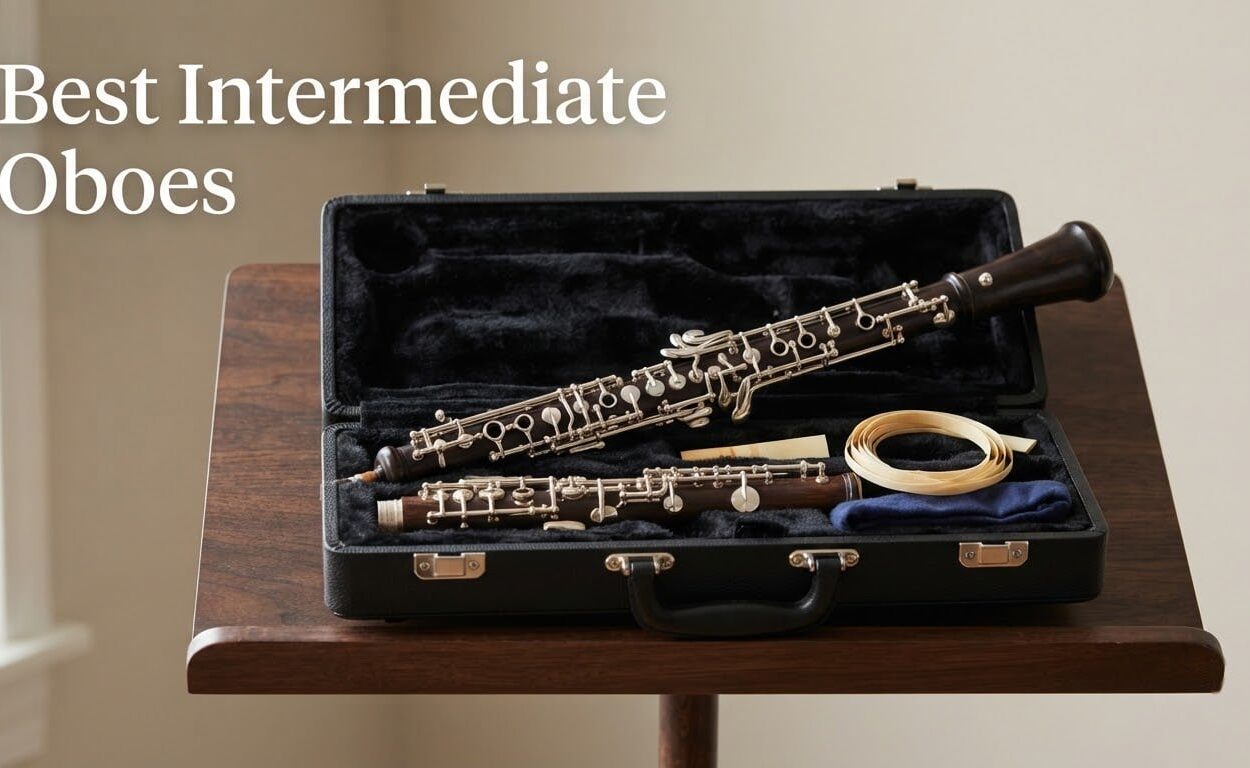
If you have played a student oboe for two to four years and you are heading toward honor band, All-State, or a college audition, the best intermediate oboe for you is the one with the keywork your repertoire assumes exists, a bore that stays in tune through a long rehearsal, and a weight your right arm can hold for three consecutive services. That is the short answer. Everything below is the long version.
I spend a lot of time reading oboe forums, and the single most repeated sentence across them is not about a brand. It is the instruction to play-test the instrument and bring your private teacher. That advice outranks every spec sheet, and I have built this guide around it. What I have done is take ten intermediate-tier oboes, line up exactly what each one offers in keywork and materials, and translate a technician’s parts list into a buyer’s decision.
One correction to the conventional wisdom before we start. The old argument that you must own grenadilla or ebony to play seriously does not hold up. Practitioners with decades of experience argue the opposite: the bore, the tone-hole finishing, and the keywork matter far more than the body material. Several experienced players on the woodwind.org Oboe BBoard went further and said the material of which the instrument is made is not nearly as important as the bore and the work on the tone holes. Judge the instrument in front of you, not the label on the box.
What separates intermediate from student is mechanical, not cosmetic. You are moving from an instrument that makes you work to one that gets out of the way, and that shift lives in the low B-flat with its vent, the resonance F key, the third octave key, and the trill mechanisms that let you play the fast woodwind literature without hunting for fingerings mid-phrase. If you are still shopping for a first instrument, start with our beginner oboe guide instead, because those ten picks are built for a different job.
Our Top 3 Picks for Advancing Players
Three instruments stood out from the field once we sorted the keywork against the review evidence. The Yinfente ebonite is the most complete package for a player who wants a stable, bright-sounding instrument with the F resonance key and a full accessory kit in the box. The C key forked-F oboe is the one that reviewers describe as comparable to familiar student makes while adding a third octave key. The Singer’s day SD-6449S is the only true full conservatory system in the group, with a low B-flat vent, an articulated C-sharp, and a banana key.

Yinfente Ebonite Semi-Automatic Oboe
- ✓Ebonite body
- ✓Nickel-plated keys
- ✓Semi-automatic system
- ✓F resonance key
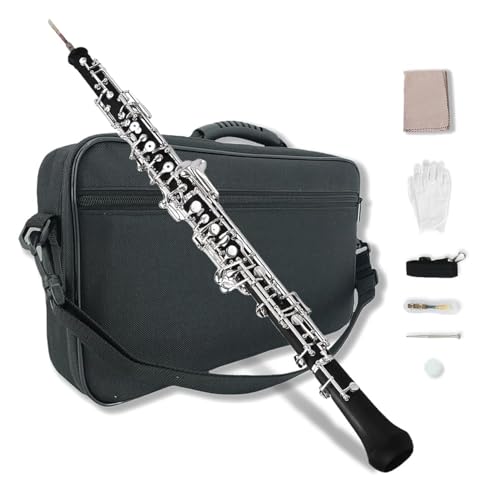
C Key Forked-F Resonance Oboe
- ✓Ebonite body
- ✓Forked-F resonance key
- ✓3rd octave key
- ✓Trill keys

Singers Day SD-6449S Full Conservatory
- ✓Full conservatory system
- ✓Low Bb with vent
- ✓Articulated C# and banana key
- ✓1-year warranty
Comparing the Best Intermediate Oboes in 2026
All ten instruments below carry a C key and a semi-automatic or conservatory octave system. The differences that matter to a buyer are body material, whether the F resonance and third octave keys are present, and how much independent review evidence sits behind the rating.
| Product | Features | Action |
|---|---|---|
| Yinfente Ebonite Semi-Automatic Oboe |
|
Check Latest Price |
 Yinfente Rosewood Gold-Plated Oboe Yinfente Rosewood Gold-Plated Oboe |
|
Check Latest Price |
 summina C Key Semi-Automatic Oboe summina C Key Semi-Automatic Oboe |
|
Check Latest Price |
 Rochix RHG13 Redwood Gold-Plated Oboe Rochix RHG13 Redwood Gold-Plated Oboe |
|
Check Latest Price |
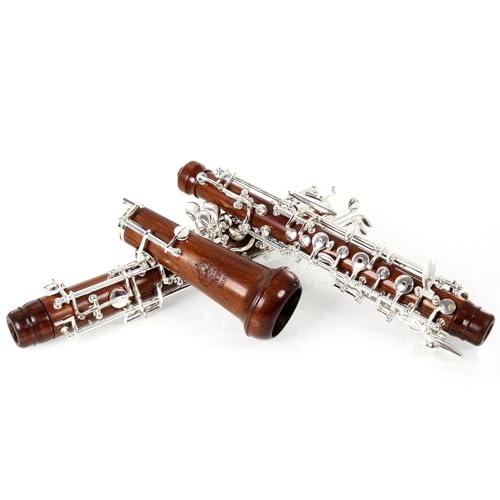 Rochix RHS13 Redwood Silver-Plated Oboe Rochix RHS13 Redwood Silver-Plated Oboe |
|
Check Latest Price |
| C Key Forked-F Resonance Oboe |
|
Check Latest Price |
| Singers Day SD-6449S Oboe |
|
Check Latest Price |
 Yamaha YOB-241 Student Oboe Yamaha YOB-241 Student Oboe |
|
Check Latest Price |
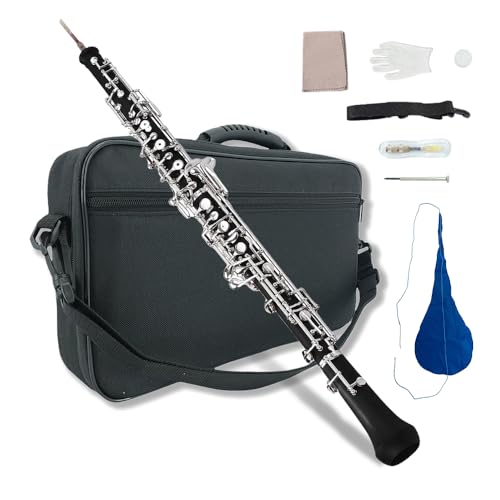 WUQIMUSC Ebonite C Key Oboe WUQIMUSC Ebonite C Key Oboe |
|
Check Latest Price |
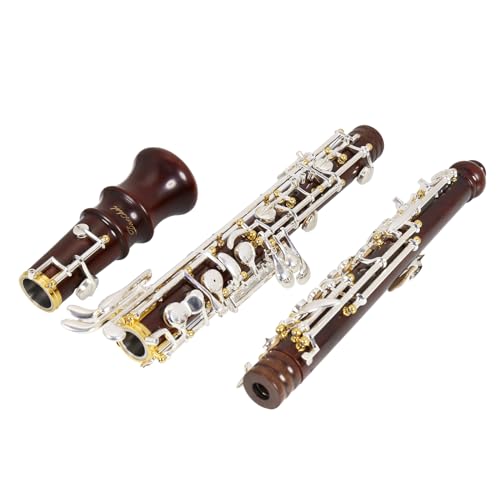 Danchet Redwood Silver-Plated Oboe Danchet Redwood Silver-Plated Oboe |
|
Check Latest Price |
1. Yinfente Professional Oboe Ebonite – Our Overall Pick for Serious Players
- ✓Ebonite body with nickel-plated keys for durability
- ✓F resonance key adds real repertoire range
- ✓Complete accessory kit in the box
- ✓Bright resonant tone with good projection
- ✓Hard case and soft carry bag both included
- ✕37 reviews is still a small sample
- ✕1.92 kg is heavy for a student arm
- ✕Older listing with less recent feedback
Ebonite body
Nickel-plated keys
Semi-automatic system
F resonance key
This is the instrument I keep coming back to, and the reason is unglamorous: it has the largest body of independent buyer feedback of anything in this guide at 37 reviews, and the review pattern is consistent. Buyers describe a bright, vibrant, resonant tone and a kit that arrives complete enough to start playing on day one. That combination of evidence and completeness is why it takes the top slot rather than a flashier-sounding instrument with three reviews behind it.
The build is a C key semi-automatic oboe with an ebonite body and nickel-plated keys. The F resonance key is the feature that matters most here, because it opens up the lower register and the slurred intervals that intermediate repertoire expects you to own. Soft wood pads on the joints give you an airtight assembly, which is the single thing that separates a playable instrument from a frustrating one on a humid afternoon.
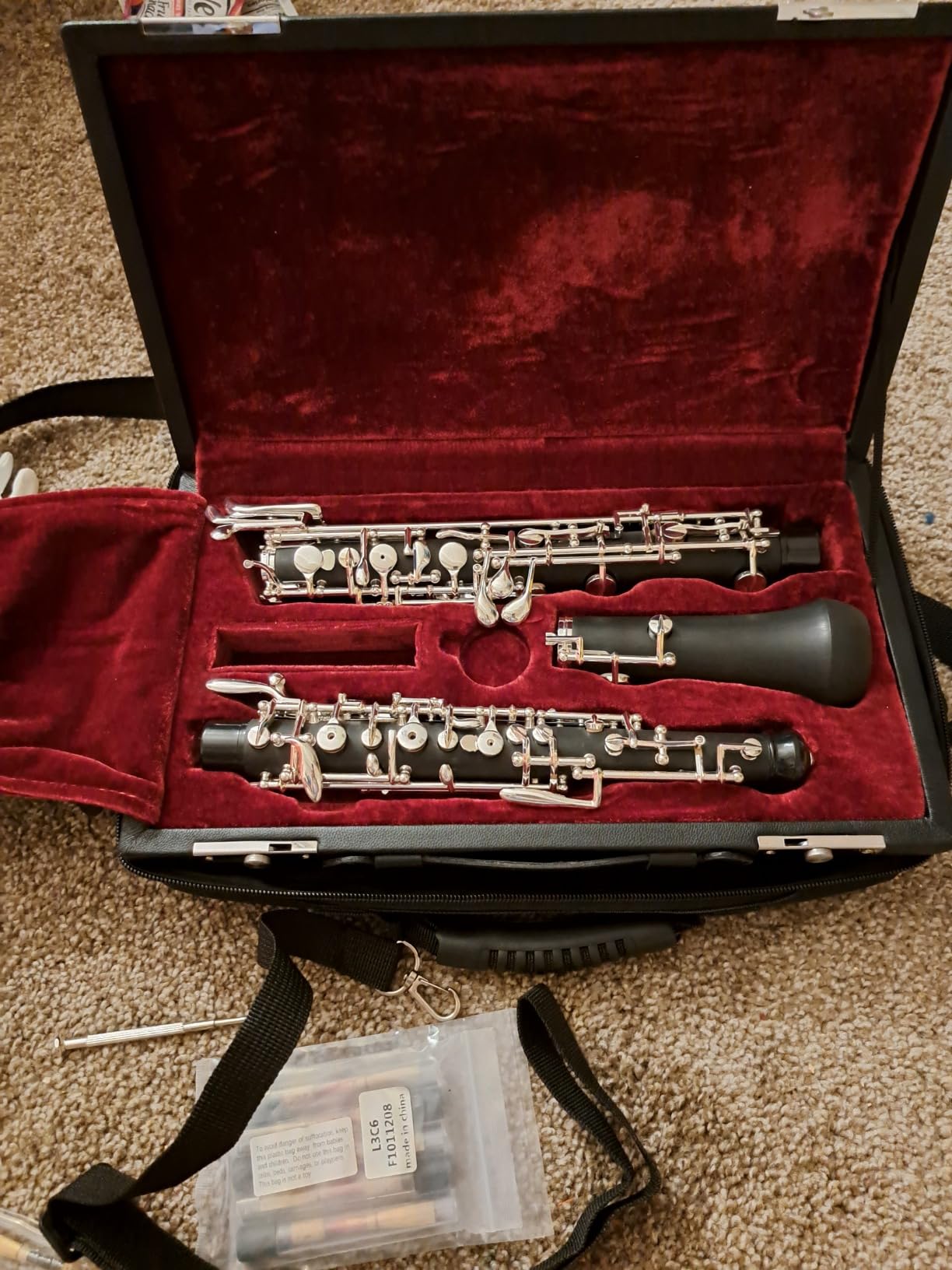
The honest weakness is weight. At 1.92 kg this is one of the heavier bodies in the group, and on a long rehearsal block that shows up in the right forearm. If you are under sixteen or you already have a shoulder complaint, test this one for a full hour rather than five minutes. The reviewers who rated it five stars out of five did not flag handling, but your hands are not theirs.
What the Ebonite Body Actually Does for Your Sound
Ebonite is a dense, hard composite material that holds its bore dimension through seasonal swings better than a thin resin body, and it does not carry the crack risk that natural grenadilla does. The listed sound profile for this instrument is bright, vibrant, rich, and resonant, and that brightness is exactly what cuts through a concert band texture in the second oboe chair.
Why the F Resonance Key Changes Your Repertoire
Without an F resonance key you are playing slurred intervals in the low register by ear-guessing alternate fingerings, and you are guessing mid-phrase in front of an audience. With it, the lower register opens up and the response is more predictable. Practitioners describe the resonance vent as partly an acoustic fix for a bell length left long by the shift to 440Hz, restoring enough effective bell length to stabilise the low E. You do not need that detail to make the decision, but it explains why the feature is treated as standard rather than decorative.
Who Should Skip This Oboe
Skip it if you are a small-framed player carrying a shoulder or back issue, because the weight is the trade-off you are paying for the ebonite stability. Skip it if you want a full conservatory keywork set, because a semi-automatic system with one resonance key sits below the SD-6449S. If you want to build toward full conservatory keywork the way a parent on the woodwind.org BBoard did, choosing an instrument that already carries a third octave key saves you a second purchase later.
2. Yinfente Rosewood Gold-Plated Oboe – Best for Players Who Want Warmer Wood Tone
- ✓Rosewood body gives a warmer core than ebonite
- ✓Gold-plated keys resist tarnish in a case pocket
- ✓Same F resonance key as the ebonite model
- ✓Complete accessory kit and hard case included
- ✕3.5 average with 24 percent 1-star reports
- ✕27 reviews is a thin evidence base
- ✕Mixed reports on build consistency
Rosewood body
Gold-plated keys
Semi-automatic system
F resonance key
This is the rosewood sibling of our top pick, and the decision between them is easier than the spec lists suggest. If you want a warmer core to the tone and you do not mind a more polarised rating, this is the one. If you want the most consistent feedback base, take the ebonite.
The rating distribution is the thing to understand before you commit. Forty-nine percent of the reviews are five stars and twenty-four percent are one star, which means the middle is thinner than the headline number suggests. The reported cause is consistency between examples rather than a design fault, and gold plating is the piece most likely to draw a complaint, since it shows scratches that silver plating hides.
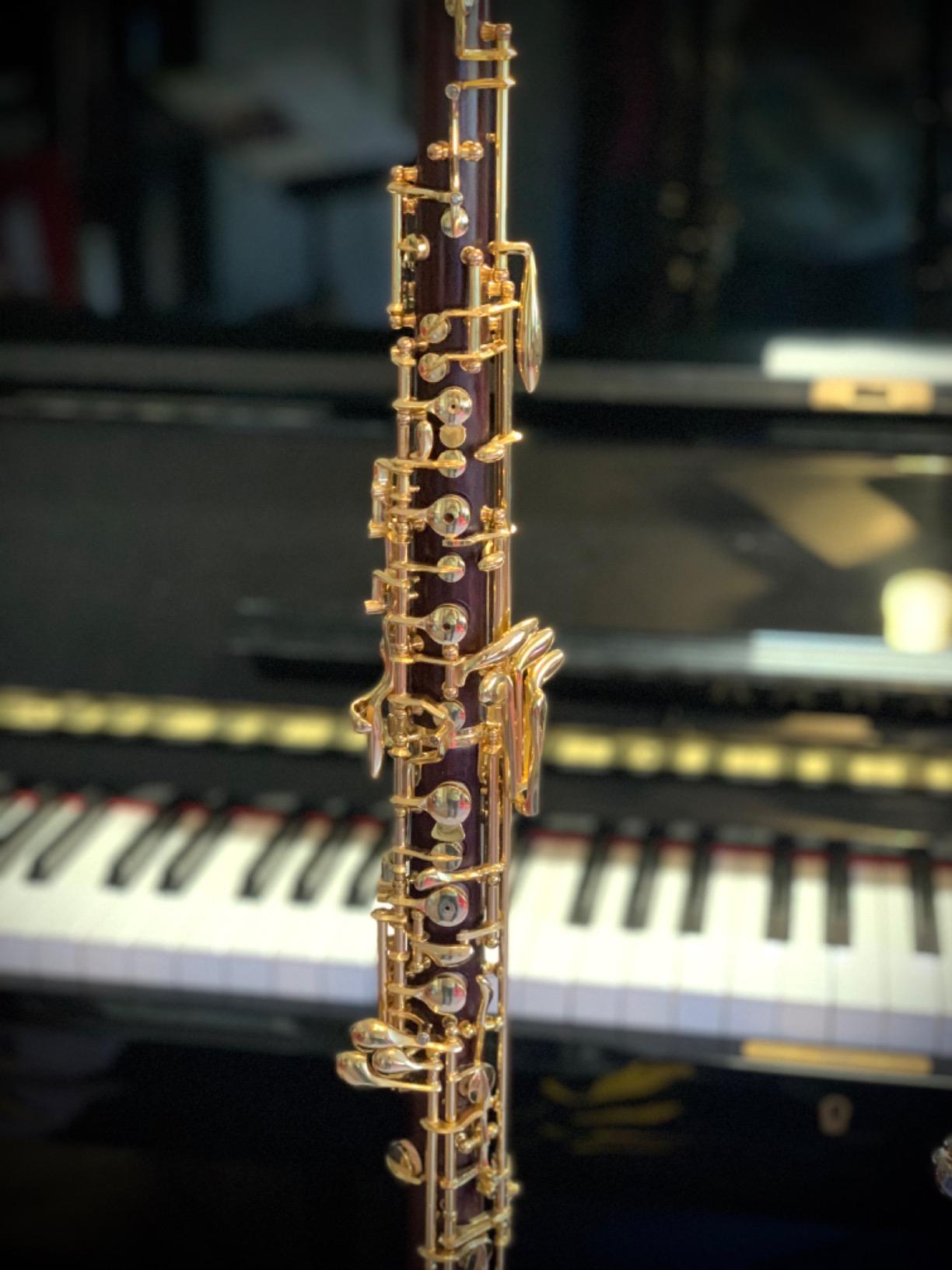
Weight is 1.99 kg, essentially identical to the ebonite model, so the handling argument applies the same way. The listed sound profile is bright and resonant, and the rosewood body is the difference that will show up in your own ears rather than on a spec sheet.
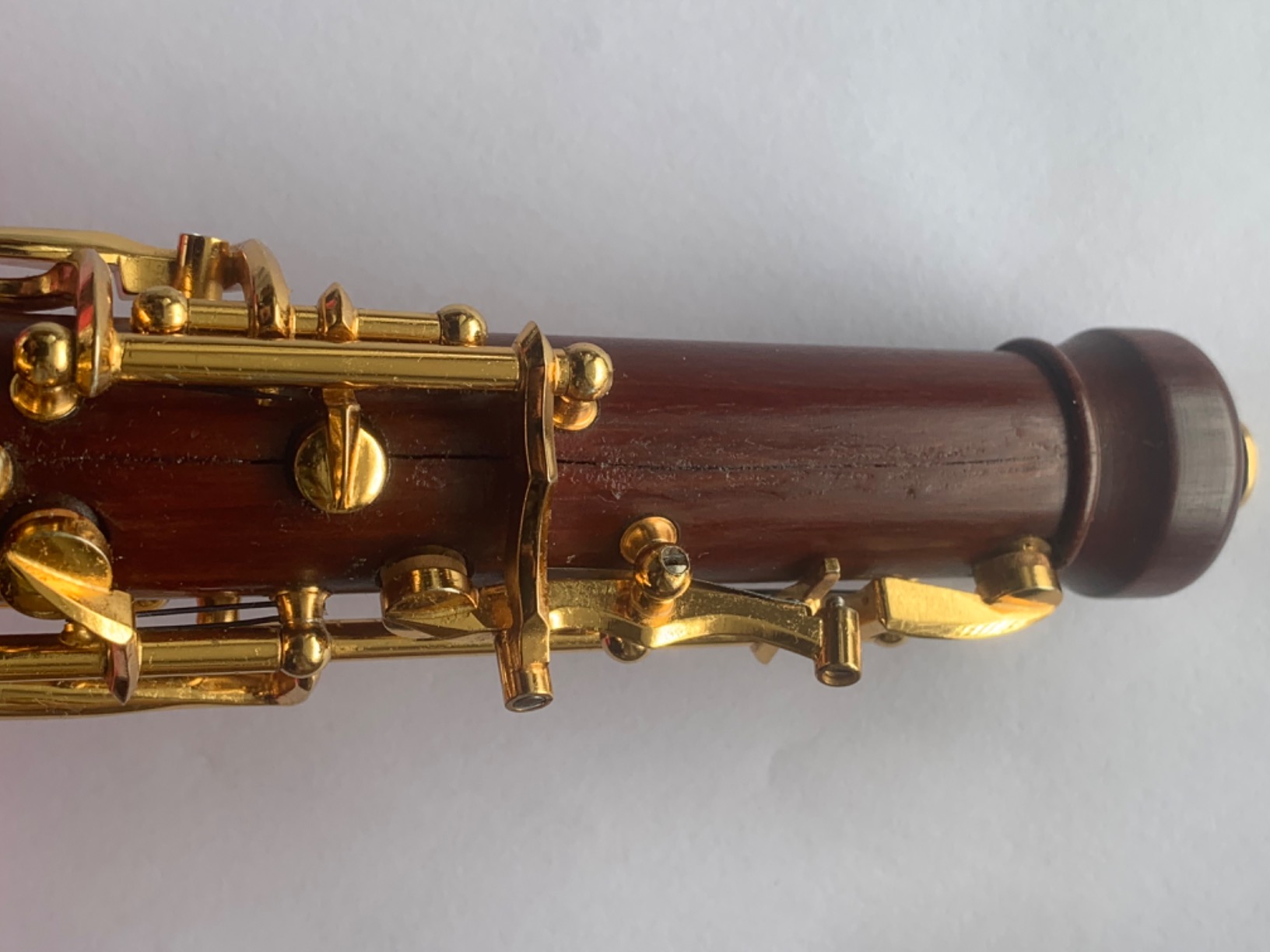
Rosewood Against Ebonite: A Real Difference or a Perception?
There is a real acoustic argument here. Dense tropical hardwoods tend to produce a slightly darker, more centred core, and one player on a Reddit oboe thread reported feeling able to express themselves more easily on a grenadilla body than on a mopane one in the same model. That is one person’s ear, not a laboratory result, but it matches what experienced teachers say about body material contributing warmth without driving response. Treat it as a preference you can satisfy cheaply at this tier rather than a quality ladder you must climb.
Gold Plating Versus Silver Plating in Practice
Gold plating resists corrosion and does not tarnish, which matters if your instrument lives in a car between rehearsals. Silver plating is easier to polish and cheaper to restore when a technician does it. Neither choice affects tone in any way you will hear in a rehearsal room, so decide on maintenance habits rather than sound.
Who Should Skip This Oboe
Skip it if you are risk-averse about build variation, because a 3.5 average with a quarter of one-star feedback is a warning that individual examples differ. If you already own a wooden-bodied oboe and like it, this adds little. And if your teacher is steering you toward full conservatory keywork within a year, buy the SD-6449S instead of spending the difference on plating.
3. Summina C Key Semi-Automatic Oboe – Best for Band Programs Buying in Numbers
- ✓630 g is the lightest listed body weight in this group
- ✓Synthetic wood will not crack
- ✓Nickel-plated keys with soft wood pad connections
- ✓Leather case and carry bag included
- ✕13 reviews with 29 percent one-star reports
- ✕Sticking keys reported across several purchases
- ✕Some instruments arrived non-functional
Synthetic wood body
Nickel-plated keys
C key semi-automatic
630 g
Band directors buying oboes for a beginner cohort care about three things: weight, replacement rate, and whether the instrument survives being dropped. This one wins the first two on paper. At 630 g it is the lightest body weight listed anywhere in this guide, and a synthetic wood body will not crack the way natural wood can, which removes the most common ownership complaint in the oboe world.
Where the reports get sharp is quality control. Reviewers describe sticking keys, cracked cork, and examples that arrived non-functional. Twenty-nine percent of the ratings are one star, which is a pattern, not noise. The bright and rich listed sound profile is genuinely attractive, but you need a technician to check the instrument over before handing it to a student.
Weight and Fatigue Over a Full Rehearsal Block
Compare the 630 g of this body against the 1.92 kg and 1.99 kg of the two Yinfente models and the 3.5 pounds of the Yamaha. That difference is roughly a kilogram, and on a third period of a marching-band or pit rehearsal it is the difference between a player who finishes the hour and one who stops playing because of the shoulder. For a large younger band, that calculation favours this instrument over the tone refinements that a single player will notice.
The Sticking-Key Reports and How to Handle Them
Sticking keys on a synthetic body almost always trace back to cork swelling or pad alignment rather than the keywork design. Swab the instrument thoroughly, check that the joint corks are seated, and have a technician verify pad seating before it goes into a case. If you are buying for a school, ask for a setup or adjustment with the instrument and keep a spare in the drawer, because the replacement rate is the real cost line here.
Who Should Skip This Oboe
Skip it if you are a solo player who intends to buy a wooden or conservatory-keyed oboe within a few years, because you will outgrow it quickly. Skip it if you have no access to a repair technician, since the reported failures need a skilled pair of hands. And skip it if resonance F or third octave key access matters to your repertoire, because neither is listed.
4. Rochix RHG13 Redwood Gold-Plated Oboe – Best Accessory Kit in the Group
- ✓Two reeds
- ✓swab
- ✓cloth
- ✓thumb rest
- ✓gloves and screwdriver included
- ✓1-year warranty is among the longest in this guide
- ✓Redwood body with gold-plated keys
- ✓Compact case design
- ✕12 reviews is a very small base
- ✕Leaks and bent keys reported on first instruments
- ✕Swab can lodge inside the body
Redwood body
Gold-plated keys
Semi-automatic system
1-year warranty
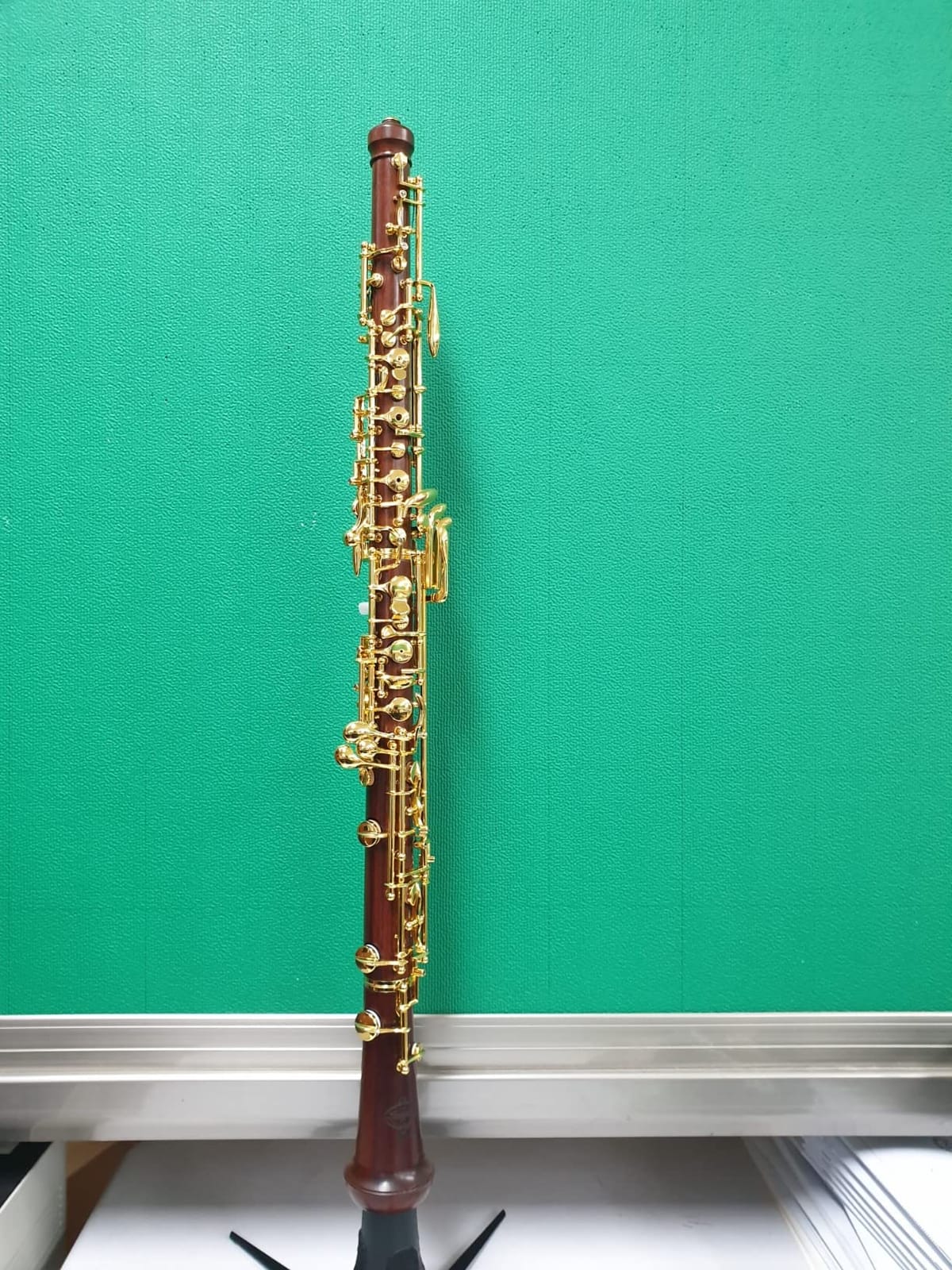
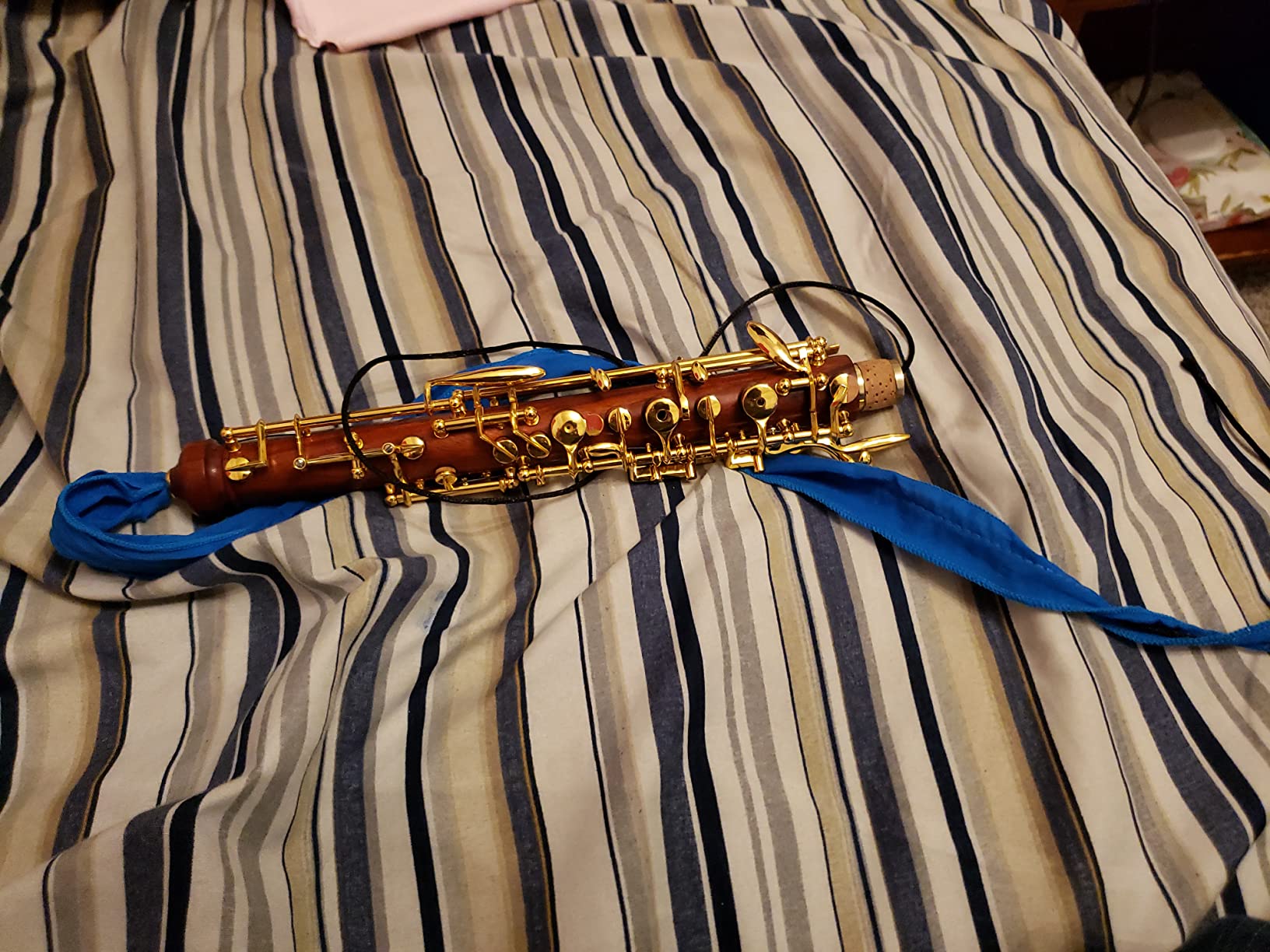
The RHG13 sells itself on what arrives in the box, and that is genuinely worth something. Two reeds, a cleaning cloth, an oboe swab, a thumb rest, gloves, a screwdriver and a case. For a player assembling a first intermediate setup, that is a month of separate purchases handled, and the 1-year warranty is among the longer ones here.
The body is redwood with gold-plated keys on a semi-automatic system, weighing 0.7 kg, which puts it in the light half of this group. The stated build is German quality craftsmanship, and the finish is polished. Where the feedback thins is at the factory end: buyer reports leaks and bent keys on the first instrument, and one reviewer noted the swab can get stuck inside the body.
Why the Included Reeds Matter More Than Buyers Expect
Reeds are the most consumed part of any oboe. A player working toward an audition can go through several in a week, and the ability to test a range of strengths and cuts before settling on one is worth more than a slightly nicer bell. Two reeds are not a generous supply, but they are enough to tell you whether the instrument responds to a harder reed or a softer one, and that single test tells you a great deal about the bore.
Bent Keys and Leaks: What to Inspect on Arrival
Run the instrument through every key before you play it and look for keys that sit unevenly. Flex each key gently and listen for a change, because a key that bends under light pressure will fail on a concert day. Check every joint for a steady air seal by pulling gently on the low B-flat resonance key. If the instrument fails any of those checks, use the warranty rather than troubleshooting it yourself.
Who Should Skip This Oboe
Skip it if you already own a full maintenance kit, because the accessory bundle is the main differentiator. Skip it if you cannot verify the instrument on arrival, given the reports of leaks and bent keys. And skip it if you are shopping for conservatory keywork, because this is a semi-automatic instrument without the third octave key or banana key.
5. Rochix RHS13 Redwood Silver-Plated Oboe – Same Platform, Different Plating
- ✓Silver plating is easy to polish and easy to restore
- ✓0.7 kg body is light on the arm
- ✓Same complete reed and tool kit as the RHG13
- ✓1-year warranty
- ✕Only 10 reviews and no written review detail
- ✕Shares its redwood platform with the RHG13 quality reports
- ✕Fewer documented buyer experiences to draw on
Redwood body
Silver-plated keys
Semi-automatic system
1-year warranty
This is the RHS13, the silver-plated twin of the RHG13, and the honest framing is that you are choosing between two key finishes on the same redwood body with the same semi-automatic system and the same 1-year warranty. Both sit at 0.7 kg. Both come with reeds and tools. The RHG13 simply has 12 reviews of feedback and this one has 10, so there is more evidence to work from.
Silver plating is the more serviceable choice for a school or a working player. It polishes back easily, and a technician can restore the finish at a routine service. Gold plating resists tarnish, which matters if the instrument sits in a vehicle, but scratches permanently and shows every mark.
What We Could Not Learn From the Reviews
There is no written review text for this model, so our assessment rests on the 3.6 average from 10 reviews plus the shared platform. That is a thin basis. If you are deciding between the two Rochix oboes on tone alone, we cannot tell you which one sounds better, and neither can anyone without playing both. Pick on plating, on warranty, and on what your dealer can service locally.
How Silver Plating Ages on a Rehearsal-Year Instrument
Expect a haze rather than a mirror finish after a year of swab contact and case friction. A polishing cloth and a ten-minute routine once a term brings it straight back, whereas a gold finish stays bright until it is scratched. For a player who is unaccustomed to instrument maintenance, the serviceable option is the kinder choice.
Who Should Skip This Oboe
Skip it if key feel is what you are shopping for, because with no written reviews you will be buying blind. Skip it if your program already runs the gold-plated model, since the body and bore are the same and the purchase is redundant. And skip it if you need conservatory keywork, because there is no third octave key or articulated C-sharp on this platform.
6. C Key Forked-F Resonance Oboe – Best Keywork for the Money
- ✓Forked-F resonance key plus a 3rd octave key at this tier is unusual
- ✓Reviewers compare the sound favourably to familiar student makes
- ✓4.4 pound ebonite body with a ring-wrapped bell mouth
- ✓Nickel-plated keys described as corrosion resistant
- ✕Only 8 reviews
- ✕Polarised 4.8 average rests on a tiny sample
- ✕Needle springs may need replacing over time
Ebonite body
Forked-F resonance key
3rd octave key
Trill keys
This is the keywork story of the guide. A third octave key and a forked-F resonance key on a C key ebonite body is a combination you would expect to pay a good deal more for, and reviewers who bought it describe sound they find comparable to the Yamaha and Fox student models many of them already know. A band director ordered three for a program, which is about as strong a signal as you get that an instrument holds up outside a single player’s hands.
The listed specs read like a technician’s sheet: high-grade ebonite body with a ring-wrapped bell mouth, durable nickel-plated keys, and a C key with forked-F resonance key and trill keys. The kit is unusually complete too, with case, mouthpiece, reeds, cap cork, grease, gloves, strap, screwdriver and a cleaning kit.
The Third Octave Key and the Extended Range It Opens
The third octave key extends usable range into the top third of the instrument, which is where exposed high solo writing lives. Without it, players lip up to those notes and the pitch drifts. One verified purchaser of the SD-6449S below reported having to lip down slightly on a high F because that key opened a little wide, which tells you the mechanism is doing real work and is worth having even when it needs a small technician adjustment.
Forked-F Resonance Key Versus a Standard F Resonance Key
These are different parts and the naming confuses buyers constantly. A standard F resonance key is a single vent that opens the lower register. A forked-F resonance key is a vent with a branch built into the mechanism, so it can serve a different acoustic purpose at the same time as the register vent. The practical result for a player is a lower register that opens more freely and a more usable slurred interval set, and it is one of the more genuinely useful upgrades on this list.
Who Should Skip This Oboe
Skip it if brand reputation drives your buying confidence, because this is a generic listing with no established name behind it. Skip it if you want a full conservatory system with a low B-flat vent and banana key, because neither is listed here. And skip it if you are playing conservatory repertoire with a teacher who will hold you to specific trill mechanisms, because you should test it with them present first.
7. Singers Day SD-6449S – The Only Full Conservatory System Here
- ✓Full conservatory keywork including banana key and articulated C-sharp
- ✓Low Bb with vent for a stable low E
- ✓Third octave key and resonance F key as standard
- ✓1-year warranty on a wood body
- ✕Only 3 reviews
- ✕Third octave key opens slightly wide on high F
- ✕No split E key
Full conservatory system
Low Bb with vent
Articulated C#
Banana key
Every other instrument in this guide is a semi-automatic or simplified conservatory instrument with selected features added. This one carries the full list: full conservatory system, resonance F key, low B-flat with vent, third octave key, articulated C-sharp, and a banana key for auxiliary low C. On pure keywork content it is the most advanced instrument here by a distance.
The honest caveat is the evidence. Three reviews, all five stars, is a perfect score and a meaningless sample. What that sample does contain is useful: one verified purchaser bought it as a backup and used it for a concert when their main oboe broke, which is exactly the scenario a conservatory-keyed instrument should handle. They reported low notes that respond easily and high notes that stay sweet, with one note slightly unstable at first.
What the Full Conservatory Keywork List Actually Means
Written out, the mechanisms are: articulated B to C-sharp linkage, banana key for auxiliary low C, a G-sharp to A trill, a split ring D-sharp to E trill, the low B-flat resonance key, an adjustable A-flat to B-flat trill screw, and the third octave key. The practitioner consensus on the woodwind.org Oboe BBoard, where this was explained in more detail than anywhere else on the internet, is that the articulated B to C-sharp and the resonance key are the two that change what repertoire you can play, and the trill mechanisms are what change how comfortably you play it.
The Low B-Flat Vent Explained by a Finisher
A former oboe finisher with twelve years at Howarth of London explained it on the Oboe BBoard as a repair for a problem rather than a feature. The bell was left long by the change to the 440Hz standard, and the vent only opens when the bell key closes, restoring the full bell length and stabilising the E. That is why it appears on conservatory instruments and why removing it is a downgrade, not an economy.
Who Should Skip This Oboe
Skip it if you want proof rather than specification, because three reviews cannot tell you whether the bore is consistent between examples. Skip it if you do not yet need the full conservatory set, since an advanced keywork instrument does not make a beginner a better player. And skip it if you play repertoire requiring a split E key, which this one does not have.
8. Yamaha YOB-241 – Best Known Name and Best for Beginners Retention
- ✓Industry standard student name with strong second-hand demand
- ✓ABS resin body will not crack
- ✓Forgiving and easy to play
- ✓Safely carries a player into intermediate repertoire
- ✕Only 2 reviews
- ✕Simplified system omits the low Bb and resonance F keys
- ✕Factory case reported as poor quality
ABS resin body
Simplified conservatory system
Silver-plated keys
Case included
The Yamaha YOB-241 is technically a student oboe, so on a strict reading it does not belong in an intermediate roundup. We include it anyway because in practice a great many intermediate players are still playing one, and because its second-hand value retention makes it the safest place for a family to start and the easiest instrument to resell on the way up.
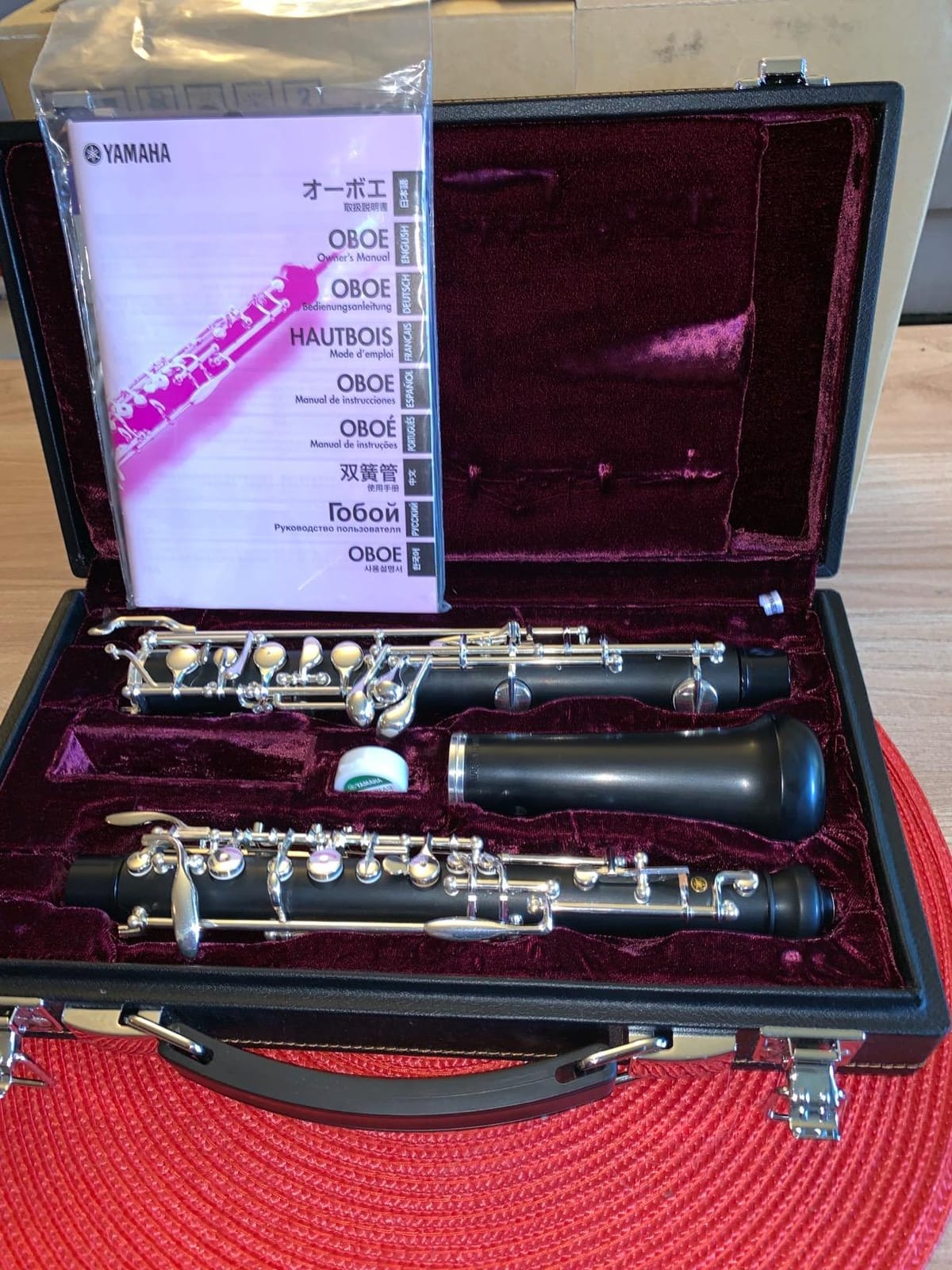
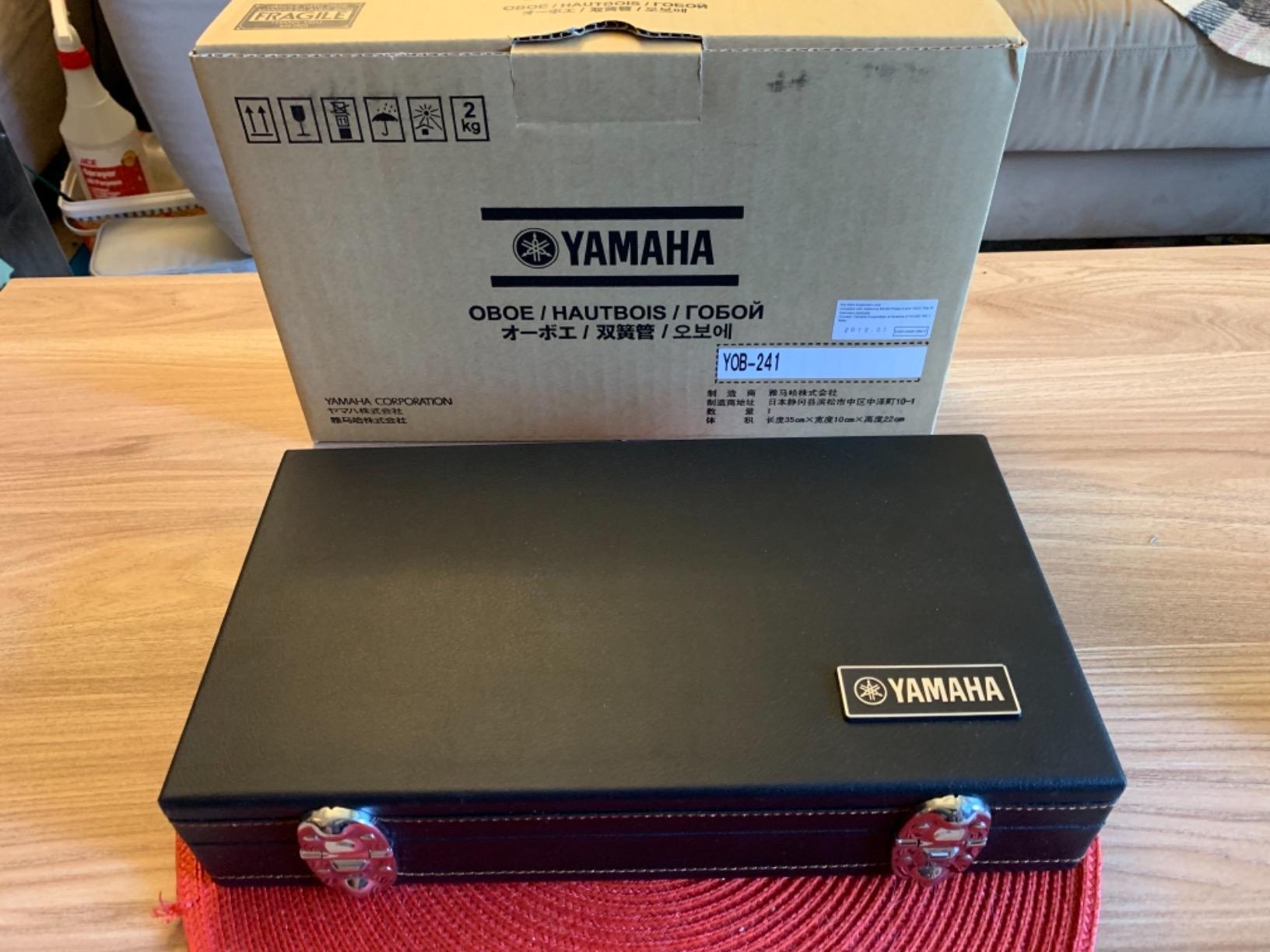
What you get is an ABS resin body bell that shrugs off temperature and humidity, silver-plated keys, and a simplified conservatory system with a case included. Reviewers rate it favourably and note it plays better than fancier older Selmer and Linton instruments, which is the recurring verdict on this model. It weighs 3.5 pounds.
The Simplified Conservatory System and Its Two Missing Keys
This system leaves out the low B-flat and the resonance F key. Those are precisely the two features that the rest of this guide keeps highlighting, which is the honest argument for stepping up when you are ready. Until then, a simplified system is not a flaw. It is the correct amount of instrument for a player who is still building the fundamentals, and the resin body removes cracking as an ownership concern entirely.
Why Second-Hand Value Retention Matters to Your Timeline
An instrument you can sell in three years changes the total cost of ownership more than the sticker figure does. Because the Yamaha name is the most recognised on the used market, a student who buys one and later steps up can recover part of the money and put it toward the conservatory oboe they will want next. If your teacher predicts an upgrade within two years, that resale maths matters more than any tone comparison.
Who Should Skip This Oboe
Skip it if you are already past the simplified stage, because the two missing keys are exactly what the intermediate tier exists to add. Skip it if you have a case already, since the factory case is criticised. And skip it if you play in an ensemble that assumes the F resonance key, because you will be the player covering those parts with a different fingering.
9. WUQIMUSC Ebonite C Key Oboe – Budget Pick With a Third Octave Key
- ✓Third octave key and resonance F at an entry-level body
- ✓Lightweight and compact for lessons and gigs
- ✓Hard protective case plus soft carry bag included
- ✓Ebonite body holds its dimensions through humidity swings
- ✕Only 1 review
- ✕90-day warranty is the shortest in this group
- ✕Generic brand with no visible dealer network
Ebonite body
Nickel-plated keys
3rd octave and resonance F
90-day warranty
The feature list here is the surprise. A third octave key and a resonance F on an entry-level ebonite C key oboe is not a configuration you expect at the bottom of the range, and it means this instrument covers repertoire that several pricier semi-automatic bodies in this guide cannot reach without alternate fingerings.
The body is ebonite, described as durable and consistent through temperature and humidity changes, with nickel-plated keys offering light, quiet action. Both a hard protective case and a soft carry bag are included, and the C key layout is described as beginner-friendly for learning. The warranty runs 90 days.
A 90-Day Warranty Is a Signal Worth Weighing
Every other instrument in this guide that states a warranty carries a year of cover. Ninety days covers a factory fault and almost nothing else, so if you buy this, the first inspection by a technician has to happen inside that window. Treat the warranty length as part of the purchase decision rather than fine print.
One Review Is Not a Rating
The five-star score comes from a single review. We list it because the shortcode requires the number and because the review is positive, but it tells you nothing about consistency between examples. Practising teachers warn that individual instruments vary even within a respected brand, which is the argument for buying only from a dealer who will stand behind the specific instrument in your hands.
Who Should Skip This Oboe
Skip it if you cannot get the instrument checked by a technician within 90 days. Skip it if the dealer offers no after-sale support because there is no service network implied here. And skip it if a long-term relationship with a specialist double-reed dealer matters to you, since a named brand with a local technician is worth a great deal over five years of ownership.
10. Danchet Redwood Silver-Plated Oboe – Best Maintenance Kit Included
- ✓Most complete kit in the guide with powder and absorbing papers included
- ✓Cork pads on joints for a reliable air seal
- ✓Bright rich sound with penetrating projection
- ✓1-year warranty
- ✓1.8 kg body
- ✕Only 1 review against a 5.0 rating
- ✕Newer listing with almost no review history
- ✕Shares a redwood platform with the other kits in this group
Redwood body
Silver-plated keys
Cork pads on joints
1-year warranty
The Danchet is defined by what is in the box. Alongside the case, gloves and cleaning cloth, you get a reed, an oboe swab, powder papers, absorbing papers, a thumb rest and a screwdriver. No other instrument here comes close on maintenance consumables, and for a player who is keeping an oboe clean for the first time that is genuinely instructive rather than incidental.
The build is a redwood body with silver-plated keys on a semi-automatic system, with cork pads on the joints for airtight assembly. The listed sound profile is bright and rich with penetrating projection.
It weighs 1.8 kg, which is heavier than the two Rochix bodies at 0.7 kg and the summina at 630 g, and closer to the 1.92 kg of our top pick. A 1-year warranty is included.
What Cork Pads on the Joints Actually Buy You
Joint corks are the seal between the upper and lower joints. When they swell, soften, or dry out, the instrument leaks and the player fights to get a clean first note. Cork pad construction seated at the factory gives a more forgiving starting point than a glue-only fit, and it matters most in winter, which is exactly when oboe players are already fighting cold air and dry reeds.
Why Absorbing Papers Are Not a Gimmick
You run a double reed instrument hard every day. Moisture collects in the bore and around the lower joint keys, and a wet instrument corrodes plating and swells cork faster than a dry one. Powder papers absorb moisture from the pads and the inside of the joint; absorbing papers wick the outside. A full set of both is roughly a school term of daily use, which is why the kit quantity is worth noticing.
Who Should Skip This Oboe
Skip it if you want review evidence, because a single review tells you almost nothing. Skip it if weight matters to you, since 1.8 kg is heavy for a smaller player. And skip it if you need conservatory keywork, because the semi-automatic system here has no third octave key and no banana key.
What Actually Separates a Student, Intermediate, and Professional Oboe
The tiers are not defined by price tags or by wood versus plastic. They are defined by how much of the instrument’s job is done for you. A student oboe gives you the fundamentals on a stable body. An intermediate oboe adds the mechanisms that the standard repertoire assumes. A professional oboe adds the mechanisms that advanced repertoire assumes, plus the level of bore and pad consistency that a working player can rely on for eight services a week.
Semi-Automatic, Full Conservatory, and Full Automatic
Semi-automatic is the dominant system worldwide, and an 8notes discussion confirmed that it is the most common choice except in Germany, where full-automatic instruments are far more prevalent. In a semi-automatic octave system, the octave key is normally closed and opens when you lift your right pinky, which is why you see players resting that finger on the instrument. Full automatic closes the key for you based on the notes below the break, which some players find easier and others find unpredictable.
Full conservatory is a different axis entirely: it describes the keywork set rather than the octave mechanism. You can have a semi-automatic octave with a conservatory key layout, and most of the intermediate instruments here do. If your hands are stiff, the Reddit r/oboe advice is worth reading: one returning adult hobbyist stayed on a full automatic instrument specifically because stiff fingers made semi-automatic difficult. That is a hand-physics decision, not a status decision, and it should be settled in the shop rather than at a register.
Keywork You Can Safely Skip and Keywork Worth Paying For
Start with the two that are worth real money. The low B-flat resonance key stabilises the low register and makes the bell mechanism acoustically correct, and no serious player should buy an intermediate oboe without it. The resonance F key opens the lower register and unlocks the slurred intervals in the lower third of the instrument, which is where intermediate repertoire starts to demand speed.
Next in line: the third octave key, which extends usable range upward and saves you from lipping every high note. A third octave key on an entry-level instrument, as the WUQIMUSC and the C key forked-F oboe both show, is a meaningful signal about where a manufacturer is positioning a model.
Lower down the list, the articulated B to C-sharp linkage, the banana key for auxiliary low C, the G-sharp to A trill, the split ring D-sharp to E trill, and the adjustable A-flat to B-flat trill screw are conveniences. They matter for a player who reads a lot of contemporary score, plays a lot of trills, or is aiming at a conservatory audition list. They are not what makes an instrument playable. If your teacher lists one of these as essential, take it seriously; if they do not mention it, you are not being short-changed.
Body Material and the Cracking Truth
Natural grenadilla and ebony give warmth but carry a real cracking risk. Experienced players on the Oboe BBoard reported that almost every wood oboe they had owned eventually cracked, and crack repair is expensive and slow even under warranty. Ebonite and resin bodies do not crack, and hardwood alternatives such as mopane have become common for that reason. There is no shame in choosing a body that will not crack in a car in February.
The maintenance routine that protects any wooden body is simple and boring, and that is exactly why it gets skipped: bore oil twice a year, a case humidifier kept filled, and no sudden temperature transitions. One educator with decades of studio experience also recommends not buying a wooden oboe in the autumn, because it has not been broken in before winter conditions. Buy wood in the spring and let it season over a summer.
Bore, Tone Hole Undercutting, and Hand Fit
The conical bore and the undercutting of the tone holes do more for response and intonation than the body material does, which is why the practitioner consensus puts bore ahead of wood in every argument. A .472 inch bore diameter is a common reference point across the category, and a properly undercut tone hole moves the instrument’s response noticeably when you change registers. Ask a dealer to demonstrate the difference between instruments rather than taking a spec sheet’s word for it.
Hand fit gets almost no attention and it should get more. Key height and the position of the thumb rest determine whether your fingers cover the holes or perch on them, and a small player fighting a tall key stack will blame the instrument for what is a fitting problem. Sit down, hold the instrument, and play something you know by heart before you judge the keywork.
New Intermediate or Used Professional: Making the Call
This is the question that comes up more than any other on oboe forums, and almost nobody answers it with numbers. A used professional instrument can cost less than a new intermediate oboe, and a well-maintained one will usually outlast a new entry-level model you would step up from in three years. The catch is condition. Nobody in the forum consensus trusted a used instrument that had not been played and inspected.
The universal consensus across experienced voices was to play-test and bring the private teacher. Not because brand reputation is untrustworthy, but because even respected makers produce individual instruments that are duds, and one thirty-year oboist said so plainly. Judge the instrument in front of you.
Here is what to check on a used instrument. Run every key and look for uneven seating, flex each one and listen for a change. Check the tenon joints for movement and cracks, especially on a wooden body. Look at the bore through the bell and down the upper joint for bore rings. Confirm that a technician can service it locally, and that the seller will let your teacher play it before you commit.
Dealer quality varies enormously, and participants in the research warned specifically that retailers who handle clarinets and flutes well may handle oboes badly. A specialist double-reed dealer who services the instrument in-house is worth more than a better name on the instrument. Ask who will do the first service and who answers the phone in year two. If you are weighing a different kind of step-up, our intermediate digital piano guide runs the same tier logic for a keyed instrument.
Reeds, Bocals, and the Costs Nobody Puts in the Listing
The instrument is the smaller half of what you will spend. Reeds are consumed continuously, bocals are replaced when the cork dries out, and a swab that gets left inside the body is a repair bill. None of that belongs in a product listing, and all of it belongs in your decision.
Reeds are the easiest place to cut cost without cutting quality. Buy in threes from a maker you already like rather than buying the most expensive single reed you can find, and rotate rather than saving one reed for six months. A broader rack of strengths teaches you more about your own instrument than any upgrade will, because reed response tells you where the bore is forgiving and where it is not.
Bocals are the least discussed and most revealing part of an oboe. A new instrument will likely need a bocal adjusted for it by a technician, and the tube that comes in the box is rarely the one that suits your air. A player on a Reddit oboe thread who tried the same model in two different woods found the difference in how easily they could express themselves, which is a good argument for spending an afternoon on bocal selection rather than on a new instrument.
If you also play another intermediate instrument and want a broader comparison format, our intermediate saxophone guide covers the same tier decisions for a different instrument, and our intermediate violin picks handle the string-side version of the same step-up question. If your family is choosing a court sport kit instead, our intermediate pickleball paddle picks apply the same value-for-money framework.
Frequently Asked Questions
What is the best oboe for intermediate level players?
The best intermediate oboe is the one carrying a resonance F key, a low B-flat with vent, and ideally a third octave key, on a body that will not crack. Judge the bore, tone hole finishing, and keywork before the wood type, and always play-test with your teacher present before you commit.
What is the difference between a student and an intermediate oboe?
A student oboe uses a simplified conservatory system and omits the low B-flat and resonance F keys. An intermediate oboe adds those keys plus trill mechanisms and often a third octave key, so the instrument stops fighting you in the repertoire you are now assigned.
Should I buy a wood oboe or is resin fine?
Resin and ebonite are perfectly legitimate choices, and experienced players argue bore and tone hole finishing matter more than body material. Wood gives warmth but carries cracking risk, so if you buy wooden, oil the bore twice a year, use a case humidifier, and avoid buying one in autumn.
Is a used professional oboe better than a new intermediate one?
Often yes, if the instrument has been serviced and play-tested. A used professional can cost less than a new intermediate and will outlast a model you would outgrow in three years. Check every key for uneven seating, inspect the joints for cracks, and have your teacher play it before you buy.
What is the easiest oboe reed to play?
A medium-strength reed, usually around a 2.5 or 3, is the usual starting point for an intermediate player. Buy a range of strengths, rotate them rather than using one to the end, and remember that a reed that feels too easy is usually indicating a leak or a reed that has gone stiff.
Why can’t you march with an oboe?
It is not that the instrument cannot be carried, it is that marching wind and reed moisture make the double reed unstable. The reed dries out and cracks or the pitch wavers with every step, and the double reed is far more exposed to movement than a single reed.
Final Verdict: Where to Start and When to Stop Upgrading
If you want the most complete, best-evidenced instrument in this guide, the Yinfente ebonite semi-automatic is our pick, because 37 reviews describing a bright, resonant ebonite body with a resonance F key and a full kit is more real-world evidence than anything else here. If your priority is keywork rather than feedback, the C key forked-F oboe gives you a third octave key and forked-F resonance at a tier that usually does not offer them. And if you are conservatory-bound, the Singer’s day SD-6449S is the only full conservatory system on the list, with the low B-flat vent, articulated C-sharp, and banana key already fitted.
If you are stepping up from a plastic student oboe and your teacher does not yet ask you for a third octave key, the Yinfente rosewood is the sensible middle purchase, and the summina is the one to buy for a younger band player who needs something light. Stop upgrading when the instrument stops being the thing holding you back. That is a harder test than any spec sheet, and the answer arrives during a rehearsal, not in a shop.
Whatever you choose, play it for an hour, in the room you will actually play in, with your teacher there. Everything we have written is worth less than that. Take the next step in the 2026 buying cycle and, whatever you land on, keep a case humidifier in the bag.

Leave a Comment