
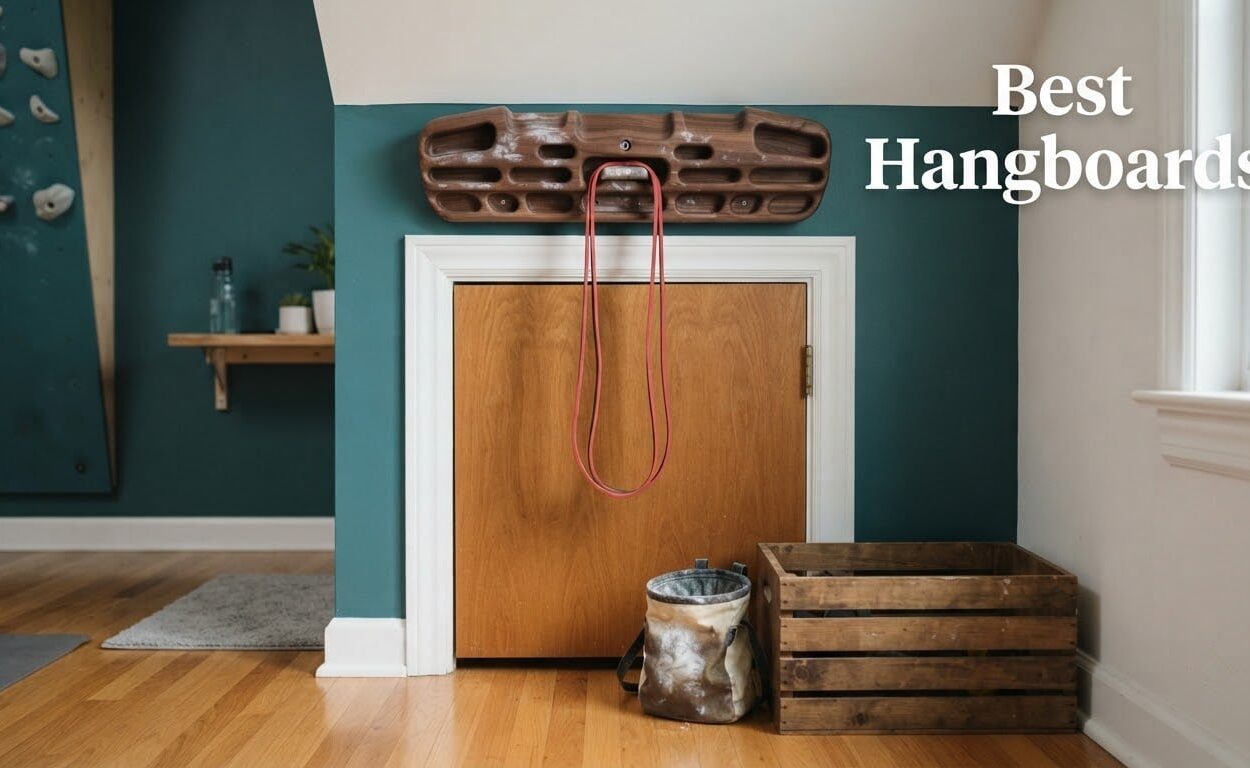
Best overall: the YY Vertical Verticalboard One — a poplar training board whose 15 progressive grips span roughly 5b to 8b, with magnetic inserts that add 10 mm of depth adjustment and a central handle for band-assisted pulling. If you want the full shortlist, here is our buying guide to the best hangboards for 2026, built from the spec sheets, materials and owner feedback on every board we could get our hands on.
I have spent months hanging, chalking and arguing about edge depth, and the thing nobody tells you is that a hangboard is not a strength object. It is a progression ladder. The board that gives you a 20 mm open-hand edge on week one and a 6 mm crimp six weeks later will change your climbing far more than the board with the most holds bolted to it.
Here is what we would grab right now, and why:
- YY Vertical Verticalboard One — Solid poplar. The densest, cleanest depth ladder in this group, with magnetic inserts that buy you 10 mm of extra difficulty whenever you want it.
- Metolius Project Training Board — CNC-milled composite. The tapered arc layout is the most ergonomically forgiving board here, and it is the one we hand to first-time hangboard owners.
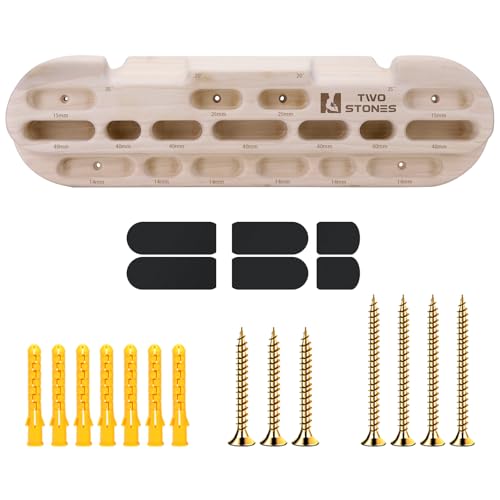
- TWO STONES Door Mounted Hangboard — Solid boxwood, CNC milled from one block. Pockets at four depths, R5 fillets, and mounting hardware in the box.
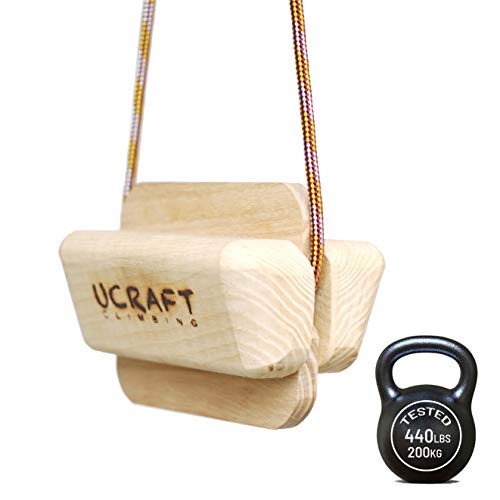
- Ucraft PocketBoard Mini Hangboard — Pocket-sized ash. At 169 g it lives in a jacket and works as a warm-up tool between sessions.
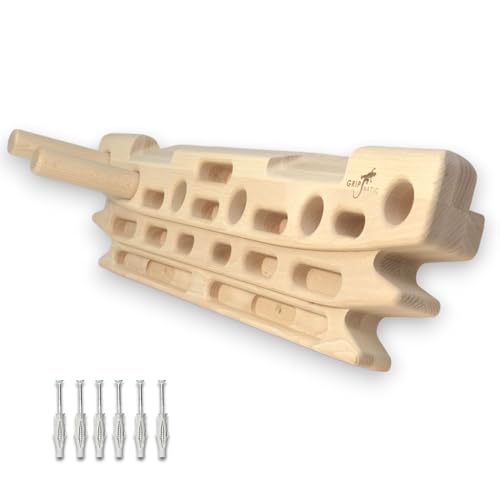
- GRIPNATIC FingerPeg 1.0 — Class A beech. Six depth levels plus six calisthenics bar holes, and it mounts above a door frame in minutes.
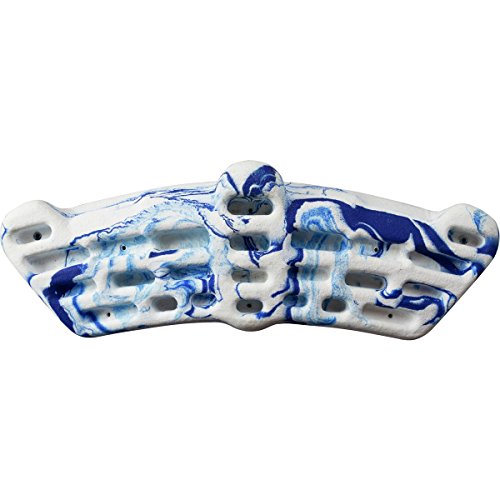
- Metolius Simulator 3D — Polyester resin. The widest hold variety of anything we reviewed, if you will accept chalk and weight for that range.
Two quick notes before you keep reading. First, the boards below all take real load, so a doorframe or drywall-only wall is not automatically safe. Second, a hangboard is a supplement to climbing, not a replacement for it. If you want more background on the training side rather than the shopping side, our home hangboard strength training guide covers the programming side in more depth.
Still not sure which way to go? Tell us your level, your mounting situation, and whether you want max hangs or repeaters, and we will point you at one board instead of twelve.
Our Top 3 Hangboards We Would Actually Buy in 2026

YY Vertical Verticalboard One
- ✓Poplar wood
- ✓15 progressive grips
- ✓magnetic 10 mm depth inserts

Comparing All 12 Hangboards Side by Side in 2026
| Product | Features | Action |
|---|---|---|
| YY Vertical Verticalboard One |
|
Check Latest Price |
| Metolius Project Training Board |
|
Check Latest Price |
| TWO STONES Hangboard |
|
Check Latest Price |
 TWO STONES Portable Hangboard TWO STONES Portable Hangboard |
|
Check Latest Price |
 Yes4All Wooden Hangboard Yes4All Wooden Hangboard |
|
Check Latest Price |
 Ucraft PocketBoard Mini Ucraft PocketBoard Mini |
|
Check Latest Price |
 GRIPNATIC FingerPeg 1.0 GRIPNATIC FingerPeg 1.0 |
|
Check Latest Price |
 Metolius Simulator 3D Metolius Simulator 3D |
|
Check Latest Price |
 TRANGO Rock Prodigy Training Center TRANGO Rock Prodigy Training Center |
|
Check Latest Price |
 Bellaroca Portable Hangboard Bellaroca Portable Hangboard |
|
Check Latest Price |
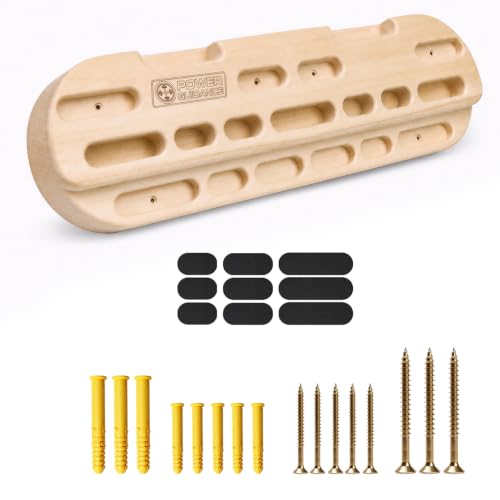 POWER GUIDANCE Hangboard POWER GUIDANCE Hangboard |
|
Check Latest Price |
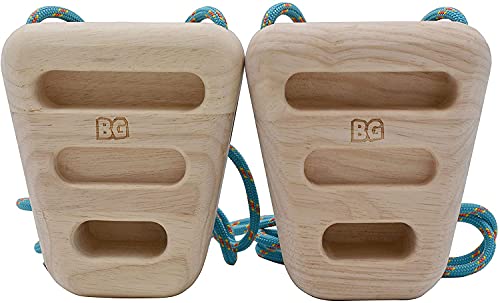 BG Climbing Wood Hangboard BG Climbing Wood Hangboard |
|
Check Latest Price |
1. YY Vertical Verticalboard One – The Cleanest Progression Ladder in the Group
- ✓Smooth poplar with no splinter risk
- ✓15 grips spanning roughly 5b to 8b
- ✓magnetic inserts add 10 mm of depth
- ✓central handle for one-arm and band work
- ✓furniture-grade finish
- ✕Some variants arrive without mounting hardware
- ✕deep finger slots need long screws and a bit extension
- ✕magnetic inserts stiff to seat at first
Poplar wood
620*130*55mm
1.685 kg
15 grips, 45 mm down to 8 mm with inserts
The Verticalboard One is the board I kept coming back to. Reviewers in the US, Spain, France, Belgium and Germany describe the same thing: poplar that feels smooth under the fingertips with no splinter risk, and a set of 15 holds that runs from a pair of warm-up jugs all the way to 8 mm edges once the inserts are seated.
What makes it different from every other board here is the magnetic insert system. Sliding a wedge into a hold cuts the usable depth by 10 mm, so a 35 mm edge becomes 25 mm without repainting anything. That single feature turns a fixed ladder into one you can make harder every week without changing boards.
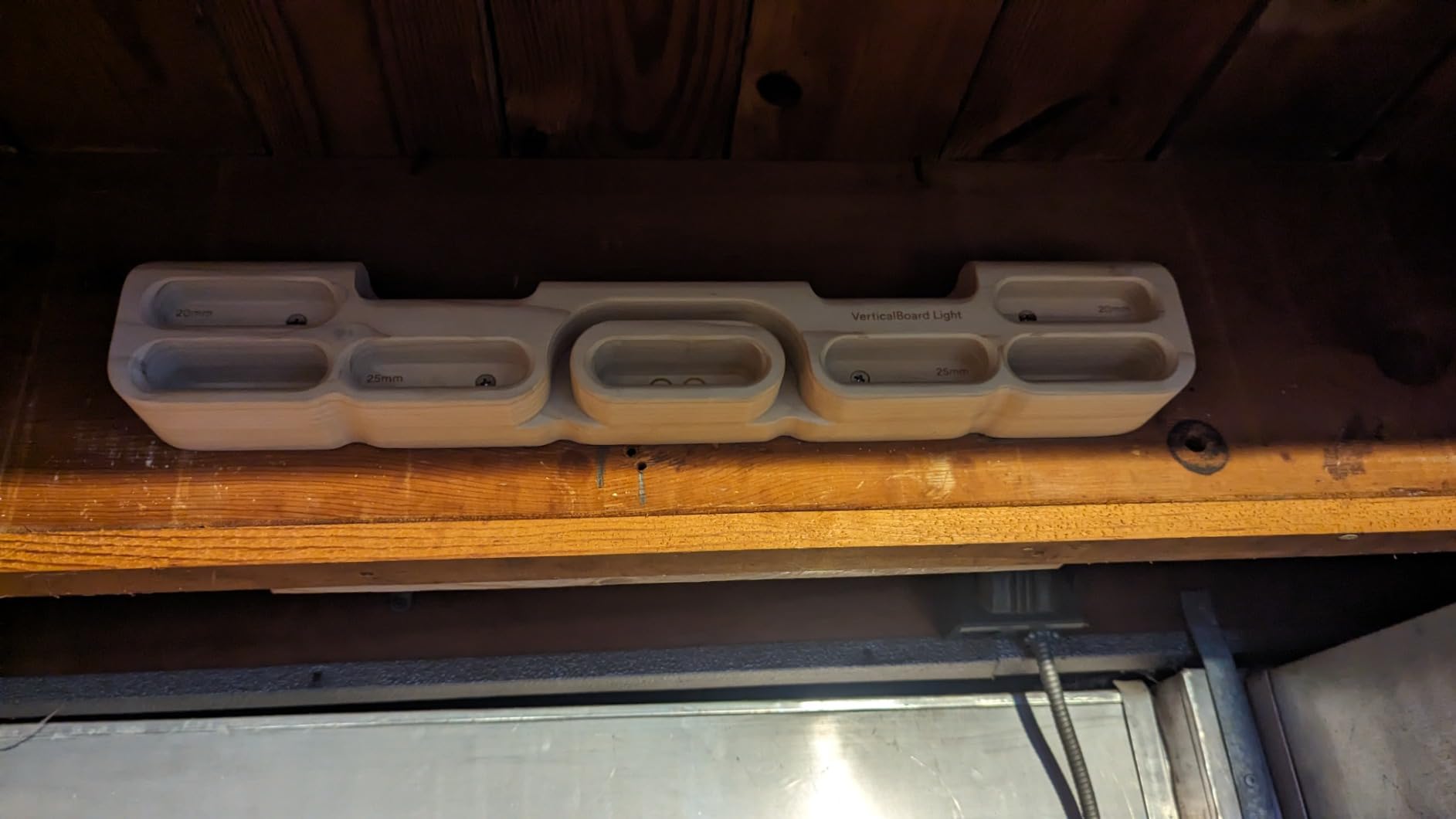
Why the Magnetic Inserts Matter More Than the Hold Count
Board specifications list 15 grips covering 45, 25, 20 and 18 mm, plus 35, 15, 10 and 8 mm with inserts, a 25 mm 30 degree incut, two-finger pockets, 35 and 20 degree slopers, and two jugs. That is a real ladder rather than a cluster of same-size holes.
The inserts are the reason to buy it. Because the wedges store on the side of the board, you can add 10 mm of depth to four different holds on the same evening, then take them out and repeat. The trade-off is that they are stiff to seat the first few times, so give yourself five minutes.
Build Quality, Finish and Living in a Home Room
At 620 by 130 by 55 mm and 1.685 kg, this is a substantial board that does not rattle. The finish is described as beautifully made and suitable for a home interior, which matters more than it sounds if the board is going above a doorway in a room you also use for other things.
The central handle is the sleeper feature. It supports one-arm pull-ups and band-assisted weighted pull-ups, so the same board covers finger work and pulling work without a second piece of kit bolted to the wall.
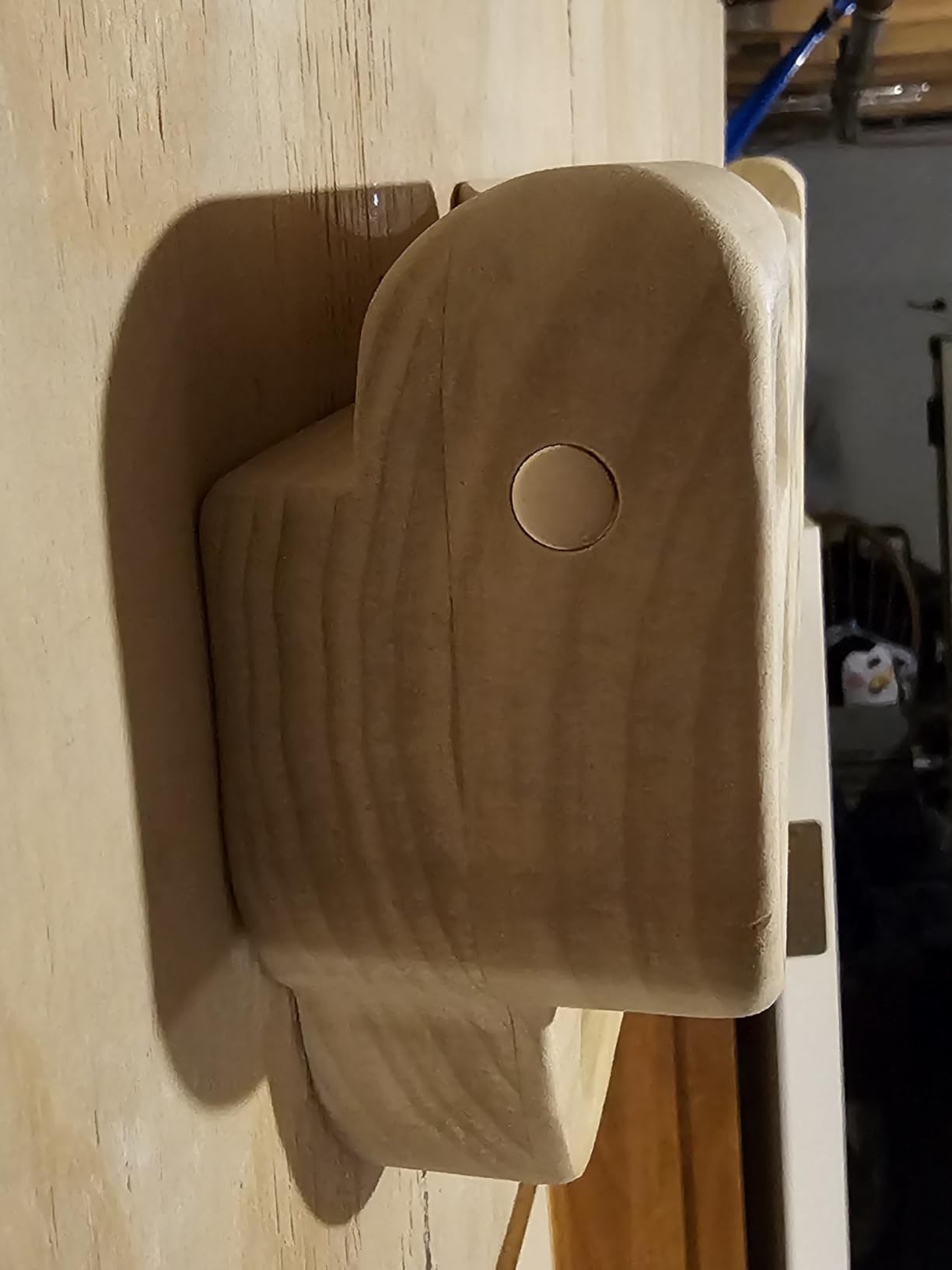
Installation Is the One Thing to Check Before Ordering
The most repeated complaint in the reviews is missing mounting hardware on some variants. Read the listing carefully and confirm what is in the box before you commit.
Those deep finger slots also mean the board wants long screws and a bit extension to reach a joist properly. Plan fifteen minutes with a stud finder rather than five minutes with a drill.
2. Metolius Project Training Board – The Most Forgiving First Board
- ✓Arc layout reduces shoulder and elbow strain
- ✓tapers top to bottom for forearm clearance
- ✓CNC milled for perfect symmetry
- ✓instructions and training guide included
- ✓compact 24.5 inch footprint
- ✕Best mounted to a plywood backboard screwed into studs
- ✕resin texture needs chalk on smaller holds
- ✕rare reports of a board arriving broken
CNC milled composite
24.5 by 6 inch
5.3 lb
Arc hold layout with taper
Metolius has been making this board since the mid-2000s and the design has not needed changing, which is either a compliment or an indictment depending on who you ask. It is also the board we recommend most often to someone buying their first one.
The reason is geometry, not features. Holds sit along a broad arc that tapers outward and downward, and the board narrows from top to bottom in both dimensions. That means the angle between your body and the hold changes gradually as you move through the set instead of snapping from comfortable to awkward.
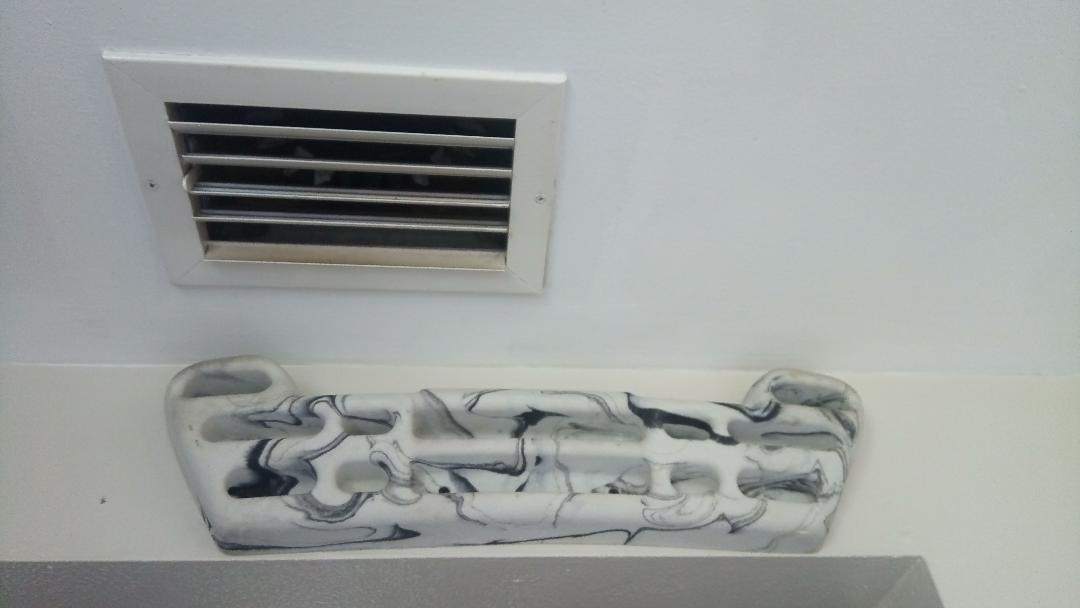
Why the Taper Matters for Elbows and Shoulders
Most beginner injuries on hangboards are not finger injuries. They come from hanging with locked elbows or shrugged shoulders on a hold set that forces the same awkward position six times in a row. The Project’s arc layout spreads that load across a range of shoulder angles.
It is the one board in this group where the shape of the board is doing safety work rather than just holding wood. At 622 by 152 mm it also fits discreetly above a doorway, which matters in a rented flat.
Texture, Symmetry and the Gym-Hold Feel
CNC milling gives perfect symmetry and a fine texture that owners compare favourably to climbing-gym holds. That said, the smaller holds still want chalk. Beginners should expect a short callus-building period before the shallowest holds feel confident.
The board weighs 5.3 lb and the box includes instructions, a training guide and mounting hardware. The training guide is worth reading even if you follow a protocol from elsewhere, because it explains the intended order of the holds.
Mount It Properly or Not at All
The clearest guidance in the reviews is that this board wants a plywood backboard screwed into studs. Drywall-only installs are not advised, and the backboard is not in the box.
If you have never screwed anything into a wall, budget an evening and buy a sheet of plywood. It is the difference between a board that lasts years and a board that pulls out of the plaster the first time you really lean on it.
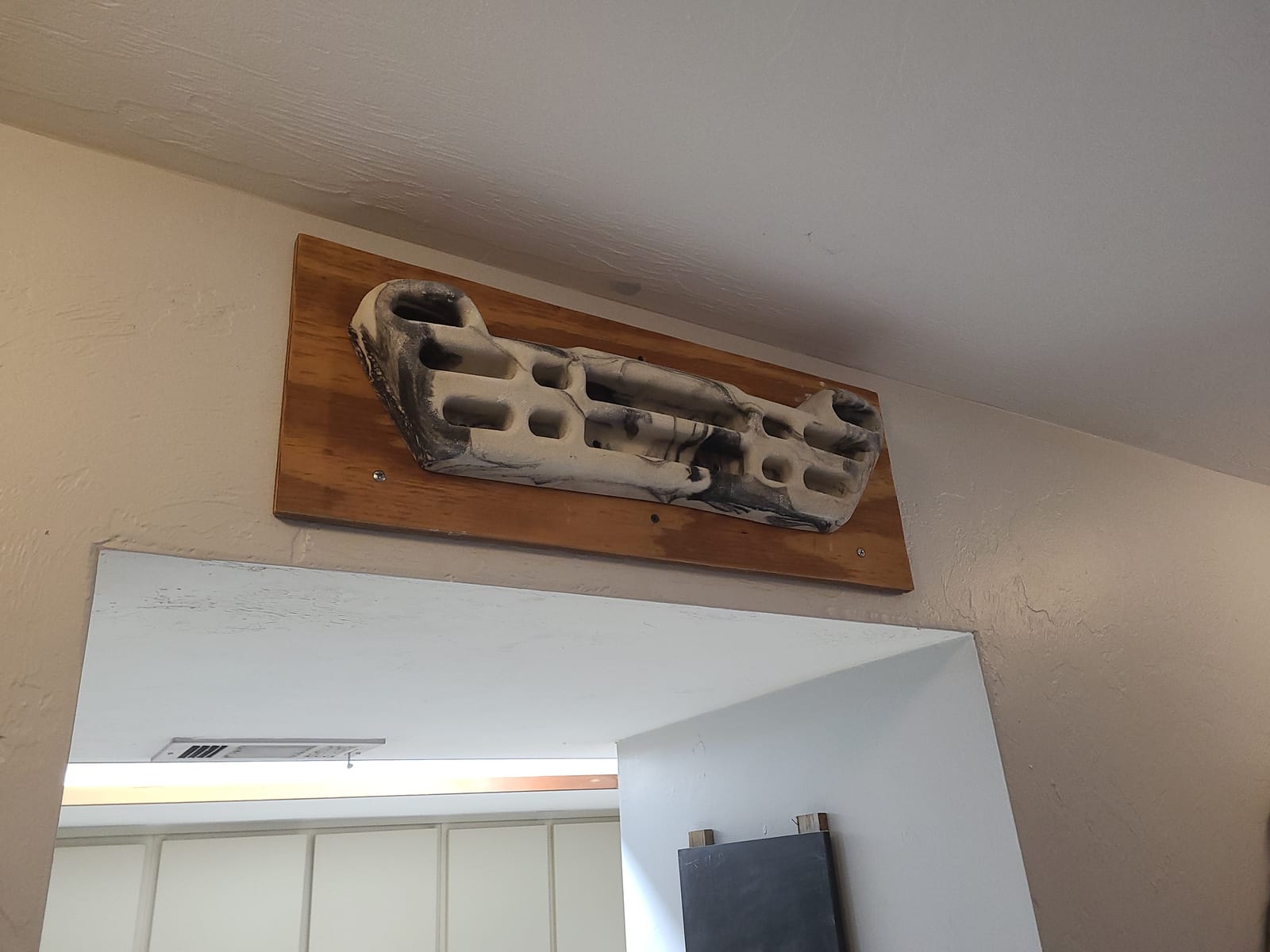
3. TWO STONES Door Mounted Hangboard – Solid Boxwood With Hardware in the Box
- ✓Milled from one solid block with no splices
- ✓R5 fillets and polished surfaces
- ✓four pocket depths for 1 to 4 fingers
- ✓hardware included
- ✓compact footprint
- ✕Jugs are narrow rather than comfortable
- ✕no drilling template for levelling
- ✕screw count and hole count do not always match
Boxwood
CNC milled
21.65 by 5.91 inch
2/3/4-finger pockets at four depths
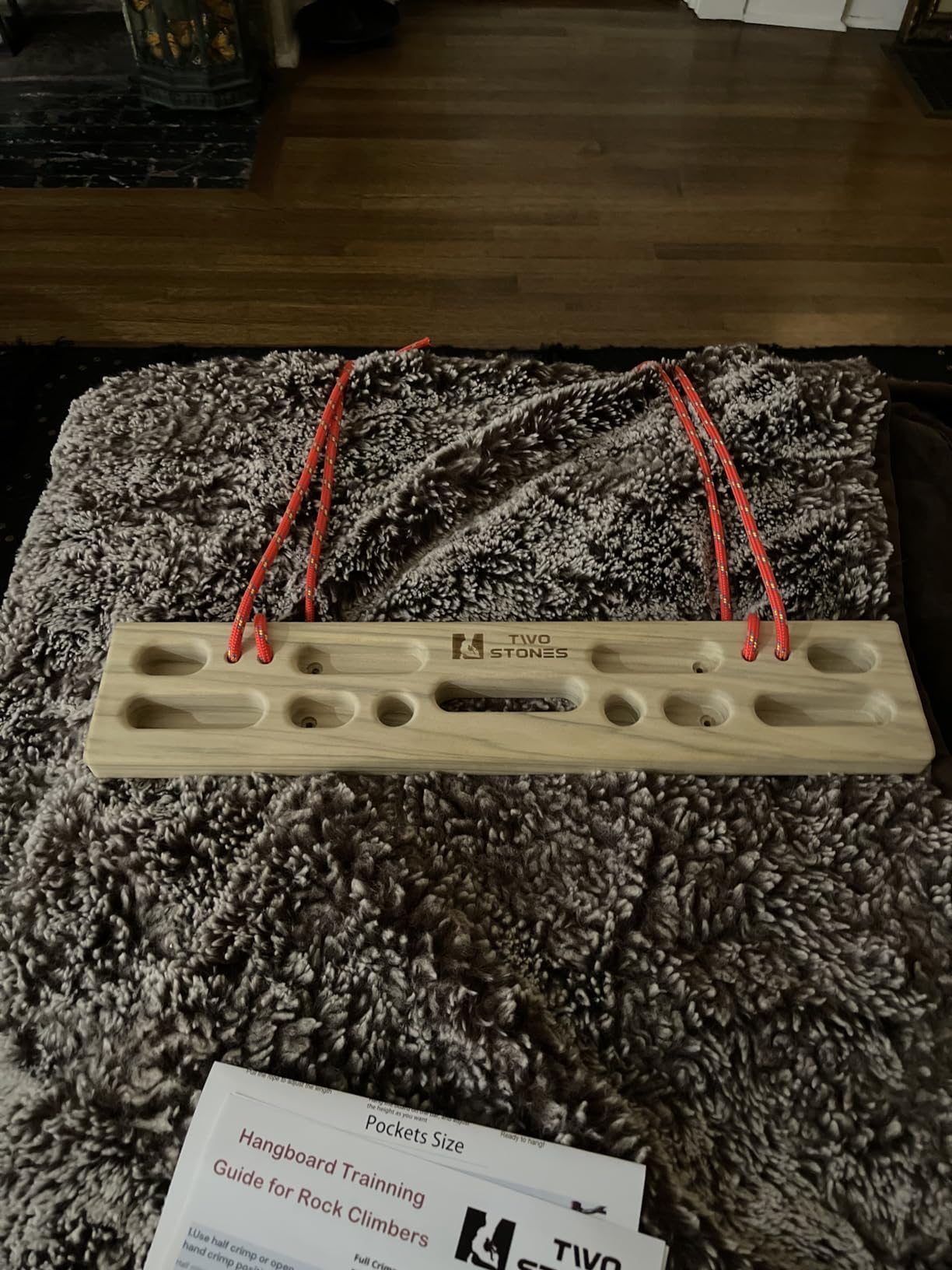
This is the board we would hand to someone who wants a proper mounted hangboard without a second trip to the hardware store. Seven screws and seven expansion tubes are in the box, and the pockets are polished rather than sanded.
Buyers describe it handling 190 to 200 lb users with the factory hardware, and the CNC milling from a complete solid wood block means there are no chips or splices to catch a fingertip on the way down the hold.
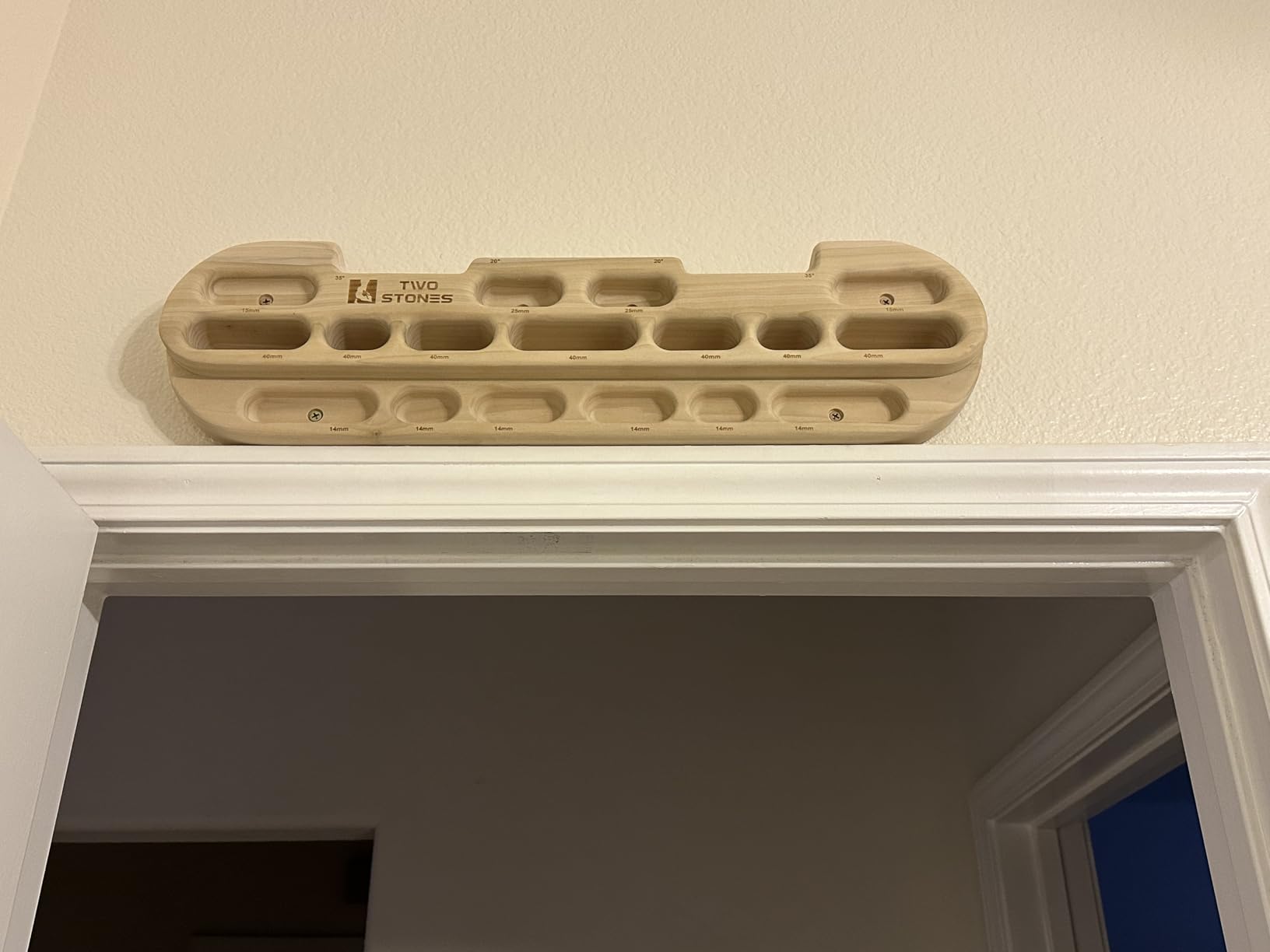
Four Pocket Depths and What They Are Good For
The layout is outer jugs, slopes at two angles, 2, 3 and 4-finger pockets at four depths, plus edges. That is enough variety to run a genuine warm-up-to-max-hang session rather than a circuit of identical grips.
Because the pockets are 2, 3 and 4-finger, you can keep a weaker finger on the lower rung of a set and still get a productive hang. On a board where every pocket takes all four fingers, that option does not exist.
Skin Feel and the Case for a Poured Backboard
R5 fillets on the pocket edges and a fully polished surface are why long hangs do not end in finger pain. That is the single most common reason climbers move from resin to wood, and this board is on the right side of that conversation.
For non-stud walls the manufacturer recommends a backboard. We would add a paper template of the hole pattern to your shopping list before you drill, because levelling by eye across a 21 inch board is harder than it sounds.
Also Useful as an L-Hang and Lever Station
Beyond finger work, the spec sheet lists support for dead hangs, bent-arm hangs, offset hangs, one-arm pull-ups, L-hang and front lever. If your training is mixed pulling and hanging, that breadth is worth more than another 4 mm crimp.
It weighs 16 oz and measures 21.65 by 5.91 by 1.89 inch, which is small enough to mount in a hallway without it dominating the wall.
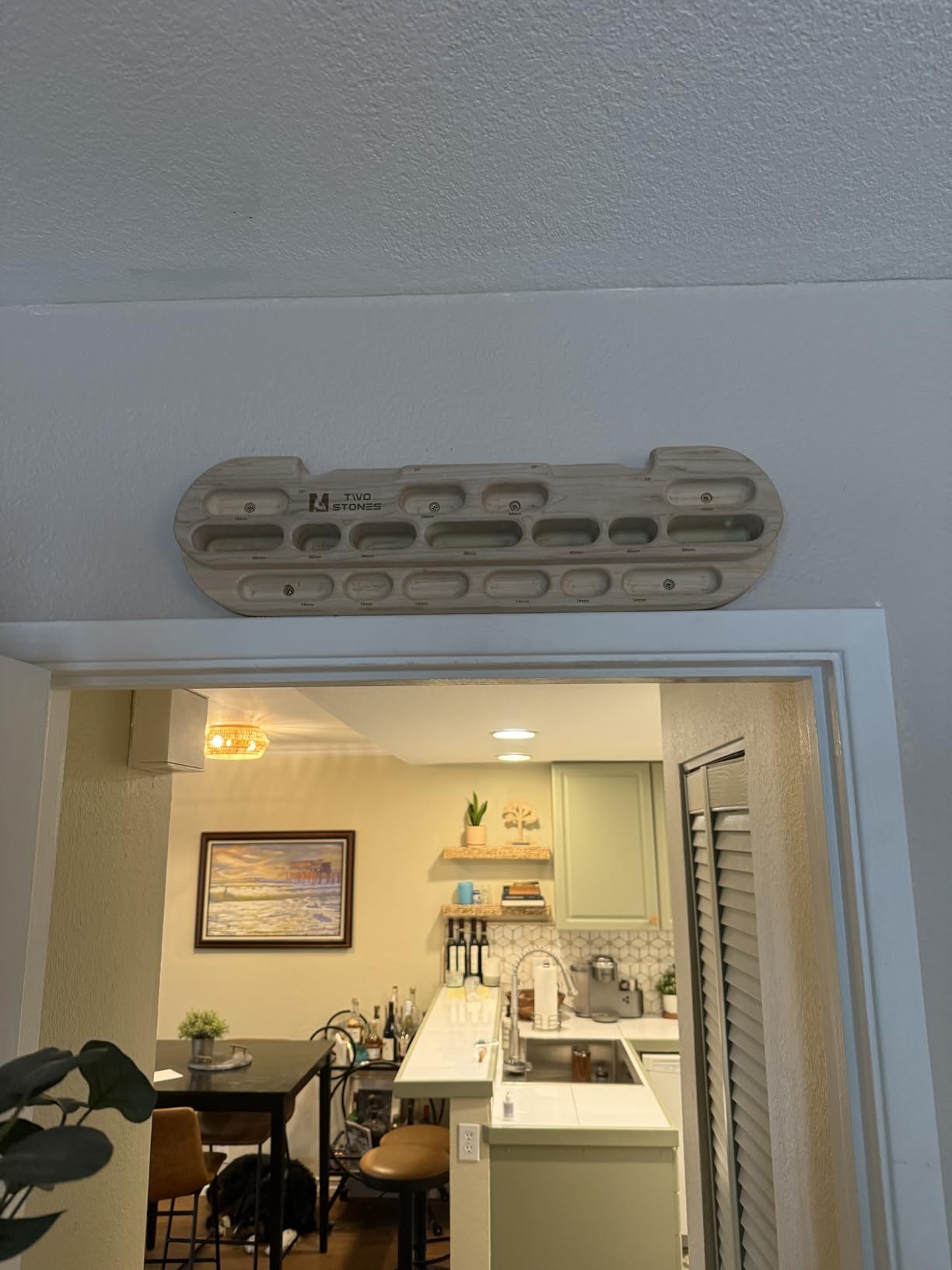
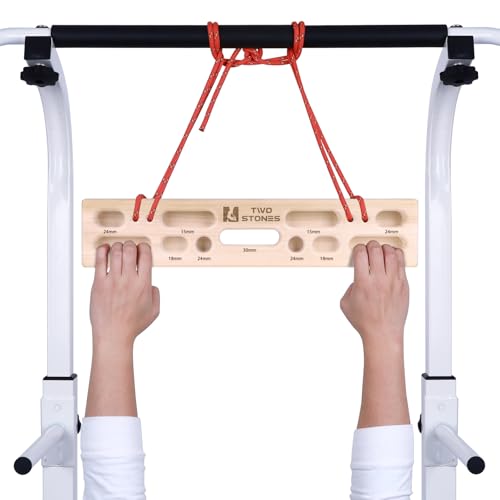
4. TWO STONES Portable Hangboard – Travel Weight With Four Pocket Depths
- ✓Only 0.7 kg so it clips to a pull-up bar in seconds
- ✓CNC milled from one solid block
- ✓four pocket depths
- ✓R5 fillets with no burrs
- ✓central handle for one-arm work
- ✕Upper-row two-finger pockets cramped by the row below
- ✕smooth wood needs chalk for reliable grip
- ✕tilts slightly backward when hanging
Boxwood
500*100*30mm
0.7 kg
1/2/3/4-finger pockets at four depths
Same wood, same milling approach as the mounted TWO STONES board, roughly a third of the size and a quarter of the weight. Owners report noticing climbing improvement within days of carrying it to the crag.
At 19.69 by 3.94 by 1.18 inch and 0.7 kg, it hooks to a pull-up bar, a tree or a gym machine in seconds. That is the whole point: a hangboard you will actually use on a four-week climbing trip is worth more than a better one at home.
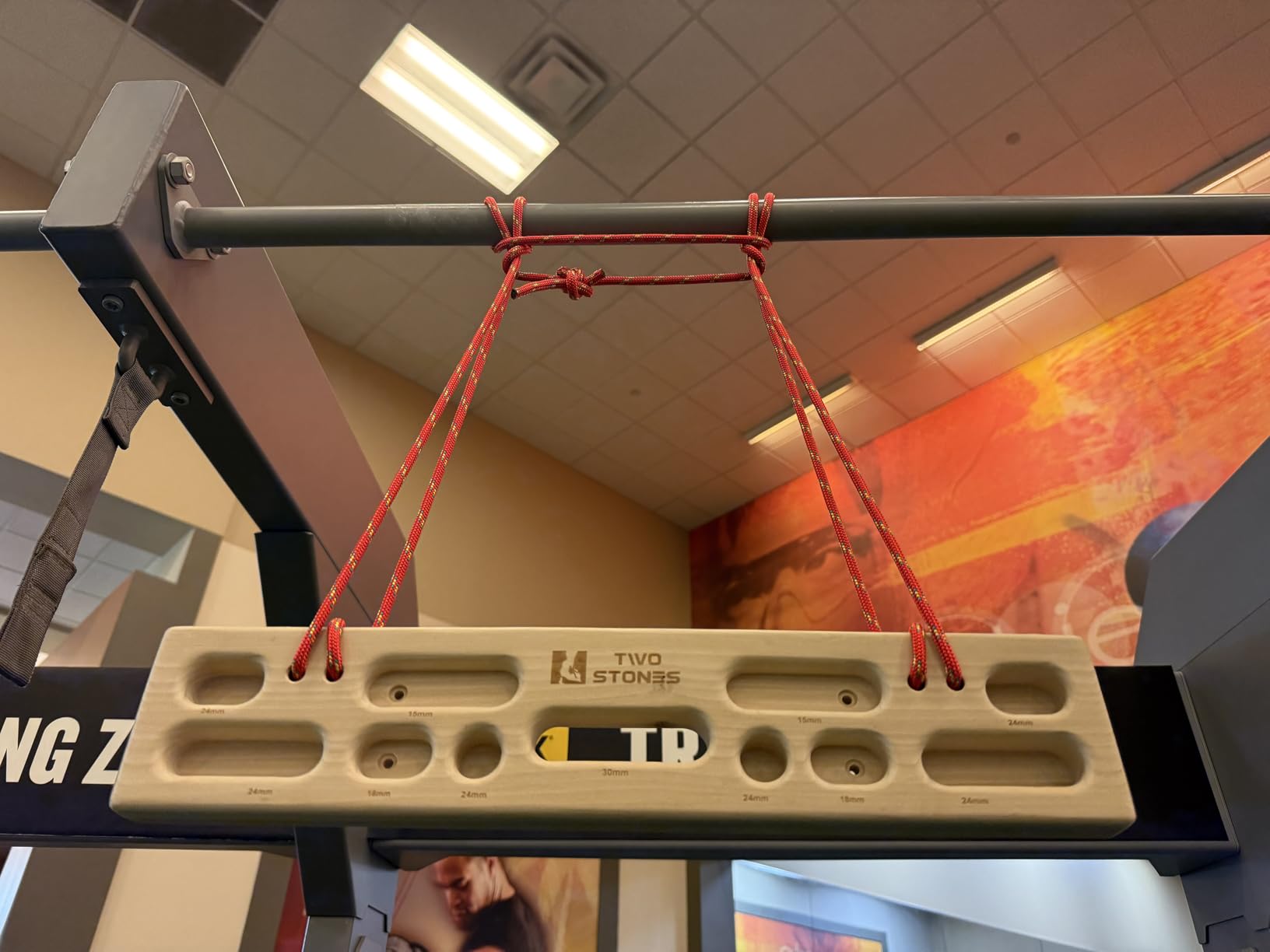
The Depth Ladder in a Hand-Sized Package
You get 1, 2, 3 and 4-finger pockets at four depths plus edges, which is more progression than most boards twice this size offer. The R5 fillets and polished surface keep it splinter-free.
The catch is layout density. With four rows packed into 30 mm of board height, the upper-row two-finger pockets are cramped by the row below and are reported as close to unusable. If you train two-finger work, check the spacing before you commit.
Chalk, Not Sweat, Is What Makes It Work
The wood is smooth enough that owners regularly note it needs chalk for a reliable grip. That is a small habit to build, but it is a habit, and on a wet day or a hot crag it matters.
It also tilts slightly backward when you load it. Not dangerous, but noticeable, and worth knowing before you start chasing a max hang on it.
Best Used as a Travel Companion, Not a Primary Board
Four pocket depths and a central handle make this a solid warm-up and maintenance tool. For a genuine max-hang ladder at home you will want more vertical resolution than a 30 mm-tall block gives you.
Think of it as the board that keeps you honest between gym sessions, and pair it with one of the larger mounted boards if you are chasing hard edges.
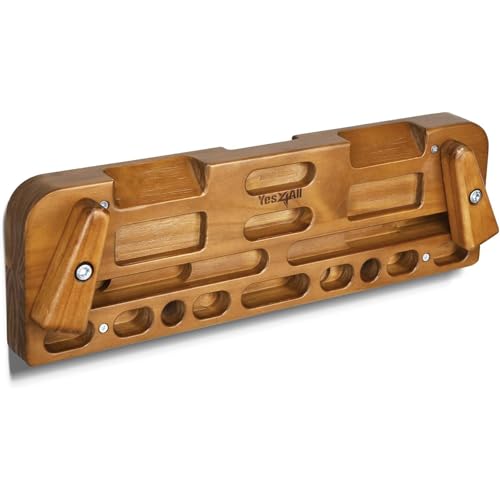
5. Yes4All Wooden Hangboard – Built Around Pinch Work and Everyday Grip Training
- ✓Largest review base here at 564
- ✓jugs slopers mini crimps and pinch holds
- ✓rounded corners and anti-slip jug surfaces
- ✓phone holder for timing sessions
- ✓compact mounting footprint
- ✕Needs a stud wall or a suitable wall type
- ✕weakest star distribution in the group with 61 percent five-star
Wood
22.3 by 7.1 by 3.1 inch
2.05 kg
Multiple grip positions for 1 to 4 fingers
Where most boards in this list are climbing-first, the Yes4All is grip-first. The spec sheet names climbing, OCR, backpacking, hunting and martial arts as target activities, and the hold mix reflects that broader brief.
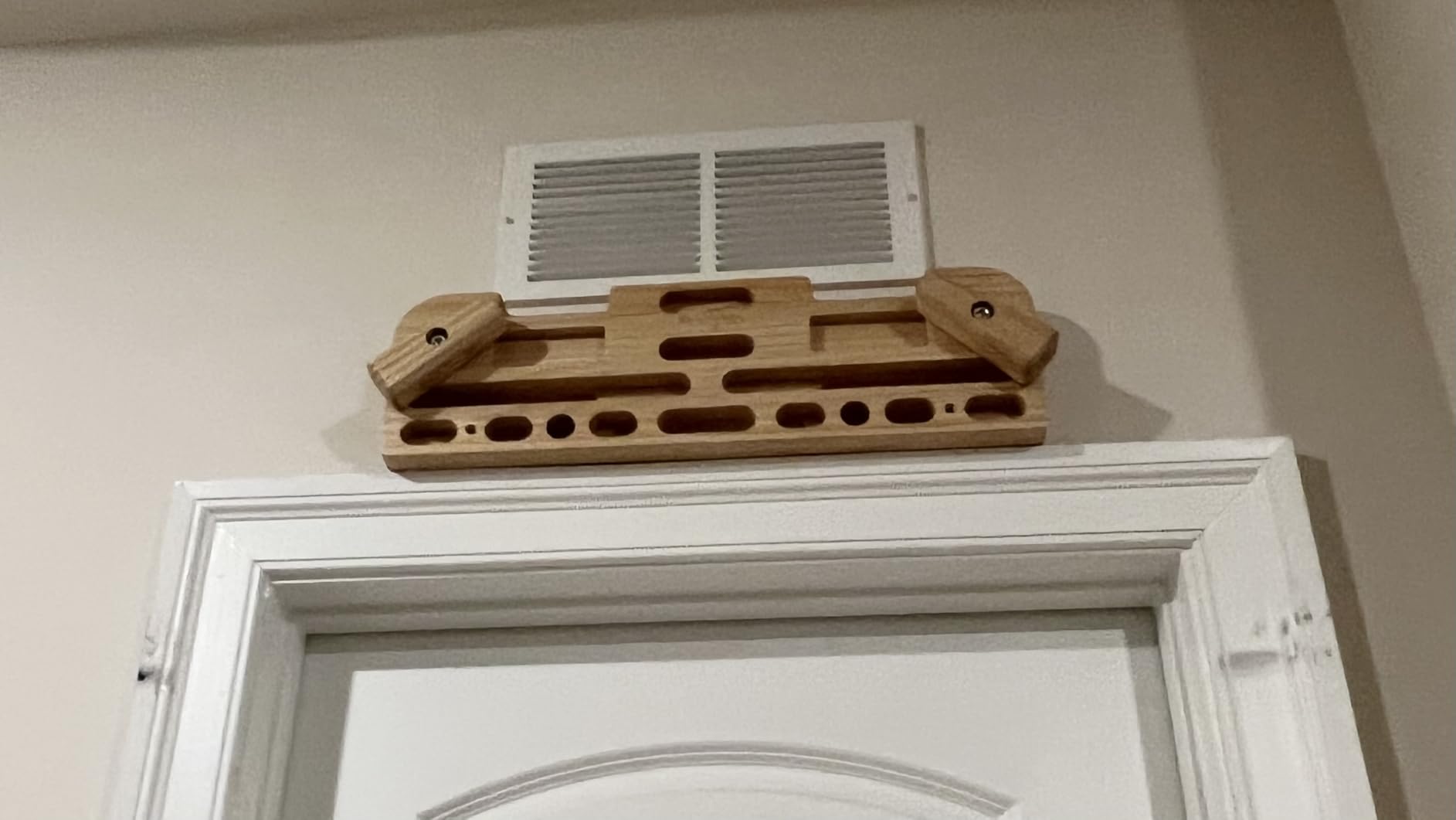
At 22.3 by 7.1 by 3.1 inch and 2.05 kg it is one of the chunkier wooden boards here, and the hardware list includes wood screws, hex bolts and a manual.
Rounded Jugs, Slopers and Mini Crimps in One Mix
The hold mix is jugs, slopers, mini crimps and pinch holds for one to four fingers, with rounded corners below the jugs to reduce strain and an anti-slip surface inside the jugs and slopers.
Rounding the corners below the jugs is a small design decision that pays off over a long session, because it is the underside of a jug that catches an open palm when you slip off the top edge.
A Phone Holder Sounds Like a Gimmick Until You Use It
Max-hang sessions are, by design, uncomfortable. Having the phone clipped at the top of the board turns a stopwatch buried on the floor into something you actually use, and it is a small quality-of-life difference over a twelve-week block.
Pair it with a structured warranty and return window and this becomes a low-stakes place to start if you are nervous about committing to a specialist board.
Read the Reviews for the Honest Rating
With 564 reviews, this has the largest review base in the group. But it also carries the weakest distribution: 61 percent five-star, with a meaningful seven percent one-star share.
The complaints cluster around mounting rather than build. The board is designed to be fixed to a suitable stud wall, and if your wall does not have one, that is the whole conversation. The anchor is the limit, not the board.
6. Ucraft PocketBoard Mini – The Warm-Up Tool That Lives in a Jacket Pocket
- ✓Only 169 g so it fits in a pocket
- ✓double-sided with 31 mm and 16 mm edges
- ✓paracord included for bars trees bolts and doorways
- ✓skin friendly surface
- ✓also works for carries and kettlebell work
- ✕Tilts side to side and single-hand use is unreliable
- ✕some boards arrive with rough faces that need sanding
- ✕two halves glued rather than bolted
Pocket-sized wood
10 by 3.9 by 7 cm
169 g
31 mm and 16 mm edges, rated to 440 lb
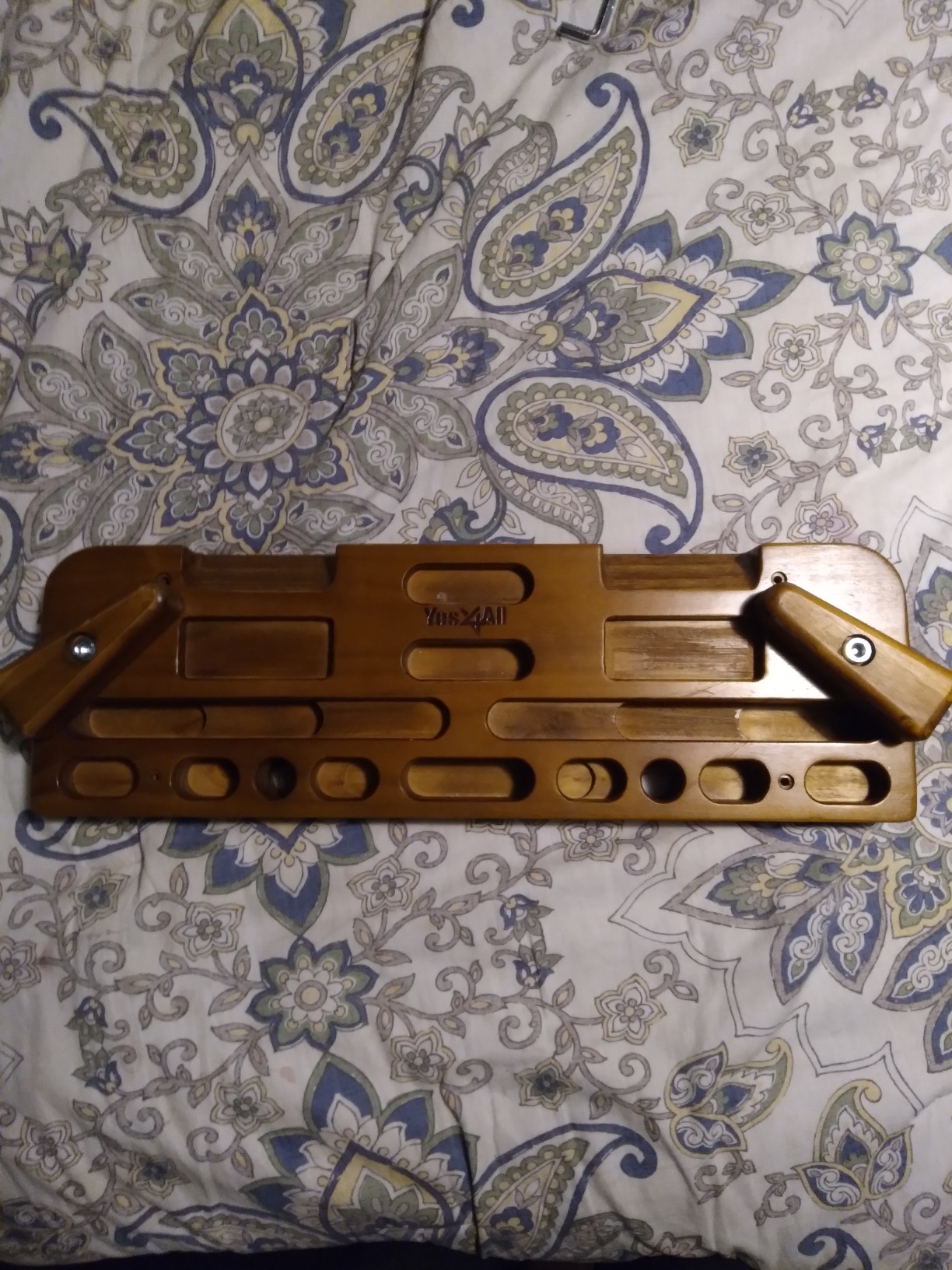
The Ucraft is not a hangboard in the usual sense. It is a 169 g block of wood that fits in a jacket pocket, and that is exactly the use case. Owners use it as a warm-up before bouldering sessions and report real grip strength gains over weeks.
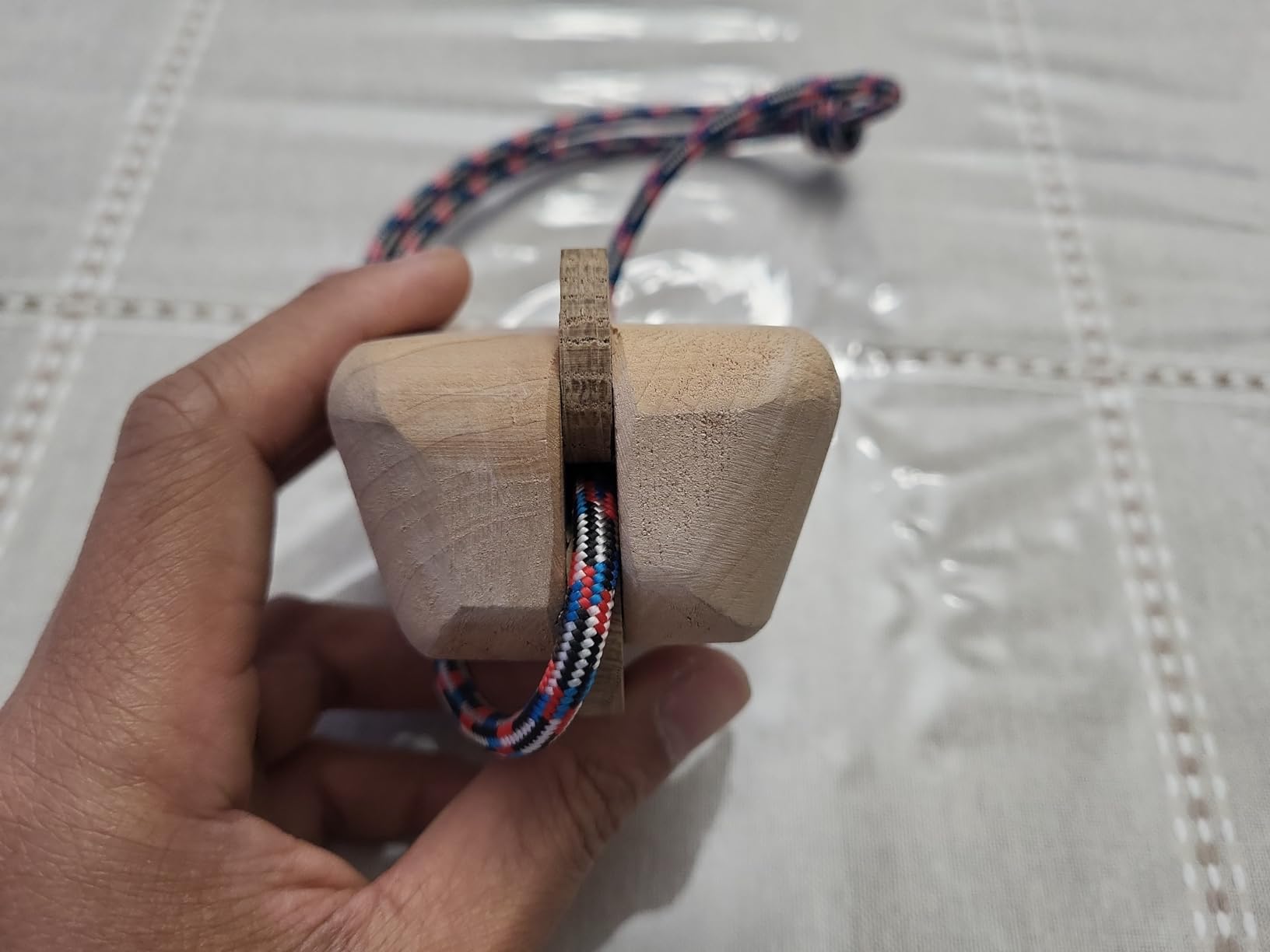
It is rated to 440 lb across 200 kg, and the included 5 mm paracord lets you hang it from a pull-up bar, a tree, a bolt or a doorway.
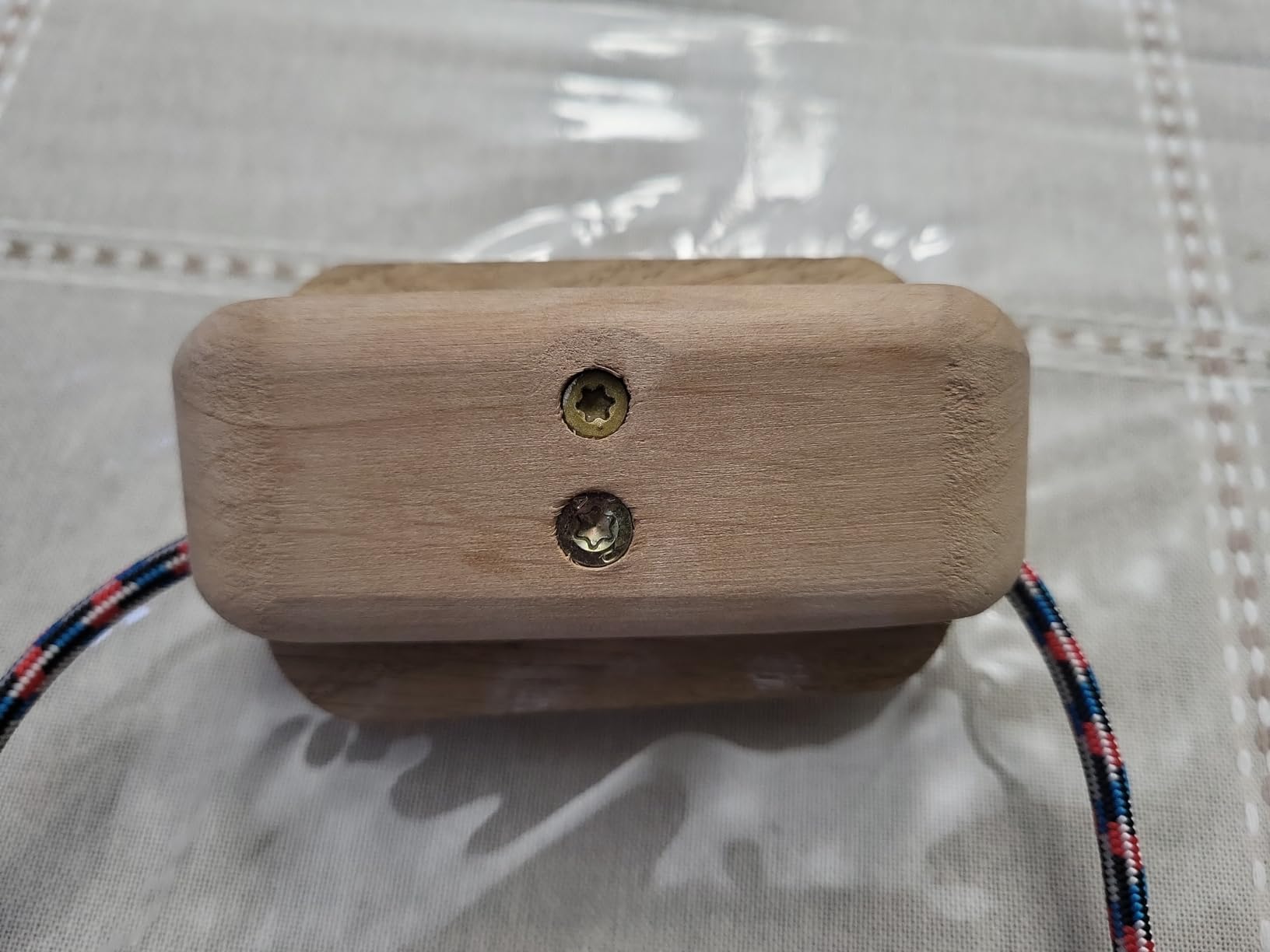
Two Edges, Two Sides, One Pocket
It is double-sided with 31 mm and 16 mm edges plus a big incut and small pinch positions. That is not a depth ladder, but it is enough to warm the finger flexors before a session without loading tendons cold.
Skin-wise it lands on the right side of the wood argument. Wood surfaces are easier on the fingertips than resin models, which is the single most common complaint people have with plastic boards.
Stability Is the Real Limitation
Be clear-eyed about this. The block can tilt side to side and only works reliably with two hands on the same block. Single-hand use is not dependable, so it is a warm-up tool and nothing more.
Some boards arrive with uneven, rough faces and coarse edges that need sanding before first use. The two halves are glued rather than bolted, which some buyers find unnerving under heavy load even at the stated rating.
Who It Is For and Who It Is Not
It is for climbers without a gym board nearby who want to maintain grip between sessions, and for anyone who wants to try finger training without drilling holes in a wall. At this weight, portability is the entire feature.
It is not for max hangs, not for chasing edge depth, and possibly not for larger hands if the block feels cramped. Check the size against your hand span first.
7. GRIPNATIC FingerPeg 1.0 – Six Depth Levels and Built-In Pull-Up Bars
- ✓2 3 and 4-finger pockets across six depth levels from 0.6 to 1.6 inch
- ✓warm-up jugs plus 20 and 35 degree slopers
- ✓six calisthenics bar holes
- ✓mounts above a door frame in under 15 minutes
- ✓furniture-like finish
- ✕Wood needs storing dry to protect the finish and load rating
- ✕heaviest of the wooden boards in this group at 3.5 kg
Beech wood
28.35 by 7.08 by 2.16 inch
3.5 kg
265 lb load capacity
The FingerPeg 1.0 is the most modern-looking board in this lineup, and the only one that ships with calisthenics bars in the box alongside screws and wall plugs. It is a recent listing, so its 100-review base is young but unusually consistent.
At 28.35 by 7.08 by 2.16 inch and 3.5 kg it is the longest wooden board here, and at 265 lb load capacity it handles almost every climber comfortably.
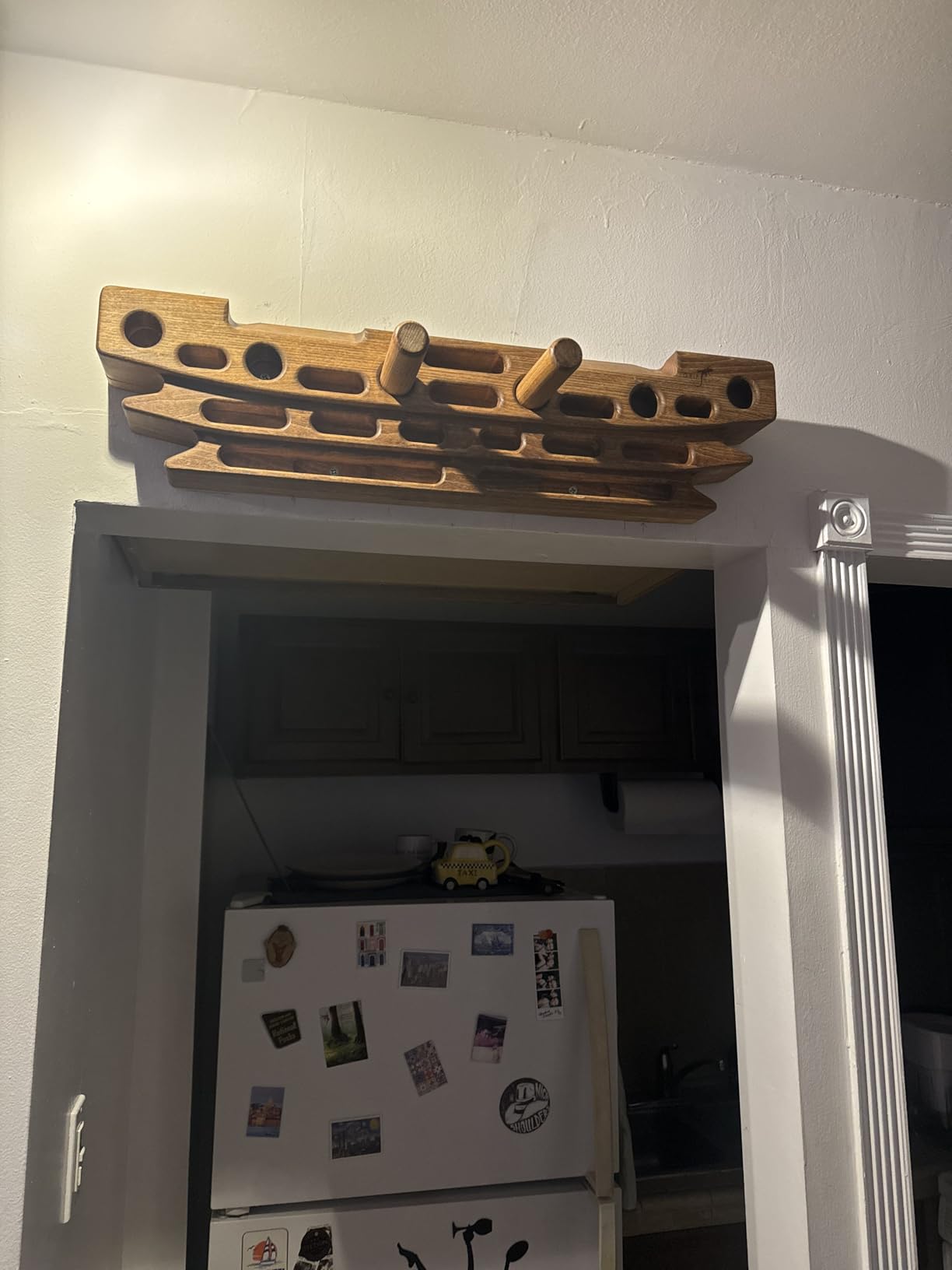
Six Depth Levels Is a Real Ladder
Two, three and four-finger pockets sit across six depth levels running from 0.6 to 1.6 inch, backed by warm-up jugs and slopers at 20 and 35 degrees. That is enough resolution to run a multi-week progression without running out of holds.
Owners like the depth range and the clean, furniture-like finish for a home room. Eighty-six percent of the 100 reviews are five-star, which is a strong signal for a listing this new.
The Calisthenics Bar Holes Change the Use Case
Six bar holes turn the board into a pull-up station. If your training is mixed, or if you want a single piece of kit to cover hanging and pulling rather than bolting a second bar to the wall, this is the most versatile mounted option here.
The tradeoff is weight. At 3.5 kg it is the heaviest wooden board in this group, which matters most during a solo install above a doorway.
Doorframe Mounting in Under 15 Minutes
Mounting above a door frame or onto a wooden beam takes under 15 minutes with the included hardware, according to the spec sheet. That is the most reassuring installation claim in this roundup.
One real caveat: keep the wood dry. Storing it damp can degrade both the finish and the stated load rating over time, which is a poor trade in a bathroom or garage.
8. Metolius Simulator 3D – The Widest Hold Variety in the Group
- ✓Widest hold variety here spanning 2 3 and 4-finger holds
- ✓fine-grained skin friendly texture
- ✓two sloper angles plus central one-hand holds
- ✓perfect CAD/CAM symmetry
- ✓owners report climbing grade progress
- ✕Heavy at 13.6 lb so mounting needs a backboard and two people
- ✕rough texture needs chalk and callus build-up
- ✕colour much whiter than the photos
- ✕rare cracked arrival reports
Polyester resin
28 by 8.75 inch
13.6 lb
CAD/CAM moulded
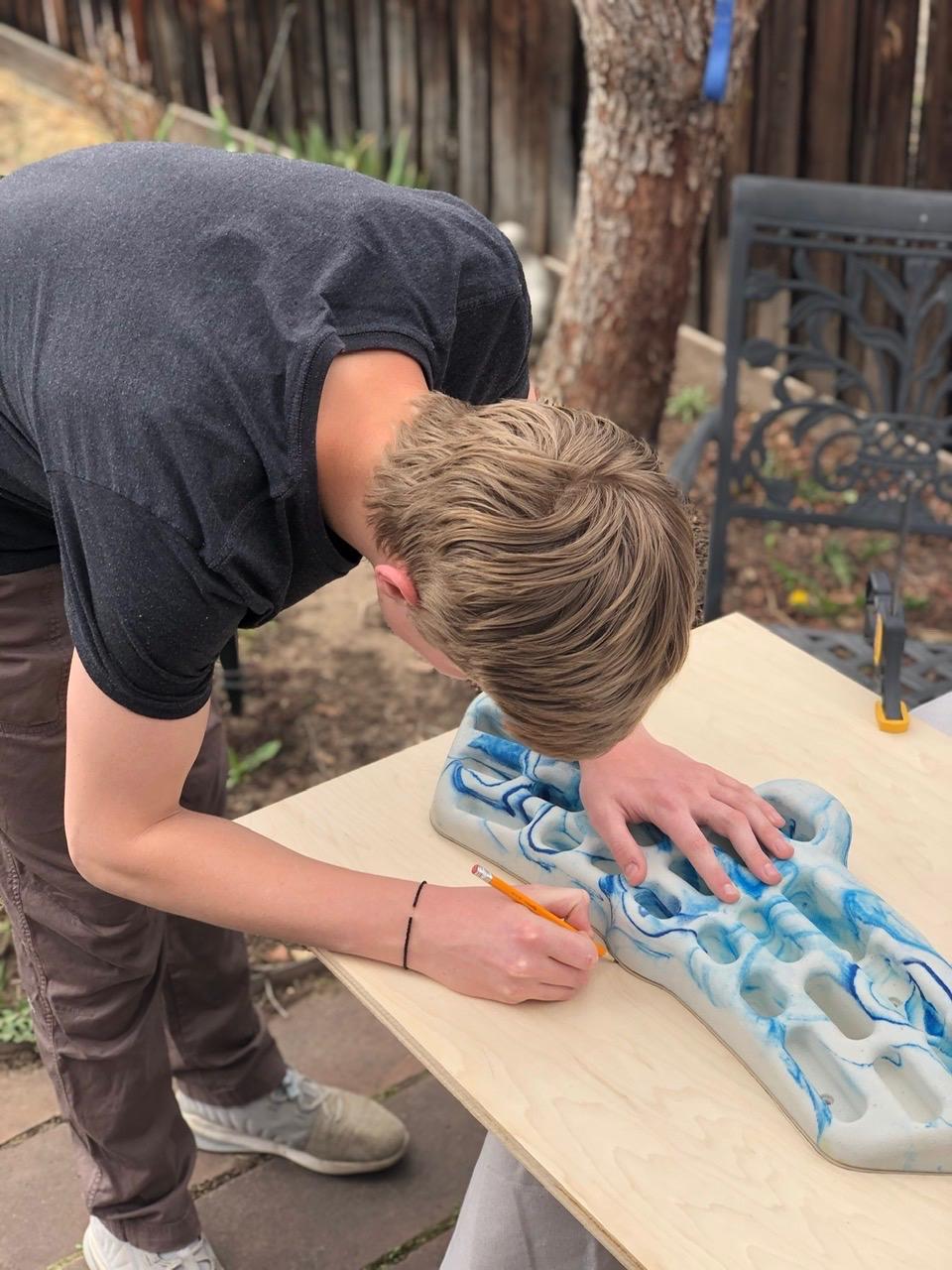
The Simulator 3D has the highest star rating of any board we reviewed, and owners consistently call it the most versatile trainer they own. It is also the heaviest thing on this list, and that is not a small detail when you are working alone above a door frame.
At 28 by 8.75 inch and 13.6 lb, it is a large, serious piece of equipment. The material is polyester resin, moulded from a CAD/CAM master for perfect symmetry, with a fine-grained texture that mimics real climbing wall holds.
Hold Variety Is the Entire Argument
Two, three and four-finger holds run from easy to very hard, with two sloper angles along the top, central one-hand holds and top corner jugs for pull-ups. No other board here covers that much territory in one frame.
One owner reports moving from 5.10c/d to 5.11a/b with regular 10 to 15 minute sessions. That is the kind of result you will not get from a board with six holds, whatever those holds are made of.
The Resin Trade-Off Nobody Mentions Twice
Resin feels closer to a gym wall than wood does, and that is genuinely useful. It is also less forgiving on skin, and the fine texture needs chalk plus a period of callus build-up before beginners feel confident on the smaller holds.
Owners who train several times a week on resin and report torn skin eventually move to wood. If your sessions are frequent and long, factor that in.
Plan the Install With a Helper
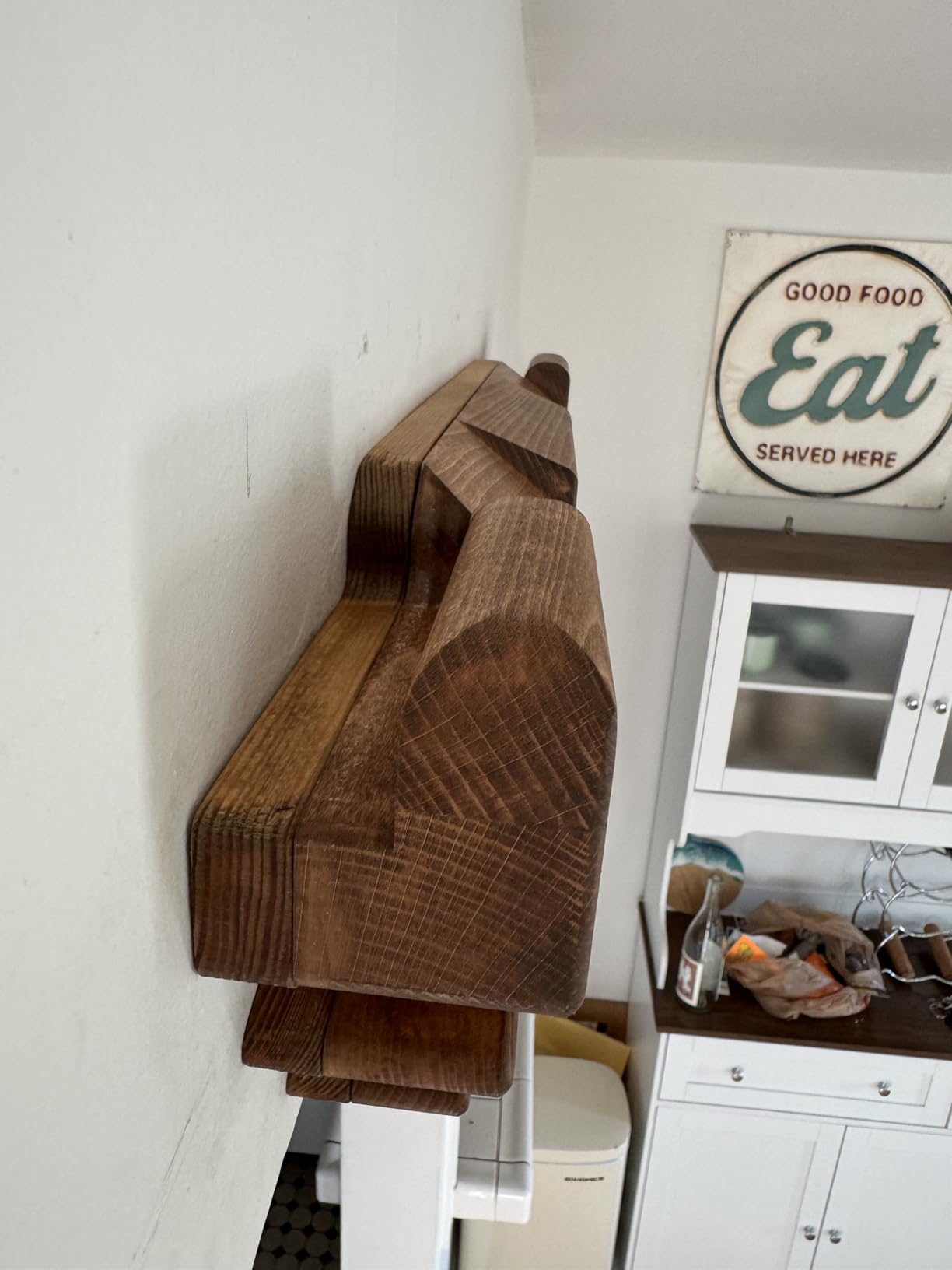
At 13.6 lb, mounting is a two-person job in practice. Most owners bolt it to a plywood backboard fixed into studs, which also protects drywall from the board’s weight and from repeated drilling.
Also expect a colour difference. Owners consistently note it arrives much whiter than the advertised product photos, which is a cosmetic point but not nothing when a board is going in a living space.
9. TRANGO Rock Prodigy Training Center – Adjustable Width and 36 Grips
- ✓36 grips covering variable depth edges pockets pinches and slopers
- ✓two-piece adjustable width matches your shoulder width
- ✓index bumps give repeatable finger placement
- ✓highest star rating in the group at 4.9
- ✕Mounting hardware sold separately
- ✕heaviest and most expensive board in this selection
Natural beech wood
20 by 16 by 5 inch package
4.46 kg package
36 grips
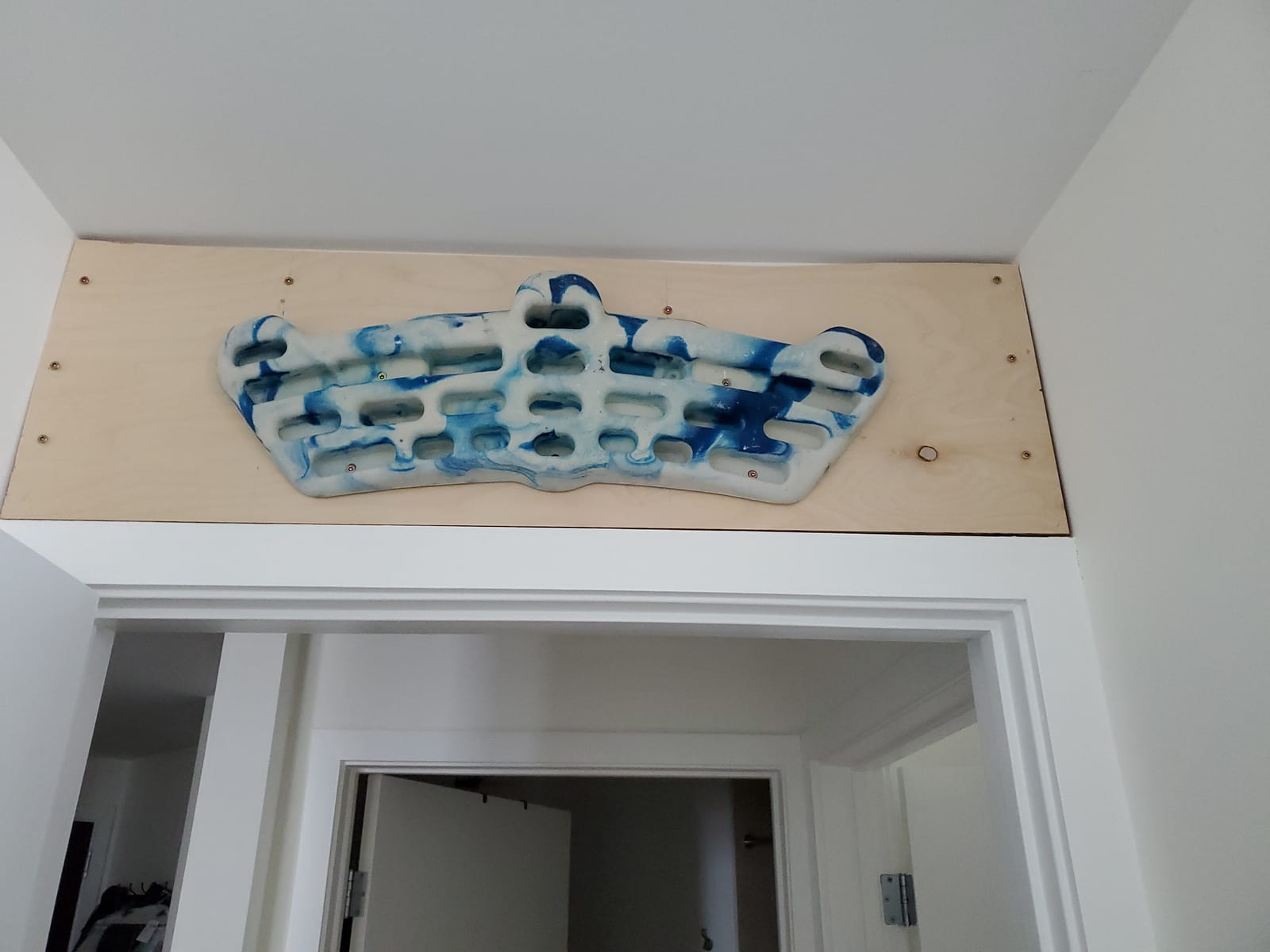
The Rock Prodigy is the only board here that solves the width problem directly. It comes in two pieces, so you can set the overall width to match your shoulder span rather than hanging from a fixed frame that forces your arms into somebody else’s ideal position.
For anyone who has felt elbow or shoulder stress from hanging too wide, that adjustment is worth more than another three holds. It is the same reasoning that surfaces when boards are ranked: symmetric, joint-friendly training ranks well because it lasts.
36 Grips and Index Bumps for Repeatability
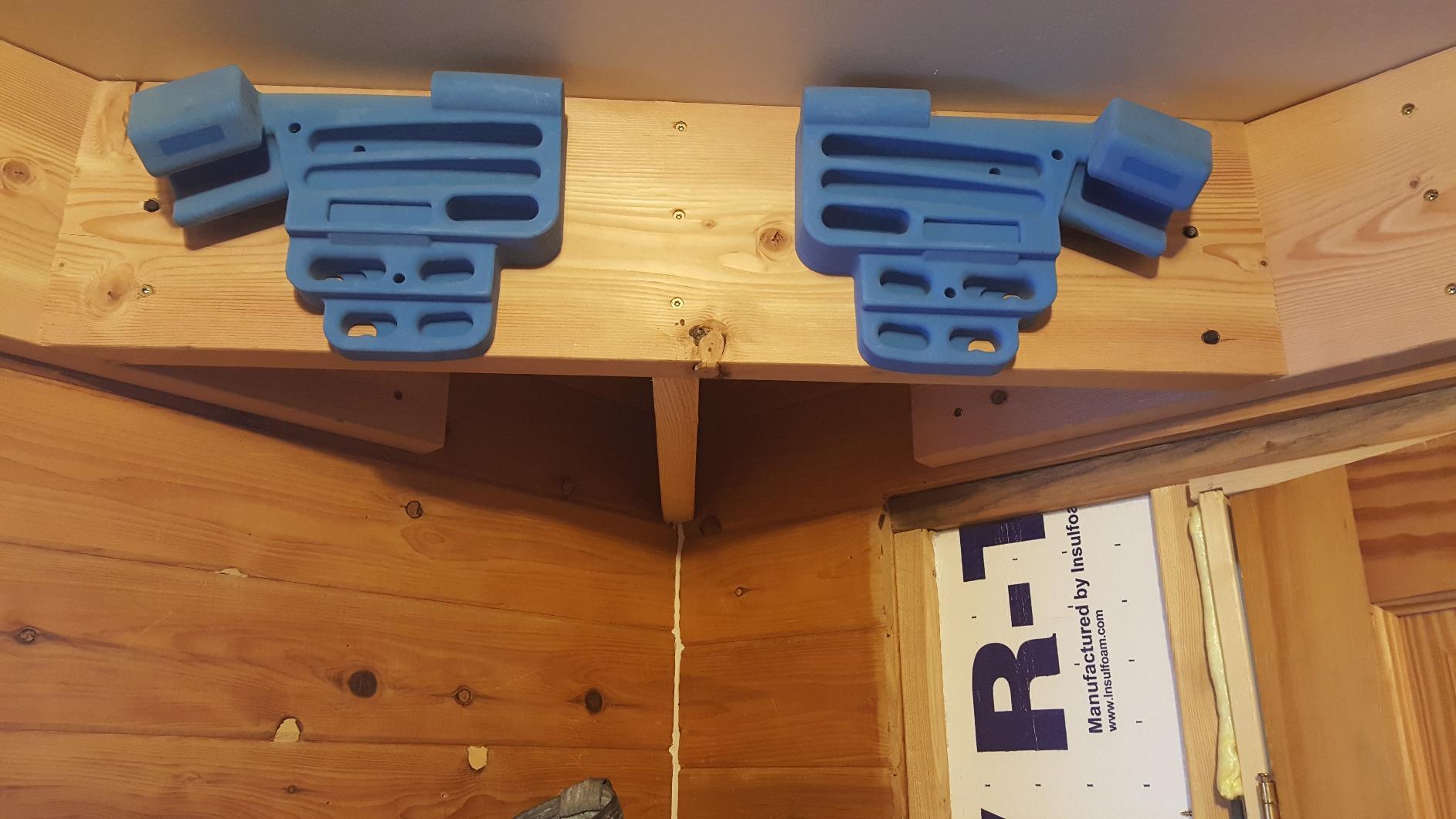
Thirty-six grips across variable-depth edges, multiple pockets, pinches and slopers is by some distance the largest hold library in this roundup. The tactile index bumps give consistent, repeatable finger placement from session to session.
Repeatability is underrated. On a board with unmarked, same-size holes you cannot tell whether week three was harder than week two. With index bumps you know your hand went in the same place.
Two-Piece Width Adjustment
The board splits into two halves that can be set to different overall widths, so the hang position matches your shoulder span. Most fixed boards force a compromise between too narrow, which twists the shoulders, and too wide, which loads the elbows.
If you are the type who follows a protocol, the hold library gives you plenty of room to build one. If you already program your own sessions, the adjustable width is the reason to buy it anyway.
Buy the Hardware Separately
The one recurring caveat is that mounting hardware is not included. Plan for that when you budget the install rather than discovering it with a drill in your hand.
It is also among the most substantial boards in this selection, with variants including Forge, Training Center, Natural and Pivot. At 20 by 16 by 5 inch packaged it is a big object for a domestic wall, so measure before you commit.
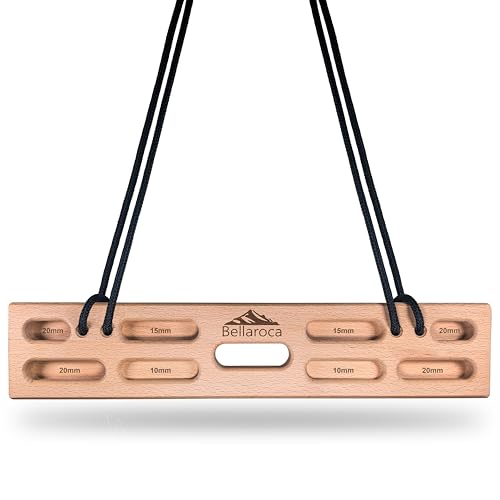
10. Bellaroca Portable Hangboard – Rubber Plates Turn Three Depths Into 12+ Combinations
- ✓Four 3 mm rubber plates cut pocket depth on demand for 12+ combinations
- ✓single block beech smooth on skin
- ✓3 metre rope allows rigging from any anchor in about a minute
- ✓central one-arm slot plus corner technical holds
- ✓ships with a structured workout plan
- ✕Some boards report sharp unbeveled edges
- ✕edges are narrow for larger hands
- ✕setup knot instructions are not clear
Beech wood
19.69 by 3.94 by 1.14 inch
1.1 kg
20/15/10 mm pockets plus plates
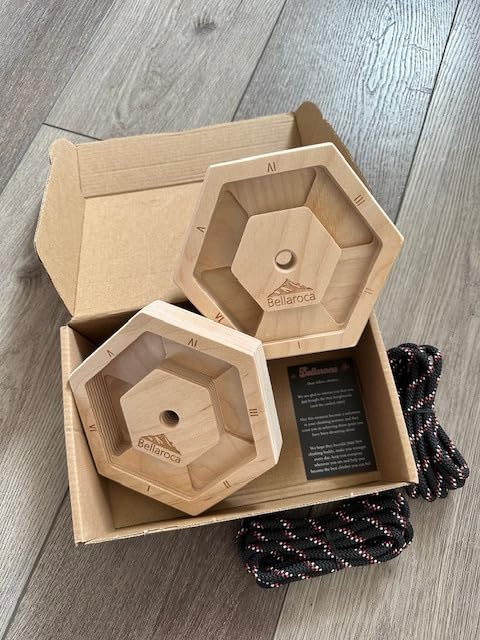
The Bellaroca’s idea is simple and I like it. Instead of buying a bigger board to get more difficulty, you add a 3 mm rubber plate to a pocket and subtract depth on demand. Three base depths become more than twelve usable combinations.
It weighs 1.1 kg and includes two ropes, four rubber plates and the board, with step-by-step assembly instructions and a structured workout plan in the box.
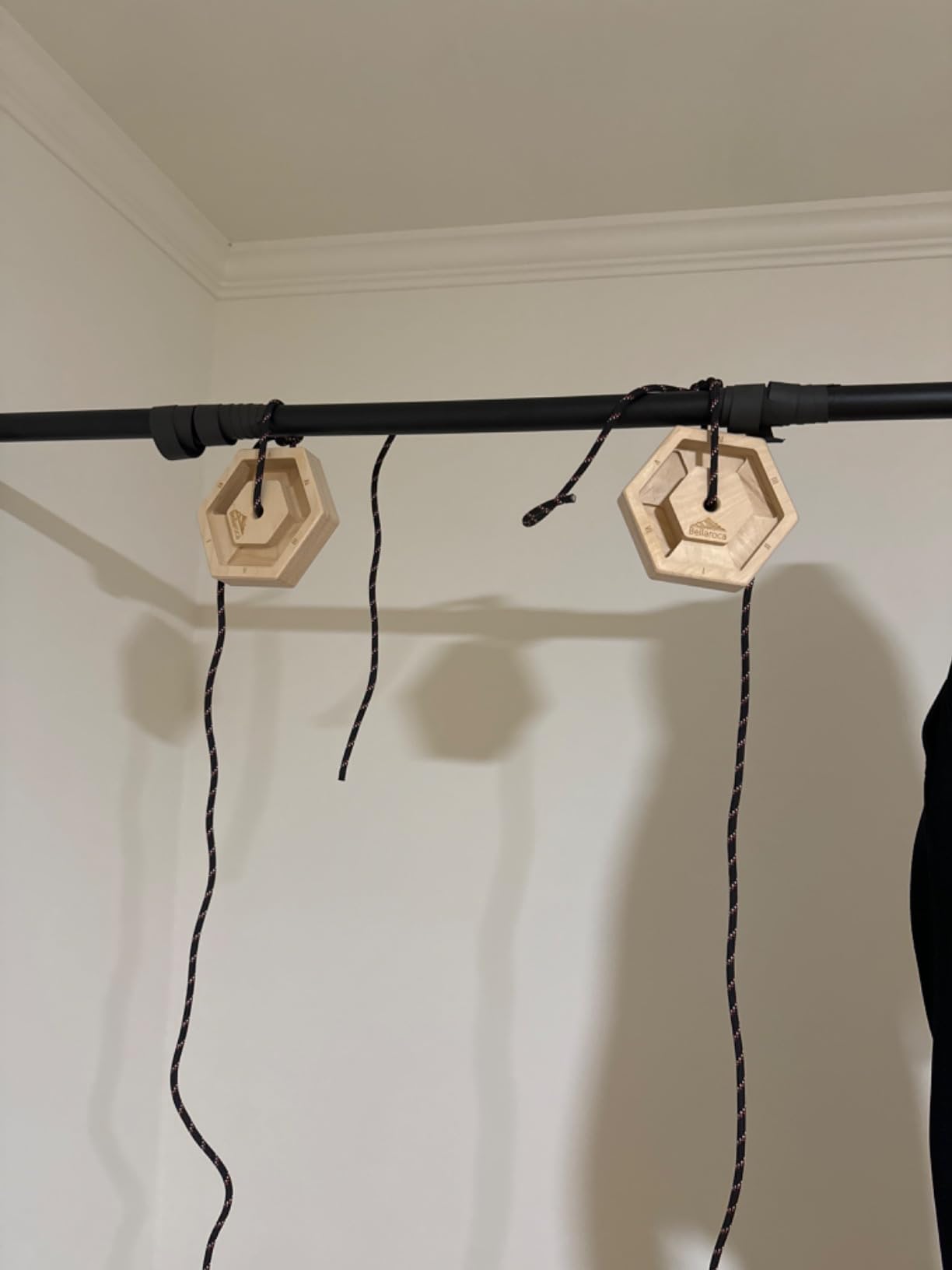
Effective Range From 20 mm Down to 4 mm
Three sets of 4-finger pockets at 20, 15 and 10 mm form the base, and the plates take you down to roughly 4 mm when you are ready. That is a genuine beginner-to-crimp range inside a board you can carry in one hand.
Around those pockets sit board-edge holds, a central one-arm pull-up slot and corner technical holds. Several owners were surprised by how much they could do with it and now take it on trips.
Check the Edges Before You Trust Them
A smaller but vocal group, including experienced climbers, reports edge and rung edges arriving sharp and unbeveled on some examples. Inspect the board on arrival and sand any that feel abrupt before your first session.
The other recurring note is hand size. The edges are narrow, so larger hands can struggle to fit all four fingers comfortably. This is the hand-span problem in miniature, and it applies to most narrow boards.
Rigging Takes About a Minute
The included 3 metre rope means you can hang it from a bar, a beam, a branch or a doorway in about a minute once you have the knot down. The knot is the weak point of the setup, and the instructions for it are the least clear part of the package.
Learn a proper figure-eight or a doubled clove hitch before you rely on it overhead. That applies to every rope-hung board here, not just this one.
11. POWER GUIDANCE Wooden Hangboard – Three Rows of Holds With a Protocol in the Box
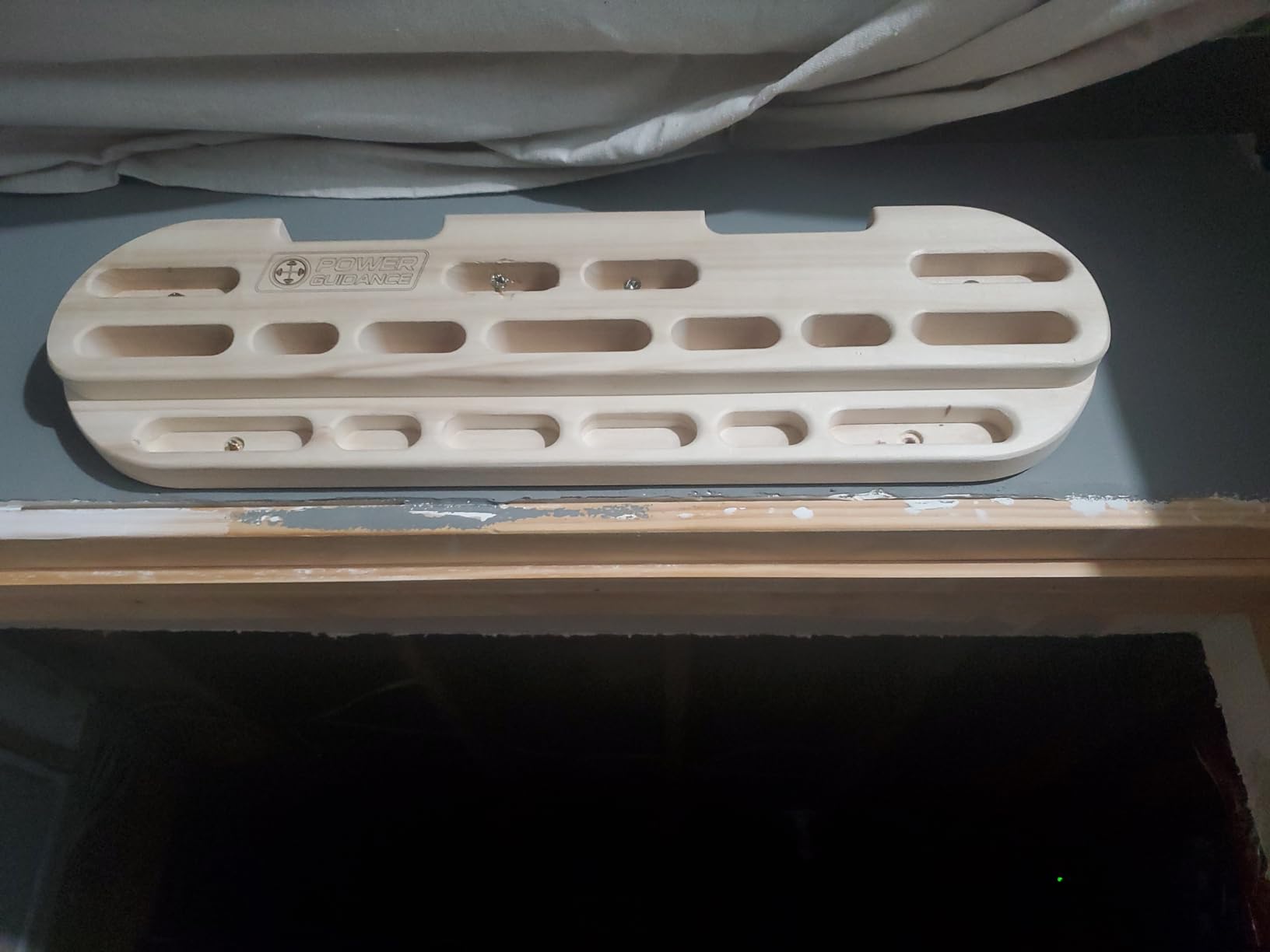
- ✓Three rows spanning 1 inch jugs 1.4 inch pockets and shallow 0.6 inch holds
- ✓four sets of 4-finger three sets of 3-finger and two sets of 2-finger pockets
- ✓rounded splinter-free edges
- ✓screws and expansion tubes included
- ✓written protocol of 5 to 8 hangs for 7 to 10 seconds
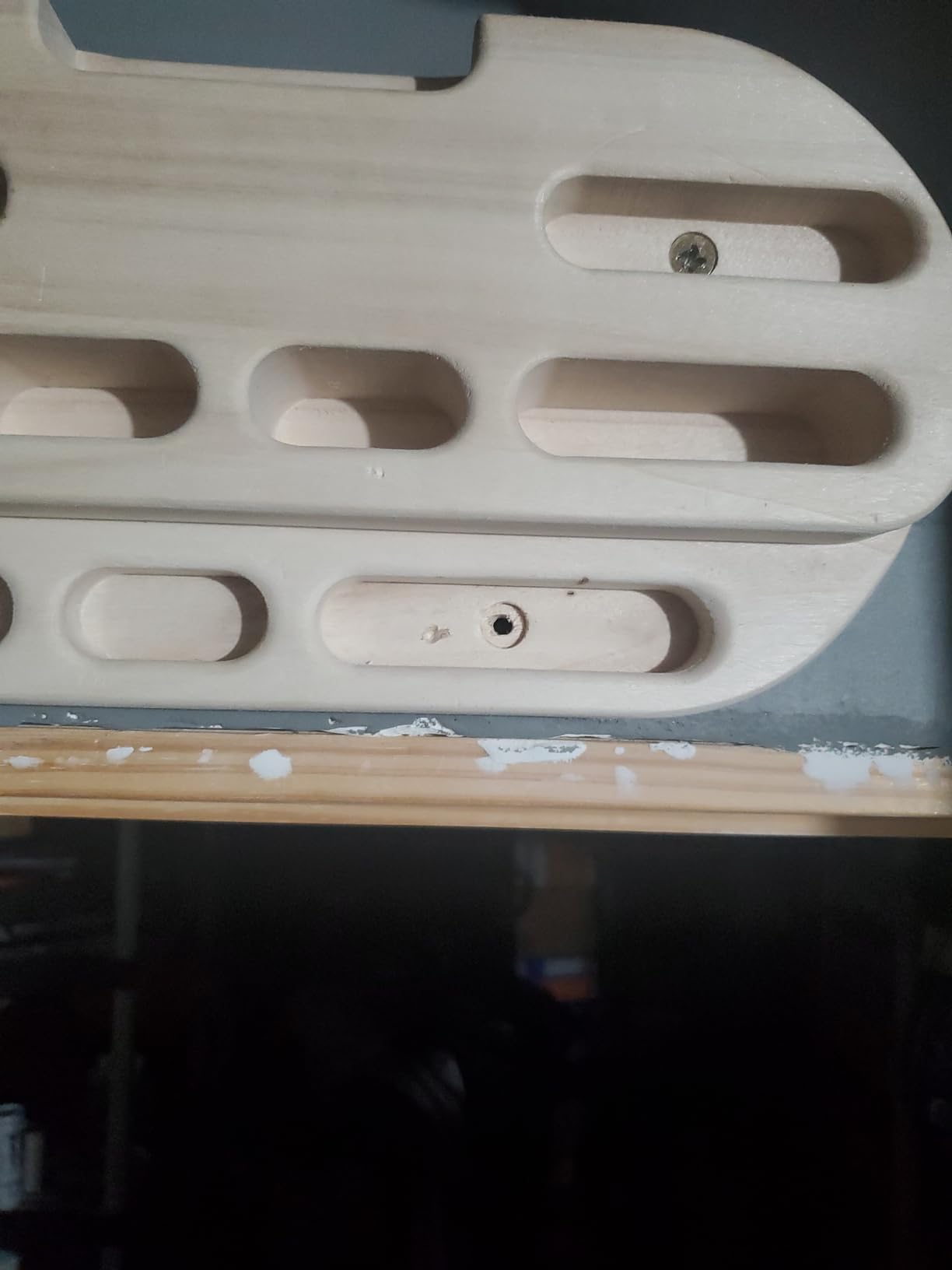
- ✕Included screws considered too short by some buyers
- ✕no backplate included for non-stud walls
- ✕some boards arrive dirty
Wood
21.7 by 6 by 2 inch
1.43 kg
Three rows from jugs to 0.6 inch holds
The POWER GUIDANCE board is the most honest beginner board in this list, and that is a compliment. It names climbing, bouldering, backpacking, hunting and martial arts as use cases, and it prints a starting protocol in the box rather than leaving you to guess.
That protocol is five to eight hangs for seven to ten seconds with three to four minutes of rest. It is conservative, and conservative is the right register for a board that most people will meet for the first time at home alone.
A Wide Hold Mix in a Small Board
Three rows of holds run from 1 inch jugs through 1.4 inch pockets and edges down to shallow 0.6 inch holds. The grip count is generous: four sets of 4-finger pockets, three sets of 3-finger and two sets of 2-finger.
Having genuine 2-finger positions matters more than it sounds, because that is where a lot of climbing-specific grip strength actually lives.
Finish and Skin Feel
The wood is ground and polished with no burrs or sharp edges, and reviewers rate the smooth finish highly. At 21.7 by 6 by 2 inch and 1.43 kg it is compact and light enough for a small room.
One reviewer would like more finger slots and a wider board for pulling work, which is a fair summary: this is a finger board rather than a mixed station.
Buy Longer Screws Before You Start
The single biggest installation complaint is the supplied hardware. Six M8 by 70 mm screws, two 80 mm and four 60 mm expansion tubes are included, plus sandpaper, but a number of buyers found the screws too short for their wall and made a hardware store run.
There is no backplate in the box, and mounting straight into drywall is strongly discouraged. If your wall lacks proper studs, buy a sheet of plywood first.
12. BG Climbing Wood Hangboard – A Simple Cord-Hung Warm-Up Board
- ✓Sturdy cord holds body weight
- ✓different edge sizes give a range of warm-up and training options
- ✓simple to clip to a pull-up bar or gym machine
- ✓good value for grip maintenance
- ✕Cord anchor lets the block rotate so the top pocket tilts back sharply
- ✕both top 4-finger pockets are the same full depth
- ✕finish quality varies between examples
Wood
compact size
portable
sturdy cord included
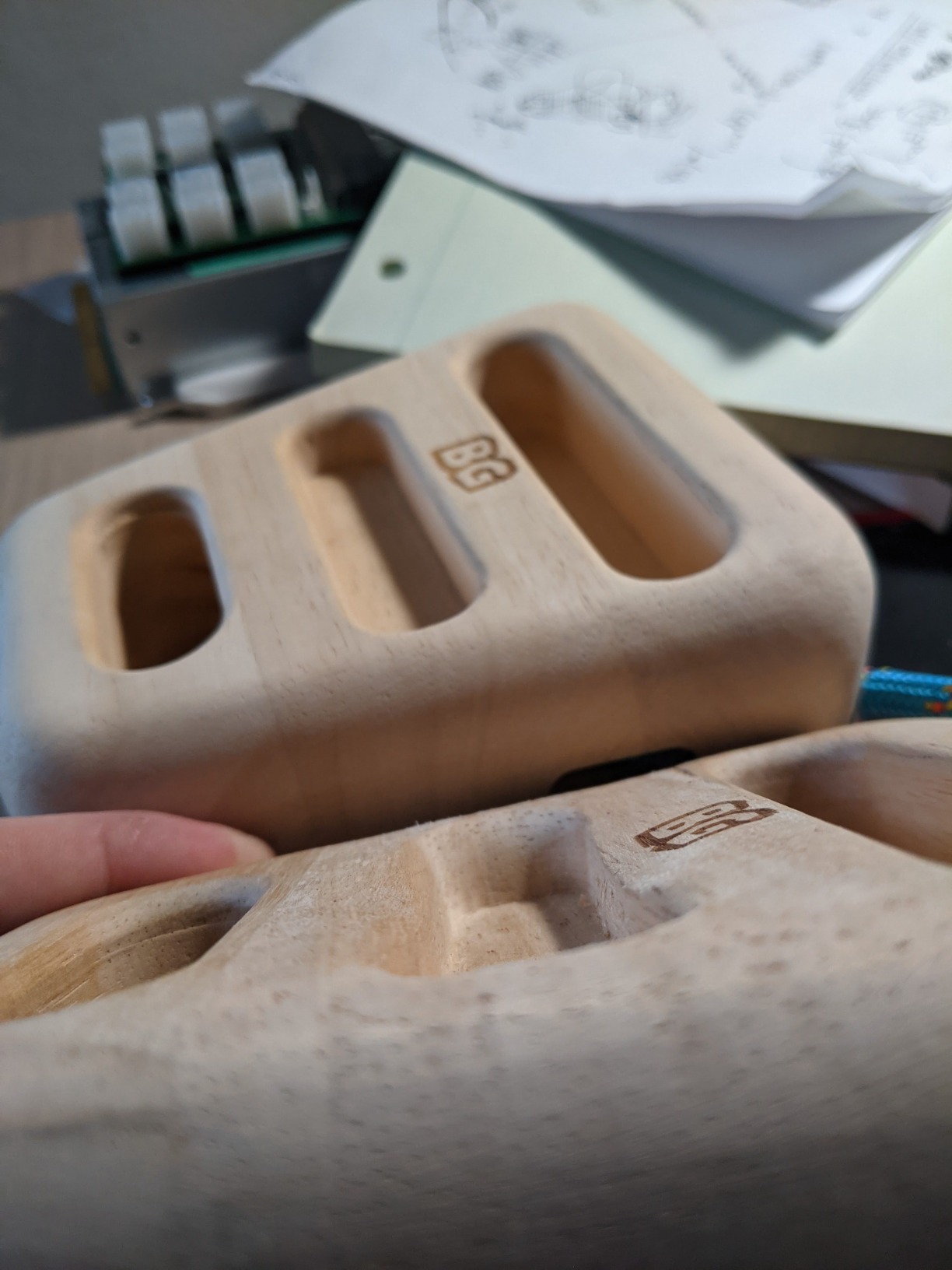
The BG Climbing board is a solid wooden block hung from a sturdy cord, and the simplicity is the point. It clips to a pull-up bar, a gym machine, a tree or a bolt in seconds, and it does one job: warming the hands up before a session.
Owners treat it as good value for warm-up and grip maintenance when no gym board is nearby. It is not a progression board, and nobody in the reviews pretends otherwise.
Different Edge Sizes, One Purpose
Different edge sizes give a range of warm-up and training exercises, and the block can be used as a hanging board or a fingerboard depending on the exercise. The sturdy cord clips to a pull-up bar or a gym machine in seconds.
It is designed for warming up and for suspension and pulling work rather than for structured max-hang programming.
The Cord Routing Causes the Main Complaint
Because the cord anchor allows the block to rotate, the top 4-finger pocket tilts back sharply under load. That is the most cited flaw in the reviews, and it is a geometry problem you cannot work around.
There is also no smaller crimp option at the top: both upper 4-finger pockets sit at the same full depth, which wastes a useful increment on a board whose whole appeal is edge variety.
Inspect the Finish on Arrival
Finish quality varies between examples, and some arrived rough enough that owners sanded them before use. Inspect on arrival and smooth any abrupt edges before loading your bodyweight through it.
There is no backboard, and no dedicated mounting hardware is expected for a cord-hung block. Treat this as a bar-clip or warm-up tool rather than something to screw into drywall.
Are You Ready for a Hangboard? A Readiness Checklist
Finger injury fear is the single biggest barrier in this sport, and it is a reasonable one. Before you spend money, run this checklist honestly.
- You climb or train on your fingers at least twice a week. One session a week does not build the tissue adaptation that makes hangboarding productive.
- You have six to twelve months of pain-free climbing behind you. Tendon adaptation to concentrated edge loading takes six to twelve weeks on its own, and it starts from a baseline you have to have already built.
- You can hang comfortably from a large edge for a full minute with no wrist or elbow ache. If that is hard today, the board will not fix it, it will just make it more painful.
- You have somewhere to mount it that is not bare drywall. A stud, a joist, a beam or a proper backboard fixed into one.
- You have a resistance band available. Band assistance lets you start on a hold you cannot yet handle, which is the difference between progressive overload and a pulley injury.
- You are willing to train twice a week and stop when your fingers ache. Numbness and lingering soreness are a stop signal, not a target.
If you fail item two or item three, wait. Nothing in this roundup will make an unprepared tendon ready, and no board on the list is worth a months-long rehab. Our beginner-friendly hangboard guide covers the non-board alternatives in more detail.
Wood vs Resin Hangboards: Which Material Suits Your Skin
Wood or resin is the first real decision, and the answer depends on how often you train and how long you tolerate a session.
Wood boards — beech, poplar, ash, boxwood — are the default for frequent home training. The surface has a slight give and a fine grain that many climbers find easier on fingertips over long sessions. Popular community consensus is blunt: wood is the skin-friendly choice, and experienced climbers tend to say it feels closer to real rock.
Resin boards are moulded, which means hold shapes can be more aggressive and more varied in a single frame, and the texture mimics a climbing gym wall closely. The Simulator 3D is the clearest example in this group. The cost is skin: users report torn skin after long sessions and move to wood.
The practical rule is frequency. If you will hang three or more times a week, wood. If you train occasionally and want maximum hold variety in one object, resin is defensible. Either way, expect a callus build-up period of a few weeks, and treat a hot, sharp finger as a stop signal.
How to Mount a Hangboard: Joists, Studs and Drywall
This is the section no competitor covers, and it is the one that decides whether your board survives. A hangboard puts a swinging, concentrated load into a wall, which is not what drywall is for.
Overhead joist mounting is the strongest option. If you have a joist crossing the ceiling where you want the board, screw straight into it with long screws and a bit extension. Some of the deeper finger slots in this roundup, including the Verticalboard One, physically need that reach.
Stud mounting is the standard interior option. Use a stud finder, mark both studs, and fix through the back of the board into the stud centre. Several boards here are designed around standard wood stud spacing. Level with a spirit level and a pencil line before the first hole.
Drywall-only mounting is not recommended for any of these boards. If a stud is genuinely impossible, screw a plywood backboard into two studs and bolt the board to the backboard. The backboard is not included with most of these products, so budget for it.
Doorframe mounting works when the board is fixed to the header above the frame, not to the door casing. The GRIPNATIC FingerPeg 1.0 is the most explicitly designed for this, and we would check the header for framing before drilling.
Two practical warnings. Buy longer screws than you think you need; short screws are the most common installation complaint across these reviews. And put a paper template of the hole pattern on the wall before drilling, because levelling a 20 inch board by eye rarely works the first time.
Max Hang vs Repeater: A Four Week Starting Protocol
A max hang is a single isometric hold at your maximum, typically 10 seconds of effort for climbers past the adaptation window. A repeater is a long set of shorter hangs with rest between them, aimed at grip endurance rather than maximum force.
For a first four weeks, we would keep it simple and stay well away from true max hangs.
- Weeks 1 and 2: three sets of five hangs at 7 to 10 seconds, three to four minutes of rest between sets, twice a week, on a large open-hand edge. Add band assistance if you cannot hold the full duration.
- Weeks 3 and 4: three sets of five hangs at 10 seconds, three to four minutes of rest, still twice a week, moving one rung shallower only if week one and two felt uneventful.
- Position: start open hand and progress toward a half crimp before you ever consider a full crimp. A full crimp on a tiny edge adds A2 pulley load before the tissue is ready for it.
- Frequency ceiling: twice a week with full rest days between. Tendon adaptation runs 6 to 12 weeks; the tissue lags the muscle, and that lag is where finger injuries happen.
- Skin care: file calluses flat, keep them dry between sessions, and expect to lose skin for the first fortnight. Chalk and grip wax reduce friction but do not replace the adaptation.
One last distinction worth knowing: a campus board is a different tool. Hangboards are static and isometric, building tendon capacity in one position. Campus boards and campus ladders are dynamic and plyometric, building power through a moving latching motion. They carry a different injury profile and are not a substitute for each other.
Frequently Asked Questions
Is it worth buying a hangboard?
It is worth it if you already climb or train at least twice a week and have six to twelve months of pain-free climbing behind you, because a hangboard is the most direct way to build finger strength at home. It is not worth it as a replacement for actually climbing, and it is not worth it if you cannot already hang comfortably from a large edge.
Should a complete beginner buy a hangboard?
Usually not yet. Finger tissue needs a baseline of six to twelve weeks before concentrated edge loading is productive, so spend your first months building general climbing strength and tendon tolerance on real holds. When you start, use a large open-hand edge, train at most twice a week, and keep a resistance band on hand so you can unload a hold that is beyond you.
Wood or resin hangboard, which is better?
Wood is the better choice for frequent home training because it is kinder on skin over long sessions and is the option most climbers move to after problems with plastic. Resin is the better choice when you want the widest hold variety in one object and will accept more chalk dependence and a callus build-up. Match the material to how often you train rather than to budget.
How often should I train on a hangboard?
Twice a week is a sensible ceiling for most climbers, with full rest days between sessions. Tendon adaptation takes six to twelve weeks, which is why the first month should be spent on large edges with generous rest rather than on max hangs. If your fingers feel different the morning after a session, you added too much.
What is the difference between a hangboard and a campus board?
A hangboard is static and isometric. You load one hold and hold it, which builds tendon capacity in a fixed position. A campus board or campus ladder is dynamic and plyometric, using rungs to develop power and a latching movement. They train different qualities and carry different injury profiles, so a campus board is not a substitute for a hangboard.
The Best Hangboard for Your Training in 2026
If you want one board and you will train on it two or three times a week, the YY Vertical Verticalboard One is our pick. The magnetic inserts give you the only real depth adjustment system in this roundup, the poplar is kind on skin, and the central handle turns it into a pulling station too.
If your fingers are still adapting, start with the Metolius Project Training Board. The tapered arc is the most forgiving geometry here, it fits discreetly above a doorway, and it is the board we would put in a beginner’s hands.
If you want the most hold variety and will accept chalk and a two-person install, the Metolius Simulator 3D is unmatched. If elbow and shoulder comfort is your problem rather than raw strength, the TRANGO Rock Prodigy is the only board here you can set to your shoulder width. If you travel, carry the Ucraft PocketBoard or the Bellaroca. And if the question is a proper wooden mounted board with the hardware already in the box, the TWO STONES board does the job without a second trip to the hardware store.
Check your mounting situation before you check your shopping list, and start on a big edge. The best hangboards in 2026 are the ones you will still be hanging from in month six.





Leave a Comment