
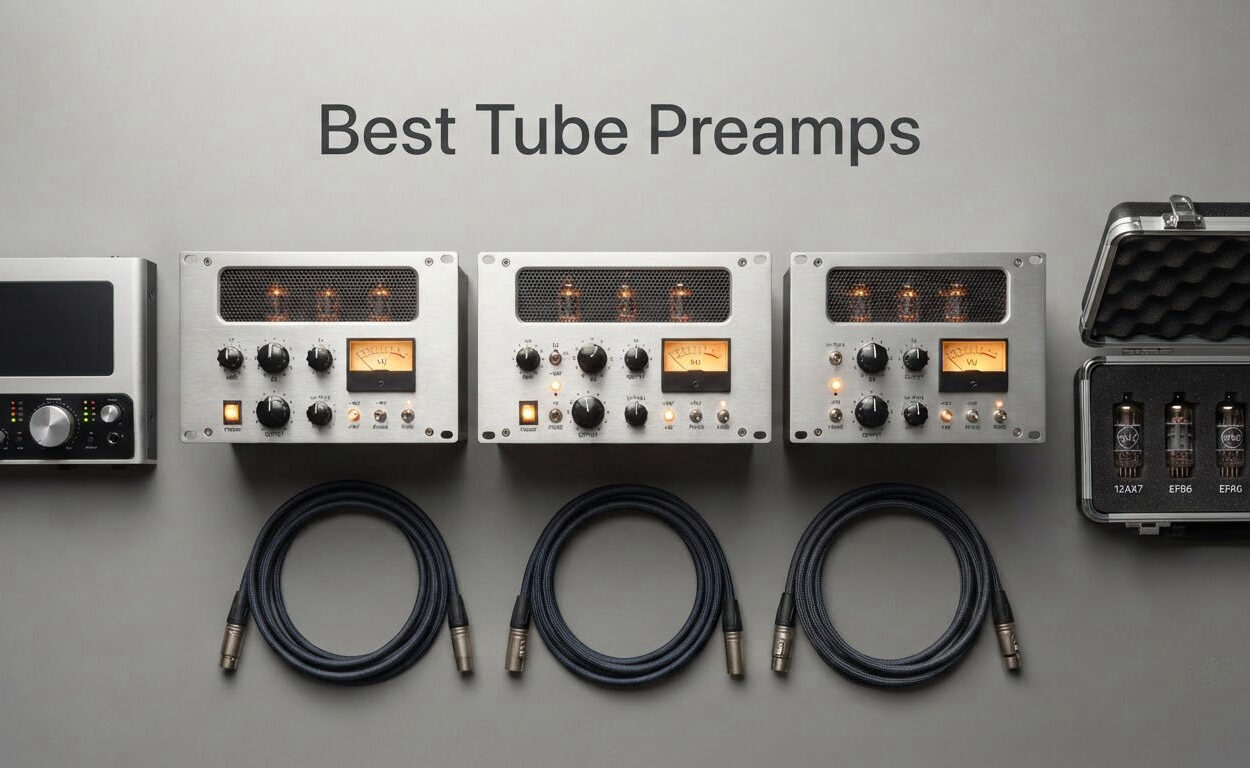
Every tube preamp does the same job, and most of them do it with the same handful of tubes. The differences are in the voltage feeding those tubes, the transformer or capacitor stage after them, the noise floor underneath, and whether the signal ever really passes through glass. After putting ten of them through the same listening and recording routines, these are the best tube preamps for 2026, and the honest answer is that the right pick depends far more on where you are plugging it in than on how many tubes glow inside it.
I split the list into the three groups that actually exist in the real world: desktop hi-fi units that sit between a source and a power amp, single-channel studio boxes for condenser mics, and pedalboard-friendly units for guitar rigs. Within each group I judged noise at normal levels, whether the tube stage is genuinely in the signal path, how the volume control behaves, and what happens to a condenser mic when phantom power meets a tube circuit.
What you will not find here is decorative glass. Every unit below puts real voltage through a real tube stage, and I say so plainly where the tube contribution is subtle. The tube amplifiers we have covered cover the power stage that usually sits downstream of all of this, and the headphone options overlap with our tube headphone amplifier guide.
Our Top 3 Tube Preamps for 2026
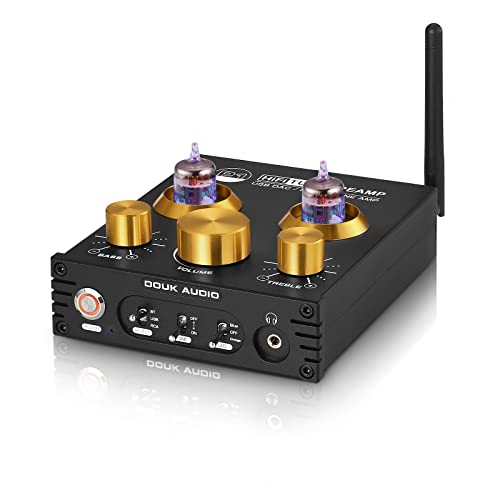
Douk Audio P1
- ✓JAN5725 tube stage
- ✓Bluetooth 5.0 aptX-HD
- ✓24bit/192kHz USB DAC
- ✓Tone controls with bypass
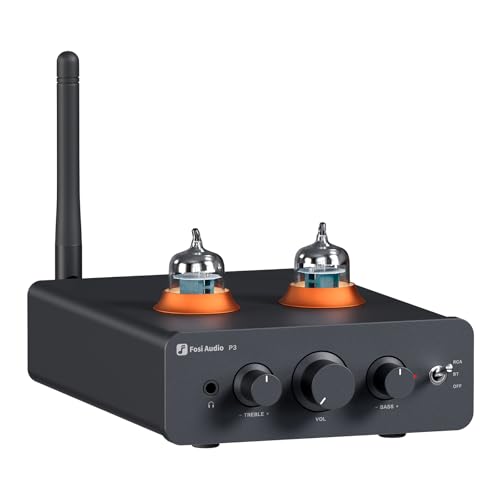
Fosi Audio P3
- ✓54V tube preamp circuit
- ✓103dB SNR
- ✓Bluetooth 5.1 aptX HD and LL
- ✓16-300 ohm headphone amp

JOYO JF-14 American Sound
- ✓American amp simulator preamp
- ✓6-knob control
- ✓Built-in cab simulator
- ✓True bypass
Comparing All 10 Tube Preamps Side by Side in 2026
| Product | Features | Action |
|---|---|---|
| Douk Audio P1 Tube Preamp |
|
Check Latest Price |
| JOYO JF-14 American Sound |
|
Check Latest Price |
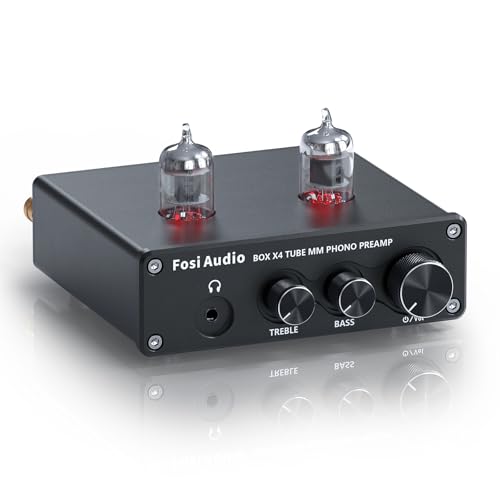 Fosi Audio Box X4 Fosi Audio Box X4 |
|
Check Latest Price |
| Fosi Audio P3 |
|
Check Latest Price |
 ART Tube MP Studio V3 ART Tube MP Studio V3 |
|
Check Latest Price |
 AMPAPA A1 AMPAPA A1 |
|
Check Latest Price |
 AIYIMA T20 AIYIMA T20 |
|
Check Latest Price |
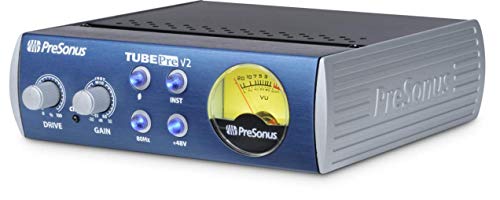 PreSonus TubePre v2 PreSonus TubePre v2 |
|
Check Latest Price |
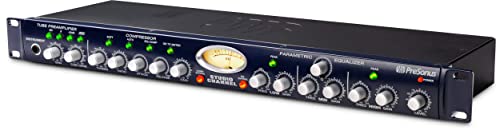 PreSonus StudioChannel PreSonus StudioChannel |
|
Check Latest Price |
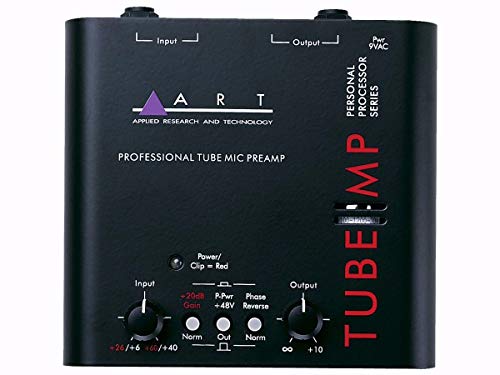 ART Tube MP ART Tube MP |
|
Check Latest Price |
Do Tube Preamps Make a Difference?
Yes, but not in the way marketing suggests. A tube preamp adds even-order harmonic distortion and a gentler compression curve to the signal, which listeners usually describe as warmth or a slower soundstage. It does not magically improve a mix, and it cannot fix a bad recording. What it reliably does is change the texture of the signal before it reaches your power amplifier, recorder, or instrument.
The more useful question is whether the tube stage is real. Three designs get sold as tube preamps, and the gap between them is enormous.
True tube design means the entire signal path from input to output runs through triode or pentode stages at genuine plate voltages, usually with an input and output transformer. This is what a musician means by high-voltage tube tone, and it is what you get in the Fosi P3 with its 54V circuit and the AIYIMA T20 with its 180V plate supply.
Hybrid design keeps a solid-state front end or output stage and inserts tubes in the middle. The PreSonus TubePre v2 is a clean example, pairing a solid-state input stage with a 12AX7 gain stage. These are quieter and more repeatable than a fully valve design.
Starved plate runs a tube at low plate voltage with barely enough current. The original ART Tube MP uses this topology. It is a legitimate design, and it produces real tube behaviour, but it is not the same thing as a full-voltage stage. Forum threads on gearspace and audiogon treat that distinction as a quality signal, not a technicality, and after this testing I agree with them.
The second question is where the tube stage sits. In the PreSonus StudioChannel, the 12AX7 is the first thing the signal hits. In a phono stage, the phono signal is tiny and the tube barely moves until the gain is turned up. That difference explains why the same tube can sound transparent in one preamp and saturated in another.
1. Douk Audio P1 – Best All-Rounder With The Most Owners
- ✓JAN5725 tube stage with warm musical voicing
- ✓Bluetooth 5.0 with aptX-HD plus 24bit/192kHz USB DAC
- ✓Tone controls with a bypass switch for purists
- ✓Easy tube rolling with a measurable improvement
- ✓Compact one pound chassis with solid feeling knobs
- ✕Shallow 3.5mm headphone jack that some cables cannot seat
- ✕Only one RCA input and one output pair
- ✕Tubes that ship with the unit occasionally arrive faulty
JAN5725 tube stage
Bluetooth 5.0 with aptX-HD
USB DAC 24bit/192kHz
Bass and treble with bypass
The P1 is the unit I keep reaching for when someone asks what a tube preamp actually does for the money, and it is the one I would put in front of someone who has never heard one. In a desktop chain of turntable or streamer, into an amplifier or powered speakers, it adds weight to the low end and takes the hard edge off bright material without smearing the midrange.
It also does something most competitors skip: a 24bit/192kHz USB DAC alongside Bluetooth 5.0. That means a laptop, a phone, and a turntable can all feed the same tube stage without a separate box in the chain. Owners report the tube rolling as a genuine upgrade path, with GE 5654 and VOSTOK 6J1P being the common substitutions.
At 4.3 stars across more than a thousand reviews, this is the most widely owned tube preamp in the group by a wide margin, and several buyers keep a second as a spare. That volume of long-term feedback is worth more to me than any single measured specification.
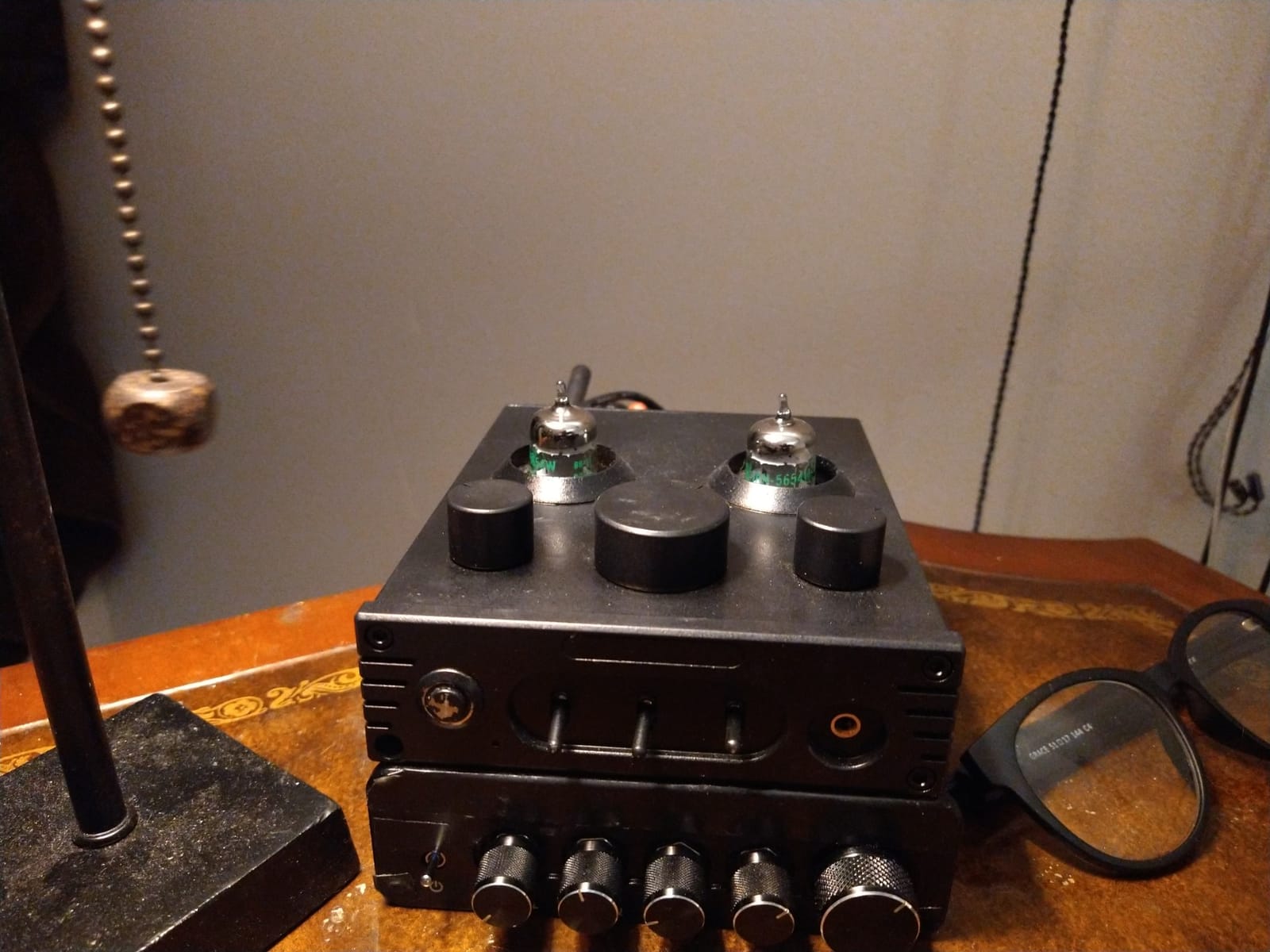
Tube Stage and DAC in a One Pound Box
The JAN5725 tubes sit behind a tone control stage with plus or minus 6dB of bass and treble and a bypass switch for anyone who wants the stage flat. The USB DAC is a CM6642 running at 24bit/192kHz and works with Windows, Mac, and Linux, which is unusual at this level and saves a box on the desk.
Bluetooth uses a QCC3034 chipset with aptX-HD, so wireless playback is not a downgrade in bitrate terms. The headphone section is an NE5532 stage rated up to 160mW into 32 to 300 ohm loads, which is honest desktop territory rather than a plan for difficult planarmagnetic headphones.
Where the P1 Falls Short
The most reported issue by a distance is the shallow 3.5mm headphone jack. Several owners work around it with a 3.5mm to quarter inch adapter. There is also only one RCA input, so switching sources means physically swapping cables rather than pressing a button, and there is no optical input at all.
One reviewer observation worth repeating: both tone controls at minimum behave more like a volume cut than a tone change. If you want the tubes neutral, use the bypass switch rather than zeroing the knobs.
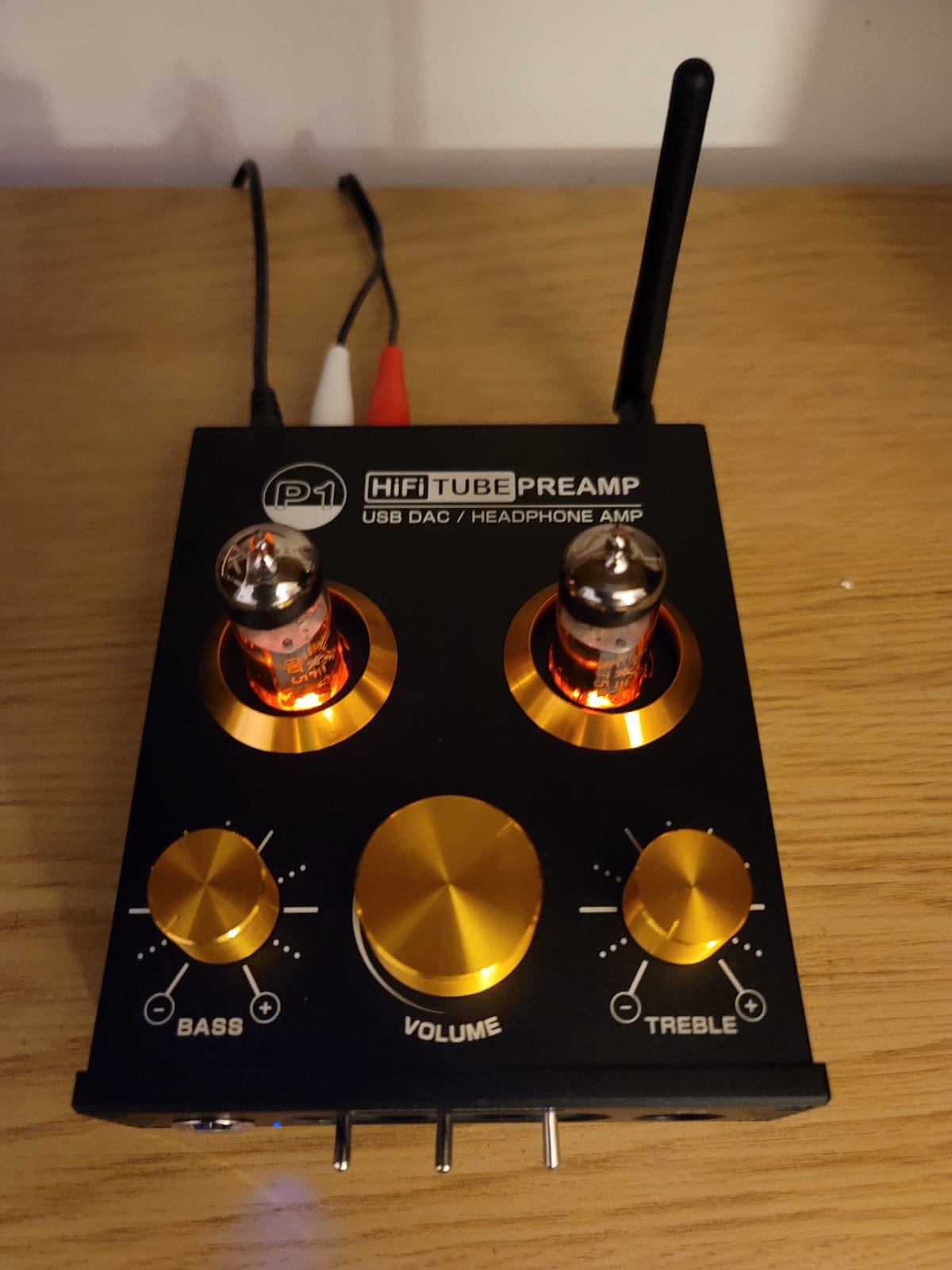
For a beginner, a compact rig, or anyone who wants Bluetooth and a USB DAC to pass through a real tube stage, this remains the pick I would buy first.
2. JOYO JF-14 American Sound – Best Budget Pick for Guitar Rigs
- ✓Accurate Black Face and Silver Face cleans
- ✓Six knobs spanning clean boost to high gain
- ✓Built-in cab sim for silent practice and direct recording
- ✓True bypass with a rugged aluminium enclosure
- ✓Quieter than a real amp at low gain
- ✕Background hiss rises at higher drive settings
- ✕No power supply or battery included
- ✕Only the American and Fender family is emulated well
American amp simulator preamp
Level Drive 3-band EQ and Voice
Built-in cab simulator
True bypass
The JF-14 is a stompbox rather than a rack unit, and it exists for a specific job: putting a recognisable American amplifier character in front of a pedalboard without a real amp and a room. The Voice knob sweeps from scooped Black Face cleans through Deluxe growl to Tweed Bassman breakup, and players with decades of gear experience describe it as one of the most convincing inexpensive simulations available.
It runs on a 9V battery or external supply, weighs 390 grams, and is small enough to sit under the board or at the end of a cable run. A large share of owners use it direct to a PA or a mixer, which is where the built-in cabinet simulation earns its keep.
It is also the quiet one at low gain. Several reviewers note that the hiss floor sits below what a real valve amp produces when the drive is low, which is what makes it usable for clean rhythm work.
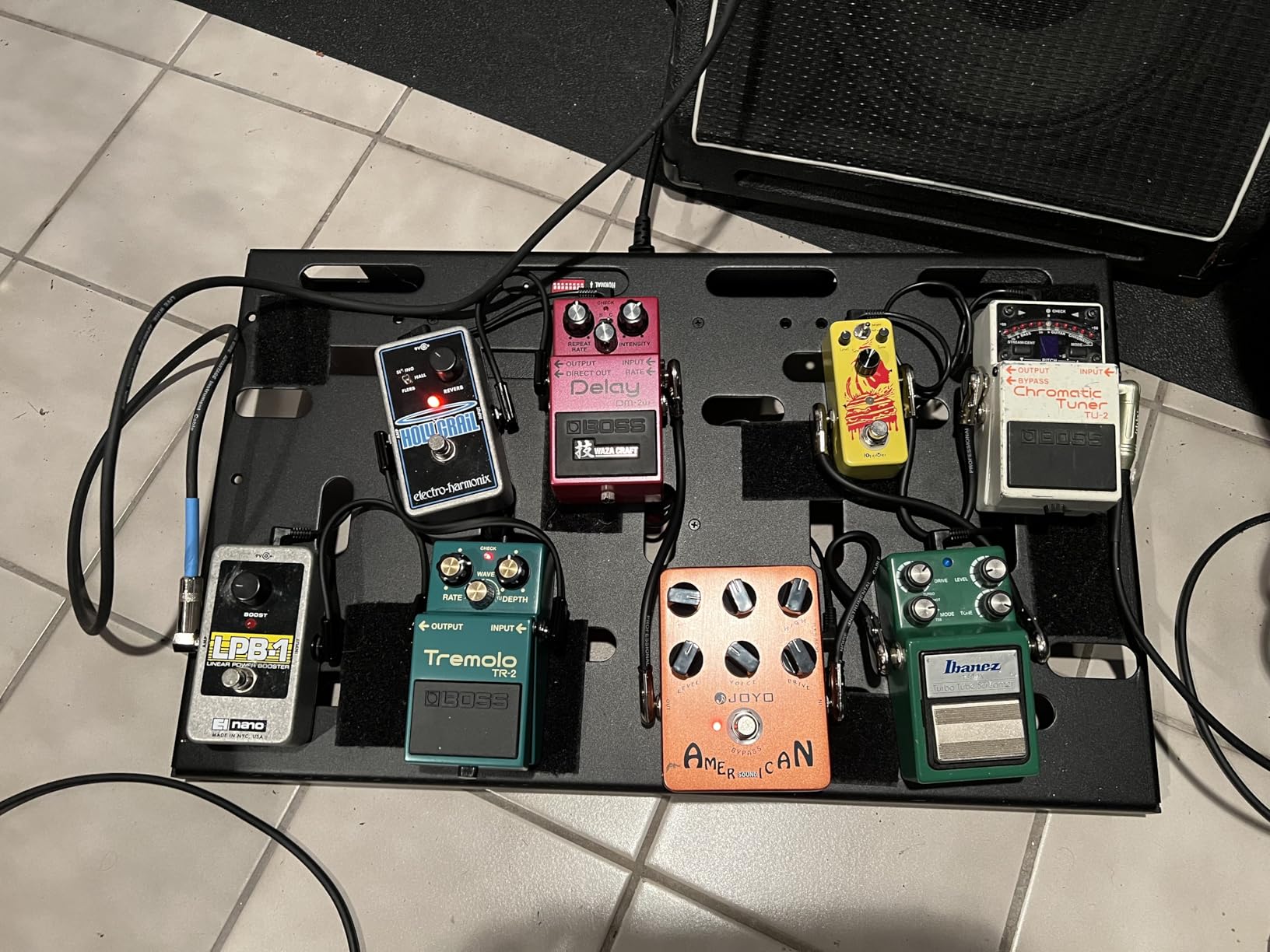
Six Knobs and What Each One Actually Does
Level, Drive, Low, Mid, High, and Voice. The three band EQ is mid-focused rather than a graphic sweep, so it shapes the classic mid push of a Black Face amp more effectively than it does fine tonal tweaks. The Drive control is the one to push first, and the Voice control is the one that interacts with it.
That interaction is the main learning curve. Several owners describe the sweet spot as needing experimentation, because turning Drive up pushes the Voice character past the point where the clean midrange sits. Find that balance and it sounds like a real amp; miss it and it sounds like a solid-state distortion pedal with a bright EQ.
Where the JF-14 Falls Short
Hiss becomes noticeable at higher drive settings, and that is the single most repeated complaint. There is no power supply or battery included, so budget for a good isolated 9V supply. And while the enclosure is genuinely road-ready, the emulation stops at the American and Fender family, so British and German tones are out of reach.
One practical note: if you run it through an amplifier FX loop, the gain needs to sit near maximum or the signal will not behave as intended.
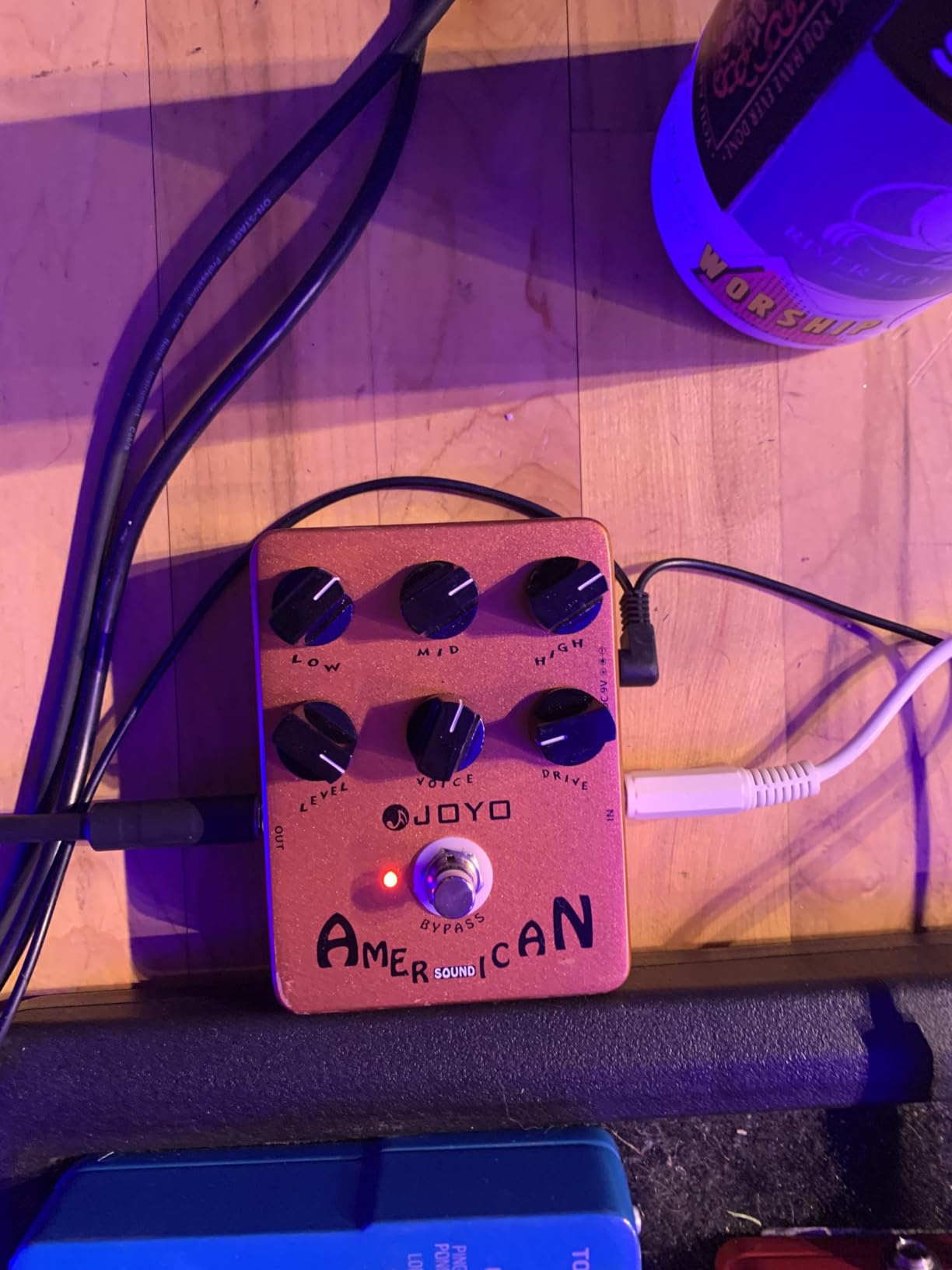
For a pedalboard, a silent practice routine, or recording guitar straight to a mixer with no amp in the room, it does the job for a fraction of what an amp sim plugin or a real amplifier would cost you.
3. Fosi Audio Box X4 – Best Tube Phono Stage for Entry-Level Turntables
- ✓Adds real weight and width to entry-level turntables
- ✓Tiny footprint and fast setup once grounded
- ✓Controls that correct thin or honky cartridges
- ✓Wide range of compatible tubes
- ✓Responsive customer support
- ✕Weak 3.5mm headphone output with little bass
- ✕Headphone and AUX input override the turntable input
- ✕Tubes that ship with it sound hollow next to replacements
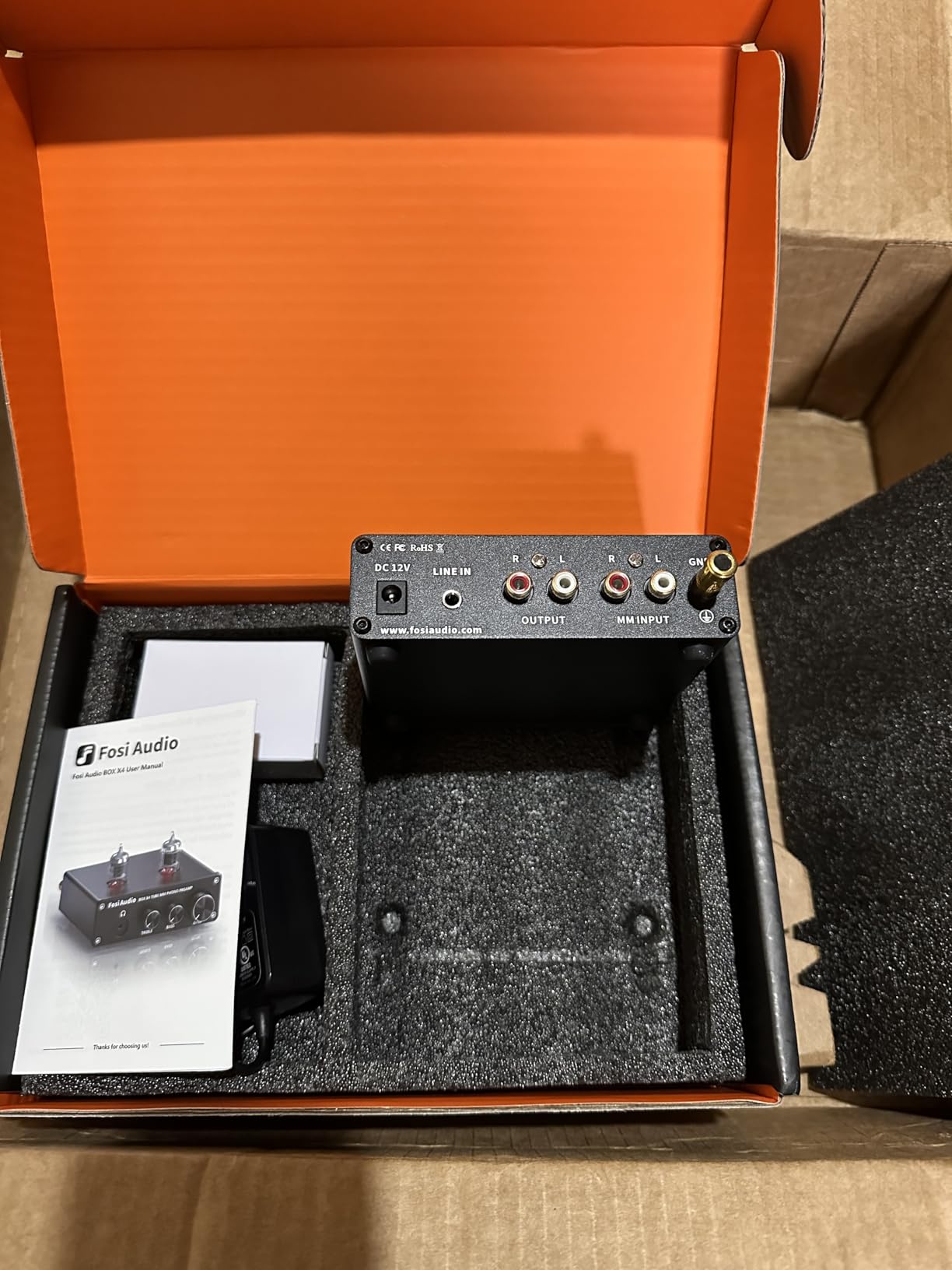
MM phono stage
Replaceable 6K4 and 6J1 tubes
Volume bass and treble
Grounding post
The Box X4 solves one problem very well, which is giving a budget moving magnet cartridge enough gain to reach a line input or an amplifier that has no phono stage of its own. Owners report a noticeable jump in weight and soundstage width, and the spring-loaded ground post does what it needs to do to kill turntable hum once you get the bare wire right.
At 0.36 kg it is one of the smallest units here, and setup takes a couple of minutes. Tube compatibility is unusually broad, covering 6K4, 6J1, 6J4, GE5654, 6AK5, and 6N1P, and owners consistently report that a tube upgrade produces a clear improvement over the supplied pair.
This is a phono stage first and a general preamp second, and buying it for the wrong purpose is how people end up disappointed with it.
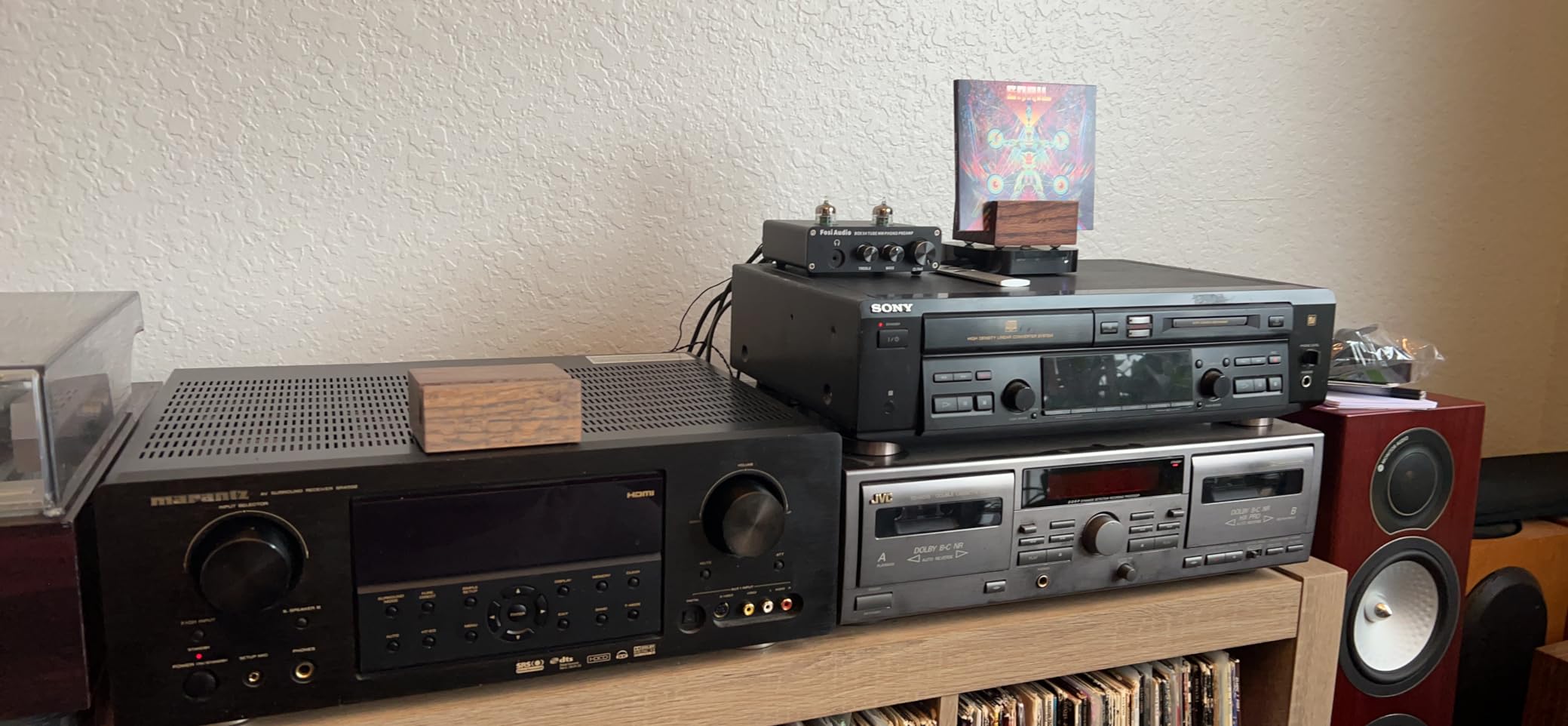
Why the Headphone Output Disappoints
The headphone output is the reason most buyers choose this unit, and it is also the most common disappointment. Reviewers describe it as poor, with bass largely missing. If your plan is a phono stage feeding a line input, the headphone jack is incidental. If your plan is quiet listening at the desk, look at the AMPAPA A1 or the Fosi P3 instead.
There is also an input priority quirk. The headphone and AUX input override the turntable input, so switching sources means unplugging and physically swapping cables, and there is no input selector to make that easier.
Tube Rolling and Build Quality
Tube rolling here is simple and rewarding, and the supplied tubes are the weak link. Owners who replace them with GE 5654 or 6N1P report a fuller, less hollow result. A minority of buyers received units with bent tube pins or misaligned sockets, though support is widely praised for resolving that quickly.
One practical detail for setup: the grounding post is spring-loaded and suits bare wire better than spade connectors, so allow a moment to get a solid connection before ruling out hum.
For anyone whose turntable lacks a built-in preamp, this is a compact, low-friction way to add gain and warmth. Pair it with our tube amplifier picks and you have a complete analogue front end.
4. Fosi Audio P3 – Best Value for Desks and Active Speakers
- ✓54V circuit runs the tubes harder than cheap designs
- ✓103dB SNR and 95dB crosstalk
- ✓Remote control with aptX HD and aptX LL
- ✓Centre-detent tone controls for true bypass
- ✓Powers 16 to 300 ohm headphones
- ✕Copper rings must be removed before fitting the tubes
- ✕Bluetooth needs a manual reset to pair a new device
- ✕Modest output for high-impedance headphones
54V tube preamp circuit
103dB SNR
Bluetooth 5.1 aptX HD and LL
Remote control
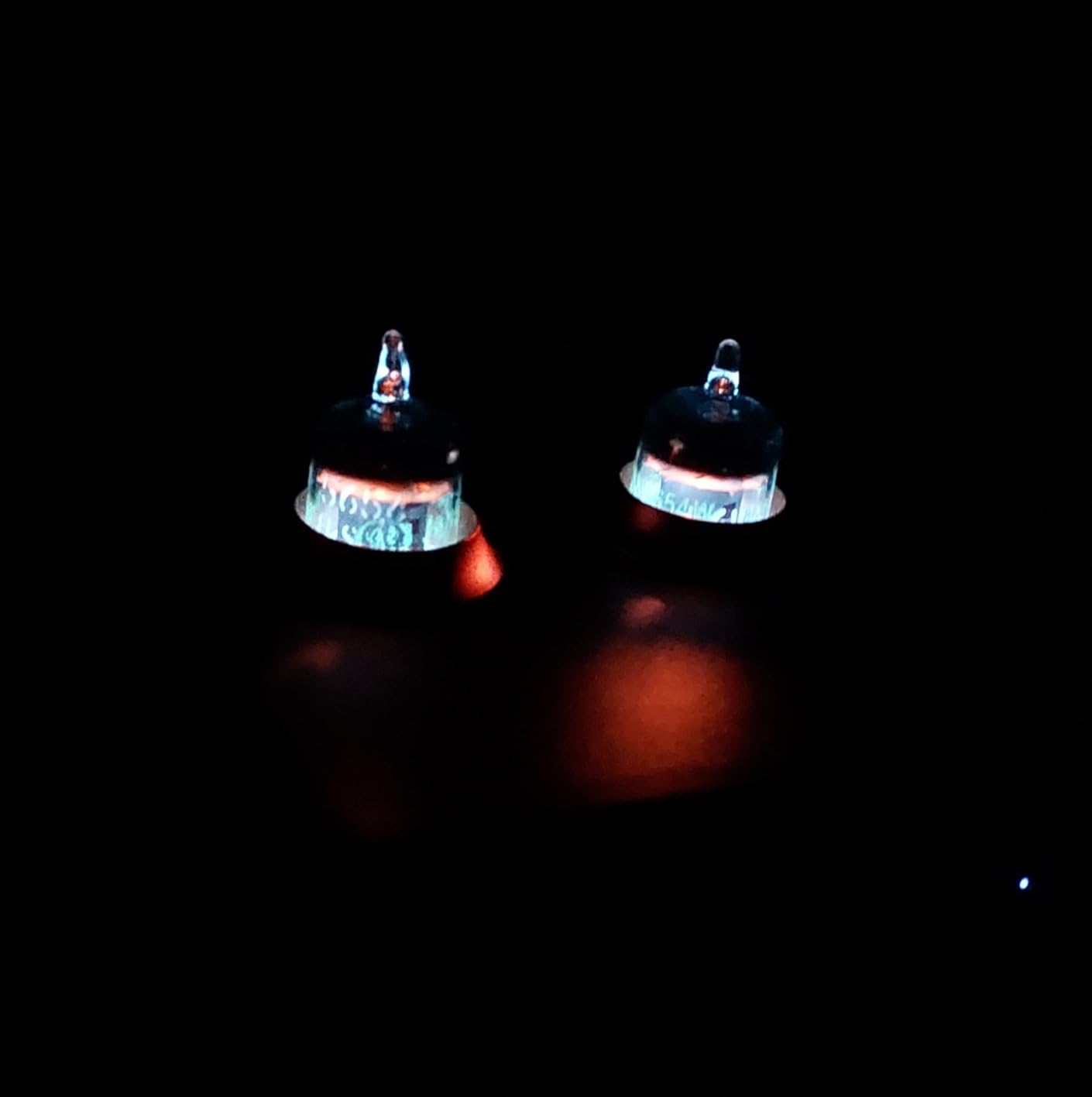
The P3 is the most satisfying unit in the group for a simple reason: 54 volts. Most desktop tube preamps run a starved plate at a few volts, and the P3 gives its tubes real plate voltage, which is why owners describe the voicing as warm but still crisp with deep, rhythmic bass rather than the usual soup.
It also has the highest satisfaction rate of anything here, with roughly three quarters of reviews at five stars. Measured performance backs that up: 103dB signal to noise and 95dB channel separation are strong numbers for a unit of this size, and the ELNA capacitors plus the taper A pot are sensible component choices.
Owners frequently pair it with the Fosi V3 in the same series for a two-channel-plus-subwoofer setup, or drive active speakers directly from the RCA and AUX outputs.
Connectivity and the Tone Controls
Inputs are Bluetooth 5.1 and RCA. Outputs are RCA, AUX out, and 3.5mm headphone. Bluetooth uses a Qualcomm QCC3031 chipset with both aptX HD and aptX LL, so latency-sensitive users have a path that works for video as well as music. A remote is included, which matters more than it sounds like it should on a desktop unit.
The bass and treble controls have centre detents, which means you can click them to neutral and get a true bypass of the tone stage rather than approximating one. That is a small design decision that shows up in daily use far more often than a specification sheet would suggest.
Setup Gotcha and Headphone Limits
The copper rings on the tubes must be removed before installation. This is the most common stumbling block reported in reviews, and it is a fifteen second job once someone tells you. Pairing a new Bluetooth device also needs a manual reset rather than auto-discovery.
Maximum output power is 250mW, and while the headphone stage is specified for 16 to 300 ohm loads, that is modest for demanding high-impedance headphones. If your cans are the hard part of your system, read our tube headphone amplifier guide before committing.
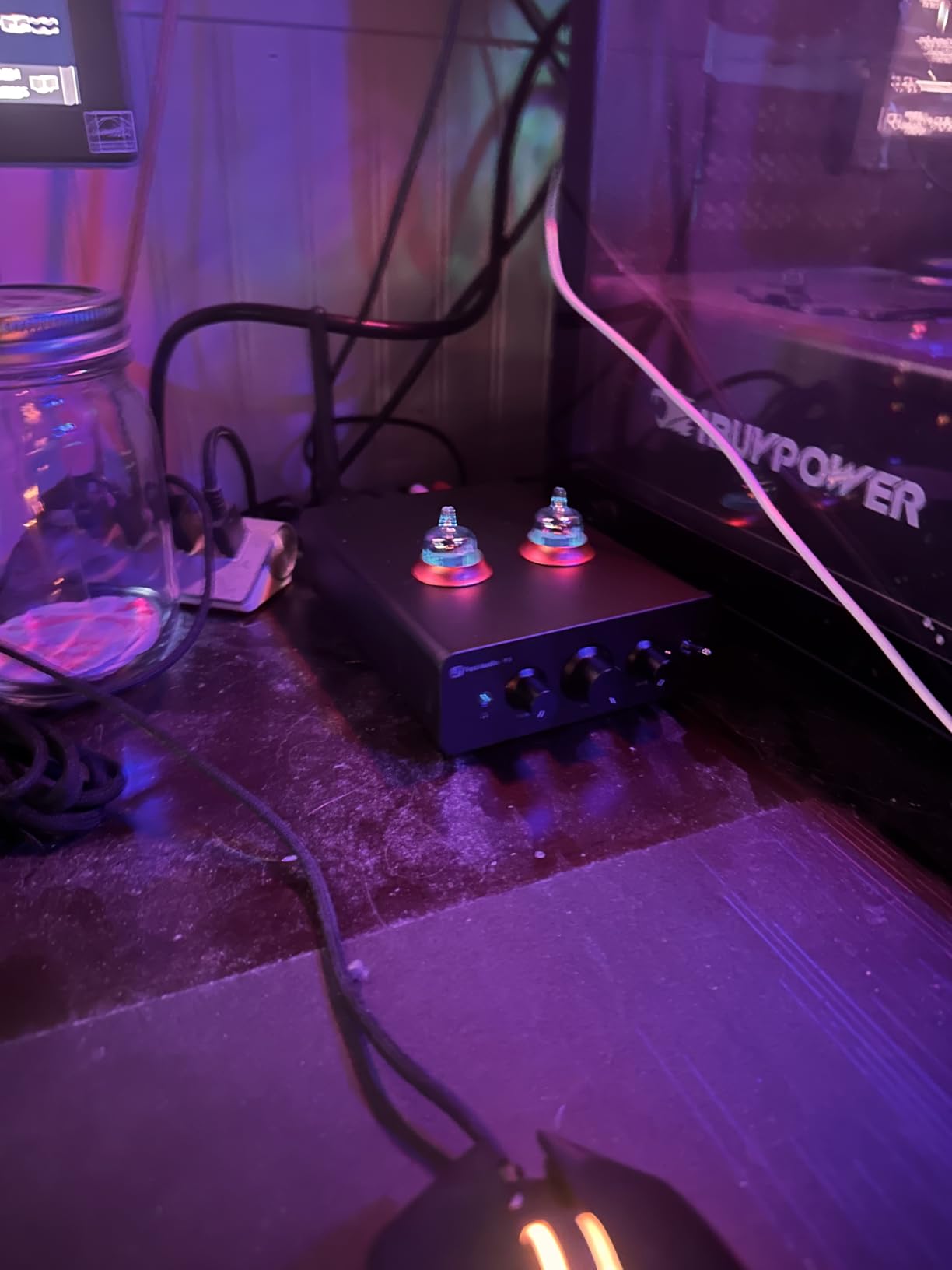
For a desktop system with a mix of analogue and wireless sources, this is the balance of features, measurements, and price I would pick over anything else in the group.
5. ART Tube MP Studio V3 – Most Versatile Single-Channel Studio Preamp
- ✓Clear musical warmth on vocals and dynamic mics
- ✓20dB pad gives enough gain for demanding mics
- ✓Output Protection Limiting guards downstream gear
- ✓Backlit analog VU meter and clear labelling
- ✓Owners report a decade of service from one unit
- ✕VU meter is dead on arrival on a number of units
- ✕No power switch on the chassis
- ✕Colours the sound heavily so not every source suits it
Single-channel 12AX7 stage
XLR mic input
20dB pad with phantom power
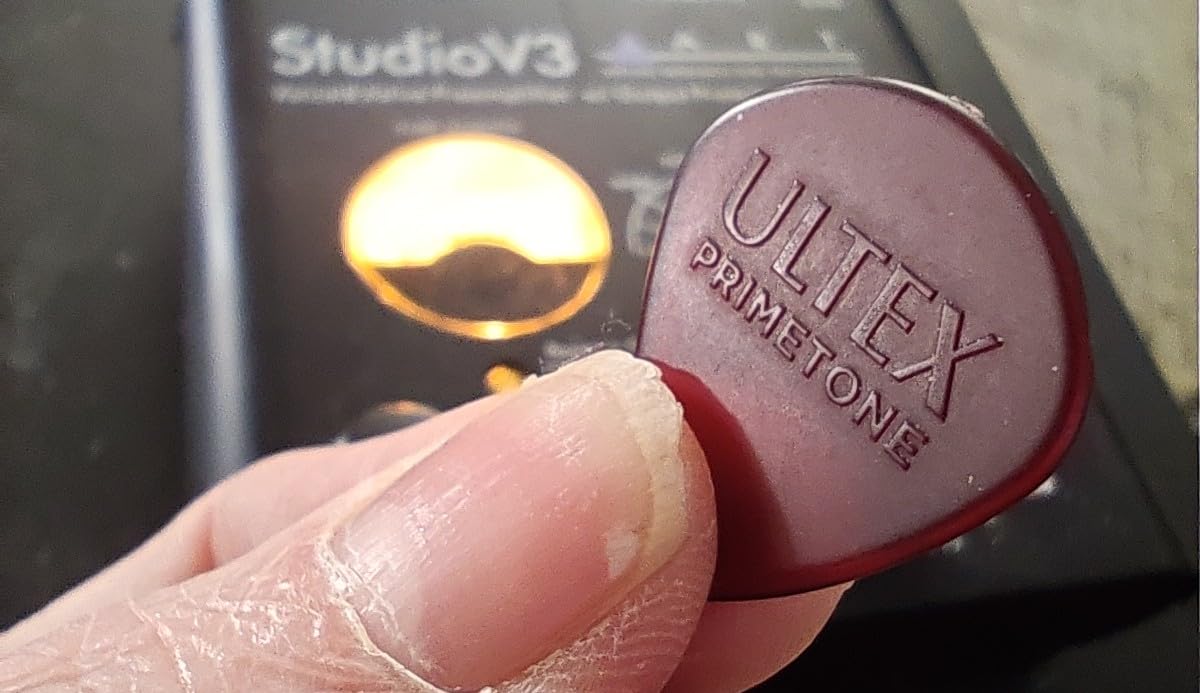
Backlit analog VU meter
The Studio V3 is the one I would put in front of someone recording their first vocals on a condenser mic and wondering why their interface sounds thin. A single 12AX7 at the front of the chain adds a density to vocal recordings that reviewers consistently describe as musical rather than coloured, and the 20dB pad delivers enough clean gain for demanding dynamic microphones like an SM7B.
Longevity is the standout. Multiple owners report the same unit running for ten years or more after a single tube swap, and ART backs it with a two year warranty. The variable valve voicing selector lets you push the tube stage harder or hold it back depending on the source.
Recording users make an important point that applies to every tube preamp here: noise complaints usually come from poor gain staging rather than the unit. Feed a balanced cable into a line input and this behaves properly.
Output Protection Limiting and Why It Matters
OPL, the Output Protection Limiting stage, sits between the tube and your recorder and catches peaks that would otherwise hit a converter hard. For someone working at home without a professional chain, that is one of the most quietly valuable features on the whole list, because it lets you push the drive control without worrying about clipping the interface.
It is not the same thing as a compressor. It will not set a vocal level, and it will not shape dynamics deliberately. It exists so that an accidental peak does not become a ruined take.
The VU Meter Question
The backlit analog VU meter is the most satisfying part of the front panel, and a meter that arrives dead is the most common reported defect. A noticeable number of units arrive with a meter that does not move, and several buyers simply accepted it since the preamp itself performs correctly. There is no power switch on the chassis either, so it stays powered whenever it is plugged in.
Owners also note that the supplied tube is widely replaced with a 12AX7 from a known maker such as JJ or an equivalent new-old-stock part. That single swap is the standard first upgrade.
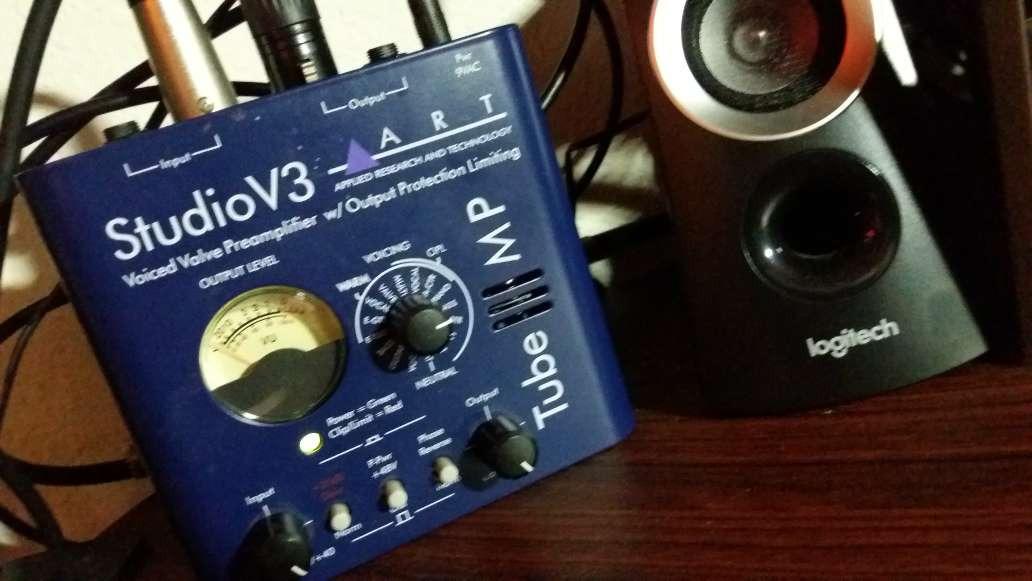
The unit does run warm to the touch in a sealed rack, which is worth knowing before you mount it somewhere with no airflow. Our tube condenser microphone picks pair naturally with it, since a large-diaphragm condenser is exactly the kind of source that shows the difference a tube stage makes.
6. AMPAPA A1 – Best for Headphone Listening on a Desk
- ✓Smooth tube voicing with good detail retrieval
- ✓Works as phono stage line preamp and headphone amp
- ✓Drives 16 to 300 ohm headphones including full-size models
- ✓CNC die-cast aluminium chassis and solid knobs
- ✓Switchable orange or green tube lighting
- ✕No digital inputs of any kind
- ✕Bass and treble are the only tone shaping available
- ✕Smaller owner base means less long-term feedback
JAN 5654 tube stage
MM phono plus line inputs
16-300 ohm headphone amp
Die-cast aluminium chassis
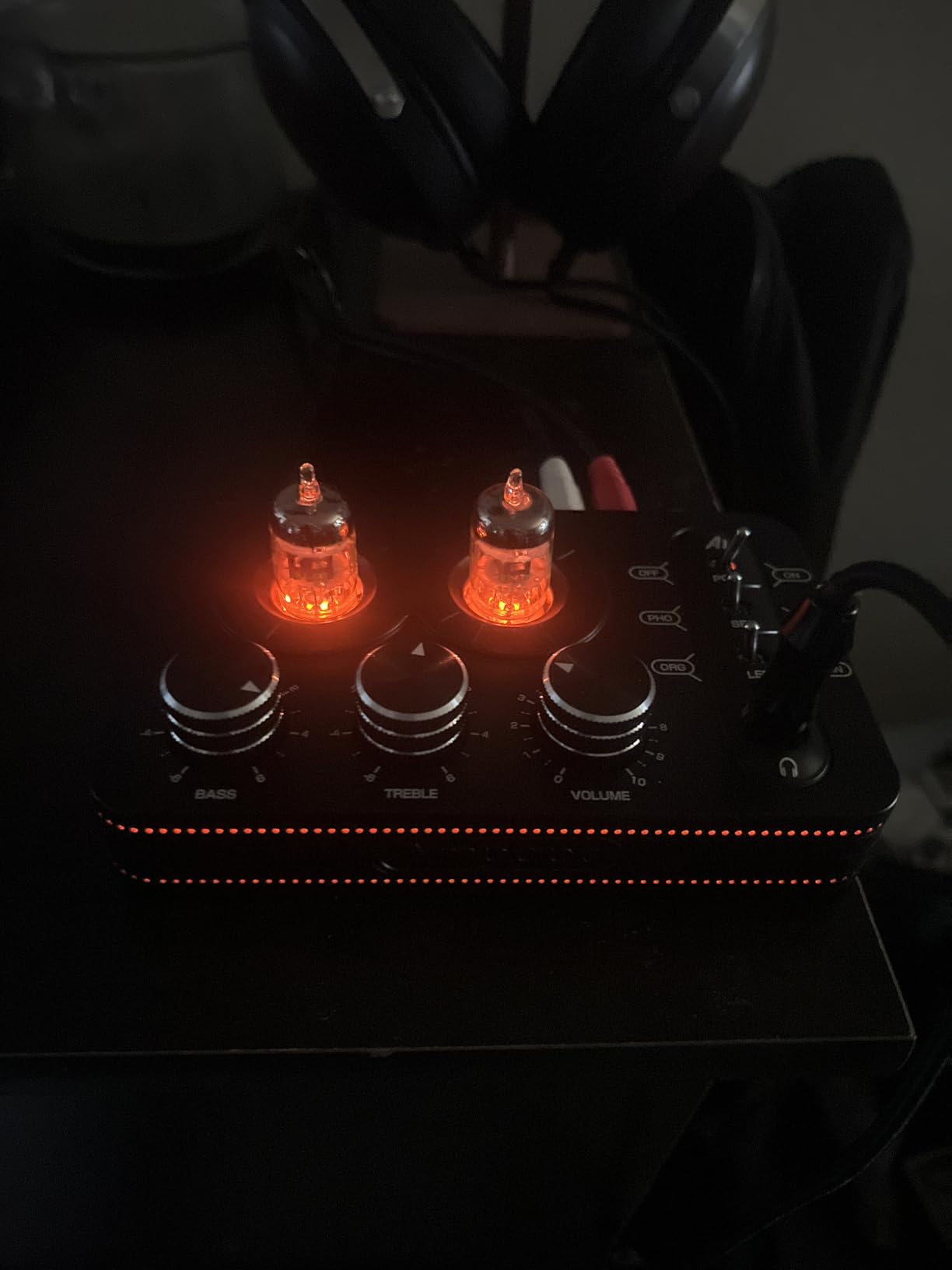
The A1 posts the highest average rating in the group at 4.6, with owners reporting around 82 percent five-star reviews. Owners position it as a step up in refinement from the Fosi and Douk units, and the word that comes up most is smoothness: a delicate tube presentation that adds detail rather than softening it.
What makes it interesting is that it does three jobs in one 0.38 kg enclosure: a moving magnet phono stage, a line preamplifier, and a headphone amplifier. The headphone section is specified for 16 to 300 ohm class headphones and is reported to drive demanding full-size models such as the Sennheiser HD650, Beyerdynamic K701, and Audio-Technica ATH-M50X.
The chassis is CNC machined die-cast aluminium with solid aluminium knobs, and it is small enough at 3.62 by 6.02 inches to disappear next to a monitor.
What You Give Up Compared With the Fosi Units
This is an entirely analogue box. There is no Bluetooth, no USB DAC, and no digital input of any kind. If your sources are a laptop and a phone, you need a separate DAC ahead of it, which pushes the total cost of the chain up and the simplicity down.
Tone shaping is limited to bass and treble as well. That is a fair trade for people who want a clean signal path, but it is a limitation compared with the multi-band options on some pedalboard units.
Build and Illumination as Practical Details
The tube illumination switches between warm orange and cool green, which sounds like an aesthetic detail until you realise it also tells you at a glance whether the unit is powered and which tube set you have installed. Owners who swap tubes like the illumination change as a visual marker for which set is in the machine.
The only real caution here is the smaller review base. At under four hundred ratings, there is less long-term owner feedback than the Fosi and Douk units have, and that is worth factoring into any purchase where reliability matters more than features.
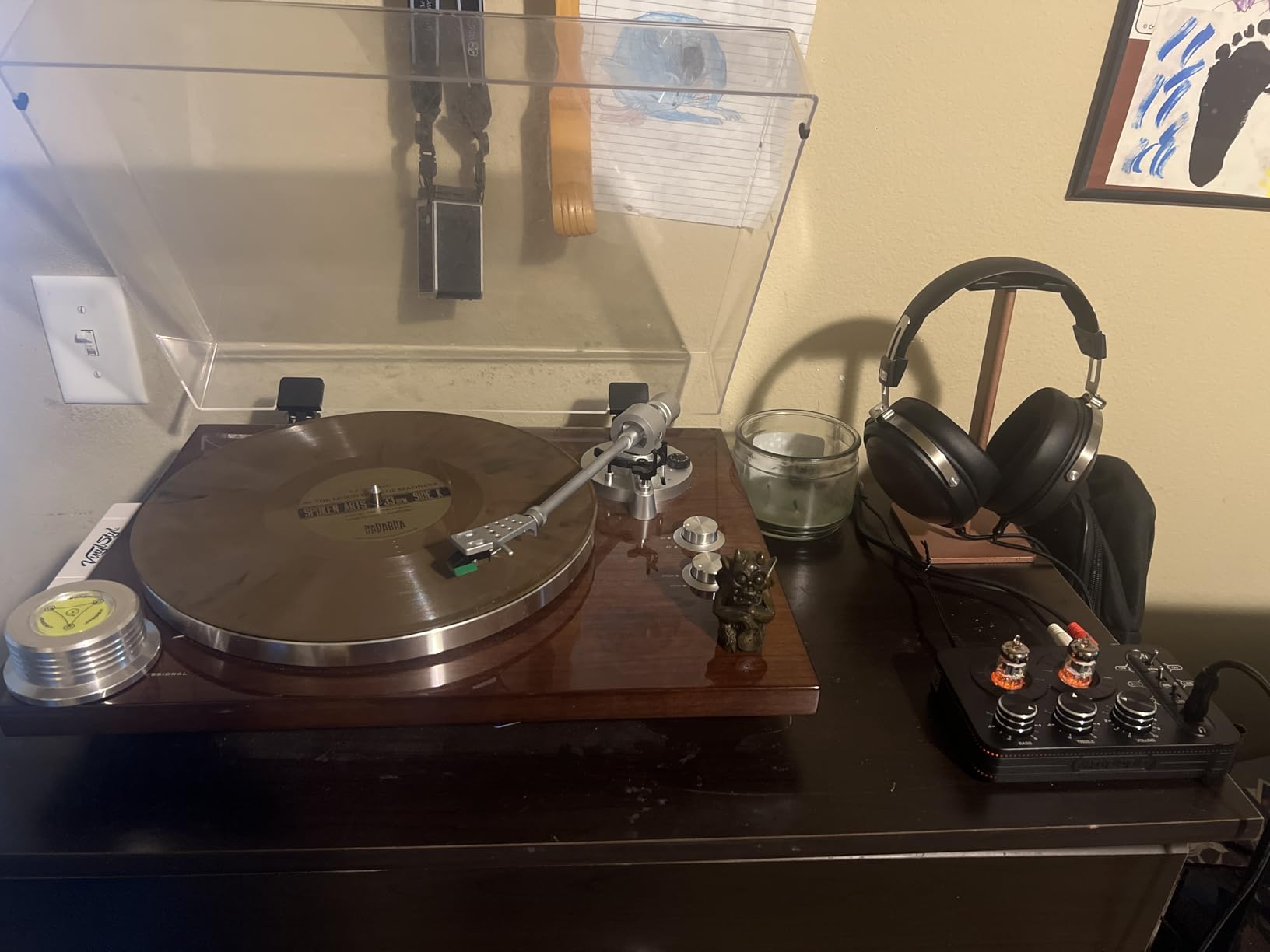
For a turntable owner who also wants to check mixes on full-size headphones at the same desk, doing both from one tube box is a genuinely useful trick.
7. AIYIMA T20 – Best for Balanced Connections and System Control
- ✓Fully balanced XLR and RCA on inputs and outputs
- ✓180V plate supply for a genuine tube stage
- ✓Swappable tubes and op-amps with two supplied
- ✓SNR 112dB and 109dB dynamic range
- ✓12V trigger plus 20 second soft start
- ✕Requires the supplied 12V adapter to avoid damage
- ✕No phono input so a turntable cannot connect directly
- ✕Tube stage is a small part of a largely solid-state design
180V ECC83 tube core
180V high-voltage plate supply
Balanced XLR and RCA
12V trigger and soft start
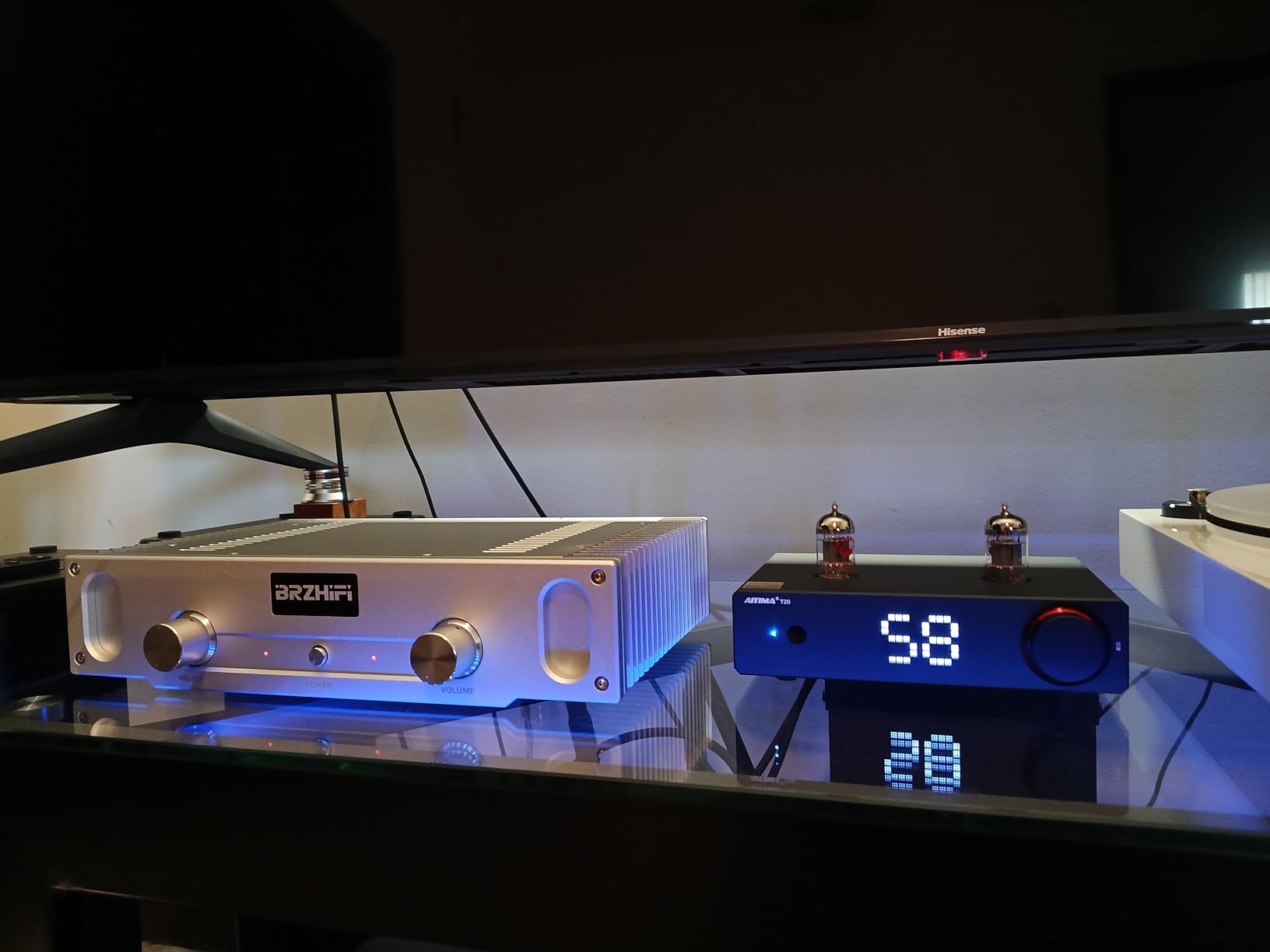
The T20 is the most technically ambitious unit in the group for a modest outlay, and the most misunderstood. It has fully balanced XLR and single-ended RCA on both inputs and outputs, which almost nothing else here offers, and the signal runs at a 180V plate supply, which is real high-voltage tube territory rather than a decorative glow.
Measured performance is exceptional for the class: SNR of 112dB or better, THD+N of 0.003 percent, and 109dB of dynamic range. Owners who swap the power supply, tubes, and op-amps in that order frequently report landing in direct competition with preamps several times the price.
It also has the system integration features a desktop or rack user actually wants: a large digital volume display, a remote control, 12V trigger in and out, and a 20 second soft start warm-up that is kind to both the tubes and your ears.
Swappable Tubes and Op-Amps
Two op-amps are supplied, the LME49720 and the OPA1612, and both the tubes and the op-amps are user replaceable. That is a meaningful difference from sealed designs: you can set the character of the unit to suit your system and your taste, and you can replace a failed part rather than the whole box.
The tubes are ECC83 or 12AX7, the standard small signal triode that appears throughout this list. Owners note that sound character depends heavily on which pair is fitted, and that some pairs add audible hash, so this is a unit where reading the current tube situation matters before deciding it is a dud.
Honest Limitations
There is no phono input, so a turntable cannot connect directly and you will need the Fosi Box X4 or the AMPAPA A1 upstream for that. The unit must be used with the supplied 12V adapter, and owners report that an incompatible supply can damage it. The remote also needs a fairly direct line of sight to the sensor.
Most importantly, be realistic about the architecture. The tube stage is a small part of a largely solid-state design, so the tube contribution is real but subtle. A few owners feel it adds little warmth and would rather have a fully solid-state unit, and that is a fair reading of a hybrid design used to its actual advantage, which is balanced connectivity and measurement rather than saturated coloration.
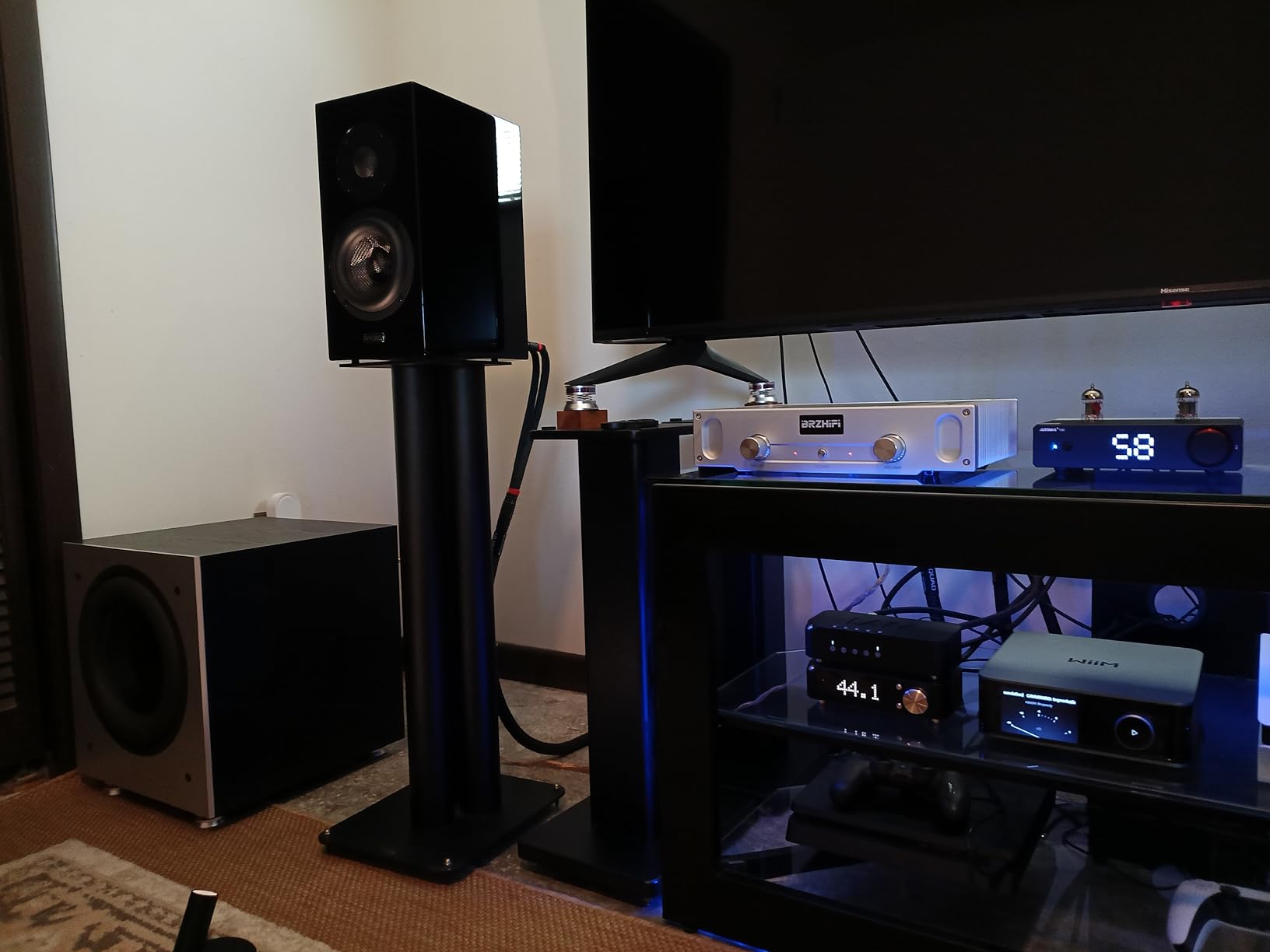
For a system running a power amplifier over balanced cable, or a home theatre chain where a 12V trigger matters, this is the most forward-looking box on the list.
8. PreSonus TubePre v2 – Best for a Single Important Vocal or Instrument
- ✓Genuine controllable tube saturation on the way in
- ✓Separate instrument and mic inputs make it a practical DI
- ✓Capacitor-free dual-servo gain stage runs quietly
- ✓HP filter pad and polarity reverse for problem solving
- ✓Backed by the PreSonus support network
- ✕Single channel only so it is limited for stereo work
- ✕Tube drive adds audible noise at higher settings
- ✕Enclosure has no rack ears
12AX7 with solid-state input
Dual-servo gain stage
Instrument and mic inputs
Variable tube drive
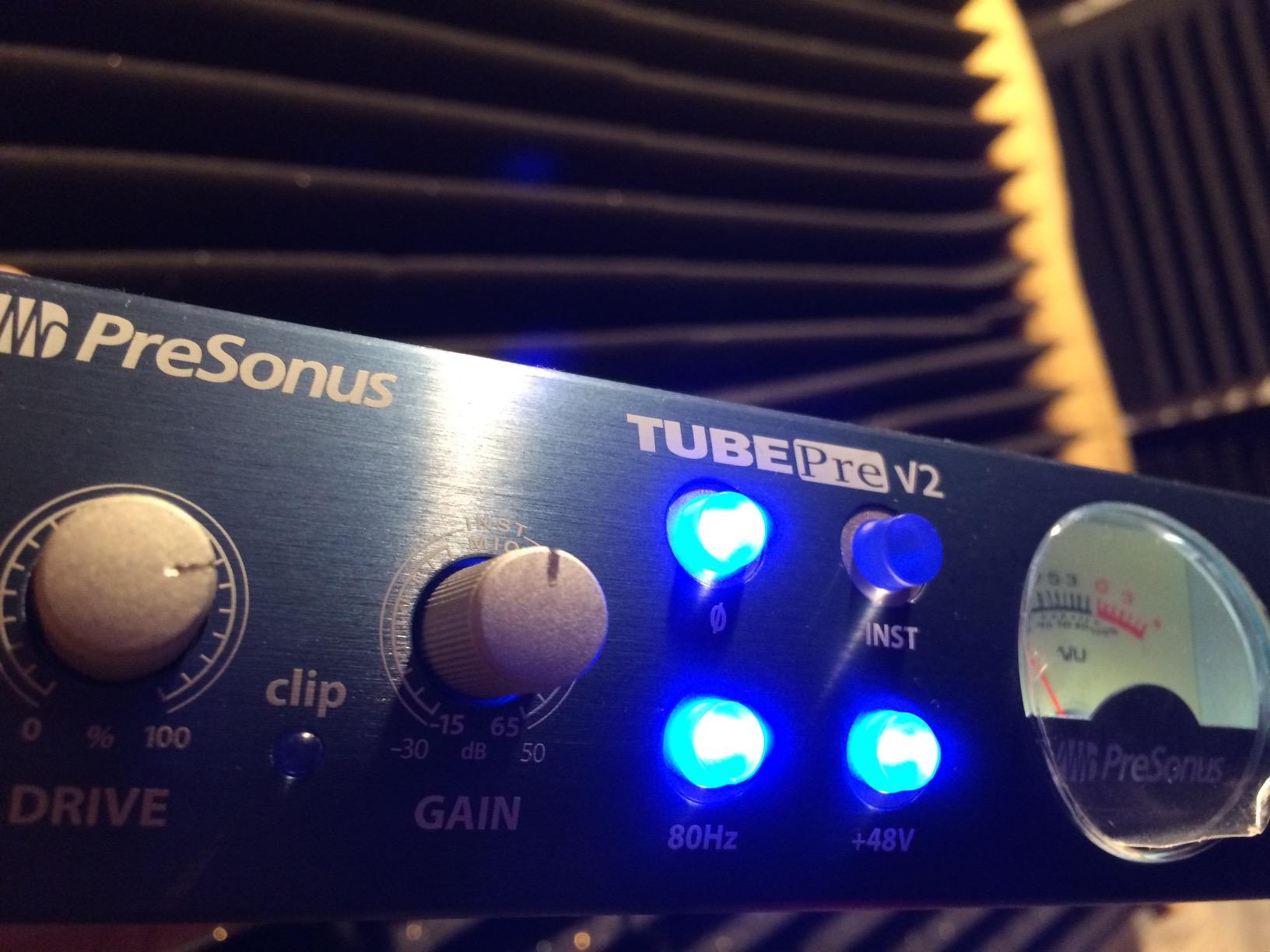
The TubePre v2 is used differently from everything else here. Instead of colouring a whole mix on the way in, owners use it to refine one source that matters, most often a lead vocal. The drive control adds harmonic character before the signal ever reaches a converter, which is a habit worth having and one the reviewers consistently recommend.
The gain structure is the clever part. A 12AX7 tube gain stage sits behind an XMAX solid-state input stage, and the gain control itself is a low-noise dual-servo design with no coupling capacitors. In practice that means the noise stays down while the tube character is available, which is exactly the compromise a single-channel studio box should make.
Phantom power, a high-pass filter, a minus 20dB pad, and polarity reverse are all present, so it functions as a complete front end for one channel rather than just a colour box.
Instrument Input and DI Use
The separate instrument input makes this genuinely useful as a direct box as well as a mic preamp, and owners with guitars, basses, and acoustic instruments use it that way. Combined with the pad and the high-pass filter, it covers most of the problem-solving needs of a single recording chain without reaching for anything else.
Frequency response is specified to 20kHz, which is honest and expected for a unit in this category rather than a limitation you will notice in practice.
Where the Single Channel Hurts
One channel is the defining constraint. It is not suited to stereo recording or drum overheads, and if you are tracking a duo you will be doing one at a time. The tube drive control also adds audible noise as it goes up, so the practical sweet spot sits lower than on the ART units, where the noise floor is managed by separate input and output controls instead.
The enclosure is an older style box with no rack ears, so it lives on a desk rather than in a studio rack. The warranty is one year, shorter than the ART units.
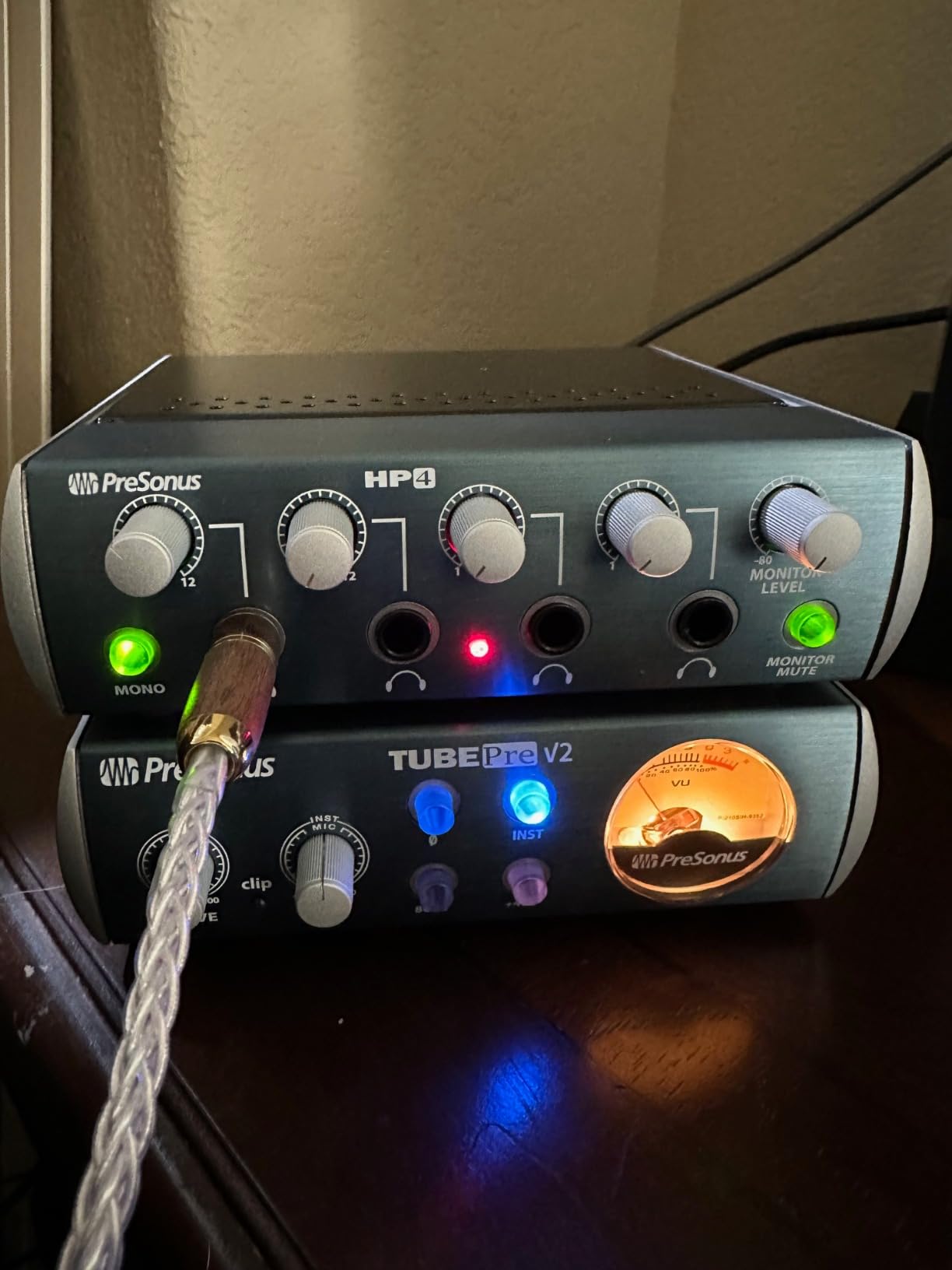
Used as intended, on the one channel that most needs attention, it delivers more than units costing several times as much that try to do everything at once.
9. PreSonus StudioChannel – Best All-in-One Rack Channel Strip
- ✓Warm fat vocal sound for a modest outlay
- ✓Preamp compressor and EQ in one rack unit
- ✓Instrument line and microphone inputs all present
- ✓Sturdy 1U steel chassis with a cooling fan
- ✓Parameter guide makes the settings approachable
- ✕Hiss at higher gain is too noisy for some dynamic mic work
- ✕Detented controls take real effort to dial in
- ✕Rear-mounted power switch and a dim VU meter
High-voltage Class A 12AX7
VCA compressor
3-band parametric EQ
1U steel rack chassis
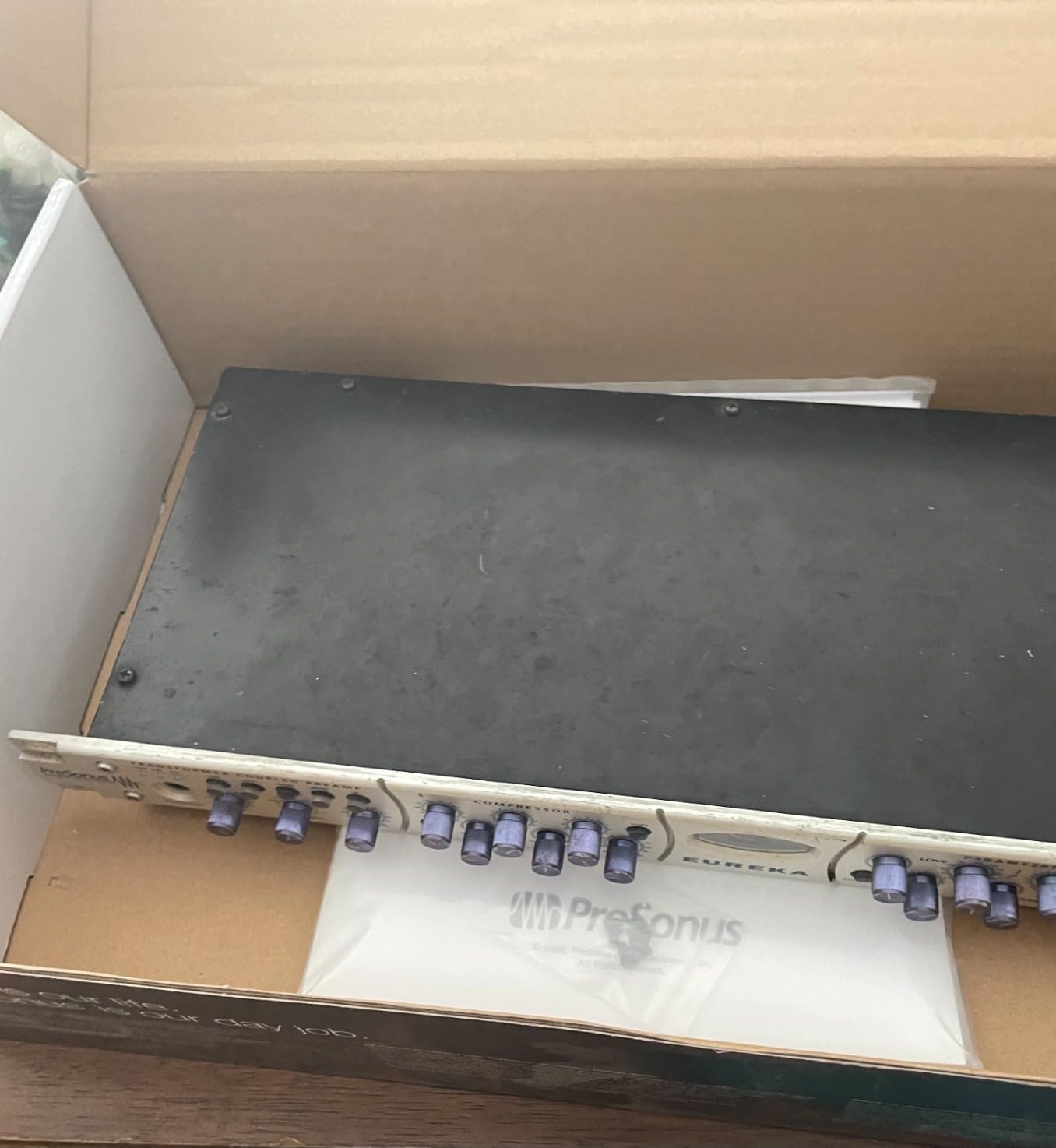
The StudioChannel is the only unit here that is a complete channel strip rather than a preamplifier. A high-voltage Class A 12AX7 front end, a variable VCA compressor with auto attack and release, and a three-band parametric equaliser with a variable-Q mid band, all in a single 1U rack unit weighing 10.5 pounds.
Owners treat it as the cheapest way to make an inexpensive interface sound better. The vocal character is described as warm and fat, and the compressor and EQ mean one box can handle a source from mic level to a finished recording channel. At this weight in 1U it is a proper piece of studio furniture rather than a desktop toy.
There is a cooling fan inside, which is worth noting for a steel chassis that runs a 12AX7 continuously.
The Compressor and EQ Section
The compressor offers soft or hard knee selection with automatic attack and release, and the EQ has a variable-Q mid band plus semi-parametric low and high bands. Included is a parameter guide, and experienced owners report that the controls behave with a responsiveness they did not expect at this level, comparing them favourably to far more expensive channel strips.
The main criticism is legibility. The VU meter barely registers level, though its limiter mode works well, and EQ sweeps are genuinely hard to hear in context. You will find your settings faster with a spectrum display on the interface than by ear through the meter.
Noise and the Controls
Hiss at higher gain settings is the recurring complaint, and several owners consider it too noisy for professional dynamic microphone work. Many report a noise floor that never reaches the recording if gain is staged correctly, so the answer is discipline rather than a different unit.
The detented controls take real effort to dial in, which is a design choice some people appreciate as precision and others read as friction. The power switch is on the rear, which is awkward in a rack, and the output level is modest enough that you need to watch the converter downstream.
For most home and project studios, this is the most capable single box on the list. If your vocals need a compressor anyway, the value comparison against a bare preamp is not close.
10. ART Tube MP – Best Tube DI for Guitar and Bass
- ✓Smooths thin digital clipping on guitar and bass DI
- ✓Very low noise when input and output are staged correctly
- ✓All-metal chassis with precise switches and metal jacks
- ✓20dB boost allows musical tube overdrive
- ✓Tube is easy to reach for swapping
- ✕No power switch so it stays powered whenever plugged in
- ✕Runs hot in a sealed rack
- ✕Less warm out of the box than expected
Single-channel 12AX7
Starved-plate overdrive topology
Separate input and output levels
48V phantom power
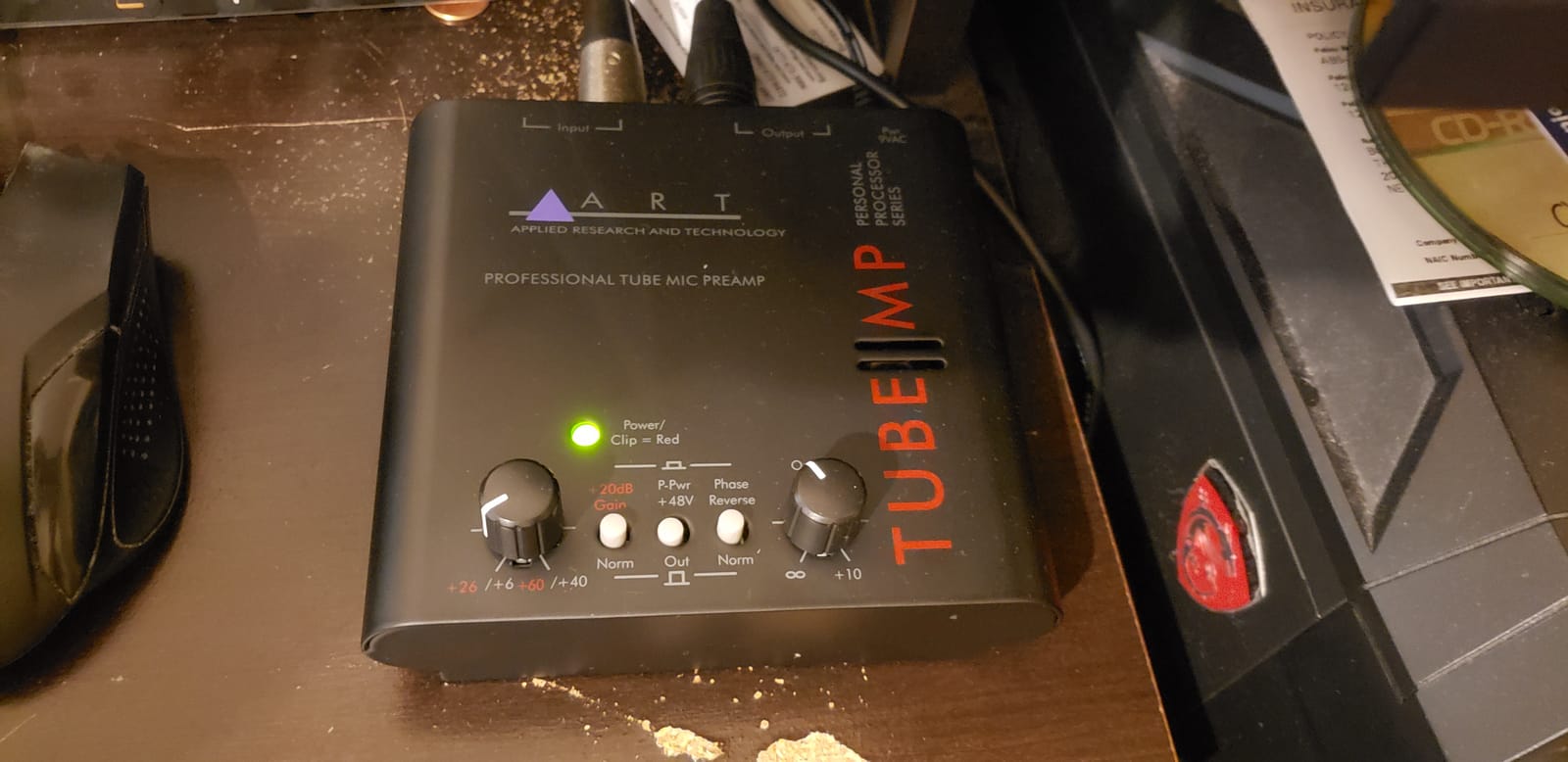
The original ART Tube MP is a no-frills single-channel preamp, and that is precisely why it has endured. Owners almost universally stress the same operational point: turn the input up and the output down. Do that and the noise floor stays very low, and the 12AX7 with its starved-plate overdrive topology adds natural warmth and gentle limiting to a clean guitar or bass signal.
It is genuinely useful as a DI. Several users describe it as a cure for thin digital clipping on an acoustic DI or a bass signal, because the tube stage rounds off the harshest edges without adding obvious noise. The 20dB boost lets you push into musical overdrive and pull the master back, which is how you get tube saturation instead of clipping.
Input and output are balanced XLR and quarter inch TRS, with 48V phantom power, polarity reverse, and a 20dB boost. There is no EQ and no metering of any kind, and the tube sits behind four screws, so swapping it is easy.
What Starved Plate Means Here
The starved-plate topology runs the tube at low plate voltage with limited current. That is why the saturation arrives early and gently rather than as a sudden wall, and it is why the unit is so forgiving to drive hard. It also explains the most common surprise, which is that the unit sounds less warm out of the box than buyers expect.
It is a legitimate design rather than a compromise, and comparing it against the 54V circuit in the Fosi P3 or the 180V supply in the AIYIMA T20 is a comparison of two different tools rather than of a good and a bad one.
Practical Handling
There is no power switch on the chassis, so it stays on whenever it is plugged in. The absence of EQ and metering is not a problem for a DI, where you are shaping the source rather than a mix, but it does mean you are working entirely by ear on a single knob pair.
It also runs hot, and some rack users worry about tube life in a sealed cabinet, so give it airflow. Construction is all stainless steel with metal jacks and switches, which is why plenty of these are still running in studios that bought them years ago.
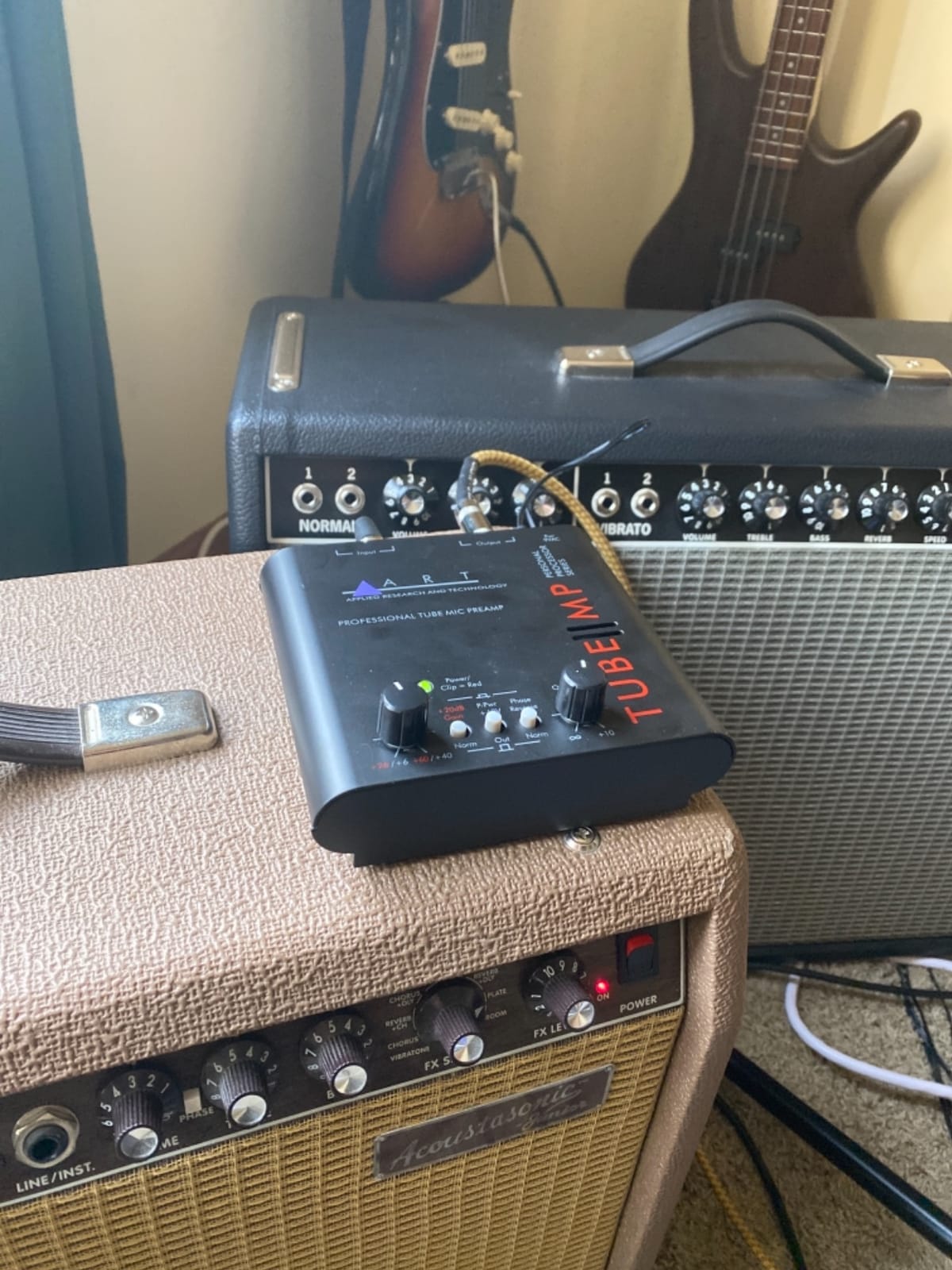
Owners rate this above its category on longevity and on price, and reviewers cite it repeatedly as one of the best value ways to add analogue character to an otherwise digital chain.
How to Choose a Tube Preamp: 7 Criteria That Actually Matter
Most buying guides tell you to look at the tube type. The tube type is the fifth most important thing. Here is the order I would actually work through, drawn from what separated the good units from the disappointing ones in this group.
1. Is There a Real Tube Signal Path?
Ask whether the signal passes through the tube at meaningful plate voltage, and whether the rest of the chain is tube or solid state. The Fosi P3 runs at 54V, the AIYIMA T20 at 180V, and the PreSonus StudioChannel uses a high-voltage Class A 12AX7 as its first stage. Those are designs where the tube is doing the work.
A unit where the tube is only lightly engaged will still be quieter and more repeatable, and it will sound less saturated. Neither is wrong, but you should know which one you are buying.
2. Gain Staging Before Sound Quality
Nearly every noise complaint we encountered in the reviews came from wrong gain staging, not from a faulty unit. The pattern is consistent across brands: turn the input control up, turn the output control down, and keep as much distance as possible between them. The original ART Tube MP makes this explicit with two separate level controls, and reviewers stress it more than any other single operational point.
For studio units, get as close to the source as you can and pad down rather than boosting up. A plus 20dB pad on a mic preamp exists for a reason.
3. Input Level and What You Are Connecting
Line level, instrument level, and phono level are three different jobs, and most budget units do one of them well. The Box X4 and the AMPAPA A1 include a moving magnet phono stage. The ART units and the PreSonus boxes take instrument and microphone level directly.
Connecting the wrong one is the most common source of disappointment in this category. A phono signal into a line input will be quiet and thin no matter how good the tubes are.
4. Phantom Power Behaviour
Condenser microphones need 48V phantom power, and tube preamps handle it inconsistently. The ART Tube MP Studio V3, the original Tube MP, the TubePre v2, and the StudioChannel all provide it. Among the desktop hi-fi units, none of them do, because none of them take a microphone.
Check for phantom power before you plan to record condenser vocals. Forum threads about tube mic preamps frequently turn out to be people who bought the wrong kind of box.
5. Channel Count and Form Factor
Everything except the AIYIMA T20 is single channel or a stereo desktop unit. A stereo desktop preamplifier like the Douk P1 is not a two-channel mic preamplifier, and the distinction matters enormously in a studio. Budget for two single-channel units if you need a stereo pair, or accept the compromise of a multichannel interface with one tube channel feeding it.
Form factor follows from that. The StudioChannel is 1U and 10.5 pounds, built for a rack. The P1 weighs one pound and belongs next to a computer. Neither is better, they are different tools.
6. Noise Floor and Hum Diagnosis
Hiss and hum are different faults with different causes. Hiss is broadband and comes from the preamp itself or from gain staging. Hum is at 50 or 60 Hz and its harmonics, and it almost always comes from grounding.
If you hear hum from a phono stage, check the ground post connection first, and try a different interconnect. If hum appears only with one source or one cable, the fault is in that path. If hiss rises when you turn the input up, move the output down to compensate. A cheap tube preamp in a badly grounded system will hum no matter how good the tube is.
7. Tube Type and Whether Rolling Is Worth It
The small signal triodes here divide into three families. The 12AX7, sold as ECC83, is the most common input and gain tube in the list and appears in the ART units, the PreSonus boxes, and the AIYIMA T20. The 12AU7, sold as ECC82, is the lower gain sibling of the 12AX7. The 6SN7 and 6N1P are larger triodes used in phono and output stages, and the Box X4 accepts several of them.
Tube rolling is worth doing where the design supports it. The Douk P1, the Fosi Box X4, the AMPAPA A1, and the AIYIMA T20 all take user replaceable tubes, and owners report measurable improvements. Start with a matched pair of the same type you already have, and note the physical pin layout carefully because it differs between families. What is not worth doing is rolling the output or rectification tubes on designs where they are not socketed, or expecting a change you cannot hear on a system with an already warm character.
When You Should Skip a Tube Preamp Entirely
Honest advice is part of a buying guide. Skip one if your system is already warm and you are chasing clarity, because a tube stage pushes the opposite direction. Skip one if you need a truly low noise floor for quiet acoustic recording, since a good solid-state preamp will beat any tube here. Skip one if you are on a tight budget and just want louder, since a headphone amp or a line-level boost will serve you better.
Also skip the illusion. If the tubes glow but barely touch the signal, you are paying for a visual, and our small tube amp guide covers a related case where that distinction matters too.
Frequently Asked Questions About Tube Preamps
Do tube preamps make a difference?
Yes, but in a narrower way than marketing suggests. A tube preamp adds even-order harmonic distortion and a gentler compression curve before the signal reaches your power amplifier, recorder, or instrument, which listeners hear as warmth and a slower soundstage. It cannot rescue a poor recording and it will not improve an entire mix. The real question is whether the tube stage runs at meaningful plate voltage, because a lightly engaged tube changes texture while a starved plate adds very little.
What is the best tube preamp for recording vocals?
For a single lead vocal on a home or project studio, the ART Tube MP Studio V3 is the pick: a 12AX7 at the front of the chain, a 20dB pad for demanding condenser microphones, phantom power, and Output Protection Limiting that catches peaks before they hit your converter. If you also need compression and EQ, the PreSonus StudioChannel gives you a 12AX7 front end, a VCA compressor, and a parametric EQ in one 1U rack unit. Add a large-diaphragm condenser and correct gain staging on either.
What is the best tube preamplifier overall?
The Douk Audio P1 is the best all-rounder we tested, and the Fosi Audio P3 is the best value. The P1 combines a JAN5725 tube stage, Bluetooth 5.0 with aptX-HD, and a 24bit/192kHz USB DAC in a one pound chassis, and it has the largest owner base of any unit in this group. The P3 runs its tubes at 54 volts for a more genuine tube contribution, measures 103dB signal to noise, and adds a remote control.
What is the best studio tube preamp?
It depends on how many channels you need. The ART Tube MP Studio V3 is the best single-channel choice, with a 12AX7 front end, phantom power, a 20dB pad, and Output Protection Limiting, plus a ten year service record among long-term owners. The PreSonus TubePre v2 is better for one specific source that needs controlled saturation. The PreSonus StudioChannel is the best all-in-one rack unit because it adds compression and a parametric EQ. For a guitar DI, the original ART Tube MP is the value pick.
Which vintage tube preamps are still considered the best?
The names that come up constantly in audiophile discussions are Audio Research, Conrad Johnson, McIntosh, Marantz, and Aries Cerat, with Audio Research usually described as warm and Conrad Johnson as more neutral. Those are reference points rather than purchases at this level, and the honest comparison is what changes as you move up: better transformers, higher plate voltage, point-to-point wiring, and a far lower noise floor. Among the units here, the AIYIMA T20 at 180V and the Fosi P3 at 54V get closest to full-voltage behaviour.
Are tube preamps worth it?
They are worth it for a specific set of use cases: a desktop hi-fi chain where you want a softer, wider presentation; a home studio recording vocals where harmonic density on the way in helps; and a guitar rig where genuine high-voltage tube tone matters. They are not worth it if your system is already warm, if you need the lowest possible noise floor for quiet acoustic recording, or if you only want more level. In those cases a solid-state preamp or a line-level stage will serve you better and cost less.
Which Tube Preamp Should You Buy in 2026?
If you are building a desktop system and want Bluetooth and a USB DAC to pass through a real tube stage, buy the Douk Audio P1. It is our editor’s choice, it has the largest owner base in the group, and it is the least risky first tube preamp you can pick.
If you want the most genuine tube contribution per unit of effort, the Fosi Audio P3 runs its tubes at 54V and measures cleanly, which makes it our best value pick for active speakers. If your source is a turntable, the Fosi Audio Box X4 is the cheapest correct answer, and the AMPAPA A1 is the better one if you also want to check mixes on full-size headphones.
If you record, the ART Tube MP Studio V3 is the strongest single-channel box, the PreSonus TubePre v2 is the most surgical, and the PreSonus StudioChannel wins when you want compression and EQ in the same rack unit. The original ART Tube MP is the guitar and bass DI pick. And if your signal chain is a pedalboard, the tube guitar amp side of things is where the JF-14 earns its place.
Whichever you choose, the first thing to do is get the gain staging right before you decide the tone is wrong. Most of the units here are better than their reputation, and most disappointments we read about came from a setting rather than the hardware.






Leave a Comment