
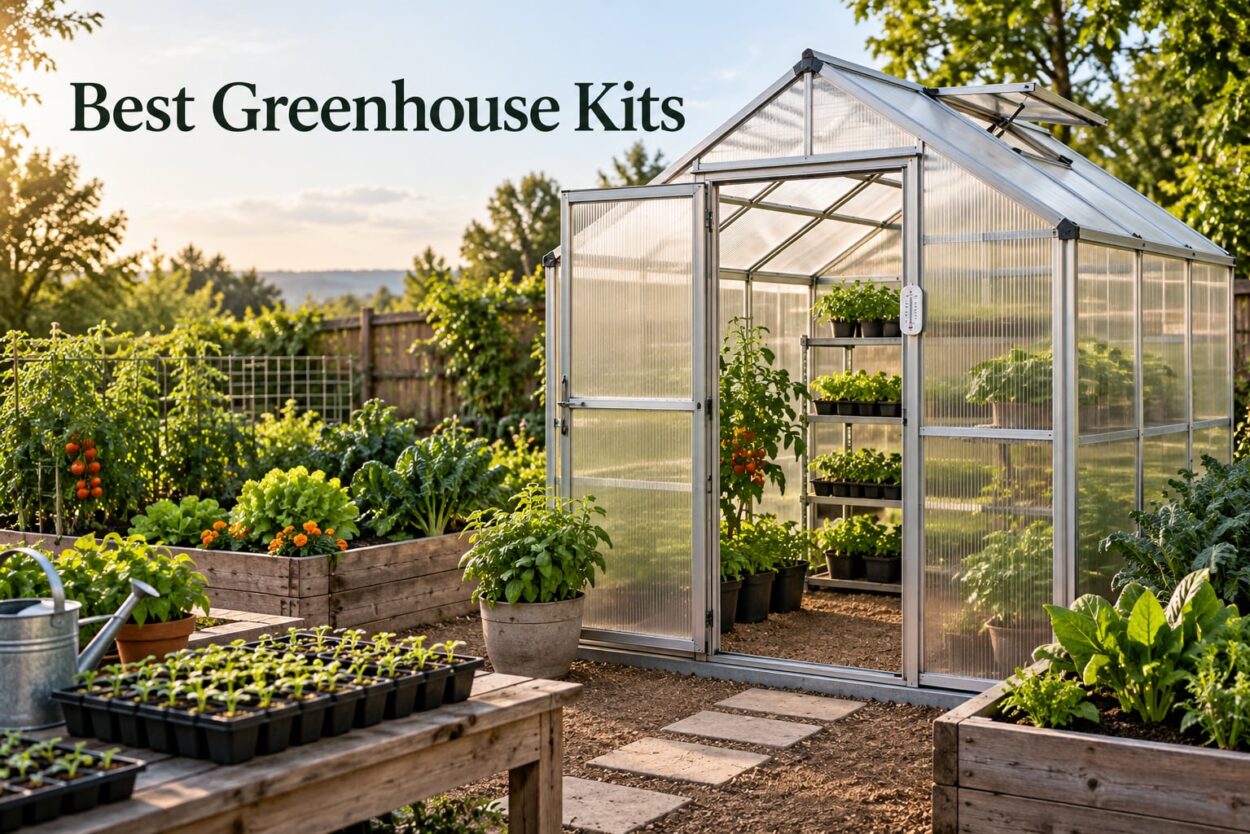
The best greenhouse kits are the ones whose frame, glazing and anchoring hardware match your climate, not the ones with the longest spec sheet. Most buyers in this category lose money the same way: they buy a fabric-covered tunnel for a snowy yard, or a rigid polycarbonate house with no foundation plan. I compared 12 of the highest-reviewed greenhouse kits sold today and scored them on the specs that decide whether a structure survives its third winter.
Every kit below was rated on nine criteria: frame material, cover material, outside dimensions against the nominal footprint, vent count, what anchoring hardware is included in the box, warranty terms, replacement part availability, assembly complexity, and the volume of owner feedback behind it. Where a manufacturer does not publish a snow-load or wind figure, I say so rather than guessing.
A word on honesty first. This ranking is built from published specifications and patterns in thousands of owner reviews, not from a season of field trials in my own yard. I have not watched these covers sag through a winter firsthand, and I will not pretend otherwise. What I can do is tell you exactly which numbers the manufacturers publish, which claims owners repeat, and where the weak points show up in reviews. If you want walk-in-only options, our walk-in greenhouse kit guide goes deeper on footprint math.
How We Picked These Greenhouse Kits
Greenhouse kits fail in predictable ways, and almost every failure traces back to a spec that was easy to gloss over on a product page. Our method focuses on those failure points rather than on appearance or marketing language.
- Frame material and gauge. Powder-coated alloy steel and galvanized steel tubes handle weather best. Light-gauge tube frames need permanent anchoring to stay square.
- Cover or panel material. Polyethylene film is simple and replaceable. Twin-wall and double-wall polycarbonate is rigid, insulating and far less prone to wind damage. PVC is for small indoor units only.
- Outside dimensions versus nominal size. A kit listed as 8×6 measures slightly more than that on the outside, and the internal planting area is smaller again.
- Vent and door count. Summer overheating, not winter cold, is what kills plants in a greenhouse. A zippered roll-up door alone is thin ventilation.
- Anchoring hardware in the box. Ropes, stakes and ground nails of the right length are part of the structure, not an accessory.
- Warranty and replacement parts. One-year cover protection is common. Lifetime replacement on connectors is rare and worth real money.
- Assembly complexity. Tool-free push-fit frames go up in an afternoon. Aluminum and polycarbonate houses must be leveled and squared carefully.
- Owner feedback volume. A 5000-review kit tells you far more about long-term durability than a 150-review kit with prettier photos.
- Published load ratings. Very few of these kits publish a snow-load or wind figure. We report what is stated and flag what is not.
We earn a commission from qualifying purchases, which does not change the order of the picks. Ratings and review counts are copied exactly as published on the product pages.
Our Top 3 Greenhouse Kits: EAGLE PEAK 8×6, Ohuhu 3-Tier and KING BIRD 20×10
The EAGLE PEAK 8×6 wins on the combination of a rigid steel frame, a genuinely one-person pop-up setup and one of the deepest owner feedback bases in the group. The Ohuhu 3-Tier is the value pick, giving you 12 shelves in a compact walk-in footprint. The KING BIRD 20×10 has the floor area for a serious vegetable bed run.
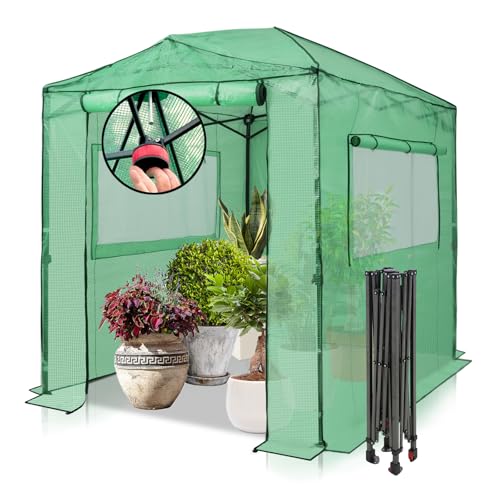
EAGLE PEAK 8×6 Pop-Up
- ✓One-person tool-free pop-up frame
- ✓Powder-coated steel frame
- ✓Front and rear roll-up zipper doors
- ✓Two roll-up side windows
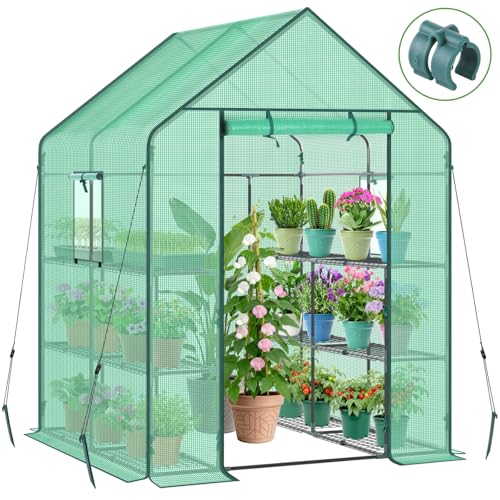
Ohuhu 3-Tier 12-Shelf
- ✓12 metal mesh shelves
- ✓Cover rated for 45 mph wind
- ✓Zippered roll-up door and 2 screened windows
- ✓Tool-free push-fit assembly
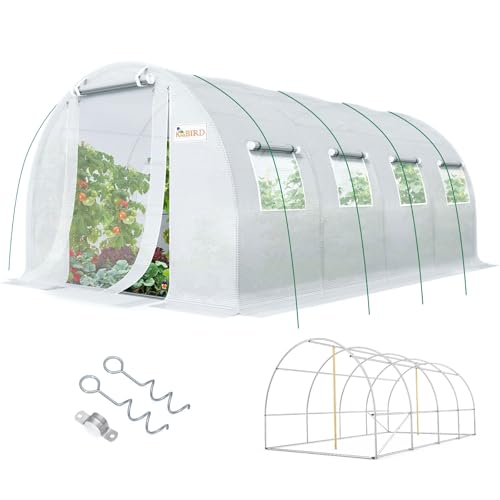
KING BIRD 20×10 Walk-In
- ✓20 ft by 10 ft floor area
- ✓8 roll-up screen windows
- ✓Dual zipper screen doors
- ✓24 stakes and 4 ropes included
Comparing 12 Greenhouse Kits Side by Side in 2026
This table covers every kit in the roundup with its exact outside dimensions, glazing type, frame material and ventilation. The Key Features column is drawn from the manufacturer specifications, not from marketing summaries.
| Product | Features | Action |
|---|---|---|
| EAGLE PEAK 8×6 Pop-Up Greenhouse |
|
Check Latest Price |
| Ohuhu 3-Tier 12-Shelf Walk-In |
|
Check Latest Price |
 KOKSRY 56x55x78 3-Tier Walk-In KOKSRY 56x55x78 3-Tier Walk-In |
|
Check Latest Price |
| KING BIRD 20x10x6.6 FT Walk-In |
|
Check Latest Price |
 Greengro 57 x 57 x 76 Inch Greengro 57 x 57 x 76 Inch |
|
Check Latest Price |
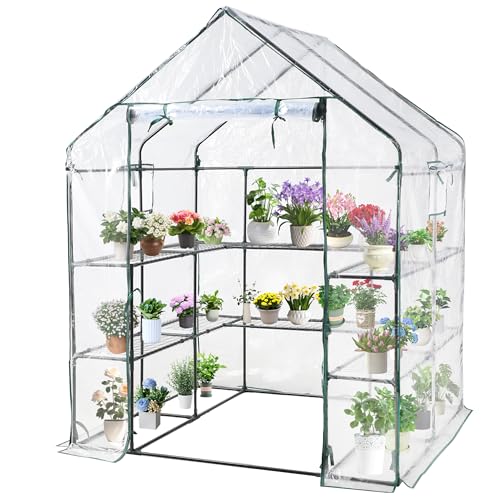 SUNGIFT 61 x 57 x 80 Inch PVC-Clear SUNGIFT 61 x 57 x 80 Inch PVC-Clear |
|
Check Latest Price |
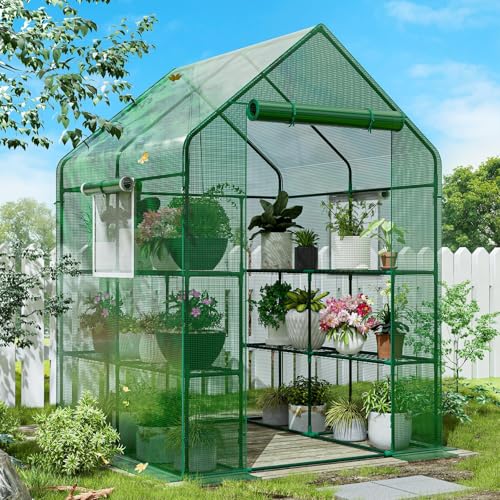 SPECILITE 56 x 56 x 78 Inch Walk-In SPECILITE 56 x 56 x 78 Inch Walk-In |
|
Check Latest Price |
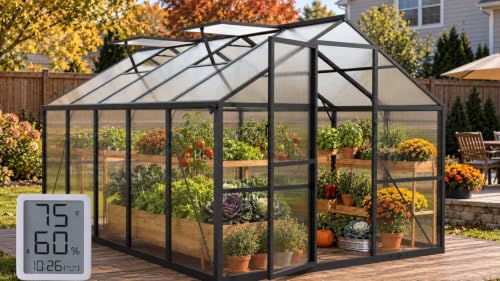 WUKHG 8×10 FT Aluminum Greenhouse WUKHG 8×10 FT Aluminum Greenhouse |
|
Check Latest Price |
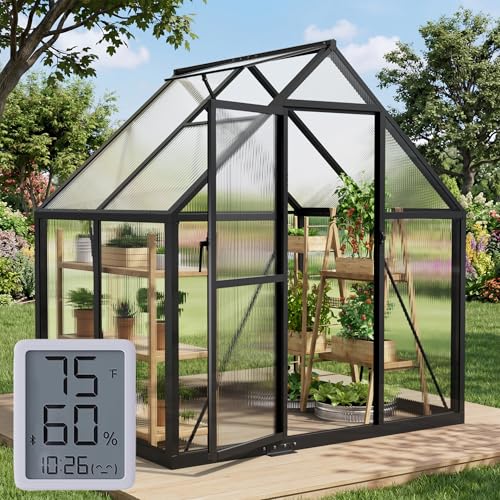 Sylviera 6×4 FT Aluminum Greenhouse Sylviera 6×4 FT Aluminum Greenhouse |
|
Check Latest Price |
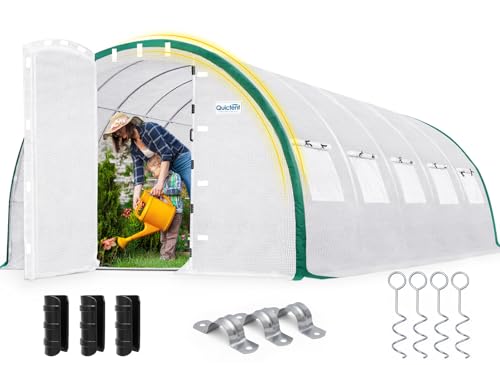 Quictent 25x10x6.6 FT Tunnel Quictent 25x10x6.6 FT Tunnel |
|
Check Latest Price |
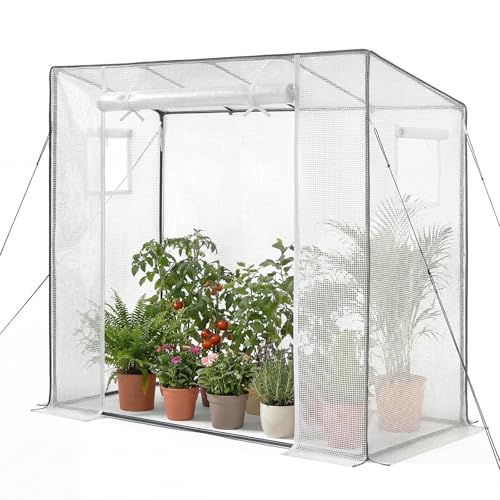 VEVOR 76.8 x 30.3 x 66.1 Inch VEVOR 76.8 x 30.3 x 66.1 Inch |
|
Check Latest Price |
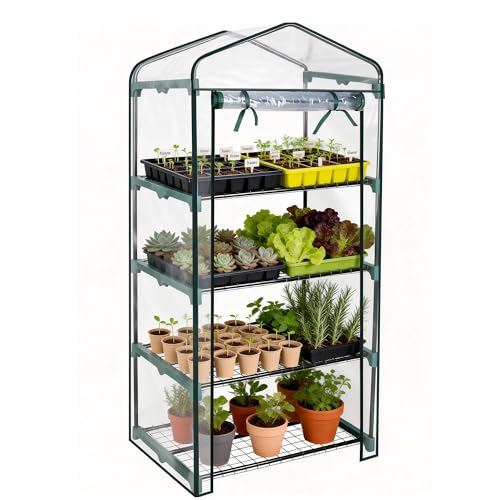 Worth Garden 4-Tier Mini Greenhouse Worth Garden 4-Tier Mini Greenhouse |
|
Check Latest Price |
1. EAGLE PEAK 8×6 Easy Setup Pop-Up – One-Person Setup With 5012 Owner Ratings Behind It
- ✓Patented center-lock frame sets up tool-free by one person
- ✓Powder-coated rust-resistant steel frame survives multiple winters
- ✓Front and rear roll-up zipper doors plus 2 roll-up side windows
- ✓Includes wind ropes and stakes
- ✓Packs down flat for seasonal storage
- ✕PE cover and zippers degrade within one or two seasons
- ✕Replacement covers cost more than you expect relative to the frame
- ✕Frame can deform under heavy snow if not cleared
- ✕Needs anchoring because wind can lift and move it
98.4 x 70.9 x 91.7 in outside
PE cover, alloy steel frame
Roll-up doors, 2 roll-up windows
37.3 lb, model GH48-GRN-AZ
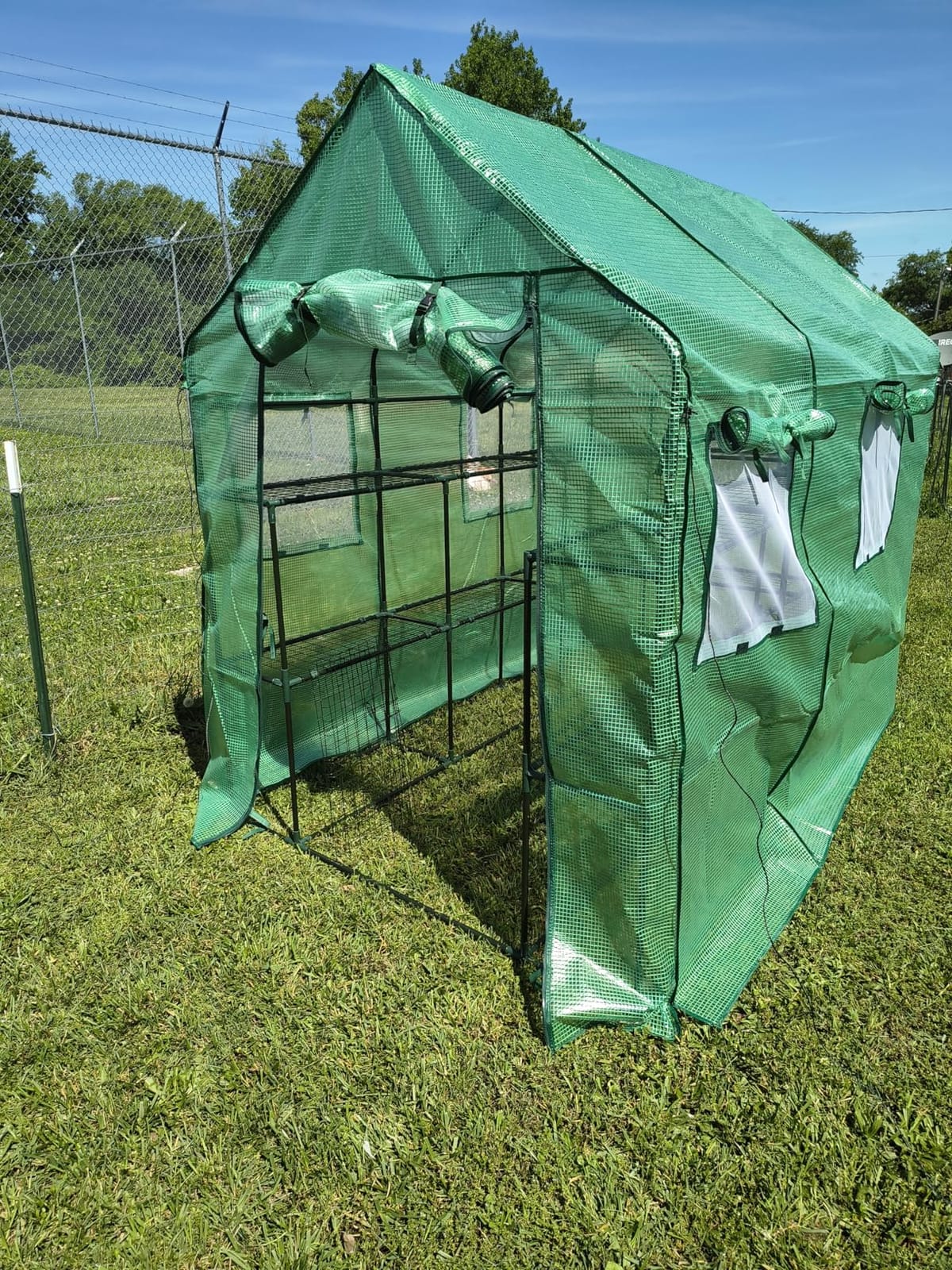
Almost 5000 owners have written about this kit, and the pattern in those reviews is remarkably consistent. The patented center-lock push-fit frame goes from flat on the lawn to fully assembled in minutes, by one person, with no tools at all. That single design decision is what separates it from nearly everything else in this roundup.
The frame is powder-coated alloy steel, and wind ropes and ground stakes are included in the box. Owners consistently report it standing through multiple winters of cold, wind and hail. The cover is water-resistant and UV-resistant polyethylene film.
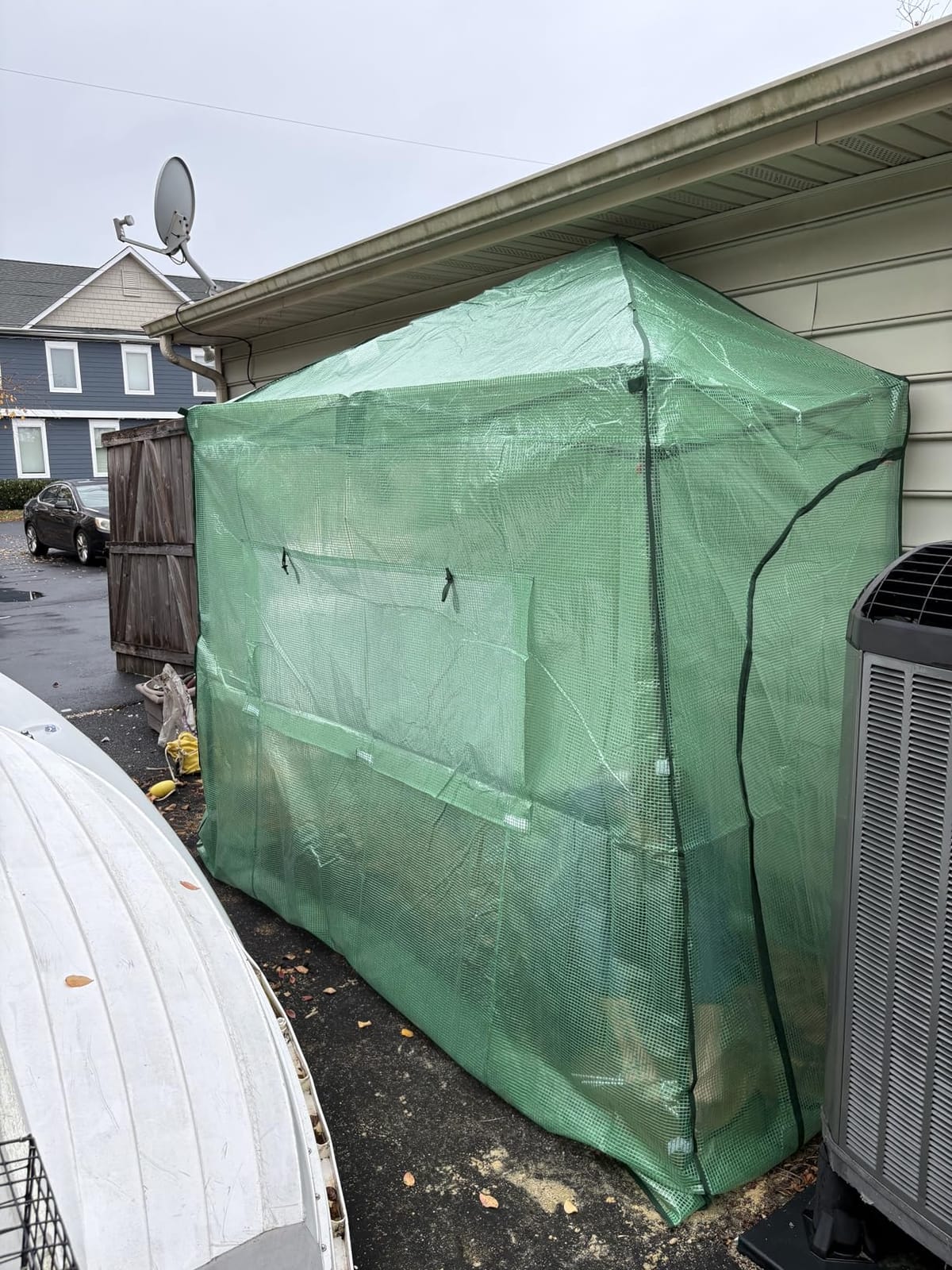
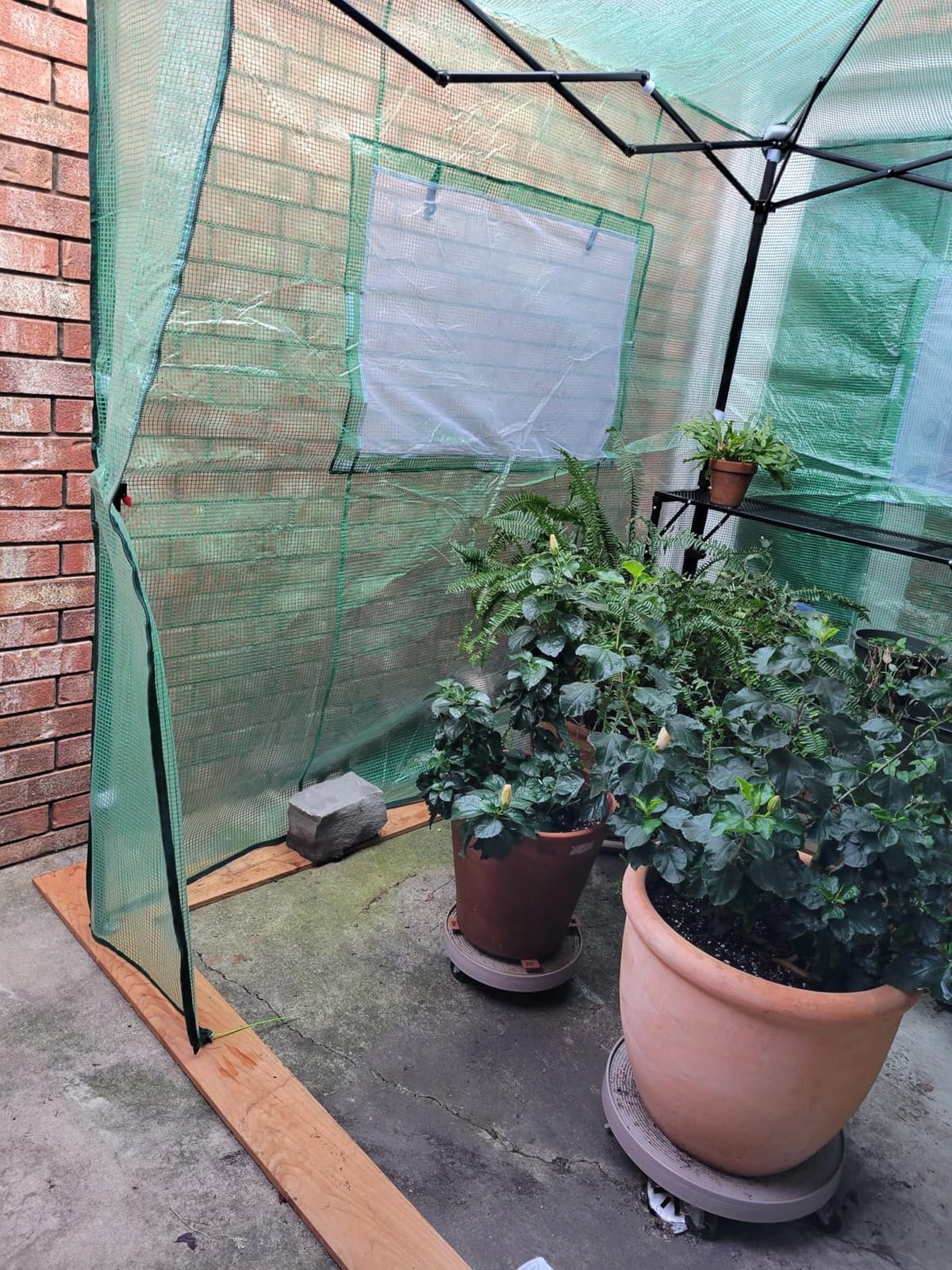
Outside dimensions are 98.4 by 70.9 by 91.7 inches and the unit weighs 37.3 pounds, so it packs flat for storage but is not a one-hand carry. Ventilation comes from a roll-up zipper door at the front, a matching rear roll-up door, and two large roll-up side windows. That is four separate openings for airflow, and only one other walk-in in this roundup matches it.
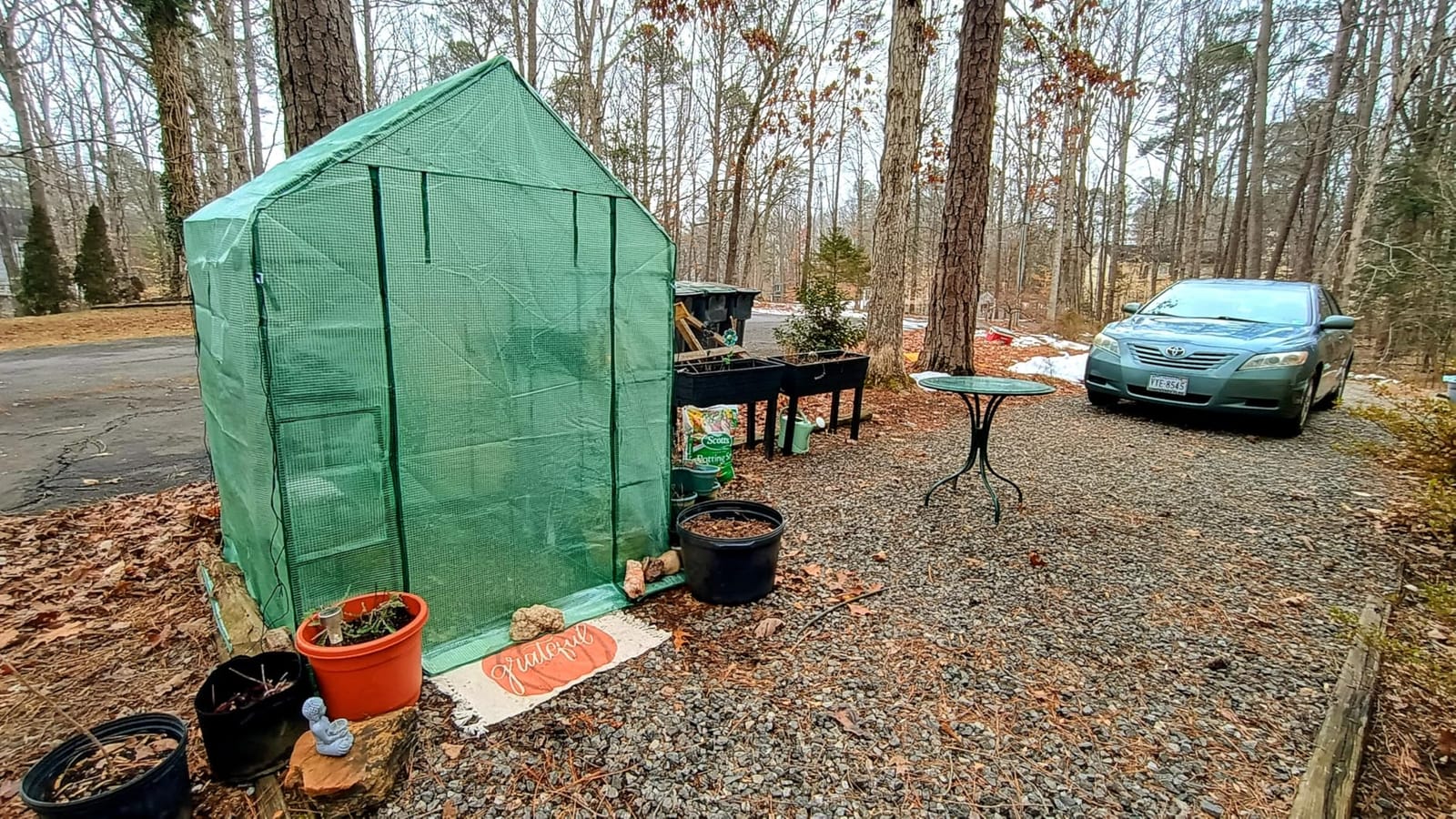
This kit stands up to a snowy yard better than the light-gauge tunnels on this list. One of the recurring owner notes is that heavy snow needs clearing off the roof, because the frame itself can deform under ice load. If you are in a heavy-snow area, plan on brushing it off or consider a rigid polycarbonate house instead.
Roll-up doors and side windows do the real work
The zippered roll-up design is the ventilation story. On a warm spring day you can raise the front door, the rear door and both side windows, which turns a closed tunnel into something close to an open cold frame. That airflow matters more than most specs sheets admit, because a greenhouse that cooks in July damages plants faster than one that gets cold in January.
Doors and windows use zippers, and that is where this kit shows its age first. Owners report seams splitting or zipper failure within a year or two of continuous outdoor exposure. The good news is that reviewers also report support sending replacement covers and parts quickly when contacted.
What the 37.3-pound steel frame actually holds
At 37.3 pounds with a powder-coated steel frame and a model number of GH48-GRN-AZ, this is substantially heavier than the 10.4 pound VEVOR tunnel later in this list. That weight is the reason it holds its shape rather than going oval in a gust. The trade-off is that it is not a seasonal carry-around unit.
Warranty coverage is one year of limited after-sale protection on the frame and top. It is also compatible with EAGLE PEAK greenhouse shelving, sold separately, which matters if you want vertical growing capacity inside a unit this size.
Who this kit suits
This suits a first-time buyer who wants a real walk-in structure without a full weekend of assembly and without tools. It also suits anyone who wants a genuine two-door structure for moving trays and pots in and out. Our greenhouse shelving guide covers what fits inside a unit this size.
Who should skip it
Skip it if you need published load ratings for a snow belt, or if you plan to keep the cover for more than a couple of seasons without budgeting for a replacement. Buyers who want a structure that stays standing through ice load with no clearing should look at the aluminum and polycarbonate units instead.
2. Ohuhu 57 x 57 x 76 Inch 3-Tier – Twelve Shelves in a Compact Walk-In Footprint
- ✓Largest review base in the roundup at 7742 ratings
- ✓12 shelves give high vertical capacity in a compact footprint
- ✓Tool-free push-fit assembly
- ✓Mesh screens block pests while allowing airflow
- ✓Cover rated for 45 mph wind
- ✕Shelf clips and light-gauge frame feel flimsy when loaded with heavy pots
- ✕PE cover and zippers degrade with prolonged sun exposure
- ✕Included ropes and stakes are thin for serious anchoring
56.3 x 55.5 x 76.8 in outside
PE cover on alloy steel frame
12 metal mesh shelves, 2 screened windows
Model Y21-80400-36
This is the most-reviewed greenhouse kit in the roundup, with more than 7700 ratings, and that volume is the reason it ranks second. Buyers consistently describe it as strong value for seed starting and frost protection, and the 12-shelf configuration is genuinely unusual at this footprint.
The frame is a rust-proof steel structure rated by the manufacturer for 45 mph wind, with double-stitched seams throughout the cover. Twelve metal mesh shelves sit at six per side, each rated to 22 pounds, which is enough for trays of seedlings and medium pots.
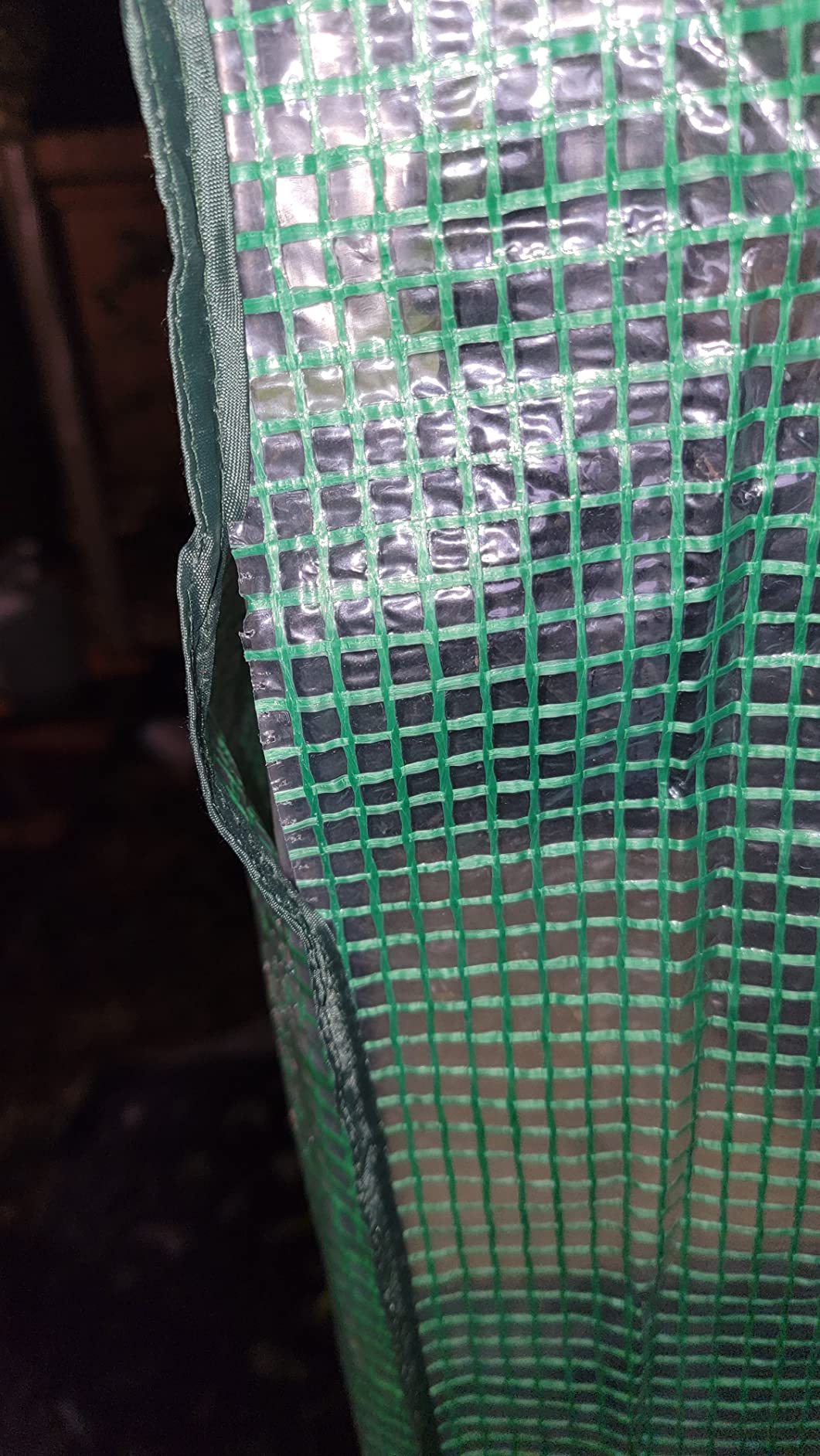
Outside dimensions are 56.3 by 55.5 by 76.8 inches and it weighs 11.5 kg. Ventilation is a zippered roll-up door plus two screened windows. Materials are CA65-certified and heavy-metal-free, which matters if you plan to grow edible crops in it.
That 45 mph figure is a manufacturer rating for the frame, not an independent test result, and it applies to a properly anchored unit. Owners still report the included ropes and stakes feel thin for serious anchoring, so plan to add proper ground anchors regardless.
Twelve shelves change how you use the space
Several 3-tier kits in this roundup ship with 8 shelves. Twelve changes the game for propagation work, because you can run a full height of seed trays without sacrificing floor space for a bench. The 22-pound per-shelf rating is adequate for trays and pots but not for bags of soil or a water barrel on the upper tiers.
Owners report that the shelf clips and the light-gauge frame feel flimsy once you load them heavily. A zip tie across each shelf corner is the cheap fix most owners settle on, and it works.
Tool-free assembly and one-year coverage
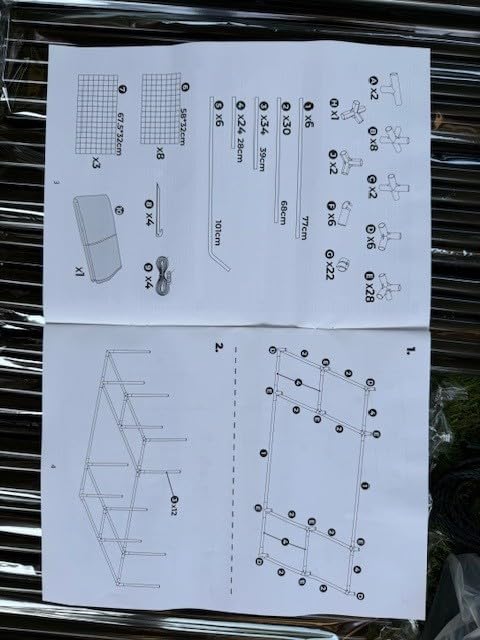
Assembly is a push-fit design with an illustrated manual and video, and no tools are required. Warranty coverage is one year, and the manufacturer offers free connector and cover replacements within that period, which is better than most of the tunnel kits here.
The model number is Y21-80400-36. The cover is a high-density reinforced polyethylene with anti-cold aging agents added, which is why buyers in colder regions report reasonable overwintering results with potted plants.
Who this kit suits
This suits a propagation-heavy gardener working in a small yard who wants maximum shelf area in the least floor space. It is also a good fit for anyone starting a large batch of seedlings each spring, since trays stack vertically instead of sprawling across a bench.
Who should skip it
Skip it if you intend to hang heavy flowering plants or a grow light rig on the upper shelves, or if you plan to leave it standing through a winter without adding your own anchors. Those who want a rigid structure that will not need cover replacement should look higher on this page.
3. KOKSRY 56 x 55 x 78 Inch 3-Tier – 16mm Steel Pipe Frame With 8 Shelves
- ✓Ships with 8 shelves across 3 tiers out of the box
- ✓UV-resistant waterproof cover helps prevent plant burn
- ✓Mesh side windows regulate airflow and exclude animals
- ✓Walk-in height for standing access
- ✓Ground nails and ropes included
- ✕Shelves and connectors are light gauge and can sag under load
- ✕Frame is light and needs firm anchoring in wind
- ✕Cover durability across multiple seasons is limited
56 x 56 x 78 in outside
UV-resistant waterproof PE cover
16mm steel pipe frame, 8 shelves
Walk-in height, model GH2X3-WHITE
The KOKSRY is a straightforward 3-tier walk-in that does one job well: giving you vertical space for seed trays in a compact shell. Owners treat it as an affordable starter greenhouse that extends the season effectively.
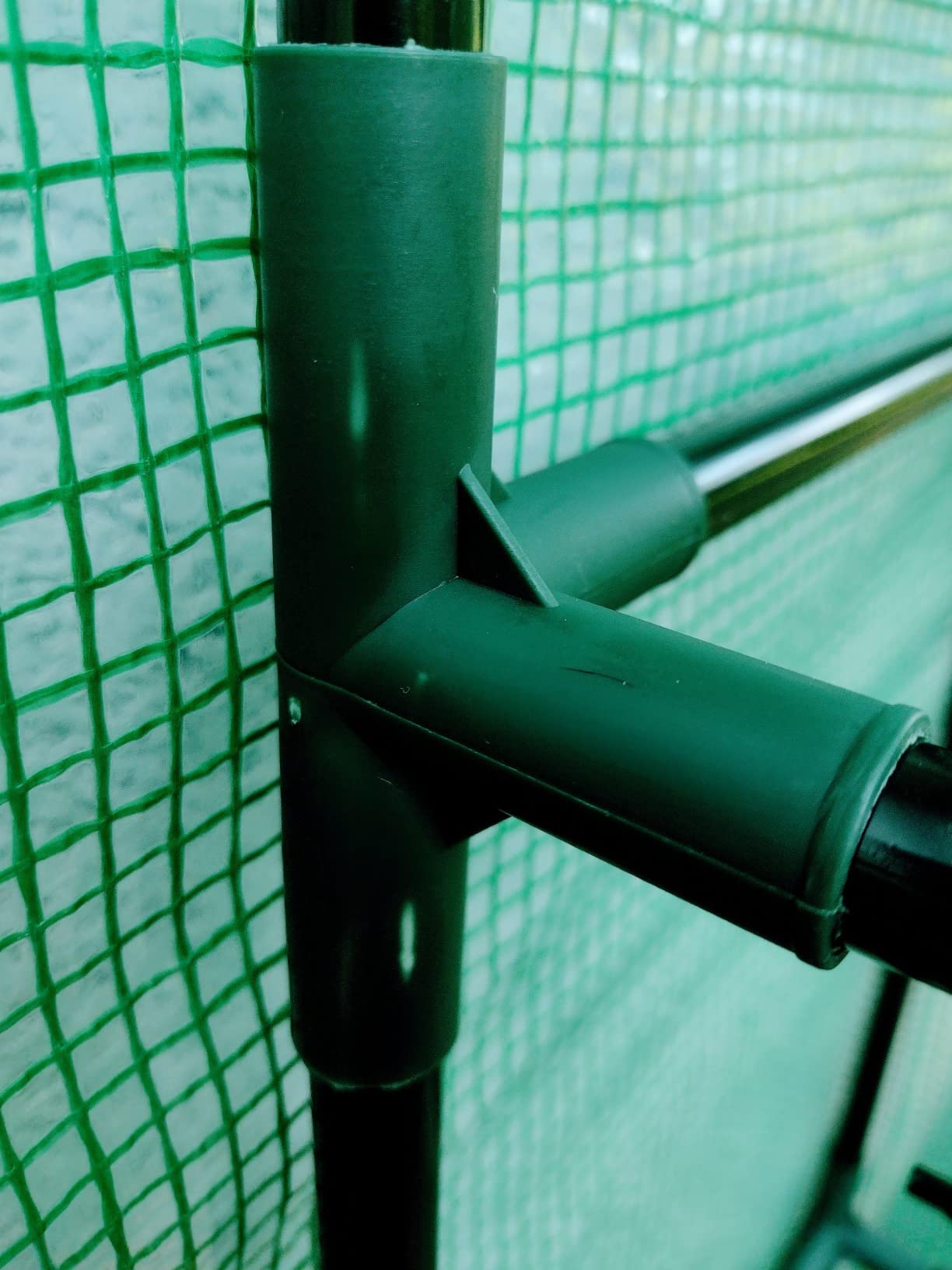
The frame is 16mm diameter steel pipe with high-strength connectors. Ground nails and ropes are included for wind stability, and the cover is a thickened waterproof UV-resistant polyethylene.
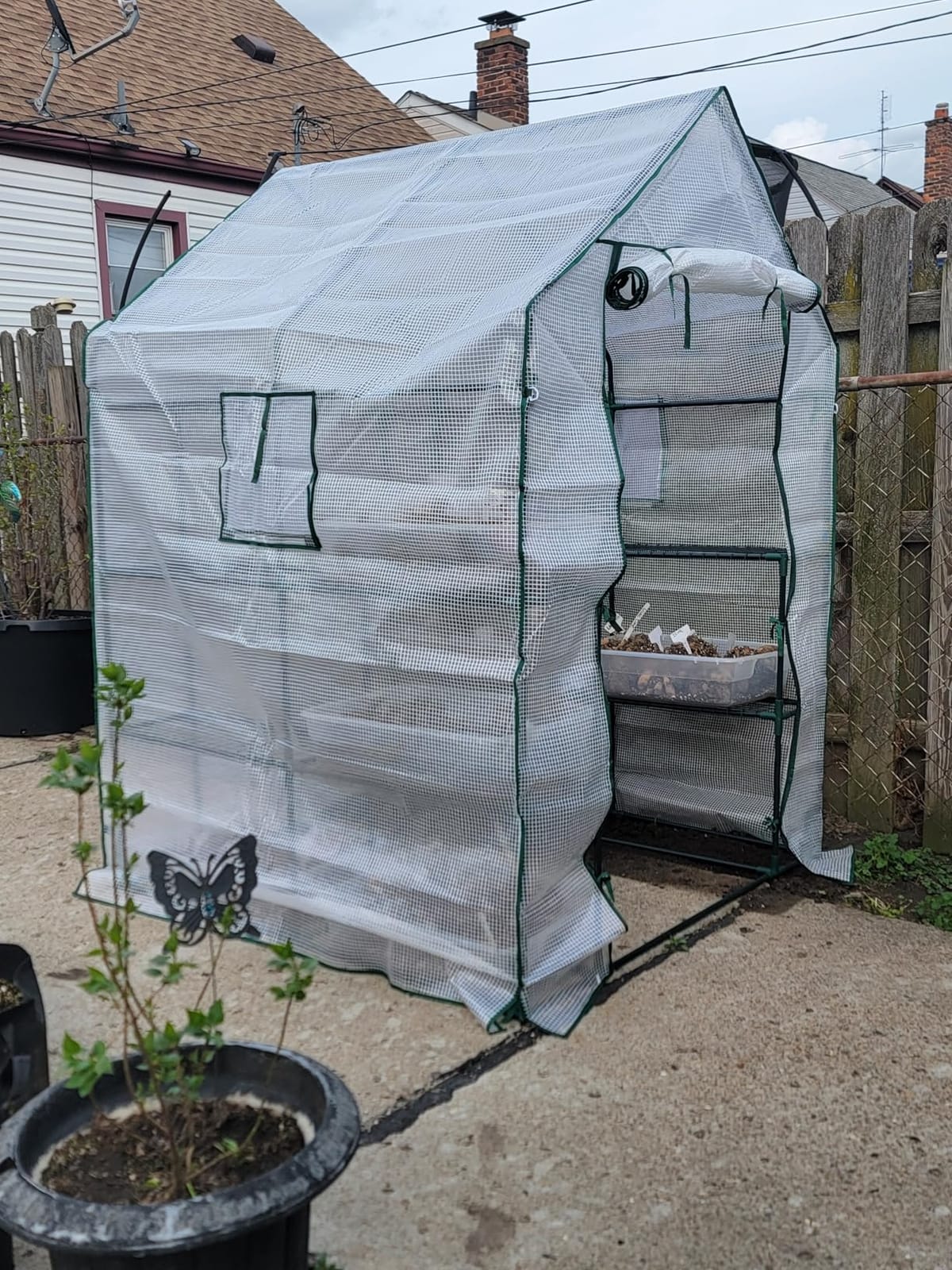
Outside dimensions are 56 by 56 by 78 inches and the unit weighs 11.39 kg. Ventilation comes from mesh screen windows on both sides plus a zippered door. The special features listed by the manufacturer include overwinter protection and a walk-in design for standing access to tend plants.
The UV-resistant cover specification is the part worth paying attention to. A cover that filters UV reduces the plant burn that gardeners complain about most in fabric tunnels, and that is a real difference during a hot spring.
Eight shelves and walk-in height for tray work
Three tiers with eight shelves total gives you room for trays on the upper levels and larger pots below. The walk-in height of 78 inches means you can stand up and work inside rather than crouching, which matters during a long potting session.
Owners report that shelves and connectors are light gauge and can sag under heavy load. If you plan to use clay pots rather than plastic trays, add support under the middle shelf before you load it.
Anchoring is the deciding factor for this kit
Because the frame is light, this unit needs firm anchoring to stay put. The included ground nails and ropes are basic, and owners in exposed sites report needing to add more. Concrete blocks on the base corners are the simplest upgrade.
Reviewers describe the cover durability across multiple seasons as limited, which is the same limitation that affects every PE-covered kit in this roundup. The model number is GH2X3-WHITE.
Who this kit suits
This suits a beginner who wants standing height and organized shelving at a modest cost, especially someone starting seeds in spring and overwintering potted herbs in autumn. It is also a reasonable second greenhouse for a yard that already has a larger tunnel.
Who should skip it
Skip it if your site is open and unsheltered, or if you want a structure you will not need to re-cover in three years. Anyone seeking a long service life with no cover replacement should step up to an aluminum and polycarbonate build.
4. KING BIRD 20 x 10 x 6.6 FT – Best for Serious Vegetable Growing
- ✓Very large 20 by 10 foot floor area for vegetable growing
- ✓Galvanized frame holds together over multiple seasons when anchored
- ✓8 roll-up screen windows give excellent ventilation control
- ✓24 stakes and 4 ropes included
- ✓Brand support reported responsive on cover replacements
- ✕Only four interior Velcro straps secure the cover
- ✕Screen zippers and Velcro window closures fail first
- ✕Frame needs supplemental bracing or a base to stay square
- ✕Cover seams can tear early if the structure is not anchored
236.2 x 118.8 x 79.2 in outside
150 g/sqm PE grid cover
Galvanized frame, 8 screen windows
Model 1306W-2, 78.1 lb
This kit is built for real beds rather than a propagation shelf. At 236.2 by 118.8 inches outside, it changes what you can grow inside, though it also changes what you have to anchor.
The frame is galvanized steel with 3 top crossbars, 2 diagonals and 10 bottom vertical poles, plus 2 added supporting stiffeners. That bracing is why owners report the frame holding together over multiple seasons when properly staked and wired. The kit includes 24 stakes and 4 ropes.
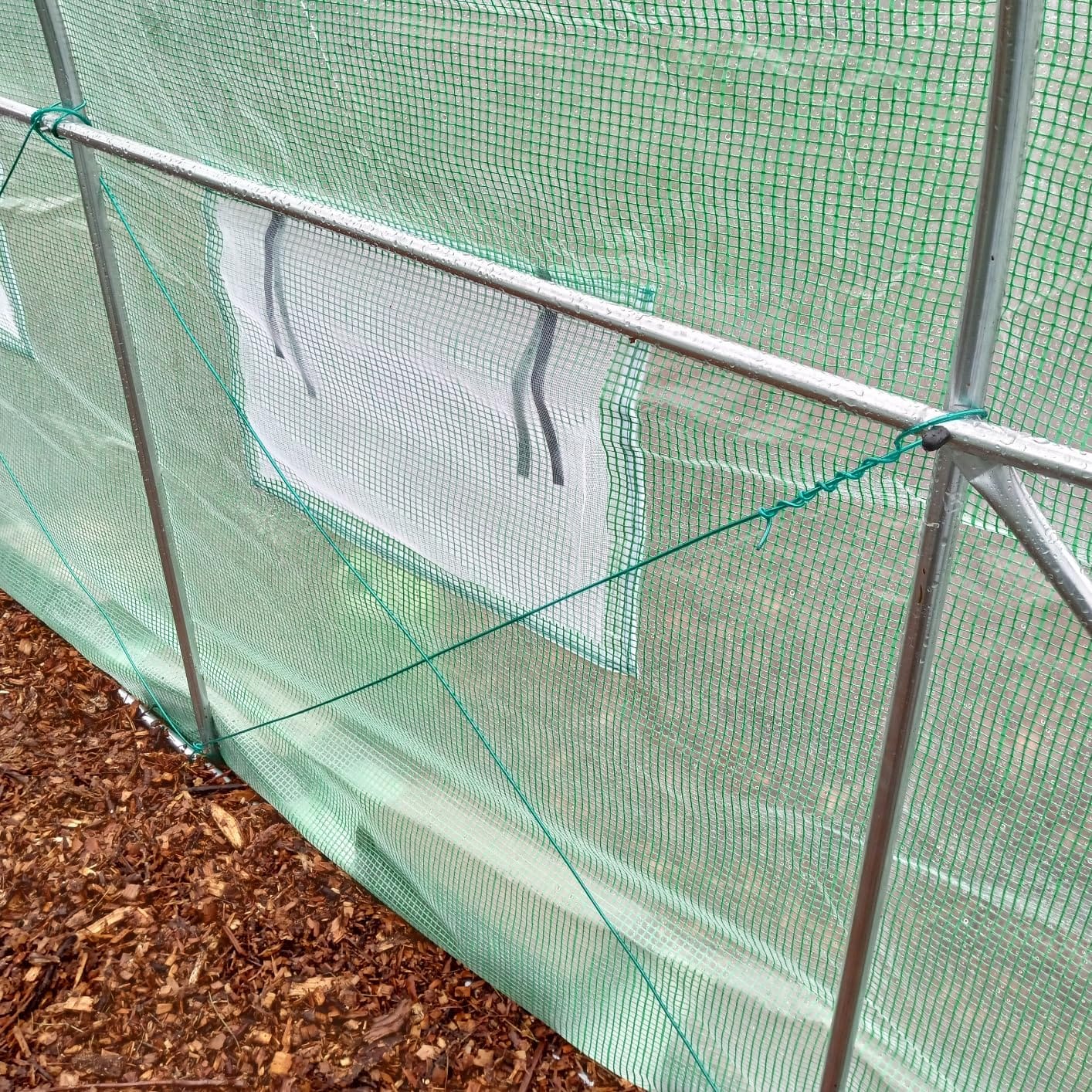
The cover is a 150 g/sqm PE grid with UV Index 6 protection. Ventilation is 8 roll-up screen windows plus dual zipper screen doors at both ends, each combining a PE layer and a mesh layer. At 78.1 pounds, this is not a unit you reposition casually.
Owners report the brand’s customer service as responsive, including free cover replacements, which is a real advantage in a category where cover support usually means buying a new tunnel.
What a 20 by 10 foot floor actually gives you
With 10 bottom vertical poles, you can run benches or ground beds along the length of the structure. Reviewers describe it as excellent value for a temporary or seasonal greenhouse, and report the frame surviving North Texas weather when properly staked and wired.
Be realistic about the shape, though. A tunnel 10 feet wide gives you limited standing room at the edges, so most work happens down the center. If you want to walk upright along the sides, choose a different style.
The cover attachment is the weak point
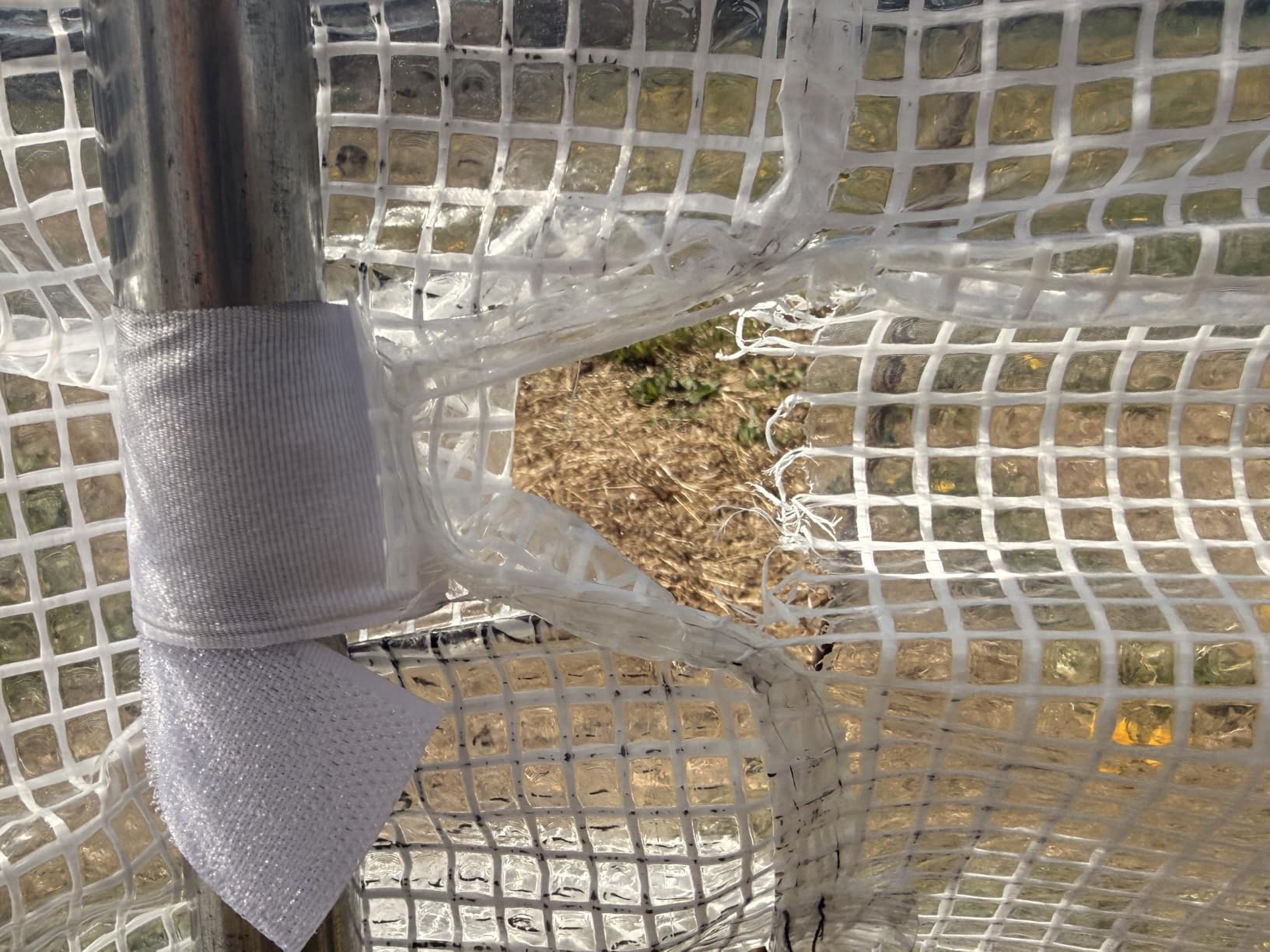
Only four interior Velcro straps secure the cover, and the bottom edging flap is short. Owners report that screen zippers and Velcro window closures are the first components to fail, and that Velcro can rip the cover seams in wind if the structure is not anchored.
That is the single most common complaint in reviews, and it is fixable. Add your own straps along the length and stake or ballast the base before the first windy day. The frame is not the problem here; the cover attachment is.
Who this kit suits
This suits a gardener growing vegetables for a household rather than seedlings for a few trays, and anyone who wants temporary covered space over an existing bed layout. It also suits buyers who can recruit a second pair of hands for assembly.
Who should skip it
Skip it if you cannot anchor it properly, or if you want a structure you will move between seasons. It is also the wrong choice for someone who wants year-round rigid construction, because a PE cover will need attention eventually regardless of the frame.
5. Greengro 57 x 57 x 76 Inch – Detachable Mid-Size Greenhouse With a 45 mph Cover Rating
- ✓Cover rated for winds up to 45 mph by the manufacturer
- ✓8 shelves rated to 22 lb with room for up to 24 plant pots
- ✓Tool-free assembly with a clear step-by-step guide
- ✓Detachable design makes relocation between patio and garden easy
- ✓Screened windows and zippered door for airflow and pest control
- ✕Cover and seams show wear sooner than expected outdoors
- ✕Shelf support clips are light and benefit from zip-tie reinforcement
- ✕Included stakes and ropes are basic and need supplementing
57 x 57 x 76 in outside
PE cover on metal frame
8 shelves rated to 22 lb,3 tiers
45 mph rated cover
The Greengro is a mid-size walk-in with a detail many kits skip: a published wind figure. The high-tensile grid PE cover with double-stranded edge banding is rated by the manufacturer for winds up to 45 mph, and the 16mm base uses sturdy connectors.
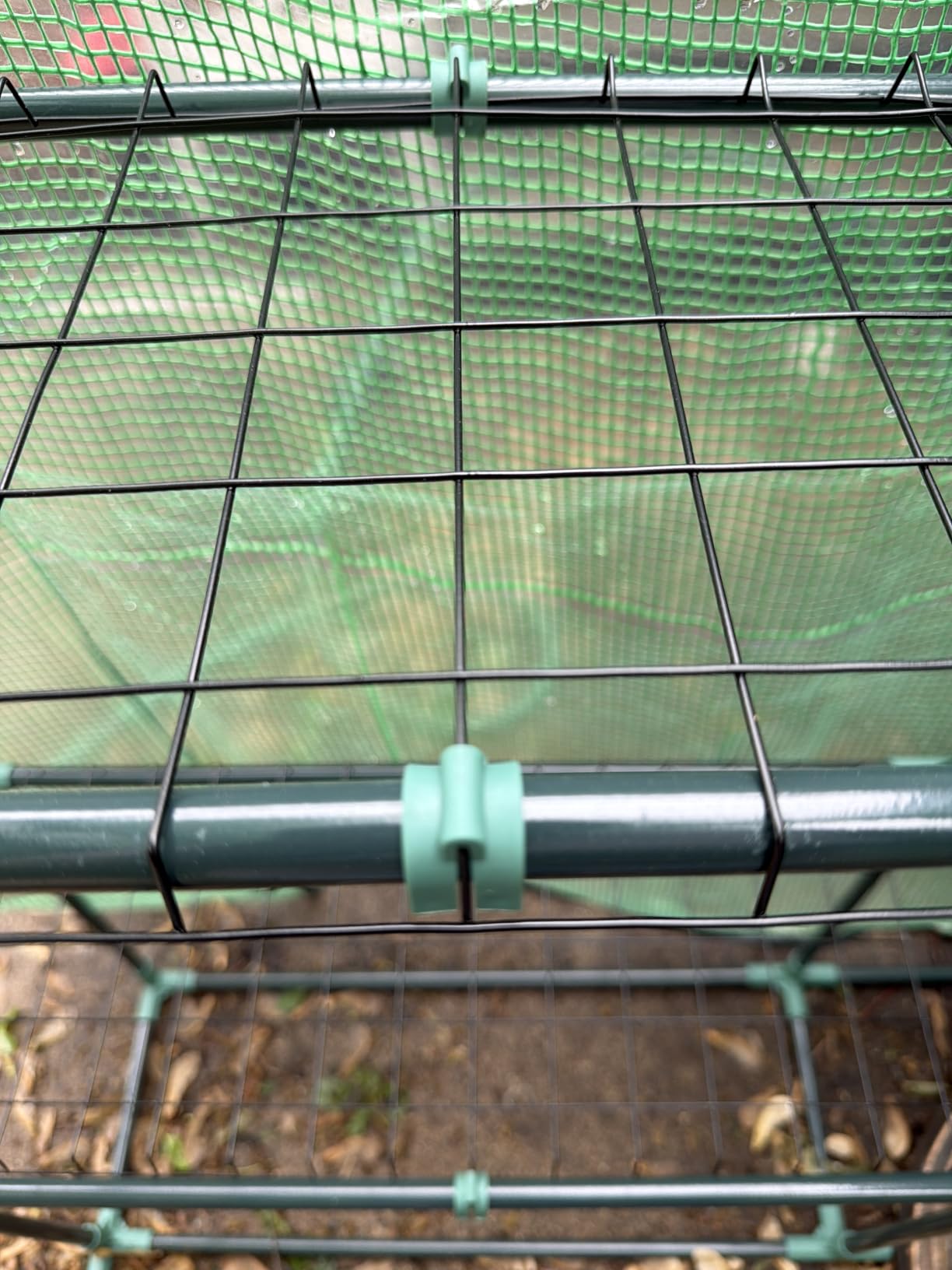
Inside there are 3 tiers with 8 shelves, each rated to 22 pounds, with space for up to 24 plant pots. Outside dimensions are 57 by 57 by 76 inches. Owners rate it as a capable budget greenhouse for seed starting and overwintering potted plants.
Ventilation is a zippered door plus screened windows, and assembly is tool-free with a detachable design that lets you relocate it between patio, deck and garden. Ropes and 4 ground stakes are included.
The 4.1 rating sits near the bottom of the group, and reviewers explain why: the cover material and shelf clips wear faster than expected, prompting many owners to add their own zip ties and anchors. That is an honest tradeoff rather than a defect.
Detachable design and what it means for renters
Because the whole structure breaks down without tools, this is a unit a renter can take with them. The detachable base frame also adapts to different plant heights as your seedlings grow.
The 4.1 rating reflects cover and clip wear more than any structural problem. The frame itself is described as steady once anchored, and the 16mm base is thicker than the tubing used on the light 3-tier kits in this roundup.
Where the shelf clips need help
Shelf support clips are light, and owners routinely add zip ties across each shelf corner. It is a small fix that materially extends the life of the shelving, and it is the most commonly recommended owner modification across the budget walk-in kits reviewed here.
The included stakes and ropes are basic. In a windy location, supplement them. A published cover rating only means something once the structure is properly secured.
Who this kit suits
This suits a renter or a gardener who wants to move the greenhouse between the patio and the garden as the season changes. It is a good fit for overwintering potted plants on a deck through winter.
Who should skip it
Skip it if you want a higher average owner rating, or if you will not spend the ten minutes adding zip ties and proper anchors. Buyers who want a long-term structure with rigid panels should look at the aluminum models instead.
6. SUNGIFT 57 x 61 x 80 Inch PVC-Clear – Works Indoors and Outdoors
- ✓Spacious interior with 3 tiers and 10 shelves
- ✓Tool-free setup typically done in about an hour
- ✓Windows provide useful airflow in hot weather
- ✓Doubles as an indoor seed-starting unit
- ✓Portable for repositioning or storage
- ✕Lightweight frame lifts or moves in strong wind
- ✕Included tie-down strings and metal anchors are weak and unreliable
- ✕Shelf hooks and clips can release under load
- ✕Cover binding and zippers can separate after a few months
61 x 57 x 80 in outside
Powder-coated steel pipe frame
3 tiers with 10 shelves
Model HDYR18-1, indoor and outdoor
The SUNGIFT is the only kit here rated for indoor and outdoor use, and that is the feature that separates it from the rest. Buyers use it on a deck in summer and move it to a bright room or basement for seedling starting in late winter.
The frame is a heavy-duty rust-resistant powder-coated steel pipe. Inside are 3 tiers with 10 sturdy shelves, and outside dimensions are 61 inches wide by 57 deep by 80 high, the tallest of the 3-tier walk-ins in this roundup. The model number is HDYR18-1.
Ventilation comes from a large zippered roll-up door plus dual observation windows. Reviewers find it a solid starter greenhouse that produces good germination results and stays cool thanks to those windows.
Owners report good results on germination and note that the setup is typically completed in about an hour by one person. The reinforced PE cover is described as year-round frost and weather protection for indoor use.
Ten shelves and a full eight-foot height
Ten shelves across three tiers gives this unit more vertical growing capacity than the 8-shelf walk-ins in this roundup. The 80-inch height also gives more headroom than the 76 to 78 inch units, which is noticeable when you are working inside for an hour.
The tradeoff is weight and stiffness. At 80 inches tall on a light-gauge frame, the structure moves in wind, and nearly every owner in reviews adds their own stakes, cinder blocks or zip ties because the supplied tie-downs are unsatisfactory.
Why the 4.1 rating reflects anchoring, not quality
Almost every complaint in the reviews comes back to hardware. Cover binding and zippers can separate after a few months, and shelf hooks and clips can release under load. Neither is a structural failure of the concept; both are consequences of light components.
Add your own anchors before the first gust and most of those complaints disappear. If you plan to use this indoors only, none of them apply.
Who this kit suits
This suits indoor seed starting where a full walk-in is too much space, and buyers who want one structure to serve both a deck in summer and a room in winter. The clear PVC-style cover also suits growers who want maximum light onto young seedlings.
Who should skip it
Skip it for an exposed outdoor site unless you are willing to build your own anchoring. It is also the wrong choice for anyone planning to hang heavy flowering plants, since the shelf hooks release under load.
7. SPECILITE 56 x 56 x 78 Inch – A 4.4 Owner Rating and Light Enough to Move Alone
- ✓Tied for the highest average rating in the roundup at 4.4
- ✓Easy to assemble and light enough for one person to move
- ✓Enough headroom to stand and work inside
- ✓Shelf rating of 22 lb suits trays and grow lights
- ✓Detachable parts for seasonal moving
- ✕Included stakes are too weak and heavy-duty anchors are needed in wind
- ✕Frame joints can wiggle apart and need pushing back into place
- ✕Wire shelves are thin and need added support
55.1 x 55.1 x 77.6 in outside
Thickened PE cover, metal frame
8 shelves at 22 lb, up to 24 pots
Model SP-GH474764-G, 9.98 kg
The SPECILITE shares the highest average rating in the roundup at 4.4, though its 255 reviews are a smaller sample than most. Owners love the combination of size, portability and the fact that it carries plants through cold winters.
Outside dimensions are 55.1 by 55.1 by 77.6 inches and the unit weighs 9.98 kg, which is light enough for one person to move. Shelf weight capacity is 22 pounds, and there is space for up to 24 plant pots.
Ventilation is a zippered roll-up door plus 2 screened side windows. The cover is a thickened polyethylene rated for rain and snow protection, and all parts are fully detachable for seasonal moving with tool-free assembly.
Because the rating is based on a smaller review base, treat it as encouraging rather than proven. The most common criticism is wind performance, not build quality.
Portability is the reason to buy this one
At about 22 pounds, this is a unit one person can move on their own. Renters who cannot install permanent structures mention this specifically, and the fully detachable design means it packs away between seasons rather than standing empty all winter.
The 77.6-inch height gives enough headroom to stand and work inside. Shelf capacity of 22 pounds is enough for seed trays, pots and a small grow light.
Anchoring is the fix owners apply immediately
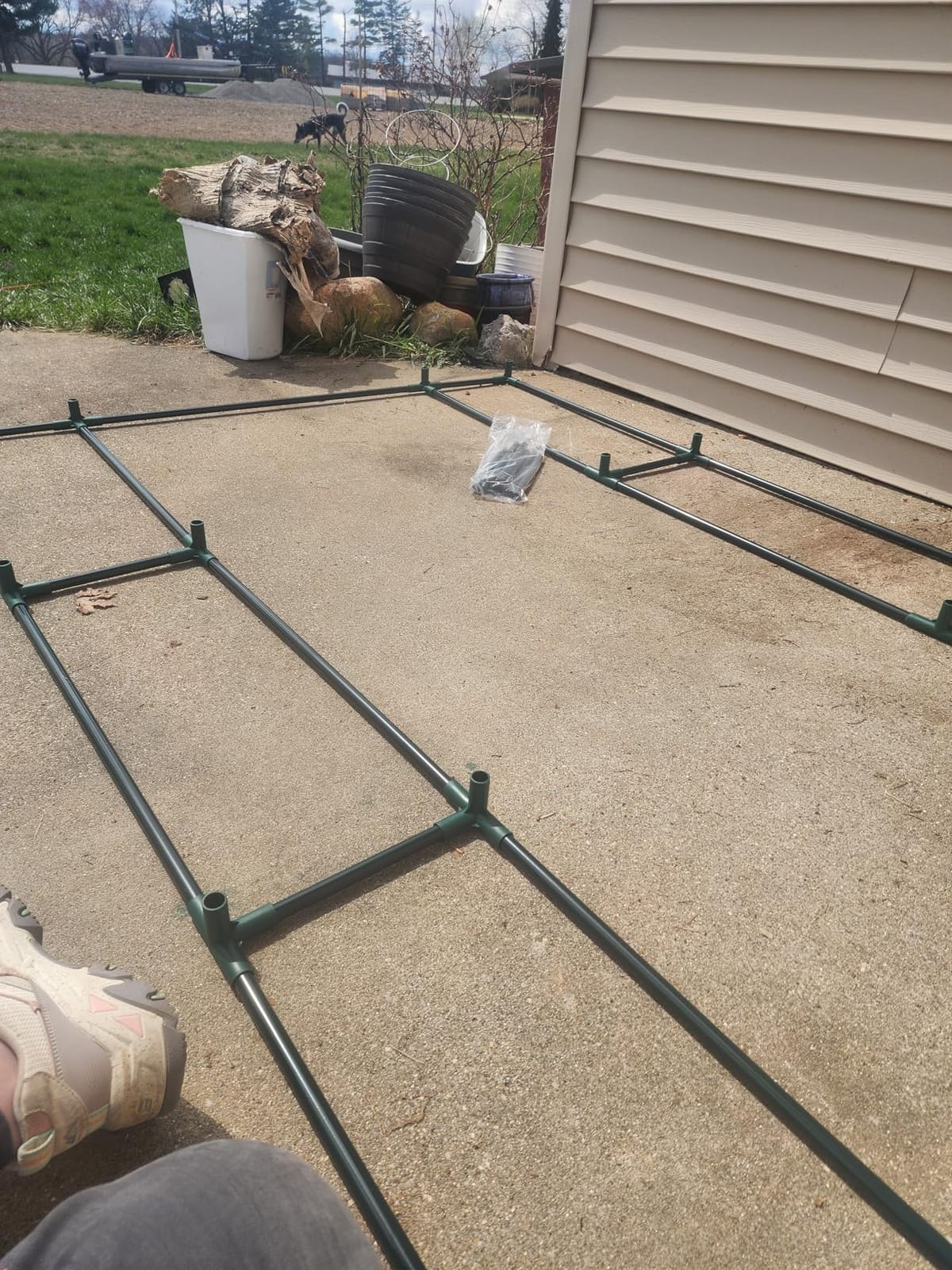
A few owners report the whole structure blowing over in gusts because the supplied stakes are flimsy, and some noted connector joints loosening. The frame is a heavy-duty rust-resistant tube design, so the fix is anchoring weight, not reinforcement.
Owners also note the wire shelves are thin and benefit from added support under the center span. Both issues are cheap to correct before you load the unit.
Who this kit suits
This suits a renter, or anyone who wants one greenhouse that can be moved between a patio, a balcony and a garden bed through the year. It is also a good first greenhouse for someone unsure how much space they need long term.
Who should skip it
Skip it if your site is open and windy and you will not anchor it, or if you want a heavy-duty structure for a permanent bed. Given the small review base, buyers who value long evidence over a high average rating should look at the most-reviewed kits instead.
8. WUKHG 8 x 10 FT Aluminum with 4mm Twin-Wall Polycarbonate – The Largest Rigid Panel Build Here
- ✓Rigid aluminum frame and polycarbonate panels outlast PE-cover kits
- ✓Shatterproof UV-blocking panels admit light while controlling humidity
- ✓Built-in roof gutter collects rainwater for irrigation
- ✓Included app-connected thermometer and hygrometer
- ✓Interior height allows seating and tool storage
- ✕Much heavier than fabric-covered tunnel kits
- ✕Polycarbonate panels need careful handling during assembly to avoid cracking
119.2 x 97.2 x 80.6 in outside
4mm twin-wall polycarbonate, aluminum frame
Roof vent, lockable door, roof gutter
Model GH8X10
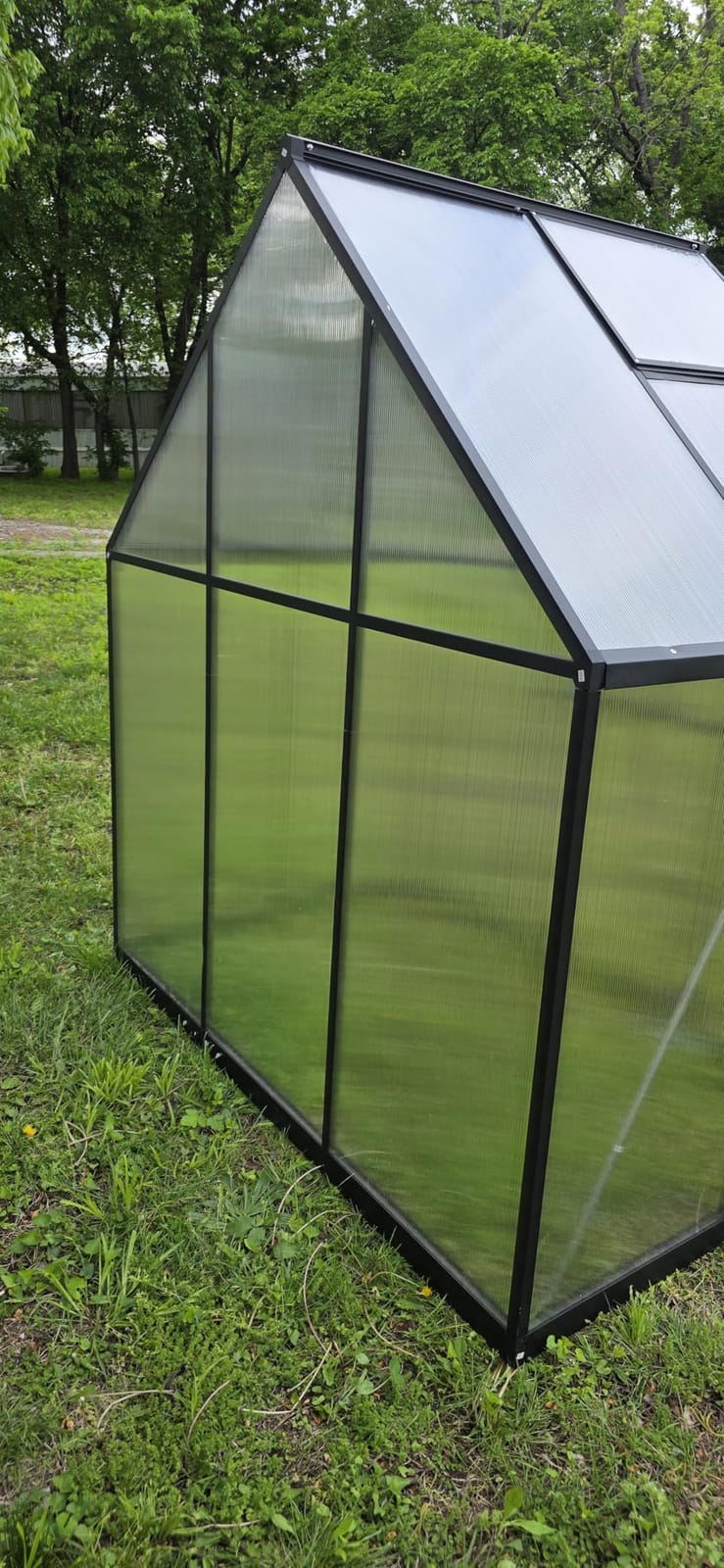
The WUKHG is the build we would actually want standing in a yard five years from now. A rigid aluminum alloy frame with 720g twin-wall 4mm polycarbonate roof panels will not sag, will not blow across the garden, and will not need a cover replacement cycle.
Outside dimensions are 119.2 by 97.2 by 80.6 inches. The panels are described as shatterproof and UV-blocking, admitting light while helping control humidity inside, which is the main reason gardeners move to polycarbonate in the first place.
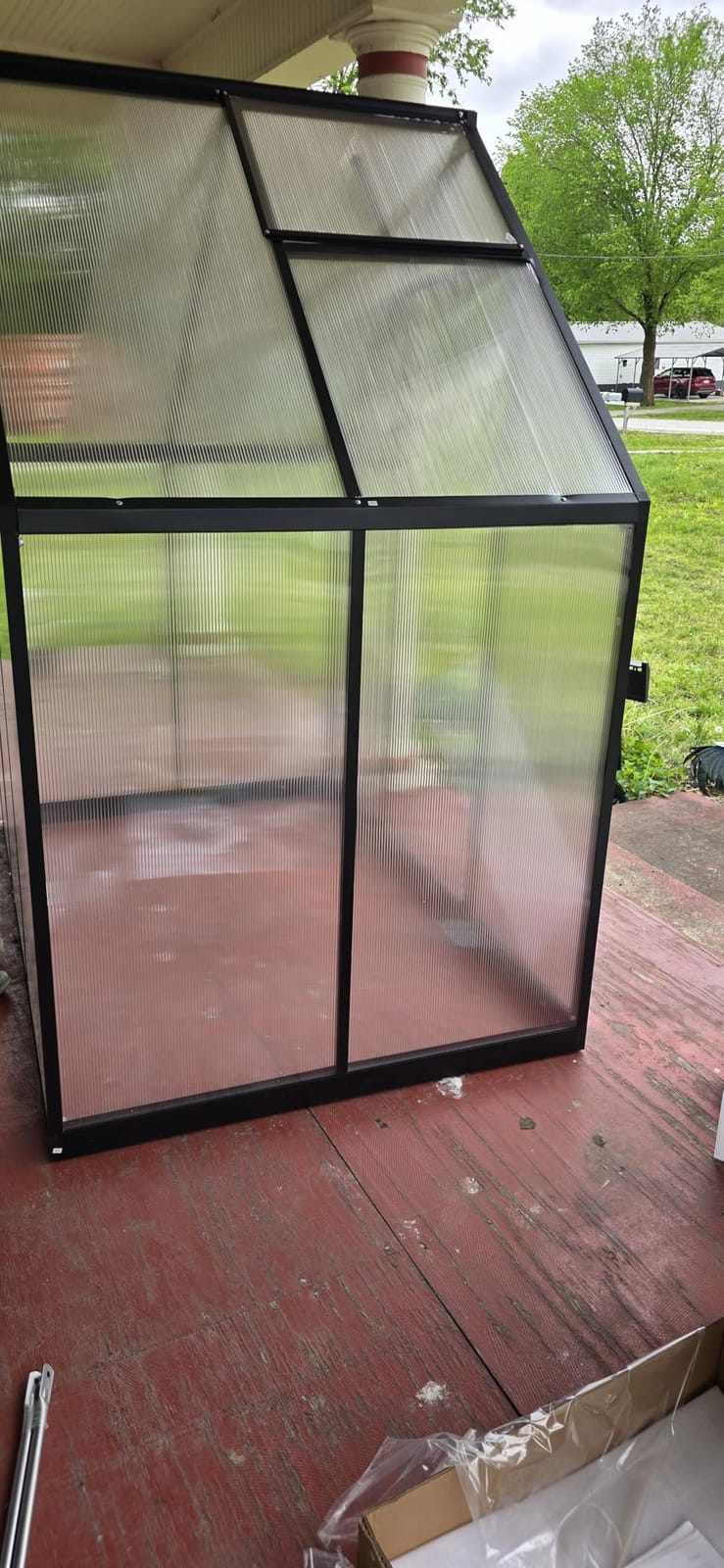
Ventilation is an adjustable window and a lockable hinged door, and there is a built-in roof gutter system for rainwater collection. The model number is GH8X10, and the interior space is sufficient for furniture and tool storage, not just plants.
A Bluetooth thermometer and hygrometer is included with an accuracy of plus or minus 0.54 degrees Fahrenheit, app graphing and a battery that is not included. Owners value the sensor as a monitoring addition rather than a gimmick.
What twin-wall polycarbonate actually changes
Owners value the rigid aluminum frame and twin-wall polycarbonate for year-round use, and they highlight the integrated roof vent, lockable door and included temperature sensor. The trade-off reported is the added weight and bulk compared with cheaper PE-covered walk-in kits.
Twin-wall panels are the practical choice for a home gardener because the air gap between the walls does the insulating work. The main handling caution is that panels crack if you twist them during assembly, so build square and leave the panels until last.
Water, security and monitoring
The built-in roof gutter is a detail that costs little and pays back quickly, because collected roof water is already at the right temperature and chemistry for irrigation. Owners use it for watering beds inside the structure.
The lockable hinged door is a real difference from zipper doors, which fail after a season or two. If you are storing tools or lighting equipment inside, that matters more than it first appears.
Who this kit suits
This suits anyone planning to use a greenhouse year-round rather than seasonally, and anyone tired of replacing covers. The interior space also makes it workable for a small hobby greenhouse setup rather than plant-only storage.
Who should skip it
Skip it if you need a structure you can carry or move, or if you want a walk-in you can set up in an afternoon with no tools. Panel handling rewards patience and an extra pair of hands.
9. Sylviera 6 x 4 FT Aluminum with 4mm Double-Wall Polycarbonate – Compact Rigid Panels
- ✓Holds a top-3 best-sellers rank in the Greenhouses category
- ✓Rigid aluminum alloy frame with 4mm double-wall polycarbonate panels
- ✓UV-resistant and impact-resistant panels
- ✓Roof vent plus included hygrometer for climate control
- ✓Compact footprint suits small yards and decks
- ✕Assembly takes more than a day for one person and must be leveled and squared
- ✕Light structure must be anchored or it will blow away
- ✕Some units arrive with panel gaps or parts needing machining
45 x 67 x 77 in outside
4mm double-wall polycarbonate, aluminum frame
Adjustable roof vents, lockable door
Included hygrometer
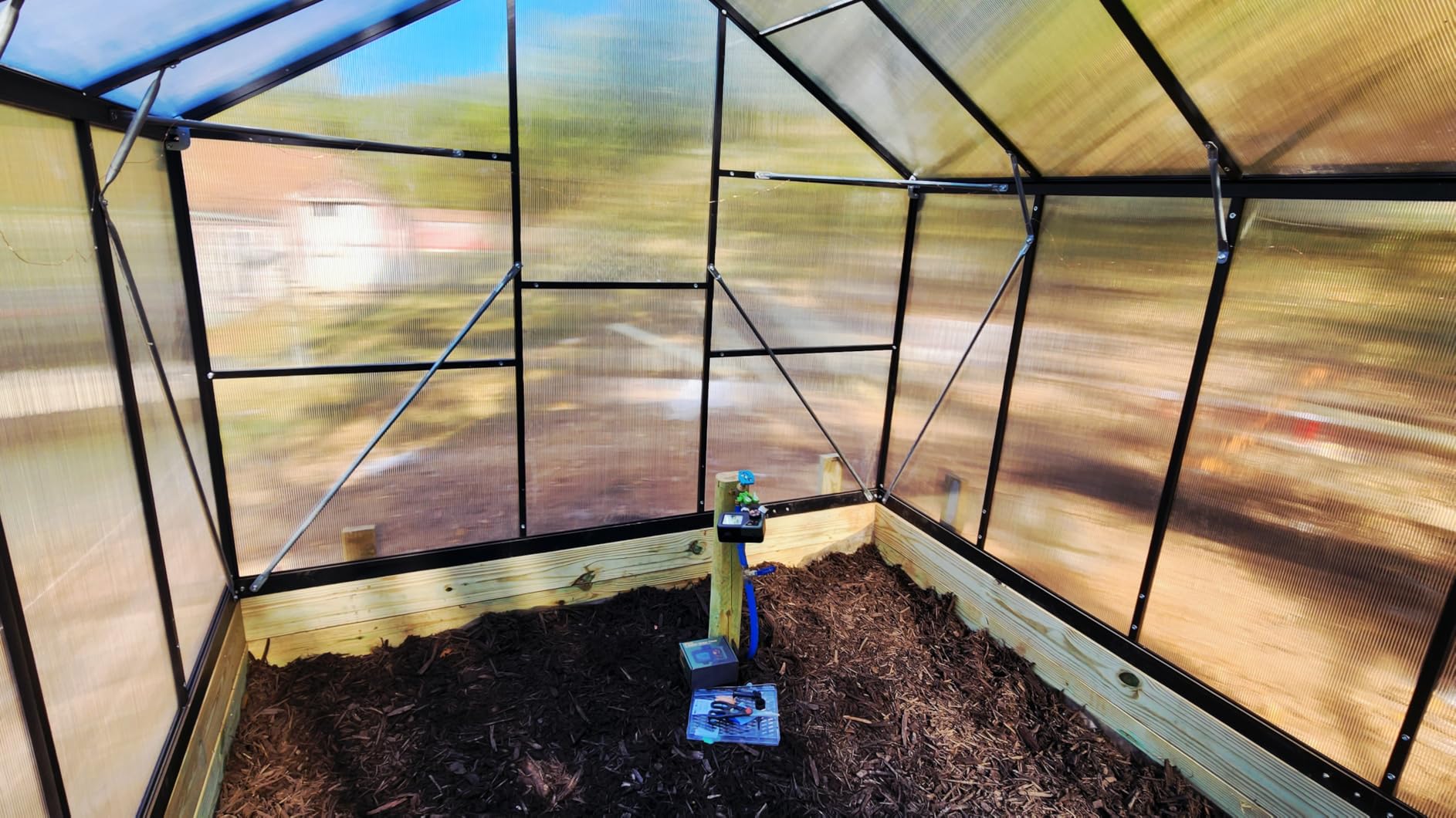
The Sylviera solves the size problem that stops people buying a rigid greenhouse. At 45 by 67 by 77 inches it gives you aluminum frame and 4mm double-wall polycarbonate in a footprint that fits a small backyard or a deck corner.
The frame is a reinforced premium aluminum alloy, and the panels are 4mm thick at 580g with UV resistance and impact resistance. Ventilation comes from adjustable roof vents and a lockable door, and a hygrometer is included for temperature and humidity monitoring.
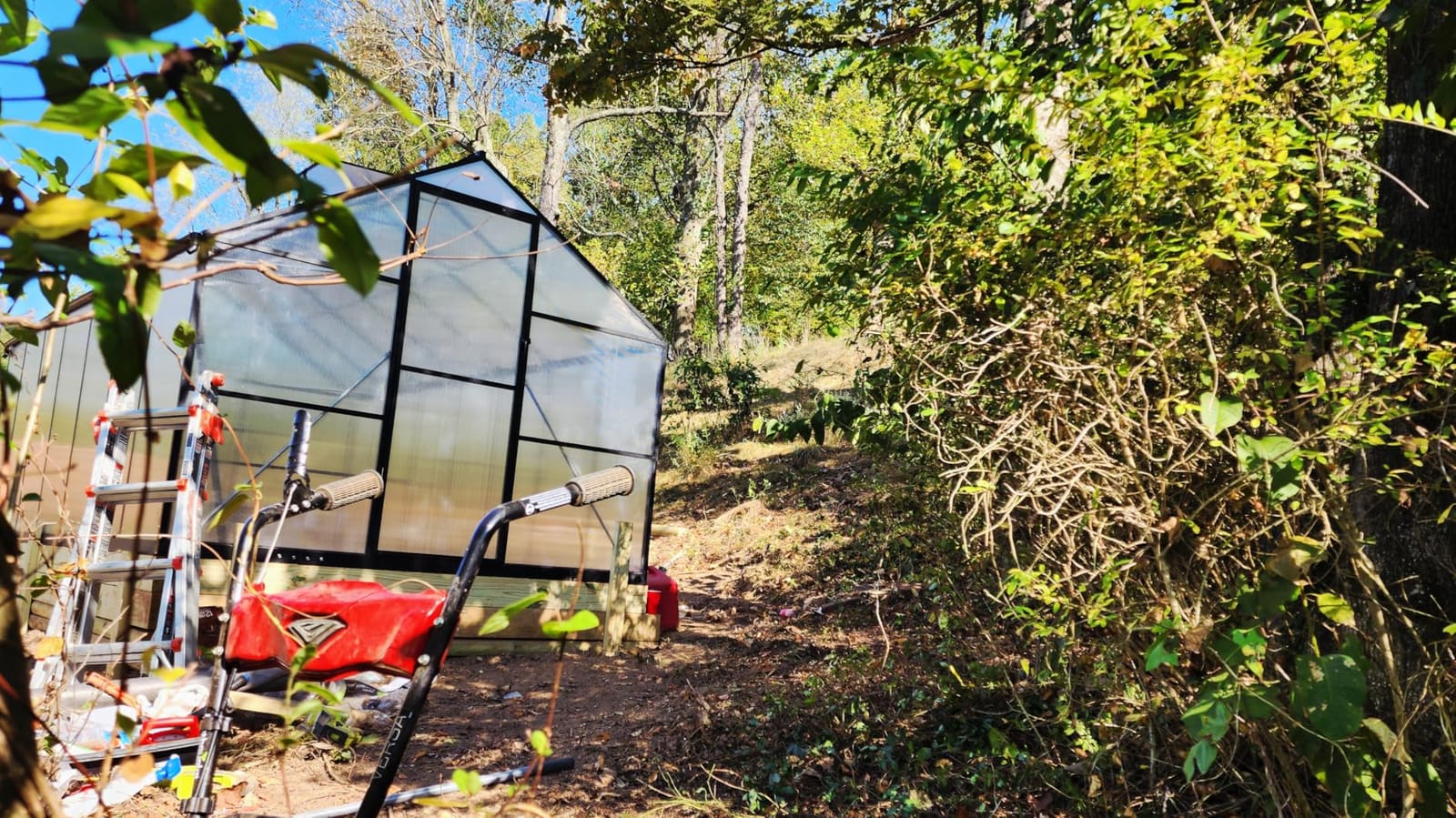
Owners are enthusiastic about the sturdiness, light transmission and appearance of the structure, and the included hygrometer is repeatedly called a useful addition. It holds a top-3 best-sellers rank in the Greenhouses category.
Assembly is the catch. Owners report that it takes more than a day for a single person and must be precisely leveled and squared, which is why we still recommend a second pair of hands for anything this rigid.
Level and square or the panels will not seat
That assembly note is not filler. Rigid panel construction depends on a frame that is true, and if the base is out of square the panels will not sit correctly. Of the two aluminum kits in this roundup, this is the one that rewards the most patience at the foundation step.
A few builds arrive with gaps between panels or with parts needing machining. That is a quality control issue rather than a design flaw, but it is worth knowing before you start a full-day build.
Small footprint, real panel advantages
At this size you still get the two things polycarbonate buys you: rigidity that resists wind, and UV filtering that limits plant burn. The compact 6×4 footprint is also the difference between buying one and buying nothing.
Because the structure is light for its rigidity, it must be anchored or it will blow away in strong wind. Treat the anchoring step as mandatory rather than optional.
Who this kit suits
This suits a gardener with limited space who still wants rigid panels and an aluminum frame rather than a fabric tunnel. It is a good fit for overwintering plants and for a small seed-starting setup in a compact footprint.
Who should skip it
Skip it if you want to stand upright in the middle of the structure, since a 6×4 footprint limits working room. It is also the wrong choice for anyone who wants a fast afternoon build without careful leveling.
10. Quictent 25 x 10 x 6.6 FT Tunnel – Generous Covered Area With Real Hinged Doors
- ✓Patented dual hinged doors open 180 degrees and are lockable
- ✓0.7mm galvanized steel frame with 4-5 reinforced top crossbars
- ✓150 gsm tear-resistant PE cover with UV inhibitor
- ✓Full-perimeter Velcro seals and an 8-inch buryable bottom edge
- ✓Spiral ground stakes included
- ✓Lifetime parts replacement on connectors and stakes
- ✕Heaviest kit in the roundup at 111.2 pounds
- ✕Two-person assembly and hard to reposition once built
- ✕Requires anchoring and sometimes an additional base to stay square
295.3 x 118.2 x 78.8 in outside
150 gsm PE cover, 0.7mm galvanized frame
2 hinged doors, 8 screen windows
Model 1324W-3, 111.2 lb
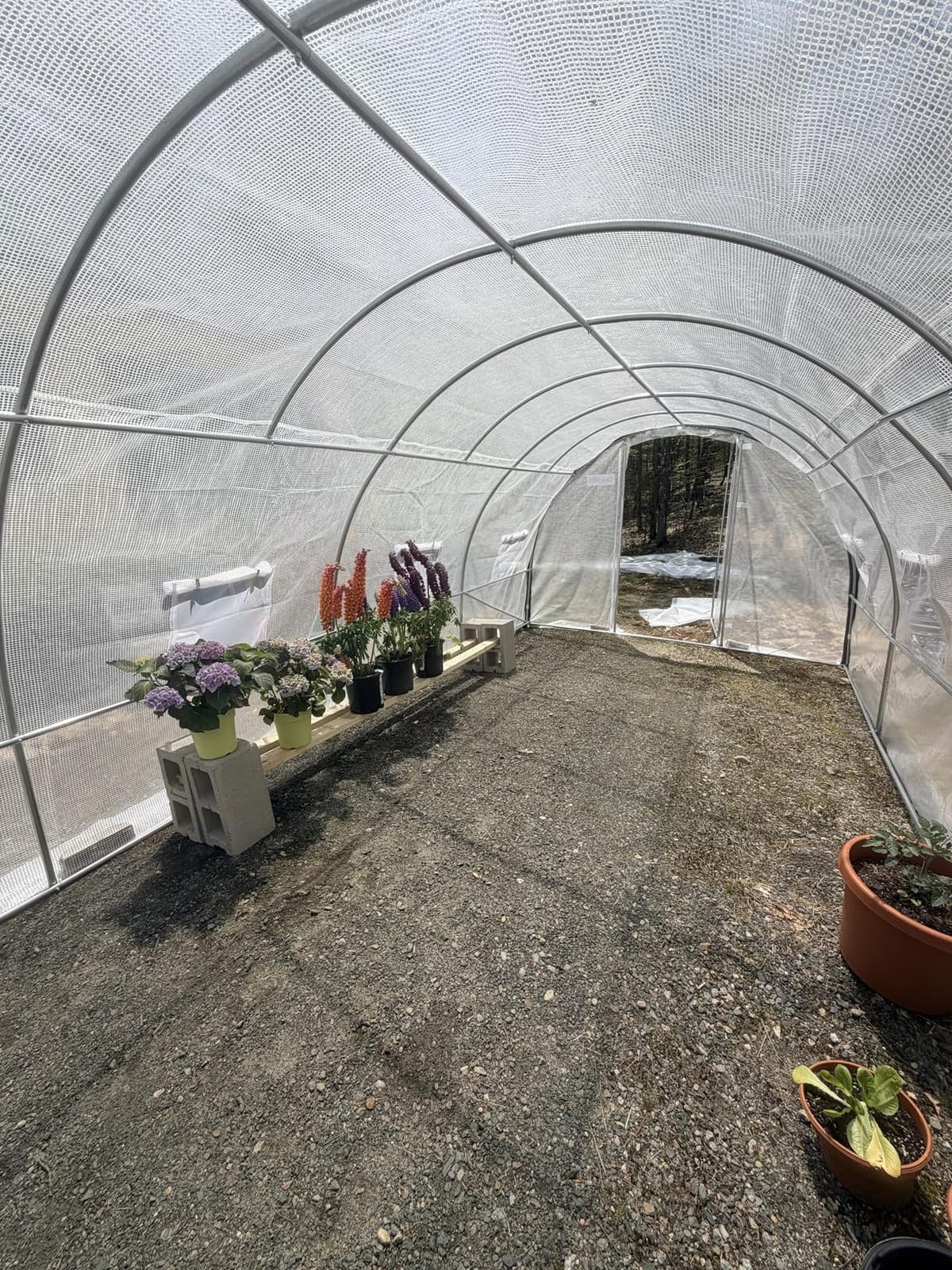
The Quictent is the largest covered area in this roundup at roughly 242 square feet, and the first kit here with genuinely hinged doors. Owners value the hinged-door design as a clear step up from zipper alternatives, and the reasoning is simple: a zipper fails, a hinge does not.
The frame is 0.7mm thickened galvanized steel with 4 to 5 reinforced top crossbars, and the cover is a 150 gsm tear-resistant polyethylene with a UV inhibitor and Oxford seam reinforcement. Light transmission is stated at 85 percent.
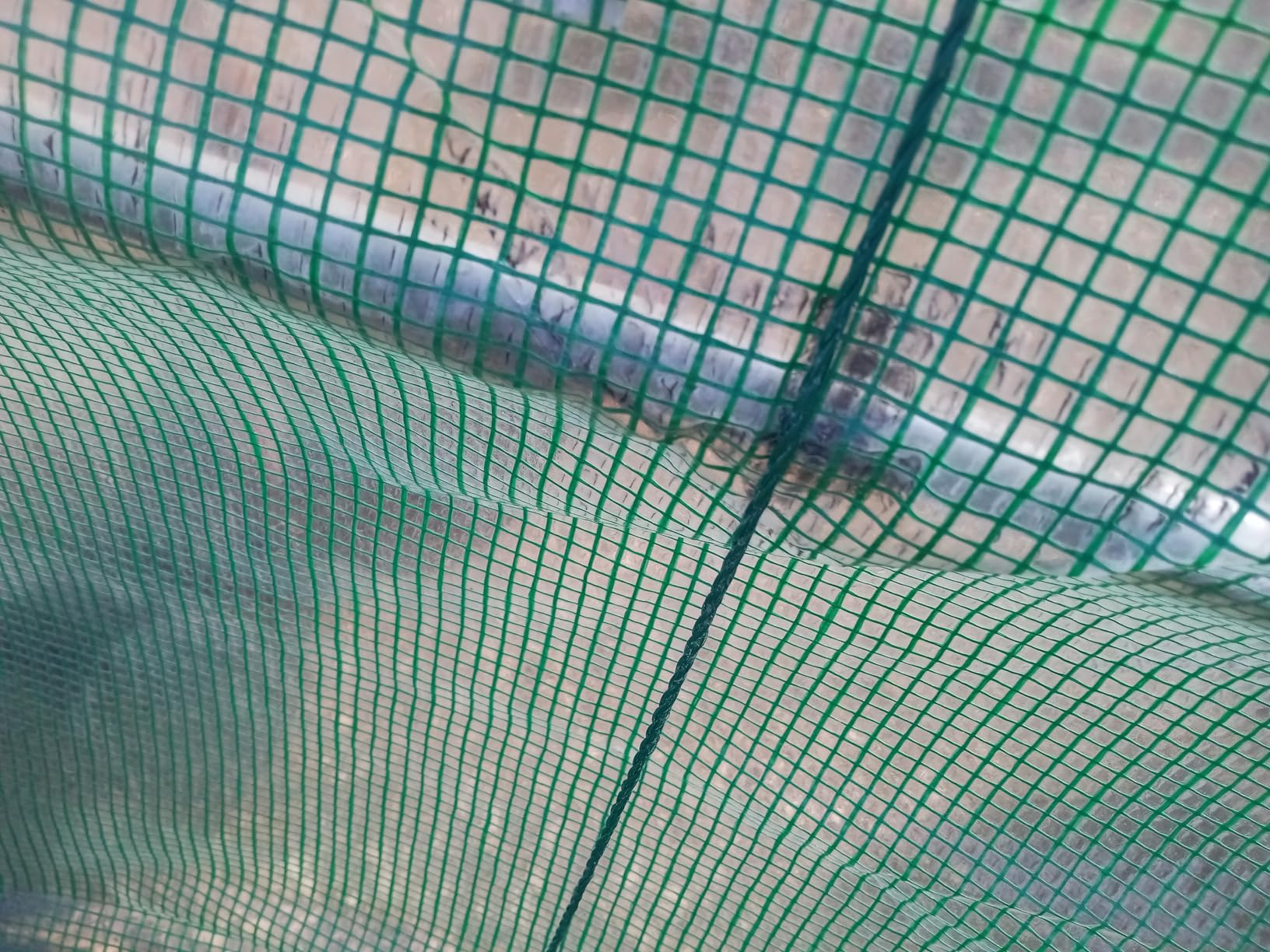
Outside dimensions are 295.3 by 118.2 by 78.8 inches and the unit weighs 111.2 pounds. Ventilation is 8 mesh screen windows plus full-perimeter Velcro seals, and there is an 8-inch overlong bottom cover that can be buried for wind resistance and insulation.
The warranty is the strongest in the roundup: lifetime parts replacement on connectors and stakes, plus 365-day complimentary coverage on main parts. Spiral ground stakes are included. No snow-load or wind-speed rating is published.
Why the 8-inch buried bottom edge matters
Burying the bottom edge is the single most effective anchoring technique available for a fabric-covered tunnel, and it is why this kit stays put better than lighter units. It also cuts drafts at floor level, which is where cold air pools in an unheated greenhouse.
Owners also value the reinforced anti-sagging top crossbars, which shed water and snow rather than letting weight build on the cover. The 8 mesh screen windows give genuine cross-ventilation, not just a door you prop open.
Weight is the trade-off
At 111.2 pounds this is the heaviest kit here, which makes assembly and repositioning a two-person job. Reviewers describe that as the main trade-off alongside the need to anchor and, in some cases, add a base to keep the frame square.
Anyone planning to move this structure seasonally should think twice. It suits a permanent site with prepared ground, not a portable one.
Who this kit suits
This suits a grower who needs serious covered area for season extension and does not intend to move the structure. The hinged doors and lifetime parts replacement suit buyers who expect to use it every season for years.
Who should skip it
Skip it if you are working alone with no help for assembly, or if you need a portable or seasonal structure. Buyers on a limited allowance should also note that this is the heaviest kit in the group.
11. VEVOR 76.8 x 30.3 x 66.1 Inch – Compact Tunnel With a Sloped, Water-Shedding Roof
- ✓Entry-level build with simple
- ✓replaceable components
- ✓Lightweight at 10.4 pounds so it moves easily between seasons
- ✓Sloped roof sheds water and the quick-connect frame speeds assembly
- ✓U-shaped ground stakes and an extended weighted bottom edge
- ✓Roll-up door and tie-strap windows aid ventilation
- ✕Narrow 30.3 inch interior limits usable planting width
- ✕140 gsm cover and light frame are less durable than heavier kits
- ✕Narrow tunnel shape is not suited to standing and working inside
76.8 x 30.3 x 66.1 in outside
140 gsm coated PE cover
Q195 powder-coated steel frame
Sloped roof, model 2x0.8mW, 10.4 lb
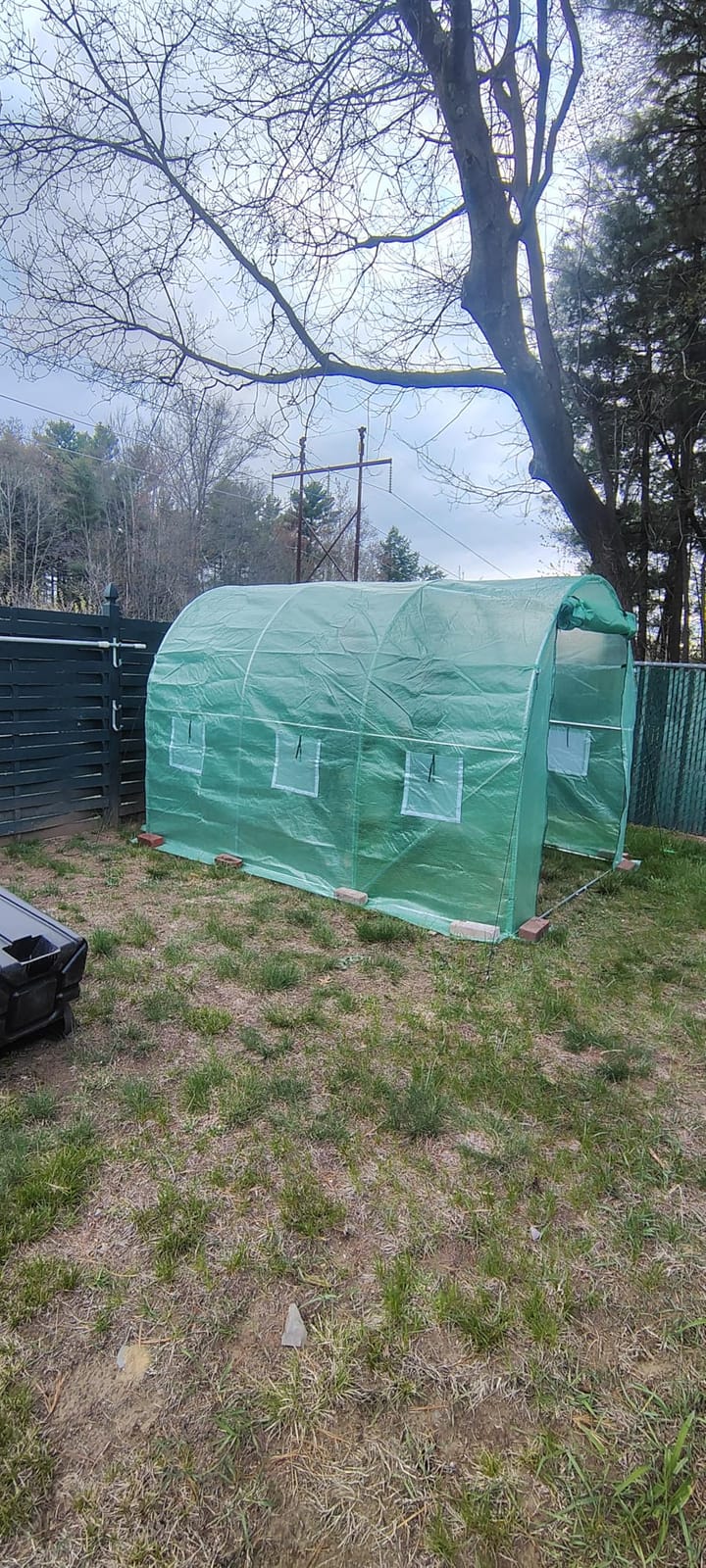
The VEVOR is the lowest-rated kit in the roundup at 4.0, and we include it because it answers a real question: what is the smallest reasonable amount of money that still produces a functional greenhouse. The answer is this one.
Buyers treat it as a budget starter greenhouse that assembles quickly and handles basic frost and seed-starting protection. At 10.4 pounds it is easy to move and repurpose seasonally, which is a genuine advantage over the heavy tunnels in this list.
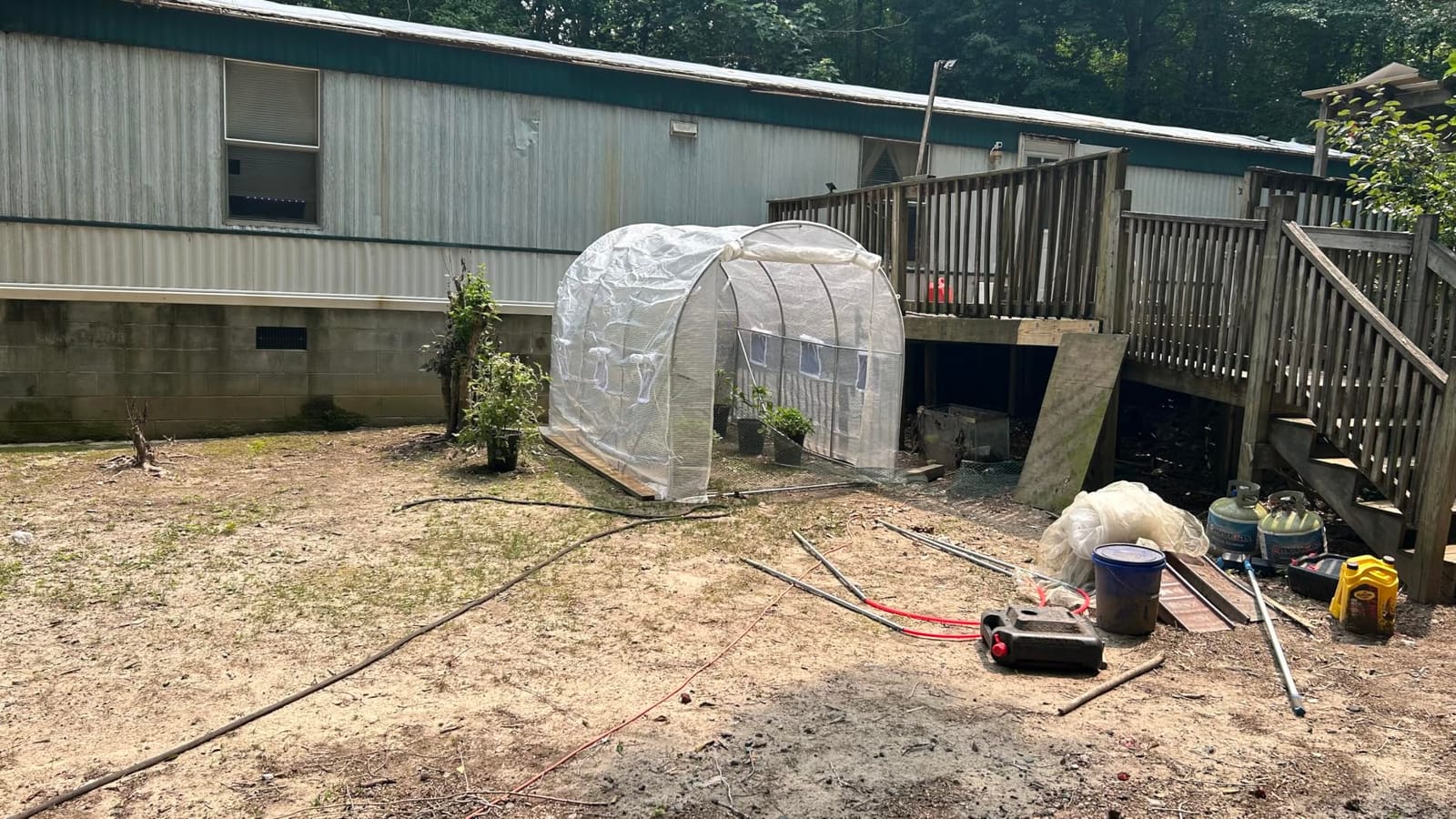
Outside dimensions are 76.8 by 30.3 by 66.1 inches. The cover is 140 gsm double-sided coated polyethylene with Level 6 sun protection and water resistance, on a Q195 powder-coated steel tube frame with a top support bar.
The sloped roof design prevents water buildup, and U-shaped ground stakes plus an extended bottom edge add stability. The manufacturer recommends a sheltered installation location, which is worth heeding given the light frame.
The 30.3 inch width is the real limitation
A 30.3 inch interior is narrow enough that you cannot walk down the middle or turn around with a tray. This is a seed-starting and hardening-off structure, not a space to work in, and buyers who expect a walk-in experience will be disappointed.
That narrow tunnel shape is also why it carries the lowest average rating in the group. Reviewers point to the thin 140 gsm cover, the light-gauge frame and the limited walkway as the reasons durability and headroom fall short of the walk-ins.
What the lighter build gives you
Quick-connect frame hardware means tool-light assembly, and the roll-up zippered door plus two windows with tie straps give real ventilation. For basic frost protection around a small bed of seedlings, that is enough.
It is built for one or two seasons of use. If you buy it, expect to replace the cover at some point, and site it somewhere sheltered rather than exposed.
Who this kit suits
This suits a first-time buyer who wants basic frost protection and seed starting on a limited allowance, and anyone who needs a structure they can carry between locations. It is a reasonable patio and balcony unit.
Who should skip it
Skip it if you want to stand and work inside, or if you plan to keep it standing through several seasons in an exposed site. Buyers who want durability should spend more on a heavier tunnel or move up to a polycarbonate build.
12. Worth Garden 4-Tier Mini – Smallest Footprint for Balconies and Patios
- ✓Compact vertical design with 4 tiers and a very small footprint
- ✓Tool-free assembly and folds flat for off-season storage
- ✓23.4 lb weight capacity per tier
- ✓Works indoors for orchids
- ✓carnivorous plants and tropicals
- ✓One owner reports it survived a Canadian winter on a balcony
- ✕Tippy when empty and needs weight on the bottom shelf to stabilize
- ✕Not wind resistant and should be anchored or kept indoors
- ✕PVC cover can rip at the zipper and shelves bend under heavier loads
- ✕Occasional reports of missing or mis-drilled parts
27 x 19 x 63 in overall
0.12mm PVC cover, steel frame
4 tiers at 23.4 lb each
Folds flat, model Without Casters
The Worth Garden mini is the smallest footprint in the roundup at 27 by 19 inches, and it does something the larger kits cannot: it suits an apartment balcony. Owners like the compact vertical design and the no-tool setup for seed starting and small tropicals.
The frame is rust-resistant steel with a 0.12mm cold-proof PVC cover, and each of the four tiers holds 23.4 pounds. The unit weighs 4.63 kg and folds flat for basement storage, which matters if your growing space is a balcony you clear in autumn.
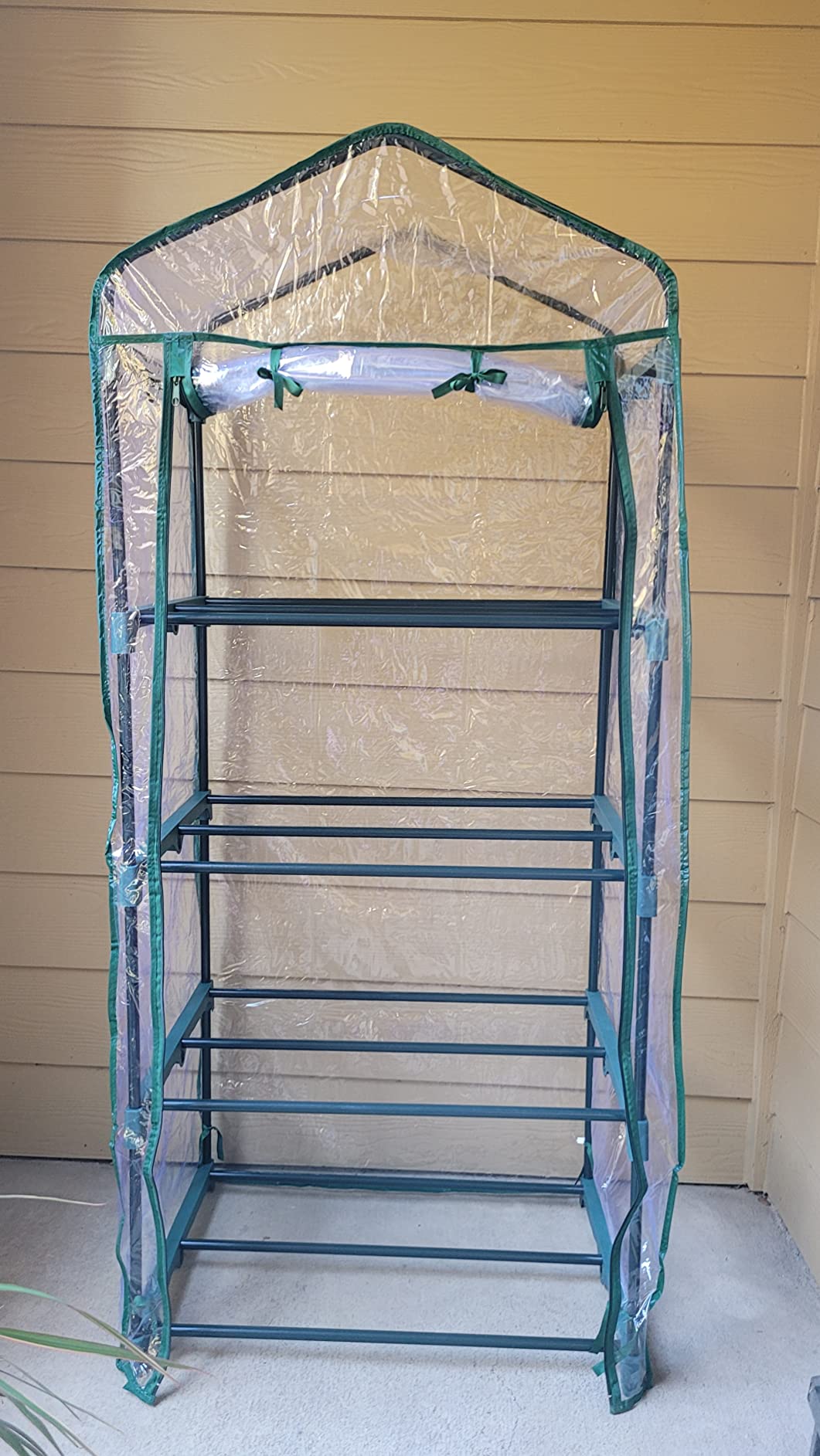
Ventilation is a single zippered door on a 63-inch tall frame. The detachable floor frame is adaptable to different plant heights, and the unit is also offered in 5-tier and green PE cover variants.
Owners report multi-season use, including one unit that survived a Canadian winter on a balcony. That is an owner report rather than a rated specification, and it is worth reading as a single case rather than a general claim.
Shelf capacity and what grows on it
With 23.4 pounds per tier across four shelves, the capacity suits seed trays, small pots and nursery stock. Owners use it for orchids, carnivorous plants and tropical houseplants, which need humidity more than they need headroom.
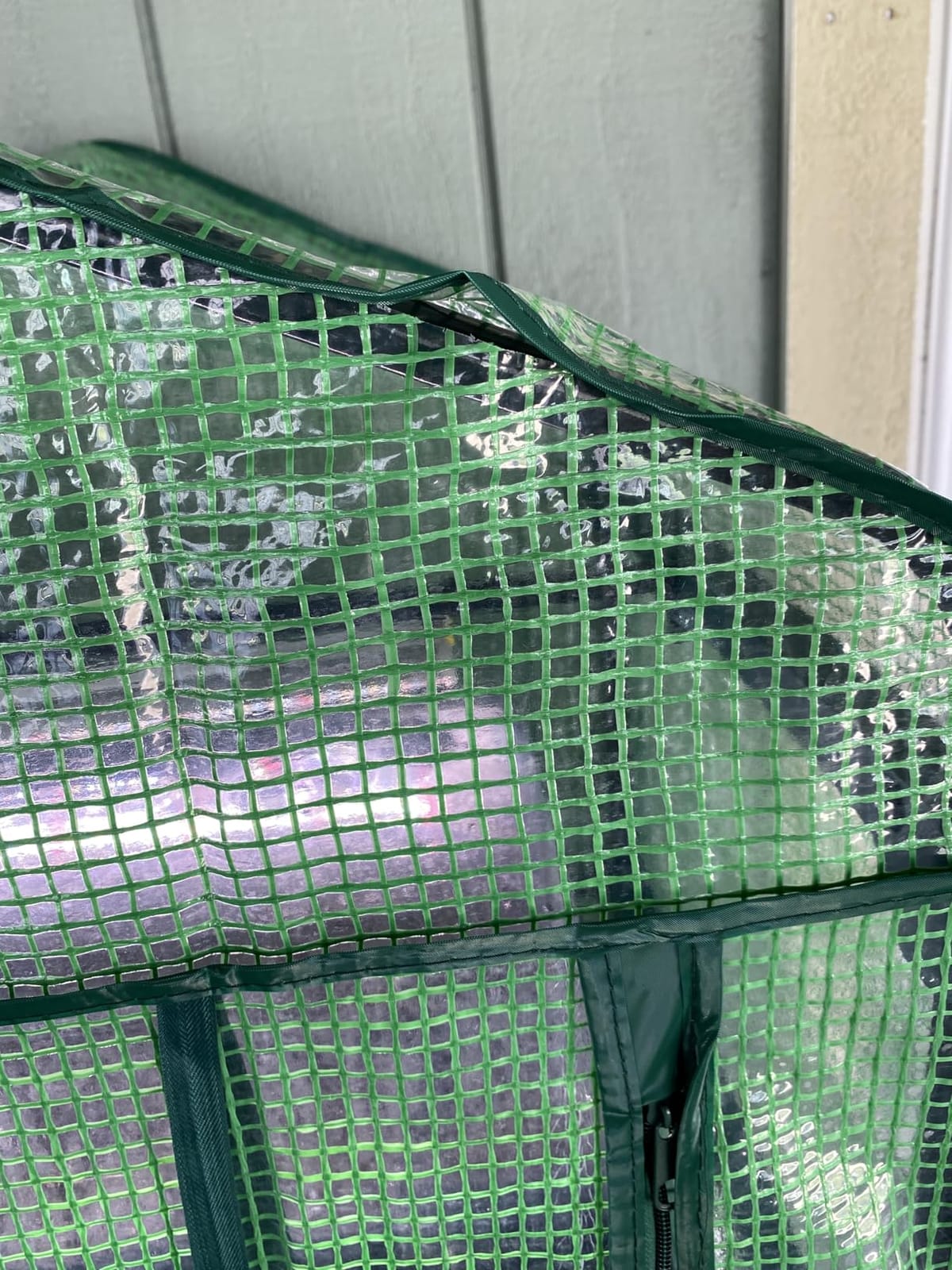
Reviews note that shelves bend under heavier loads, so keep heavier pots on the bottom tier where the frame is strongest. The 0.12mm PVC cover is thin by design, and it can rip at the zipper with repeated use.
Stability is the deciding factor
Complaints center on stability. The unit is tippy when empty, so put weight on the bottom shelf and it behaves completely differently. It is not wind resistant and should be anchored or kept indoors in exposed locations.
There are also occasional reports of missing or mis-drilled parts on delivery, so check the hardware count before you start. Assembly is tool-free either way.
Who this kit suits
This suits apartment and balcony growers, and anyone who wants a greenhouse they can carry indoors in winter. It is a good fit for tropical and humidity-loving houseplants rather than a vegetable operation.
Who should skip it
Skip it if you need to reach the top shelf from above, or if your space is exposed to wind. Anyone growing food crops will find the capacity too small and the cover too thin for the job.
How to Choose a Greenhouse Kit: Size, Style, Glazing, Venting and Anchors
Most greenhouse buying mistakes come down to five decisions made in the wrong order. Here is the order we would make them in.
Measure the space, then subtract for planting area
A kit listed as 8×6 measures more than 8 by 6 on the outside, and the usable planted area inside is smaller again once the frame, door swing and shelving take their share. Measure the ground you have, not the number on the listing.
Check the door width before you commit. Owners regularly report that a nominal size did not match the physical unit, and that the doorway could not fit the trays or equipment they needed to move through it. Inside dimensions matter for a walk-in; outside dimensions matter for your yard.
Pick a style that matches how you will actually work
Four styles cover most home use. A freestanding walk-in gives you standing height and room to work, which is what you want for vegetables and overwintering. A lean-to uses a wall as one side, cutting material cost and warming faster in winter. A pop-up or portable tunnel sets up in minutes and moves seasonally. A mini tier unit fits a balcony and does vertical growing rather than floor growing.
Our walk-in greenhouse guide covers the footprint trade-offs in more depth if you are still deciding between styles.
Choose glazing by climate, not by price
Polyethylene film is the simplest option and the easiest to replace, which makes it a reasonable choice in mild climates. It degrades, tears and sags, and replacement covers for an exact model number can be hard to source later. PVC is similar in character and belongs on small indoor units.
Polycarbonate is the better long-term answer for most US home gardens. Rigid panels resist wind, do not sag, and the twin-wall construction insulates better than a single layer of film. The trade-offs are weight, cost, and careful handling during assembly. Glass still wins on light transmission, so growers under grow lights or chasing maximum yield still have a case for it.
Color matters less than most listings suggest. Clear panels transmit the most light, while diffused or frosted panels reduce hotspots and plant scorch. Match the color to your light conditions rather than to appearance.
Ventilation decides whether you keep using it in July
Summer overheating damages plants faster than winter cold does. Look for roll-up side windows, screen windows and a roof vent, and count them against the interior surface area. A zippered roll-up door on its own is thin ventilation, and rolling the door is the only airflow option on many budget walk-ins.
Rigid aluminum and polycarbonate houses add an adjustable roof vent, which is a meaningful upgrade. If your summers are hot, prioritize vent count over shelving, because a greenhouse you have to abandon in July is a wasted purchase.
Once temperatures climb, active cooling is the next question. Our greenhouse fan guide covers exhaust and circulation options for units that need them.
Anchoring and foundation are not optional
Cheap kits fail in their first winter, and the reason is usually that they were never anchored properly. Anchoring hardware is frequently sold separately or is inadequate, so kits slide or collapse in wind. Ropes, stakes and ground nails of the right length are part of the structure, not an accessory.
Surface matters too. Soil and grass accept stakes and buried edges. Concrete, pavers and decking need a different approach, and a rigid greenhouse should be anchored to a level base or its frame will not stay square. If you are outfitting a larger structure, our professional greenhouse equipment guide covers staging and benching options.
Plan for winter before you buy, not after
An unheated greenhouse protects plants from frost, not from deep cold. In cold zones, plan on a heat source such as a paraffin heater, a small electric heater rated for the space, or a thermal mass approach using water containers. The cheapest method is often the simplest: thermal mass and closing the structure at night.
Do not buy a mid-size unit before you know what crops you want and whether you will heat it. Overspending before that decision is a common and expensive pattern among first-time buyers.
Check replacement parts before you commit
Replacement covers and panels are the biggest long-term ownership pain point, because covers degrade and exact-SKU replacements get hard to find. Before buying, look up whether the manufacturer stocks a replacement cover for that model number and whether parts are sold separately.
Warranty length is a useful proxy. One-year cover protection is common. Lifetime replacement on connectors and stakes, as offered on the Quictent, is rare and tells you the manufacturer expects those parts to be replaced.
Frequently Asked Questions
What is the best residential greenhouse?
The best residential greenhouse is the one whose frame material and glazing match your climate and site. For most US home gardens, an aluminum frame with twin-wall polycarbonate offers the best balance of rigidity, insulation and low maintenance, as seen in the WUKHG 8×10 kit. Buyers who want a fast, tool-free setup and a lower-cost structure can use a powder-coated steel frame with a PE cover, as in the EAGLE PEAK 8×6.
Which polycarbonate greenhouse is the best?
Among the polycarbonate kits reviewed here, the WUKHG 8×10 FT aluminum greenhouse leads on size and monitoring, with 4mm twin-wall polycarbonate panels, an adjustable roof vent, a lockable hinged door and a built-in roof gutter. The Sylviera 6×4 FT is the better choice when space is the constraint, using the same 4mm double-wall panel construction in a compact footprint.
What are the downsides of a polycarbonate greenhouse?
The main downsides of a polycarbonate greenhouse are weight, cost and assembly complexity. Rigid panels are heavier than PE film, which makes anchoring harder, and they must be seated on a frame that is level and square or they will not fit properly. Panels can crack if twisted during assembly. Buyers also report that the added build cost is harder to justify if you only plan to use the structure seasonally.
What is the average lifespan of a polycarbonate greenhouse?
A well-anchored aluminum and polycarbonate greenhouse can reasonably be expected to outlast several cover replacement cycles, which is why buyers value it as a long-term structure. Reviews of polycarbonate builds highlight the rigid frame and panels as the reason they avoid the recurring cover replacement that affects PE kits. Actual lifespan depends far more on anchoring and snow clearing than on the panel brand.
Are portable greenhouses any good?
Portable greenhouses are good for seasonal frost protection, seed starting and renters who cannot install permanent structures. The SPECILITE, at under 22 pounds with fully detachable parts, is a good example of a unit one person can move between seasons. Their limits are structural: light-gauge frames lift or deform in wind without added anchors, and narrow tunnels are not suited to standing and working inside.
What is the cheapest way to heat a greenhouse?
The cheapest way to heat a greenhouse is usually passive rather than electrical. Filling the space with water containers stores daytime heat and releases it overnight at no running cost. Closing vents and doors before sunset traps that warmth. Where active heat is needed, a small paraffin heater or a fan heater sized to the interior is the usual next step, and rigid polycarbonate units hold heat better than PE-covered tunnels because the twin-wall panels insulate.
Which Greenhouse Kit Should You Buy in 2026?
If you want the single best balance of build quality, evidence and ease of setup in 2026, the EAGLE PEAK 8×6 is our pick. Its patented center-lock frame is the only one here that one person can raise with no tools, on a 37.3 pound powder-coated steel frame, with 5012 owner ratings reporting on how it holds up.
If you are starting seeds in a small yard, the Ohuhu 3-Tier gives you 12 shelves and a manufacturer-rated 45 mph frame in a 56 inch walk-in shell. The KOKSRY is the alternative with 8 shelves and the same walk-in height.
If you want to skip cover replacement entirely, the WUKHG 8×10 with 4mm twin-wall polycarbonate is the build we would own, and the Sylviera 6×4 is the version for a small yard. If you need the largest covered area and plan to keep it in one place, the Quictent 25×10 with hinged doors and lifetime parts replacement is the strongest long-term tunnel.
Before you order any of them, measure your space, confirm the anchoring hardware in the box, and check that replacement covers are sold for the exact model. Those three checks prevent most of the disappointments owners report in the reviews above.




Leave a Comment