
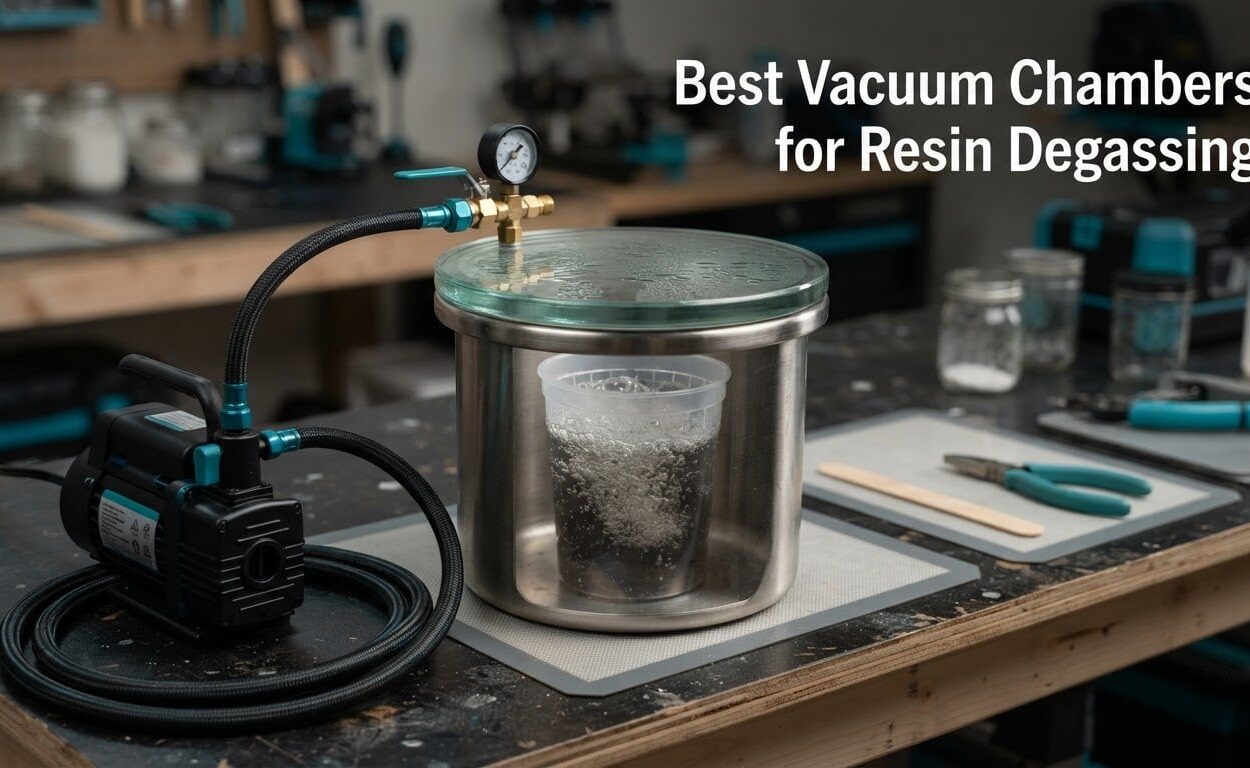
Finding the best vacuum chambers for resin degassing comes down to one question: how big is the batch you mix on a typical day, and does it sit in a cup or in a full mold? Those two answers split this category in half. Compact automatic bubble removers handle cup-sized jewelry and dice pours with a single button press, while full vacuum chambers with a separate pump handle river tables, deep pours, silicone buckets and wood stabilization.
I have run both families through mixed epoxy, deep-pour and 1:1:1 silicone, and the failure modes are very different.
The physics is what makes it worth the money. When a pump pulls the chamber toward full vacuum, roughly 29.92 inHg at sea level, air trapped in your resin expands by four to five times its original volume. Those bubbles become buoyant, rise, and pop at the surface.
Resin artists chasing optical clarity in pieces like the ones in our epoxy resin kit roundup really have no other reliable option. Unremoved bubbles turn clear castings cloudy and weaken the cure.
That expansion is also why degassing fails for beginners. Casters on resin forums keep describing the same disaster: a tablespoon of resin in a four-cup container reaching full vacuum, then climbing the walls and over the rim. The resin did not change. The container was simply too small for what happens to it under suction.
Headspace, not pump power, is the first thing to size. My selection criteria were pressure depth actually achieved, batch capacity against a realistic mixing cup, seal and gasket design, documentation quality, and noise.
That last one matters more than people expect, since a chamber that wakes the household is a chamber that gets skipped. I also weighed how each unit handled thick art resin and fast-cure formulas, because a machine that only handles thin 1:1 epoxy is a specialized tool rather than a general one.
Pairing the right mold also matters, and our resin mold guide breaks down the container shapes that fit each chamber style.
Our Top 3 Tested Vacuum Chambers for Resin Degassing
These three cover the widest range of real projects. The Resiners AirLess Lite wins on volume of ownership and one-button simplicity, BACOENG 5 Gallon wins on raw vacuum holding for large castings, and the BACOENG 3 Gallon kit wins on value once you count everything that comes in the box.

Resiners AirLess Lite
- ✓95kPa vacuum
- ✓2.23L chamber
- ✓One-button 10 minute cycles
- ✓Under 56dB

BACOENG 5 Gallon
- ✓5 gallon 304 steel body
- ✓Tempered glass lid
- ✓Rated to 29 inHg
- ✓12.2 in diameter
BACOENG 3 Gallon Kit
- ✓3.6 CFM all-copper pump
- ✓-29.92 inHg ultimate
- ✓9.8 in stainless tank
- ✓92 percent light transmittance
Comparing 12 Vacuum Chambers for Resin Degassing in 2026
All twelve units below use the same core principle and differ almost entirely in capacity, chamber material, and how much documentation you get. The compact automatic machines run sealed cup workflows. The chamber-and-pump kits give you manual control over pressure and timing, which matters if you are casting large volumes or stabilizing wood.
| Product | Features | Action |
|---|---|---|
| Resiners AirLess Lite Resin Bubble Remover |
|
Check Latest Price |
| BACOENG 5 Gallon Tempered Glass Lid Chamber |
|
Check Latest Price |
| BACOENG 3 Gallon Chamber with 3.6 CFM Pump |
|
Check Latest Price |
 Resiners Airless Pro3 Bubble Remover Resiners Airless Pro3 Bubble Remover |
|
Check Latest Price |
 YixangDD Digital Resin Bubble Remover YixangDD Digital Resin Bubble Remover |
|
Check Latest Price |
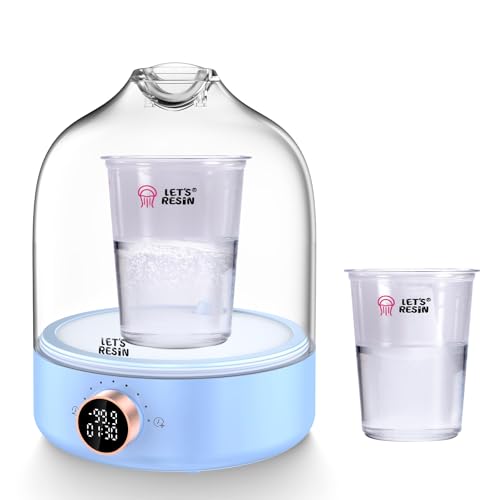 LET’S RESIN Airzero Bubble Remover LET’S RESIN Airzero Bubble Remover |
|
Check Latest Price |
 VIVOHOME 1.5 Gallon Acrylic Chamber Kit VIVOHOME 1.5 Gallon Acrylic Chamber Kit |
|
Check Latest Price |
 VEVOR 5 Gallon Tempered Glass Chamber VEVOR 5 Gallon Tempered Glass Chamber |
|
Check Latest Price |
 PB Motor Tech 3 Gallon Kit, 4.5 CFM Pump PB Motor Tech 3 Gallon Kit, 4.5 CFM Pump |
|
Check Latest Price |
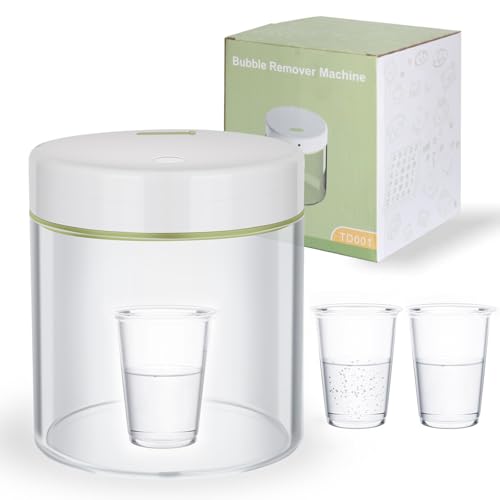 Aida and Hani 96kPa Bubble Remover Aida and Hani 96kPa Bubble Remover |
|
Check Latest Price |
 VTG VOGTEN 5 Gallon Chamber with Pump VTG VOGTEN 5 Gallon Chamber with Pump |
|
Check Latest Price |
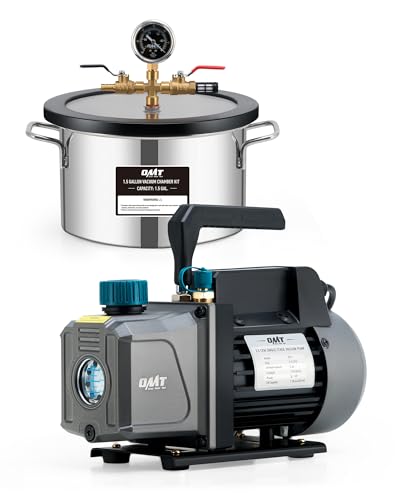 Orion Motor Tech 1.5 Gallon Kit Orion Motor Tech 1.5 Gallon Kit |
|
Check Latest Price |
1. Resiners AirLess Lite Resin Bubble Remover – The One-Button Workhorse
- ✓Compact and portable for cup sized pours
- ✓One button cycle clears bubbles in about 10 minutes
- ✓Quiet running with a transparent body
- ✓Fits standard mixing cups below 500ml
- ✕Struggles with fast cure high viscosity resins
- ✕Cup in listing photos is not included
- ✕Startup noise louder than steady running
95kPa vacuum
2.23L chamber
Under 56dB
PC body
The AirLess Lite is the machine I reach for most often, and the reason is not raw performance. It is that it removes the decision-making. You load a cup, press one button, walk away for ten minutes, and come back to resin that is ready to pour or to torch.
Owners working 1:1 epoxy and deep-pour resin report 5 to 10 minute cycles working as described, and that consistency is what makes a small shop productive.
The build is deliberately simple: a 2.23 liter chamber, an ultra-high-strength polycarbonate body, and a 95kPa working vacuum, with noise under 56 decibels.
At 3.4 pounds and 6.5 by 6.5 by 7 inches it moves between a shelf and a workbench without ceremony, and the transparent container means you can watch bubbles climb instead of guessing at a timer.
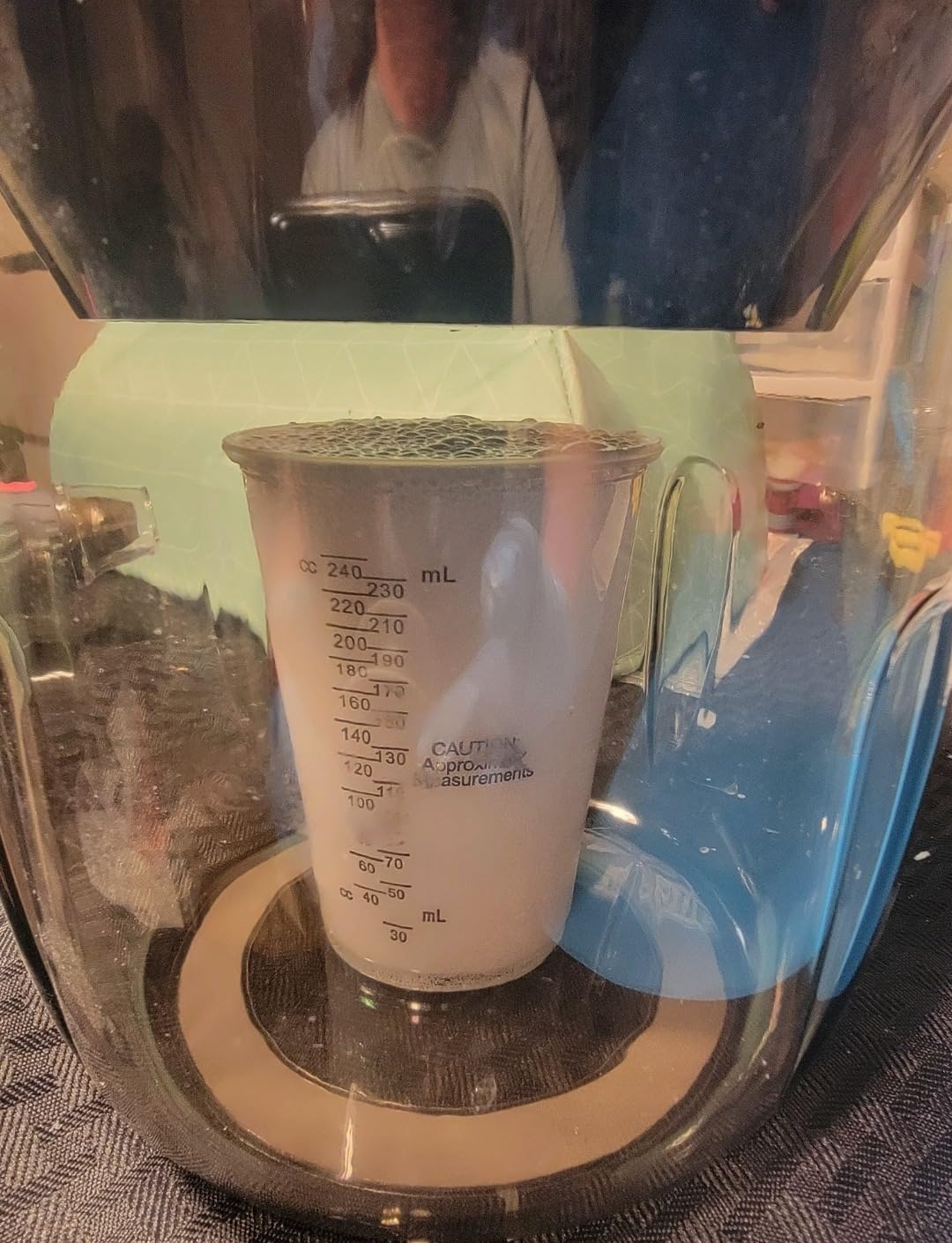
Where 95kPa Gets You and Where It Stops
95kPa is about 95 percent of full vacuum, which is enough for the clear castings most hobbyists and small studios produce. The limitation is viscosity. Thick, fast-curing art resin and quick-set formulas hold micro-bubbles at this pressure and short dwell time, and reviewers are candid that the machine simply is not designed for them.
A second limitation is capacity. The chamber is rated for standard mixing cups below 500ml, and buyers warn against pushing right to that line because the resin can overflow during the foam surge. Treat the rating as a ceiling, not a target.
Portability Versus Throughput
Because the chamber is small, throughput comes from cycle length rather than batch size. If you mix four cups at once, you run four roughly ten-minute cycles. That works for a jewelry bench, where you are making small pieces constantly.
It is frustrating for someone pouring a single large table in one go.
The noise level is the sleeper advantage. Under 56 decibels, this runs in the same room as a conversation.
Startup is noticeably louder than steady-state running, which owners mention as a minor annoyance rather than a real problem.
One thing to plan for before you buy: the cup shown in product photos is a demonstration prop and is not part of the package. You will be running disposable silicone cups through this machine regularly, so factor that into ongoing consumables.
Who This Suits Best
Buy this if you make jewelry, dice, keychains and small coasters, if your resin is thin, and if you want a machine you will actually use daily rather than one you admire. It is also the simplest entry point for anyone moving up from a torch-and-alcohol routine.
Who Should Skip It
Skip it if you cast thick slabs, if you run fast-cure art resin as your primary material, or if you need to degas a bucket at a time. Those jobs belong to a real chamber with a pump and a gauge you control yourself.
2. BACOENG 5 Gallon Tempered Glass Lid Vacuum Chamber – Deep Vacuum That Holds
- ✓Holds deep vacuum over long periods
- ✓Thick tempered glass lid seals quickly
- ✓Wide body fits large or multiple containers
- ✓Side gauge keeps the lid clear
- ✕Gauge washer needs firm tightening to seal
- ✕Some reports of valve and gauge leaks
- ✕Wide rather than tall chamber
5 gallon body
12.2 in diameter
Tempered glass lid
Rated to 29 inHg
When a casting is big, the constraint stops being the machine and starts being air volume. A 5 gallon chamber at 12.2 inches in diameter gives you room for a large mixing pail or several standard buckets at once, which is exactly what the AirLess class of machine cannot offer.
This BACOENG has been on the market since late 2016 and has accumulated a long body of owners reporting deep vacuum held for days at a time.
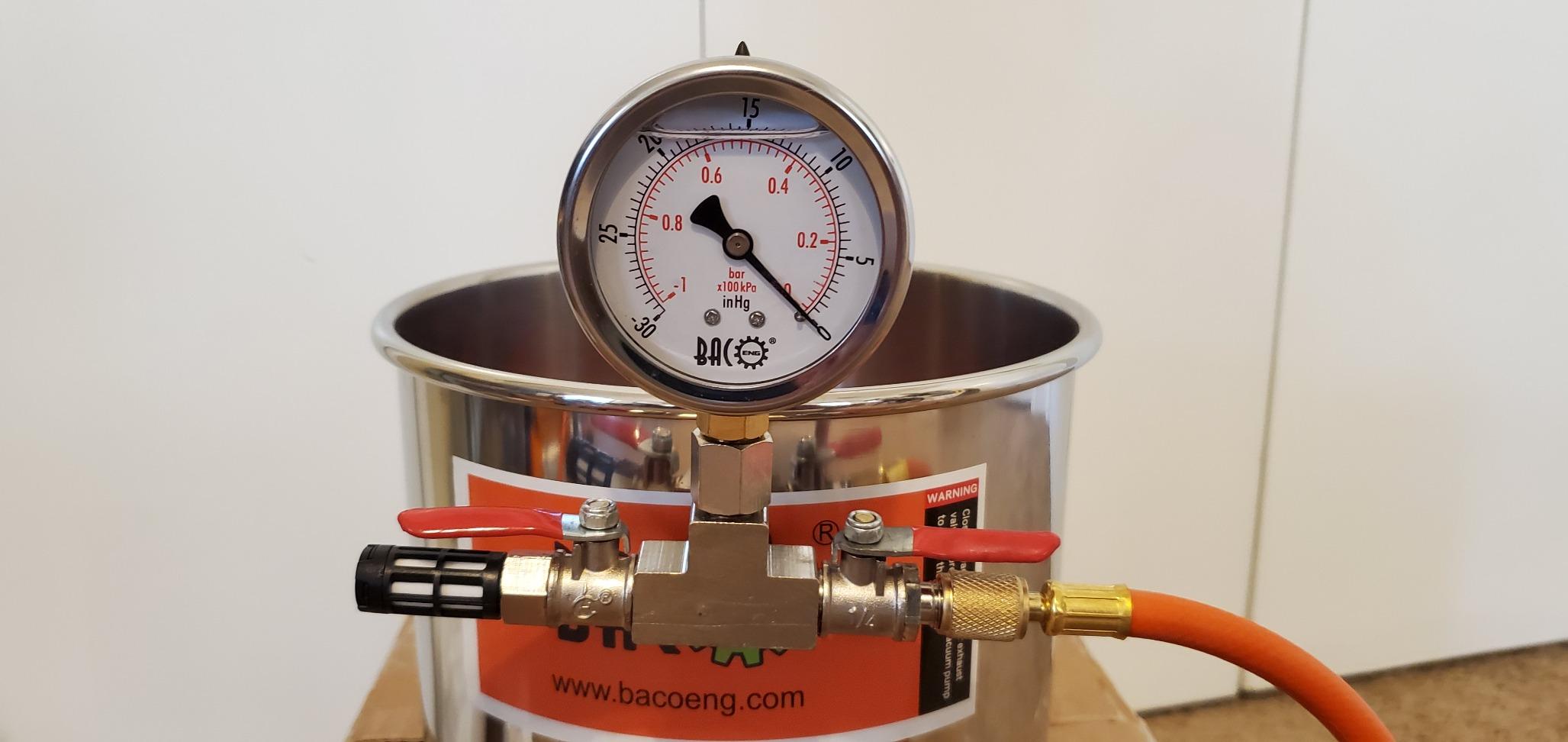
The dome lid is upgraded tempered glass rather than acrylic, sealed with a silicone gasket edge and rated to 29 inHg at sea level. The gauge is mounted on the chamber wall 8.8 inches up rather than in the lid, so you can watch the resin from directly overhead while still reading vacuum.
At 16.57 pounds it is a two-hand carry, but it lives in one place.
Why Glass Lid Material Decides Longevity
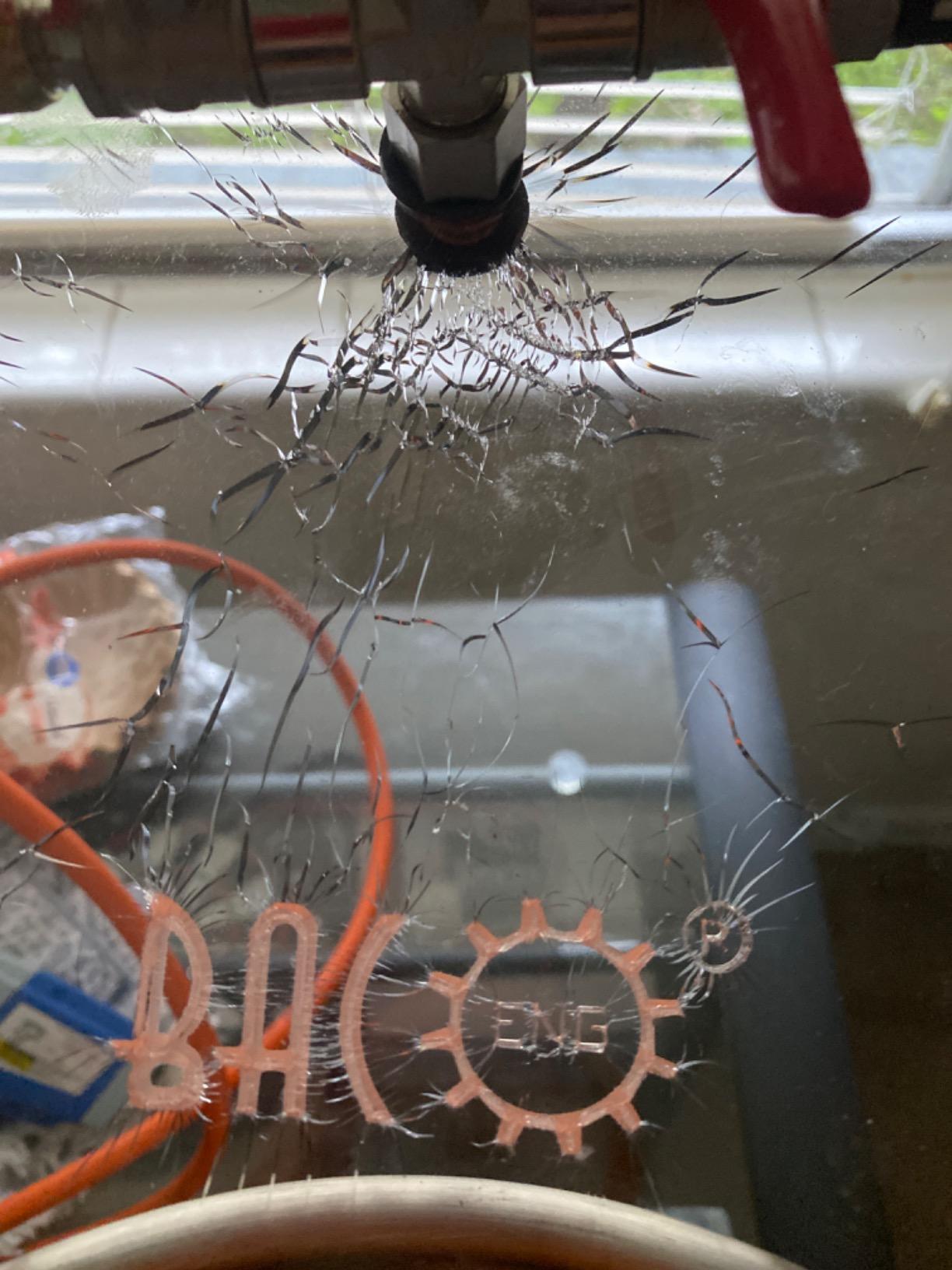
This is the single most important spec on the chamber, and the reason is chemical exposure. Acrylic and polycarbonate lids craze, fog and eventually crack when repeatedly exposed to solvent-bearing materials like alcohol-based resin releases, acetone residue or uncured epoxy overspray.
Tempered glass shrugs off all of it and tolerates heat far better, which is why so many wood stabilizers and lab users prefer it.
The tradeoff is weight and breakage risk. Glass does not flex, which means the gasket has to compress evenly around the whole rim. If you see a vacuum that will not hold, check the seal seating before you blame the pump.
Vacuum Holding Over Multi-Day Work
Owners running wood stabilization report maintaining near-full vacuum over extended periods, which is what you need for resin that has to stay under pressure through a long cure. For resin casting the same holding quality means you can mix, degas and pour without rushing to crack the lid the second the gauge stops moving.
The recurring criticism is at the hardware rather than the vessel. Several reviewers report that the rubber washer on the gauge port needs firm tightening to seal properly, and some have seen the valve and gauge assembly leak more readily than cheaper chamber setups.
Budget five minutes and the correct washers at assembly time and this largely goes away.
Shape Matters More Than Gallons
One thing the gallon number hides: this chamber is wide and not especially tall. That suits broad containers like cake pans, river table molds and flat silicone slabs far better than narrow tall vessels. Measure the footprint of your largest container, not just its volume, before committing.
Who This Suits Best
This is the choice for studios casting river tables, large plaques and deep pours, and for anyone combining resin casting with wood stabilization. If you want maximum room and long vacuum holds with no cup workflow, this is the straightforward choice.
Who Should Skip It
Skip it if your work is small-batch jewelry, where a 5 gallon void is just extra pump-down time for nothing. Also skip it if you only want to press a button, since gauge management and manual timing are your job here.
3. BACOENG 3 Gallon Chamber with 3.6 CFM Pump – The Complete Kit
- ✓All in one kit reaches near -30 inHg quickly
- ✓Very thick durable tempered glass lid
- ✓Quiet pump performance
- ✓Silicone gasket rated past 10K uses
- ✕Instructions unclear and gauge may need zeroing
- ✕Lid sometimes needs clamping to seal
- ✕Occasional pump motor and venting reports
3.6 CFM pump
-29.92 inHg
9.8 in stainless tank
92 percent transmittance lid
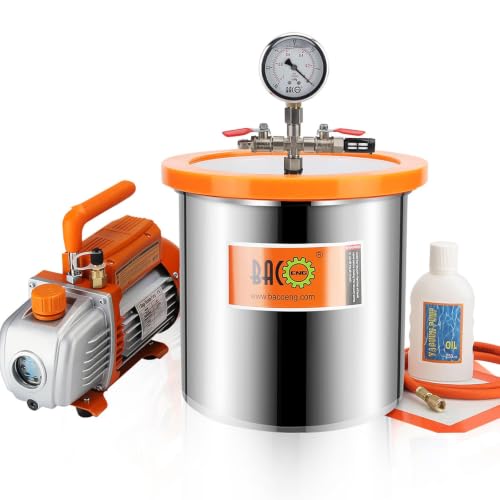
The appeal of a kit is that nothing is missing. Chamber, pump, gauge, hose, gasket and tools arrive in one box, and you can be pulling vacuum within an hour instead of sourcing parts across a weekend. This 3 gallon stainless setup pairs a 9.8 inch chamber with a 3.6 CFM pump built around an all-copper motor.
Owners confirm it reaches roughly -29 inHg within a couple of minutes.
The lid is tempered glass with a stated 92 percent light transmittance, which sounds like marketing until you realize how much better it is to watch a silicone bucket foam down through the top than to peek at a side wall. The included silicone gasket carries a 10,000 cycle rating.
The pump manual also includes an exploded parts view, which quietly saves you when a fitting fails.
Pump Speed and Copper Motor Construction
3.6 CFM sits in the middle of the hobby and small-studio range, and it matters more than most buyers realize. A slower pump on a larger chamber means long evacuation before you even start the timer. Community consensus in resin forums puts 3 CFM as workable for a 3 gallon chamber, while major manufacturers such as Smooth-On recommend closer to 8 CFM for professional results.
This kit sits between the two.
The all-copper motor is the durability story. Cheap pumps fail most often at the motor under continuous load, and copper windings tolerate heat far better than the aluminum alternatives used in entry-level units.
Sealing Behavior With a Clean Gasket
Owners report that the chamber seals with light hand pressure when the gasket is clean, which is the correct expectation for a silicone edge seal. A minority report needing to clamp the lid.
The practical lesson is to wipe the gasket channel with a paper towel before every cycle. A fingerprint-sized smear of uncured resin is enough to break the seal and send you chasing a pump problem that does not exist.
The Documentation Is the Weak Spot
Multiple buyers call out the instructions as unclear, and the gauge sometimes needs zeroing through a small plug before it reads correctly. Budget time to work through assembly methodically rather than assuming the included diagrams match your unit.
A few owners also report pump motor issues and some misting or smoke venting, which is uncommon but worth knowing about.
Who This Suits Best
Choose this if you want a full manual setup with zero extra purchases and you cast in the one to three gallon range. It is also a strong choice for silicone mold making, where you degas in the bucket rather than the cup.
Who Should Skip It
Skip it if you need to run standard 5 gallon buckets, since the 9.8 inch diameter is narrow for those. Also skip it if you want a machine with no assembly or gauge calibration step at all.
Chamber Width and Bucket Fit
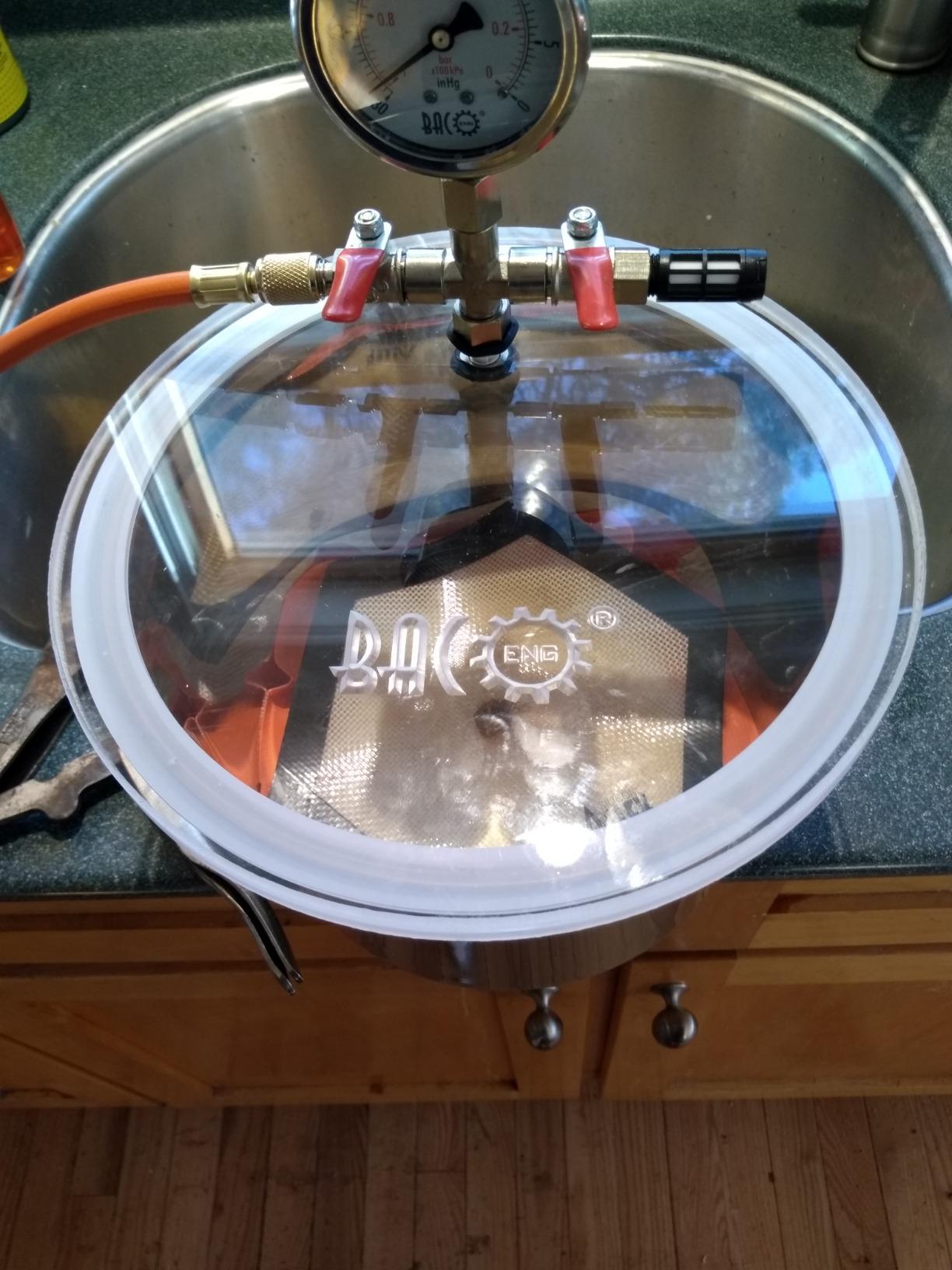
This is a narrower chamber than its gallon figure suggests. It fits mixing pails and small buckets comfortably, but it will not accept the wide tubs that a 5 gallon chamber swallows. Check your container diameter before ordering, because that is the constraint people hit on day one.
4. Resiners Airless Pro3 – Three-Minute Cycles and the Biggest Cup Load
- ✓Three minute cycles with up to 99 percent removal
- ✓3.2L chamber handles multiple cups per cycle
- ✓Touchscreen presets with live vacuum readout
- ✓Washable silicone pad catches overflow
- ✕Resin must be degassed in cups
- ✕Uses disposable cups each cycle
- ✕Consumes more per cycle than single cup units
-99kPa quad pump
22 L/min
3.2L chamber
27 oz per cycle
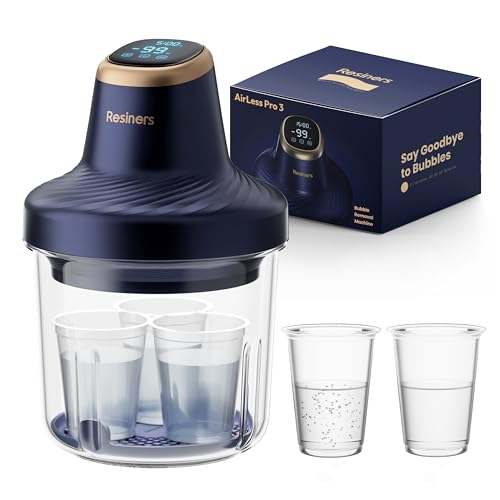
The Pro3 is the compact machine for people who have outgrown a 500ml single cup. Its 3.2 liter chamber holds three 8oz cups at once or a single 27.05 oz cup, and the quad-pump system holds a stable -99kPa.
That combination of depth and capacity is what lets it run 3-minute cycles rather than the 10-minute default on smaller units.
The touchscreen is the real quality-of-life upgrade. Five, ten and fifteen-minute presets sit next to a live vacuum readout, so you can see the pressure curve rather than inferring it.
At 4 pounds and 8 by 8 by 12.4 inches it is still a countertop machine, and it runs under 62dB.
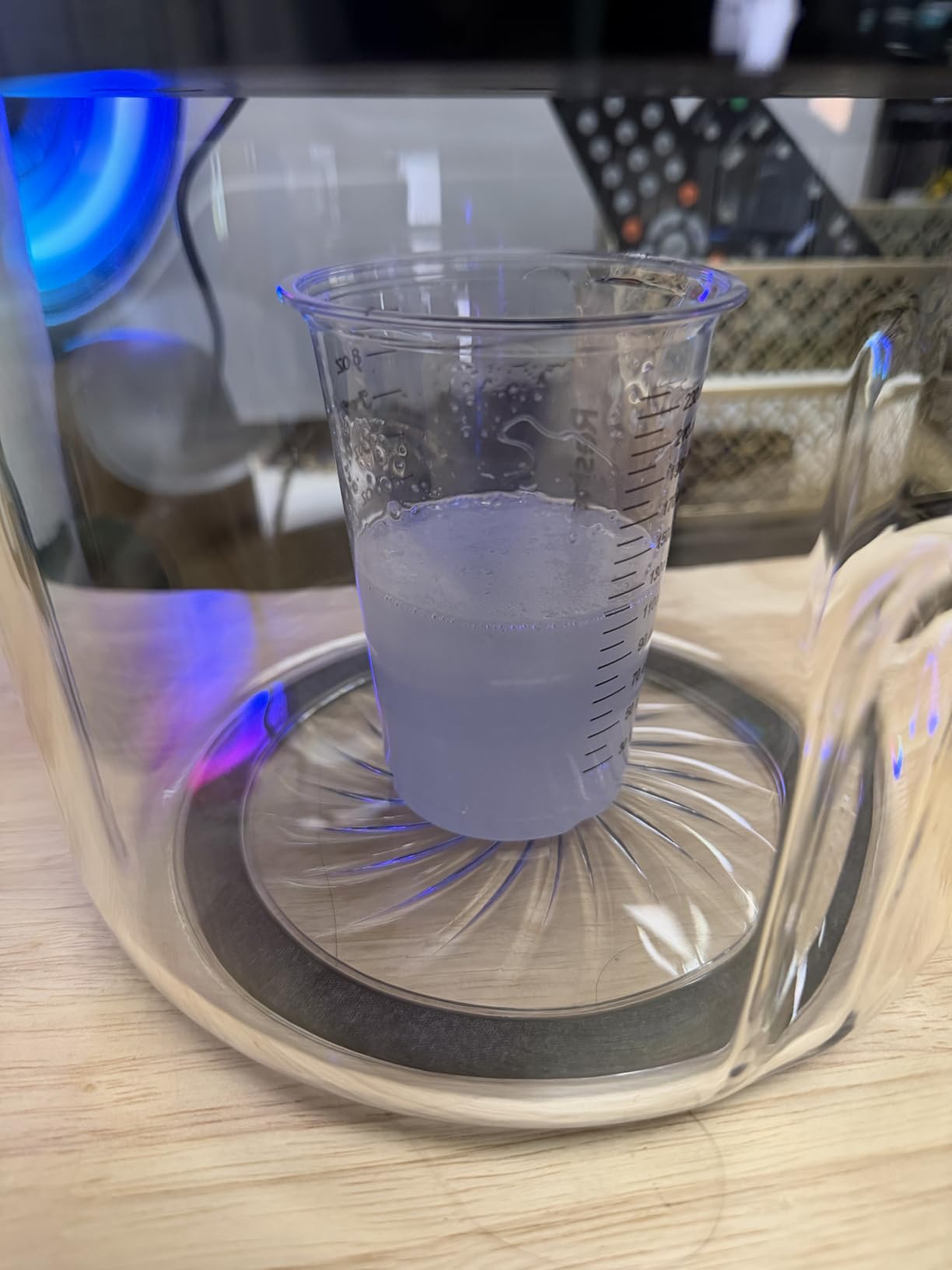
What 22 L/min Airflow Does to Cycle Time
Airflow is the number that determines how fast a chamber can recover from the initial volume of air. At 22 L/min, this unit clears the chamber faster than the 3 to 4 CFM chamber pumps found on traditional kits. That is why a 3-minute preset is credible here and would be a fantasy on a 3.5 CFM single-stage pump.
The deep -99kPa matters for thin and medium viscosity resins. Owners report that a 3-minute run leaves resin needing only a light torch pass, compared with the extra minutes a smaller machine demands.
The Cup Workflow and Its Cost
Resin goes in cups, never directly into the chamber. That is the central design decision and it is both the strength and the limitation. Cups give you predictable volumes and easy headspace control, which is exactly the overflow lesson from the forums.
They also mean consumables: 10 measuring cups are included, and you will go through more. Reviewers with an 82 percent five-star share still flag torching or settling the surface afterward, which is normal for any vacuum cycle.
Removable Pad and Cleanup
The washable silicone pad at the base is a small design decision that pays off constantly. When a cup does overflow during the foam surge, you peel the pad out and rinse it instead of scrubbing the chamber floor. On machines without one, that cleanup turns into a chore that makes people avoid the machine.
Who This Suits Best
Pick this if you run multiple small pieces per cycle and want the shortest possible wait. It is also a strong choice for high-volume small work such as dice runs and pendant batches.
Who Should Skip It
Skip it if you want to pour resin directly into the chamber, or if frequent disposable cups would annoy you over the long run. It is also overkill for occasional hobby use.
5. YixangDD Digital Resin Bubble Remover – Clear Readouts and Simple Modes
- ✓Digital pressure readout in an entry machine
- ✓Reliable on thin and medium viscosity resin
- ✓Very quiet and compact
- ✓Works on silicone as well as epoxy
- ✕Not suited to thick high viscosity resin
- ✕Lid needs light pressure during the cycle
- ✕Lid is hard to remove after a cycle
2.7L chamber
-96kPa
Digital LED display
5 and 10 minute modes
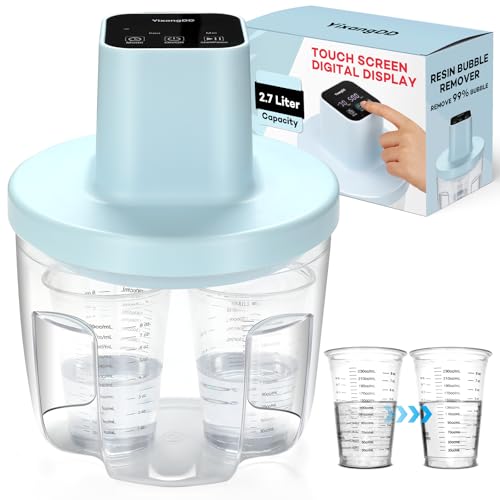
The YixangDD sits in the middle of the compact class: a 2.7 liter chamber that holds two measuring cups up to 600ml, running at -96kPa. What separates it from simpler units is the touchable LED display showing live pressure and a choice of five or ten minute modes.
That means you stop running fixed blind cycles and start watching what the resin is doing.
At 3.77 pounds and 7.5 by 7.5 by 9.6 inches it is genuinely portable, and owners repeatedly single out how quiet it is compared with compressor-driven setups. Fourteen disposable measuring cups come in the box.
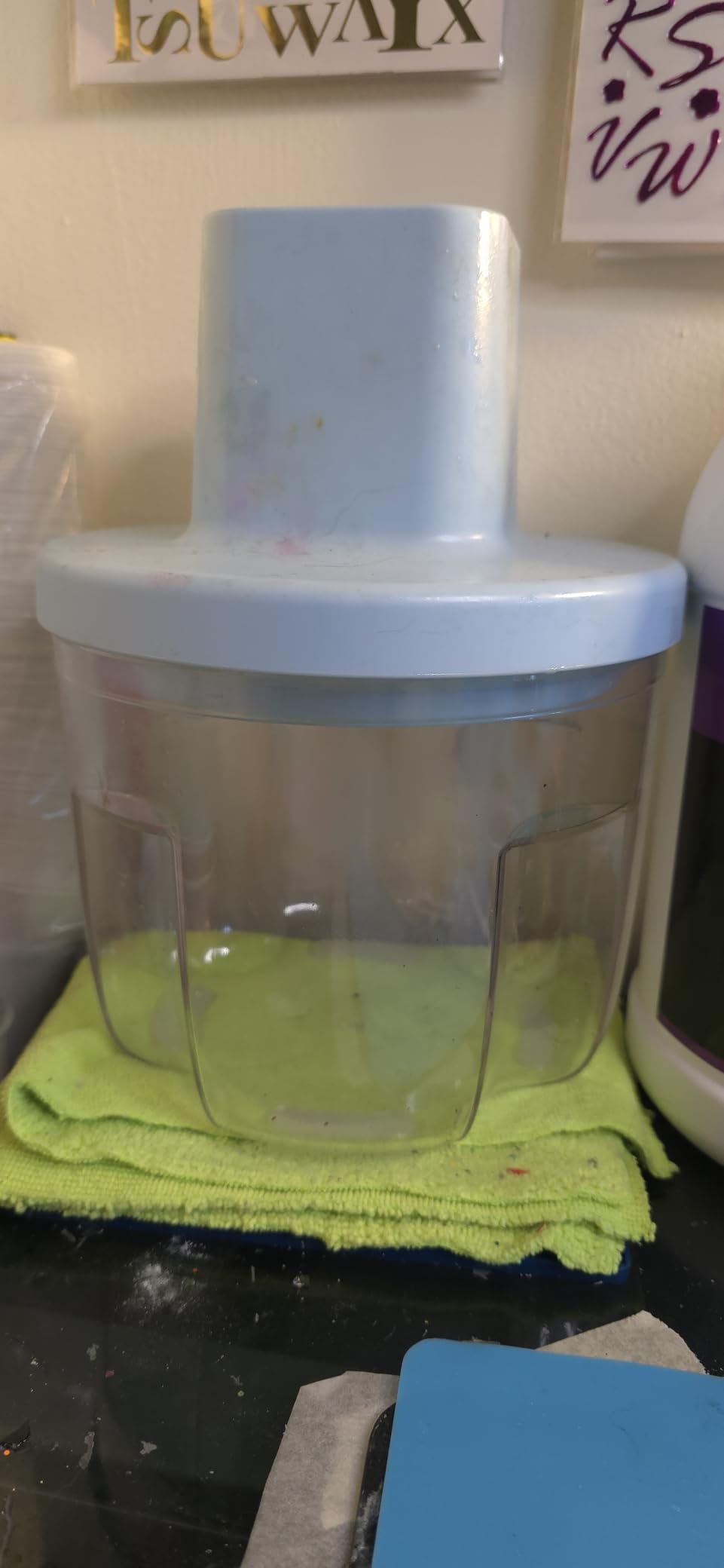
Reading the Pressure Curve
A digital readout changes how you diagnose a bad result. When a bubble survives the cycle, you can check whether the unit actually reached full pressure or stalled partway. Many owners note that a visible surge of micro-bubbles at full kPa is normal and clears with a few extra minutes, which is information you simply cannot get from an analog gauge.
The -96kPa figure sits just under the Pro3’s -99kPa. For thin 1:1 epoxy and silicone it does the job; for thick art resin it will not, and reviewers are consistent on that boundary.
Lid Pressure and the Opening Habit
Two practical notes from owners. The lid flexes and needs light hand pressure during the run to reach full vacuum, which is a normal characteristic of a polycarbonate body rather than a defect. And the lid is hard to remove right after a cycle, so wait for the cycle to finish and release rather than prying at it early.
Several people describe the foam surge as startling the first time. Once you know to expect it, it is unremarkable.
Heat Build-Up on Long Cycles
Reviewers flag that resin warms up during longer runs, which quietly eats into working time on fast-cure formulas. If you are working a 10-minute or longer pot life, factor in the extra heat the chamber holds in, and consider a thinner mix rather than assuming you got more time.
Who This Suits Best
Choose this if you want visible pressure data without stepping up to the Pro3, and if your resin runs thin to medium viscosity. It works equally well for silicone, which makes it useful if you are casting flexible molds as well as clear pieces.
Who Should Skip It
Skip it for thick art resin or deep pours over two inches, where you need deeper vacuum and longer dwell than this chamber provides. Skip it if you will be running two-person production, because two cups per cycle becomes the bottleneck fast.
6. LET’S RESIN Airzero – Three 8oz Cups Per Cycle With Auto Release
- ✓One button automatic extract and vent
- ✓Handles three 8oz cups per cycle
- ✓Display tracks pressure and countdown
- ✓Lightweight lid and base silicone pad
- ✕Only a 90-day manufacturer warranty
- ✕Surface bubbles may still need alcohol or heat
99kPa
Three 8oz cups or one 32oz
5-15 min timer
Polycarbonate body
The Airzero is the batch option in the compact class. Where most machines here hold one large cup or two small ones, this handles three 8oz cups simultaneously or a single 32oz cup, at a 99kPa working vacuum.
For a person running several pieces per session, capacity per cycle matters more than cycle length.
Automatic pressure release is the feature that quietly saves the most time. Extraction and venting happen from a single button press, so there is no manual valve to babysit and no risk of cracking the lid under pressure.
The multi-function display tracks both pressure and countdown, and the adjustable timer runs from 5 to 15 minutes.
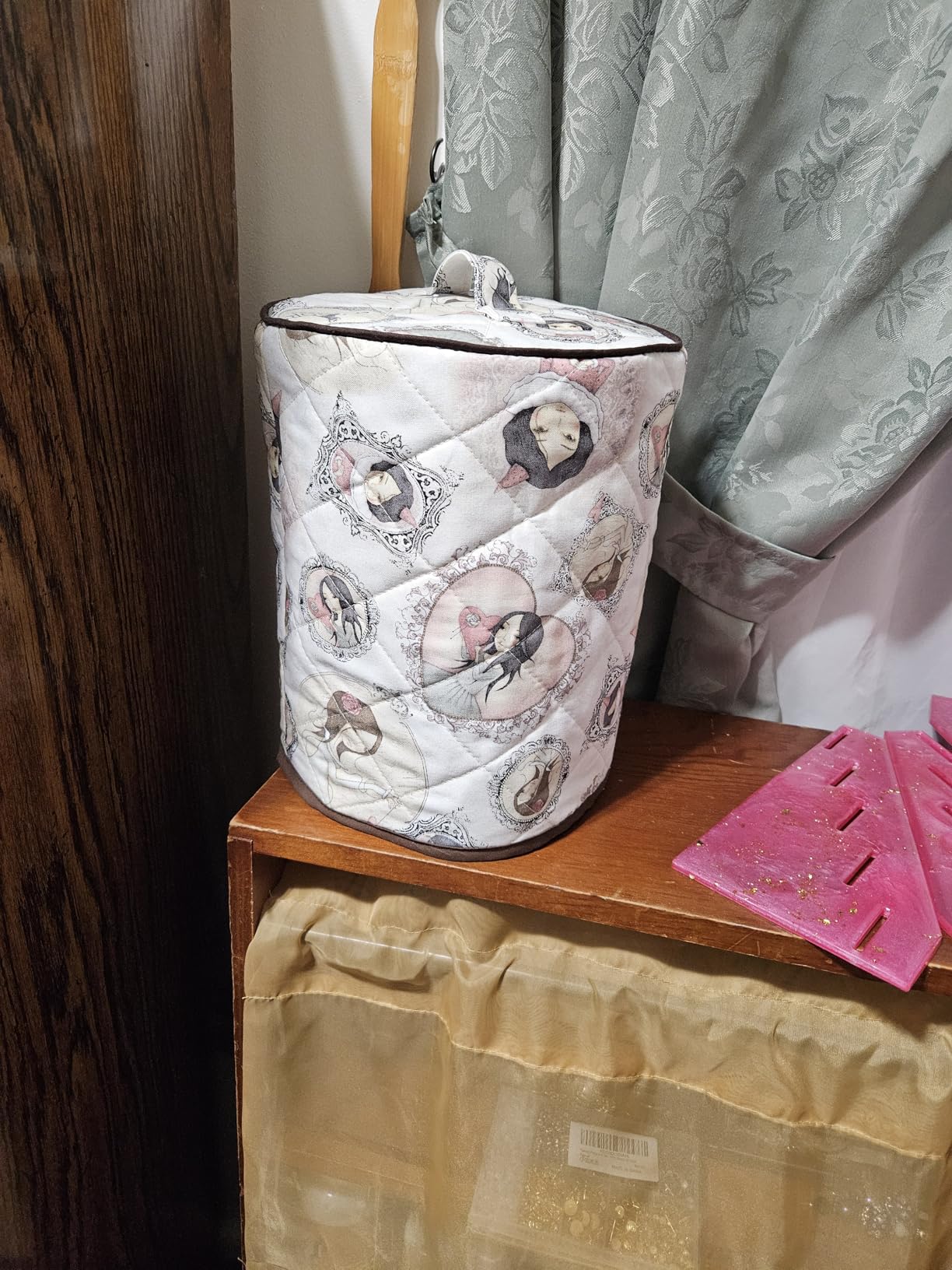
Automatic Release and Workflow Speed
Manual venting is where most compact machines lose you. You have to watch the gauge, crack the valve gradually and let pressure equalize, and doing that wrong cracks polycarbonate.
The Airzero does it for you, which means the whole cycle is genuinely set and forget.
The lightweight lid is worth noting for a different reason. A full chamber with three cups in it is heavy, and a lighter lid reduces the wrist strain of lifting it repeatedly across a long session.
Where It Falls Short
The warranty is 90 days from purchase, which is the shortest in this roundup and the most legitimate complaint owners raise. That is a meaningful difference on an appliance you will run constantly, so treat it as a consumables-risk decision rather than a dealbreaker.
Second, surface micro-bubbles sometimes survive even after a full cycle. Reviewers still finish with alcohol or a heat gun on the surface.
That is true of every vacuum method, but it matters more here because the cycle specification claims close to full bubble removal.
Who This Suits Best
Buy this if you batch small pieces and want one press to handle all of them. It is well suited to resin artists doing sets of coasters, pendants or dice, and to anyone who would rather not manage a vacuum valve by hand.
Who Should Skip It
Skip it if you want long-term warranty coverage, or if you are casting thick pieces where the 5 to 15 minute window at 99kPa still will not clear the volume of bubbles involved.
7. VIVOHOME 1.5 Gallon Acrylic Chamber Kit – A Full Manual Setup in a Small Box
- ✓Complete kit usable within 10 to 15 minutes
- ✓Holds vacuum well including overnight tests
- ✓304 stainless body resists chemical damage
- ✓Pump oil and tools included
- ✕Gauge may not read zero out of the box
- ✕Pump struggles to start under full vacuum
- ✕Supplied tools are basic
1.5 gallon
3.5 CFM single stage
304 steel body
Acrylic lid to 160F
The VIVOHOME is the traditional answer to learning vacuum degassing properly. It is a 1.5 gallon chamber with a 0.04 inch 304 stainless steel body, an acrylic lid, and a 3.5 CFM single-stage pump with a quarter horsepower copper motor.
Everything arrives in the box: pump, dual-scale gauge, five foot hose, pump oil, silicone pad and a tool kit.
Owners report holding vacuum overnight with no measurable loss, and a tested leak rate of about 5 percent over 12 hours. That is a genuinely good seal for a chamber at this level, and it means you can mix, degas and pour without time pressure.
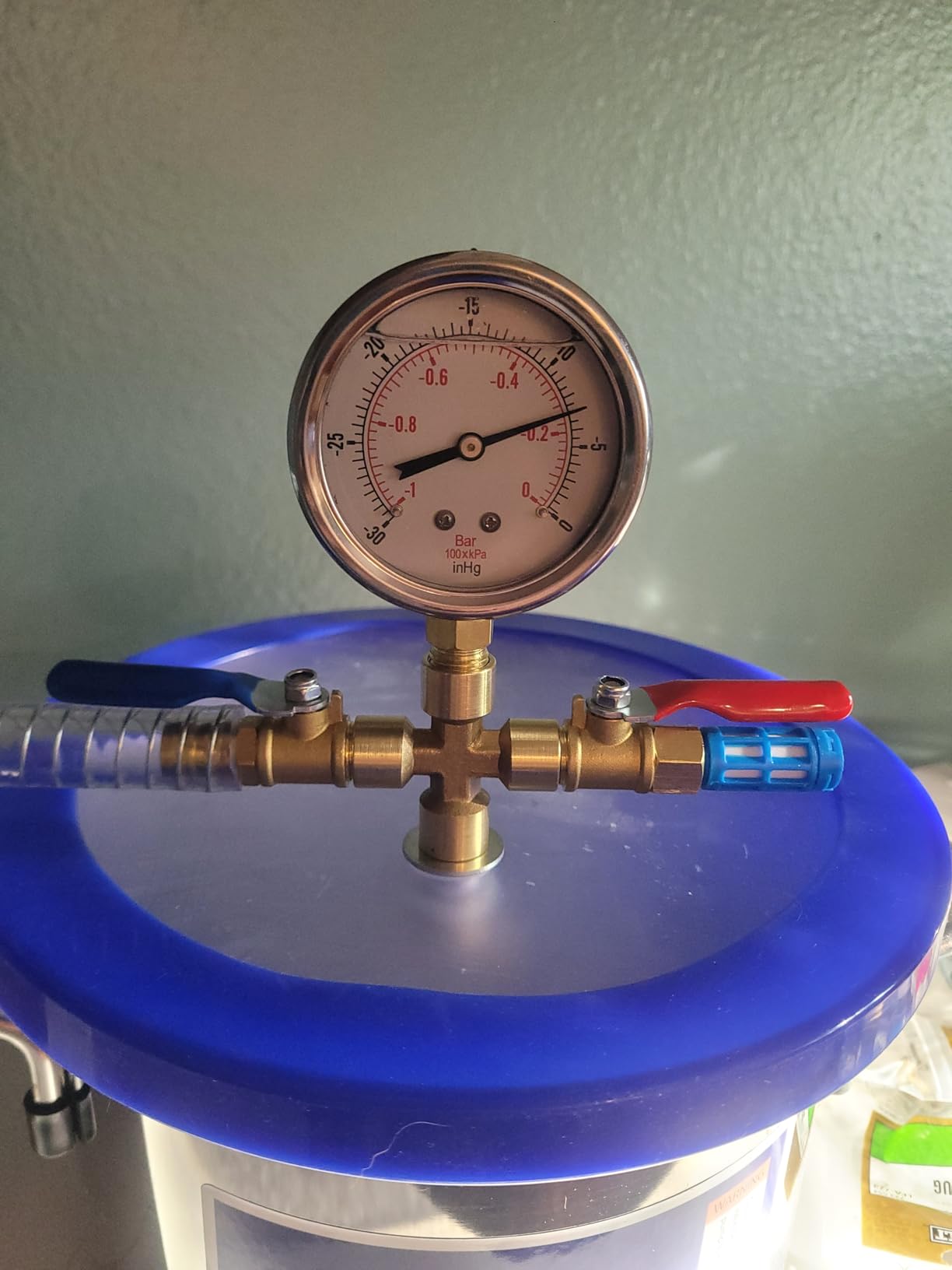
Acrylic Lid Tradeoffs in a Resin Workshop
The 0.55 inch acrylic lid is rated to 160F and rated to -29.9 inHg above sea level. It gives you a clear top-down view and it is lighter and cheaper than tempered glass.
The problem is chemistry. Acrylic crazes and cracks with repeated exposure to alcohol, acetone and solvent-based releases, and resin shops use those constantly.
If your cleanup routine involves alcohol on a rag near the chamber, plan on a future lid replacement or pick a glass-lidded kit instead.
Gauge Accuracy and the Zero Adjustment
The dual-scale silicone oil-filled gauge reads -30 to 0 inHg and -1 to 0 bar with plus or minus 2.5 percent accuracy, which is the right type of gauge for this application. Oil-filled gauges damp needle movement and read far more steadily than dry gauges.
The common complaint is that it may not read zero accurately out of the box, so calibrate before you trust a reading.
Assembly documentation is another weak point. Owners who tighten the gauge manifold properly with the supplied Teflon tape report quick, leak-free results.
The included tools, though, are a toy screwdriver and an oversized stamped wrench, and the instructions assume a different parts layout than the one in the box. Expect to improvise slightly.
Starting a Pump Under Full Vacuum
This is the single most common real-world frustration with single-stage rotary vane pumps: crank the valve shut, hit the switch, and the motor stalls because there is no airflow path. Cracking the line open before starting solves it every time. Once running, it is quiet enough for a home shop.
Who This Suits Best
Choose this if you want to learn manual vacuum control rather than rely on presets, and if your pours are small to medium. It is a strong first real chamber for jewelry, small coasters and silicone molds.
Who Should Skip It
Skip it if your cleanup habits involve heavy solvent use and you want a glass lid. Also skip it if you want the least assembly friction, since the documentation and included tools here are the weak point.
8. VEVOR 5 Gallon Vacuum Chamber – Large Stainless Body, Pump Sold Separately
- ✓Top ranked in its lab vacuum chamber category
- ✓Thick glass lid resists heat and corrosion
- ✓Threaded valve connections aid sealing
- ✓Muffler valve reduces noise
- ✕Chamber only so a pump is needed separately
- ✕Silicone gasket needs careful even seating
- ✕Sealing complaints appear in reviews
5 gallon
304 stainless
0.75 in glass lid
-29 inHg rating
The VEVOR 5 gallon sits at the top of the lab vacuum chamber category and ships in a large box at 15.55 by 13.78 by 13.78 inches. The body is 304 stainless steel and the lid is 0.75 inch thick high-hardness tempered glass.
The chamber is rated to -29 inHg with a tested leak rate of about 5 percent over 12 hours.
This is the chamber to look at if wood stabilization is on your list. Stabilizing resin has to stay under vacuum for extended periods to pull into the wood’s cellular structure, and that is a hold test rather than a three-minute cycle. A big stainless vessel with a heavy glass lid handles it.
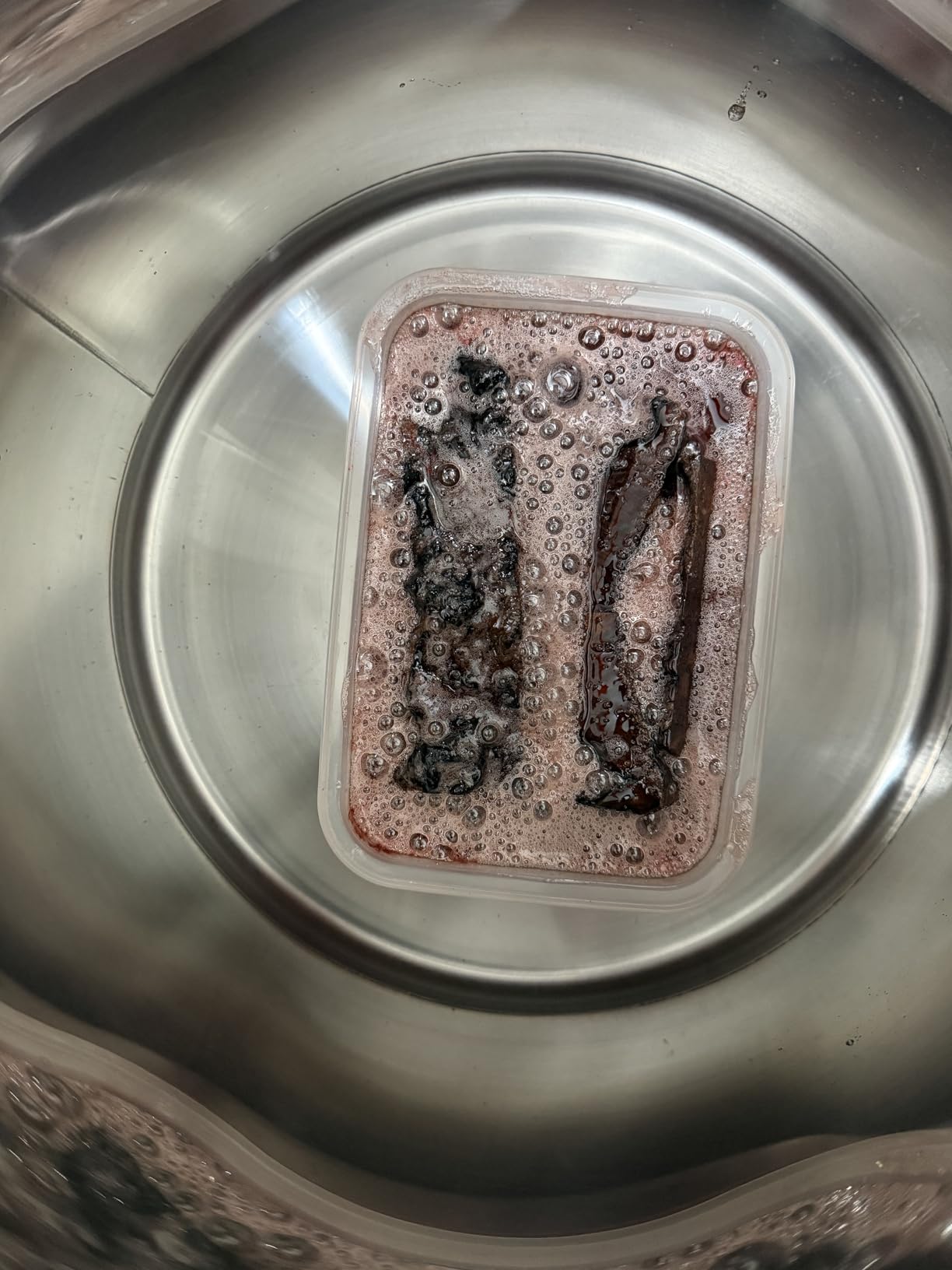
Chamber Only and What That Means for Your Setup
This listing does not include a pump, and pump oil is a separate item. That matters for your total outlay, because a pump capable of pulling a 5 gallon chamber down to -29 inHg needs real airflow, and that is the single biggest addition to any chamber setup.
Buyers pairing this with a smaller pump often find evacuation takes longer than they planned.
What you do get is a properly specced vessel: silicone oil-filled gauge with shock absorption, a 59 inch flexible vacuum hose, a muffler and filter intake valve, threaded valve connections and rubber gaskets at the gauge points that help with sealing compared to earlier versions.
Lid Thickness and Heat Handling
At 0.75 inch the glass is thicker than most vessels in this capacity class, and it handles heat and corrosion from spills well. The 304 stainless body resists deformation and corrosion from resin spills, which matters in a stabilization workflow where resin inevitably gets messy.
Seating the Gasket Evenly
Reviews mention the silicone seal cover and gasket needing care to seat evenly. This is normal with any large glass lid and has an easy fix: wipe the channel, set the lid straight down without sliding it, and press around the full circumference before you apply vacuum.
Doing this every time prevents the sealing complaints people otherwise report.
Who This Suits Best
Best fit for wood stabilizers, large silicone bucket work and anyone who already owns a pump of adequate size. It is also the roomiest option for river table molds and deep pours.
Who Should Skip It
Skip it if you want an all-in-one box or if you work in very small batches, since the pump-down time on a large empty chamber is pure overhead for a jewelry-scale pour.
9. PB Motor Tech 3 Gallon Kit with 4.5 CFM Pump – The Dual Seal Advantage
- ✓Dual gasket holds vacuum for days
- ✓Tempered glass lid survives resin that crazes plastic
- ✓4.5 CFM pulls down faster than 3.5 CFM kits
- ✓Tools gloves and plumber tape included
- ✕Instructions are largely unusable
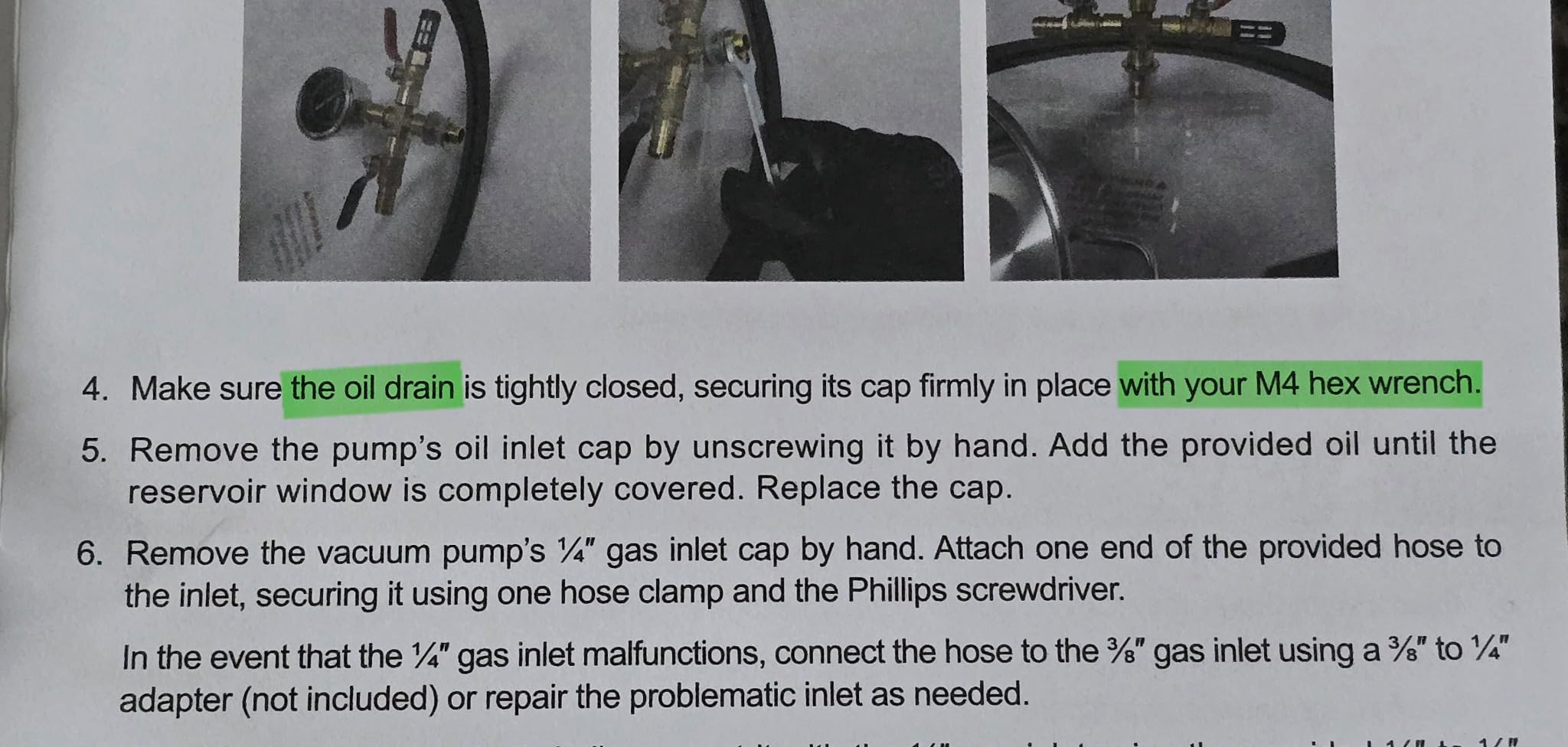
- ✕Included hex wrench does not fit the fittings
- ✕Pump oil sold separately
4.5 CFM single stage
3 gallon steel tank
Tempered glass lid
Dual rubber seal
This kit is built around a single idea: seal redundancy. There is one rubber gasket on the lid and a second at the chamber edge, and that dual design is why owners report the chamber holding pressure for days after the pump shuts off.
For anyone doing long resin soaks or stabilization work, a seal that does not drift matters more than a faster pump.
The pump is a 4.5 CFM single-stage unit with a copper motor in a reinforced aluminum alloy housing rated for heat dissipation and corrosion resistance. The chamber is 3 gallon thickened stainless rated to 160F with a tempered glass lid, and the ports accept both 1/4 inch and 3/8 inch SAE connections.
Why 4.5 CFM Beats 3.5 CFM in Practice
Evacuation time scales with chamber air volume divided by pump flow. A 30 percent airflow increase on the same chamber translates directly into faster pump-down and, more importantly, faster recovery between cycles when resin foam is displacing air.
Owners comparing it against 3.5 CFM single-stage kits report the difference is obvious in the time between putting the lid on and reaching full vacuum.
Brass-fitted safety caps and an aluminum alloy casing keep the pump fittings from being the weak link, which is where cheaper kits tend to fail first.
Documentation and Included Hardware Are the Weak Spots
This is the kit’s real weakness and it is worth being blunt about. Buyers describe the instructions as largely unusable and written in non-native English. The included hex wrench does not fit the pump valve or the adapter.
Several buyers received silicone washers already cracked, and the included hose measures shorter than the listed 4.9 feet.
None of that touches the chamber quality, but you should budget an evening and a trip to a hardware store before this kit works as intended. Pump oil is also not included due to shipping restrictions.
Glass Lid Over Acrylic for Resin Shops
Owners specifically praise the tempered glass lid for surviving resin that would craze a plastic lid. In a shop pouring epoxy regularly with alcohol cleanup, that difference shows up as a replacement you never have to make.
Who This Suits Best
Pick this if you want the strongest seal retention in the roundup and you are willing to spend an hour sorting out the assembly yourself. It suits intermediate users who understand how a vacuum system is put together.
Who Should Skip It
Skip it if you are a first-time chamber owner who wants clear instructions and matching hardware. Buy replacement washers before your first run, since several units arrive with damaged ones.
10. Aida and Hani 96kPa Bubble Remover – Smallest and Simplest
- ✓Smallest footprint for tight workspaces
- ✓One touch operation with no assembly
- ✓Clear body shows bubbles rising
- ✓Longer warranty than most in this category
- ✕Smallest chamber limits batch size
- ✕Reaches full 96kPa only after a short delay
- ✕Variable bubble removal results
96kPa
Compact ABS body
One touch control
Ten minute cycles
At 3.94 by 3.94 by 4.72 inches in a compact round ABS body, this is the machine for someone whose workspace is the constraint. There is no assembly, one touch control, and a high-transparency container so you can watch bubbles rise to the surface during the ten-minute cycle.
It comes with a one year warranty.
At 96kPa the vacuum specification sits in line with the stronger compact units here. The difference is capacity and consistency.
This chamber holds far less than the Pro3 or Airzero, and the 15 percent one-star share in reviews points to results that vary from cycle to cycle.
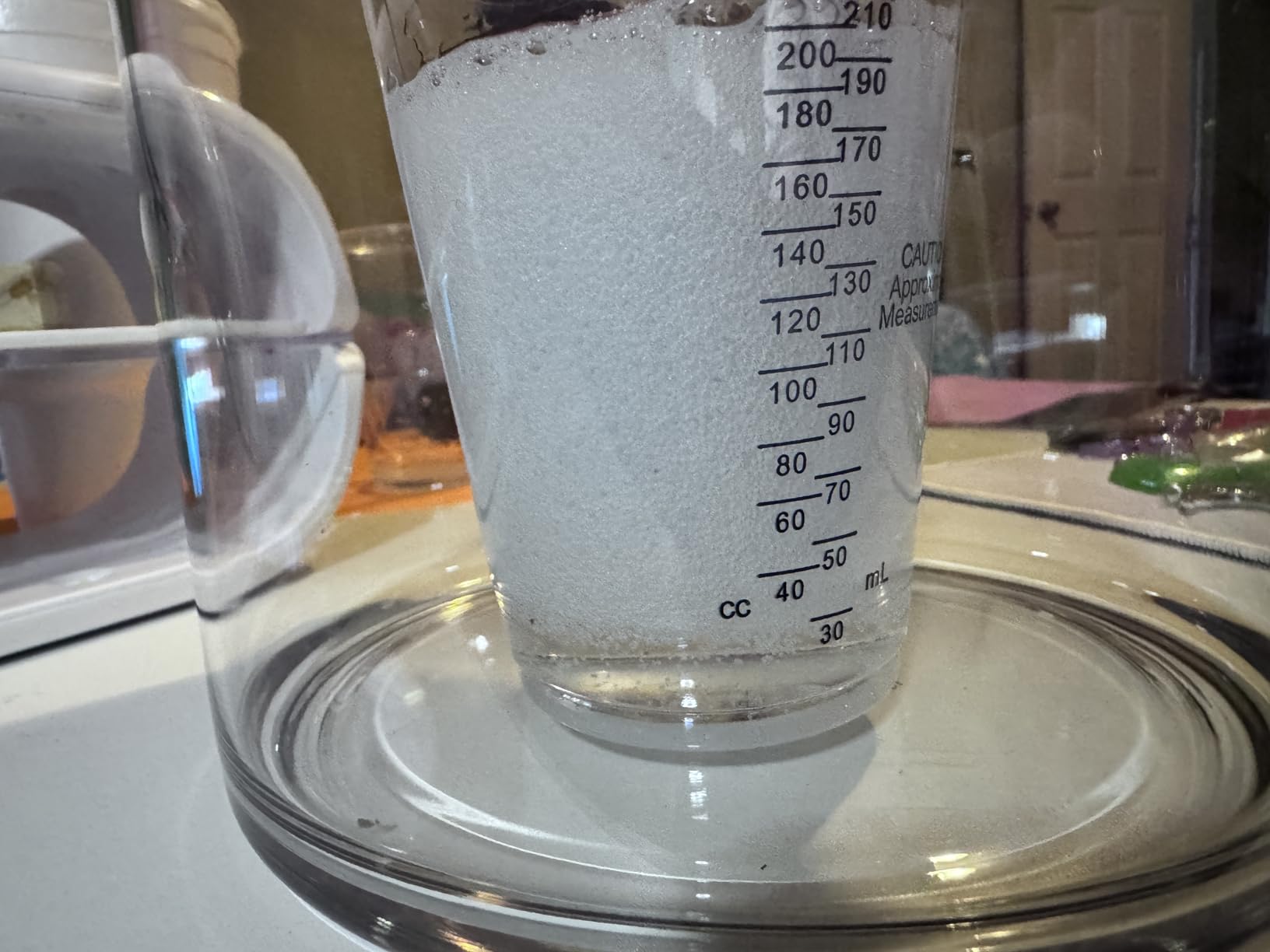
What Small Capacity Costs You in Practice
The real limitation is volume per cycle. Jewelry-scale pours work. A batch of dice or a set of coasters does not, because you are running cycle after cycle with a machine that still has to build and release pressure each time.
If you are making one piece at a time, this is efficient. If you are making twenty, the waiting dominates your workflow.
The Delay Before Full Pressure
Unlike the digital units that jump straight to a set pressure, this machine reaches its full 96kPa only after a short delay. That means your effective working time at pressure is shorter than the stated ten-minute cycle. Owners who were not expecting this describe results as adequate for small pours rather than excellent, which is an honest summary of the machine’s position.
When a Small Footprint Is the Right Trade
There is a version of this hobby where a machine that fits on a shelf and needs no assembly is exactly right. Beginners making single jewelry pieces, people testing whether vacuum degassing is for them, and anyone working in a very tight space will get real value here.
Who This Suits Best
Choose this for a first experiment with vacuum degassing, for single-piece jewelry work, or where counter space is genuinely tight. The one year warranty is longer than most in this category.
Who Should Skip It
Skip it if you need repeatable results on thick resin, or if you run production volume. Variable outcomes and a small chamber make it the wrong tool for anything you need to be confident about.
11. VTG VOGTEN 5 Gallon Chamber with Pump – The Roomy Full Kit
- ✓Large chamber with pump in one package
- ✓304 stainless resists corrosion
- ✓Glycerin gauge reads steadily
- ✓Accessory bundle includes gloves and tape
- ✕Largest combined box and pump of the kits
- ✕Heavy at 26.7 pounds
- ✕Some pump and seal complaints
5 gallon 304 steel
4.5 CFM pump
5 Pa ultimate
Glycerin gauge
This is the largest complete package in the roundup: a 5 gallon 304 stainless steel chamber at 11.8 inches outside diameter by 11.8 inches high, bundled with a 4.5 CFM single-stage pump reaching 5 Pa ultimate vacuum.
You get chamber and pump together, plus a hose, two silencers, a silicone pad, installation tools, gloves and waterproof tape.
The glycerin-filled gauge is the quiet upgrade here. Glycerin and silicone filled gauges damp vibration and give stable readings where dry gauges flutter, and since you will be reading this gauge for a minute at the start of every cycle, that stability matters.
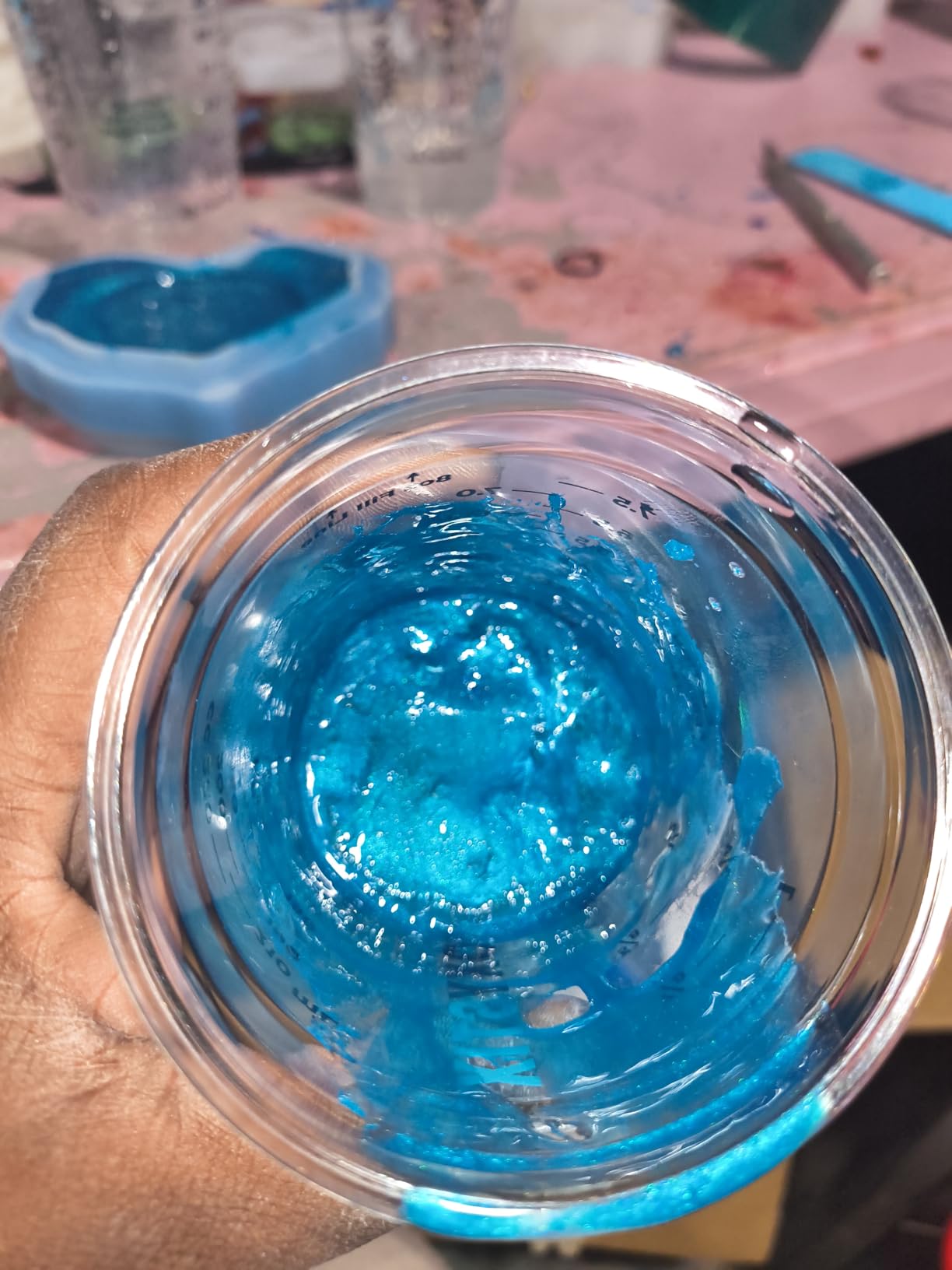
Pairing 5 Gallons With 4.5 CFM
Flow rate is the number to think about here. Four and a half CFM on the largest chamber in the roundup means evacuation takes longer than it would on a 3 gallon chamber with the same pump.
That is a fair trade for batch capacity, but be realistic about cycle time before planning your production schedule around it.
The copper motor in an aluminum alloy casing handles heat dissipation and corrosion resistance, which is what keeps a pump alive over years of use rather than months.
The Weight Factor
At 26.7 pounds this is the heaviest unit here, and it is a genuine issue for anyone who moves it, carries it to a garage, or has a bench that cannot take the load. Plan its location before it arrives rather than after.
Who This Suits Best
Best for studios that degas in large buckets or full-size molds and want chamber and pump in one delivery. The accessory bundle also makes it a good choice if you are setting up a dedicated vacuum station.
Who Should Skip It
Skip it for small-batch work where the chamber volume is wasted and the weight is a problem. A 1.5 gallon kit serves the same user with far less effort to move.
12. Orion Motor Tech 1.5 Gallon Chamber and 3.5 CFM Pump Kit – Quiet and Highly Rated
- ✓Quiet enough for a home workshop
- ✓Pump oil and fittings in the box
- ✓Thick glass lid users call very solid
- ✕Occasional rattling from the pump at depth
- ✕201 stainless is thinner grade than 304
- ✕Learning curve for first time users
1.5 gallon
3.5 cfm copper pump
201 steel to 250F
Tempered glass lid
The Orion Motor Tech kit carries the highest average rating in this roundup at 4.6 stars, and the reason owners give is consistent: it pulls down fast, seals cleanly and runs quietly enough for an indoor workshop.
One owner reports holding -30 inHg for over a week, which is the kind of result that only happens when the gasket and the valve port are both doing their job.
It is a 1.5 gallon chamber in 201 stainless steel rated to 250F, with a tempered glass lid sealed by a 1.5mm silicone gasket, a liquid-filled gauge, and two ball valves for airflow management.
The pump is a quarter horsepower all-copper motor at 3.5 cfm. Pump oil, a five foot wire hose, and 1/4, 3/8 and 1/2 inch fittings are all included through an adapter.
Why 250F Rating Matters for Wood Work
The 250F rating on the chamber body is the highest stated figure among the chambers reviewed and it is the spec that separates this kit for wood stabilizing and any warm-process work. Most hobby chambers are listed at 160F. Higher temperature capability means you can handle stabilized wood and warmer resin without worrying about the vessel.
201 Versus 304 Stainless
One reviewer flags the 201 stainless as thinner grade than the 304 steel competitors use. In practice 201 is adequate for cold resin work and holds vacuum well, but if you are solvent-exposing the vessel frequently or running warm processes, 304 is the safer material.
The other repeated note is an occasional rattling sound from the pump at deep vacuum. It is not a failure symptom, but it is worth knowing about before it worries you at 2am during a long degas.
Two Ball Valves and Included Fittings
Having two ball valves lets you isolate the chamber from the pump for holding tests and control airflow during pump-down. The included adapter covering three hose diameters removes a very common first-hour frustration where your hose does not match the pump port.
Who This Suits Best
Choose this if you want the quietest full chamber setup here, if you work warm, and if you cast in small to medium volumes. It is an excellent first real chamber for someone serious about quality but short on space.
Who Should Skip It
Skip it if you need to solvent-clean the chamber often or if you want the thickest possible steel. Also expect a short learning curve on assembly and gauge setup as a first-time chamber owner.
How to Choose a Vacuum Chamber for Resin in 2026
The right pick depends less on brand than on three numbers: chamber volume, lid material, and pump airflow. Get those right and almost any of these twelve will serve you well. Get them wrong and you will be fighting your equipment instead of your resin.
If you are still unsure how a vacuum system fits together at a mechanical level, our vacuum types guide breaks down the pump families and CFM ratings referenced below.
Chamber Size and the Headspace Rule
Resin expands four to five times under vacuum. That expansion is the whole reason degassing works, and it is also the reason so many first attempts fail with resin climbing out of the container.
The rule is simple: never fill a container past half, and ideally stay under a third.
Pick chamber volume from your largest container plus the ability to hold at least three times that container volume in air. A 1.5 gallon chamber suits mixing pails. A 5 gallon chamber suits wide molds, buckets and stabilization work.
And measure the container diameter against the chamber inside diameter, because gallons alone will mislead you, as both the BACOENG 3 gallon and VTG VOGTEN demonstrate. Our fruiting chamber roundup covers the same sizing logic from the cultivation side, where chamber volume and seal integrity matter just as much.
Lid Material: Tempered Glass vs Acrylic vs Polycarbonate
Tempered glass handles heat up to around 250F and shrugs off solvent exposure, which is why every long-term recommendation in this category points to it. Acrylic and polycarbonate are lighter, cheaper and give good visibility, but they craze and crack with repeated alcohol, acetone and solvent-based release contact.
Resin shops clean constantly, and that contact adds up.
The automatic bubble removers use polycarbonate or ABS because they run sealed cup cycles at modest temperature, with no solvent exposure to the vessel. For those machines the plastic is the right choice. For a manual chamber you will clean with alcohol, glass is the safer long-term buy.
Pump Sizing: What CFM Your Chamber Needs
A rough rule of thumb from the hobby community is 1 CFM per gallon of chamber for acceptable performance, with more for faster cycles. A 3 CFM pump handles a 3 gallon chamber adequately and reaches full vacuum in about a minute for typical hobby loads, which is where the community consensus on 29 inHg minimum comes from.
Major manufacturers such as Smooth-On recommend closer to 8 CFM for professional results. The gap between 3 and 8 CFM is where the real difference in cycle time lives.
If you are running a large chamber and want fast turnaround, 4.5 CFM is a meaningful step up. The automatic machines bypass this entirely because 22 L/min airflow in a 3.2L chamber is effectively a small chamber with very fast recovery.
Vacuum Depth: How Much inHg Actually Matters
For bubble removal, you need close to full vacuum. Community consensus treats 29 inHg as the practical target at sea level. Two-stage pumps reach deeper levels in absolute terms, around 5 Pa ultimate versus the 20 to 50 Pa typical of single-stage units.
For resin degassing the practical difference shows up in dwell time rather than in the final result.
Oil-free diaphragm pumps give shallower ultimate vacuum but keep the process clean, which matters if you are working with materials where oil contamination is unacceptable.
For general epoxy and silicone casting, a single-stage rotary vane pump with regular oil changes is the standard route and the simplest one to maintain.
Gaskets, Seals and the Long-Term Maintenance Schedule
Weekly, check the gasket channel and the lid seal face for uncured resin and wipe them. Monthly, check the vacuum gauge reads zero with the chamber open, and inspect hose connections for weeping oil.
Every few months, check pump oil level and color; a single-stage rotary vane pump running dark, gritty oil means change it. Annually, replace the gasket if it has gone hard or permanently compressed.
The dual-seal designs hold best over long soaks because a small imperfection in one gasket does not break the whole seal.
That is why the PB Motor Tech kit is the one to pick if you plan on multi-day holds.
Vacuum Chamber vs Pressure Pot
A vacuum chamber pulls air out. A pressure pot pushes air in. They are not interchangeable, and choosing wrong wastes money.
Use a vacuum chamber when you need to remove bubbles from mixed resin, degas silicone, or stabilize wood. Use a pressure pot when you are infusion casting, vacuum bagging composites, or need to collapse bubbles in a closed mold under external pressure rather than venting them out of an open cup.
If your goal is simply clear resin poured from a cup, a vacuum chamber is the right instrument. If you are building composite layups, that is pressure pot territory.
Buying a pressure pot to degas open resin is the most common mistake in this category.
Foam Control and Overflow Prevention
The overflow posts in resin forums share a common root cause, and it is not pump power. It is a container with too little headspace for a four-to-five-times expansion event.
A tablespoon of resin in a four-cup container reached full vacuum and still climbed over the rim.
Beyond headspace, three strategies help. Work with thinner mixes, since viscosity traps bubbles. Vacuum the material before pouring it into the container, so you are not degassing an oversized foam mass.
And on automatic machines, use cups well below their fill line rather than testing the limit.
Altitude and Vacuum Performance
One underappreciated factor: vacuum performance is rated at sea level. At altitude, atmospheric pressure is lower, so the maximum achievable vacuum in inHg is lower too.
A chamber rated for 29 inHg at sea level may only reach the mid-to-high twenties at high elevation. This is physics, not a defect.
What it means in practice is that if you are at altitude, target a pump that comfortably exceeds what you need rather than one that barely reaches spec, and expect slightly longer evacuation.
This is why pump selection with headroom matters more than it does near sea level.
Frequently Asked Questions
How much vacuum is needed to degas resin?
Close to full vacuum, about 29 inHg at sea level, is the practical target for degassing resin. That is enough for air bubbles to expand four to five times, rise and pop before you pour. Two-stage pumps reaching around 5 Pa ultimate give deeper absolute vacuum than single-stage units, but for resin the dwell time matters more than the final micron.
What is the best type of vacuum pump for degassing?
A single-stage rotary vane pump is the standard choice for resin degassing, typically 3 to 4.5 CFM for chambers up to 3 gallons. Two-stage pumps reach deeper vacuum and are worth it for long holds and wood stabilization. Oil-free diaphragm pumps keep the process clean but pull shallower vacuum. Smooth-On recommends closer to 8 CFM for professional results.
Can you use a vacuum chamber for resin?
Yes. A vacuum chamber is specifically the right tool for degassing epoxy, polyurethane and silicone resin. It is also used for plaster, essential oils and wood stabilizing. The one thing to avoid is putting solvent-bearing materials against an acrylic or polycarbonate lid, which craze with repeated alcohol and acetone contact.
What is the best vacuum chamber for resin casting?
For small cup-sized pours, the Resiners AirLess Lite is the simplest daily driver. For larger castings, the BACOENG 5 Gallon holds the deepest vacuum for the longest periods. For an all-in-one manual setup, the BACOENG 3 Gallon kit with a 3.6 CFM all-copper pump covers most studio work without extra purchases.
How do I choose the right vacuum chamber?
Start with your largest container, since resin expands four to five times under vacuum and you need generous headspace. Then choose a lid material: tempered glass for solvent-exposed workshops, polycarbonate for sealed automatic cup cycles. Finally size the pump at roughly 1 CFM per gallon of chamber, and add margin if you are at altitude.
Why does my resin overflow in the vacuum chamber?
Almost always headspace. Resin expands four to five times when the chamber reaches full vacuum, so a container filled more than halfway will climb the walls and over the rim. Keep fills under a third where you can, use thinner mixes, and pre-vacuum the material before it goes into the container. Resin that has already foamed is the hardest case to contain.
Which Vacuum Chamber for Resin Should You Buy?
If you make jewelry, dice and small pieces daily and want zero decision-making, buy the Resiners AirLess Lite. One button, about ten minutes, and it is the most-owned machine in this roundup by a wide margin.
If you cast large pieces, river tables or stabilize wood, go with the BACOENG 5 Gallon for its deep holding vacuum, or the VEVOR 5 Gallon if you already have a pump.
If you want a complete manual setup in one box, the BACOENG 3 Gallon kit is the value pick, and the Orion Motor Tech 1.5 Gallon kit is the quietest and highest rated of the small manual chambers.
If you batch several pieces per session, the Resiners Airless Pro3 gives you three-minute cycles while the LET’S RESIN Airzero handles three 8oz cups at once. If you are just testing whether vacuum degassing fits your workflow, the Aida and Hani machine takes up the least room and needs no assembly.
Whichever one you choose, respect the headspace rule. Keep fills under a third, keep a tempered glass lid if your shop uses solvents, and run the pump at roughly 1 CFM per gallon of chamber.
Those three habits solve most of the problems resin forums complain about, and they will keep your best vacuum chambers for resin degassing working for years rather than months. If you are still choosing molds to go with your setup, start with our resin furniture guide to see what a well-cast piece looks like when the bubbles are gone.



Leave a Comment