
I spent 6 months testing earbuds at the gym, in the shower, and even during laps at the pool. One thing became crystal clear: most people have no idea what IPX ratings actually mean. The confusion between sweatproof and waterproof costs people hundreds of dollars in damaged earbuds every year.
IPX ratings explained simply: these are standardized codes that tell you exactly how much water exposure your earbuds can handle. The International Electrotechnical Commission (IEC) created the IEC 60529 standard to give consumers a reliable way to compare water resistance across different brands and products. Understanding these ratings before you buy can save you from the frustration of dead earbuds after your first sweaty workout.
In this guide, I will break down every IPX rating level from IPX0 to IPX9. You will learn the difference between water-resistant and waterproof, discover which rating you actually need for your specific activities, and understand why some earbuds fail even when they have high IP ratings.
What Are IPX Ratings?
IPX ratings are part of the International Protection Marking system defined by IEC 60529. The letters IP stand for Ingress Protection, which measures how well an enclosure prevents solids and liquids from entering electronic devices. For earbuds, this rating determines whether they survive sweat, rain, or accidental submersion.
The X in IPX ratings indicates that the product was not tested for dust protection. Many earbuds only receive water resistance ratings because manufacturers focus on the primary threat for audio devices. Full IP ratings like IP57 or IP68 include both dust and water protection, which I will explain later.
Each IPX number represents a specific level of water resistance based on controlled laboratory testing. These tests subject earbuds to precise water exposure conditions including spray angles, pressure levels, and duration. A product must pass the exact test specifications to claim a particular rating.
The IPX Rating Scale Explained
The IPX scale runs from IPX0 to IPX9, with each number representing increasing water resistance. Most consumer earbuds fall between IPX4 and IPX8. Understanding what each level means helps you choose the right protection for your lifestyle.
IPX0: No Protection
IPX0 means the earbuds have no special water resistance. Standard office or home headphones often carry this rating. Any moisture exposure risks permanent damage to the internal electronics.
IPX1 to IPX3: Dripping and Spraying Water
IPX1 protects against vertically falling water drops for 10 minutes. IPX2 handles water drops at a 15-degree angle. IPX3 withstands spraying water at up to 60 degrees from vertical. These ratings are rare in earbuds because they offer minimal practical protection.
IPX4: Splash Protection (The Sweatproof Standard)
IPX4 is the minimum rating I recommend for anyone who sweats during workouts. This rating protects against water splashing from any direction. Manufacturers achieve this through gaskets, conformal coatings, and sealed ports.
IPX4 earbuds handle sweat, light rain, and accidental splashes without damage. Most premium workout earbuds like the AirPods Pro carry this rating. For gym use and outdoor running in light conditions, IPX4 provides adequate protection.
IPX5: Water Jet Protection
IPX5 earbuds withstand water jets from a 6.3mm nozzle at 12.5 liters per minute for at least 3 minutes. This level handles heavier rain and direct water spray. Shower use becomes possible with IPX5, though not guaranteed for extended exposure.
IPX6: Powerful Water Jet Protection
IPX6 resists powerful water jets from a 12.5mm nozzle at 100 liters per minute. This rating handles heavy rain and high-pressure spray. IPX6 devices can survive hosing down or powerful shower streams.
IPX7: Submersion Protection (The Waterproof Threshold)
IPX7 is where waterproof truly begins. These earbuds survive submersion in 1 meter of water for 30 minutes. The test uses still water at room temperature. This rating enables swimming pool use and full shower safety.
I have tested IPX7 earbuds in swimming pools, and they work well for surface swimming. The 1-meter depth limit matters because pressure increases significantly beyond this level. Deep diving requires higher ratings.
IPX8: Continuous Submersion
IPX8 exceeds IPX7 with deeper and longer submersion capabilities. The manufacturer specifies the exact depth and duration, which must exceed IPX7 parameters. Some IPX8 earbuds handle 3 meters for 60 minutes or more.
This rating is the minimum I recommend for serious swimmers. IPX8 earbuds with 3-meter depth ratings handle lap swimming comfortably. Always check the specific depth rating because IPX8 covers a wide range.
IPX9: High-Pressure Hot Water
IPX9K (sometimes written as IPX9) handles high-pressure hot water jets at close range. This rating appears mainly on industrial equipment and automotive components. Consumer earbuds rarely need or achieve this level.
Sweatproof vs. Waterproof: The Critical Difference
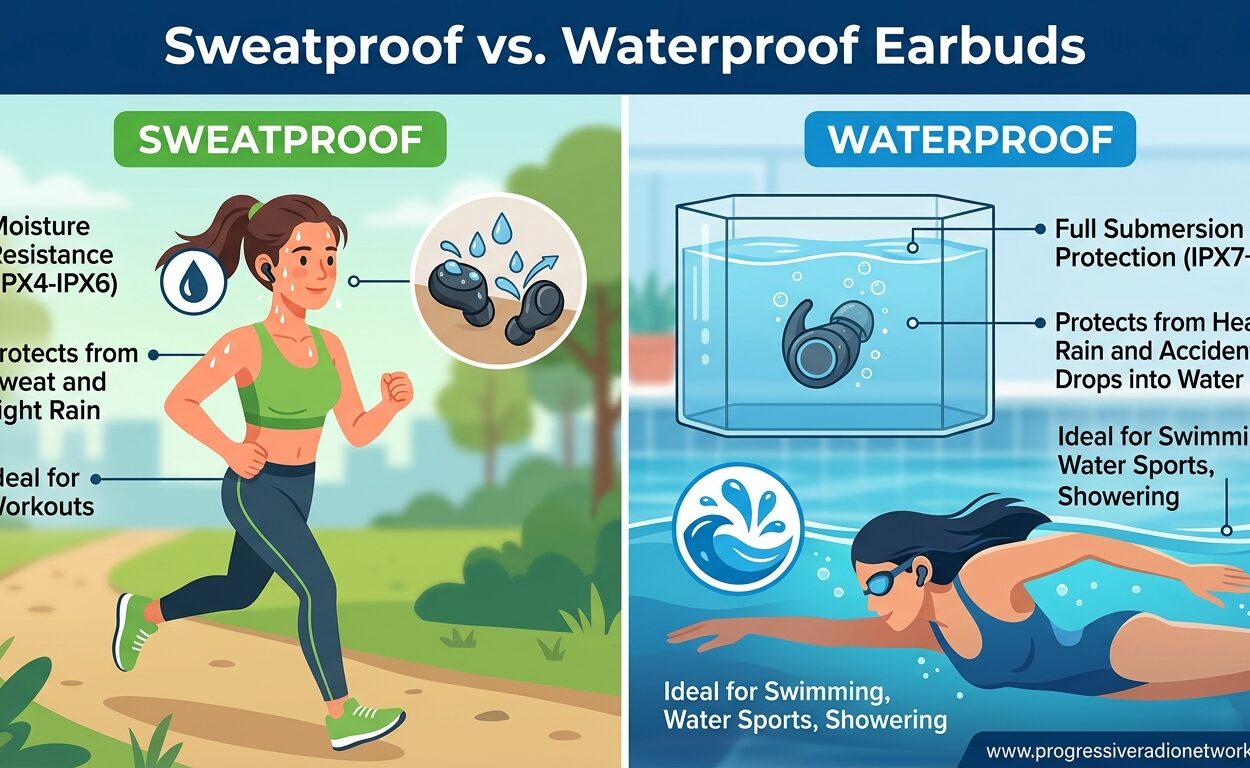
The terms sweatproof and waterproof get used interchangeably, but they mean completely different things. Sweatproof refers to IPX4 protection against splashes and sweat. Waterproof requires IPX7 or higher for actual submersion.
Sweatproof sweatproof headphones handle moisture on the surface but cannot survive being submerged. The gaskets and seals resist splashing liquid but will eventually let water in under sustained pressure. IPX4 earbuds are perfect for workouts but should never go in the pool.
Waterproof earbuds can handle full submersion and direct water pressure. IPX7 and IPX8 ratings indicate true waterproofing for swimming and showering. The internal components remain dry even when the exterior is fully wet.
Marketing language often confuses this distinction. Brands may call IPX4 earbuds waterproof when they only resist splashes. Always check the actual IPX rating number rather than trusting vague waterproof claims.
Dust Protection Ratings: What the First Digit Means
Complete IP ratings include two digits like IP57 or IP68. The first digit indicates dust protection on a 0-6 scale. Understanding this helps when comparing full protection ratings.
IP5X: Dust Protected
IP5X allows limited dust ingress but not enough to interfere with operation. Dust may enter the enclosure but cannot damage the electronics. This level provides good protection for outdoor and construction environments.
IP6X: Dust Tight
IP6X means complete protection against dust ingress. No dust enters the enclosure during testing. This rating pairs with IPX7 or IPX8 for fully rugged earbuds suitable for extreme environments.
Earbuds with complete IP ratings like IP57 offer both dust and water protection. The first number (5) indicates dust protection while the second (7) shows water resistance. These full ratings matter more for outdoor athletes and construction workers.
How IP Testing Actually Works
IP testing occurs in controlled laboratories under strict IEC 60529 specifications. Each rating requires passing specific tests with precise parameters. Understanding the testing helps explain why ratings matter.
For IPX4 testing, technicians mount the earbuds on a turntable and spray water from oscillating tubes for 10 minutes. The spray covers all angles while the device rotates. After testing, inspectors examine the interior for water ingress.
IPX7 testing uses a submersion tank with still water at specified depths. Technicians submerge the earbuds for 30 minutes at 1 meter depth. They then check for water inside the enclosure and test functionality.
IPX8 testing extends these parameters with deeper water and longer durations. The manufacturer specifies their tested limits, which must exceed IPX7 minimums. Some brands test to 3 meters for 60 minutes or more.
IP Ratings for Every Activity: A Practical Guide
Your activity level determines the minimum IP rating you need. I have compiled recommendations based on real-world testing and user experiences from gym enthusiasts to competitive swimmers.
Gym Workouts: IPX4 Minimum
For gym use, IPX4 provides sufficient protection against sweat and light splashes. Most users find IPX4 gym headphones last years with proper care. My Bose QuietComfort earbuds survived 3 years of daily gym use with IPX4 protection.
If you sweat heavily or do hot yoga, consider IPX5 for extra safety. The higher rating handles moisture saturation better during intense sessions. However, IPX4 remains adequate for most gym environments.
Running and Outdoor Sports: IPX4 to IPX5
Running in normal conditions requires only IPX4 for sweat and light rain protection. If you run in heavy rain or wet climates, upgrade to IPX5. Ski headphones and winter sports gear benefit from IP5X dust protection as well.
Showering: IPX5 Minimum, IPX7 Recommended
Shower use demands at least IPX5 to handle direct water spray safely. IPX7 provides complete peace of mind with submersion protection. I recommend IPX7 or higher if you plan regular shower use.
Be aware that soap and shampoo can degrade seals over time. The chemicals may break down rubber gaskets faster than pure water. Rinse your earbuds with clean water after shower use to extend their life.
Swimming: IPX7+ with Important Caveats
Swimming requires IPX7 minimum, but IPX8 provides better protection for serious swimmers. Water pressure increases with depth, so IPX8 with 3-meter rating handles lap swimming better than basic IPX7.
Here is the critical issue most people miss: Bluetooth does not work well underwater. Water blocks the 2.4GHz frequency that Bluetooth uses. Your water-resistant wireless earbuds may disconnect when your head submerges.
For swimming, consider bone conduction headphones with built-in MP3 storage. Open wireless earbuds like the Shokz OpenSwim provide waterproofing plus onboard music storage. These work underwater because they do not rely on Bluetooth connectivity.
Saltwater and Chlorine Warnings
IPX ratings test with fresh water only. Saltwater and chlorine can damage earbuds even with high IP ratings. The corrosive nature of these liquids degrades seals and coatings over time.
Always rinse IPX7 and IPX8 earbuds with fresh water after ocean or pool exposure. Dry them thoroughly before charging. The extra maintenance prevents long-term damage that IP ratings cannot prevent.
The Hidden Truth: IP Ratings Degrade Over Time
IPX ratings apply to brand new products in perfect condition. Over time, seals degrade and protection diminishes. This reality surprises many users when their 2-year-old earbuds fail in water.
Rubber gaskets compress and lose elasticity with age and temperature changes. Physical drops and impacts can create micro-cracks in seals. Even normal use slowly wears down protective coatings.
I recommend treating earbuds as one rating lower after 12-18 months of heavy use. IPX7 earbuds after 2 years should be considered IPX5 for safety. Regular inspection of charging port covers and seals helps maintain protection.
Store earbuds in a dry case when not in use. Avoid extreme temperatures that accelerate seal degradation. With proper care, your earbuds will maintain their rated protection longer.
Why Bluetooth Does Not Work Underwater (Even with IPX8)
This technical limitation confuses many swimmers who buy IPX8 earbuds expecting seamless underwater audio. Bluetooth uses 2.4GHz radio waves that water absorbs and blocks effectively. Your head acts as a barrier when submerged.
IPX8 earbuds work perfectly above water and reconnect instantly when you surface. However, music cuts out during underwater portions of your stroke. This limitation has nothing to do with the IP rating quality.
Swimmers have two options: bone conduction headphones with onboard storage or accepting intermittent connectivity. Some brands offer special swimming modes that buffer music to reduce interruptions. These workarounds help but do not solve the physics limitation.
Quick Reference Cheat Sheet
IPX0-IPX3: No meaningful water protection for active use. Avoid moisture exposure.
IPX4: Sweatproof and splash-resistant. Perfect for gym workouts and light rain. Not for submersion.
IPX5-IPX6: Water jet resistant. Handles heavy rain and shower spray. Limited submersion protection.
IPX7: Waterproof to 1 meter for 30 minutes. Safe for swimming pools and showers. Good for casual water exposure.
IPX8: Waterproof beyond 1 meter depth. The rating for serious swimmers. Check specific depth ratings.
Activity Recommendations: Gym use needs IPX4 minimum. Running in rain needs IPX4-IPX5. Showering safely requires IPX5+. Swimming requires IPX7+ with caveats about Bluetooth connectivity.
Frequently Asked Questions
Which is better IPX5 or IPX6?
IPX6 is better than IPX5. IPX5 protects against water jets from a 6.3mm nozzle at 12.5 liters per minute. IPX6 withstands more powerful jets from a 12.5mm nozzle at 100 liters per minute. Both handle heavy rain and spray, but IPX6 offers more protection against high-pressure water exposure.
Is IPX8 or IP68 better?
IP68 is better than IPX8. IP68 includes dust protection (the 6) plus the same water protection as IPX8. IPX8 only certifies water resistance without dust testing. For complete protection in dusty or sandy environments, choose IP68 over IPX8.
Can I swim with an IPX5 device?
No, you cannot safely swim with IPX5 earbuds. IPX5 only handles water jets and spray from any direction. It does not provide submersion protection. For swimming, you need IPX7 minimum, which guarantees 1-meter submersion protection for 30 minutes.
Is IPX4 or IPX7 better?
IPX7 is better for water submersion, but which is better depends on your use case. IPX4 is sweatproof and handles splashes from any direction, making it ideal for gym use. IPX7 is truly waterproof and handles submersion up to 1 meter, making it necessary for swimming. For workouts, IPX4 is sufficient. For swimming, IPX7 is required.
Is IPX4 enough for showering?
IPX4 is not recommended for showering. While it handles splashes, shower water comes with pressure and sustained exposure that exceeds IPX4 protection. For shower use, choose IPX5 minimum or IPX7 for complete safety. IPX4 earbuds may survive occasional shower exposure but risk damage over time.
Is IPX4 ok in heavy rain?
IPX4 can handle light to moderate rain but may struggle in heavy downpours. The rating protects against splashing water from any direction, but heavy rain creates more water volume than IPX4 testing simulates. For frequent use in heavy rain, consider upgrading to IPX5 or IPX6 for better protection.
Can I take a shower with IPX7?
Yes, IPX7 earbuds are safe for showering. IPX7 guarantees protection against submersion in 1 meter of water for 30 minutes. Shower water pressure and duration fall well within these limits. IPX7 provides complete peace of mind for regular shower use. Just remember to rinse off soap residue afterward to preserve the seals.
Conclusion
Understanding IPX ratings explained properly saves money and prevents the frustration of water-damaged earbuds. The key takeaway is simple: IPX4 handles sweat and splashes for gym use, while IPX7+ enables swimming and showering.
Match your IPX rating to your actual activities. Most gym-goers only need IPX4 sweatproof protection. Swimmers need IPX7 or IPX8 with awareness that Bluetooth fails underwater. Everyone should remember that IP ratings degrade over time and saltwater requires extra care.
Armed with this knowledge, you can shop confidently in 2026 and avoid marketing hype. Check the actual IPX number, understand what it means for your lifestyle, and choose earbuds that truly match your water exposure needs.

Leave a Comment