
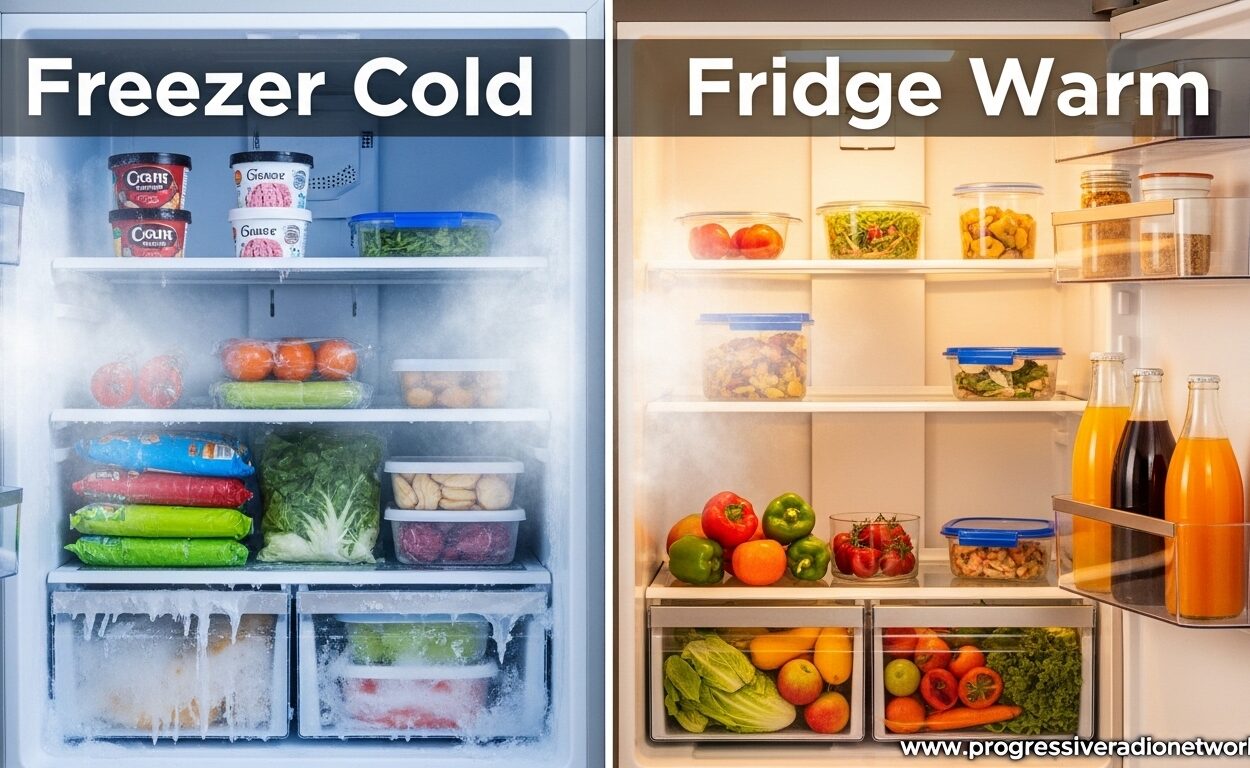
When you open your refrigerator and find warm food while the freezer is working perfectly, it’s frustrating and confusing. This Freezer Cold Fridge Warm problem is one of the most common refrigerator issues homeowners face. The good news is that most causes are related to airflow problems rather than expensive compressor failures.
Your refrigerator and freezer share a single cooling system. Cold air is generated in the freezer section and then circulated into the fresh food compartment. When something disrupts this airflow, your freezer stays cold while your refrigerator warms up. Understanding this basic principle makes troubleshooting much easier.
I’ve seen this issue hundreds of times, and in about 80% of cases, it’s a problem you can diagnose yourself without calling a technician. Let me walk you through exactly what’s happening and how to fix it.
Freezer Cold Fridge Warm: Understanding How Airflow Works
Most modern refrigerators use a single cooling system that serves both compartments. The evaporator coils located in the freezer section remove heat from the interior, creating cold air. A fan then blows this cold air through a damper door into the refrigerator section.
This system relies on proper air circulation to maintain the correct temperature in both compartments. The freezer typically stays around 0°F while the refrigerator should be between 35-38°F. When this airflow is restricted or the fan fails, cold air gets trapped in the freezer while the fresh food section warms up.
Think of it like your home’s HVAC system. If the vents to a room are closed or the fan stops working, that room won’t get conditioned air even though the air conditioner is running perfectly. Your refrigerator works on the same principle.
Blocked Air Vents Are the Most Common Cause
The number one reason for a warm refrigerator with a cold freezer is simple blocked air vents. Most people don’t realize that placing items directly in front of these vents can completely stop cold air from reaching the fresh food section.
Your refrigerator has air vents, usually located on the back wall of the fresh food compartment. These vents deliver cold air from the freezer. When they’re blocked by large containers, leftovers, or packaging, the air can’t circulate properly.
How to check your vents:
- Locate the air vent on the back wall of your refrigerator
- Check if any items are directly in front of or touching the vent
- Remove any obstructions and leave at least 2 inches of clearance
- Wait 2-4 hours and check if temperatures improve
This simple fix resolves about 40% of all Freezer Cold Fridge Warm cases I encounter. It costs nothing and takes just minutes to check.
Evaporator Fan Not Working
The evaporator fan is responsible for circulating cold air from the freezer into the refrigerator compartment. When this fan fails, cold air remains trapped in the freezer while the fresh food section warms up.
A failing evaporator fan motor often makes noise before it stops completely. You might hear squealing, chirping, or grinding sounds coming from the freezer area. These sounds indicate the fan bearings are wearing out.
How to test your evaporator fan:
- Open the freezer door and locate the fan (usually behind a panel at the back)
- Listen for the fan running when the compressor is on
- Press the door switch to see if the fan starts
- If you hear the compressor but not the fan, the fan motor may have failed
Replacing an evaporator fan motor typically costs between $100-250 if you hire a professional, or $30-80 if you’re comfortable with DIY repair. This is one of the more affordable refrigerator repairs.
Iced Evaporator Coil Problems
When frost builds up on the evaporator coils, it blocks airflow just like a blocked vent would. This happens when your refrigerator’s automatic defrost system fails. The defrost system should melt frost buildup every 8-12 hours, but when components fail, ice accumulates until airflow is completely restricted.
The defrost system consists of three main parts: the defrost heater, defrost thermostat, and defrost timer or control board. Failure of any of these components causes ice buildup.
Signs of iced evaporator coils:
- Thick frost or ice visible on the back wall of the freezer
- Temperature gradually getting worse over days or weeks
- Freezer temperature might also start rising eventually
- Water leaks onto the floor when the unit tries to defrost
A quick temporary fix is to unplug your refrigerator for 24 hours with the doors open to manually defrost the coils. This often restores normal operation for weeks or months, giving you time to schedule proper repairs.
Stuck Damper Door
The damper door controls how much cold air flows from the freezer into the refrigerator. It opens and closes based on temperature settings to maintain the desired temperature in the fresh food compartment.
When the damper door becomes stuck closed, no cold air can enter the refrigerator section. This causes your fresh food to warm up while the freezer continues working normally. The damper can become stuck due to ice buildup, mechanical failure, or electrical issues with the damper control.
Damper door failure symptoms:
- Freezer temperature is normal or too cold
- Refrigerator temperature won’t go below 45-50°F
- Adjusting the temperature control has no effect
- You might hear the damper trying to open but failing
Damper repairs typically cost $150-300 for professional service. On some models, the damper is accessible from inside the fresh food section, while on others it requires removing panels.
Door Seal and Gasket Issues
While less common as a primary cause of Freezer Cold Fridge Warm problems, damaged door seals can contribute to temperature issues. When the refrigerator door gasket doesn’t seal properly, warm air enters the compartment constantly.
This forces your refrigerator to work harder and can overwhelm the cooling system’s ability to maintain proper temperatures. Over time, this constant warm air infiltration can cause the fresh food section to warm up even while the freezer stays cold.
How to test your door seal:
- Close the door on a dollar bill
- Pull the bill out – you should feel resistance
- Test around the entire door perimeter
- If the bill slides out easily anywhere, your seal needs replacement
Replacing a door gasket costs $20-60 for the part and is typically a DIY-friendly repair that takes about 30 minutes.
DIY Troubleshooting Checklist
Before calling a professional, work through this homeowner-safe checklist. These steps will either solve your problem or give you valuable information to share with a technician.
Step 1: Check Air Vents
Ensure no items are blocking air vents in either compartment. Rearrange items to provide at least 2 inches of clearance around all vents.
Step 2: Verify Temperature Settings
Check that both freezer and refrigerator controls are set to recommended settings (freezer at 0°F, refrigerator at 37°F). Sometimes accidental adjustments cause the problem.
Step 3: Test the Door Seals
Use the dollar bill test described above to verify both doors seal properly. Replace damaged gaskets as needed.
Step 4: Listen for the Evaporator Fan
With the freezer door open, press the door switch and listen for the fan. No sound when the compressor is running indicates a fan problem.
Step 5: Check for Ice Buildup
Look through vents or panels in the freezer for excessive frost on the evaporator coils. Heavy ice indicates a defrost system problem.
Step 6: Try a Manual Defrost
Unplug the unit for 24 hours with doors open to completely defrost. Plug back in and monitor temperatures for 24-48 hours.
Step 7: Monitor and Document
If the problem persists after these steps, document temperatures in both compartments twice daily. This information is invaluable for a technician.
When to Call a Professional
Some refrigerator problems require professional diagnosis and repair. If you’ve worked through the troubleshooting checklist without success, it’s time to call an appliance repair technician.
Situations that require professional service:
- Sealed system problems (refrigerant leaks, compressor failure)
- Electrical control board issues
- Complex damper assembly replacements
- Any repair requiring specialized tools or refrigerant handling
Professional refrigerator repairs typically cost $200-400 depending on the problem. For units over 10 years old, consider whether repair costs exceed 50% of a new refrigerator’s cost – if so, replacement might be more economical.
Red flags indicating serious problems:
- Compressor runs constantly but temperatures don’t improve
- Loud clicking or buzzing from the back of the refrigerator
- Oil spots visible on the floor near the unit (refrigerant leak)
- Multiple components failing simultaneously
Frequently Asked Questions
Why is my freezer cold and my refrigerator warm?
The most common cause is blocked air vents preventing cold air from circulating from the freezer to the refrigerator. Other frequent causes include a failed evaporator fan, iced evaporator coils due to defrost system failure, or a stuck damper door that won’t open to allow cold air flow.
What are the signs of a dying refrigerator?
Common signs include: food spoiling faster than usual, the compressor running constantly without cycling off, unusual noises (clicking, buzzing, squealing), frost buildup in unexpected places, inconsistent temperatures, and increased energy bills. If your refrigerator is over 10-12 years old and experiencing multiple issues, replacement may be more cost-effective than repair.
Why is it colder in my freezer and warmer in the fridge?
This happens because most refrigerators produce cold air in the freezer section first, then circulate it to the fresh food compartment. When airflow is blocked or the fan that moves air isn’t working, cold air stays trapped in the freezer while the refrigerator warms up. The cooling system itself may be working perfectly, but the air distribution has failed.
How do I reset a refrigerator compressor?
To reset your refrigerator: 1) Unplug the unit from power for 5-10 minutes. 2) Locate the compressor and wait 5 minutes after plugging back in before it starts. 3) Some models have a reset button near the temperature controls. Note that compressor resets rarely solve airflow problems – they’re more useful for electrical glitches or after power surges.
Can I fix a warm fridge myself?
Yes, about 80% of Freezer Cold Fridge Warm problems are DIY-fixable. Start by checking for blocked air vents, testing door seals, and verifying temperature settings. You can also try a manual 24-hour defrost to clear ice buildup. However, sealed system repairs (compressor, refrigerant) and complex electrical work should be left to professionals.
How much does it cost to fix freezer cold but fridge warm?
Simple fixes like clearing vents cost nothing. Evaporator fan replacement costs $100-250 professionally. Damper repairs run $150-300. Defrost system repairs typically cost $200-350. Sealed system repairs (compressor, refrigerant) cost $400-700 and may not be worth it for units over 10 years old. Always get a quote before authorizing repairs.
Prevention Tips to Avoid Future Issues
Once you’ve resolved your Freezer Cold Fridge Warm problem, these simple maintenance habits can prevent recurrence:
- Keep vents clear: Never place items directly in front of air vents. Organize your refrigerator to maintain proper airflow throughout.
- Clean condenser coils: Vacuum dust from coils annually (or biannually if you have pets). Dirty coils force your refrigerator to work harder.
- Check door seals: Inspect gaskets monthly for cracks or tears. Clean them with warm soapy water to maintain a good seal.
- Don’t overfill: Overpacking either compartment restricts airflow. Aim for 70-75% full maximum for optimal circulation.
- Monitor temperatures: Keep a thermometer in both compartments. Early detection of temperature changes makes diagnosis easier.
Brand-Specific Notes
Some refrigerator brands have common issues that cause Freezer Cold Fridge Warm problems:
Whirlpool/KitchenAid/Maytag: Evaporator fan motor failure is common in units 5-8 years old. The fan is relatively accessible and affordable to replace.
Samsung: Ice maker leaks can drip onto the damper assembly and freeze it shut. If you have a Samsung with ice maker issues, check the damper for ice buildup.
LG: Linear compressor issues are different from standard compressor problems. These units can have unique cooling patterns when failing. LG units over 7 years old with cooling issues may need compressor replacement.
GE: Damper control failures are common in GE French door and side-by-side models. The electronic damper can fail closed, blocking all airflow to the fresh food section.
Conclusion
Dealing with Freezer Cold Fridge Warm problems is frustrating, but most cases have straightforward solutions. Start with the simple checks – clear those air vents, test your door seals, and verify temperature settings. These basic steps resolve nearly half of all cases.
If simple fixes don’t work, listen for your evaporator fan and check for ice buildup on the coils. These two issues account for another 30% of cases. The manual defrost technique can buy you time and help diagnose defrost system problems.
Remember that sealed system repairs (compressor and refrigerant issues) are expensive and may not be worth it for older units. Get a detailed quote before authorizing any major repair, and consider replacement if your refrigerator is over 10 years old.
By working through this troubleshooting guide systematically, you’ll either solve the problem yourself or gather the information a technician needs to diagnose and fix your Freezer Cold Fridge Warm issue quickly and affordably.


Leave a Comment