
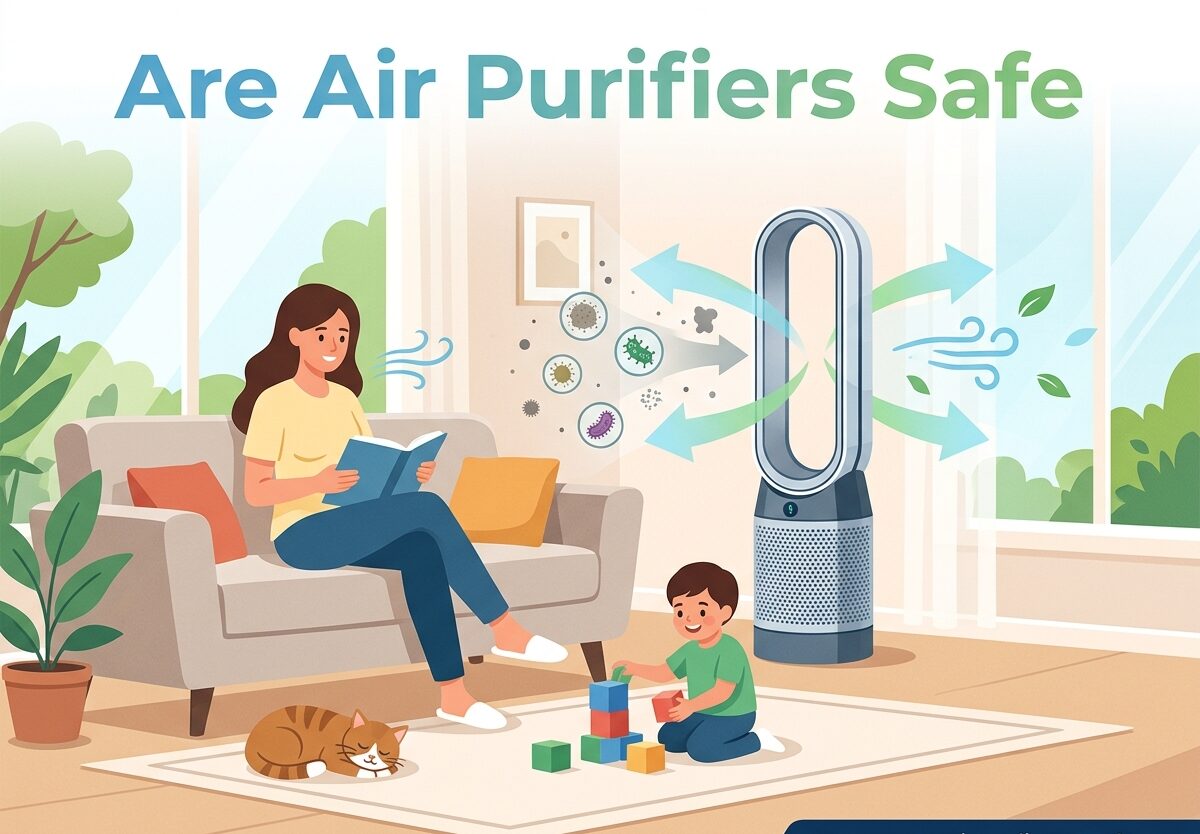
Indoor air quality affects our health more than most people realize. We spend about 90% of our time indoors, where pollutant levels can be 2-5 times higher than outdoor air. This raises an important question many homeowners ask: are air purifiers safe to use in our living spaces?
The short answer is yes – most air purifiers are completely safe when you choose the right technology. However, not all air cleaning devices are created equal. Some types can actually introduce harmful substances into your home while trying to clean the air. Understanding the difference between safe and unsafe technologies is essential for protecting your family’s health.
I’ve researched air purifier safety extensively, examining data from government health agencies, medical studies, and real user experiences. Here’s what you need to know about using air purifiers safely in your home.
Are Air Purifiers Safe
Yes, air purifiers using mechanical filtration (particularly HEPA filters) are generally safe for continuous use in homes. These devices work by pulling air through a fine mesh that traps particles without releasing anything harmful back into your room. The Environmental Protection Agency and California Air Resources Board both confirm that HEPA-based air purifiers pose no health risks when properly maintained.
The safety of your air purifier depends entirely on the technology it uses:
- HEPA filtration – Completely safe, traps 99.97% of particles as small as 0.3 microns
- Activated carbon – Safe, effectively removes odors and volatile organic compounds
- UV-C light – Generally safe when properly contained, kills bacteria and viruses
- Ozone generators – NOT safe, produce harmful ozone that irritates lungs
- Ionizers – Potentially unsafe, may produce trace ozone and particles
Look for air purifiers certified by the California Air Resources Board (CARB). This certification ensures the device meets strict ozone emission standards and is safe for residential use. CARB maintains a list of certified air cleaning devices that have been tested and verified as safe.
How Air Purifiers Work
Air purifiers work by circulating room air through a series of filters that capture pollutants. A fan draws in air from the room, passes it through filter materials that trap particles, and then releases clean air back into the space. This continuous cycle gradually reduces the concentration of airborne contaminants.
The effectiveness depends on several factors. The Clean Air Delivery Rate (CADR) measures how much clean air the device produces. Higher CADR numbers mean faster air cleaning. The Filter Capacity Metric (CCM) indicates how much pollution the filter can capture before needing replacement. Room size ratings help you choose a purifier powerful enough for your space.
Most air purifiers complete this air exchange cycle 3-5 times per hour in a properly sized room. This frequent turnover is what makes them effective at maintaining clean air throughout the day and night.
Safe Air Cleaning Technologies
HEPA Filtration
HEPA (High Efficiency Particulate Air) filters are the gold standard for safe air purification. Originally developed for nuclear facilities and hospitals, HEPA filters capture particles using a dense mat of fibers. Air passes through easily, but particles get trapped through a combination of interception, impaction, and diffusion.
True HEPA filters must capture 99.97% of particles 0.3 microns in size. This includes dust, pollen, pet dander, mold spores, and bacteria. HEPA filtration produces no byproducts and releases nothing into the air – it simply traps particles and holds them until you replace the filter.
Some premium models use medical-grade H13 or H14 HEPA, which are even more efficient at capturing ultrafine particles. These filters are completely safe and are the same technology used in clean rooms and hospital isolation wards.
Activated Carbon
Activated carbon filters use a form of carbon processed to have small, low-volume pores that increase surface area for adsorption. These filters excel at removing gases, odors, and volatile organic compounds (VOCs) that HEPA filters can’t catch.
Carbon filters work through a process called adsorption, where chemical molecules stick to the carbon surface. They’re particularly effective against cooking smells, paint fumes, tobacco smoke, and household chemicals. The carbon itself is completely safe and inert – it’s essentially the same material used in water filters and aquarium filters.
Activated carbon filters need replacement more frequently than HEPA filters, typically every 3-6 months depending on usage and pollution levels. When saturated, they simply stop adsorbing odors rather than releasing anything harmful.
Pre-Filters
Pre-filters capture larger particles like hair and dust before they reach the main HEPA filter. This extends the life of your more expensive filters and improves overall efficiency. Pre-filters are usually washable foam or mesh screens that require monthly cleaning.
These filters are completely safe and help your air purifier work more efficiently. By catching larger debris first, they prevent the HEPA filter from clogging prematurely, which maintains optimal airflow and filtration performance.
Technologies to Avoid
Ozone Generators
Ozone generators are devices intentionally designed to produce ozone, a molecule composed of three oxygen atoms. While manufacturers claim ozone “purifies” air by killing mold and bacteria, health agencies strongly warn against using these devices in occupied spaces.
Ozone is a lung irritant that can cause coughing, chest pain, and throat irritation. The EPA states that ozone can worsen asthma, compromise the body’s ability to fight respiratory infections, and may cause permanent lung damage with prolonged exposure. Children, elderly people, and those with respiratory conditions are particularly vulnerable.
The California Air Resources Board has banned the sale of ozone-generating air cleaners for residential use. Despite manufacturer claims, no safe level of ozone exposure has been established for indoor environments. Avoid any device marketed as an “ozone generator” or that claims to produce “activated oxygen.”
Ionizers and Ionic Air Purifiers
Ionic air purifiers work by charging particles in the air, causing them to stick to surfaces or collection plates. While they don’t use filters, they can produce small amounts of ozone as a byproduct – enough to cause concern for some health agencies.
Many ionizers produce trace ozone levels below regulatory limits, but the cumulative effect in small rooms isn’t well studied. Some users report that ionizers can make the air feel heavy or cause respiratory irritation. The charged particles also attach to walls and furniture, creating black residue that’s difficult to clean.
If you choose an ionizer, look for CARB certification which limits ozone emissions to safe levels. However, mechanical HEPA filtration remains the safer choice with no known drawbacks.
Electrostatic Precipitators
Electrostatic precipitators use an electrical charge to trap particles on collection plates. While they can be effective, some models generate ozone as a byproduct of the ionization process. The plates also require frequent cleaning to maintain efficiency.
Like ionizers, these devices may produce low levels of ozone. The EPA recommends avoiding any air cleaner that generates ozone, even in small amounts. The long-term health effects of continuous low-level ozone exposure aren’t fully understood, making mechanical filtration a safer choice.
Potential Risks and Downsides
Off-Gassing from New Units
Some users report noticing chemical smells when first running new air purifiers. This off-gassing typically comes from plastics, adhesives, and filter materials used in manufacturing. The smell usually dissipates within a few days to a week of use.
Forum users recommend running new purifiers on high in a well-ventilated area for 24-48 hours before using them in bedrooms. This allows any volatile compounds to off-gas more quickly. Choosing purifiers with minimal plastic components and medical-grade filtration can reduce this issue.
Some premium manufacturers use hospital-grade components that don’t off-gas. Reading user reviews can help identify models with minimal chemical odor issues.
Dry Air Effects
Air purifiers don’t remove moisture from the air, but the improved air circulation can make dry air feel more noticeable, especially in winter. Some users report increased dry throat or irritated eyes when running purifiers continuously.
If dry air becomes an issue, using a humidifier alongside your air purifier can maintain comfortable humidity levels. The two devices work well together – the humidifier adds moisture while the purifier removes particles, creating optimal indoor air quality.
Noise and Energy Considerations
Most air purifiers produce some fan noise, which can range from a whisper-quiet 25 decibels on low to 50+ decibels on high settings. For bedroom use, look for models with sleep modes that operate below 30 decibels – about the volume of a soft whisper.
Energy consumption varies widely. Modern ENERGY STAR certified purifiers use as little as 10-50 watts on low settings – similar to an LED light bulb. Running continuously for a month typically costs less than $5 in electricity. The health benefits generally outweigh this minimal cost for most users.
Filter Maintenance Costs
HEPA filters typically need replacement every 6-12 months, with carbon filters requiring more frequent changes. Annual filter costs range from $50-200 depending on the model and usage. These ongoing expenses are the main downside of mechanical filtration systems.
Some users wonder if filter maintenance affects air quality. A dirty filter simply becomes less efficient rather than releasing captured particles – most HEPA filters actually become more effective at trapping particles as they load, though airflow decreases. Using your purifier’s filter change indicator ensures optimal performance.
Are Air Purifiers Safe for Overnight Use
Yes, HEPA-based air purifiers are completely safe for overnight use and can actually improve sleep quality. Many users report better sleep with reduced allergy symptoms and less congestion when running a purifier in their bedroom.
For overnight use, choose a model with a dedicated sleep mode. These modes typically operate at the lowest fan speed, minimize indicator lights, and maintain quiet operation below 30 decibels. Some models have air quality sensors that automatically adjust fan speed based on pollutant levels.
Place the purifier at least 6 inches from walls and furniture to ensure proper airflow. Avoid placing it directly next to your bed where the airflow might be bothersome. A corner of the room on a nightstand or floor typically works well.
Benefits of overnight use include reduced exposure to allergens while you sleep, consistent air quality throughout the night, and waking up with fewer congestion symptoms. Many allergy sufferers find overnight use makes the biggest difference in their daily symptoms.
Air Purifiers for Specific Health Needs
Allergy and Asthma Relief
For the 50 million Americans with allergies and 25 million with asthma, air purifiers can provide significant relief. HEPA filters remove common triggers like pollen, pet dander, dust mites, and mold spores that cause allergic reactions and asthma attacks.
Clinical studies show that HEPA air purifiers reduce asthma symptoms and rescue inhaler use in children. The American Lung Association recommends air purifiers as part of a comprehensive asthma management plan. Consistent use is key – running the purifier continuously keeps allergen levels low throughout the day.
For optimal allergy relief, place purifiers in bedrooms and main living areas. Keep windows closed during high pollen seasons and run the purifier continuously to maintain filtered air. Vacuuming with a HEPA vacuum and using allergen-proof bedding enhances the purifier’s effectiveness.
COPD and Respiratory Conditions
People with COPD and other respiratory conditions benefit from cleaner air that reduces irritation to sensitive lungs. Air purifiers remove particles that can trigger exacerbations and worsening symptoms.
While air purifiers can’t cure respiratory conditions, they create a healthier environment that may reduce symptom severity. Many COPD patients report fewer coughing fits and easier breathing when using air purifiers consistently.
For respiratory conditions, focus on removing particles rather than just odors. A HEPA filter is essential – activated carbon helps but should be secondary. Place the purifier in the room where you spend the most time, typically the living room or bedroom.
Immunocompromised Individuals
People undergoing chemotherapy, organ transplant recipients, and those with immune disorders need protection from airborne pathogens. Medical-grade HEPA filtration (H13-H14) can capture bacteria, mold spores, and some viruses that pose serious risks to immunocompromised individuals.
Hospitals use HEPA filtration in isolation rooms and operating rooms for this exact reason. Home air purifiers with medical-grade filters provide similar protection, creating a safer environment for vulnerable individuals.
For maximum protection, run the purifier continuously and place it in the room where the immunocompromised person spends the most time. Regular filter replacement is critical – a clogged filter can’t capture pathogens effectively.
Baby and Nursery Safety
Parents often wonder about air purifier safety for babies and young children. The good news is that HEPA air purifiers are completely safe for nurseries and can protect developing lungs from airborne irritants.
Babies are more vulnerable to air pollution because they breathe faster relative to their size and their respiratory systems are still developing. Air purifiers remove common irritants that can affect infant breathing and sleep quality.
For nurseries, choose a whisper-quiet model with a sleep mode. Place the purifier away from the crib to avoid direct airflow on the baby. The white noise from the fan can actually help soothe some babies to sleep. Always choose models with no ozone generation and CARB certification.
Pet Safety Considerations
Are air purifiers safe for pets? Yes, HEPA air purifiers are completely safe for cats, dogs, and other pets. In fact, pets can benefit from cleaner air just as much as humans. Air purifiers are excellent at removing pet dander, which is a common allergen even for pet owners.
However, pet owners should avoid ozone-generating purifiers. Animals are often more sensitive to ozone than humans due to their smaller size and faster respiratory rates. Birds are especially vulnerable to ozone and other airborne toxins.
For homes with pets, choose a purifier with a washable pre-filter to catch pet hair before it reaches the HEPA filter. This extends filter life and maintains efficiency. Activated carbon helps control pet odors, keeping your home smelling fresh.
Some pet owners worry about their pets being near the air purifier. The intake and outlet grills are designed to prevent paws and noses from contacting the fan. Still, it’s wise to place the purifier where pets can’t knock it over or block the airflow.
Maintenance and Placement Tips
Filter Replacement Schedule
Following the manufacturer’s filter replacement schedule is crucial for maintaining both safety and performance. A clogged HEPA filter reduces airflow and allows particles to pass through. A saturated carbon filter stops removing odors and VOCs.
Most HEPA filters last 6-12 months depending on air quality and usage. Carbon filters typically need replacement every 3-6 months. Pre-filters should be cleaned monthly. Set calendar reminders or use the purifier’s filter change indicator to stay on schedule.
Always use genuine replacement filters from the manufacturer. Third-party filters may not fit properly and could allow unfiltered air to bypass the filtration media. Proper sealing is essential for effective filtration.
Proper Placement
Where you place your air purifier affects its performance significantly. For optimal airflow, position the unit at least 6-12 inches from walls and furniture. Don’t place it behind furniture or in corners where airflow is restricted.
Purifiers work best in the room where you spend the most time. For allergy relief, the bedroom is most important since you spend 7-8 hours there each night. Place the purifier near your bed but not directly facing you to avoid drafts.
Avoid placing purifiers near sources of pollutants like kitchens or smoking areas. While they can filter this air, they’ll work more efficiently cleaning already relatively clean air. For multi-story homes, consider separate purifiers for each floor.
Cleaning and Care
Regular cleaning keeps your air purifier working efficiently. Wipe the exterior with a damp cloth weekly to remove dust. Clean the air intake and outlet grills monthly using a vacuum with a soft brush attachment.
For washable pre-filters, rinse with water monthly and allow to air completely before reinstalling. Never run the purifier with a wet pre-filter as this can damage the motor or promote mold growth.
Check the filter housing monthly for dust buildup around the seals. If you notice dust escaping around the filter edges, check that the filter is properly seated and the gaskets are intact. Any gaps in the filter seal allow unfiltered air to pass through.
FAQs
Is there a downside to air purifiers?
The main downsides are ongoing filter replacement costs ($50-200 annually), minor noise from fans, and potential dry air effects. Some new units may off-gas chemical smells initially. These drawbacks are minimal compared to the benefits of cleaner air. Ozone-generating purifiers pose serious health risks and should be avoided entirely.
Is it safe to be in a room with an air purifier?
Yes, rooms with HEPA air purifiers are completely safe for continuous occupancy. These devices clean air without releasing harmful substances. In fact, they make rooms safer by removing pollutants that cause health issues. Ensure your purifier uses mechanical filtration (HEPA) rather than ozone generation for complete safety.
Would an air purifier help my COPD?
Air purifiers can help COPD patients by removing airborne particles that irritate sensitive lungs and trigger exacerbations. HEPA filtration reduces dust, allergens, and pollutants that worsen COPD symptoms. While not a cure, cleaner air can reduce coughing and improve breathing comfort. Place the purifier where you spend most of your time and run it continuously for best results.
What is the best air purifier for chemo patients?
Chemo patients need medical-grade HEPA filtration (H13-H14) that captures bacteria, mold spores, and pathogens. Look for models with True HEPA or medical HEPA ratings, not HEPA-type filters. CARB certification ensures no ozone emissions. Continuous operation is essential for maintaining the cleanest environment. Consult your healthcare team about specific recommendations for your medical situation.
Conclusion
So, are air purifiers safe? Yes – when you choose the right technology. HEPA filtration with activated carbon is completely safe and effective for improving indoor air quality. These mechanical systems trap pollutants without releasing anything harmful into your home.
The key is avoiding ozone generators and being cautious with ionizers. Look for CARB certification, which ensures the device meets strict safety standards for ozone emissions. Follow the manufacturer’s maintenance schedule and replace filters as recommended for optimal performance.
For most people, the benefits of cleaner air outweigh the minor costs and considerations. Allergy sufferers, asthma patients, and anyone concerned about indoor air quality can breathe easier with a properly selected and maintained air purifier. After all, we take in about 11,000 liters of air each day – making sure that air is clean is one of the best investments you can make in your health.

Leave a Comment