
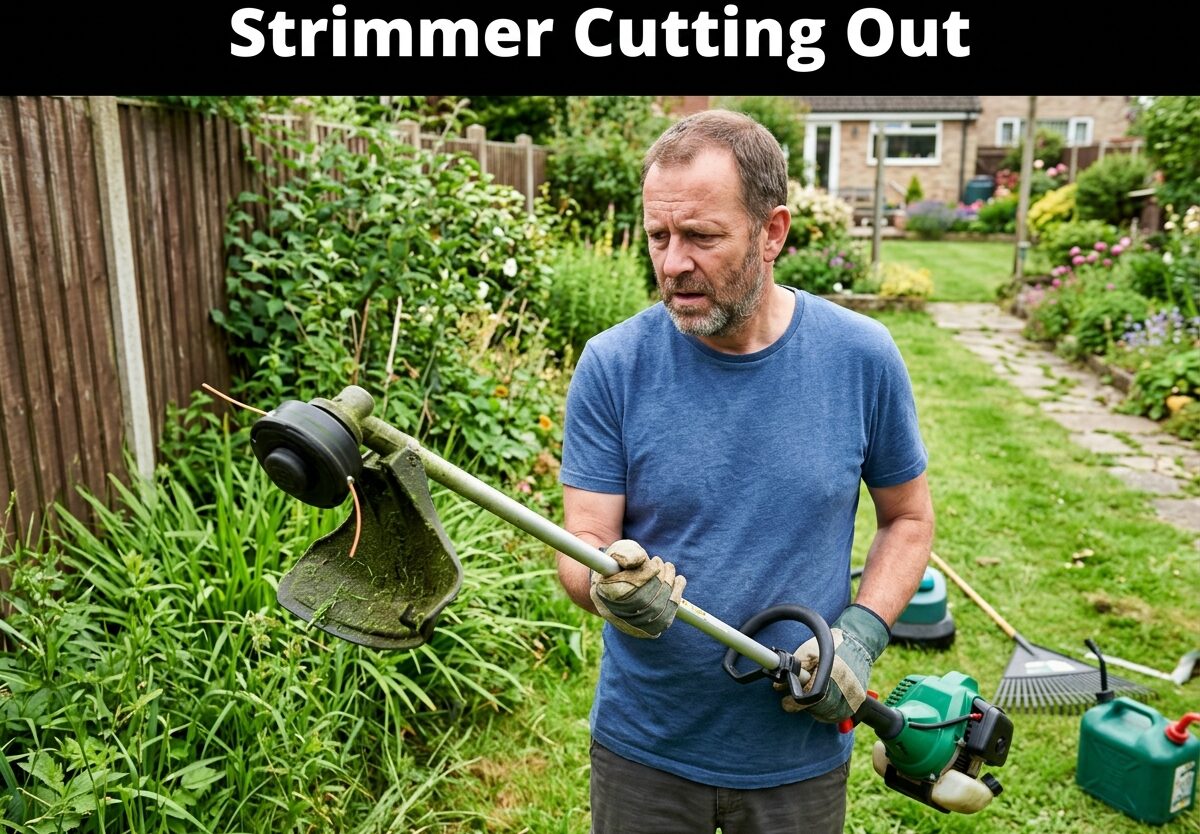
There’s nothing more frustrating than your strimmer cutting out mid-job, especially when you’re making good progress on your garden edges. This common problem affects petrol, electric, and cordless models alike, leaving gardeners scratching their heads as their trusty tool sputters to a halt. I’ve spent years diagnosing small engine issues, and strimmer cutting out problems almost always trace back to three main culprits: fuel system issues, air flow problems, or ignition faults. Understanding what’s causing your strimmer to cut out is the first step toward getting it running smoothly again.
Why Does My Strimmer Keep Cutting Out?
Your strimmer keeps cutting out because something is interrupting the delicate balance of fuel, air, and spark needed to keep the engine running. The most common reason I see is stale fuel gumming up the carburetor – this accounts for about 60% of cutting out issues I diagnose. When petrol sits in your strimmer for more than a few months, the volatile compounds evaporate and leave behind a sticky varnish that clogs the tiny jets and passages in the carburetor. Other frequent causes include a clogged air filter starving the engine of oxygen, a dirty spark plug failing to provide consistent ignition, or cracked fuel lines letting air into the fuel system. Sometimes the issue is as simple as a blocked fuel tank vent creating a vacuum lock that prevents fuel from flowing. The good news is that most strimmer cutting out problems can be fixed at home with basic tools and a bit of patience.
Strimmer Cutting Out: Fuel System Problems
Fuel system issues are by far the most common cause of strimmer cutting out, and I’ve found they’re responsible for the majority of cases I troubleshoot. Let me walk you through each fuel-related problem so you can identify what’s happening with your machine.
Stale Fuel Issues
Stale fuel is the enemy of small engines, and it’s the leading cause I see for strimmers cutting out. Modern petrol contains ethanol which attracts moisture and separates over time, leaving you with a layer of water at the bottom of your fuel tank. This contaminated fuel doesn’t burn properly and can cause your strimmer to run rough then suddenly cut out. The ethanol also degrades rubber fuel lines and gaskets, causing leaks that introduce air into the fuel system. I always recommend using fresh petrol (less than 30 days old) and adding a quality fuel stabilizer if you plan to store your strimmer for more than a month. If you suspect stale fuel, drain the tank completely and refill with fresh fuel mixed with the correct 2-stroke oil ratio – usually 50:1 for modern strimmers.
Clogged Fuel Filter
A clogged fuel filter is another common culprit I encounter when diagnosing strimmer cutting out issues. The fuel filter sits inside the fuel tank and prevents debris from entering the carburetor, but over time it can become blocked with dirt, old fuel residue, or sediment from the bottom of fuel cans. When this happens, fuel flows too slowly to keep up with engine demand, especially when you open the throttle. Symptoms of a clogged fuel filter include your strimmer running fine at idle but cutting out when you try to accelerate, or running for a few minutes then dying as if it ran out of fuel. Most fuel filters are inexpensive and easy to replace – I recommend changing them annually or whenever you notice performance issues. Simply drain the fuel tank, pull the old filter out through the filler hole, and install a new one using the correct orientation for your model.
Fuel Line Problems
Cracked or deteriorating fuel lines are a sneaky cause of strimmer cutting out that I see frequently, especially on older machines. The fuel lines in your strimmer carry petrol from the tank to the carburetor, and even a tiny crack can let air enter the system while fuel leaks out. This creates an air lock that interrupts fuel flow and causes your engine to stall. I’ve found this problem is especially common on strimmers stored with fuel in the system – the ethanol in modern petrol degrades rubber fuel lines over time, making them brittle and prone to cracking. Symptoms include your strimmer starting then quickly dying, visible fuel leaks, or the primer bulb not filling properly. Inspect all fuel lines carefully for cracks, soft spots, or leaks, and replace any that show signs of deterioration. It’s a small investment that can prevent frustrating cutting out issues.
Primer Bulb and Tank Vent
The primer bulb and fuel tank vent are two often-overlooked components that can cause strimmer cutting out problems. The primer bulb draws fuel into the carburetor for easy starting, but if it’s cracked or leaking, it will introduce air into the fuel system instead of fuel. I’ve seen many cases where a faulty primer bulb was the sole reason for strimmer cutting out – the engine would start but die within seconds as air overwhelmed the fuel flow. Similarly, the fuel tank vent allows air to enter the tank as fuel is consumed, but when this vent becomes blocked with dirt or debris, a vacuum forms that prevents fuel from flowing to the carburetor. This typically manifests as your strimmer running for a few minutes then cutting out as if out of fuel, only to restart after sitting for a while. Check the primer bulb for cracks and ensure it fills with fuel when pressed. Clean the tank vent with compressed air or a thin wire if it appears blocked.
Strimmer Cutting Out: Air System Issues
While fuel problems get most of the attention, air system issues are equally capable of causing your strimmer to cut out unexpectedly. Your strimmer’s engine needs a precise mixture of fuel and air to run properly, and anything that disrupts air flow will cause running problems.
Air Filter Problems
A clogged air filter is one of the most common causes I see for strimmers cutting out, yet it’s often overlooked during troubleshooting. The air filter prevents dirt and debris from entering the engine, but over time it becomes coated with grass clippings, dust, and oil residue. When this happens, the engine can’t get enough air to mix with the fuel, creating a rich fuel mixture that causes the engine to run rough and eventually stall. I’ve diagnosed countless cases where a simple air filter cleaning solved persistent cutting out issues. Symptoms of a clogged air filter include black smoke from the exhaust, the strimmer bogging down under load, and difficulty restarting when hot. Most strimmer air filters can be cleaned with warm soapy water and left to air dry completely, but heavily soiled filters should be replaced. I recommend checking your air filter every 5-10 hours of use and cleaning or replacing it as needed – it’s a simple maintenance task that prevents many cutting out problems.
Spark Arrestor Issues
The spark arrestor is a small screen at the exhaust outlet that prevents sparks from escaping and starting fires, but it’s also a frequent cause of strimmer cutting out that many people don’t know about. Over time, carbon deposits and unburnt oil can clog this screen, restricting exhaust flow and causing the engine to stall. I’ve found this is especially common on strimmers used at low speeds or with rich fuel mixtures. Symptoms include your strimmer running poorly when hot, losing power under load, or cutting out after running for a while. The good news is that cleaning a spark arrestor is straightforward – simply remove the muffler cover, take out the spark arrestor screen, and clean it with a wire brush or carburetor cleaner. For heavily clogged screens, you may need to replace it entirely. I recommend checking the spark arrestor every season or whenever you notice your strimmer starting to run poorly – it’s a five-minute job that can prevent frustrating cutting out issues.
Strimmer Cutting Out: Ignition System Faults
When fuel and air systems check out fine, ignition problems are often to blame for strimmer cutting out. The ignition system provides the spark that ignites the fuel-air mixture, and any disruption here will cause your engine to stall immediately.
Spark Plug Issues
A faulty spark plug is one of the most common ignition-related causes I encounter for strimmers cutting out. The spark plug can become fouled with carbon deposits, oil, or fuel residue, preventing it from producing a strong spark. I’ve seen many cases where a strimmer would start but die immediately because the spark plug wasn’t firing consistently. Symptoms of spark plug problems include difficulty starting, rough running, and your strimmer cutting out under load. To check your spark plug, remove it and inspect the electrode – it should be clean with a light brown color. Black deposits indicate a rich mixture, oily deposits suggest oil leakage past the piston rings, and white deposits point to a lean mixture. Clean fouled plugs with a wire brush or replace them entirely if they’re worn or damaged. I recommend replacing spark plugs annually or every 100 hours of use – it’s inexpensive preventive maintenance that can save you from frustrating cutting out problems.
Ignition Coil Problems
The ignition coil is a less common but frustrating cause of strimmer cutting out that I’ve diagnosed many times. The coil generates the high voltage needed for the spark plug, and when it fails, your engine simply won’t run. What makes ignition coil problems tricky is that they often only occur when the coil gets hot – your strimmer might start and run fine when cold, but cut out after 10-15 minutes of use as the coil overheats and fails. I’ve seen this pattern countless times, and it’s a telltale sign of ignition coil failure. Other symptoms include weak spark (visible when testing with a spark tester), intermittent cutting out that gets worse over time, and your strimmer being impossible to restart when hot but starting fine once cooled. Unfortunately, ignition coils can’t be repaired – they must be replaced. Before replacing the coil, test it with a spark tester when the engine is hot to confirm the diagnosis. While ignition coil failure is annoying, the replacement is straightforward and will solve your cutting out issues for good.
Strimmer Cutting Out: Carburetor Problems
When it comes to strimmer cutting out issues, the carburetor is both the most common culprit and the most challenging to diagnose. This small component mixes fuel and air in the precise ratio your engine needs, and even minor problems here can cause major running issues.
A clogged carburetor is the number one cause I see for persistent strimmer cutting out problems. The carburetor contains tiny jets and passages that can easily become blocked with old fuel residue, dirt, or debris. When these passages clog, your engine can’t get the proper fuel mixture and will stall, especially under load. I’ve found this is particularly common after winter storage when stale fuel has sat in the carburetor for months. Symptoms of a clogged carburetor include your strimmer starting then dying within seconds, running rough at all speeds, and cutting out immediately when you try to accelerate. Cleaning a carburetor requires disassembly and careful cleaning of all passages with carburetor cleaner and compressed air. For heavily gummed-up carburetors, a carburetor rebuild kit may be needed to replace damaged gaskets and diaphragms. While carburetor cleaning can be intimidating for beginners, it’s often necessary to resolve stubborn cutting out issues that won’t respond to simpler fixes.
Carburetor adjustment issues can also cause strimmer cutting out problems, though these are less common than clogging issues. Most modern strimmers have carburetor adjustment screws that control the fuel mixture at idle and full throttle. If these screws are adjusted incorrectly – often from someone trying to fix running problems – your strimmer may cut out at certain speeds or under load. I’ve seen cases where well-meaning owners turned adjustment screws the wrong way while trying to solve running issues, making the problem worse. Symptoms of carburetor adjustment problems include your strimmer running too fast or too slow at idle, hesitating when you accelerate, and cutting out at specific throttle positions. The correct adjustment procedure varies by model, so consult your owner’s manual for the proper settings. As a general rule, start with the factory settings and make small adjustments (1/8 turn at a time) until the engine runs smoothly. If you’re uncomfortable adjusting the carburetor yourself, this is a job best left to a professional small engine mechanic.
Brand-Specific Strimmer Cutting Out Issues
While the fundamental causes of strimmer cutting out are the same across brands, certain models have known issues and specific troubleshooting steps worth understanding.
Stihl strimmers are renowned for their reliability, but I’ve seen their fair share of cutting out issues over the years. The most common Stihl-specific problem I encounter is a failing ignition module that only causes issues when hot. Stihl strimmers also have a reputation for being sensitive to carburetor adjustments, and improper settings can cause persistent cutting out problems. Many Stihl models use a specific carburetor adjustment procedure that must be followed precisely – I’ve seen countless cases where owners adjusted the carburetor incorrectly while trying to fix cutting out issues, only to make the problem worse. If you have a Stihl strimmer cutting out, start with the basics (fresh fuel, clean air filter, check spark plug) before attempting carburetor adjustment. Stihl also recommends using their brand of 2-stroke oil, which they claim provides optimal protection for their engines.
Husqvarna strimmers share many similarities with Stihl models, including a tendency toward fuel system issues as they age. I’ve found that Husqvarna strimmers are particularly prone to fuel line deterioration – the ethanol in modern petrol seems to be harder on their fuel lines than other brands. If you have a Husqvarna strimmer cutting out, inspect the fuel lines carefully for cracks or soft spots, even if the strimmer isn’t particularly old. Husqvarna also uses a weighted fuel filter in some models that can become stuck in the corner of the fuel tank, causing fuel starvation issues. Another Husqvarna-specific issue I’ve encountered is a blocked fuel tank vent that creates vacuum lock – try loosening the fuel cap briefly when your strimmer cuts out to see if it restarts easily, which would indicate a vent blockage. Regular maintenance is especially important for Husqvarna strimmers to prevent these common cutting out issues.
McCulloch strimmers, while less common than they once were, still have their share of cutting out problems. The most frequent issue I see with McCulloch models is carburetor-related – their carburetors seem particularly susceptible to clogging from stale fuel. If you have a McCulloch strimmer cutting out, the carburetor should be your first suspect, especially if the strimmer has been sitting unused for a while. I’ve also encountered ignition coil problems on older McCulloch models, which typically manifest as the strimmer starting when cold but cutting out after 10-15 minutes of use. McCulloch strimmers often have simpler carburetors than premium brands, which can make them easier to clean but also more sensitive to adjustment. When troubleshooting a McCulloch strimmer, pay special attention to the fuel filter location – some models have the filter inside the fuel tank while others have it externally, and knowing which type you have is essential for proper maintenance.
Preventing Strimmer Cutting Out: Maintenance Tips
Preventing strimmer cutting out issues is far easier than fixing them, and a good maintenance routine will keep your strimmer running reliably for years. Let me share the preventive measures I recommend based on years of experience troubleshooting small engines.
Fuel Best Practices
Fuel management is the single most important factor in preventing strimmer cutting out issues. I always recommend using fresh petrol (less than 30 days old) and mixing it with high-quality 2-stroke oil at the correct ratio for your model. Most modern strimmers use a 50:1 ratio, but check your owner’s manual to be sure. I’ve seen countless cases where incorrect oil mixing caused engine damage and cutting out problems. When mixing fuel, use a dedicated measuring container rather than guessing – getting the ratio right is critical for engine lubrication and performance. For seasonal storage, add a fuel stabilizer to your petrol and run the strimmer for a few minutes to distribute stabilized fuel throughout the system. This prevents fuel degradation and varnish buildup that would otherwise cause cutting out issues when you try to use your strimmer again in spring. I also recommend using ethanol-free petrol if available in your area – it’s more expensive but will prevent many fuel-related cutting out problems.
Regular Maintenance Schedule
Establishing a regular maintenance schedule will prevent most strimmer cutting out issues before they start. I recommend checking your air filter every 5-10 hours of use and cleaning or replacing it as needed – a clean air filter is essential for proper engine performance. Inspect the spark plug monthly and replace it annually or every 100 hours of use, even if it still looks okay. Fresh spark plugs prevent ignition-related cutting out issues and are inexpensive insurance against frustrating problems. Check fuel lines quarterly for cracks or deterioration, especially if you store your strimmer with fuel in the system. The primer bulb should also be inspected regularly – any cracks or loss of flexibility mean it’s time for replacement. I recommend keeping a basic maintenance log to track when you last performed each task. This simple practice helps you stay on top of maintenance and prevents the neglect that leads to most strimmer cutting out problems.
Seasonal Storage Tips
Proper seasonal storage is essential for preventing strimmer cutting out issues when you try to use your machine again after months of sitting idle. Before storing your strimmer for winter, run it until it’s completely out of fuel – this prevents stale fuel from gumming up the carburetor during storage. If you can’t run it dry, add a fuel stabilizer to the tank and run the engine for a few minutes to distribute stabilized fuel throughout the system. Clean the air filter thoroughly before storage or replace it if heavily soiled. Remove the spark plug and add a few drops of oil into the cylinder, then pull the starter cord slowly to distribute the oil and prevent rust during storage. Store your strimmer in a clean, dry place away from temperature extremes – garages and sheds are ideal as long as they’re not prone to moisture. I also recommend covering your strimmer to prevent dust accumulation, which can clog air passages and cause cutting out issues when you try to use it again.
When to Seek Professional Repair
While most strimmer cutting out issues can be diagnosed and fixed at home, there are times when professional repair is the best option. If you’ve worked through all the common causes – fresh fuel, clean air filter, good spark plug, clear fuel lines – and your strimmer is still cutting out, it may be time to consult a professional. Internal engine problems like worn piston rings, damaged crankshaft seals, or failed crankshaft bearings require specialized tools and expertise to repair. I also recommend professional service for carburetor issues if you’re uncomfortable with disassembly and cleaning – a botched carburetor repair can leave you with more problems than you started with. Complex electrical issues like failing ignition modules or shorted kill switches are best left to professionals who have the diagnostic equipment to test these components properly. The cost of professional repair is often justified compared to the frustration of repeatedly trying to fix a persistent cutting out issue yourself.
FAQs
Why does my strimmer cut out when I give it throttle?
When your strimmer cuts out upon throttling, it’s usually starving for fuel or air. Check the air filter for clogs, inspect fuel lines for cracks, and clean the carburetor jets. A dirty carburetor from stale fuel is the most common culprit.
Why does my petrol strimmer only run for a few minutes then stop?
If your petrol strimmer runs briefly then dies, you likely have a fuel delivery issue. This can be caused by a clogged fuel filter, cracked fuel lines drawing air, or a blocked fuel tank vent creating vacuum lock. Check these components first before suspecting the carburetor.
Why does my strimmer die when turned sideways?
Strimmers dying when tilted is often due to fuel tank positioning or carburetor design. Some models have fuel pickups that can’t reach fuel when angled. A blocked fuel tank vent can also cause issues as fuel shifts position. Try operating with a fuller tank or check if your model has this limitation.
Does soaking trimmer line in water help?
Soaking nylon trimmer line in water can help it become more flexible and less brittle, which may reduce breakage. However, this won’t fix engine cutting out issues – those are related to fuel, air, or ignition systems, not the cutting line itself.
Why does my strimmer cut out when hot?
Heat-related cutting out often points to ignition coil failure when hot, or fuel vaporization in the carburetor. As the coil warms up, it can fail and kill spark. Let the strimmer cool completely – if it restarts when cold but dies once hot, the ignition coil is likely the culprit.
Conclusion
Strimmer cutting out problems are frustrating but almost always solvable once you understand the underlying causes. By systematically checking the fuel system, air intake, and ignition components, most gardeners can diagnose and fix their cutting out issues without professional help. Remember that stale fuel is the number one culprit I see – always start with fresh fuel and work through the other common causes before assuming the worst. Regular maintenance including air filter cleaning, spark plug replacement, and proper fuel management will prevent most strimmer cutting out problems before they start. When in doubt, consult your owner’s manual or seek professional repair rather than continuing to struggle with persistent issues. Your strimmer should provide years of reliable service with proper care and attention to the common causes of cutting out.



Leave a Comment