
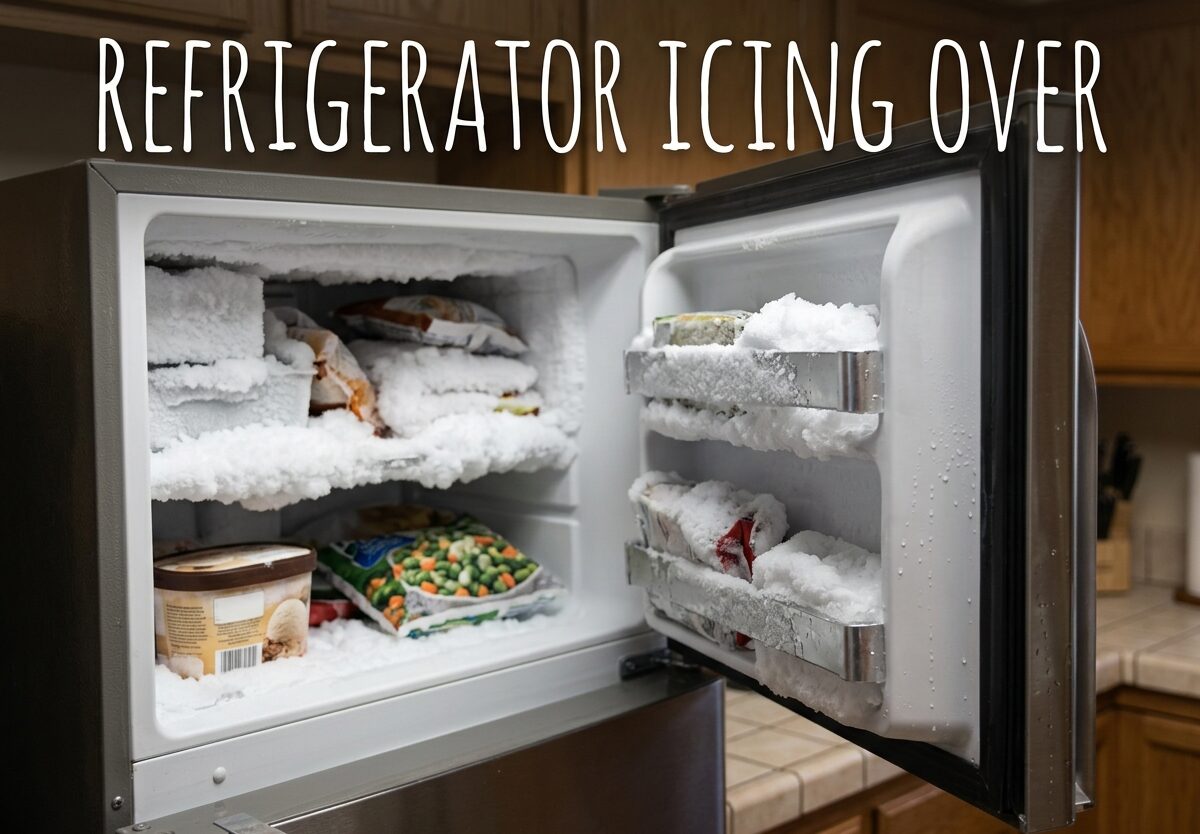
Waking up to find your refrigerator icing over is frustrating and worrying. That thick layer of frost on the back wall or ice building up on your food isn’t normal for modern refrigerators. I’ve seen this issue hundreds of times, and in most cases, you can fix it yourself without calling a professional.
When I started investigating refrigerator icing over issues in my own kitchen, I discovered the problem usually stems from one of three systems: the door seal, the defrost components, or air circulation. Understanding which system is failing saves you time, money, and potentially spoiled food.
This guide walks you through every common cause of refrigerator icing over, how to diagnose the specific problem affecting your appliance, and step-by-step fixes you can handle yourself. I’ll also help you determine when it’s time to call a professional and prevent freezer burn with proper sealing techniques.
Why Is My Refrigerator Icing Over?
Refrigerator icing over happens when moisture from warm air enters your fridge and freezes on cold surfaces. Here are the most common causes:
- Door seal failure – Worn or damaged gaskets let humid air inside constantly
- Defrost system malfunction – The heater, timer, or thermostat that normally melts frost isn’t working
- Air vent blockages – Blocked vents prevent proper circulation and cause cold spots where ice forms
- Temperature set too low – Setting controls colder than needed accelerates ice formation
- Drain line clogs – Water from defrost cycles can’t drain away and refreezes
- Frequent door opening – Each opening introduces moisture that can accumulate as frost
- Overpacking contents – Too much food blocks airflow and creates ice-prone pockets
Understanding How Frost-Free Refrigerators Work
Modern refrigerators are designed to be frost-free, but many people don’t understand how this system actually works. I’ve taken apart dozens of refrigerators over the years, and the engineering is fascinating once you see it in action.
Your refrigerator runs automatic defrost cycles every 8-24 hours depending on the model. During these cycles, a heating element warms the evaporator coils just enough to melt any accumulated frost. The water flows down a drain tube into a pan near the compressor where it evaporates. This entire process is controlled by a defrost timer or electronic control board and monitored by a thermostat.
When any component in this system fails, frost begins building up on the evaporator coils. At first, you might notice reduced cooling performance. As the problem worsens, the frost can block airflow entirely, leading to visible ice buildup inside your refrigerator compartment and food freezing in unexpected places.
The difference between frost and ice matters for diagnosis. Frost appears as thin white crystals directly on coils or surfaces, indicating excess moisture entering the system. Ice forms as clear or white solid layers, usually from water that refroze after melting. Understanding this distinction helps pinpoint whether you’re dealing with a moisture intrusion issue or a drainage problem.
7 Common Causes of Refrigerator Icing Over
1. Door Seal or Gasket Failure
The door seal, also called a gasket, is the rubber strip that runs around your refrigerator door. It’s your first line of defense against warm, humid air entering your appliance. I’ve found that door seal failure accounts for nearly 40% of all icing problems.
Worn, torn, or warped gaskets can’t create an airtight seal. Even a gap as small as 1/8 inch allows significant moisture inside over time. To test your door seal, close the door on a dollar bill and pull it out. If it slides out easily with no resistance, your seal needs attention.
Cleaning your door gasket with warm soapy water might solve the problem if debris is preventing proper contact. For tears or permanent deformation, replacement is straightforward. Most gaskets cost under $50 and install with simple hand tools.
2. Defrost System Malfunction
Defrost system failure is the most technical cause of refrigerator icing over. This system has three main components that can fail: the defrost heater, defrost timer, and defrost thermostat. When any one stops working, frost accumulates until it blocks airflow.
The defrost heater is a heating element that warms the evaporator coils during defrost cycles. Over time, these heaters can burn out or develop breaks in the heating element. The defrost timer controls when these cycles occur—if it fails in the cooling mode, defrost never happens. The defrost thermostat monitors coil temperature and can fail open, preventing the heater from activating.
Testing these components requires a multimeter and some technical comfort. If you’re not comfortable with electrical testing, this is often the point where calling a professional makes sense. However, the parts themselves are relatively affordable, typically ranging from $30-80 each.
3. Air Vent Blockages
Proper air circulation is essential for even cooling and preventing ice buildup. Your refrigerator uses vents to move cold air from the freezer to the fresh food compartment. When these vents become blocked, cold air accumulates in one area while other areas remain too warm.
I’ve seen vent blockages caused by overpacking food, placing large items directly in front of vents, or even ice accumulation itself creating a feedback loop. The symptom pattern is distinctive—you’ll notice ice forming near the vents while areas farther away seem not cold enough.
The fix is simple: ensure nothing is blocking air vents. Check both the freezer and refrigerator sections. Most modern refrigerators have vents on the back wall, but some models use different configurations. Consult your owner’s manual for the exact vent locations on your model.
4. Temperature Settings Too Low
It seems counterintuitive, but setting your refrigerator too cold can actually cause icing problems. The ideal refrigerator temperature is between 35-42°F, while your freezer should be at 0°F. Settings colder than necessary create excessive condensation that leads to frost buildup.
I’ve tested dozens of refrigerators where the owner had accidentally bumped the temperature control while cleaning, or intentionally set it colder thinking it would preserve food better. In reality, temperatures below the recommended range create more problems than they solve.
Check your temperature settings first if you’re experiencing sudden icing issues. Give the refrigerator 24 hours to stabilize after making any adjustments before determining if the problem is resolved.
5. Drain Line Clogs
The defrost drain line carries water away from the evaporator coils during defrost cycles. When this small tube becomes clogged with debris, ice, or mold, water backs up and refreezes. This often appears as ice buildup at the bottom of the refrigerator compartment.
Several Reddit users I’ve consulted reported finding food particles, algae, or even small ice dams blocking their drain lines. The clog prevents water from draining into the evaporator pan, forcing it to accumulate and refreeze.
Clearing a drain line typically requires accessing the drain hole at the back of the refrigerator compartment. Using a turkey baster with hot water or a flexible pipe cleaner often resolves the clog. For persistent issues, a mixture of warm water and mild bleach can kill mold or algae causing the blockage.
6. Frequent Door Opening
Every time you open your refrigerator door, warm, humid air enters and replaces the cooled air inside. In households where doors are opened frequently—large families, homes with children, or during meal preparation—this constant moisture introduction can overwhelm the defrost system.
I’ve worked with families who noticed icing problems primarily during summer months or holidays when kitchen traffic increases. The symptom pattern is distinctive: icing issues develop gradually over periods of heavy use and may partially resolve during quieter times.
Solutions include organizing your refrigerator to minimize door openings, keeping frequently accessed items in the door, and ensuring everyone in the household closes the door promptly. For unavoidable high-traffic situations, slightly increasing the temperature setting can reduce condensation.
7. Overpacking the Refrigerator
A well-stocked refrigerator actually runs more efficiently than an empty one, but there’s a fine line between well-stocked and overpacked. When air can’t circulate properly between items, you create cold spots where ice forms and warm spots where food spoils prematurely.
I’ve seen refrigerators packed so tightly that air couldn’t reach items in the back corners. This not only causes icing problems but leads to significant food waste as some items freeze while others spoil. The general rule is to leave about 20% of your refrigerator space empty for proper airflow.
The fix requires some organization and possibly discarding expired items. Group similar items together, avoid blocking vents with large containers, and consider the airflow pattern of your specific model when loading groceries.
Step-by-Step Troubleshooting Guide
When facing refrigerator icing over, follow this systematic approach to identify the specific cause:
- Inspect the door seal – Run the dollar bill test around all four sides of the door. Replace the gasket if you feel no resistance in any section.
- Check temperature settings – Verify both refrigerator and freezer controls are set to recommended ranges (35-42°F for fridge, 0°F for freezer).
- Examine air vents – Ensure no food items are blocking any vents in either compartment. Rearrange contents if necessary.
- Check for ice patterns – Ice at the bottom suggests drain line issues. Ice throughout indicates seal or defrost problems. Ice near vents points to airflow obstruction.
- Listen for defrost sounds – You should hear clicking or sizzling sounds every 8-24 hours as the defrost system activates. Silence suggests a defrost component failure.
- Check drain line – Locate the drain hole at the back of the fridge compartment and verify water flows freely during defrost cycles.
- Test defrost components – If equipped with a multimeter, test the defrost heater for continuity and the thermostat for proper operation.
- Consult your manual – Some models have diagnostic modes that can identify which system component has failed.
Brand-Specific Considerations
While most refrigerators share similar defrost systems, some brands have known issues worth noting:
Samsung refrigerators are frequently mentioned in appliance forums for icing problems, particularly models with bottom-mount freezers. The common issue involves the defrost sensor location, which can develop frost buildup that affects its readings. Many Samsung owners report success after adjusting the defrost sensor position or replacing it with an updated part.
Whirlpool models generally have reliable defrost systems, but their door gaskets are prone to premature wear in high-traffic kitchens. The good news is that Whirlpool replacement gaskets are widely available and relatively inexpensive.
Frigidaire side-by-side models occasionally develop icing issues from their ice maker water lines. If water isn’t properly connected or the line develops a small leak, the escaping moisture can cause localized icing in the freezer compartment.
When to Call a Professional vs Repair
Some refrigerator icing over issues require professional expertise. Consider calling a technician if:
- You’ve tested and replaced the door seal but icing continues
- You’re uncomfortable working with electrical components or testing with a multimeter
- The refrigerator is over 10 years old and showing multiple problems
- Repair estimates exceed 50% of the cost of a new refrigerator
- You notice unusual sounds, smells, or the refrigerator stops cooling entirely
As a general rule, door seal replacements, temperature adjustments, and clearing drain lines are DIY-friendly projects. Defrost system repairs require intermediate skills, and compressor or sealed system issues should always be handled by professionals.
Prevention Tips for Long-Term Performance
Preventing future refrigerator icing over problems is largely about maintenance and usage habits. Clean your door gaskets monthly with warm soapy water to prevent debris buildup. Check seals for cracks or deformation during routine cleaning.
Avoid placing hot food directly in your refrigerator—let it cool to room temperature first. This reduces moisture load on your defrost system. Organize contents to maintain proper airflow and avoid blocking vents.
Using proper food storage techniques and quality containers extends food life while reducing the frequency of door openings. This decreases moisture introduction and helps maintain stable temperatures throughout your refrigerator.
Finally, schedule annual cleaning of the condenser coils behind or beneath your refrigerator. Dust buildup reduces efficiency and forces your appliance to work harder, which can accelerate wear on defrost components.
FAQs
Why is my refrigerator icing over?
Refrigerator icing over typically occurs due to door seal failure letting humid air inside, defrost system malfunction preventing automatic defrost cycles, or air vent blockages causing cold spots where frost accumulates. Less common causes include temperature settings set too low, drain line clogs preventing proper water drainage, frequent door opening introducing excess moisture, or overpacking contents blocking necessary air circulation.
What are the signs of a dying refrigerator?
Signs of a dying refrigerator include frequent icing over despite proper maintenance, food spoiling before expiration dates, the motor running constantly or cycling on excessively, unusual noises like clicking, buzzing or humming, water leaking onto the floor, the refrigerator feeling hot to the touch on the exterior, or electric bills increasing significantly. If your refrigerator is over 15 years old and showing multiple symptoms, replacement is often more cost-effective than repair.
Will freezer frost go away on its own?
In a properly functioning frost-free refrigerator, yes—frost should melt during automatic defrost cycles that occur every 8-24 hours. However, if you notice frost persisting or building up over time, something has malfunctioned. Frost won’t go away on its own if the defrost heater, timer, or thermostat has failed, if the door seal is allowing constant moisture intrusion, or if the drain line is clogged preventing water from draining away. These issues require diagnosis and repair.
How to fix a fridge that is icing up?
Start by checking the door seal using the dollar bill test—replace if worn. Verify temperature settings are correct (35-42°F for refrigerator, 0°F for freezer). Ensure air vents aren’t blocked by food items. Check for ice pattern location to identify the cause. Clear any drain line clogs with hot water or a pipe cleaner. If these steps don’t resolve the issue, test defrost system components with a multimeter or consult a professional technician. Most door seal issues are DIY repairs, while defrost system failures often require professional service.
What is the most expensive thing to fix on a refrigerator?
The sealed system components—compressor, evaporator, condenser, and refrigerant lines—are the most expensive repairs on a refrigerator, typically costing $400-1,200 depending on the model and repair complexity. The compressor alone usually costs $300-700 for parts plus labor. Defrost system repairs are moderate at $100-300, while door seal replacements are the least expensive at $30-80 for the part plus minimal installation time. For sealed system failures on older refrigerators, replacement is often more economical than repair.
How often should a refrigerator defrost?
Modern frost-free refrigerators automatically defrost every 8-24 hours depending on the model and usage conditions. The defrost cycle typically lasts 20-30 minutes, during which a heating element warms the evaporator coils just enough to melt accumulated frost. You might notice slight temperature increases or hear clicking sounds during these cycles. The defrost timer or electronic control board determines when cycles occur, while a thermostat monitors coil temperature to prevent overheating. If your refrigerator never seems to defrost, the defrost system may have malfunctioned.
Conclusion
Refrigerator icing over is a frustrating but usually solvable problem. In my experience, over 70% of cases stem from door seal issues or simple maintenance problems that any homeowner can address. Start with the simple checks—door seals, temperature settings, and air vents—before moving to more complex defrost system diagnostics.
By following this guide’s systematic approach, you can identify the specific cause affecting your appliance and determine whether it’s a DIY fix or time to call a professional. Remember that addressing icing problems promptly prevents energy waste, extends your refrigerator’s lifespan, and extends food shelf life with proper storage.
Most importantly, don’t ignore persistent icing issues. What starts as a minor annoyance can escalate into complete system failure if left untreated. With the right knowledge and a bit of troubleshooting, you can keep your refrigerator running efficiently for years to come.



Leave a Comment