
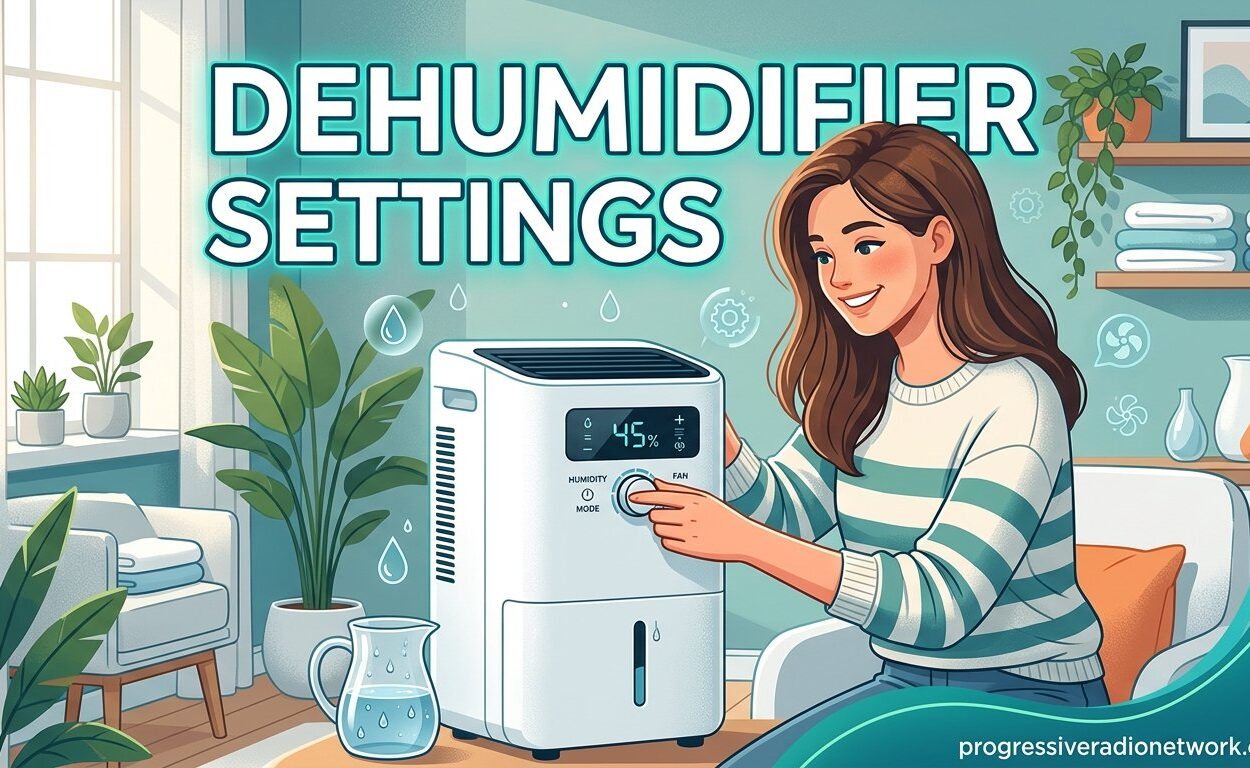
Getting your dehumidifier settings right can make the difference between a comfortable, healthy home and one plagued by mold, musty odors, and wasted electricity. The ideal relative humidity for most homes falls between 30% and 50%, but the perfect number depends on your room, season, and specific moisture concerns.
I have spent years testing dehumidifiers in basements, bedrooms, and crawl spaces, and the most common question I hear is simple: what number should I actually set this thing to? It is a great question because the wrong setting either leaves your space too damp or runs your unit into the ground unnecessarily.
In this guide, we break down exactly what each dehumidifier setting means, the ideal humidity level for every room in your home, and how to adjust for summer versus winter. Whether you are trying to stop mold growth before it starts or just want better sleep, these dehumidifier settings will help you dial in the perfect indoor climate. For a deeper look at how humidity control stops mold, check out our complete guide to dehumidifier mold prevention.
Understanding Dehumidifier Settings: What the Numbers Mean
Dehumidifier settings refer to the target relative humidity (RH) level you want your appliance to maintain, usually displayed as a number between 30 and 60 on the control panel. When you set your dehumidifier to 45, for example, you are telling the humidistat to keep the room at 45% relative humidity. The built-in humidity sensor continuously monitors the air and cycles the compressor on and off to hold that target.
So what does 40 mean on a dehumidifier? It simply means the unit will run until the air reaches 40% relative humidity, then shut off until humidity rises again. Lower numbers mean drier air and more runtime for the compressor. Higher numbers mean more moisture stays in the air and less energy is consumed.
Many dehumidifiers also offer mode options beyond the percentage dial. Here is what the common modes actually do:
- Auto mode: The unit cycles on and off automatically to maintain your set humidity target. This is the setting most people should use day-to-day.
- Continuous mode: The compressor runs nonstop regardless of the current humidity level. Use this only when you need to dry out a severely damp space quickly, such as a flooded basement or a newly installed area.
- Comfort mode: Some brands offer this setting, which automatically adjusts the target based on room temperature to maintain a comfortable feel. It is essentially a smart auto-adjust feature.
- High, Medium, Low: These fan speed settings control airflow, not the humidity target. High moves more air for faster drying, while low runs quieter for bedrooms and living spaces.
Should you set your dehumidifier to high or low? For everyday use, set your target humidity percentage first, then choose a fan speed based on noise tolerance and how quickly you need results. High fan speed dries faster but uses more energy.
What Is the Ideal Humidity Setting for a Dehumidifier?
The ideal dehumidifier setting for most homes is between 40% and 50% relative humidity. The American Society of Heating, Refrigerating and Air-Conditioning Engineers (ASHRAE) recommends keeping indoor humidity between 40% and 60% for comfort and health, while the Environmental Protection Agency advises staying under 50% to discourage mold growth and dust mites.
For the best balance of comfort, mold prevention, and energy efficiency, here are the target settings we recommend by space:
- Living areas: 40-50% RH
- Bedrooms: 40-50% RH for comfort and sleep quality
- Basements: 45-50% RH (40-45% if prone to dampness)
- Crawl spaces: 45-55% RH
- Bathrooms: 40-50% RH
- Damp climates: 40% RH to stay ahead of moisture intrusion
Hitting these targets consistently keeps mold spores from colonizing, reduces allergens like dust mites, and prevents wood furniture or flooring from warping. If you want to understand how dehumidifiers compare to other humidity-control options, read our breakdown of dehumidifiers versus air conditioners.
Dehumidifier Settings by Room: A Complete Guide
Different rooms have different moisture sources, which means one humidity setting does not fit every space. Here is how to dial in your dehumidifier settings room by room.
Basement Dehumidifier Settings
Basements are the most common place for a dehumidifier, and for good reason. They sit below ground level where moisture seeps through concrete walls and floors. For most basements, a setting of 45-50% RH works well. If you notice musty odors, visible condensation, or have had mold problems before, drop the target to 40-45%.
Is 60% humidity too high for a basement? Yes. At 60% RH, mold can begin growing on drywall, wood, and organic materials within 24 to 48 hours. If your basement consistently reads above 55%, you need a more powerful dehumidifier or a lower target setting. Many homeowners on forums report that finished basements need tighter control than unfinished ones because drywall, carpet, and furniture absorb moisture and feed mold.
Bedroom Dehumidifier Settings
For bedrooms, aim for 40-50% RH. This range keeps dust mites under control without drying out your sinuses while you sleep. Is 40% humidity too low for sleeping? For most people, 40% is perfectly comfortable and even beneficial for allergy sufferers. However, if you wake up with a dry throat or nose, bump the setting up to 45-50%.
Run the dehumidifier on low fan speed in bedrooms to keep noise levels down overnight. Position it at least three feet from the bed for best airflow and comfort.
Bathroom and Crawl Space Settings
Bathrooms spike in humidity after showers, often exceeding 70% temporarily. Set your bathroom dehumidifier to 40-50% RH and let it cycle on after each use. For crawl spaces, a setting of 45-55% prevents wood rot and pest problems without overworking the unit. Use continuous drainage in both areas since they produce steady moisture.
Seasonal Dehumidifier Settings: Summer vs Winter
Your dehumidifier settings should change with the seasons because outdoor temperature directly affects indoor humidity. During summer, warm air holds more moisture, so your unit works harder. Set your target to 45-50% RH in summer to handle the extra load while keeping energy costs manageable.
In winter, cold outside air is naturally drier, and heating systems further reduce indoor moisture. You may not need your dehumidifier at all during cold months, or you can raise the target to 50% RH. Is 50% humidity too high for winter? In most heated homes, no. Winter air is so dry that 50% is rarely reached naturally. If your hygrometer consistently reads above 50% in winter, you likely have a moisture source like a leak or poor ventilation that needs attention.
Here is a quick seasonal reference for dehumidifier settings:
- Spring: 45-50% RH as humidity begins rising
- Summer: 45-50% RH, possibly 40% in very humid climates
- Fall: 45-50% RH while moisture levels transition
- Winter: 50% RH or turn the unit off if humidity stays below 50% naturally
Your settings directly affect your electricity bill. To understand the cost implications, see our analysis of what it costs to run a dehumidifier.
How to Set Your Dehumidifier: Step-by-Step
Setting up a dehumidifier correctly from the start saves time, energy, and frustration. Follow these steps to get your unit configured properly.
- Choose the right location: Place the dehumidifier in the dampest area with at least 12 inches of clearance on all sides for airflow. Avoid corners and tight spaces.
- Set up drainage: Decide between manual bucket emptying or continuous drainage via a garden hose connected to the drain port. Continuous drainage is strongly recommended for basements and crawl spaces.
- Power on and check the current reading: Turn the unit on and note the current relative humidity displayed on the panel. This tells you how much work the dehumidifier needs to do.
- Set your target humidity: Use the up and down arrows to select your target RH based on the room type and season guidelines above. Start at 50% and adjust down if needed.
- Choose your fan speed: Select high for fast initial drying or low for quiet ongoing operation.
- Let it run for 24 hours: New spaces or very damp rooms may need continuous operation for the first day to reach the target. Check the reading after 24 hours and fine-tune as needed.
- Set a schedule if available: If your unit has a timer or Wi-Fi connectivity, program it to run during off-peak hours to save on electricity.
If your unit is pulling water faster than expected, it might be working overtime due to an underlying moisture problem. Our guide on why your dehumidifier keeps filling with water covers the common causes.
Dehumidifier Setting to Prevent Mold
Mold needs sustained humidity above 60% to grow and thrive. The best dehumidifier setting to prevent mold is 45% RH, which gives you a safety buffer below the 50% threshold where mold spores begin activating. For spaces with a history of mold problems, dropping to 40% RH provides extra protection.
Keep in mind that mold prevention is not just about the number on the dial. Consistency matters. If humidity spikes above 60% for even 24 hours, mold can begin colonizing. Check your hygrometer readings regularly, especially during humid summer months and after heavy rainfall.
For a full breakdown of how to use dehumidifiers as part of a mold prevention strategy, read our detailed dehumidifier mold prevention guide.
Tips for Optimal Performance and Energy Efficiency
Can I leave the dehumidifier on all night? Yes, modern dehumidifiers are designed for continuous operation and will shut off automatically once the target humidity is reached. Running overnight is common and safe, especially in bedrooms and basements.
To get the most from your dehumidifier settings while keeping energy costs down, follow these tips:
- Clean the filter monthly: A clogged filter reduces airflow and forces the compressor to work harder, increasing energy use by up to 20%.
- Keep doors and windows closed: Your dehumidifier can only control humidity in a sealed space. Open windows let humid air pour in continuously.
- Use continuous drainage: This prevents the unit from shutting off when the bucket fills, allowing uninterrupted operation.
- Position for airflow: Keep the unit away from walls and furniture so air circulates freely through the intake and exhaust.
- Avoid setting too low: Setting the target below 35% RH wastes energy and can dry out wood floors, furniture, and your sinuses unnecessarily.
If you are shopping for a new unit, our dehumidifier buying guide covers the best options by room size and capacity.
What does 40 mean on a dehumidifier?
The number 40 on a dehumidifier means the unit will run until the air reaches 40% relative humidity, then cycle off until moisture rises again. Lower numbers produce drier air but require more compressor runtime and energy.
Is 60% humidity too high for a basement?
Yes, 60% humidity is too high for a basement. Mold can begin growing at humidity levels above 50%, so basements should be kept between 40% and 50% relative humidity. If your basement consistently reads above 55%, lower your dehumidifier target or upgrade to a higher-capacity unit.
Can I leave the dehumidifier on all night?
Yes, you can safely leave a dehumidifier running overnight. Modern units automatically shut off when the target humidity is reached or when the water bucket is full. Running at night is especially useful in bedrooms and basements for consistent moisture control.
Is 40% humidity too low for sleeping?
For most people, 40% humidity is comfortable for sleeping and helps control dust mites and allergens. If you experience dry throat, dry skin, or nasal irritation at 40%, raise the setting to 45-50%. The ideal sleep humidity range is 40-50% RH.
What is the perfect setting for a dehumidifier?
The perfect dehumidifier setting for most homes is 45-50% relative humidity. This range balances comfort, mold prevention, and energy efficiency. For damp basements or mold-prone areas, drop to 40-45%. For bedrooms and living spaces, 45-50% is ideal.
Should I set my dehumidifier to high or low?
Set your target humidity first based on your room and season, then choose fan speed separately. Use high fan speed for fast drying of very damp spaces, and low fan speed for quiet ongoing operation in bedrooms and living areas. The percentage setting controls humidity level, while fan speed controls airflow and noise.
What setting should I keep my dehumidifier on?
Keep your dehumidifier set to 45-50% RH for general home use, 40-45% for basements and mold-prone areas, and 50% for bedrooms if you prefer slightly more moisture. Check the display regularly and adjust seasonally, lowering the target in humid summer months.
Is 50% humidity too high for winter?
No, 50% humidity is not too high for winter in most heated homes. Winter air is naturally dry, and heating systems reduce indoor moisture further, so 50% is rarely reached naturally. If your home consistently reads above 50% in winter, check for moisture sources like leaks or poor ventilation.
Conclusion
Getting your dehumidifier settings right comes down to one core principle: aim for 40-50% relative humidity and adjust based on your specific room, season, and moisture concerns. Basements and mold-prone areas need the lower end of that range at 40-45%, while bedrooms and living spaces stay comfortable at 45-50%.
Remember that the number on your control panel is a target, not a fan speed. Set your humidity goal first, then choose a fan speed that matches your noise tolerance and drying needs. Adjust seasonally, use continuous drainage when possible, and check your hygrometer readings regularly.
Proper dehumidifier settings protect your home from mold, reduce allergens, preserve wood and drywall, and keep your energy bills under control. Start at 50% RH, monitor for a week, and fine-tune from there. Your indoor air quality and comfort will thank you.

Leave a Comment