
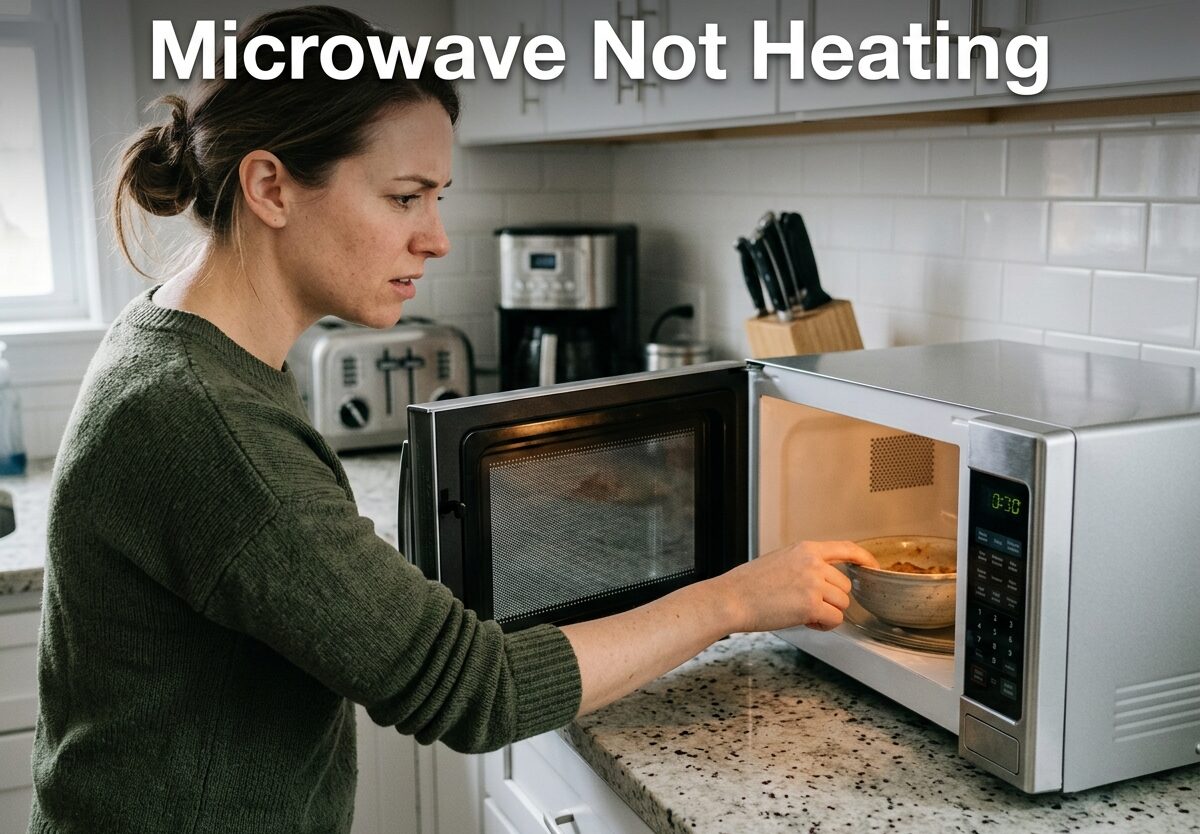
When your microwave runs but doesn’t heat food, it’s frustrating and confusing. The turntable spins, the countdown works, but your meal stays cold. I’ve researched the most common causes of microwave not heating issues and compiled this comprehensive troubleshooting guide to help you diagnose and potentially fix the problem.
This guide covers everything from simple setting errors to internal component failures. Most microwave heating issues stem from a few key problems: magnetron failure, door switch malfunctions, or accidental setting changes like demo mode or control lock. Let’s walk through each potential cause systematically.
Safety First Before You Begin
Before attempting any microwave troubleshooting or repair, I need to share an important safety warning. Microwaves contain high-voltage components that can store lethal electrical charges even when unplugged. The capacitor inside your microwave can hold thousands of volts long after it’s disconnected from power.
Never remove the microwave cover or attempt to access internal components unless you’re properly trained and have the right tools. High-voltage diode, magnetron, and capacitor replacements should be left to qualified professionals. The troubleshooting steps in this guide focus on safe, external checks you can perform yourself.
Step 1: Check Power Supply and Outlet
A microwave not heating but running might indicate insufficient power delivery. Start by verifying your microwave is receiving adequate electrical power. Check that the power cord is firmly plugged into a grounded, three-prong outlet.
Test the outlet with another small appliance like a lamp or phone charger to confirm it’s working properly. A faulty outlet can supply enough power for the display and turntable but not enough for the magnetron to generate heat.
Check your home’s circuit breaker panel. Microwave ovens typically require dedicated 15- or 20-amp circuits. If the microwave shares a circuit with other appliances, tripped breakers or blown fuses could cause power delivery issues.
Some users have reported success with a simple power reset. Unplug your microwave for 60 seconds, then plug it back in. This can reset the electronic control board and resolve temporary glitches affecting heating performance.
Step 2: Verify Door is Properly Closed
Your microwave’s door does more than keep food inside. It contains a critical safety mechanism that prevents operation if not properly secured. Microwave ovens have multiple door switches that must be activated for the magnetron to engage.
Inspect the door latch and hinge for any visible damage, food debris, or buildup that might prevent complete closure. Clean the door edges and the door frame with a damp cloth to remove any residue affecting the seal.
Close the door firmly and listen for an audible click. If your door feels loose or doesn’t latch securely, the door switches may not be activating properly. A faulty door switch is a common cause of microwave not heating issues because it interrupts the power flow to the magnetron as a safety measure.
Try opening and closing the door several times firmly. Sometimes the switches just need to be properly activated. If this resolves your heating issue temporarily but it returns, the door switch mechanism likely needs professional replacement.
Step 3: Check Control Settings
Many microwave not heating situations are caused by accidental setting changes rather than component failure. Before assuming your microwave is broken, verify these common settings aren’t interfering with normal operation.
Control Lock mode disables all controls for child safety. Look for a padlock icon on your display. If your control panel is unresponsive, check if Control Lock is activated. This typically requires pressing and holding a specific button for 3-5 seconds to deactivate.
Demo Mode is designed for retail display and allows the microwave to run without producing heat. This is a common culprit when your microwave runs but doesn’t heat. Check your display for “DEMO” or try pressing the Start/Stop button for 3-5 seconds to toggle this feature off.
Verify your power level setting is at maximum (usually level 10 or 100%). If accidentally set to a lower power level, your microwave will appear to run without generating sufficient heat. The power level can typically be adjusted before pressing Start.
Check if Delay Start has been programmed. This feature delays cooking for a set time period, which might make it seem like your microwave isn’t working properly. Cancel any active Delay Start settings.
Step 4: Check for Error Codes
Modern microwaves display error codes when internal problems are detected. These codes can pinpoint specific component failures affecting heating performance. Common error codes include F1, F2, F3, F4, F5, F6, F7, F8, and F9, though the exact meaning varies by manufacturer.
Consult your owner’s manual or the manufacturer’s website for code interpretations specific to your model. Samsung, LG, Whirlpool, GE, and other brands each have unique error code systems. Understanding these codes can help determine whether your microwave not heating issue requires professional repair.
An error code indicating door switch problems, magnetron failure, or thermal fuse issues will typically require professional service. These codes mean the microwave has self-diagnosed a hardware failure that needs proper diagnosis and repair.
Common Internal Component Failures
When external checks don’t resolve your microwave not heating issue, internal component failure is likely. The magnetron is the heart of your microwave, generating the electromagnetic waves that heat food. Magnetron failure is a leading cause of heating problems and typically occurs after 5-10 years of regular use.
The high-voltage diode converts electrical power for the magnetron. A failed diode prevents proper power delivery, causing your microwave to run without heating. Diode testing requires a multimeter and technical knowledge, making this a professional repair job.
The thermal fuse protects your microwave from overheating. If this safety device blows due to excessive heat or electrical surges, it cuts power to heating components. A blown thermal fuse will need replacement by a qualified technician.
The high-voltage capacitor stores electrical energy for the magnetron. Like the thermal fuse, a failed capacitor will prevent heating. Capacitor replacement is dangerous due to stored electrical charge and should only be performed by trained professionals.
A faulty control board or damaged wiring can also cause heating problems. These issues require professional diagnosis to determine if repair is cost-effective versus replacement.
Repair vs Replace Decision Guide
When facing microwave not heating issues, deciding between repair and replacement depends on several factors. Professional microwave repairs typically cost between $100 and $300, including parts and labor. Magnetron replacement alone can cost $150-250.
Consider your microwave’s age. Most units last 7-10 years with regular use. If your microwave is over 8 years old and needs a major repair like magnetron replacement, replacement might be more cost-effective. New models also offer improved energy efficiency and features.
Basic countertop microwaves start around $100, while over-the-range models cost $250-600. If your repair estimate approaches 50% of a new unit’s cost, replacement usually makes more financial sense. However, high-end built-in models may justify more expensive repairs.
Check if your microwave is still under warranty. Many manufacturers offer 1-2 year full warranties and extended magnetron warranties up to 5-10 years. Warranty service can significantly reduce or eliminate repair costs.
FAQs
Why is my microwave working but no heat?
When your microwave runs but doesn’t heat, the most common causes are magnetron failure, a faulty door switch, or accidental setting changes like demo mode or low power level. The magnetron generates heat and typically fails after 5-10 years of use. Door switch problems prevent the magnetron from receiving power as a safety measure. Always check for demo mode or control lock before assuming component failure.
Is it worth fixing a microwave that won’t heat?
Repair is worth considering if your microwave is under 5 years old or the repair cost is less than half the price of a replacement. Basic repairs cost $100-300 while new microwaves start at $100. Check your warranty coverage first, as magnetron failures may be covered under extended warranties. Units over 8 years old typically should be replaced rather than repaired.
Where is the reset button on a microwave?
Most microwaves don’t have a dedicated reset button. To reset your microwave, unplug it from the power outlet for 60 seconds, then plug it back in. This can resolve temporary electronic glitches affecting performance. Some models require pressing and holding the Start/Stop or Cancel button for 3-5 seconds to reset the control board or exit demo mode.
Can I replace the magnetron in my microwave?
I don’t recommend DIY magnetron replacement unless you have professional appliance repair experience. Magnetrons involve high-voltage electrical systems that can be dangerous even when unplugged. The microwave capacitor stores lethal electrical charges. Professional magnetron replacement typically costs $150-250 including parts and labor, and ensures proper installation and safety testing.
Conclusion
Dealing with a microwave not heating can be frustrating, but many issues have simple solutions. Start with the basics: check your power supply, verify the door closes properly, and confirm demo mode or control lock aren’t activated. These quick checks resolve many cases without any repair needed.
When these steps don’t fix the problem, internal component failure is likely. Magnetron issues, door switch failures, and high-voltage component problems require professional diagnosis and repair. Use the repair vs replace guide to make an informed decision based on your microwave’s age and repair costs.
Remember that microwave repair involves dangerous high-voltage components. Beyond basic troubleshooting, leave repairs to qualified professionals who can safely diagnose and fix your microwave not heating issue.
Leave a Comment