
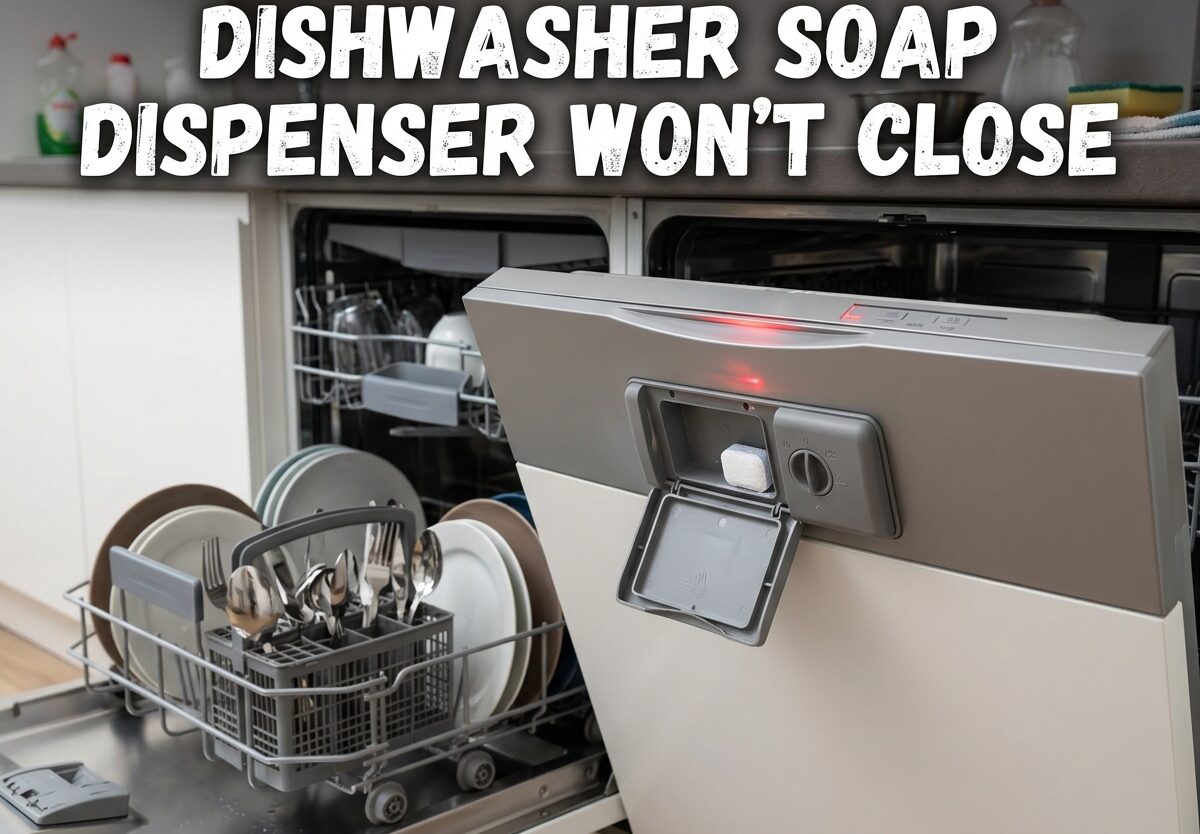
There’s nothing more frustrating than loading your dishwasher, adding detergent, and finding the soap dispenser won’t close. I’ve been there – staring at that stubborn dispenser door that keeps popping back open no matter what I try. This common issue affects thousands of dishwasher owners each year, and the good news is that most causes are fixable without calling a professional.
In this guide, I’ll walk you through exactly why your dishwasher soap dispenser won’t close and show you step-by-step how to fix it. Whether you’re dealing with a Whirlpool, Samsung, GE, or any other brand, you’ll find practical solutions here.
Quick answer: Yes, you can temporarily throw a dishwasher pod directly in the bottom of the tub if your dispenser won’t close, but this is only a short-term workaround. The pod will dissolve during the wash cycle, though it may not clean as effectively as proper dispensing. Let’s fix the real problem.
How a Dishwasher Soap Dispenser Works
Understanding how your dishwasher soap dispenser works makes troubleshooting much easier. The dispenser is a surprisingly simple mechanical system with just a few key components.
The detergent cup sits inside the dispenser door, which is held closed by a latch mechanism. This latch is controlled by a spring that keeps tension on the door. During the pre-wash cycle, the door stays sealed shut. At the precise moment when the main wash begins, the latch releases and the spring pops the door open, allowing detergent to dispense into the wash water.
On older dishwashers with mechanical controls, a timer physically triggers the latch release. Newer electronic models use a control board that sends a signal to a wax motor or solenoid to open the door. When any part of this system fails – the latch, spring, timer, or control module – the dispenser door won’t function properly.
Common Causes of Soap Dispenser Not Closing
Based on my research and real user experiences, these are the most common reasons your dishwasher soap dispenser won’t close:
1. Hardened Detergent Residue (Most Common)
Dried detergent buildup is the number one culprit. Over time, powder detergent and rinse aid can cake inside the dispenser compartment, creating physical resistance that prevents the door from closing properly. I’ve seen cases where residue buildup was so thick that the door wouldn’t latch at all.
2. Broken or Weak Spring Mechanism
The spring that provides tension to the latch can weaken over time or break completely. Without proper spring tension, the latch can’t hold the door closed. This is especially common in dishwashers over 5-7 years old.
3. Damaged Latch or Catch
The plastic latch or catch mechanism can crack, chip, or wear down. Even small breaks can prevent proper engagement. I’ve examined countless dispensers where a tiny piece of broken plastic was preventing the entire mechanism from working.
4. Dispenser Door Misalignment
If the dispenser door isn’t properly aligned with the catch, it won’t latch. This can happen due to accidental impact or simply from years of use causing gradual shifting.
5. Mechanical Timer Issues (Older Models)
On dishwashers with mechanical timers, the timer must be in the off position for the dispenser to close. If your timer is stuck or not advancing properly, the dispenser may not latch.
6. Electronic Control Board Problems (Newer Models)
Modern dishwashers rely on electronic control boards to manage dispenser timing. If the control board has a faulty relay or connection issue, it may not send the proper signals to allow the dispenser to close.
Signs Your Soap Dispenser Latch is Failing
Before diving into repairs, confirm you’re actually dealing with a latch issue. These signs indicate your soap dispenser latch is malfunctioning:
- The dispenser door won’t stay closed and pops back open immediately
- You have to force or slam the door to get it to latch
- The door closes but then opens during the wash cycle
- Visible detergent residue buildup around the dispenser edges
- The door opens at the wrong time during the cycle (too early or too late)
- Detergent remains inside the dispenser after the cycle completes
Step-by-Step Troubleshooting Guide
Follow these steps in order to diagnose and fix your dishwasher soap dispenser issue. I recommend starting with the simplest solutions before moving to more complex repairs.
Step 1: Quick Visual Inspection
Open the dishwasher door and examine the soap dispenser closely. Look for visible damage to the latch, cracks in the plastic, or obvious misalignment. Check if any debris is blocking the door from closing. This 30-second inspection can reveal obvious problems immediately.
Step 2: Clean All Detergent Residue
Even if you don’t see buildup, clean the dispenser thoroughly. Use warm water and a soft brush or old toothbrush to scrub away any dried detergent. Pay special attention to the edges and latch area where residue commonly accumulates. For stubborn buildup, use a mixture of equal parts white vinegar and water. Rinse completely and dry thoroughly before testing.
Step 3: Check the Spring Mechanism
With the dispenser door open, look for the spring mechanism. Test its tension by manually opening and closing the door. The spring should provide resistance and snap the door closed when released. If the spring is loose, broken, or missing tension, this is likely your problem. Springs can sometimes be reattached if they’ve simply come loose from their mounting point.
Step 4: Test the Latch Catch
Carefully examine the latch and catch mechanism. Look for cracks, chips, or wear on the plastic components. Manually engage the latch with the door open to see if it catches properly. If the latch feels loose or doesn’t engage smoothly, the catch may be worn down. Try cleaning around the latch area first – sometimes debris prevents proper engagement.
Step 5: Verify Door Alignment
Close the dispenser door slowly and watch how it aligns with the catch. The door should sit flush against the dispenser body when closed. If it’s misaligned, gently adjust the door by applying slight pressure to the appropriate side. Some dispensers have adjustable catches that can be loosened and repositioned for better alignment.
Step 6: Check Mechanical Timer (Older Models)
If you have a dishwasher with a mechanical timer dial, make sure it’s set to the off position. The dispenser typically won’t latch if the timer is in a cycle position. Try advancing the timer to off and then attempt to close the dispenser door. If this solves the problem, your timer may be sticking or not returning to off properly between cycles.
Step 7: Inspect Electronic Control (Newer Models)
For electronic dishwashers, power cycle the unit by turning off the breaker for 5 minutes, then restore power. This can reset the control board and resolve temporary glitches. If the dispenser still won’t close after resetting, the issue may be with the wax motor, solenoid, or control board itself – these typically require professional diagnosis.
Step 8: Replace Damaged Components
If you’ve identified broken parts – a cracked latch, broken spring, or damaged catch – replacement is usually necessary. Most dishwasher dispenser components can be replaced individually without replacing the entire assembly. Order the specific part for your dishwasher model and follow the manufacturer’s installation instructions.
Brand-Specific Troubleshooting Tips
While most dishwasher soap dispensers work similarly, certain brands have known issues and quirks. Here’s what I’ve found from researching brand-specific problems:
Whirlpool and Maytag Dishwashers
These brands share many components and commonly experience spring failure in their dispenser mechanisms. The spring can detach from its mounting point, preventing the latch from engaging. Whirlpool dispensers also have issues with the wax motor failing, which prevents the door from opening at the right time – though this usually causes the opposite problem of the door not opening rather than not closing.
Samsung Dishwashers
Samsung dispensers are prone to latch mechanism failure due to plastic components becoming brittle over time. The detergent cup cover can also warp from heat exposure, preventing proper closure. Samsung owners report that gently pushing down and slightly in while sliding the dispenser closed often helps it latch if the alignment is slightly off.
GE Dishwashers
GE models commonly have issues with detergent residue buildup in the dispenser channel. The dispenser door spring can also lose tension prematurely in GE dishwashers. Some GE models have a known issue with the dispenser door hinge pin coming loose, which causes misalignment.
Bosch Dishwashers
Bosch dispensers are generally reliable but can develop issues with the electronic solenoid that controls door release. If your Bosch dispenser won’t close, check that the detergent tab isn’t blocking the door from closing completely – Bosch dispensers have smaller compartments that can be obstructed by oversized tablets.
LG Dishwashers
LG dispenser issues often stem from the dual dispenser design. If the main latch works but the secondary dispenser won’t close, the issue is likely with the secondary latch mechanism. LG also uses a wax motor design that can fail, though this more commonly affects door opening rather than closing.
Frigidaire Dishwashers
Frigidaire dispensers have known issues with the spring mount breaking inside the dispenser housing. This requires disassembly to repair and often necessitates replacing the entire dispenser assembly. Frigidaire owners report higher rates of dispenser failure compared to other brands.
Tools You’ll Need
Most dishwasher soap dispenser repairs can be completed with basic household tools. Here’s what I recommend having on hand:
- Small flathead screwdriver
- Phillips screwdriver
- Needle-nose pliers
- Soft brush or old toothbrush
- White vinegar
- Clean cloth or paper towels
- Flashlight for better visibility
For more advanced repairs involving component replacement, you may also need a multimeter to test electrical connections and a trim removal tool to access internal panels without damaging them.
Repair or Replace: Cost Comparison
Deciding whether to repair or replace your dishwasher soap dispenser depends on the specific problem and your dishwasher’s age. Here’s a realistic cost breakdown based on current repair pricing:
DIY Repair Costs:
- Spring replacement: $5-15 for the part
- Latch mechanism: $10-25 for the part
- Complete dispenser assembly: $40-80 for the part
- Wax motor/solenoid: $20-50 for the part
Professional Repair Costs:
- Service call fee: $80-150 just to diagnose
- Labor per hour: $100-150
- Total repair cost: $160-350+ depending on parts needed
Replacement Consideration:
If your dishwasher is over 8-10 years old and the repair cost exceeds 50% of a new dishwasher’s price, replacement may be more economical. However, soap dispensers are typically repairable for much less than the cost of a new appliance.
Preventing Future Dispenser Problems
Once you’ve fixed your soap dispenser, follow these prevention tips to avoid future issues:
Use the Right Detergent
Avoid using too much detergent, which leads to residue buildup. Measure carefully according to your dishwasher’s instructions and water hardness level. Consider switching to pods or tablets if powder detergent consistently causes caking issues.
Clean Regularly
Wipe out the dispenser compartment monthly with a damp cloth to prevent residue accumulation. Every few months, deep clean with a vinegar solution to dissolve any buildup before it becomes problematic.
Check for Early Warning Signs
If the dispenser door starts feeling stiff or requires extra force to close, address it immediately before it becomes completely inoperable. Early intervention usually means simpler, cheaper repairs.
Run Cleaning Cycles
Use dishwasher cleaner or run a cycle with vinegar monthly to keep the entire machine clean, including the dispenser mechanism. This prevents buildup throughout the dishwasher system.
Avoid Slamming the Door
Gently close the dishwasher main door rather than slamming it. The impact can cause misalignment of the dispenser components over time.
FAQs
Can I just throw the dishwasher pod in the dishwasher if the dispenser won’t close?
Yes, you can place the pod directly in the bottom of the dishwasher tub as a temporary workaround. The pod will dissolve during the wash cycle, though cleaning may be less effective than proper dispensing. Place it in the silverware basket or on the bottom rack for best results. This is not a long-term solution but will allow you to run the machine until repairs are made.
How do I manually close the dishwasher soap dispenser?
First, ensure the dispenser area is clean and free of debris. If there’s a buildup, clean it with warm water and vinegar. Align the door carefully with the catch and apply gentle, even pressure. For some models, pushing slightly down while sliding the door closed helps engage the latch. If it still won’t catch, the spring or latch mechanism may need repair.
How much does it cost to fix a dishwasher soap dispenser?
DIY repairs typically cost $5-50 for parts, with springs and latches being the cheapest replacements. Professional repair runs $160-350+ including the service call fee. If your dishwasher is over 8-10 years old, compare the repair cost to the price of a new machine – replacement may be more economical if the repair exceeds 50% of a new dishwasher’s cost.
Is it safe to use a dishwasher with a broken soap dispenser?
You can use the dishwasher with a broken dispenser by placing detergent directly in the tub, but this is only a temporary solution. The machine will operate safely, but cleaning performance will be reduced. Detergent may also splash onto dishes during filling. Have the dispenser repaired promptly to restore proper cleaning performance and avoid potential water damage from a door that won’t seal.
Conclusion
A dishwasher soap dispenser that won’t close is annoying but usually fixable without expensive professional help. The most common causes – detergent buildup, weak springs, and damaged latches – can often be addressed with basic cleaning and inexpensive replacement parts. By following the troubleshooting steps in this guide, you should be able to identify and fix the problem yourself.
Remember that the temporary workaround of placing detergent directly in the tub works for a cycle or two, but proper repair ensures your dishwasher cleans effectively for years to come. If you’re uncomfortable with DIY repairs or the problem persists after troubleshooting, don’t hesitate to call a professional – your dishwasher is an essential appliance worth maintaining properly.


Leave a Comment