
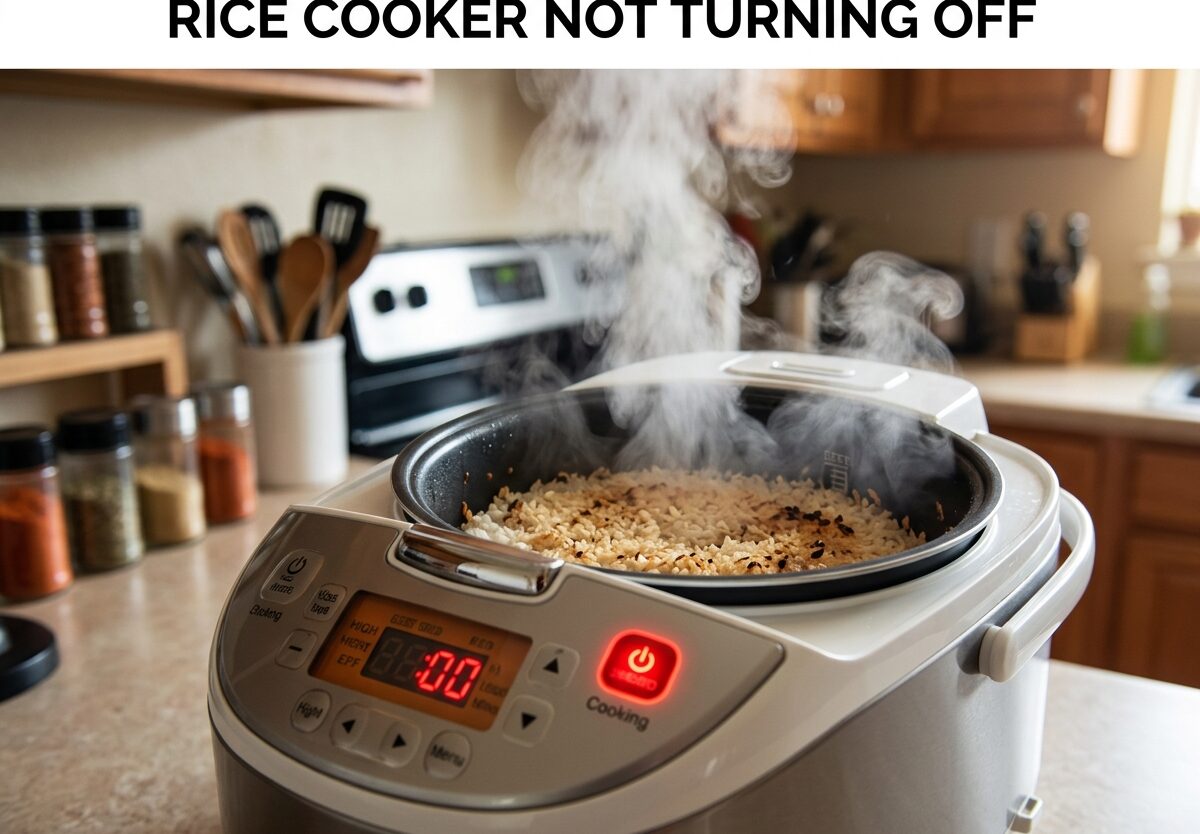
Dealing with a rice cooker not turning off is frustrating and potentially dangerous. I’ve seen this issue countless times over the years of testing kitchen appliances. When your rice cooker won’t shut off automatically, it can burn your rice, waste energy, and in worst cases, create a fire hazard. Let me walk you through exactly why this happens and how to fix it safely.
How Rice Cooker Auto Shut-Off Works
Understanding how your rice cooker knows when to stop cooking is the first step to diagnosing the problem. Most rice cookers use a simple but clever thermal mechanism that detects when water has evaporated from the pot.
When rice cooks, water boils at 212degF (100degC). As long as water remains in the pot, the temperature stays at this boiling point. Once all the water absorbs or evaporates, the temperature starts rising above boiling. This temperature spike triggers the auto shut-off mechanism.
The Thermostat Mechanism
Most basic rice cookers use a bimetallic thermostat or a thermistor to monitor temperature. These sensors sit near the heating plate and detect when the pot temperature rises above the boiling point of water.
The thermostat is calibrated to trip at approximately 230-240degF (110-115degC). When it hits this threshold, it activates the switch that cuts power to the main heating element.
The Magnetic Switch
Many rice cookers use a magnetic reed switch as their shut-off mechanism. A magnet attached to a thermal expansion material loses its magnetic properties when heated beyond a specific point, causing the switch to open and break the circuit.
This simple mechanical design is reliable but can fail over time due to wear, debris, or moisture damage. The magnetic switch is what you hear click when your rice cooker finishes cooking.
Keep Warm Mode Explained
After the cooking cycle completes, most rice cookers automatically switch to keep warm mode. This is normal behavior. The keep warm function maintains rice at approximately 140-158degF (60-70degC) using a lower-wattage heating element.
If your rice cooker switches to warm but never fully turns off, this is usually working as designed. However, if the main heating element stays active at full power continuously, that’s when you have a problem.
Common Causes of Rice Cooker Not Turning Off
Based on my experience repairing and testing rice cookers, I’ve identified the most common culprits behind a rice cooker not turning off. Understanding these causes will help you diagnose your specific issue quickly.
Dirty or Wet Heating Plate
The most common cause I’ve encountered is a dirty or wet heating plate and sensor area. When starch, rice residue, or moisture accumulates on the heating plate or around the temperature sensor, it creates insulation that prevents accurate temperature reading.
The sensor thinks the pot is cooler than it actually is, so it keeps heating. This explains why some users report their rice cooker not turning off only after months of use without proper cleaning.
Faulty Micro Switch
The micro switch is the component that physically cuts power to the heating element when triggered by the thermostat. Over time, these switches can fail due to electrical arcing, mechanical wear, or heat damage.
A failing micro switch might work intermittently at first, then fail completely. This is a common issue in rice cookers over 3-5 years old, especially in models with heavier daily use.
Broken Thermostat or Thermistor
Temperature sensors can fail in two ways: they can stop registering temperature changes entirely, or they can calibrate incorrectly. Either scenario prevents the rice cooker from knowing when to stop cooking.
Thermostats can also become stuck due to debris, moisture damage, or manufacturing defects. A stuck thermostat might never reach its trip point, causing continuous heating.
Debris in Sensor Area
Rice cookers have vents and steam paths that allow moisture to escape during cooking. When these become clogged with starch buildup, food particles, or mineral deposits, the internal pressure and temperature readings can be affected.
I’ve seen rice cookers with vents so clogged that the steam couldn’t escape properly, causing the internal temperature to rise abnormally and confuse the sensors.
Step-by-Step Troubleshooting Guide
Before attempting any repairs, let’s walk through a systematic troubleshooting process. I recommend following these steps in order, starting with the simplest and most common fixes.
Safety Precautions
Safety comes first when working with electrical appliances. Always unplug your rice cooker before performing any inspection or cleaning. Never attempt repairs while the unit is plugged in or hot.
Allow the rice cooker to cool completely for at least 30 minutes before touching internal components. If you’re uncomfortable with any step, it’s better to consult a professional repair technician.
Tools You’ll Need
- Soft cloth or sponge
- Mild dish soap
- Cotton swabs
- White vinegar
- Multimeter (for electrical testing)
- Screwdriver set (if opening the unit)
Step 1: Thorough Cleaning
Clean the heating plate and interior thoroughly with warm, soapy water. Pay special attention to the metal plate at the bottom and any sensors visible. Remove all starch buildup, rice residue, and mineral deposits.
For stubborn mineral deposits, create a paste with baking soda and water, apply to the affected area, let sit for 15 minutes, then scrub gently. Rinse completely and dry thoroughly before testing.
Step 2: Check the Vent and Steam Paths
Inspect all vents and steam openings for clogs. Use a cotton swab or soft brush to clean these areas carefully. Ensure steam can escape freely during operation.
Some rice cookers have removable vent covers or steam caps. Remove these and clean both the cover and the opening underneath. This is a common source of problems that many users overlook.
Step 3: Test with Proper Water Ratio
Test your rice cooker with the correct water-to-rice ratio. Using too little water can cause the rice cooker to heat beyond its normal operating range, potentially confusing the sensors.
Run a test cycle with just water (no rice) using the amount specified in your manual. This eliminates rice-related variables and helps isolate whether the issue is with the cooking process or the shut-off mechanism itself.
Step 4: Inspect the Cook Button
Some users have found that the cook button mechanism becomes stuck or doesn’t engage properly. When the button won’t stay down, the rice cooker may not complete its cycle correctly.
Check for debris around the button mechanism. In some cases, users have reported success by placing small washers or coins on the center plate to ensure proper contact with the heating element.
Step 5: When to Call a Professional
If you’ve completed steps 1-4 and your rice cooker still won’t turn off, the issue is likely internal. Faulty micro switches, broken thermostats, or wiring problems require professional diagnosis and repair.
For rice cookers under warranty, contact the manufacturer for service. For older units, consider whether repair costs make sense compared to replacement.
How to Fix a Rice Cooker That Won’t Shut Off
If basic troubleshooting doesn’t resolve the issue, you may need to perform more advanced repairs. These procedures require some technical skill and comfort with small appliance repair.
Replacing the Micro Switch
The micro switch is the most common component failure in rice cookers that won’t turn off. Located near the heating element, this small mechanical switch activates when the thermostat reaches its trip point.
To replace the micro switch, you’ll need to open the rice cooker casing, disconnect the old switch, note the wiring configuration, and install a compatible replacement. Always ensure the replacement switch matches the original’s electrical ratings.
Testing the Thermostat
Using a multimeter, you can test the thermostat for continuity. A working thermostat should show continuity at room temperature and open circuit when heated past its trip point.
If the thermostat fails this test, it will need replacement. Thermostats are typically soldered into place and require careful desoldering and resoldering during replacement.
Checking Wiring Connections
Loose or corroded wiring connections can cause intermittent shut-off problems. Inspect all internal wiring for signs of damage, corrosion, or loose connections.
Pay special attention to connections near the heating element, as these are subjected to the most heat stress. Tighten any loose connections and clean corroded terminals with electrical contact cleaner.
Preventive Maintenance Tips
Regular maintenance can prevent many rice cooker problems before they start. I recommend following this simple maintenance schedule to keep your rice cooker working reliably.
Daily Maintenance
After each use, wipe down the heating plate and interior with a damp cloth. Remove any food residue or starch buildup immediately. This prevents accumulation that can interfere with temperature sensors.
Weekly Maintenance
Once a week, perform a more thorough cleaning. Remove and wash all removable parts including the inner pot, steam vent cap, and lid. Clean vents and steam paths with a cotton swab.
Monthly Maintenance
Monthly, descale your rice cooker if you live in an area with hard water. Mineral buildup can insulate heating elements and interfere with temperature sensors. Use a mixture of equal parts white vinegar and water, run a cycle, then rinse thoroughly.
What to Avoid
Never immerse the main rice cooker unit in water. This can cause electrical short circuits and permanent damage. Also avoid using abrasive cleaners or metal scouring pads that can damage the heating plate surface.
When to Repair vs Replace Your Rice Cooker
Not every rice cooker problem is worth fixing. Consider these factors when deciding whether to repair or replace your malfunctioning rice cooker.
Cost Considerations
Professional repair typically costs $50-100 plus parts. If your rice cooker cost less than $100 new, replacement often makes more financial sense than repair.
Age Factors
Rice cookers typically last 5-8 years with proper care. If your unit is over 5 years old and experiencing problems, replacement might be more cost-effective than multiple repairs.
Safety Concerns
A rice cooker that won’t turn off poses a legitimate fire risk, especially if left unattended. If you’re unable to resolve the issue through cleaning and basic troubleshooting, I strongly recommend replacing the unit rather than risking continued use of a malfunctioning appliance.
Availability of Parts
For some models, especially budget brands or older units, replacement parts may be unavailable or difficult to source. Before investing in repair, check whether parts are readily available for your specific model.
FAQs
Why is my rice cooker not stopping?
Your rice cooker isn’t stopping because the auto shut-off mechanism has failed. This is usually caused by a dirty heating plate interfering with temperature sensing, a faulty micro switch that won’t cut power, or a broken thermostat that can’t detect when water has evaporated. Clean the unit thoroughly first, then test if the problem persists.
Do you have to turn off the rice cooker?
Modern rice cookers should turn off automatically after cooking, but some basic models only switch to keep warm mode and must be manually unplugged. Check your manual to confirm your model’s expected behavior. If your model should auto shut-off but doesn’t, there’s a malfunction that needs attention.
What is the life expectancy of a rice cooker?
Most rice cookers last 5-8 years with proper care and regular cleaning. Higher-end models from brands like Zojirushi and Cuckoo often last 8-10 years, while budget models typically need replacement after 3-5 years. The most common failure point is the micro switch or thermostat.
How does a rice cooker know when rice is done?
Rice cookers detect when rice is done by monitoring temperature. As long as water remains in the pot, temperature stays at boiling point (212degF). Once water absorbs or evaporates, temperature rises above boiling. This temperature spike triggers the thermostat to activate the shut-off switch, ending the cooking cycle.
Is a rice cooker that won’t turn off a fire hazard?
Yes, a rice cooker that won’t turn off is a potential fire hazard. Continuous heating can cause rice to burn, smoke, and potentially ignite. The heating element itself can overheat and damage surrounding components. Never leave a malfunctioning rice cooker unattended, and unplug it immediately if it fails to shut off.
Can I use my rice cooker if the auto shut-off doesn’t work?
I don’t recommend using a rice cooker with a malfunctioning auto shut-off except with constant supervision. You would need to monitor it manually and unplug when rice is done, which defeats the purpose of a rice cooker. The safer choice is to repair the unit or replace it entirely.
Conclusion
A rice cooker not turning off is a frustrating problem, but in most cases, it’s fixable with proper cleaning and basic troubleshooting. Start with the simple solutions: clean the heating plate, check the vents, and ensure proper water ratios.
If these steps don’t resolve the issue, the problem likely lies with internal components like the micro switch or thermostat. At this point, weigh the cost of professional repair against the price of replacement, especially for older units.
Most importantly, never ignore a malfunctioning rice cooker. The fire risk is real, and continued use of a defective unit isn’t worth the risk. Either repair it properly or replace it with a new model that will serve you reliably for years to come.


Leave a Comment