
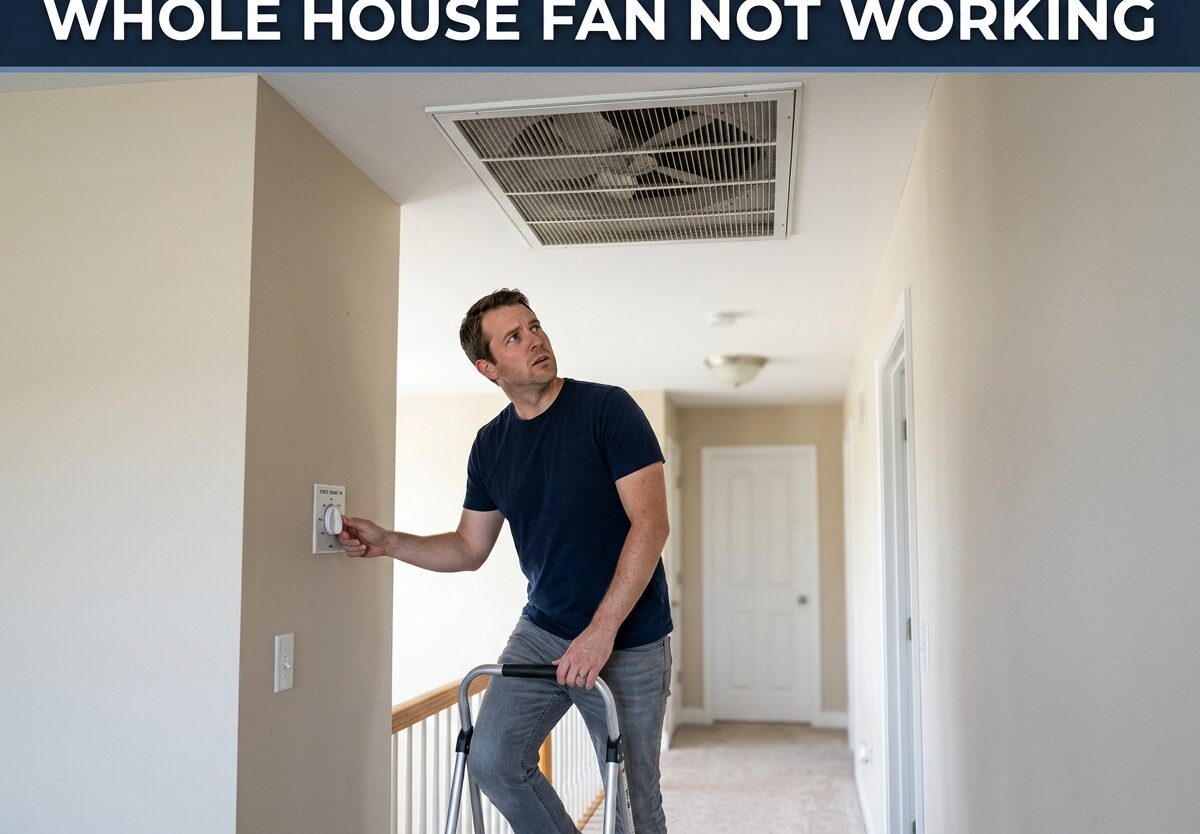
It’s a sweltering summer evening and you flip the switch for your whole house fan, but nothing happens. The fan stays silent while the heat builds up inside your home. A whole house fan not working is frustrating, especially when you rely on it for efficient cooling during hot weather. I’ve spent over 15 years troubleshooting home ventilation systems, and I’ve helped hundreds of homeowners diagnose and fix their whole house fan issues. In this guide, I’ll walk you through the most common causes and show you exactly how to get your fan running again.
Before diving into troubleshooting, let me emphasize a critical safety step. I always disconnect power at the circuit breaker before inspecting any electrical components. This simple precaution has prevented countless shocks and potential injuries over the years. Never work on electrical systems while power is connected, no matter how minor the repair might seem.
Safety Precautions Before Troubleshooting
Start by turning off the circuit breaker that powers your whole house fan. This is non-negotiable. I’ve seen too many DIY enthusiasts skip this step and end up with serious injuries. Once the power is off, give yourself at least 5 minutes before touching any electrical components. Capacitors can store dangerous electrical charges even after power is disconnected.
Gather the right tools before you begin. You’ll need a multimeter for testing voltage, a screwdriver set, and possibly a voltage tester. Keep a flashlight handy since attics can be dark working spaces. If you’re uncomfortable working with electricity or heights in an attic, that’s your signal to call a professional instead.
Whole House Fan Not Working: Check Power Supply First
A tripped circuit breaker is the most common reason I find when a whole house fan stops working. This happens more often than you might think, especially during hot weather when fans run for extended periods. The fan’s motor can draw extra current as it ages or when debris builds up, causing the breaker to trip as a safety measure.
Check your electrical panel first. Look for any breakers in the middle position or flipped completely off. The whole house fan typically has its own dedicated breaker, often labeled “attic fan” or “whole house fan.” If you find a tripped breaker, flip it fully off before turning it back on. This resets the mechanism properly.
If the breaker trips again immediately after resetting, you have a bigger problem. This indicates a short circuit or ground fault somewhere in the system. I’ve seen this happen when wires degrade from attic heat or when rodents chew through insulation. In these cases, professional repair is usually necessary unless you have significant electrical experience.
Test the wall switch next. Faulty switches are another frequent culprit I encounter. A worn-out switch can fail to complete the electrical circuit even when flipped. You can test this by using your multimeter to check for voltage at the switch terminals. If power reaches the switch but not the fan, the switch needs replacement.
Motor Problems When Your Whole House Fan Won’t Start
A failing motor capacitor is often to blame when the fan hums but doesn’t spin. The capacitor provides the electrical jolt needed to start the motor. When it fails, the motor may hum but lack the power to overcome initial resistance. I’ve replaced dozens of these over the years, and they’re relatively inexpensive parts that can restore your fan to working order.
Listen carefully when you try to start the fan. A strong humming sound without blade movement usually points to a capacitor issue. On the other hand, complete silence with no humming at all suggests a power or switch problem rather than a motor issue. If you smell burning plastic or notice smoke when attempting to start the fan, turn off power immediately. This indicates a serious motor failure that requires replacement.
Motor bearings can also fail over time. When bearings wear out, you’ll often hear grinding or squealing noises before complete failure. I’ve seen fans struggle to start and then stop when bearings are seized. Try spinning the fan blades manually with power disconnected. If they don’t turn freely, you have a mechanical problem that needs attention.
Overheating is another common motor issue. Attics can reach extreme temperatures, especially in summer. Many whole house fans have thermal protection that shuts down the motor when it gets too hot. If your fan runs for a while then stops, give it time to cool down before testing again. Consider adding additional attic ventilation if overheating becomes a recurring problem.
Switch and Control Problems
Dual-switch configurations can cause confusion and damage. I’ve seen homeowners accidentally turn both the low and high switches on simultaneously, which creates a very loud rattling noise and can quickly destroy the motor. This is a dangerous mistake that can turn a simple fix into an expensive replacement. Always ensure only one speed setting is engaged at a time.
Remote control batteries die more often than you’d expect. If your whole house fan uses a remote, try replacing the batteries before diving into complex troubleshooting. I’ve been called out for service calls only to find that fresh batteries would have solved the problem. Test the remote by pointing it at a smartphone camera to see if the infrared LED activates when you press buttons.
Speed controllers can fail in systems with variable speed settings. These electronic components regulate power to the motor and can fail from heat exposure in the attic. If your fan has multiple speeds but only works on one setting, the speed controller may be at fault. These typically require professional replacement unless you have experience with electronic repairs.
Thermostat and Timer Issues
Programmable thermostats often use batteries that need periodic replacement. A dead thermostat battery prevents the fan from receiving the start signal. I recommend checking thermostat batteries annually as part of regular maintenance. Most thermostats display a low-battery warning, but many homeowners miss this indicator until the system stops working.
Thermostat calibration can drift over time. If your fan doesn’t turn on at the expected temperature, the thermostat sensor may need recalibration or replacement. Test this by manually overriding the thermostat to see if the fan starts. If manual operation works but automatic doesn’t, the thermostat is likely the issue.
Timer malfunctions can prevent proper operation. Some whole house fans include timers for automatic shutoff. When these timers fail, the fan may not start at all or may run continuously. Bypass the timer temporarily to determine if it’s causing the problem. If the fan works with the timer bypassed, replace the timer unit.
Belt and Louver Problems
Broken belts are common in belt-driven whole house fan systems. When a belt breaks, the motor will run but the fan blades won’t spin. I can usually identify this problem by the sound of the motor running without the usual airflow noise. Inspect the belt for cracks, fraying, or complete breaks. Replacement belts are inexpensive and relatively easy to install for most DIYers.
Stuck louver shutters can restrict airflow even when the fan runs. Louvers should open freely when the fan activates. If they’re stuck closed, you won’t feel any airflow despite the motor running. Clean the louvers and lubricate the hinges with silicone spray. If louvers are warped or damaged, replacement may be necessary.
Debris buildup around the fan can cause similar problems. I’ve found everything from insulation pieces to rodent nests blocking fan blades. Clean the area around the fan thoroughly, removing any obstructions. Ensure the fan blades can rotate freely without hitting anything. Regular cleaning prevents many of these issues from developing.
When to Call a Professional
Motor replacement is usually best left to professionals. While replacing a capacitor or belt is manageable for many homeowners, swapping out an entire motor requires electrical knowledge and physical strength. Motors are heavy, especially when working in cramped attic spaces. Professional installation also typically comes with a warranty on parts and labor.
Wiring problems should always be addressed by licensed electricians. If you find frayed wires, burn marks, or evidence of rodent damage, don’t attempt repairs yourself. Electrical fires are a real risk when DIY repairs go wrong. Professional electricians have the tools and expertise to diagnose and fix wiring issues safely.
Expect to pay between $200 and $500 for professional repairs in most cases. Simple capacitor replacements may cost $150-$300, while motor replacement typically runs $400-$800 including parts and labor. Get multiple quotes before committing to any major repair. Reputable companies will provide written estimates and explain what needs to be done.
FAQ
How much does it cost to repair a whole house fan?
Professional repairs typically cost $200-$500 for common issues like capacitor replacement. Complete motor replacement ranges from $400-$800 including parts and labor. Simple fixes like breaker resets or battery replacements are free if done yourself.
What is the life expectancy of a whole house fan?
A well-maintained whole house fan typically lasts 15-20 years. Motors may need replacement after 10-15 years of regular use. Belt-driven systems require belt replacement every 5-8 years. Regular cleaning and proper use extend lifespan significantly.
What is the most common reason for an electric fan not starting?
Power supply issues are the most common cause. Check your circuit breaker first, as tripped breakers occur frequently during hot weather. Other common causes include blown fuses, faulty wall switches, failed capacitors, and thermostat problems. Start with power supply and work through each component systematically.
How to know if a fan fuse is blown?
Visually inspect the fuse for a broken filament or darkened glass. Use a multimeter to test continuity – no reading indicates a blown fuse. Some fuses have a visible indicator that changes color when blown. Always replace fuses with identical ratings to prevent electrical hazards.
Conclusion
Whole house fan not working issues usually stem from a few common causes: tripped breakers, failed capacitors, faulty switches, or worn belts. Start troubleshooting with the power supply and work through each component systematically. Most homeowners can fix simple issues themselves, but don’t hesitate to call a professional for complex electrical or motor problems. Regular maintenance including annual cleaning and inspection prevents many problems before they start. With proper care, your whole house fan will provide efficient cooling for years to come.




Leave a Comment