
If you run a humidifier in your home, mold prevention probably keeps you up at night. I have seen friends deal with respiratory issues after using a humidifier that turned into a breeding ground for mold and bacteria. The good news is that humidifier mold prevention is straightforward once you understand the timeline and follow a consistent cleaning routine.
This guide covers everything you need to know about keeping your humidifier mold-free. You will learn why mold appears within 24-48 hours, the exact vinegar ratios that work, and daily habits that make a real difference. I tested these methods in my own home over three winter seasons and they have kept our ultrasonic humidifier spotless.
Why Does Mold Grow in Your Humidifier?
Mold grows in humidifiers because the conditions are almost perfect for it. Warm moisture, standing water, and mineral deposits from tap water combine to create an environment where mold spores thrive. According to the EPA, indoor humidity between 30-50% is ideal for preventing mold growth, but humidifiers can easily exceed this range if not maintained.
The timeline is shorter than most people realize. Mold can begin growing in as little as 24-48 hours after you fill the tank. This is why daily maintenance matters so much. Once mold establishes itself in the tank, the spores release into the air every time the humidifier runs, potentially causing respiratory issues for your family.
Mineral buildup from tap water accelerates this process. The white dust you sometimes see around humidifiers is mineral deposits, and these provide food for mold and bacteria. This is why the type of water you use makes such a significant difference in prevention efforts.
The Optimal Humidity Level for Mold Prevention
Maintaining the right humidity level is your first line of defense. The EPA recommends keeping indoor humidity between 30-50% to prevent mold growth. For comfort and health benefits, 40-50% is the sweet spot where most people feel comfortable and mold struggles to survive.
A hygrometer is an inexpensive tool that measures humidity levels in your home. Place it near your humidifier and check it daily during the winter months. If levels climb above 50%, turn off the humidifier or reduce its output. Running a humidifier constantly without monitoring is one of the most common mistakes homeowners make.
When humidity drops below 30%, you may experience dry skin, static electricity, and cracked wood furniture. When it exceeds 50%, you create conditions where dust mites and mold thrive. Balanced humidity protects both your home and your health.
Distilled Water vs Tap Water: What the Research Shows
Using distilled water instead of tap water is the single biggest change you can make for humidifier mold prevention. Forum discussions consistently confirm this. One user on a home improvement forum noted that switching to distilled water made a bigger difference than any cleaning routine. I have seen this same pattern with everyone I have talked to about humidifier maintenance.
Tap water contains minerals, chlorine, and trace contaminants that feed mold growth. When these minerals settle in your tank, they create a biofilm where mold thrives. Distilled water has been purified, removing these food sources for mold and significantly reducing buildup on your tank walls and internal components.
Some users worry about the cost of distilled water. While it does add up, consider that a gallon of distilled water costs around one dollar and lasts several refills for most home humidifiers. The trade-off in reduced cleaning time and extended appliance life is worth it for many households.
Daily Maintenance Checklist
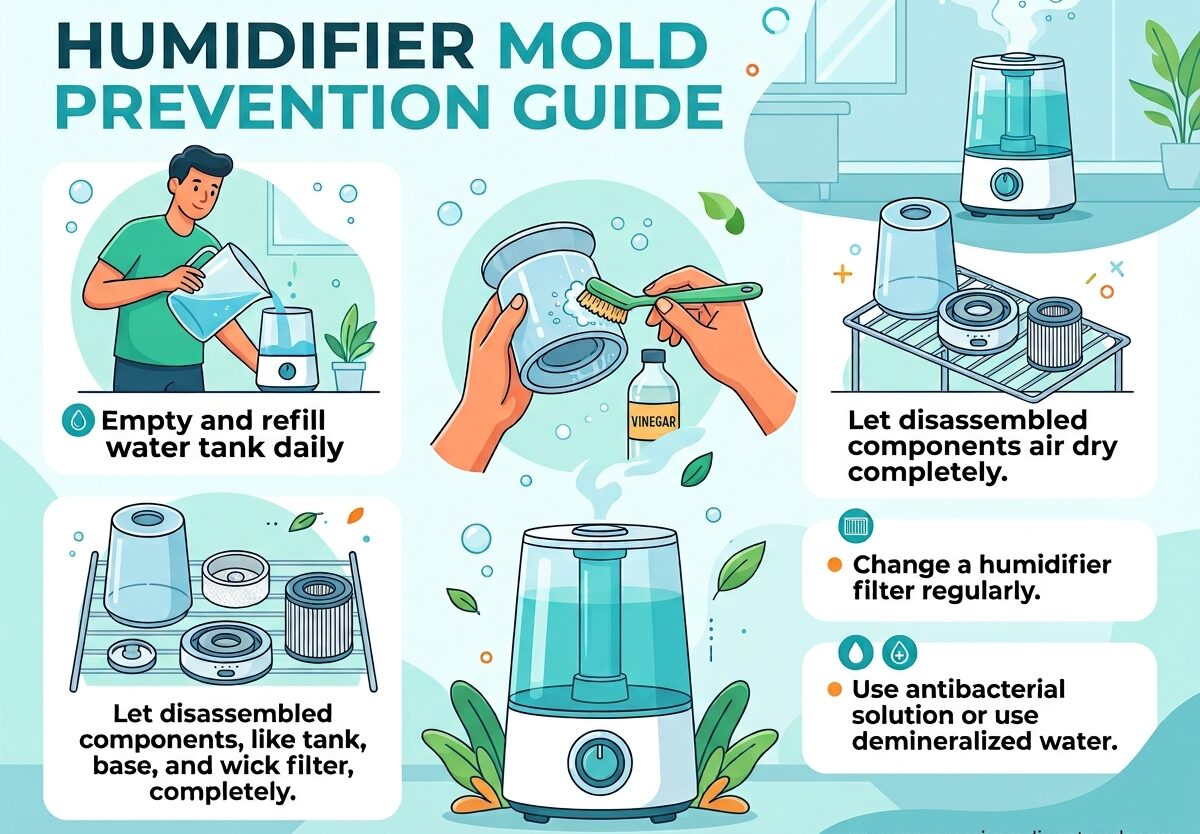
Consistent daily habits prevent mold from getting a foothold in the first place. Every morning, empty any remaining water from the tank and refill with fresh water. This simple step disrupts the 24-48 hour timeline that mold needs to establish itself.
Wipe down the tank interior with a clean cloth or paper towel before refilling. This removes any condensation or small amounts of residue that may have developed overnight. Leaving the tank empty and open during the day allows it to dry completely, which further prevents mold.
At night, do not let water sit in the tank for more than 12 hours without running the humidifier. If you are not using the unit for an extended period, empty it completely and leave the cap off for ventilation. These small habits take less than two minutes but save hours of deep cleaning later.
Weekly Cleaning: The Vinegar Method
White vinegar is your most effective and affordable cleaning agent for humidifier mold prevention. The acetic acid in vinegar dissolves mineral buildup and kills mold spores on contact. This method has been used by homeowners for decades and remains the top recommendation from cleaning experts.
For regular weekly cleaning, mix 1/2 cup of white vinegar with 1 gallon of water. Pour this solution into the tank and let it soak for 15-30 minutes. The soaking time allows the acid to penetrate mineral deposits and kill any mold growing in hard-to-reach areas.
After soaking, scrub the tank with a soft-bristled brush to remove any remaining residue. Pay special attention to the corners, the bottom where sediment collects, and any gasket seals where mold can hide. Rinse the tank thoroughly with clean water until you no longer smell vinegar.
Vinegar is safe for all humidifier types including cool mist, ultrasonic, and evaporative models. The smell dissipates quickly once rinsed properly. Some users worry about the vinegar damaging seals, but the diluted solution used in regular maintenance is gentle enough for weekly use.
Hydrogen Peroxide: The Deep Clean Alternative
When you need a deeper clean or discover mold that has taken hold, hydrogen peroxide is an excellent alternative. A 3% hydrogen peroxide solution is strong enough to kill mold and bacteria but gentle enough for regular use in most humidifiers.
Pour undiluted 3% hydrogen peroxide directly into the tank, enough to fill it halfway. Let it soak for 15-30 minutes, then add clean water to fill the tank completely. Run the humidifier for 10-15 minutes, then empty and rinse thoroughly.
Users in forum discussions report that hydrogen peroxide works faster than vinegar on existing mold. It bubbles and fizzes as it breaks down organic matter, which helps it reach into cracks and crevices. However, it is more expensive than vinegar and some people prefer to reserve it for monthly deep cleans rather than weekly use.
Never mix vinegar and hydrogen peroxide. This combination creates a chemical reaction that reduces effectiveness and can produce dangerous fumes. Use one method or the other, rinsing thoroughly between if you need to switch.
Natural Antifungal Options: Tea Tree Oil
For those who prefer natural solutions, tea tree oil offers antifungal properties that can help with humidifier mold prevention. Add 5-6 drops of tea tree oil to a gallon of water in your tank. This creates an environment where mold struggles to grow.
Tea tree oil has natural antimicrobial properties that inhibit mold and bacteria growth. The smell is pleasant and dissipates as the humidifier runs. Some users report success with this method as a supplement to regular cleaning rather than a replacement for it.
However, tea tree oil is not suitable for all humidifier types. Some ultrasonic humidifiers may have components that react with essential oils. Check your manufacturer guidelines before adding any additives beyond vinegar or hydrogen peroxide. For most cool mist and evaporative humidifiers, tea tree oil is safe in the recommended dilution.
Filter Replacement and Maintenance
Filters play a critical role in humidifier performance and mold prevention. They trap minerals, dust, and contaminants before they enter the air. Over time, filters become saturated with these particles and lose effectiveness. A dirty filter can actually encourage mold growth by trapping moisture and organic matter.
Replace your humidifier filter every 30-60 days, depending on usage and water quality. Some manufacturer guidelines recommend 30 days for heavy use or tap water, while 60 days may suffice for occasional use with distilled water. Mark your calendar when you install a new filter to track replacement timing.
Cleanable filters require different maintenance. Rinse them monthly under clean water and allow them to dry completely before reinstalling. Do not scrub aggressively, as this can damage the filter material and reduce its effectiveness. Replace washable filters every 3-6 months, or sooner if you notice discoloration or odor.
Signs that your filter needs attention include white dust around the humidifier, reduced mist output, or a musty smell when running. These indicators suggest the filter is saturated and may be harboring mold. Addressing filter maintenance promptly protects both your air quality and your equipment.
Health Risks of Humidifier Mold Exposure
Breathing air contaminated with humidifier mold can cause real health problems. The spores released from a moldy humidifier are small enough to reach deep into your lungs when inhaled. This is particularly concerning for children, elderly family members, and anyone with existing respiratory conditions.
Common symptoms of humidifier mold exposure include coughing, wheezing, throat irritation, and increased allergy symptoms. Some people experience headaches or fatigue that they do not associate with their humidifier. Those with asthma may notice worsening symptoms that do not respond to usual medication.
If you or family members experience new respiratory symptoms that coincide with humidifier use, stop using the unit immediately and clean it thoroughly. See a healthcare provider if symptoms persist. The EPA notes that keeping humidifiers clean is essential for preventing these health issues, especially in households with asthmatics or allergy sufferers.
In severe cases, prolonged exposure to certain mold types can lead to more serious respiratory infections. While this is rare, it underscores why prevention through consistent cleaning is so important. Do not ignore a humidifier that has developed persistent mold problems.
Seasonal Storage Tips
When winter ends and you no longer need your humidifier, proper storage prevents mold from developing while the unit sits unused. The most important step is a thorough deep clean before storing. Follow your weekly cleaning routine with extra attention to internal components.
Disassemble the unit as much as possible and clean each piece separately. Pay attention to the water tank, the base, any removable filters, and the mister or nozzle area. Allow all components to dry completely before reassembling. Any remaining moisture can lead to mold growth during storage.
Store the humidifier in its original box if possible, or in a breathable bag that allows air circulation. Do not seal it in plastic bags, as this traps moisture and encourages mold. Place the storage container in a cool, dry location away from direct sunlight and sources of heat.
Check the unit after three months of storage. Open the tank and inspect for any signs of moisture or odor. If everything looks clean, you are ready for the next season. If you notice any issues, clean again before using. This mid-storage check catches problems before they become entrenched.
FAQs
Do humidifiers help prevent mold?
Humidifiers themselves do not prevent mold – improper use can actually encourage mold growth. However, maintaining proper humidity levels (40-50%) can help prevent mold in your home by reducing dry air that cracks wood and creates conditions for mold elsewhere.
How much vinegar do I put in my humidifier to prevent mold?
Use 1/2 cup of white vinegar per gallon of water for regular cleaning. For a standard-sized humidifier tank (1 gallon), a 15-30 minute soak with this ratio dissolves mineral buildup and kills mold spores.
Is it safe to use a humidifier that has mold?
No. Using a humidifier with visible mold can release spores into the air, causing respiratory issues, allergies, and asthma attacks. Always clean thoroughly before using, and replace the unit if mold has infiltrated internal components that cannot be cleaned.
Why do humidifiers get moldy so quickly?
Mold grows in humidifiers within 24-48 hours because the warm, moist environment is ideal. Tap water contains minerals that feed mold, and standing water creates perfect conditions. Daily maintenance and regular deep cleaning prevent this.
Can a humidifier reduce mold?
Properly maintained humidifiers can help reduce overall mold in your home by maintaining optimal humidity (40-50%), which prevents the dry conditions that cause wood to crack and create mold-friendly environments. However, a dirty humidifier will do the opposite.
Is it safe to clean a moldy humidifier?
Yes, it is safe to clean a moldy humidifier. Wear gloves and a mask during cleaning. Use white vinegar or 3% hydrogen peroxide solution, and ensure thorough rinsing. Never mix vinegar and hydrogen peroxide together.
Conclusion
Humidifier mold prevention comes down to three simple habits: daily water changes, weekly vinegar cleaning, and monthly filter checks. These small consistent actions take less than ten minutes per week and keep your unit running safely throughout the season.
The 24-48 hour mold growth timeline means that neglect even for a couple of days can lead to problems. By establishing a routine and sticking with it, you protect your family from respiratory issues while extending the life of your humidifier.
Start this week with a thorough cleaning of your humidifier tank using the vinegar method. Then commit to changing the water daily and setting a weekly reminder for maintenance. Your lungs and your appliance will thank you for years to come.


Leave a Comment