
That distinctive rotten egg smell near your stove is something no homeowner should ignore. A gas stove leaking is more than just an inconvenience – it’s a potentially life-threatening situation that requires immediate attention. Natural gas is highly flammable, and even a small leak can lead to explosions, fires, or serious health problems from prolonged exposure.
I’ve researched the most critical information about gas stove leaks, including how to detect them, what immediate steps to take, and how to tell the difference between normal new-stove smells and dangerous leaks. This guide could save your life.
What is a Gas Stove Leak and Why It’s Dangerous
A gas stove leak occurs when natural gas or propane escapes from your stove’s fuel system through damaged pipes, loose connections, faulty valves, or cracked burner components. Since natural gas is naturally odorless, gas companies add mercaptan – a chemical compound with that unmistakable rotten egg smell – to make leaks detectable.
The danger is twofold. First, natural gas is highly combustible and can explode with even a small spark from a light switch, phone, or static electricity. Second, exposure to gas or its byproduct carbon monoxide can cause serious health issues including headaches, dizziness, nausea, and in extreme cases, death. According to safety data, gas leaks account for thousands of home fires annually.
Immediate Signs of a Gas Stove Leak
The most obvious sign of a gas stove leaking is the smell of rotten eggs or sulfur near your appliance. Natural gas is odorless in its pure form, so utility companies add mercaptan specifically to make leaks immediately noticeable. If you detect this distinctive odor, it’s your clearest warning that something is wrong.
The Rotten Egg Smell (Mercaptan)
Mercaptan is the chemical odorant added to natural gas specifically for safety. It smells like rotten eggs or sulfur and is detectable by most people at very low concentrations. If you notice this smell around your stove – even faintly – you likely have a leak. The smell may be stronger near the floor since natural gas is lighter than air and rises, but propane sinks and pools low.
Hissing or Whistling Sounds
A hissing or whistling sound coming from your stove or gas lines is a telltale sign of pressurized gas escaping through a small opening. This sound might be constant or intermittent, and it’s often most noticeable when the stove is turned off. If you hear unusual sounds from your gas appliances, investigate immediately or call your gas company.
Flame Color Changes (Blue vs Yellow)
Healthy gas stove burners produce a steady blue flame. If you see yellow, orange, or red flames instead, this indicates incomplete combustion and possibly a gas leak or problem with your burner. Yellow flames mean the gas isn’t burning properly, which can produce dangerous carbon monoxide. A flickering or inconsistent flame is also a warning sign.
Dead Houseplants Near the Stove
If your houseplants near the gas stove suddenly die or wilt for no apparent reason, this could indicate a gas leak. Natural gas displaces oxygen in the air, which can suffocate plants. This is often one of the more subtle signs that homeowners overlook until other symptoms appear.
Unexplained High Gas Bills
A sudden spike in your gas bill without increased usage could mean gas is escaping somewhere in your system. While small leaks might not produce an obvious smell, they still waste gas and create danger. Compare your bills from previous months and seasons – an unexplained increase warrants investigation.
Health Symptoms of Gas Exposure
Exposure to natural gas or carbon monoxide from a leaking stove produces specific physical symptoms that shouldn’t be ignored. The most common signs include persistent headaches, dizziness or lightheadedness, nausea, fatigue, and difficulty breathing. These symptoms often worsen when you’re near the stove and improve when you leave the house.
Carbon monoxide is particularly dangerous because it’s odorless and colorless. A gas stove that isn’t burning properly can produce this deadly gas. Symptoms of carbon monoxide poisoning include confusion, chest pain, vomiting, and eventually loss of consciousness. If multiple family members experience these symptoms simultaneously, evacuate immediately and seek medical attention.
Children, elderly individuals, and pets are often affected first and may show symptoms before healthy adults do. If you notice your pets acting unusually lethargic or your children complaining of headaches that go away when outside, consider the possibility of a gas leak.
How to Detect a Gas Stove Leak
There are several reliable methods to detect a gas stove leak, ranging from simple DIY tests to professional detection equipment. The soapy water bubble test is the most accessible method for homeowners and works surprisingly well for identifying small leaks.
The Soapy Water Bubble Test (Step-by-Step)
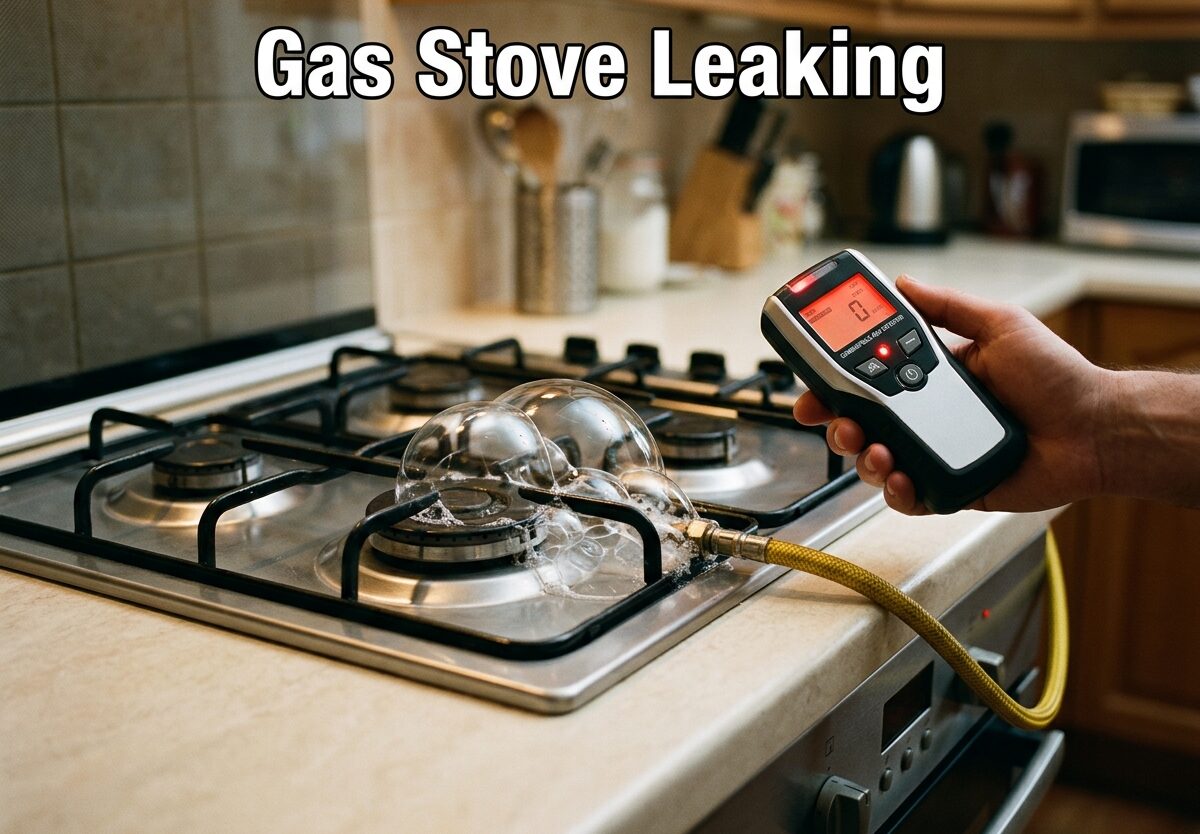
The bubble test is simple and effective for finding small leaks in connections and hoses. Mix one tablespoon of dish soap with one cup of water in a spray bottle or bowl. Turn off all burners and the oven. Make sure your kitchen is well-ventilated. Apply the soapy solution to all gas connections, flexible hoses, and valves using a sponge or spray bottle. Watch closely for bubbles forming at any connection point – growing bubbles indicate escaping gas.
Check all visible connections including where the gas line connects to the stove, each burner connection, and any flexible hoses. Bubbles will appear immediately where gas is escaping. If you find a leak this way, turn off the gas supply at the shutoff valve and call a professional immediately.
Using a Combustible Gas Detector
Combustible gas detectors are electronic devices that sense gas concentrations in the air and alert you when levels become dangerous. These handheld tools can detect natural gas, propane, and other combustible gases. Simply turn on the device and slowly move it around your stove, gas connections, and nearby pipes. The detector will alarm or display readings when it detects gas presence.
While gas detectors are reliable tools, they’re not foolproof. Small leaks might not trigger an alarm immediately, and detectors require regular testing and battery replacement. However, they’re excellent for periodic safety checks and can detect leaks in areas you can’t see or reach easily.
Lead Acetate Test Strips
Lead acetate test strips are chemical indicators that change color when exposed to hydrogen sulfide – the sulfur compound that gives natural gas its smell. While not as commonly used by homeowners, these strips can provide visual confirmation of a gas leak. Expose the strip near suspected leak areas and watch for color changes indicating gas presence.
When to Call the Gas Company Instead
If you smell gas strongly, hear hissing sounds, or feel dizzy or nauseous, don’t attempt to detect the leak yourself. These are emergency situations requiring professional help. Gas companies have specialized equipment and trained technicians who can safely locate and repair leaks. Most gas companies offer free leak detection services and will respond quickly to emergency calls.
Never attempt DIY repairs on gas lines or connections. Improper repairs can make leaks worse or create new hazards. Licensed plumbers and gas company technicians have the training and equipment to work safely with gas systems.
What to Do If Your Gas Stove Is Leaking
If you suspect a gas leak, immediate action is critical. First, don’t panic – move deliberately but quickly. Get everyone out of the house immediately, including pets. Don’t stop to gather belongings or open windows (this can create air currents that spread gas). Leave doors open as you exit to help ventilate the area.
Once outside and at a safe distance (at least 100 feet away), call your gas company’s emergency line or 911. Most areas have 24-hour emergency gas hotlines. Don’t go back inside until emergency responders give the all-clear. Don’t try to locate the leak yourself or attempt to fix it – that’s what professionals are for.
If you know where your gas shutoff valve is located and can safely access it, turn off the gas supply. The valve is usually located near the gas meter or where the gas line enters your home. Turn the valve perpendicular to the pipe to shut off gas flow. Only do this if you can reach it quickly and safely without crossing through areas with strong gas odor.
What NOT to Do During a Gas Leak
Knowing what NOT to do during a gas leak is just as important as knowing what to do. These mistakes can turn a bad situation into a catastrophe. Do NOT turn any electrical switches, lights, or appliances on or off – even a tiny spark can ignite accumulated gas. This includes light switches, thermostats, and even unplugging devices.
Do NOT use your phone inside the house if you suspect a gas leak. The electrical components can create sparks. Take your phone outside before making any calls. Do NOT light matches, candles, or cigarettes – obviously, but also avoid using any flame sources. Do NOT start your car if it’s parked in an attached garage – the ignition could ignite gas that has seeped into the garage.
Do NOT search for the leak yourself – leave that to professionals with proper equipment. Do NOT try to ventilate by opening windows rapidly – this can create static electricity and spread the gas. Do NOT re-enter your home until emergency responders have cleared it safe, even if the gas smell seems to have dissipated.
Common Causes of Gas Stove Leaks
Understanding what causes gas stove leaks can help you prevent them. Loose connections are the most common culprit – the fittings between gas lines and stoves can loosen over time from vibration and regular use. Corrosion of internal gas pipes or flexible supply hoses creates weak spots that eventually leak.
Faulty gas valves or worn seals in the stove’s control mechanism can allow gas to escape. Burner valves that don’t close completely are another common issue. Poor installation – when a stove isn’t properly connected to the gas line – creates immediate leak risks. That’s why professional installation is essential.
Old appliances are more prone to leaks simply from age and wear. If your gas stove is over 15 years old, consider having it professionally inspected or replaced. Moving a stove can also damage connections if not done carefully, so always check for leaks after relocating your stove.
Is It Normal for a New Gas Stove to Smell?
Yes, it’s normal to smell some gas odor when you first use a new gas stove or after installing a replacement. This “new stove smell” comes from manufacturing oils, protective coatings, and dust burning off the burners and heating elements. The smell should dissipate within the first few uses and should never be strong or overwhelming.
If the smell persists beyond 3-4 uses, is very strong, or you notice it when the stove is completely off, that’s NOT normal and indicates a potential leak. New stoves should be professionally installed, and you should request a leak check as part of installation. When in doubt about whether a smell is normal, err on the side of caution and call your gas company.
Carbon Monoxide vs Natural Gas Detector – Key Difference
Many homeowners confuse these two important safety devices, but they detect completely different hazards. Carbon monoxide (CO) detectors alert you to dangerous levels of carbon monoxide – a colorless, odorless byproduct of incomplete combustion. Natural gas detectors alert you to the presence of actual natural gas or propane leaks.
You need BOTH types of detectors for complete protection. A CO detector won’t alert you to a natural gas leak (which has that rotten egg smell), and a natural gas detector won’t warn you about carbon monoxide poisoning. Install CO detectors near sleeping areas as required by law in many states. Place natural gas detectors near gas appliances for earliest leak detection.
Test both types of detectors monthly and replace batteries annually. Replace the entire unit according to manufacturer recommendations – typically every 5-7 years. These small devices are inexpensive insurance against deadly hazards.
How to Prevent Gas Stove Leaks
Prevention is always better than emergency response. Schedule annual professional inspections of your gas stove and all gas lines in your home. A licensed technician can catch small problems before they become dangerous. Keep the area around your stove clean and clear – grease buildup and clutter can hide leaks and create fire hazards.
Never attempt DIY gas line repairs or modifications. Gas systems require professional training and proper licensing. Replace aging appliances before they fail – most gas stoves last 15-20 years with proper maintenance. Install and maintain both carbon monoxide and natural gas detectors throughout your home. These simple steps can dramatically reduce your risk of experiencing a dangerous gas leak.
FAQs
What happens if a gas stove leaks?
Gas leaks can cause explosions from ignition, fires from accumulated gas, and health problems from exposure including headaches, dizziness, nausea, and carbon monoxide poisoning. In severe cases, gas leaks can be fatal.
Are there warning signs before a gas explosion?
Yes. Warning signs include strong rotten egg smell, hissing sounds from gas lines, yellow or orange flames instead of blue, dead houseplants near gas appliances, and physical symptoms like dizziness or headaches among household members.
Can a gas stove cause dizziness?
Yes. Exposure to natural gas or carbon monoxide from a leaking stove can cause dizziness, headaches, nausea, fatigue, and confusion. These symptoms typically improve when you leave the affected area and breathe fresh air.
How can I tell if my gas stove is leaking carbon monoxide?
You cannot see or smell carbon monoxide. Warning signs include yellow flames instead of blue, soot around burners, and physical symptoms like headache, dizziness, nausea, and confusion that affect multiple household members. Install a CO detector – it’s the only reliable way to detect carbon monoxide.
Who to call for gas stove leak?
Call your gas company’s emergency line immediately. Most gas companies offer free 24-hour emergency leak detection and response. If the situation feels dangerous or anyone is experiencing symptoms, call 911 first, then evacuate and wait for emergency responders.
Is it normal to smell a little gas from stove?
No. A properly functioning gas stove should NEVER smell like gas. A very faint smell when first lighting a burner briefly is normal, but any persistent smell – even faint – indicates a leak. New stoves may have a temporary burning smell from manufacturing residues, but this should dissipate after a few uses.
Conclusion
Gas stove leaking is a serious safety issue that requires immediate attention and professional repair. Knowing the signs – rotten egg smell, hissing sounds, yellow flames, and physical symptoms – can help you identify problems early. The bubble test offers a simple DIY detection method, but never hesitate to call your gas company for emergency service. Install both carbon monoxide and natural gas detectors, schedule annual inspections, and always prioritize safety over convenience. When it comes to gas leaks, it’s always better to be overly cautious than to risk your family’s safety.




Leave a Comment