
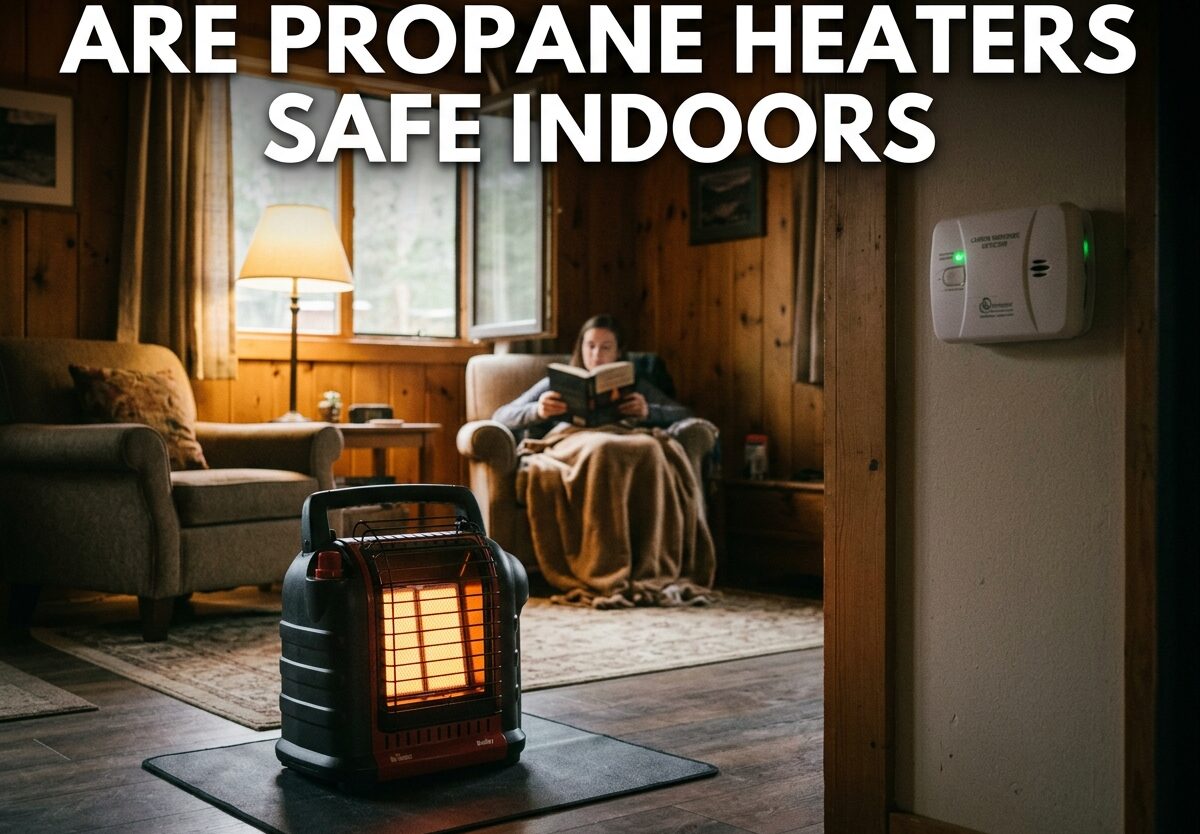
Yes, propane heaters CAN be safe indoors when you use indoor-rated models equipped with Oxygen Depletion Sensors (ODS), maintain proper ventilation, and install carbon monoxide detectors. The key is understanding the difference between heaters designed for indoor use versus those meant only for outdoor spaces. I’ll explain exactly what makes some propane heaters safe for indoor use and the critical safety precautions you need to follow.
Table of Contents
- Understanding Indoor Propane Heater Safety
- Critical Safety Features: ODS and Beyond
- Indoor-Rated vs Outdoor-Only Heaters: The Critical Difference
- Ventilation Requirements for Indoor Propane Heaters
- Carbon Monoxide Safety: What You Must Know
- Propane Tank Storage Safety Indoors
- Common Myths vs Facts About Indoor Propane Heaters
- Best Practices for Safe Indoor Propane Heater Use
- When NOT to Use Propane Heaters Indoors
- Water Vapor Production: The Overlooked Effect
- Frequently Asked Questions
- Conclusion
Understanding Indoor Propane Heater Safety
Are propane heaters safe indoors? The answer depends entirely on using the right equipment. Indoor-rated propane heaters are specifically engineered with safety features that make them suitable for enclosed spaces. These heaters burn propane fuel more completely and include automatic shut-off mechanisms that activate when oxygen levels drop or unsafe conditions are detected. The question isn’t whether propane heaters are inherently dangerous, but whether you’re using a heater designed and certified for indoor use.
I’ve researched this topic extensively because many homeowners, campers, and emergency preppers need reliable backup heating options. Understanding the difference between safe indoor propane heaters and dangerous outdoor-only models can literally save lives. Let me break down exactly what you need to know.
Critical Safety Features: ODS and Beyond
The single most important safety feature in any indoor propane heater is the Oxygen Depletion Sensor (ODS). This small but critical device continuously monitors oxygen levels in your space and automatically shuts off the heater if oxygen drops below safe levels. I can’t stress enough how important this feature is. An ODS is what separates a potentially safe indoor heater from one that should never be used inside.
Beyond the ODS, safe indoor propane heaters include multiple layers of protection. Automatic shut-off valves stop gas flow if the flame goes out. Tip-over protection immediately kills power if the heater gets knocked over. Overheat sensors detect when internal temperatures reach dangerous levels and shut everything down. Cool-touch housing prevents burns from accidental contact. These safety features work together to make indoor propane heaters a viable option when used correctly.
What Is an Oxygen Depletion Sensor (ODS)?
An Oxygen Depletion Sensor is a safety device that measures the percentage of oxygen in the surrounding air. When oxygen levels fall below approximately 18.5% (normal air is about 21% oxygen), the ODS triggers a complete shutdown of the heater. This prevents dangerous oxygen depletion and reduces the risk of carbon monoxide buildup. The ODS is your primary defense against the invisible dangers of burning fuel indoors. Every indoor propane heater you consider should have this feature prominently listed in its specifications.
Indoor-Rated vs Outdoor-Only Heaters: The Critical Difference
This distinction is absolutely critical and cannot be overstated. Outdoor-only propane heaters lack Oxygen Depletion Sensors and other indoor safety features. They’re designed for open-air spaces where natural ventilation prevents dangerous gas accumulation. Using an outdoor-only propane heater indoors is extremely dangerous and can lead to carbon monoxide poisoning, oxygen depletion, and potentially fatal consequences.
Indoor-rated propane heaters are explicitly certified for indoor use by organizations like CSA (Canadian Standards Association) or UL (Underwriters Laboratories). These certifications appear on the heater’s label and documentation. Look for clear wording like “Indoor Safe” or “Indoor-Rated” on the product packaging. Manufacturers cannot legally make these claims without meeting strict safety standards. If a heater doesn’t specifically state it’s rated for indoor use, assume it’s outdoor-only and keep it outside.
Ventilation Requirements for Indoor Propane Heaters
Even with indoor-rated heaters equipped with ODS, proper ventilation remains essential. Here’s a practical formula I recommend: provide at least one square inch of opening for every 1,000 BTUs of heater output. For example, a 10,000 BTU heater needs at least 10 square inches of ventilation. This can be achieved by cracking a window or door slightly.
Ventilation serves multiple purposes. It provides fresh oxygen for combustion, prevents moisture buildup from the water vapor produced during burning, and ensures any minor gas leaks can dissipate harmlessly. Even the safest indoor propane heaters should never be used in completely sealed spaces. I recommend always cracking a window when operating any propane heater indoors, regardless of its safety features.
Carbon Monoxide Safety: What You Must Know
Carbon monoxide (CO) is an odorless, colorless gas produced when propane burns incompletely. While ODS-equipped heaters dramatically reduce this risk, no safety system is perfect. This is why a working carbon monoxide detector is absolutely non-negotiable when using any fuel-burning appliance indoors.
Place CO detectors on every level of your home and specifically in rooms where you’ll use the propane heater. Test them monthly and replace batteries annually. Know the symptoms of CO exposure: headache, dizziness, nausea, and confusion. If anyone experiences these symptoms while a propane heater is running, immediately turn off the heater, move to fresh air, and seek medical attention if symptoms persist.
Propane Tank Storage Safety Indoors
A common point of confusion is whether propane tanks can be stored or used indoors. Here’s the clear answer: propane tanks in active use (connected to an indoor-rated heater) are generally acceptable when the heater is designed for that purpose. However, storing spare or disconnected propane tanks indoors is not recommended and often violates local safety codes.
The reason is simple: propane is heavier than air. If a spare tank were to leak, the gas would settle at floor level and create an explosion hazard. Store extra propane tanks outdoors in a shaded, well-ventilated area away from ignition sources. When changing tanks indoors, do so in a well-ventilated space and check all connections carefully before relighting the heater.
Common Myths vs Facts About Indoor Propane Heaters
Let me address some persistent myths that create confusion about indoor propane heater safety:
Myth: All propane heaters are dangerous indoors.
Fact: Indoor-rated models with ODS and proper certifications are specifically designed for safe indoor use when following manufacturer guidelines.
Myth: The ODS makes propane heaters completely foolproof.
Fact: ODS is an important safety feature, but it doesn’t eliminate the need for ventilation, CO detectors, and proper usage practices.
Myth: Any propane heater is safe if you open a window.
Fact: Outdoor-only heaters lack critical safety features regardless of ventilation. Only use heaters specifically rated and certified for indoor use.
Best Practices for Safe Indoor Propane Heater Use
Follow these guidelines every time you use an indoor propane heater:
Never leave the heater operating unattended. This means no running the heater while you’re asleep or out of the room. Keep flammable materials at least three feet away from the heater in all directions. This includes curtains, furniture, bedding, and paper products. Check the heater’s condition before each use. Look for damage to the hose, connections, or burner unit. Never use a damaged heater.
Place the heater on a stable, level surface away from foot traffic. Keep children and pets away from the operating heater. Follow all manufacturer instructions regarding fuel type and operation. Use only the type of propane tank specified by the manufacturer. Never attempt to modify or repair the heater yourself.
When NOT to Use Propane Heaters Indoors
There are specific situations where even indoor-rated propane heaters should not be used. Avoid using propane heaters in very small enclosed spaces like bathrooms, closets, or under tents. These spaces have limited air volume and ventilation options. Never operate a propane heater while sleeping. The risk of oxygen depletion overnight is too high, even with ODS protection.
Don’t use propane heaters around unsupervised children or pets. The hot surfaces and fire hazards require adult supervision at all times. Avoid using damaged or malfunctioning equipment. If anything seems off unusual odors, yellow or flickering flames, difficulty lighting turn off the heater immediately and have it inspected before using again.
Water Vapor Production: The Overlooked Effect
One effect rarely discussed is water vapor production. When propane burns, it produces water vapor as a byproduct. A typical propane heater can release significant moisture into the air during operation. In most situations, this isn’t a problem, but in very small or poorly ventilated spaces, it can lead to condensation on windows and walls.
Over time, excess moisture can contribute to mold growth and damage to building materials. This is another reason why adequate ventilation is important, even with indoor-rated heaters. If you notice excessive condensation while using your propane heater, increase ventilation or limit operating time.
Frequently Asked Questions
Are there any propane heaters safe to use indoors?
Is it okay to run a propane heater indoor without ventilation?
How long can you run a propane heater indoors?
Are Little Buddy propane heaters safe to use inside?
Do indoor propane heaters produce carbon monoxide?
Can you use a propane heater in a tent?
Conclusion
Are propane heaters safe indoors? Yes, when you choose indoor-rated models equipped with Oxygen Depletion Sensors, maintain proper ventilation, and install carbon monoxide detectors. The key is understanding that not all propane heaters are created equal outdoor-only models should never be used indoors under any circumstances. Indoor-rated propane heaters provide a valuable backup heating option for power outages, emergency situations, and supplemental heating when used responsibly.
Always prioritize safety: verify indoor certification, ensure adequate ventilation, install CO detectors, never leave heaters unattended, and follow all manufacturer guidelines. When these precautions are followed, propane heaters can be a safe and effective indoor heating solution. Stay warm and stay safe.


Leave a Comment