
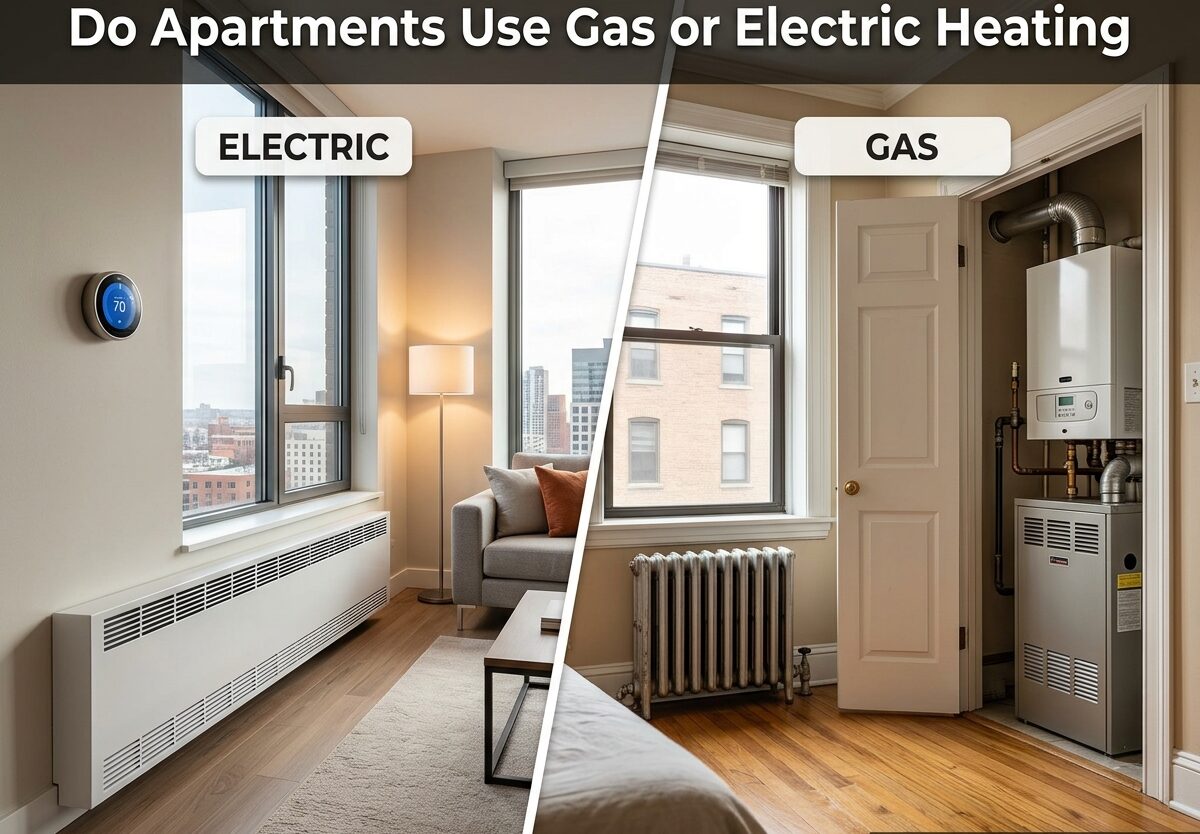
Apartments use both gas and electric heating systems, with the choice depending on building age, location, and infrastructure. Gas heating remains more common in older apartment buildings, especially in colder regions where natural gas infrastructure has existed for decades. Newer apartment constructions increasingly favor electric heating, particularly heat pump systems, due to easier installation and environmental considerations. Understanding which type your apartment uses affects your monthly utility costs, safety responsibilities, and heating efficiency.
Do Apartments Use Gas or Electric Heating
Approximately 47% of American households rely on natural gas for space heating, while electric heating serves about 40% of homes, according to the U.S. Energy Information Administration’s most recent Residential Energy Consumption Survey. In multifamily apartment buildings, the split varies significantly by region and building age. The Northeast and Midwest show higher gas usage due to older housing stock and established natural gas infrastructure, while the South and West demonstrate greater electric heating adoption, particularly in developments built after 2000.
Climate plays a crucial role in heating system selection. Apartments in regions with harsh winters typically install gas forced-air systems or boilers because natural gas delivers heat faster and maintains comfortable temperatures more efficiently during extreme cold. Conversely, apartments in milder climates often rely on electric heat pumps that provide both heating and cooling functionality, making them more versatile and cost-effective for year-round use.
Building age remains one of the strongest predictors of heating type. Apartment complexes constructed before 1980 overwhelmingly feature gas central heating systems, as natural gas was significantly cheaper than electricity during that era. Buildings erected after 2010 increasingly incorporate electric heat pumps, high-efficiency electric boilers, or zoned electric baseboard heating, responding to evolving energy prices and stricter environmental regulations.
Regional Variations in Apartment Heating
The Northeast region demonstrates the highest concentration of gas heating in apartments, with approximately 65% of multifamily buildings relying on natural gas. States like New York, Massachusetts, and Pennsylvania feature extensive gas infrastructure established during the mid-20th century, making gas heating the default choice for most apartment constructions. Older apartment buildings in cities like Boston and Philadelphia typically utilize central steam boilers powered by gas, distributing heat through cast iron radiators in individual units.
The Midwest shows similar patterns, with roughly 60% of apartments using gas heating. The region’s harsh winters make gas’s rapid heating capability particularly valuable. Cities like Chicago, Minneapolis, and Detroit feature countless apartment buildings with gas forced-air systems, many installed during the post-World War II housing boom. However, newer suburban apartment complexes in Midwest states increasingly adopt heat pump technology despite winter challenges.
The South presents a striking contrast, with electric heating dominating the apartment landscape. Approximately 55% of Southern apartments rely on electric systems, primarily heat pumps that handle both heating and cooling needs. States like Texas, Florida, and Arizona favor electric systems due to milder winters where heat pumps operate efficiently. The cooling advantage of heat pumps makes them particularly attractive in regions where air conditioning dominates annual energy consumption.
The West Coast demonstrates the most diverse heating mix. California apartments increasingly feature electric heat pumps due to environmental regulations encouraging electrification. Pacific Northwest apartments, conversely, maintain higher gas usage due to historically cheap natural gas and existing infrastructure. Mountain states vary based on elevation and winter severity, with high-altitude Colorado apartments favoring gas heating while lower-elevation developments embrace heat pump technology.
Historical Evolution of Apartment Heating
Apartment heating systems have undergone dramatic transformation throughout American history. Early apartment buildings in the late 1800s relied on coal-fired boilers distributing steam through radiators, with building staff manually stoking fires around the clock. This labor-intensive system required constant attention and created significant air pollution in urban areas. The transition to natural gas began in the early 20th century as gas pipelines expanded into major cities, offering cleaner and more automated heating.
The post-World War II housing boom accelerated gas heating adoption in apartments. Natural gas prices remained low through the 1960s and 1970s, making gas the economical choice for large apartment complexes. During this era, developers installed gas forced-air systems in millions of apartment units across America. These systems provided zoned control for individual apartments, a significant improvement over the all-or-nothing steam systems of earlier decades.
The 1970s energy crisis prompted initial interest in electric alternatives, but high electricity costs limited widespread adoption. Electric baseboard heating gained traction in smaller apartment buildings and individual units where gas installation proved impractical. However, the technology remained inefficient compared to gas options, restricting its use to specific applications and regions with mild climates.
The heat pump revolution beginning in the 1990s fundamentally altered the apartment heating landscape. Advances in compressor technology and refrigerants made heat pumps viable in colder climates, expanding their application beyond the Sun Belt. Modern variable-speed inverters, introduced in the 2010s, further enhanced heat pump performance in cold weather, making them increasingly competitive with traditional gas heating systems even in northern regions.
Today, the apartment heating industry stands at another inflection point. Environmental regulations increasingly discourage new gas connections, while technological advances make electric heating more efficient and cost-effective. Many municipalities have enacted or proposed gas bans in new construction, accelerating the transition to all-electric apartment buildings. This shift reflects growing concern about climate change and evolving preferences for cleaner energy sources in residential settings.
Types of Apartment Heating Systems
Gas Heating Systems
Gas forced-air furnaces represent the most common heating system in older apartment buildings. These systems burn natural gas to heat a metal heat exchanger, then distribute warm air throughout individual units via a network of ducts and vents. A typical apartment gas furnace delivers between 40,000 and 120,000 BTUs of heating capacity, with efficiency ratings ranging from 80% for older units to over 98% for modern high-efficiency models.
Modern gas furnaces employ sophisticated technology to maximize efficiency and comfort. Two-stage furnaces can operate at lower capacity during mild weather and ramp up during extreme cold, providing more consistent temperatures and reducing energy waste. Variable-speed blowers precisely control airflow, eliminating temperature swings and improving humidity regulation. High-efficiency condensing furnaces extract so much heat from combustion gases that exhaust temperatures are cool enough to vent through plastic pipes rather than metal chimneys.
Steam and hot water boilers provide another traditional gas heating method found in apartment buildings, particularly in pre-1950 constructions. These central boilers heat water that circulates through pipes to radiators or baseboard units in each apartment. While boiler systems operate more quietly than forced air and maintain more consistent temperatures, they heat up more slowly and require regular maintenance to prevent corrosion and sediment buildup.
Steam boilers, common in older East Coast apartments, heat water to the boiling point and distribute steam through insulated pipes to cast iron radiators. These systems create distinctive clicking sounds as steam moves through pipes and radiators heat up. Steam systems require careful water level monitoring and periodic venting of air from radiators to maintain even heating throughout the building.
Hot water boilers operate at lower temperatures than steam systems, circulating water at 160-180 degrees Fahrenheit through baseboard radiators or tubing hidden in floors. These systems provide more responsive control than steam and operate at higher efficiencies. Many older boiler buildings have been upgraded with modern condensing boilers that achieve over 95% efficiency, dramatically reducing fuel consumption compared to original equipment.
Gas wall units and floor furnaces occasionally appear in older studio apartments and efficiency units where installing ductwork proves impractical. These self-contained units vent directly through exterior walls and typically serve single rooms or small open floor plans. While inexpensive to install, gas wall units generally provide less even heating and require careful monitoring for proper ventilation. Floor furnaces, installed beneath floor grates, present tripping hazards and efficiency challenges but remain in some older apartment conversions.
Electric Heating Systems
Electric baseboard heaters rank among the most common electric heating solutions in apartments, particularly in individual units built between 1960 and 2000. These zoned heaters use electric resistance elements to warm air directly, with each room typically controlled by its own wall-mounted thermostat. While installation costs remain low and maintenance requirements minimal, electric baseboard heating often generates higher monthly utility bills compared to natural gas.
Electric baseboard heating works through simple principles: electric current flows through resistance heating elements, converting electrical energy directly into heat. Each unit typically produces 250-500 watts per linear foot, with standard apartment units requiring 10-20 feet of baseboard heating total. The heaters create natural convection currents, drawing cool air from the floor, warming it as it rises through heating elements, and releasing warm air from the top of the unit.
Modern electric baseboard heaters incorporate improved thermostats and safety features. Built-in electronic thermostats provide more precise temperature control than traditional mechanical dial thermostats, reducing temperature swings and energy waste. Many units include automatic shutoff if tipped over or if objects block airflow, addressing fire safety concerns associated with earlier models. Some advanced models include programmable thermostats that can reduce heating during unoccupied hours.
Heat pumps have gained tremendous popularity in newer apartment constructions, especially in regions with moderate climates. These electric-powered systems transfer heat between indoor and outdoor air rather than generating it directly, providing both heating and cooling from a single system. Modern heat pumps deliver 200-300% efficiency because they move existing thermal energy rather than creating it through resistance, though their effectiveness declines in temperatures below 25 degrees Fahrenheit.
Heat pump technology has advanced dramatically in recent years. Traditional single-speed heat pumps struggle in cold weather, losing efficiency and switching to expensive electric resistance backup heating below freezing temperatures. Modern cold-climate heat pumps feature variable-speed compressors that maintain efficiency down to 5 degrees Fahrenheit, with some models rated for operation down to -13 degrees. These advances make heat pumps viable even in northern regions previously considered unsuitable for electric heating.
Ductless mini-split heat pumps offer particular advantages for apartment retrofits and additions. These systems consist of an outdoor condenser unit connected to one or more indoor air handlers via refrigerant lines, eliminating the need for ductwork. Each indoor unit operates independently, allowing tenants to control temperatures in different zones precisely. Mini-splits achieve higher efficiency than central heat pumps because they avoid duct energy losses and can adjust capacity precisely to match heating needs.
Electric furnaces function similarly to gas furnaces but use heating elements instead of burners. These all-electric forced-air systems appear in apartments where natural gas service is unavailable or where builders prioritized simplicity over operating costs. While electric furnaces offer 100% efficiency at the unit level and require no venting, the higher cost of electricity per BTU makes them more expensive to operate than gas equivalents.
Electric furnace technology has improved with variable-speed blowers and staged heating elements that modulate output based on demand. Rather than operating at full capacity constantly, modern electric furnaces can use only the heating elements needed for current conditions, reducing energy waste and temperature fluctuations. However, their operating cost disadvantage compared to gas furnaces limits their application to regions with expensive natural gas or where environmental regulations discourage gas connections.
Hybrid Systems
Dual fuel systems combine electric heat pumps with gas furnace backup, automatically switching between the two based on outdoor temperature. These hybrid systems maximize efficiency by using the heat pump during mild conditions and switching to gas heating when temperatures plummet below the heat pump’s effective operating range. While increasingly common in luxury apartments seeking optimal energy efficiency, dual fuel systems represent a significant upfront investment for property owners.
The intelligence behind dual fuel systems lies in the thermostat controlling them. These specialized thermostats monitor outdoor temperature and energy prices, calculating the most economical heating mode in real-time. During mild weather when heat pumps operate efficiently, the system uses electric heating exclusively. As temperatures drop and heat pump efficiency declines, the thermostat calculates the economic crossover point and automatically switches to gas heating. In regions with time-of-use electricity pricing, some systems can even switch based on current electric rates.
Dual fuel systems address the fundamental weakness of heat pumps in cold climates while maintaining their efficiency advantage in mild weather. An apartment building in a climate with 30-degree winter days might use the heat pump for 70% of the heating season and gas for the 30% when temperatures drop below 25 degrees. This hybrid approach can reduce heating costs by 20-40% compared to gas-only systems in regions with moderate winters, while maintaining comfort during extreme cold events.
Emerging Heating Technologies
Geothermal heat pumps represent the cutting edge of efficient apartment heating, though their high cost limits widespread adoption. These systems tap into constant underground temperatures, using the earth as a heat source in winter and heat sink in summer. Geothermal systems achieve 400-500% efficiency, far exceeding conventional heat pumps or gas furnaces. While typically installed in single-family homes, larger apartment complexes can utilize shared ground loops to distribute costs across multiple units.
Variable refrigerant flow (VRF) systems, originally developed in Asia, increasingly appear in modern apartment buildings. These sophisticated heat pump systems can provide simultaneous heating and cooling to different parts of a building by selectively directing refrigerant flow. A VRF system might heat north-facing apartments needing warmth while cooling south-facing units experiencing solar gain, all from a single outdoor condenser plant. This flexibility makes VRF systems ideal for mixed-use buildings with diverse heating and cooling needs.
Smart heating technology integration represents another emerging trend in apartment buildings. Internet-connected thermostats, sensors, and controls allow building managers to optimize heating system operation across entire complexes. These systems can detect when apartments are unoccupied using motion sensors and automatically reduce heating, preventing energy waste. Some advanced implementations use machine learning algorithms to predict heating demand based on weather forecasts and occupancy patterns, pre-conditioning apartments before tenants arrive home.
Gas vs Electric Heating Comparison
| Factor | Gas Heating | Electric Heating |
|---|---|---|
| Monthly Operating Cost | Generally 30-50% lower than electric (varies by region) | Higher due to electricity cost per BTU |
| Installation Cost | Higher due to gas lines, venting, and ductwork | Lower, especially for baseboard or heat pump systems |
| Heating Speed | Fast heat delivery, ideal for cold climates | Slower, especially heat pumps in extreme cold |
| Energy Efficiency | 80-98% AFUE rating for furnaces | 100% efficient at unit level; 200-300% for heat pumps |
| Maintenance | Annual professional inspection recommended | Minimal maintenance, longer intervals between service |
| Lifespan | 15-20 years for furnaces, 20-30 for boilers | 20-30 years for electric furnaces, 15 for heat pumps |
| Safety Concerns | Carbon monoxide risk, gas leaks, combustion | No combustion byproducts, fire risk from overheating |
| Environmental Impact | Emits CO2 during combustion | Zero direct emissions; impact depends on electricity source |
How to Identify Your Apartment Heating Type
Step 1: Locate Your Heating Unit
Find your apartment’s heating equipment, which may be located in a closet, basement, utility room, or dedicated mechanical space. In many apartments, especially those with central systems, you might only have access to the thermostat while the actual heating equipment resides in a building-wide mechanical room. If this describes your situation, skip ahead to the utility bill and thermostat identification methods.
For apartments with individual heating systems, start by checking utility closets, laundry rooms, or basement spaces. Gas furnaces typically require dedicated mechanical spaces with proper ventilation and gas line access. Electric baseboard heaters are visible along the walls of each room, typically positioned under windows to counteract cold air infiltration. Heat pump systems feature outdoor condenser units resembling air conditioners, plus indoor air handlers or duct connections.
In high-rise apartment buildings, heating equipment often resides in penthouse mechanical rooms or basement utility spaces. These central systems serve multiple units through vertical shafts and horizontal distribution pipes. You may only see terminal equipment like radiators, baseboard convectors, or vent registers in your actual apartment, with the main heating plant located elsewhere in the building.
Step 2: Perform Visual Inspection
Examine your heating unit carefully. Gas furnaces typically feature a sealed metal cabinet with visible gas pipes (usually black iron or flexible yellow connectors) leading into the unit, along with metal vent pipes exiting through the ceiling or wall. Electric furnaces resemble gas units but lack gas connections and venting, instead featuring heavy electrical conduits and power cables. Baseboard heaters with no pipes or vents indicate electric resistance heating, while cast iron radiators or copper tubing with aluminum fins point to a boiler system.
Gas furnaces have distinctive visual features that aid identification. Look for the gas shut-off valve, typically located within six feet of the unit and featuring a quarter-turn handle. The gas line connects to a gas valve mounted on the furnace, with smaller diameter pipes supplying gas to individual burners. The combustion chamber door provides access to burners and the heat exchanger, though you should never operate this door while the furnace is running.
Electric furnaces lack these gas connections entirely. Instead, you’ll see heavy electrical cables entering the cabinet, often protected by flexible metal conduit. The circuit breaker or disconnect switch for an electric furnace typically ranges from 60 to 100 amps, reflecting the substantial power draw. Inside the cabinet, you would see heating elements glowing red when operating, though cabinet viewing ports are uncommon for safety reasons.
Heat pump outdoor units resemble central air conditioners, with large fans and metal coils. You can distinguish heat pumps from air conditioners by looking for a reversing valve—a brass component with three pipe connections—and a defrost cycle that occasionally causes the outdoor unit to steam in cold weather. The technical specification label typically lists both cooling and heating capacities, confirming heat pump functionality.
Step 3: Check for Venting
Look for vent pipes or flues. Gas heating requires ventilation to exhaust combustion byproducts outdoors, so you’ll see metal vent pipes (typically round or oval) connecting to the heating unit and extending through exterior walls or the roof. Electric heating produces no combustion gases and requires no venting, so the absence of vent pipes strongly indicates electric heating. This visual clue often provides the quickest identification method.
Gas furnace venting configurations vary by installation type. Standard-efficiency furnaces use metal vent pipes, often 4-6 inches in diameter, that connect to the furnace and extend through the roof. These vents remain warm during operation as they carry hot exhaust gases. High-efficiency condensing furnaces use plastic PVC pipes for venting, typically running horizontally through exterior walls. These systems also include a condensate drain line that removes water produced during combustion.
Gas boilers use different venting strategies depending on whether they’re steam or hot water systems. Steam boilers typically vent into existing chimney flues, with visible vent connections entering chimney structures. Modern high-efficiency boilers may use sidewall venting with plastic pipes similar to condensing furnaces. The absence of any vent pipes in conjunction with radiators or baseboard convectors strongly suggests a remote boiler serving multiple units from a central location.
Electric heating systems have no venting requirements because they produce no combustion byproducts. This absence of vent pipes provides a clear visual indicator. If you see baseboard heaters, electric wall units, or cabinet-style heaters with no external venting connections, your apartment almost certainly uses electric resistance heating. Heat pump outdoor units also require no venting, though they do have refrigerant lines connecting indoor and outdoor components.
Step 4: Examine the Unit Label
Look for the manufacturer’s label, typically affixed to the inside of the access panel. Gas furnaces list specifications in BTUs (British Thermal Units), while electric units display ratings in kilowatts or watts. The label may also explicitly state “gas furnace,” “electric furnace,” “heat pump,” or “electric boiler.” If you can safely access this information without touching live electrical components or hot surfaces, the label provides definitive identification.
Gas furnace labels typically include input capacity in BTUs per hour, output capacity in BTUs per hour, and efficiency percentage. For example, a label might read “Input: 100,000 BTUH, Output: 80,000 BTUH, AFUE: 80%.” This indicates the furnace converts 80% of gas energy into usable heat, with the remaining 20% lost through venting. The model number and serial number also help identify the furnace type and age through manufacturer databases.
Electric furnace labels display heating capacity in kilowatts, such as “15 kW heating capacity” or “51,000 BTU output.” Unlike gas furnaces, electric units show 100% efficiency because all electrical energy converts to heat. The electrical specifications include voltage (typically 240V for heating elements), phase (single or three-phase), and amperage draw. You might also see “heat strip” or “heating element” references in the specification list.
Heat pump labels include both heating and cooling specifications, typically measured in BTUs or tons for capacity and SEER/HSPF for efficiency. A heat pump label might show “Cooling: 3 tons (36,000 BTU), Heating: 38,000 BTU, SEER: 16, HSPF: 9.” The presence of both heating and cooling ratings definitively identifies the unit as a heat pump rather than a dedicated furnace or air conditioner.
Step 5: Analyze Your Utility Bills
Review your monthly utility statements carefully. Apartments with gas heating typically receive separate bills for both electricity and natural gas, with the gas bill showing significant seasonal increases during winter months. Electric-only apartments receive only an electric bill, which will spike during heating season if your unit uses electric resistance heating or a heat pump. If your landlord covers heating costs, check your lease for specific utility inclusions.
Gas bills for heating show distinct seasonal patterns. During summer months when heating isn’t needed, gas consumption drops dramatically, often showing only minimal usage for gas water heaters or cooking appliances. Winter gas bills increase proportionally to heating demand, with the coldest months showing 5-10 times the gas usage of summer months. The gas bill typically measures usage in therms or hundred cubic feet, with winter consumption ranging from 50-200 therms depending on apartment size and climate severity.
Electric heating manifests differently on utility bills depending on system type. Electric resistance baseboard heating produces dramatic seasonal increases, with winter electric bills potentially 3-4 times higher than summer bills. Heat pump systems show more moderate increases because they maintain high efficiency even in cold weather. In all-electric apartments, you’ll see only electric bills with no separate gas charges, though some utilities break out electric usage by time period to identify heating-related consumption.
Utility bill analysis becomes more complex when landlords cover heating costs. In these arrangements, you might receive only an electric bill that excludes heating-related usage, with the landlord paying for heating through a master meter. Check your lease agreement for specific utility inclusions, and ask your landlord directly if your bill structure seems unclear. Some buildings use submetering systems that bill tenants individually for heating even though equipment is centrally located.
Step 6: Inspect the Thermostat
Remove your thermostat’s cover plate and examine the wiring behind it. Gas heating systems typically have two to four wires connected to the thermostat, while electric heat pumps often have five or more wires due to additional controls for reversing valves and auxiliary heat. Smart thermostats can also identify your system type during setup, displaying whether you have gas, electric, heat pump, or hybrid heating.
Traditional gas furnace thermostats use simple wiring configurations. Most basic gas systems require only two wires: one for heating demand and one for power. More sophisticated gas furnaces might include additional wires for fan control or air conditioning, but rarely exceed four total wires. The wire connections typically include terminals labeled R (power), W (heat), Y (cooling), and G (fan). The presence of a W wire without additional heating-specific wires suggests a gas system.
Heat pump thermostats require more complex wiring due to additional control functions. Standard heat pump wiring includes terminals for O or B (reversing valve), which controls whether the system heats or cools, and AUX or E (auxiliary or emergency heat), which activates electric backup heating. Heat pump thermostats typically have at least five wires and often include additional wires for staging or dual fuel systems. The presence of O/B or AUX terminals on your thermostat definitively indicates a heat pump system.
Smart thermostats like Nest, Ecobee, or Honeywell Home include system detection features. During setup, these thermostats analyze connected wiring and automatically configure for the detected system type. They display system information in settings menus, often explicitly stating “Gas furnace,” “Heat pump,” “Electric baseboard,” or other specific configurations. If you have a smart thermostat, checking the equipment settings provides instant system identification without requiring visual inspection of heating equipment.
Step 7: Ask Your Landlord or Property Manager
When in doubt, consult your landlord or building management. They maintain records of all building systems and can quickly identify your heating type. This approach proves especially reliable in larger complexes with central boiler plants or shared mechanical systems where individual units contain only terminal equipment like radiators or vent registers.
Property managers can provide specific details about heating system make, model, and maintenance history. They typically have original equipment documentation, service records, and warranty information for all building mechanical systems. Requesting this information helps you understand not just what type of heating you have, but also its age, efficiency rating, and maintenance requirements. This information proves particularly valuable when troubleshooting heating issues or estimating operating costs.
In buildings with central heating plants, landlords or management companies can explain how heat is generated and distributed. You might learn that your radiator connects to a central gas boiler serving 50 apartments, or that your vent registers connect to a building-wide heat pump system. Understanding the complete system helps you diagnose problems and communicate effectively with maintenance personnel when issues arise.
Safety Considerations
Gas heating introduces specific safety concerns that require regular attention. Carbon monoxide, an odorless and colorless byproduct of gas combustion, can accumulate if a furnace develops cracks in its heat exchanger or if venting becomes obstructed. Every apartment with gas heating must have working carbon monoxide detectors installed outside sleeping areas, with batteries replaced annually and units replaced every five to seven years. Never block heating vents or registers, and report any gas smell immediately to your gas company’s emergency line.
Carbon Monoxide Poisoning
Carbon monoxide (CO) poisoning represents the most serious safety risk associated with gas heating in apartments. CO binds to hemoglobin in red blood cells 200+ times more strongly than oxygen, effectively displacing oxygen and causing tissue hypoxia. Because CO is odorless, colorless, and tasteless, victims often don’t realize they’re being poisoned until symptoms become severe. Proper CO detection provides the only reliable warning system for this deadly hazard.
Early CO poisoning symptoms mimic common illnesses, often causing confusion about the source. Initial symptoms include headache, dizziness, nausea, and fatigue, which victims frequently mistake for flu or food poisoning. As exposure continues, symptoms progress to confusion, rapid heartbeat, chest pain, and loss of consciousness. Anyone experiencing these symptoms that improve when leaving the apartment should suspect CO poisoning and seek immediate medical attention.
Proper CO detector placement maximizes protection. Install CO detectors outside each sleeping area, approximately 5 feet above the floor. CO detectors should not be placed within 15 feet of fuel-burning appliances to avoid false alarms, and they should never be installed in dead air spaces like corners or behind furniture. Test CO detectors monthly by pressing the test button, and replace batteries annually at the same time you replace smoke detector batteries.
CO detectors have limited lifespan and require periodic replacement even if they appear functional. Most CO detector manufacturers recommend replacement every 5-7 years because sensors degrade over time and may fail to detect dangerous CO levels. Check the manufacturing date on the back of your CO detector and replace it according to manufacturer recommendations. Many modern CO detectors include end-of-life warnings that beep when replacement is needed.
If your CO detector activates, take immediate action. Move all occupants outdoors immediately to fresh air, then call your gas company’s emergency line or 911 from outside the building. Don’t re-enter the apartment until emergency responders declare it safe. Do not assume it’s a false alarm—CO detectors are designed to minimize false alarms, and any alarm should be treated as a real emergency until proven otherwise.
Gas Leak Recognition and Response
Natural gas includes mercaptan, a sulfur-based additive that creates the distinctive rotten egg smell for easy leak detection. Gas leaks most commonly occur at connection points, where pipes join appliances or where flexible supply lines connect to fixed piping. Old piping systems may develop cracks due to corrosion, while newer systems typically leak at connection points that loosen over time due to vibration or thermal expansion.
If you smell gas in your apartment, take immediate action without using any electrical switches, appliances, or phones that could create sparks. Open windows if possible to increase ventilation, then evacuate all occupants immediately. Once safely outside, call your gas company’s emergency line or 911 from your mobile phone or a neighbor’s phone. Don’t re-enter the building until emergency responders locate and repair the leak and declare the area safe.
Gas leak prevention relies on regular professional inspections. Gas furnaces should be inspected annually by qualified HVAC technicians who check for proper combustion, heat exchanger integrity, and gas line connections. Between professional inspections, watch for warning signs including yellow burner flames instead of blue, excessive condensation on windows near heating equipment, or unusual smells when the furnace operates. These symptoms indicate potential problems requiring professional attention.
Electric Heating Safety
Electric heating eliminates carbon monoxide risks but presents other safety considerations. Electric baseboard heaters can ignite curtains, furniture, or other combustible materials placed too close to the unit. Maintain at least three feet of clearance around all electric heating elements. Never run electric cords under rugs or place furniture on top of cords, as this creates fire hazards from overheating. If your apartment uses electric heating, ensure your smoke detectors function properly and test them monthly.
Electric baseboard heaters pose specific fire risks due to their high surface temperatures and proximity to window coverings. Curtains can blow into contact with heating elements and ignite, particularly when windows are opened on cold days. Use curtains with adequate length that don’t reach heater surfaces, or install heat-resistant curtains in apartments with electric baseboard heating. Never use baseboard heaters as drying racks for clothing or towels.
Electric heating systems draw substantial current, creating electrical fire hazards if wiring degrades or connections loosen. Warm electrical outlets, flickering lights when heating operates, or frequently tripping circuit breakers all indicate potential electrical problems requiring immediate professional attention. Never attempt to repair electrical heating systems yourself unless you have proper training and qualifications.
Space heaters represent a special category of electric heating risk in apartments. Many apartment leases prohibit portable space heaters due to their fire hazard, and with good reason. Space heaters cause over 25,000 residential fires annually according to the National Fire Protection Association. If your lease allows space heaters, use only modern units with tip-over switches and overheat protection, plug them directly into wall outlets (never extension cords), and maintain three feet of clearance from all combustible materials.
Maintenance Schedules and Responsibilities
Gas heating systems require annual professional maintenance for safe operation. This maintenance should include inspection of the heat exchanger for cracks, verification of proper combustion, cleaning of burner components, testing of safety controls, and inspection of venting systems. The technician should also check gas pressure, clean or replace air filters, and verify proper airflow. Schedule this maintenance annually before heating season begins to prevent problems during cold weather when service technicians are busiest.
Boiler systems need specialized maintenance different from forced-air furnaces. Boiler maintenance includes testing pressure relief valves, checking expansion tanks, inspecting and cleaning heat exchangers, testing water chemistry, and verifying proper water pressure. Steam boilers require additional maintenance including low-water cutoff testing and automatic water feeder verification. Building managers typically handle this maintenance for central boiler systems, but individual tenants should report any unusual noises, smells, or performance issues.
Electric heating systems require less frequent professional maintenance but still benefit from periodic attention. Heat pump systems should be inspected annually by qualified technicians who check refrigerant levels, clean coils, test defrost cycles, and verify proper electrical connections. Electric baseboard heaters require minimal professional maintenance but benefit from regular cleaning to remove dust that can cause burning smells when heaters activate. Vacuum heating elements gently during seasonal cleaning to remove accumulated dust and pet hair.
Tenant maintenance responsibilities vary by building and lease terms. In apartments with individual heating systems, tenants typically replace air filters in forced-air systems every 1-3 months and report any unusual operation. In buildings with central heating plants, tenants typically have no maintenance responsibilities beyond reporting problems to building management. Check your lease for specific maintenance responsibilities, and when in doubt, report any concerns to your landlord rather than attempting DIY repairs.
Maintenance request procedures vary by property management company. Learn the proper procedure for your building, whether it’s calling a maintenance hotline, submitting requests through an online portal, or contacting your superintendent directly. When reporting heating problems, be specific about symptoms: describe unusual sounds (banging, whistling, rattling), smells (burning, gas, musty), or performance issues (insufficient heat, uneven heating, frequent cycling). Detailed descriptions help maintenance personnel diagnose problems more efficiently.
Utility Costs and Responsibilities
Understanding who pays for heating costs significantly impacts your monthly budget. Many apartment listings advertise “heat included,” meaning the landlord covers heating expenses through your rent. This arrangement typically applies to buildings with central boiler systems where individual unit metering proves impractical. When heat is included, your rent will be higher than comparable units where tenants pay utilities directly, but you gain predictable monthly housing costs regardless of winter weather severity.
Regional Cost Variations
Heating costs vary dramatically by region due to climate differences and energy pricing structures. Northeast apartments with gas heating typically spend $150-300 monthly during winter heating season, with Maine, Vermont, and New Hampshire showing the highest costs due to extreme cold and older housing stock. Midwest apartments face similar heating expenses, with Minnesota, Wisconsin, and Michigan residents spending $120-250 monthly during winter months.
Southern apartments demonstrate much lower heating costs due to milder winters, but higher cooling expenses offset some of this advantage. Texas apartments with electric heat pumps might spend only $50-100 monthly on heating during brief winter periods, but face $150-250 monthly cooling bills during summer. Florida apartments rarely require heating at all, with many tenants using electric space heaters only during occasional cold snaps, spending $20-50 monthly during winter months.
Western heating costs show extreme variation by state. California apartments with electric heat pumps spend $60-120 monthly during winter, but face some of the nation’s highest electricity rates. Pacific Northwest apartments benefit from historically cheap hydroelectric power, with heating costs of $40-80 monthly for electric systems. Mountain state apartments face the nation’s most extreme heating costs, with Colorado and Wyoming residents spending $200-400 monthly during winter due to harsh winters and elevation effects on heating efficiency.
Energy pricing structures vary by region and affect heating costs beyond just climate. Some utilities charge flat rates regardless of usage time, while others implement time-of-use pricing with expensive peak periods and cheap off-peak hours. Apartments in regions with time-of-use pricing can reduce heating costs by scheduling heat pump operation during off-peak hours, particularly using heat pump water heaters that can heat water during cheap nighttime hours for use throughout the day.
Gas vs Electric Operating Cost Comparison
In apartments where tenants pay for heating separately, your monthly costs vary dramatically based on system type. Gas heating typically costs between $60 and $150 per month during winter in moderate climates, with costs in cold regions potentially reaching $250 or more. Electric resistance heating often costs 2-3 times more than gas for the same heat output, with winter bills frequently exceeding $200 even in milder climates. Heat pumps operating in moderate temperatures can compete with gas heating costs but lose this advantage during extreme cold when auxiliary electric heating activates.
The price differential between gas and electric heating stems from fundamental energy cost differences. Natural gas typically costs $1.00-1.50 per therm (100,000 BTU), while electricity costs $0.12-0.20 per kilowatt-hour. Since one kilowatt-hour equals 3,412 BTU, electric resistance heating costs 2-3 times more per BTU than gas heating. However, heat pump efficiency advantages of 200-300% can offset this disadvantage, making heat pump operating costs competitive with gas in many regions.
Gas heating costs fluctuate with natural gas markets, which vary seasonally and based on supply conditions. During periods of high demand or limited supply, such as cold snaps or pipeline disruptions, gas prices can spike dramatically. Winter 2022-2023 saw gas prices increase 30-50% in many regions due to supply constraints and cold weather. Electric heating costs show less volatility but have trended steadily upward in most regions as utilities invest in grid infrastructure and renewable energy integration.
Energy efficiency measures can dramatically reduce heating costs regardless of system type. Simple measures like weatherstripping windows and doors, using thermal curtains, and sealing drafts can reduce heating costs 10-20%. Programmable thermostats that automatically reduce heating during unoccupied hours or sleeping hours save an additional 10-15% for most apartments. For electric baseboard heating, using heaters only in occupied rooms rather than heating unused spaces provides substantial savings without sacrificing comfort.
Lease Agreement Utility Responsibilities
Lease agreements should explicitly specify which utilities you’re responsible for and which the landlord covers. Look for language distinguishing between “tenant pays all utilities except water and sewer” versus “all utilities included.” Some arrangements split costs, with the landlord covering building-wide heating while tenants pay for electricity used for appliances, lighting, and air conditioning. Never assume heating is included without written confirmation in your lease.
“Heat included” arrangements simplify budgeting but typically command higher monthly rent. Landlords factor average heating costs into rent calculations, typically adding $100-200 monthly to rent for heat-included apartments in cold climates. While heat-included apartments eliminate winter bill shock, you may pay more overall than if you paid for actual usage, particularly if you’re frugal with heating or spend extended periods away from your apartment.
Submetering represents an increasingly common middle ground between heat-included and tenant-paid arrangements. Buildings with central heating plants install individual meters for each apartment that measure actual heating usage, allowing landlords to bill tenants precisely based on consumption. Submetering provides landlords fair recovery of heating costs while giving tenants control over their heating expenses through conservation measures.
Some apartments use flat-fee utility add-ons rather than actual usage-based billing. These arrangements charge a fixed monthly amount for heating regardless of actual consumption, typically $50-150 depending on apartment size and system type. Flat fees provide predictable monthly costs but don’t reward conservation efforts—your heating costs remain the same whether you keep your apartment at 65 degrees or 75 degrees throughout winter.
Utility responsibility clauses deserve careful review before signing any lease. Pay particular attention to phrases like “tenant responsible for all utilities,” “heat and hot water included,” or “gas included, electric tenant responsibility.” Some leases specify dollar limits on landlord-provided utilities, such as “landlord pays heating up to $100 monthly, tenant responsible for excess.” These clauses can create unexpected expenses during severe weather or if heating system efficiency degrades.
Budgeting for Heating Costs
When apartment hunting with heating costs in mind, request utility cost history from current or recent tenants. Most landlords will provide average monthly heating costs for the unit, allowing you to budget accurately. If the landlord can’t provide specific data, request typical monthly heating costs for similar units in the building. This information helps compare total housing costs (rent plus utilities) rather than just comparing rent prices between different apartments.
Seasonal budget planning prevents winter bill shock for tenants paying heating costs directly. Many utilities offer budget billing plans that spread heating costs evenly across 12 months rather than charging higher winter bills and lower summer bills. These plans calculate your annual heating costs based on historical usage and charge a consistent monthly amount, making budgeting easier while still requiring settlement of any actual usage differences at plan end.
Heating costs should factor into rent-versus-buy calculations when moving between apartments. An apartment with $200 higher monthly rent but included heating costs might be more economical than a cheaper apartment where you pay $300 monthly for winter heating. Calculate total monthly housing costs including estimated utilities rather than comparing rent prices alone. This comprehensive approach reveals the true cost differences between apartment options.
Energy-efficient apartments justify higher rents through lower operating costs. Apartments with modern heat pumps, good insulation, and efficient windows might cost $150 more monthly in rent but save $200 monthly in heating costs compared to older apartments with outdated systems. View these efficiency features as long-term investments that pay dividends through reduced utility bills throughout your tenancy.
Energy Efficiency Tips
For gas heating apartments, programmable thermostats can reduce heating costs by 10-15% by automatically lowering temperatures during sleeping hours or when you’re away. Set your thermostat to 68 degrees when home and active, and reduce it to 62-65 degrees at night or during extended absences. Ensure furniture and curtains don’t block vents or registers, as obstructions force your system to work harder and less efficiently. Replace furnace filters every three months to maintain proper airflow and system efficiency.
Thermostat programming strategies vary based on daily schedules. For apartments with regular work schedules, program temperature setbacks of 5-8 degrees during working hours and overnight. Avoid setbacks greater than 8 degrees, as the energy required to reheat the apartment may offset savings. For apartments with irregular schedules, consider smart thermostats that learn your patterns and adjust automatically, or use motion detectors to detect occupancy and adjust heating accordingly.
Furnace filter maintenance significantly affects heating efficiency and air quality. Standard fiberglass filters should be replaced monthly during heating season, while pleated filters typically last three months. Clogged filters restrict airflow, forcing the furnace to work harder and potentially causing overheating or premature component failure. Mark filter replacement dates on your calendar or set phone reminders to maintain regular replacement schedules.
Register and vent optimization improves heating effectiveness without increasing energy consumption. Ensure all supply and return vents are unobstructed by furniture, rugs, or curtains. Use deflectors to direct warm air from ceiling vents down into occupied spaces rather than letting warm air accumulate near ceilings. In forced-air systems, partially close vents in rarely used rooms to direct more heat to frequently occupied spaces, but never close vents completely as this can damage ductwork or reduce overall system efficiency.
Electric heating benefits from different efficiency strategies. If your apartment uses electric baseboard heaters, use them only in rooms you’re actively occupying rather than heating the entire unit equally. Close doors to unused rooms and seal gaps around windows and doors with weatherstripping to prevent heat loss. For heat pump systems, avoid setting the thermostat back more than 2 degrees, as large temperature swings trigger inefficient auxiliary electric heating.
Zone heating strategies maximize electric baseboard heating efficiency. Instead of heating all rooms equally, focus heat in rooms you’re actively using. Keep bedroom doors closed during daytime to prevent wasting heat in unoccupied spaces. Use supplemental heating like blankets and warm clothing to maintain comfort at slightly lower air temperatures. This targeted approach can reduce electric heating costs 30-40% without significantly sacrificing comfort.
Heat pump optimization differs from resistance heating strategies. Unlike electric baseboards, heat pumps achieve maximum efficiency through steady operation rather than on/off cycling. Avoid large thermostat setbacks that trigger expensive auxiliary heat. Instead, maintain consistent temperatures and let the heat pump modulate output based on demand. During cold weather, avoid manually switching to emergency heat except during malfunctions, as this activates inefficient resistance heating.
Regardless of heating type, maximizing solar gain during daylight hours helps reduce heating costs. Open curtains on south-facing windows during sunny days to capture free heat, then close all curtains at night to insulate against heat loss through windows. Using ceiling fans on their lowest clockwise setting circulates warm air that accumulates near ceilings back down to living areas, making rooms feel warmer without increasing thermostat settings.
Window treatments significantly affect heating efficiency. Thermal curtains with insulating backing reduce heat loss through windows by 20-30%. Close curtains at dusk to create insulating air pockets between fabric and glass. During sunny winter days, open curtains on south-facing windows to capture solar heat gain, but keep curtains closed on north-facing windows that receive no direct sunlight. This strategic curtain management reduces heating loads without requiring any equipment investment.
Apartment sealing and insulation improvements reduce heating costs regardless of system type. Weatherstripping around doors and windows prevents drafts and heat loss, typically costing $20-50 for materials but saving $50-150 annually in heating costs. Door snakes draft stoppers block air leaks under doors, particularly useful for apartments with gaps at door bottoms. Electrical outlet and switch plate insulation gaskets prevent heat loss through exterior walls, costing under $5 but providing measurable efficiency improvements.
Humidity management affects perceived warmth and heating efficiency. Properly humidified air feels warmer than dry air at the same temperature, allowing lower thermostat settings while maintaining comfort. Use humidifiers carefully in gas-heated apartments to prevent condensation on windows, which can cause mold and damage building materials. Target indoor humidity of 30-40% during winter, using hygrometers to monitor levels and adjust humidifier operation accordingly.
Advanced Efficiency Strategies
Smart home technology integration optimizes heating efficiency through automation. Smart thermostats learn your schedule and preferences, automatically adjusting temperatures based on occupancy patterns and weather conditions. Some models include occupancy sensors that detect when you’re home versus away, adjusting heating accordingly. Others connect to weather services and begin pre-heating or pre-cooling your apartment before temperatures change dramatically, maintaining comfort more efficiently than reactive systems.
Energy monitoring devices identify wasteful heating practices and equipment problems. Plug-in electricity monitors measure consumption of individual electric heaters, identifying which units use the most power and when. Whole-building energy monitors track total electrical consumption, helping you understand how heating affects your total electric bill. Gas monitors measure gas consumption in real-time, helping identify inefficient operation or potential problems with gas heating systems.
Landlord cooperation opportunities exist even when tenants don’t control heating system selection. Request programmable thermostat installation if your apartment lacks one—many landlords will install these devices since they reduce energy costs and improve tenant satisfaction. Ask about building weatherization programs that might include window upgrades, insulation improvements, or air sealing. Propose energy-efficient replacements when old equipment fails, as the cost difference often pays back through reduced energy costs.
Frequently Asked Questions
Do apartments use gas or electric heating?
Apartments use both gas and electric heating systems. Approximately 47% of American households rely on natural gas for space heating, while electric heating serves about 40% of homes. The split varies significantly by region, building age, and climate. Older buildings in the Northeast and Midwest typically feature gas heating, while newer constructions and Southern apartments more commonly use electric systems.
How can I tell if my apartment has gas or electric heating?
You can identify your heating type through several methods: 1) Look for vent pipes – gas systems require venting while electric systems do not. 2) Check for gas pipes or yellow flexible connectors near heating equipment. 3) Examine your utility bills – gas-heated apartments receive separate gas and electric bills. 4) Inspect the thermostat wiring – heat pumps have 5+ wires including reversing valve connections. 5) Ask your landlord or property manager.
Is gas heating cheaper than electric for apartments?
Gas heating is typically 30-50% cheaper to operate than electric resistance heating in most regions. Natural gas costs $1.00-1.50 per therm while electricity costs $0.12-0.20 per kilowatt-hour. However, heat pumps can achieve 200-300% efficiency, making their operating costs competitive with or sometimes lower than gas heating. Operating costs vary significantly by region and climate conditions.
What are the safety concerns with gas heating in apartments?
Gas heating presents several safety concerns: carbon monoxide poisoning from improper combustion or venting, gas leaks from connection points or corroded pipes, and fire hazards from blocked vents or registers. Safety measures include installing CO detectors outside sleeping areas, having annual professional inspections, knowing how to recognize gas smells (rotten egg odor from mercaptan additive), and never blocking heating vents.
How can I reduce my apartment heating costs?
Reduce heating costs through: programmable thermostat use (setback 5-8 degrees when away or sleeping), regular furnace filter replacement every 1-3 months, maintaining 3+ feet clearance around heating elements, using zone heating for electric baseboard systems, weatherstripping windows and doors, using thermal curtains, and scheduling heating system maintenance before winter. Energy-efficient practices can reduce heating costs by 20-40%.
Conclusion
Apartments use both gas and electric heating systems, with the choice influenced by building age, geographic location, climate conditions, and construction timelines. Understanding whether your apartment uses gas or electric heating helps you manage utility costs, maintain appropriate safety measures, and optimize your comfort. If you’re unsure about your heating type, use the identification methods outlined above or consult your landlord for definitive information.
When apartment hunting, consider heating type alongside rent price, as lower rents for electric-heated units may offset through higher winter utility bills. Similarly, “heat included” arrangements simplify budgeting but typically command higher monthly rent. By understanding these tradeoffs and knowing how to identify different heating systems, you can make informed decisions about where to live and how to manage your apartment’s heating efficiently and safely.
The apartment heating landscape continues evolving toward electrification as environmental regulations encourage transition away from fossil fuels. Heat pump technology advances make electric heating increasingly viable even in cold climates, while smart controls optimize efficiency regardless of system type. Whether your current apartment uses gas or electric heating, understanding your system’s operation, maintenance requirements, and cost implications helps you maximize comfort while minimizing expenses and safety risks.


Leave a Comment