
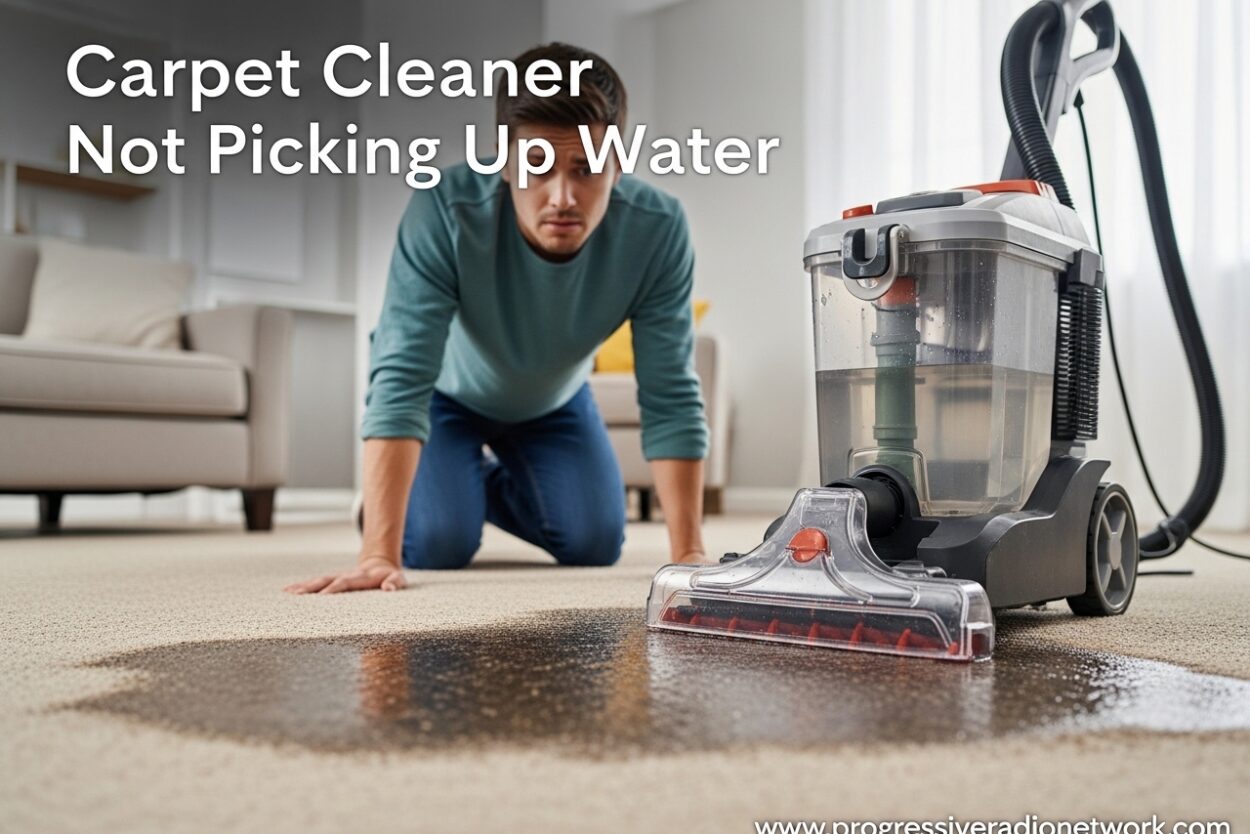
There’s nothing more frustrating than running your carpet cleaner over a stain, watching the cleaning solution spray onto the carpet, and then realizing no dirty water is being picked up. I’ve been there, and I know how annoying it feels to end up with soaking wet carpet and a recovery tank that’s barely collected anything.
When your carpet cleaner not picking up water becomes an issue, it usually points to a specific problem in the suction system. The good news is that most causes are simple fixes you can handle at home without calling a repair technician. Let me walk you through exactly what’s happening and how to get your machine working again.
How Carpet Cleaner Suction Works
Understanding how your carpet cleaner extracts water helps you troubleshoot problems faster. Most upright carpet cleaners use a spray-and-extract system. The machine releases clean water and cleaning solution onto your carpet through spray nozzles, while powerful suction pulls the dirty water back into a separate recovery tank.
The suction system relies on several components working together: the vacuum motor creates airflow, the dirty water tank collects the extracted water, a float valve prevents overflow, and various filters catch debris. When any part of this system fails, you’ll notice your carpet cleaner not picking up water properly.
Common Causes of Carpet Cleaner Not Picking Up Water
Before diving into specific fixes, it helps to understand what typically causes suction problems. Based on my research across multiple brands and user experiences, these issues account for over 90% of cases.
The dirty water tank being too full is the most common culprit. When the recovery tank reaches capacity, the float valve closes to prevent overflow, which blocks suction entirely. Even if the tank looks empty, debris can trick the float mechanism into thinking it’s full.
A stuck float valve causes problems even when the tank isn’t full. This small red or rubber piece sits inside the dirty water tank and rises with water level. If it gets stuck in the closed position from dirt, hair, or detergent residue, it blocks the suction path completely.
Clogged nozzles and brush rolls are another frequent issue. Hair, fibers, and debris wrap around the brush roll and accumulate in the spray nozzle area. This buildup blocks the suction path that pulls water from your carpet into the recovery tank.
Improper tank seating seems obvious, but I can’t tell you how many times this has been the issue. Both the clean and dirty water tanks must click securely into place. If there’s even a small gap, air enters the system and destroys the suction needed to pick up water.
The lint screen or mesh filter, when clogged, restricts airflow enough to reduce suction significantly. Located either in the dirty water tank or near the suction intake, this filter catches large debris but needs regular cleaning to maintain proper airflow.
Carpet Cleaner Not Picking Up Water: Step-by-Step Troubleshooting Guide
Let me walk you through the exact troubleshooting process I use. Follow these steps in order, checking after each one to see if you’ve resolved the problem.
Step 1: Check and empty the dirty water tank. Remove the recovery tank completely and empty it into a sink or toilet. Even if it doesn’t look full, there might be debris affecting the float valve. Rinse the tank with clean water and check that the float moves freely.
Step 2: Verify proper tank seating. When reinstalling the dirty water tank, listen for an audible click. Press firmly on the tank to ensure it’s locked in place. Many models require both the clean and dirty tanks to be seated correctly for the machine to operate properly.
Step 3: Inspect the float valve. Look inside the dirty water tank at the float mechanism. It should move up and down freely without sticking. Clean any debris or detergent buildup from the float and its housing. If the float is damaged or won’t move freely, contact the manufacturer for a replacement.
Step 4: Check the lint screen or filter. Remove the lint screen from the dirty water tank or suction intake. Rinse it thoroughly under running water, using a soft brush to remove stuck debris. Let it dry completely before reinstalling. A damaged filter should be replaced to maintain proper suction.
Step 5: Clear the nozzle and brush roll area. Flip the machine over to access the underside. Remove any visible hair, strings, or debris wrapped around the brush roll. Use scissors to cut away stubborn tangles. Clean out the spray nozzle area with a small brush or compressed air.
Step 6: Inspect hose connections. If your model has removable hoses or attachments, check that all connections are secure. Look for cracks or splits in the hoses that could cause air leaks. Tighten any loose connections and replace damaged hoses.
Step 7: Test the suction. With everything reassembled, run the machine on a dry carpet section or test it with your hand over the suction intake. You should feel strong suction. If it’s still weak, proceed to brand-specific troubleshooting or contact customer support.
Clearing Clogs: Nozzle, Hose, and Filter
Sometimes the problem is a stubborn clog that requires more thorough cleaning. I’ve found that different types of clogs need different approaches.
For nozzle clogs, start by removing any visible debris with tweezers or needle-nose pliers. Then flush the nozzle with warm water from both directions. A pipe cleaner or cotton swab can help dislodge stubborn buildup inside the nozzle opening.
Hose clogs often require disconnecting the hose completely. Look through it for visible blockages and use a broom handle or straightened coat hanger to push through clogs. For stubborn clogs, running water through the hose while maneuvering the obstruction usually works.
Filter cleaning is straightforward but important. Most lint screens can be rinsed clean, but dome filters and mesh filters might need gentle scrubbing with a soft brush. Avoid using harsh chemicals that could damage the filter material. Let all filters air dry completely before reinstalling to prevent mold growth.
I recommend performing this deep cleaning every 3-6 months depending on how frequently you use your carpet cleaner. Prevention is much easier than dealing with stubborn clogs later.
Brand-Specific Troubleshooting Tips
While most carpet cleaners work on similar principles, each brand has unique features that affect troubleshooting. Let me share what I’ve learned about the most common brands.
Bissell Carpet Cleaners
Bissell models like the ProHeat, Big Green, and ProMax series are notorious for float valve issues. The red float door inside the dirty water tank gets stuck easily from detergent residue. Clean this area thoroughly with warm water and check that the float moves freely before each use.
Many Bissell models also have a 2-in-1 water tank with a heavy-duty bladder inside. If this bladder is damaged or not seated correctly, suction fails completely. Inspect the bladder for tears and ensure it’s properly positioned before reassembling the tank.
Hoover Carpet Cleaners
Hoover PowerScrub and SmartWash models frequently have issues with the dome filter located under the recovery tank lid. This wire mesh filter clogs quickly with pet hair and fibers. Remove and clean it after every use to maintain optimal suction.
Hoover models also have a suction indicator that turns red when airflow is restricted. If you see this indicator, check all hoses and connections for cracks or loose fittings. The suction hose on Hoover models can develop leaks where it connects to the machine body.
Rug Doctor Models
Rug Doctor Mighty Pro X3 and similar models use a white recovery tank with a distinctive dome filter on top. This filter must be clean for proper suction. Additionally, check the brass connector where the hose attaches to the machine – debris often accumulates here and restricts airflow.
The grey rubber hose on Rug Doctor models can split where it bends most frequently. Inspect the entire hose length for cracks, especially near connection points. A split hose is a common cause of sudden suction loss.
Vax and Other Brands
Vax carpet cleaners typically have a washable filter located near the motor intake. This filter needs regular cleaning or replacement. Vax models also use multiple seals and gaskets that can wear out over time, causing air leaks that reduce suction.
For other brands, consult your user manual for specific filter locations and maintenance requirements. Most manufacturers provide troubleshooting guides on their websites with model-specific instructions.
Prevention and Maintenance Tips
After troubleshooting countless carpet cleaners, I’ve learned that prevention is worth much more than repair. A few simple habits can prevent most suction problems before they start.
Always empty and rinse the dirty water tank immediately after each use. Letting dirty water sit in the tank promotes mold growth and causes debris to harden, which can clog the float valve and filters. A quick rinse takes just a minute and prevents most issues.
Clean the lint screen or filter after every cleaning session. I keep a small brush near my cleaning supplies specifically for this purpose. A clean filter maintains proper airflow and extends the life of your machine’s motor.
Check the brush roll area regularly for wrapped hair and fibers. I do this quick inspection before each use, removing any buildup with scissors. It takes less than a minute but prevents stubborn clogs that are difficult to remove later.
Store your carpet cleaner properly. Empty all tanks, clean all filters, and let the machine dry completely before storage. Store in a cool, dry place away from direct sunlight. Proper storage prevents mold growth and component degradation.
Replace filters and seals according to the manufacturer’s schedule. Most brands recommend replacing filters every 6-12 months depending on usage. Worn seals and gaskets cause air leaks that reduce suction efficiency. Keep spare filters on hand so you’re never tempted to skip this maintenance.
I also recommend running a cleaning cycle with just clean water after using detergent. This flushes out any remaining soap residue that could clog nozzles or leave sticky buildup on components. A quick water-only run takes just a few minutes but significantly extends your machine’s life.
When to Contact Customer Support
Sometimes despite your best troubleshooting efforts, the problem requires professional help. If you’ve tried all the steps above and your carpet cleaner still isn’t picking up water, it might be time to contact the manufacturer.
Most carpet cleaner manufacturers offer customer support through phone, email, or live chat. Have your model number and serial number ready when you contact them. Be prepared to describe the troubleshooting steps you’ve already tried – this helps them diagnose the problem faster.
If your machine is still under warranty, you might be eligible for free repairs or replacement. Most warranties cover motor issues and manufacturing defects but don’t cover damage from improper maintenance or normal wear on filters and seals.
For machines out of warranty, consider the repair cost versus replacement. Basic repairs might cost $50-100, while a new carpet cleaner typically ranges from $100-300 for residential models. If the repair costs more than half the price of a new machine, replacement might be the smarter choice.
Frequently Asked Questions
Why is my carpet cleaner not picking up much water?
The most common reasons include a full dirty water tank, stuck float valve, clogged nozzle or filters, or improper tank seating. Start by emptying the recovery tank and ensuring it clicks securely into place. Check that the float moves freely inside the tank and clean any debris from the nozzle and brush roll area.
How to improve suction on carpet cleaner?
Improve suction by cleaning or replacing the lint screen and filters, clearing any clogs from the nozzle and hose, ensuring all tanks are properly seated, and checking for cracks or leaks in hoses. Regular maintenance after each use prevents suction loss. Also verify the float valve moves freely and isn’t stuck in the closed position.
How do I unclog my carpet cleaner?
Unclog your carpet cleaner by removing debris from the brush roll and nozzle with tweezers or scissors, flushing the nozzle with warm water, disconnecting and clearing hoses of blockages, and cleaning all filters thoroughly. For stubborn clogs, use a pipe cleaner or compressed air to dislodge debris in tight spaces.
Why won’t my Bissell carpet cleaner pick up the water?
Bissell carpet cleaners commonly fail to pick up water due to a stuck red float door in the dirty water tank, a damaged heavy-duty bladder in 2-in-1 tanks, or clogged filters. Remove the float and clean it thoroughly with warm water, inspect the bladder for tears, and clean or replace the dome filter under the tank lid.
How to fix loss of suction in a vacuum cleaner?
Fix suction loss by checking for blockages in the hose and nozzle, cleaning or replacing filters, inspecting hoses for cracks or leaks, ensuring the dust bin or bag isn’t full, and verifying all connections are secure. For carpet cleaners, also check the float valve and tank seating as these are common causes.
How long should a carpet cleaner machine last?
A quality residential carpet cleaner should last 5-8 years with proper maintenance. Commercial machines like Rug Doctor can last 10+ years. Regular cleaning of filters, proper storage, and timely replacement of worn components significantly extend lifespan. Machines used frequently for pet households or cleaning businesses may need replacement sooner.
What causes a carpet cleaner to spray but not pick up water?
When a carpet cleaner sprays but won’t pick up water, the issue is isolated to the suction system. Common causes include a stuck float valve blocking the recovery intake, clogged lint screen or filter restricting airflow, improperly seated dirty water tank causing air leaks, or blocked suction hose. The spray system works independently, so focus on suction components.
Conclusion
Dealing with a carpet cleaner not picking up water is frustrating, but as you’ve seen, most problems have simple solutions. The key is systematic troubleshooting – start with the easiest fixes like emptying the tank and checking seating, then work through more involved steps like cleaning filters and clearing clogs.
Remember that prevention is your best strategy. Taking two minutes after each cleaning session to empty tanks, rinse filters, and check for wrapped hair prevents most suction problems before they start. Your carpet cleaner will thank you with years of reliable service.
If you’ve tried all these steps and your carpet cleaner still isn’t picking up water properly, don’t hesitate to contact the manufacturer’s customer support. They can provide model-specific guidance and may offer repair or replacement options if your machine is still under warranty.
With proper troubleshooting and regular maintenance, your carpet cleaner will be back to extracting dirty water effectively in no time, leaving your carpets clean, fresh, and properly dried after every cleaning session.



Leave a Comment