
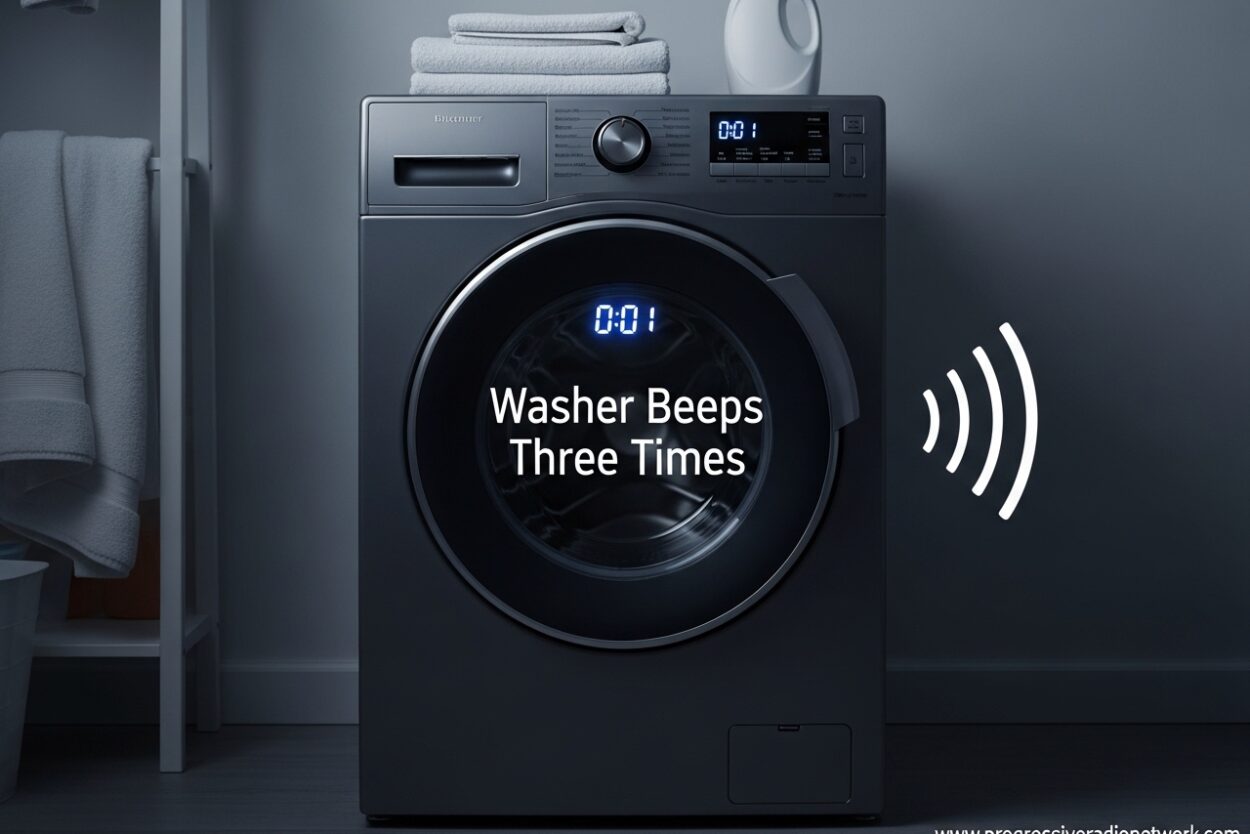
You press the start button on your washing machine, ready to tackle a pile of laundry. Instead of the comforting sound of water filling the drum, you hear three sharp beeps. The washer sits silent. Your clothes aren’t getting clean, and you’re wondering what went wrong.
This frustrating scenario happens to thousands of homeowners weekly. The three-beep error is one of the most common washing machine problems, but the meaning varies by brand and model. Understanding what’s happening is the first step toward fixing it.
When your washer beeps three times, the machine is trying to tell you something is wrong. The good news is that most causes are repairable, and many fixes are DIY-friendly. I’ve researched this issue extensively and will walk you through everything you need to know to get your laundry routine back on track.
What Does Three Beeps Mean on a Washing Machine?
Three beeps on a washing machine typically indicates the appliance has detected an error condition. The most common cause is a door lock issue where the machine does not recognize the door as properly closed and locked. However, the specific meaning varies by manufacturer and model.
When you press start, your washer runs through a safety check sequence. The most critical check is confirming the door is securely locked to prevent water leakage during the cycle. If the washer cannot verify the door is closed due to a faulty latch, wiring problem, or control board malfunction, it emits three beeps and refuses to start.
On some models, three beeps can also indicate an unbalanced load, control board error, or timer malfunction. The exact meaning depends on your washer’s brand and whether the beeps are accompanied by error codes on the display panel.
Why Your Washer Beeps Three Times: 5 Most Common Causes
1. Door Lock or Latch Failure (Most Common)
The door lock assembly is the number one cause of three-beep errors, especially on front-load washers. This component has two jobs: physically locking the door and sending a signal to the control board confirming the lock is engaged.
Over time, the door latch mechanism can fail in several ways. The mechanical hook may become worn and unable to catch properly. The electrical switch that signals “locked” can fail. In some cases, the latch becomes misaligned with the strike plate on the washer frame.
I’ve seen this issue most frequently in washers that are 3-5 years old. The repetitive locking and unlocking action wears down components. Sometimes you can temporarily fix the problem by firmly closing the door or adjusting your closing technique, but eventually the latch assembly needs replacement.
2. Control Board Malfunction
Your washer’s control board is the brain of the operation. It receives signals from various components and initiates the appropriate actions. When the control board begins to fail, it may misinterpret signals or fail to send commands correctly.
A failing control board might think the door is unlocked even when it’s properly closed. This causes the three-beep error because the safety interlock prevents the washer from starting. Control board issues can be intermittent at first, which explains why some washers beep randomly during cycles.
Power surges, electrical spikes, and moisture exposure can damage control boards over time. If your washer displays other unusual behaviors besides the three-beep error like random cycles starting or the display acting erratically, the control board is likely the culprit.
3. Timer and Selector Switch Problems
The cycle selector switch or timer on your washer controls which cycle runs and for how long. In older washers with mechanical dials and in newer electronic models, this component can develop issues that trigger error signals.
When the selector switch fails, it may send incorrect signals to the control board. The board responds with error beeps because it cannot determine the selected cycle. This is particularly common in washers where users report random three-beep patterns even when not actively using the machine.
Forum discussions reveal that cycle selector replacement is a common fix for washers that beep at random times. The switch develops internal wear or corrosion, causing intermittent electrical contact. Replacing the selector typically resolves both the beeping and any cycle selection issues.
4. Unbalanced Load Detection
Modern washers have sensors that detect if the laundry load is unbalanced. Operating with an unbalanced load can damage the machine’s drum and suspension system. When the washer detects this condition, it may beep three times and refuse to start or pause the cycle.
This issue most commonly occurs when washing large bulky items like comforters or heavy loads of towels. The weight distribution is uneven, causing the drum to wobble excessively during the spin cycle. The washer’s safety system detects this and stops operation.
Redistributing the clothes and restarting typically solves this problem. However, if the washer consistently reports unbalanced load errors even with properly distributed loads, the suspension system or load sensor may need attention.
5. Wiring and Connection Issues
The various components of your washer are connected by wires that carry electrical signals between them. Over time, these connections can loosen, corrode, or become damaged by vibration and moisture.
A loose wire connecting the door latch to the control board can cause the three-beep error. The board cannot receive the “door locked” signal, so it assumes the door is open and refuses to start. Similarly, damaged wiring to the control board or selector switch can trigger error signals.
Washing machines vibrate significantly during operation. This constant movement can gradually loosen wire connections and terminals. Moisture from humidity or minor leaks can cause corrosion on electrical contacts. These issues require some electrical knowledge to diagnose and repair safely.
What 3 Beeps Mean on Different Washer Brands
The meaning of three beeps varies significantly between manufacturers. Here’s a brand-by-brand breakdown to help you identify the specific issue with your washer.
Samsung Washers
On Samsung washing machines, three beeps typically indicate a door error or unbalanced load condition. Samsung washers display specific error codes on the LED panel along with the beeps:
dS, d5, or FL codes indicate a door error where the washer cannot lock the door or detect that it’s locked. This is most often caused by a faulty door latch assembly or debris preventing the door from closing properly.
The dc or Ub code means an unbalanced load has been detected. The washer will beep three times and pause until you redistribute the clothes. This is a safety feature to prevent damage from excessive drum vibration.
Samsung also uses a 4C/4E code for water filling issues and an nd/5E/SE code for drainage problems. While these typically display different beep patterns, some models may use three beeps to alert you to any error condition.
Whirlpool Washers
Whirlpool washing machines commonly use three beeps to signal a door lock fault, particularly on front-loading models. The washer cannot proceed with the cycle because it cannot verify the door is securely closed.
The door lock mechanism on Whirlpool washers includes a wax motor that physically slides the lock into place. When this motor fails or the wax module leaks, the door won’t lock properly. The control board detects this condition and signals with three beeps.
Some Whirlpool models use a specific F/dL error code for door lock issues. If you see this code along with three beeps, the door lock assembly is almost certainly the problem. Replacement is straightforward for most DIY enthusiasts with basic tools.
Frigidaire Laundry Centers
Frigidaire laundry centers (washer-dryer combo units) use three long beeps to indicate an error occurred during the cycle. This differs from the short beeps used by other brands and typically means the washer stopped mid-cycle due to a detected problem.
Common causes include improper installation, unbalanced loads, or issues with the drain pump. Frigidaire recommends checking the installation first, ensuring the unit is level and all shipping materials have been removed.
For laundry center models, three beeps during startup often indicate the door switch or latch is not functioning. The combo units are particularly sensitive to door alignment because of their compact design.
LG and GE Washers
LG washing machines typically display a DE error code (door error) when three beeps occur. This indicates the door cannot be locked or the lock switch is defective. LG washers use a unique door lock mechanism that can sometimes be cleaned rather than replaced if debris is causing the issue.
GE washers often use three beeps along with specific error codes displayed on the panel. A door lock error will show as a dL or dO code. GE recommends checking for items caught in the door seal that might prevent proper closure before assuming a mechanical failure.
Both LG and GE emphasize checking that the washer is level during installation. An unleveled unit can cause door alignment issues that trigger the three-beep error even when the latch mechanism is functioning correctly.
How to Fix When Your Washer Beeps Three Times
Quick Reset Procedure
Before diving into repairs, try this simple reset procedure that fixes many temporary electronic glitches:
Step 1: Unplug your washing machine from the electrical outlet. If the plug is hard to reach, you can turn off the washer’s dedicated circuit breaker.
Step 2: Wait at least one full minute. This allows the washer’s capacitors to discharge completely and resets the control board’s memory.
Step 3: While waiting, press and hold the start/pause button for 5-10 seconds to discharge any residual power in the control panel.
Step 4: Plug the washer back in or turn the breaker back on. Wait 30 seconds for the washer to fully power up.
Step 5: Try starting a cycle. If the washer starts normally, the error was temporary. If three beeps return, proceed with troubleshooting steps.
Forum users report this reset fixes approximately 30% of three-beep issues, particularly those caused by electronic glitches or momentary sensor malfunctions.
Door Latch Inspection and Repair
If the reset doesn’t solve the problem, the door latch assembly is your next inspection point. Here’s how to check and potentially fix door lock issues:
Visual Inspection: Examine the door seal and latch area for any visible debris, clothing, or damage. Sometimes small items like socks get caught in the door gasket, preventing proper closure. Clean any debris you find.
Door Alignment Check: Close the door carefully and observe if it sits flush with the washer frame. Misalignment can prevent the latch from engaging. Check if the door hinges are loose or bent, which might require hinge replacement or adjustment.
Latch Mechanism Test: Manually operate the door latch mechanism (the part on the door itself) with your finger. It should move smoothly and spring back when released. Sticky or stiff operation indicates the mechanism needs cleaning or replacement.
Electrical Connection Check: If you’re comfortable with basic electrical work, you can check the wiring to the door lock switch. Unplug the washer, remove the top panel, and locate the door lock assembly. Ensure all wire connections are secure and not corroded.
Replacement: If the latch mechanism is visibly broken, worn, or fails the electrical continuity test, replacement is necessary. Door lock assemblies cost between $25-75 depending on your model and are widely available online.
Manual Door Unlock Method
When your washer beeps three times and the door won’t open, clothes can be trapped inside. This manual unlock method works on most models:
Emergency Release: Most front-load washers have an emergency release cord or access panel. Look for a small round panel near the bottom of the door frame. Prying this open reveals a pull cord or ring that manually releases the door lock.
Manual Access: If no emergency release is visible, unplug the washer and remove the top panel. Reach down to the door lock mechanism from above. Most locks have a manual release tab or ring you can pull to disengage the lock.
Drain First: Before manually unlocking, check if water remains in the drum. If so, drain it using the small drain hose located near the bottom front of the washer. This prevents water from spilling out when you open the door.
This manual unlock method is particularly useful when the washer is stuck in locked mode due to a control board failure. Once you retrieve your clothes, you can decide whether to attempt repairs or call a professional.
Should You DIY or Call a Professional?
Deciding between DIY repair and professional service depends on your comfort level with appliance repair and the specific problem. Here are some guidelines to help you choose.
DIY-Friendly Repairs: Door latch replacement, basic troubleshooting, cleaning debris from door seals, and resetting the control board are all manageable DIY projects. Most door latch assemblies require only basic hand tools and 30-60 minutes to replace. Online tutorials are available for virtually every washer make and model.
Consider Professional Help For: Control board replacement, internal wiring repairs, and motor-related issues require more advanced electrical knowledge. If your washer displays multiple error codes or has other unusual symptoms beyond the three-beep error, professional diagnosis is recommended.
Cost Comparison: A professional service call typically costs $80-150 just for diagnosis, plus parts and labor. Door latch replacement usually runs $150-250 when done professionally. DIY parts cost $25-75 for a door latch. Control board replacement professionally costs $300-500, while the part itself is $100-200 if you’re comfortable installing it yourself.
Safety Considerations: Always unplug your washer before attempting any repair. Water and electricity are a dangerous combination. If you’re unsure about any step of the repair process, it’s better to pay for professional service than risk injury or further damage to the appliance.
How to Prevent Future 3-Beep Errors
Preventive maintenance can significantly reduce the likelihood of encountering the three-beep error. Here are proven strategies to keep your washer running smoothly.
Clean the Door Seal Regularly: The rubber gasket around your washer door collects debris, detergent residue, and moisture. Wipe it down weekly with a damp cloth and monthly with a mild cleaner. This prevents buildup that can interfere with door closure and latch operation.
Check Door Alignment: Periodically verify that your washer door closes smoothly and latches securely. If you notice the door catching or not sitting flush, check the hinges for tightness. Loose hinges cause misalignment that strains the latch mechanism.
Avoid Overloading: Stuffing too many clothes in the washer puts strain on all components, including the door latch. Follow your manufacturer’s guidelines for load capacity. Large bulky items should be washed in smaller batches or taken to a laundromat with commercial-capacity machines.
Use the Right Detergent: Excess suds from too much detergent can interfere with sensors and trigger false errors. Use HE (high-efficiency) detergent in the recommended amount for front-load washers. This prevents residue buildup on door seals and sensors.
Level Your Washer: An unleveled washer vibrates excessively, which loosens connections over time. Use a bubble level to verify your washer sits evenly on all four corners. Adjust the leveling feet as needed. This simple step prevents many mechanical and electrical issues.
Schedule Professional Maintenance: Consider having your washer professionally serviced every 3-5 years. A technician can clean internal components, check connections, and identify potential problems before they cause failures. This preventive maintenance can extend your washer’s lifespan by years.
Frequently Asked Questions
Why does my washing machine keep beeping three times?
Your washer beeps three times because it has detected an error condition, most commonly a door lock issue where the machine cannot confirm the door is properly closed and locked. This safety feature prevents operation when the door might open during the cycle, which could cause water leakage. Other causes include control board problems, unbalanced loads, or selector switch failures depending on your washer brand.
What does 3 short beeps mean?
Three short beeps on a washing machine typically indicates a door lock or latch error. The washer’s safety system cannot verify that the door is securely closed, so it refuses to start the cycle. On some brands like Samsung, three short beeps can also indicate an unbalanced load error (dc/Ub code) or a door error code (dS, d5, FL). Check your display panel for specific error codes that accompany the beeps.
How to force reset a washer?
To force reset your washer, unplug it from the electrical outlet or turn off the circuit breaker. Wait at least one full minute for the capacitors to discharge. While waiting, press and hold the start/pause button for 5-10 seconds. Then plug the washer back in, wait 30 seconds for it to power up, and try starting a cycle. This reset clears temporary electronic glitches in about 30% of cases.
How to fix 3 beeps on startup?
To fix three beeps on startup, first try the reset procedure of unplugging for one minute. If that doesn’t work, inspect the door latch area for debris or clothing preventing proper closure. Check door alignment and ensure it closes flush with the frame. Test the latch mechanism manually for smooth operation. If issues persist, the door lock assembly likely needs replacement ($25-75 for the part). Professional help is recommended if the reset and basic troubleshooting don’t resolve the issue.
Conclusion
When your washer beeps three times and won’t start, it’s frustrating but rarely a catastrophic problem. The issue is most often related to the door lock mechanism, which is a relatively simple and affordable repair. By understanding what the beeps mean and following the troubleshooting steps in this guide, you can often resolve the issue yourself without expensive professional service.
Remember that three beeps mean different things on different washer brands. Samsung, Whirlpool, Frigidaire, and LG all use this beep pattern for various error conditions. Check your display for error codes and consult your owner’s manual for brand-specific information.
The reset procedure should always be your first step. This simple fix resolves about 30% of cases caused by electronic glitches. If that doesn’t work, systematically inspect the door latch, check for unbalanced loads, and verify all connections are secure.
Preventive maintenance goes a long way toward avoiding future problems. Keep your door seal clean, don’t overload the machine, use the correct detergent, and ensure your washer remains level. These simple habits can extend the life of your washer and prevent the three-beep error from returning.
If DIY troubleshooting doesn’t solve the problem, don’t hesitate to call a professional. Appliance repair technicians have the tools and expertise to diagnose complex issues with control boards, wiring, and internal components. Investing in professional service is often more economical than causing further damage through inexperienced repair attempts.
With the information in this guide, you’re now equipped to diagnose and fix most cases where your washer beeps three times. Here’s to getting your laundry routine back to normal and keeping your washer running smoothly for years to come.


Leave a Comment