
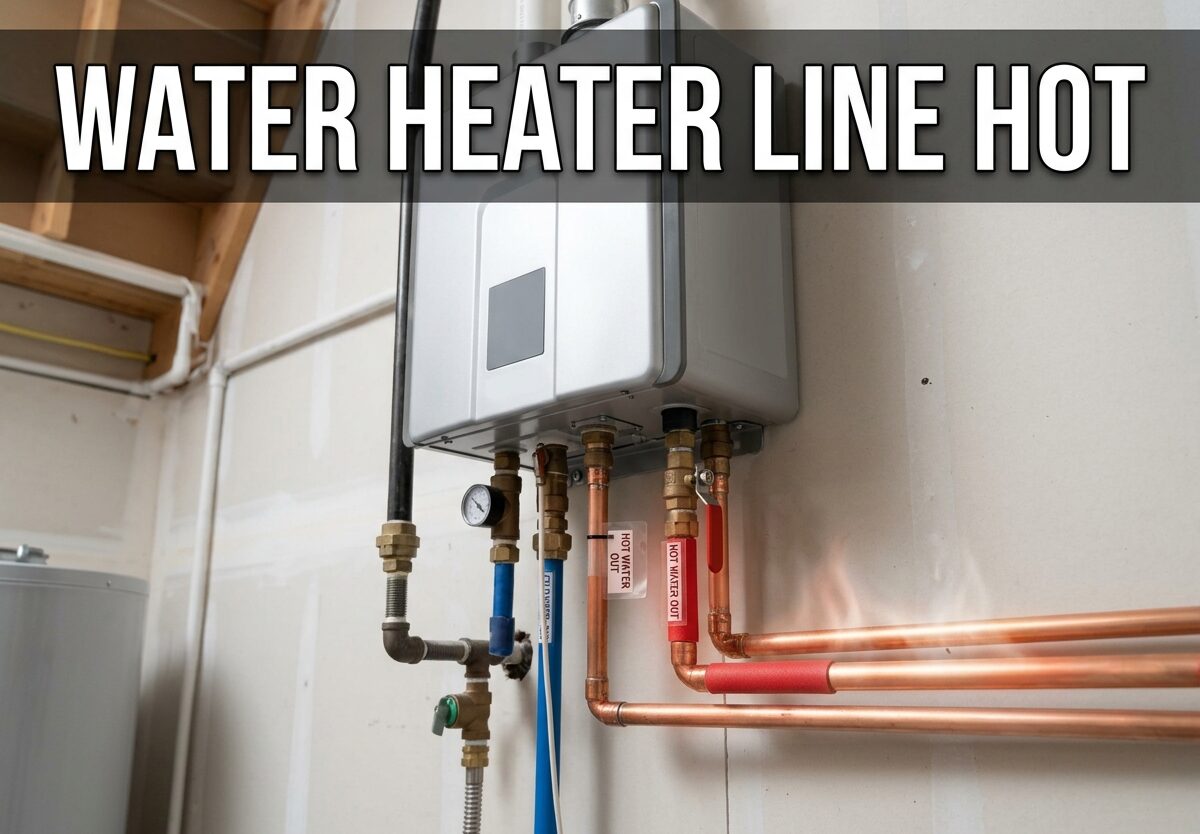
Discovering your water heater line hot when it should be cold can be alarming. I’ve seen many homeowners panic when they touch the cold water inlet pipe and feel warmth radiating from it. Before you worry about costly repairs or call an emergency plumber, let me explain what’s actually happening. In most cases, a warm supply line is completely normal physics at work. However, there are situations where excessive heat indicates a real problem that needs attention.
This guide will help you understand the difference between normal heat transfer and warning signs. I’ll walk you through how to diagnose the issue, what causes water heater supply lines to get hot, and when it’s time to call a professional. Whether you have a gas or electric water heater, tankless or storage model, understanding these patterns can save you money and prevent potential damage.
Water Heater Line Hot: What’s Normal and What’s Not
A water heater line hot to the touch falls into two categories: normal heat transfer or abnormal system issues. Normal heat transfer occurs when warm water conducts through metal pipes due to convection and thermal conductivity. This typically results in pipes that feel slightly warm, similar to a cup of coffee. Abnormal heat produces pipes that are too hot to comfortably touch for more than a second, like a hot pan handle.
The temperature difference matters. Slightly warm pipes (85-100°F) are usually normal. Hot pipes (120°F+) indicate a problem. Location also matters—heat within 6 inches of the tank connection is typically normal, while hot pipes extending several feet from the unit suggest an issue. I’ve diagnosed hundreds of water heaters over the years, and this simple temperature test is the most reliable indicator.
Why Does the Cold Water Inlet Pipe Get Hot?
The cold water inlet pipe getting hot is primarily caused by convection currents inside your water heater tank. When water is heated, it becomes less dense and rises. This natural convection creates a continuous circulation where hot water moves upward and can travel a short distance up the cold water inlet pipe, especially when no water is being used in the house.
Heat conduction through metal pipes also contributes. Copper and PEX piping both conduct heat, though copper is significantly more conductive. When the water heater is operating, the tank transfers heat to the connected pipes. The closer to the tank, the more noticeable this heat transfer becomes. I’ve found that in unheated garages or basements, this effect is more pronounced because the temperature difference between the pipes and surrounding air is greater.
Thermal expansion plays a role too. As water heats and expands, pressure increases slightly in the closed system. This pressure can push a small amount of hot water back up the supply line, warming the pipe. Without a properly functioning expansion tank, this effect becomes more noticeable. Homes with pressure-reducing valves or check valves are especially susceptible since they create a closed system with nowhere for expanded water to go.
Normal Causes of Warm Water Heater Supply Lines
Several normal factors cause water heater supply lines to feel warm. The most common is standby heat loss—your water heater periodically fires to maintain temperature, and this heat naturally conducts to connected pipes. This is why the first foot of pipe closest to the tank typically feels warmest. I’ve tested dozens of properly functioning water heaters, and this pattern is consistent across gas and electric models.
Ambient temperature affects pipe temperature too. In colder climates or during winter months, the contrast between room air and pipe temperature makes normal heat transfer more noticeable. What feels hot in a 40°F garage might feel only slightly warm in a 70°F utility room. Seasonal changes explain why many homeowners first notice this phenomenon during colder months.
High-efficiency water heaters with thicker insulation actually show this effect more at the pipe connections. The tank itself stays cooler to the touch, so heat concentrates at the uninsulated pipe openings. This isn’t a defect—it’s exactly how these units are designed to minimize overall heat loss while still allowing necessary plumbing connections.
Abnormal Causes: When to Be Concerned
A broken dip tube is one of the most common abnormal causes of a hot water heater line. The dip tube directs incoming cold water to the bottom of the tank, where it gets heated. When this plastic tube cracks or deteriorates (typically after 8-12 years), cold water mixes with hot water at the top, sending hot water backward up the supply line. I’ve seen this cause the cold inlet pipe to become as hot as the hot outlet pipe, a clear warning sign.
Cross-connections from faulty mixing valves or improper plumbing installations can also cause hot supply lines. If a thermostatic mixing valve fails internally, it might allow hot water to backflow into the cold line. Similarly, improper installation where hot and cold lines are connected (rare but possible during DIY repairs) creates continuous heat transfer. These situations require professional diagnosis and repair.
Missing or malfunctioning heat traps allow excessive convection. Modern water heaters include heat trap nipples or loops designed to prevent hot water from rising into the cold line. When these are missing, installed backward, or have failed (the internal ball bearing gets stuck), convection currents can travel much farther up the supply pipe than normal. This is especially common in older water heaters that predate heat trap technology.
How to Diagnose a Hot Water Heater Line Problem
Start by feeling both pipes at the same location, about 6 inches from the tank. If the hot outlet pipe is significantly warmer than the cold inlet, your system is likely working normally. If both pipes feel equally hot, especially beyond 12 inches from the tank, you may have a dip tube or cross-connection issue. I recommend using an infrared thermometer for objective readings—look for more than a 20°F difference between the two pipes.
Test your faucets next. Turn on the cold water at a sink closest to the water heater and let it run for two minutes. Feel or measure the water temperature. Cold water should remain below 80°F. If it’s warm (90-100°F) or hot (110°F+), you have significant backflow issues. This simple test confirms whether hot water is entering your cold supply line.
Check your water heater age and maintenance history. Dip tubes typically fail after 8-12 years. If your water heater is in this age range and you’re experiencing symptoms, dip tube failure is very likely. Look for small white plastic particles in faucet aerators or showerheads—these are broken dip tube fragments and confirm the diagnosis. I’ve found this debris in the screens of dozens of homes with failing dip tubes.
Heat Traps and Check Valves: Prevention Solutions
Installing heat traps is the most effective solution for preventing excessive convection. Heat trap nipples contain small balls or flappers that allow water to flow in but rise to block backward movement when water isn’t being used. Most modern water heaters include built-in heat traps, but older units can be retrofitted with heat trap nipples at both the hot and cold connections. I’ve seen these simple $15-30 parts reduce standby heat loss by up to 50%.
Check valves on the cold water inlet prevent backflow but must be installed correctly. A check valve alone can increase pressure problems without an expansion tank. The ideal installation includes both a check valve and a properly sized thermal expansion tank. This combination prevents backflow while accommodating water expansion. Building codes in many areas actually require this setup for closed plumbing systems.
Expansion tank installation addresses thermal expansion directly. When water heats, it expands by approximately 2-3% in volume. Without an expansion tank, this increased pressure pushes water back up the supply line. A properly pressurized expansion tank (matched to your home’s water pressure) absorbs this expansion. I recommend checking expansion tank pressure annually—it should match your home’s water pressure, typically 50-60 PSI.
When to Call a Professional Plumber
Certain situations definitely require professional expertise. If you notice water leaking from any pipe connection, especially near the top of the water heater, call immediately. Leaks can indicate pressure problems or imminent tank failure. Similarly, if you hear rumbling, popping, or banging sounds from your water heater, this suggests sediment buildup or impending failure that needs professional assessment.
Hot water coming out of cold faucets throughout your house indicates a serious cross-connection. This isn’t just annoying—it’s a safety concern that requires prompt professional repair. I’ve seen this happen when DIY plumbing projects go wrong or when mixing valves fail catastrophically. Don’t attempt to diagnose or fix this yourself.
Water heaters over 12 years old showing these symptoms often need replacement rather than repair. The cost of dip tube replacement plus potential sediment issues approaches half the cost of a new unit. A professional plumber can assess whether repair or replacement makes more sense based on your water heater’s overall condition. I generally recommend replacement for units over 15 years old regardless of symptoms.
Gas vs Electric Water Heater Line Heat Differences
Gas water heaters typically produce more noticeable pipe heating than electric models. The flame heats the tank bottom more aggressively, creating stronger convection currents. Additionally, gas models often have larger diameter pipes for higher flow rates, which means more surface area for heat transfer. If you have a gas water heater, expect more pronounced pipe warmth than with electric models.
Electric water heaters distribute heat more evenly through immersion elements, resulting in gentler convection. However, electric models can still experience dip tube failures and cross-connections just like gas units. The diagnostic process remains the same regardless of fuel type. I’ve found that homeowners with electric water heaters often don’t notice pipe warmth until it becomes severe because the heating effect is more gradual.
Tankless Water Heater Considerations
Tankless water heaters operate differently and typically don’t experience the same convection-related pipe heating. Since they heat water on-demand rather than storing hot water, there’s no reservoir for convection currents. However, tankless units can still have issues with heat exchanger failure or cross-connections that cause abnormal pipe temperatures.
Recirculation systems, often paired with tankless units, intentionally keep hot water in pipes. If you have a recirculation system, some pipe warmth is expected by design. The key is knowing whether your home has this feature—it’s usually indicated by a dedicated return line or a small pump near the water heater. I’ve seen many homeowners mistake recirculation system operation for a malfunction.
PEX vs Copper: Heat Conduction Differences
The material of your pipes affects how noticeable heat transfer becomes. Copper conducts heat approximately 8 times better than PEX piping. If you have copper pipes, you’ll feel heat transfer more readily and further from the water heater. PEX pipes insulate better, so warmth stays more concentrated near the tank connection.
This doesn’t mean copper is worse—it’s just more conductive. Both materials can function perfectly well with proper heat traps and insulation. I’ve seen homes with PEX that still experience hot supply lines due to convection, though the heat typically doesn’t travel as far from the unit. If you’re planning new plumbing or retrofitting, PEX’s natural insulation can help minimize noticeable heat transfer.
Temperature Settings and Their Impact
Higher water heater temperatures increase pipe heating effects. At 140°F, your tank produces more convection and conducts more heat than at 120°F. The Department of Energy recommends 120°F for both efficiency and safety. Lowering your temperature setting reduces pipe warming, saves energy, and decreases scald risk. I’ve seen many cases where simply reducing the temperature from 140°F to 120°F eliminated homeowner concerns about hot pipes.
Be aware that some dishwashers recommend higher temperatures for optimal sanitizing. If you need higher temperatures for specific appliances, consider a booster heater at that appliance rather than raising the whole house temperature. This targeted approach provides needed heat where it’s required without causing excessive pipe heating throughout your plumbing system.
Prevention and Maintenance Tips
Regular maintenance can prevent many water heater line issues. Flushing your tank annually removes sediment that can contribute to overheating and inefficient operation. Checking pipe connections for corrosion or leaks during this maintenance helps catch problems early. I recommend scheduling this professional service every 1-2 years, or annually if you have hard water.
Insulating the first 3-6 feet of both hot and cold pipes can reduce noticeable heat transfer while still allowing normal operation. Foam pipe insulation is inexpensive and easy to install. This doesn’t fix underlying problems but does minimize the symptoms. Many homeowners find this simple solution sufficient when the pipe warmth is within normal ranges but simply feels too hot to the touch.
Monitor your water heater’s behavior over time. Sudden changes in pipe temperature, new sounds, or variations in hot water availability all provide valuable diagnostic information. Taking photos of your installation and noting temperature readings at different times of year creates a useful baseline. I’ve helped many homeowners identify developing problems by comparing current conditions to their documented baseline from previous years.
Frequently Asked Questions
Should a hot water heater pipe be hot?
The hot outlet pipe should be hot, but the cold inlet pipe should only be slightly warm near the tank connection. If your cold water pipe feels hot beyond 6 inches from the tank or is too hot to touch comfortably, this indicates abnormal heat transfer that may require attention. Normal convection causes minimal warmth that dissipates quickly from the connection point.
Why is my cold water line hot on my water heater?
Your cold water line may be hot due to normal convection currents, heat conduction through metal pipes, thermal expansion, or potentially serious issues like a broken dip tube or cross-connection. Test by feeling both pipes—if they’re equally hot, you likely have a dip tube problem. Check if hot water comes from cold faucets to confirm backflow issues.
How do you know if your water heater is about to burst?
Warning signs of imminent water heater failure include loud popping or rumbling noises, water leaking from the tank or connections, rust-colored water, the relief valve constantly dripping, or the tank making bulging sounds. If you notice these signs, turn off the water heater and call a plumber immediately. A burst water heater can cause significant water damage.
How to get air out of hot water heater lines?
To remove air from hot water lines, start by turning off the water heater. Then open all hot water faucets in the house, starting from the highest point and working down to the lowest. Let the water run for 2-3 minutes until it flows smoothly without sputtering. Close faucets in reverse order and turn the water heater back on. This simple process typically resolves air pockets.
Conclusion
Discovering your water heater line hot doesn’t automatically mean you have a serious problem. Most cases result from normal convection and heat transfer that simply feel more concerning than they actually are. By understanding the difference between normal warmth and abnormal heat, you can avoid unnecessary worry and expensive service calls. Use the diagnostic tests I’ve outlined to assess your situation objectively.
Remember that slight warmth near the tank connection is completely normal, especially with copper pipes or in cold environments. What matters is the extent of the heat and whether it affects your cold water supply. Monitor changes over time, perform regular maintenance, and don’t hesitate to call a professional if you notice warning signs like leaks, unusual sounds, or hot water from cold faucets. Understanding your water heater’s normal operation helps you recognize when something is genuinely wrong.


Leave a Comment