
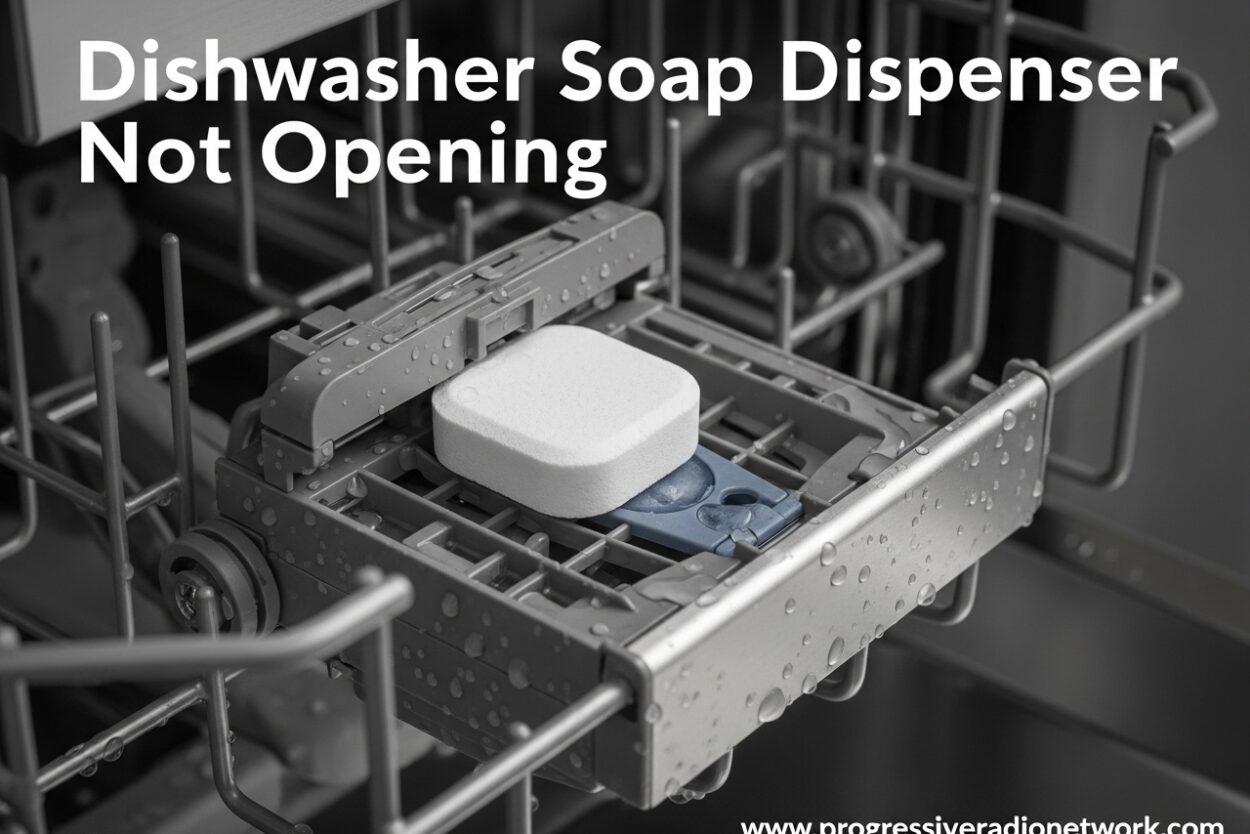
You open your dishwasher after a full cycle, expecting sparkling clean dishes. Instead, you find a soggy detergent pod still sitting in the soap dispenser, and your dishes are barely rinsed. A dishwasher soap dispenser not opening is one of the most frustrating appliance problems, but it’s also surprisingly common and often fixable without calling a technician.
In this guide, I’ll walk you through the five most common causes of a stuck detergent dispenser and exactly how to fix each one. Whether you’re dealing with a Whirlpool, Bosch, Samsung, or another brand, these troubleshooting steps apply to virtually all modern dishwashers.
Why Is My Dishwasher Soap Dispenser Not Opening?
A dishwasher soap dispenser not opening is typically caused by one of five issues: hardened detergent residue blocking the latch mechanism, dishes obstructing the dispenser door, a broken or worn spring, a faulty actuator or solenoid, or a malfunctioning control board.
The detergent dispenser works through a simple but precise mechanism. When your dishwasher reaches the correct point in the wash cycle, the control board sends an electrical signal to the actuator (or solenoid in some models), which releases a spring-loaded door. The detergent then falls into the wash water, typically during the main wash phase. When any part of this chain fails, your detergent stays trapped in the dispenser.
Detergent Buildup and Residue
The most common cause of a dishwasher soap dispenser not opening is detergent buildup. Over time, especially in humid environments or if you use too much detergent, soap residue can harden around the dispenser door latch. This sticky buildup creates enough resistance to prevent the spring from opening the door, even when the actuator triggers correctly.
Old, clumped detergent is another culprit. If your detergent has been sitting for months, it can absorb moisture and harden into a solid block. When you try to use it, this hardened detergent can fuse the dispenser door shut or create enough friction to stop it from opening.
The fix: Start by manually opening the dispenser door and inspecting the latch area. Use warm water and a soft brush to clean away any visible detergent buildup. For stubborn residue, mix a solution of equal parts white vinegar and warm water, then apply it to the affected area and let it sit for 10-15 minutes before scrubbing. Run the dishwasher empty with the dispenser door open to flush out any remaining debris.
Prevention tip: Use only fresh detergent, store it in a dry place, and avoid overfilling the dispenser. Most modern detergents require only 1-2 tablespoons per load.
Obstruction from Improperly Loaded Dishes
Sometimes the problem isn’t mechanical at all—it’s how you’re loading your dishwasher. Large pots, pans, or cutting boards placed in the lower rack can physically block the dispenser door from opening. Even smaller items like utensils or bowls can interfere if they’re positioned too close to the dispenser.
Many homeowners don’t realize that the dispenser door needs several inches of clearance to swing open fully. When dishes obstruct this space, the door may open partially (releasing some detergent) or not open at all. This is especially common with tall items in the lower rack directly beneath the upper dispenser.
The fix: Before starting your dishwasher, manually close the dispenser door and check that nothing in the lower rack will block its path. Load large items like baking sheets and cutting boards along the sides or back of the lower rack, never directly under the dispenser. Most dishwashers have designated loading zones indicated in the owner’s manual.
Quick test: With the dishwasher empty, close the dispenser door and gently press the latch to ensure it can open freely. If it’s obstructed even with no dishes inside, the issue is mechanical rather than loading-related.
Broken or Worn Dispenser Spring
The dispenser door relies on a small but powerful spring to swing open when released. Over years of use (typically 5-10+ years depending on usage), this spring can weaken, stretch, or break completely. A worn spring may not have enough force to push the door open against detergent resistance, while a broken spring renders the door inoperable.
Signs of a broken spring: The dispenser door feels loose or floppy when manually opened, there’s no tension when closing it, or you can actually see a broken spring coil in the mechanism. Sometimes the spring detaches from its mounting point rather than breaking.
The fix: If you’re comfortable with basic appliance repair, you can replace the spring yourself. Start by locating your dishwasher’s model number (usually on a sticker inside the door edge) and ordering a replacement spring specific to your model. The repair typically involves removing the dispenser cover, disconnecting the old spring, and attaching the new one.
For many dishwashers, replacing the entire dispenser assembly is easier than replacing just the spring, and the cost difference is often minimal (typically $15-40 for parts).
Faulty Dispenser Actuator or Solenoid
The actuator (or solenoid, depending on your model) is the electrical component that receives the signal from the control board and physically releases the dispenser latch. When this component fails, the dispenser door won’t open even if the latch, spring, and door mechanism are all in perfect condition.
Actuator failure can be caused by electrical surges, moisture damage, or simple wear over time. Some dishwasher models are known for having fragile actuators that fail more frequently than others.
Signs of actuator failure: The dispenser door opens manually but not during the cycle, you hear a clicking sound during the wash cycle (indicating the control board is sending a signal), or the actuator shows visible signs of corrosion or burning.
Testing the actuator: With the dishwasher disconnected from power, you can use a multimeter to test the actuator for continuity. If there’s no continuity, the component has failed and needs replacement. This is a moderately advanced DIY repair—accessible for those comfortable with electrical testing, but best left to professionals if you’re unsure.
Replacement actuators typically cost $20-60, depending on your dishwasher model.
Control Board Malfunction
The control board is the brain of your dishwasher, coordinating all timing and electrical signals. If the control board fails to send the signal to the actuator at the right time, the dispenser won’t open. This is often accompanied by other issues like the dishwasher not advancing through cycles properly or displaying error codes.
Control board problems can be caused by power surges, moisture exposure, or component failure over time. Some dishwasher models have known issues with specific control board failures that trigger dispenser problems.
Signs of control board failure: Multiple functions not working properly, error codes on the display, the dishwasher stopping mid-cycle, or the dispenser not opening along with other timing issues.
The fix: Control board replacement is one of the more expensive dishwasher repairs, typically costing $150-400 for parts alone. Before investing in a new board, try resetting your dishwasher by turning off power at the breaker for 5 minutes. This can sometimes resolve temporary control board glitches. If problems persist, professional diagnosis is recommended to confirm the control board is the issue.
Dishwasher Soap Dispenser Not Opening: Step-by-Step Troubleshooting
Follow this ordered approach to isolate and fix the problem efficiently:
Step 1: Check for obstructions. With the dishwasher empty, manually close and open the dispenser door to ensure it moves freely. Load a test cycle with no dishes and observe if the door opens.
Step 2: Clean the dispenser thoroughly. Use warm water and vinegar to remove all detergent residue from the latch area. Run an empty cycle with the dispenser door open to flush the system.
Step 3: Test with fresh detergent. Old, moisture-damaged detergent is a common culprit. Try a new detergent pack or powder to rule out this simple cause.
Step 4: Inspect the spring mechanism. Open the dispenser door several times and feel for proper tension. A loose or floppy door indicates spring problems.
Step 5: Listen during the cycle. Run a normal cycle and listen for a click or mechanical sound when the dispenser should open (typically 20-30 minutes into the cycle). No sound suggests electrical issues.
Step 6: Check for error codes. Many dishwashers display error codes when the control board detects a dispenser problem. Consult your manual for code meanings.
Step 7: Test the actuator. If you’re comfortable with electrical testing, use a multimeter to check actuator continuity with power disconnected.
If you’ve worked through these steps without success, the issue is likely the control board or a complex mechanical failure requiring professional service.
Brand-Specific Troubleshooting Notes
Whirlpool dishwashers: Known for dispenser latch issues caused by detergent buildup. The wax motor actuator in older Whirlpool models is a common failure point—replacement costs around $30-50 and is a DIY-friendly repair.
Bosch dishwashers: Generally reliable, but the dispenser door spring can weaken over time. Bosch dispensers are also sensitive to overfilling—use only the recommended amount of detergent.
Samsung dishwashers: Some models have documented issues with the dispenser actuator failing prematurely. Check if your model is covered under any service bulletins before paying for repairs.
KitchenAid and Kenmore: These brands share many components with Whirlpool. The detergent buildup issue is particularly common in models with the dispenser located on the door rather than the side wall.
General Electric and Hotpoint: Older models often use a solenoid-based release mechanism that can fail. Testing the solenoid for continuity is a reliable diagnostic step.
When to Call a Professional
Some dishwasher soap dispenser problems are DIY-friendly, but others require professional expertise. Call a technician if you’re uncomfortable with electrical testing, if the repair requires disassembling the dishwasher door, or if multiple components appear to be failing simultaneously.
Professional repair typically costs $100-200 for labor plus parts. If your dishwasher is over 10 years old and the repair estimate exceeds half the cost of a new machine, replacement may be the smarter investment.
Always check if your dishwasher is still under warranty or if there are any manufacturer recalls affecting your model before paying for repairs.
FAQ
Why is my dishwasher soap compartment not opening?
The most common reasons are hardened detergent residue blocking the latch, dishes obstructing the dispenser door, a broken spring mechanism, a faulty actuator or solenoid, or a malfunctioning control board preventing the release signal.
What to do if soap dispenser is not releasing in dishwasher?
Start by checking for obstructions from dishes, clean all detergent residue from the latch area with warm vinegar water, test with fresh detergent, inspect the spring tension, and listen for the actuator click during the cycle. If these don’t resolve it, the actuator or control board may need replacement.
Can I just throw the dishwasher pod in the dishwasher?
It’s not recommended. While placing a pod directly in the tub may work temporarily, it won’t release at the optimal time in the wash cycle, leading to poor cleaning results. The dispenser timing ensures detergent releases during the main wash phase when water temperature is highest.
Why is my soap dispenser not opening during wash?
If your dispenser doesn’t open specifically during the wash cycle (but opens manually), the issue is likely the actuator or solenoid not receiving or responding to the electrical signal from the control board. This could be a failed actuator, broken wire, or control board malfunction.
How to fix dishwasher soap dispenser latch?
First clean all detergent buildup from the latch mechanism with warm vinegar water. If the latch moves freely but still won’t open during cycles, test the spring tension and check if the actuator is clicking. Replace broken springs ($15-40) or faulty actuators ($20-60) as needed. For latch replacement, consider replacing the entire dispenser assembly.
How much does it cost to replace a dishwasher soap dispenser?
DIY replacement costs $15-60 for parts depending on whether you replace just the spring, actuator, or entire dispenser assembly. Professional repair including labor typically runs $100-250. Control board replacement is more expensive at $150-400 for parts plus labor.
Conclusion
A dishwasher soap dispenser not opening is frustrating, but most cases can be resolved with simple troubleshooting. Start with the easiest fixes—checking for obstructions, cleaning detergent buildup, and testing with fresh detergent—before moving to more complex repairs like spring or actuator replacement.
If you’ve worked through all the DIY steps without success, or if you’re uncomfortable with electrical testing, don’t hesitate to call a professional. A properly functioning detergent dispenser is essential for clean dishes, and the repair cost is often reasonable compared to the convenience of having a fully operational dishwasher.
Regular maintenance, including keeping the dispenser clean and using fresh detergent, can prevent most dispenser problems and extend the life of your dishwasher. With proper care, your dishwasher’s soap dispenser should provide years of reliable service.




Leave a Comment