
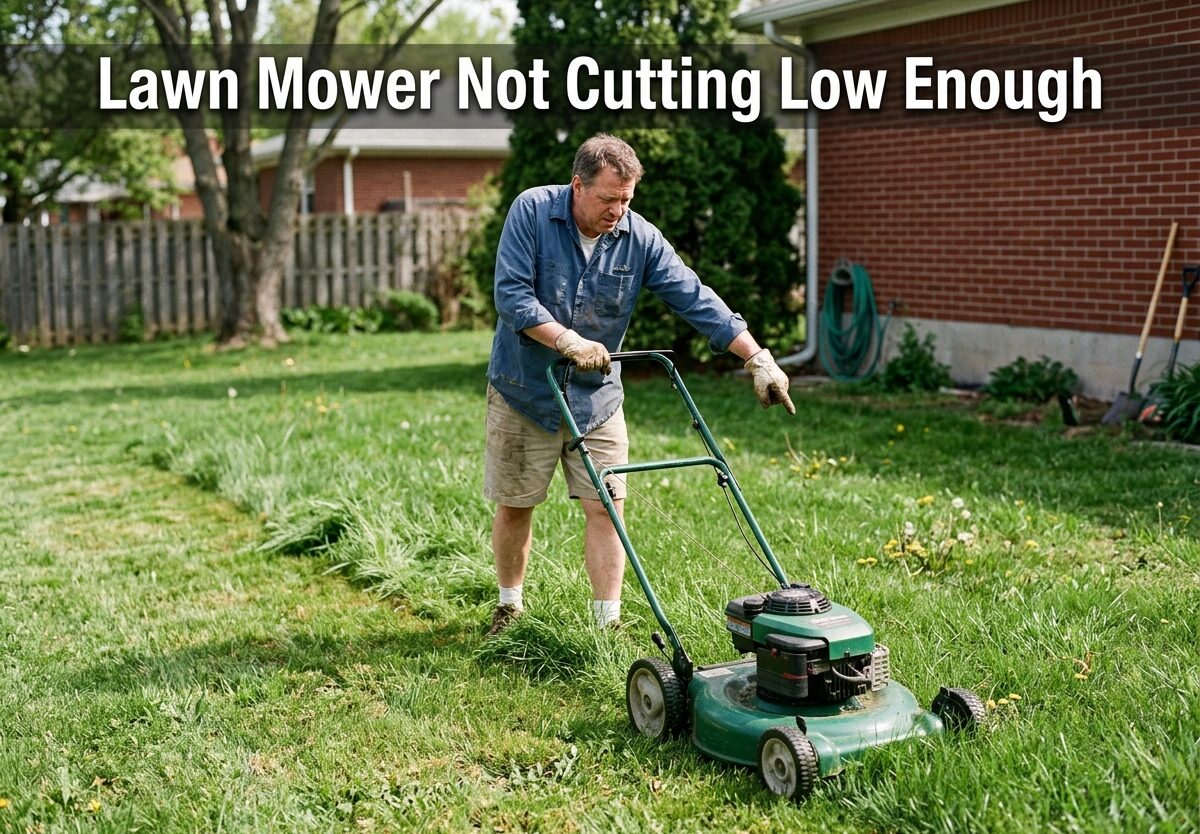
You push your lawn mower across the yard, expecting that pristine, carpet-like finish. Instead, you’re left with grass that looks untouched, longer than you wanted, and frustratingly uneven. If your lawn mower is not cutting low enough, you’re not alone. This is one of the most common complaints among homeowners, and the solution often involves simple adjustments rather than buying new equipment.
Understanding why your mower won’t cut lower than a certain point can save you time, frustration, and potentially expensive mistakes. Before you consider modifying your equipment or shopping for electric lawn mower options with different cutting heights, let’s walk through the most common causes and proven solutions.
Why Your Lawn Mower Is Not Cutting Low Enough
Several factors can prevent your mower from achieving your desired cutting height. The most common culprits include uneven tire pressure, an unlevel mower deck, or simply reaching the manufacturer’s minimum height setting. Many homeowners don’t realize that their mower has a factory-set limit designed to protect both the machine and your lawn.
Electric mowers, in particular, often have higher minimum cutting heights than their gas counterparts. This design choice protects the battery and motor from strain while preventing grass damage. Understanding these limitations helps you determine whether adjustment is possible or if you need to adjust your expectations.
Check Tire Pressure First
Before diving into complex adjustments, check your tire pressure. Uneven tire pressure is one of the most overlooked causes of uneven cutting height. When one tire has lower pressure than the others, the mower deck tilts, causing one side to cut lower than the other.
Most residential lawn mower tires should be inflated between 10-15 PSI, but always check your owner’s manual for the recommended pressure. Use a tire gauge to measure each tire, and inflate or deflate as needed to match the specifications. This simple check takes less than five minutes and often solves the problem immediately.
How to Level Your Mower Deck
An unlevel mower deck is the primary cause of uneven cutting. Over time, vibrations, impacts, and normal wear can throw your deck out of alignment. Leveling your deck is a straightforward process that most homeowners can complete in under an hour.
Start by parking your mower on a flat, level surface. Engage the parking brake and disconnect the spark plug for safety. You’ll need a tape measure and possibly a wrench or socket set, depending on your mower model.
Measure from the ground to the bottom of the deck at each corner. The measurements should be within 1/8 inch of each other from side to side. Most manufacturers recommend the front of the deck sit slightly lower than the rear, typically by 1/8 to 1/4 inch. This slight pitch prevents the blades from scalping the grass.
If adjustments are needed, locate the adjustment nuts on the deck hangers. Turn these nuts to raise or lower each corner until your measurements match the specifications. Recheck your measurements after each adjustment, and retighten all nuts once level.
Understanding Factory Height Limits
Every lawn mower has a minimum cutting height built into its design. These limits exist for important reasons. Cutting too low can damage your lawn by scalping the grass, exposing soil to sunlight, and encouraging weed growth. Additionally, cutting below the minimum height can cause the blades to strike the ground, damaging both the blades and the deck.
Gas mowers typically have lower minimum heights than electric models. Most gas push mowers can cut as low as 1 inch, while electric mowers often bottom out around 1.5 to 2 inches. These differences reflect the power delivery systems and the torque available at the blades.
The 1/3 Rule for Mowing Height
The golden rule of lawn care is never remove more than one-third of the grass blade in a single mowing. This practice, known as the 1/3 rule, promotes healthier grass by reducing stress and maintaining proper root development.
When you cut too much off at once, the grass struggles to recover. The plant redirects energy from root growth to blade regeneration, weakening your lawn over time. Following the 1/3 rule means mowing more frequently during peak growing seasons but results in a thicker, healthier lawn that’s more resistant to drought, pests, and disease.
For example, if you maintain your lawn at 3 inches, you should mow when the grass reaches 4 to 4.5 inches. This ensures you never remove more than 1 to 1.5 inches in a single pass.
Ideal Cutting Heights by Grass Type
Different grass varieties thrive at different heights. Cutting your grass too short for its type stresses the plant and invites problems. Here are the recommended cutting ranges for common grass types:
Bermuda grass: 1 to 1.5 inches. This warm-season grass tolerates close cutting and thrives when maintained at shorter heights.
Kentucky bluegrass: 2.5 to 3.5 inches. As a cool-season grass, it benefits from taller cutting to maintain root health during summer stress.
Fescue (tall and fine): 2.5 to 4 inches. These grasses perform best when kept taller, especially during hot summer months.
St. Augustine: 2.5 to 4 inches. This warm-season grass needs taller cutting to maintain its broad leaf structure and shade tolerance.
Zoysia: 1 to 2 inches. This dense grass tolerates close cutting but may require more frequent mowing at lower heights.
When Your Lawn Mower Cuts Unevenly
Uneven cutting differs from insufficient cutting height. If your mower leaves patches of longer grass or creates a streaked pattern, several factors could be at play. Dull blades tear rather than cut grass, leaving ragged edges that brown quickly. Sharpen or replace your blades at least once per season, or more frequently if you hit debris or rocks.
A worn or loose deck belt can also cause uneven cutting by reducing blade speed. Inspect your belt for cracks, fraying, or signs of stretching. Replace the belt if it shows significant wear or fails the tension test.
Safety Warnings About Blade Modifications
You may encounter online suggestions for modifying your mower to cut lower than the factory setting. Common modifications include adding washers under the blade, using longer bolts, or adjusting the deck hangers beyond their intended range. These modifications are dangerous and should be avoided.
Altering the blade mounting system can cause the blade to detach during operation, creating a potentially lethal projectile. Even if the blade stays attached, modifications can throw the deck out of balance, causing excessive vibration that damages the spindle, bearings, and crankshaft. Additionally, modifications typically void your manufacturer warranty and could create liability issues if property damage or injury occurs.
Alternative Solutions for Very Low Cuts
If you need cutting heights below your mower’s minimum, consider alternative equipment rather than modifying your current mower. Reel mowers, which use a scissoring action rather than rotary blades, can cut as low as 0.5 inches without scalping or damaging the grass.
Reel mowers are the preferred choice for golf courses and sports fields for this reason. They produce a cleaner cut and can achieve lower heights safely. While they require more frequent mowing and don’t mulch as effectively as rotary mowers, they’re an excellent option for homeowners seeking that manicured, golf course aesthetic.
FAQs
How do I make my lawn mower cut lower?
Start by checking tire pressure and ensuring all tires are inflated to the recommended PSI. Then level your mower deck by measuring from the ground to each corner and adjusting until measurements are within 1/8 inch side-to-side. If your mower is already at its lowest setting, you’ve reached the factory minimum. Do not modify the blade mounting system, as this creates safety hazards.
What is the 1/3 rule in mowing?
The 1/3 rule states you should never remove more than one-third of the grass blade height in a single mowing. For example, if your lawn is maintained at 3 inches, mow when it reaches 4 to 4.5 inches. This practice reduces grass stress, promotes root development, and creates a healthier, more resilient lawn.
How to fix lawn mower not cutting evenly?
Check that your mower deck is level by measuring from the ground to each corner on a flat surface. Adjust the deck hangers until measurements match within 1/8 inch side-to-side. Also ensure tire pressure is equal on all tires, blades are sharp, and the deck belt is in good condition with proper tension.
How to tell if a mower crankshaft is bent?
Symptoms of a bent crankshaft include excessive vibration that gets worse at higher speeds, uneven cutting height that can’t be corrected by deck leveling, and unusual noises. If you’ve hit a large object and notice these symptoms, stop using the mower immediately. A bent crankshaft is a serious issue requiring professional repair or engine replacement.
What is the best height to set a lawnmower to cut grass?
The ideal cutting height depends on your grass type. Cool-season grasses like Kentucky bluegrass and fescue thrive at 2.5 to 4 inches. Warm-season grasses like Bermuda and Zoysia prefer 1 to 2 inches. Taller cutting generally promotes deeper roots and better stress tolerance. Never remove more than 1/3 of the blade length in a single mowing.
Is it better to mow higher or lower?
For most residential lawns, mowing higher is better. Taller grass develops deeper root systems, shades the soil to reduce weed growth, and retains moisture better during drought. The exception is certain warm-season grasses like Bermuda that thrive at shorter heights. Always follow the 1/3 rule and never cut below the recommended minimum for your grass type.
Conclusion
When your lawn mower is not cutting low enough, the solution usually begins with simple maintenance rather than equipment replacement. Check your tire pressure, level your deck, and ensure you’re following the 1/3 rule for your specific grass type. Remember that factory height limits exist to protect both your mower and your lawn from damage.
If you’ve exhausted these adjustments and still need lower cutting heights, consider a reel mower for specific areas rather than modifying your rotary mower. Your lawn’s health depends on proper cutting techniques, and sometimes the lowest cut isn’t the best cut for long-term grass vitality.





Leave a Comment