
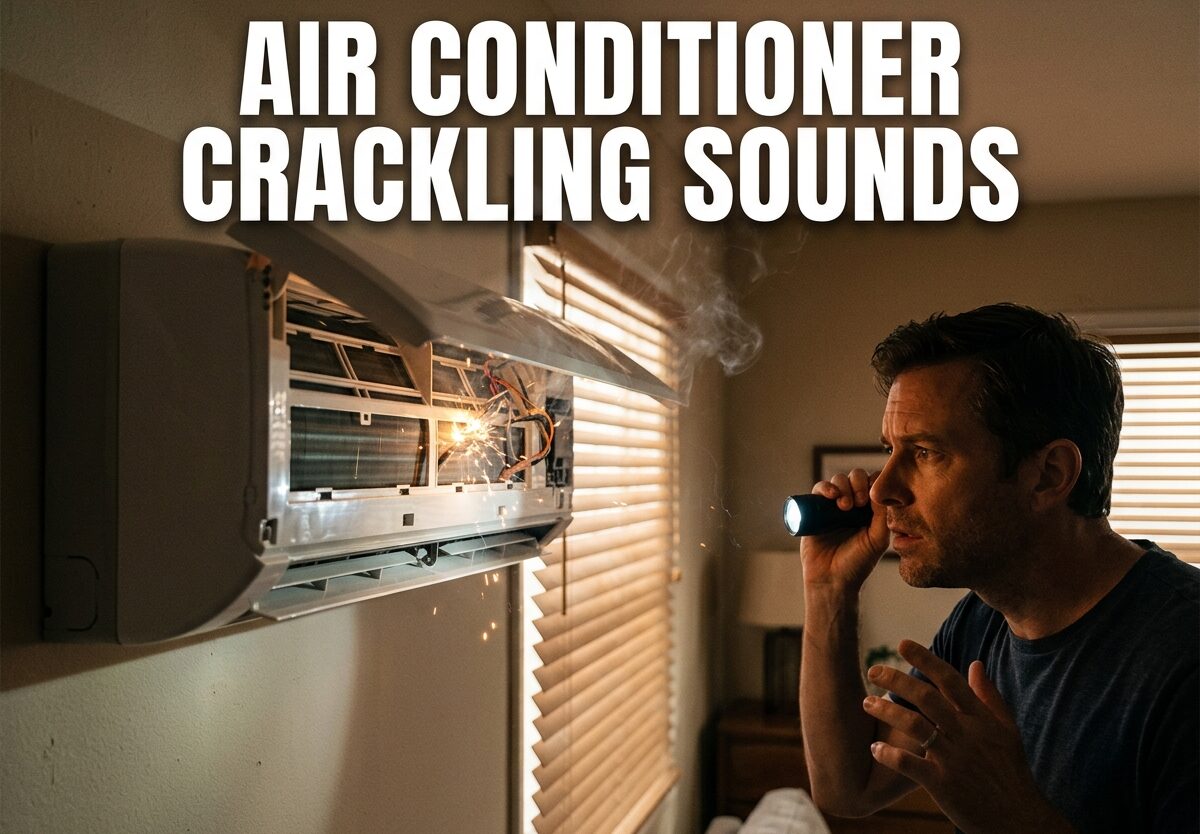
Hearing unexpected crackling sounds from your air conditioner can be concerning. These popping, snapping, or crackling noises usually indicate one of three common issues: ice buildup on evaporator coils, thermal expansion of internal materials, or loose components vibrating during operation.
Understanding what causes air conditioner crackling sounds helps you determine whether the issue is harmless or requires immediate professional attention. I’ve researched the most common causes and solutions to help you diagnose and fix AC crackling sounds effectively.
What Causes Air Conditioner Crackling Sounds
AC crackling sounds typically stem from five main causes. Identifying which one matches your situation is the first step toward resolving the issue.
Ice on Evaporator Coils (Most Common)
Frozen evaporator coils are the leading cause of crackling sounds in air conditioners. When your AC runs continuously or the temperature is set too low, ice forms on the coils.
As the system cycles off, this ice cracks and breaks away, creating that distinctive popping or crackling noise. This issue also reduces cooling efficiency and can damage your compressor if left untreated.
Signs of frozen coils include reduced airflow, water leakage around the indoor unit, and the crackling sound occurring most often when the AC turns off.
Thermal Expansion of Materials
Your air conditioner contains various metal and plastic components that expand and contract as temperatures change during operation.
This thermal expansion creates popping or crackling sounds, particularly when the unit first turns on or shuts down. Plastic casings expanding, metal ductwork adjusting, or copper lines shifting can all produce these noises.
Thermal expansion sounds are generally harmless and considered normal operation. They typically occur within the first few minutes of startup or shutdown.
Loose Parts and Vibrations
Over time, screws, panels, and internal components can become loose due to normal vibration during operation.
These loose parts rattle and create crackling or popping sounds as the AC runs. Common culprits include loose fan blades, unsecured access panels, or detached insulation within the unit.
If the crackling sound is constant rather than intermittent, loose parts are likely the cause. This issue worsens over time and should be addressed to prevent further damage.
Refrigerant Issues
Low refrigerant levels or refrigerant leaks can cause crackling or hissing sounds within your AC system.
When refrigerant pressure is imbalanced, the refrigerant may bubble or crackle as it moves through the lines. This is often accompanied by reduced cooling performance and higher energy bills.
Refrigerant issues require professional diagnosis and repair. Continuing to run your AC with low refrigerant can cause compressor failure.
Electrical Problems
In some cases, crackling sounds indicate electrical issues within the AC unit.
Failing capacitors, loose wiring connections, or a deteriorating compressor can all produce crackling or popping sounds. These sounds may be accompanied by burning smells, flickering lights, or circuit breaker trips.
Electrical problems are potentially dangerous and require immediate professional attention. Never ignore crackling sounds that occur with other electrical symptoms.
Is AC Crackling Sound Dangerous?
Not all crackling sounds indicate a serious problem, but some require immediate action. Here’s how to assess the severity.
When to Worry: Danger Signs
Certain symptoms accompanying crackling sounds indicate potentially serious issues. If you notice any of these danger signs, turn off your AC and contact a professional.
Burning smell accompanying crackling sounds suggests electrical problems that could pose a fire hazard. Smoke or visible sparks require immediate shutdown of your system.
Crackling with water leakage around the indoor unit indicates severe ice buildup that can damage internal components. This may also cause water damage to your home.
Tripped circuit breakers combined with crackling sounds point to electrical issues that need professional diagnosis. Continued operation can damage your AC’s electrical system.
Complete loss of cooling performance alongside crackling sounds suggests compressor failure or major refrigerant issues. These repairs require professional service.
Normal vs Concerning Noises
Harmless crackling sounds typically occur only during startup or shutdown cycles. They’re relatively quiet and don’t worsen over time.
Concerning crackling is loud, frequent, or constant during operation. These sounds often increase in volume or frequency and may be accompanied by reduced cooling performance.
Normal thermal expansion sounds happen predictably when temperature changes occur. Abnormal sounds occur randomly or at unusual times during operation.
How to Fix Air Conditioner Crackling Sounds
Depending on the cause, you may be able to resolve crackling sounds yourself or you may need professional assistance. Here’s a step-by-step approach.
DIY Troubleshooting Steps
Step 1: Change your air filter. A clogged filter restricts airflow, causing the evaporator coils to freeze. Replace your filter with a new one and allow the AC to run for several hours to see if the crackling stops.
Step 2: Check your thermostat setting. If the temperature is set below 68 degrees Fahrenheit, your AC may be working too hard and freezing up. Raise the temperature by 2-3 degrees and monitor for improvement.
Step 3: Inspect the outdoor unit. Look for visible debris, loose panels, or obvious damage. Secure any loose access panels and clear away leaves, sticks, or other debris from around the unit.
Step 4: Check for ice buildup. Look through the vents of your indoor unit for visible ice on the coils. If you see ice, turn off the AC and let it thaw completely before running it again.
Step 5: Listen to timing patterns. Note when the crackling occurs. Startup and shutdown sounds are usually normal. Constant crackling during operation requires professional attention.
When to Call a Professional
Certain crackling sound causes require professional HVAC expertise. Contact a qualified technician if you experience any of these situations.
If crackling persists after changing your filter and adjusting the thermostat, professional diagnosis is needed. The issue may involve refrigerant levels, electrical components, or internal mechanical problems.
Electrical symptoms like burning smells, flickering lights, or tripped breakers require immediate professional service. These issues can be dangerous if improperly addressed.
Refrigerant leaks require specialized equipment and EPA-certified technicians. Never attempt to recharge refrigerant yourself as improper handling can damage your system and harm the environment.
Compressor issues indicated by loud crackling combined with complete cooling failure require professional repair or replacement. Compressor work is complex and expensive.
Prevention Tips
Regular maintenance prevents most causes of air conditioner crackling sounds. Schedule annual professional maintenance to catch issues early.
Change your air filter every 1-3 months depending on usage and household factors. Clean filters prevent airflow issues that lead to frozen coils.
Keep your thermostat set between 72-74 degrees during summer months. Extremely low settings strain your system and increase the likelihood of ice formation.
Clear debris from around your outdoor unit regularly. Ensure at least two feet of clearance on all sides for proper airflow.
Address unusual sounds promptly. Waiting allows minor issues to become major problems that require expensive repairs.
FAQs
Why is my AC making a crackling sound?
Your AC is making a crackling sound most commonly due to ice buildup on evaporator coils, thermal expansion of internal materials, or loose parts vibrating during operation. Other causes include refrigerant issues and electrical problems. The timing and accompanying symptoms help identify the specific cause.
What is the 3 minute rule for air conditioners?
The 3 minute rule for air conditioners recommends waiting 3-5 minutes after your AC turns off before restarting it. This waiting period allows pressure in the refrigerant lines to equalize, preventing compressor damage. Many modern ACs have built-in delays to enforce this rule automatically.
What are the signs of a failing AC compressor?
Signs of a failing AC compressor include loud crackling or banging sounds, weak or warm airflow, hard starting or frequent cycling, higher than normal energy bills, and the AC unit tripping circuit breakers. If you notice these symptoms together, contact an HVAC professional immediately as compressor replacement is often required.
Can I fix AC crackling noises myself?
You can fix some AC crackling noises yourself by changing the air filter, adjusting the thermostat setting, clearing debris around the outdoor unit, and securing loose access panels. However, refrigerant issues, electrical problems, and compressor failures require professional HVAC service.
Why does my window AC make crackling sounds at night?
Window AC units often make more noticeable crackling sounds at night due to lower ambient temperatures, quieter environment making sounds more apparent, and thermal expansion as outdoor temperatures drop. Ice buildup from continuous operation on hot days is another common cause of nighttime crackling in window units.
Conclusion
Air conditioner crackling sounds usually stem from ice formation, thermal expansion, or loose components. While some crackling is normal, persistent or loud sounds accompanied by reduced cooling require attention.
Start with simple DIY troubleshooting like filter replacement and thermostat adjustment. If problems persist or you notice danger signs like burning smells, contact a professional HVAC technician. Regular maintenance prevents most crackling sound issues and extends your AC’s lifespan.


Leave a Comment