
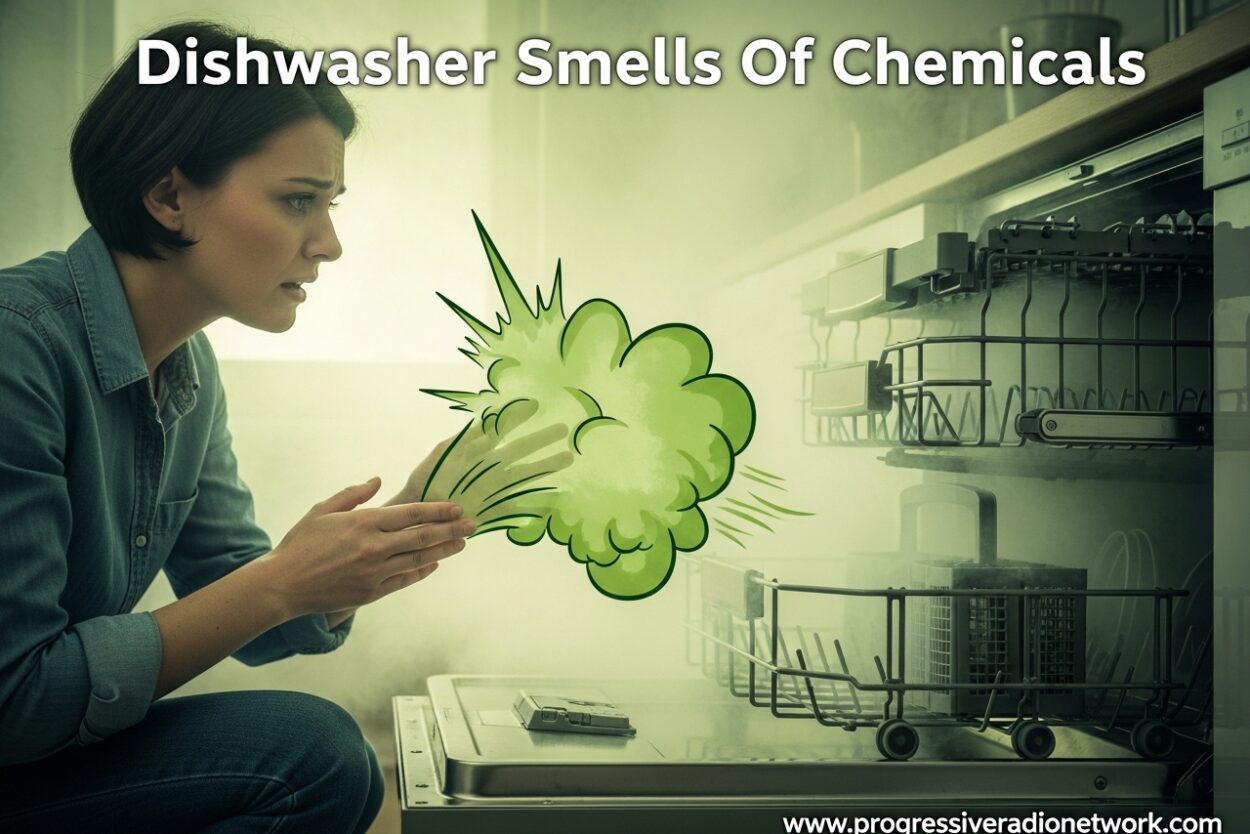
That sharp chemical odor wafting from your dishwasher isn’t just unpleasant. It’s making you wonder if something is seriously wrong with your appliance. I’ve been there, standing in front of an open dishwasher, hit with a smell that ranges from plastic burning to industrial solvent.
Chemical smells in dishwashers are actually quite common. They can happen with brand new units or older models that have been running fine for years. The good news is most chemical odors are fixable with simple cleaning methods and a bit of patience.
In this guide, I’ll walk you through why your dishwasher smells of chemicals, how to identify the specific cause, and exactly what steps to take to eliminate the odor for good.
Why Is My Dishwasher Smelling Of Chemicals?
Chemical odors in your dishwasher typically stem from one of two sources: new appliance off-gassing or accumulated buildup from regular use. The specific smell gives you important clues about what’s happening inside your machine.
A burning plastic or rubber odor usually points to electrical issues or items melting on the heating element. A sharp chemical or solvent smell often indicates detergent residue, hard water deposits, or bacteria growing in hidden areas.
New dishwashers commonly emit chemical smells during their first few weeks of operation as materials cure and off-gas volatile organic compounds (VOCs). This is normal but can be intense for anyone with chemical sensitivities.
New Dishwasher Chemical Smells: The Off-Gassing Phase
That chemical smell coming from your brand new dishwasher? It’s probably off-gassing, and it’s completely normal. Here’s what’s actually happening inside your new appliance.
Bitumen Insulation Off-Gassing
Many dishwasher brands use bitumen (a petroleum-based insulation material) on the exterior tub to reduce noise and heat loss. When your new dishwasher runs its first cycles, the heating element warms this bitumen insulation.
As the bitumen heats up, it releases volatile organic compounds (VOCs) into the air. These VOCs create that distinctive chemical or asphalt-like smell. The odor is usually strongest during the first 10-20 cycles and gradually diminishes over time.
This process can last anywhere from a few weeks to several months depending on your usage frequency and ventilation. Bosch dishwashers are particularly known for this issue due to their extensive bitumen insulation.
Plastic Component Off-Gassing
Your dishwasher’s interior contains numerous plastic parts including the tub, racks, spray arms, and tubing. New plastics release VOCs when heated for the first time, creating chemical odors that can transfer to your dishes.
Plastic is also porous, meaning it can absorb and retain odors more than stainless steel interiors. This is why plastic-interior dishwashers tend to hold onto smells longer, even after the initial off-gassing period ends.
Wire Rack Coating Odors
The vinyl or PVC coating on dishwasher wire racks can emit chemical smells when new. This coating protects dishes from scratching but releases odors during the first several heating cycles as the material cures.
Accelerating the Off-Gassing Process
You can speed up off-gassing by running your dishwasher empty on the hottest setting with good ventilation. Open windows and doors to allow VOCs to dissipate rather than recirculating through your home.
Some chemically sensitive individuals report success running multiple vinegar cycles during the break-in period. The acidity helps neutralize VOCs while providing a temporary odor mask.
Common Causes of Chemical Smells in Older Dishwashers
If your dishwasher is several years old and suddenly developing chemical odors, off-gassing isn’t the culprit. Here are the most common causes of chemical smells in established appliances.
Dirty or Clogged Filter
The filter at the bottom of your dishwasher traps food particles, debris, and grease during each cycle. When this filter becomes clogged, bacteria begin to grow and produce hydrogen sulfide gas.
While hydrogen sulfide typically smells like rotten eggs, when combined with detergent residue and decaying food, it can create a complex chemical odor that’s hard to identify. A dirty filter is the number one cause of persistent dishwasher odors.
Detergent and Rinse Aid Residue
Modern dishwashers use very little water, which means detergent doesn’t always rinse away completely. Excess detergent accumulates on interior surfaces, spray arms, and in hidden corners.
When combined with hard water minerals, this detergent residue forms a concrete-like scum that harbors bacteria. The chemical reaction between detergent, minerals, and bacteria creates sharp, chemical odors that seem to get worse after each wash.
Hard Water Mineral Buildup
If you live in an area with hard water, mineral deposits accumulate throughout your dishwasher over time. These calcium and magnesium deposits mix with soap scum to create a breeding ground for odor-causing bacteria.
The result is a chemical smell that’s particularly noticeable when your dishwasher is running hot. White vinegar is especially effective at breaking down these mineral deposits.
Plastic Items Melting on Heating Element
A burning plastic smell is different from other chemical odors because it indicates something is actively melting. This typically happens when a plastic lid, utensil, or food container falls from the rack and contacts the heating element.
If you notice this smell during a cycle, stop the dishwasher immediately and remove the melted item. Continued operation can cause permanent damage to the heating element and create persistent burning odors.
Mold and Mildew in Gasket Seals
The rubber gasket around your dishwasher door creates a watertight seal. This dark, damp environment is perfect for mold and mildew growth, especially if you regularly close the door immediately after running a cycle.
While mold typically smells musty, when combined with detergent residue and bacteria, it can create complex chemical odors. The smell often transfers to dishes, especially plastics which absorb odors more readily.
Drainage Problems and Standing Water
Water that doesn’t drain properly creates a breeding ground for bacteria. Check the bottom of your dishwasher after cycles complete. If water remains in the tub, your drain hose, air gap, or garbage disposal connection may be clogged.
Stagnant water mixed with food particles and detergent creates a distinct chemical sewage-like smell that worsens over time. This is one of the more serious causes as it can indicate mechanical problems requiring professional repair.
How to Get Rid of Chemical Smells in Your Dishwasher
Now that you’ve identified the likely cause, here’s exactly how to eliminate chemical odors from your dishwasher. These methods work for both new dishwasher off-gassing and older units with buildup issues.
Method 1: White Vinegar Deep Clean
White vinegar is the most effective natural cleaner for dishwasher odors. Its acidity breaks down mineral deposits, soap scum, and bacteria while neutralizing VOCs from new appliances.
Place a cup of white vinegar in a dishwasher-safe bowl on the top rack. Run your dishwasher on the hottest cycle with no other dishes inside. The vinegar will circulate throughout the machine, cleaning interior surfaces and neutralizing odors.
For persistent smells, repeat this process once a week for three weeks. The acidity breaks down buildup gradually without damaging internal components.
Method 2: Baking Soda Absorption Treatment
Baking soda is excellent at absorbing and neutralizing odors rather than just masking them. Sprinkle one cup of baking soda across the bottom of your dishwasher tub.
Run a short hot water cycle to distribute the baking soda, then let the dishwasher sit overnight. The baking soda will continue absorbing odors while the machine is idle.
In the morning, run another hot cycle to rinse away the baking soda and any loosened debris. This method is particularly effective for plastic-interior dishwashers that tend to hold onto odors.
Method 3: Citric Acid with Detergent
Citric acid is more powerful than vinegar at breaking down hard water deposits. Combine one tablespoon of citric acid with your regular detergent in the dispenser.
Run a normal cycle with dishes included. The citric acid will break down mineral buildup throughout the machine while the detergent provides cleaning power. This method is especially effective in areas with very hard water.
Filter Cleaning Instructions
Your dishwasher filter needs monthly cleaning to prevent odor-causing bacteria growth. Remove the bottom rack to access the filter, usually located at the bottom center of the tub.
Twist to unlock and remove the filter assembly. Rinse under hot water while scrubbing with a soft brush to remove trapped food particles. For stubborn buildup, soak the filter in a vinegar solution for 15 minutes before scrubbing.
Reinstall the filter securely before running your next cycle. A clean filter prevents food particles from recirculating and causing odors.
Gasket Seal Cleaning
The rubber door seal harbors mold and mildew that create chemical odors. Clean the gasket weekly with a mixture of equal parts water and white vinegar.
Use a soft cloth or toothbrush to reach into the folds and crevices of the seal. Pay special attention to the bottom corners where moisture accumulates. Dry thoroughly with a clean cloth to prevent future mold growth.
Safety Warning: When Chemical Smells Indicate Danger
Not all dishwasher odors are harmless. Certain chemical smells indicate serious problems that require immediate attention to prevent fire hazards or electrical damage.
Burning Plastic or Rubber Odors
A burning plastic smell that appears suddenly and gets worse during cycles indicates active melting or electrical problems. Stop using your dishwasher immediately if you notice this smell.
Check for plastic items that may have fallen onto the heating element. If none are found, the smell may indicate burning wire insulation, which is a serious fire hazard requiring professional repair.
Burning Rubber from Electrical Components
A distinct burning rubber smell often means wire insulation is melting inside your dishwasher. This is different from the temporary off-gassing smell of new appliances.
Electrical burning odors tend to intensify with each cycle and may be accompanied by unusual sounds or the circuit breaker tripping. These are clear warning signs of dangerous electrical problems.
When to Call a Professional
If you’ve tried cleaning methods and the chemical smell persists, especially if it smells like burning, call a professional appliance repair technician. Internal electrical problems, pump failures, and seal leaks require specialized knowledge and tools to repair safely.
Don’t continue running a dishwasher that smells like burning. The risk of electrical fire increases with each cycle. The cost of professional inspection is minimal compared to potential fire damage.
Prevention Tips to Keep Your Dishwasher Smelling Fresh
Once you’ve eliminated the chemical smell, these simple habits prevent odors from returning. Prevention is much easier than dealing with established odor problems.
Run Hot Water Before Starting
Run your kitchen sink until the water is hot before starting the dishwasher. This ensures the first fill is hot rather than lukewarm, which improves detergent effectiveness and reduces residue buildup.
Use the Right Amount of Detergent
More detergent doesn’t mean cleaner dishes. Excess detergent leaves residue that creates chemical odors. Follow manufacturer recommendations and adjust based on your water hardness.
If you have soft water, use even less detergent than recommended. Soft water requires less detergent to clean effectively, and excess product will definitely cause odor problems.
Leave the Door Ajar After Cycles
Moisture creates the perfect environment for bacteria and mold growth. Leave your dishwasher door slightly open for at least an hour after cycles complete to allow interior surfaces to dry completely.
This simple habit prevents the warm, damp conditions that odor-causing bacteria need to thrive. It’s especially important if you run your dishwasher at night and don’t empty it until morning.
Monthly Deep Cleaning
Even with proper maintenance, monthly deep cleaning prevents odor-causing buildup. Run a vinegar cycle once a month to keep mineral deposits and bacteria in check.
Combine this with monthly filter cleaning and gasket wiping for comprehensive odor prevention. This 15-minute monthly routine saves hours of dealing with established odor problems.
Inspect Spray Arms Regularly
Clogged spray arms reduce cleaning effectiveness and create pockets of stagnant water where bacteria grow. Remove spray arms monthly and clean the nozzles with a toothbrush or pipe cleaner.
Ensure the spray arms spin freely and water flows freely through all nozzles. Proper spray arm function prevents the dirty water and food particle buildup that causes chemical odors.
Frequently Asked Questions
Why is my dishwasher giving off a chemical smell?
Chemical smells in dishwashers typically come from three sources: new appliance off-gassing from bitumen insulation and plastic components, detergent and mineral residue buildup, or bacterial growth in dirty filters and gaskets. The specific odor type helps identify the cause. Burning plastic indicates electrical issues, while sharp chemical smells point to residue or bacteria problems.
What are the signs of a failing dishwasher?
Common signs of dishwasher failure include persistent odors that don’t respond to cleaning, unusual noises during cycles, water not draining properly, dishes coming out dirty or cloudy, the door not latching correctly, visible leaks, and the cycle not completing. Electrical burning smells or tripped breakers indicate serious problems requiring immediate professional attention.
Is it normal for a new dishwasher to smell like burning plastic?
Yes, new dishwashers commonly emit chemical or burning plastic smells during the first few weeks of operation. This is caused by off-gassing from bitumen insulation, plastic components, and vinyl-coated wire racks as they heat for the first time. The smell should gradually diminish over 10-20 cycles. If the smell intensifies or persists beyond several weeks, contact the manufacturer.
Is a stinky dishwasher a health hazard?
A smelly dishwasher can be a health hazard if caused by bacterial growth, mold, or mildew. These can contaminate dishes and potentially cause illness, especially in immunocompromised individuals. Chemical smells from off-gassing aren’t typically dangerous but can cause headaches or irritation in chemically sensitive people. Burning odors indicate potential fire hazards and require immediate attention.
What is the average lifespan of a dishwasher?
The average dishwasher lasts 10-13 years with proper maintenance. Higher-end models like Bosch and Miele often last 15+ years, while budget models may need replacement after 8-10 years. Regular cleaning, proper loading, and addressing problems promptly extend lifespan. Units with persistent electrical problems or extensive rust typically need replacement rather than repair.
Conclusion
Chemical smells in your dishwasher are unpleasant but usually fixable with the right approach. New dishwasher off-gassing is temporary and resolves within weeks, while older units typically need deep cleaning to remove residue buildup.
Start by identifying whether your smell is from off-gassing, bacterial growth, or electrical problems. Then use the appropriate cleaning method, whether it’s vinegar cycles for general odors or professional service for burning smells.
Regular maintenance including monthly filter cleaning and proper detergent amounts prevents most chemical odors from returning. With consistent care, your dishwasher can run odor-free for years to come.





Leave a Comment