
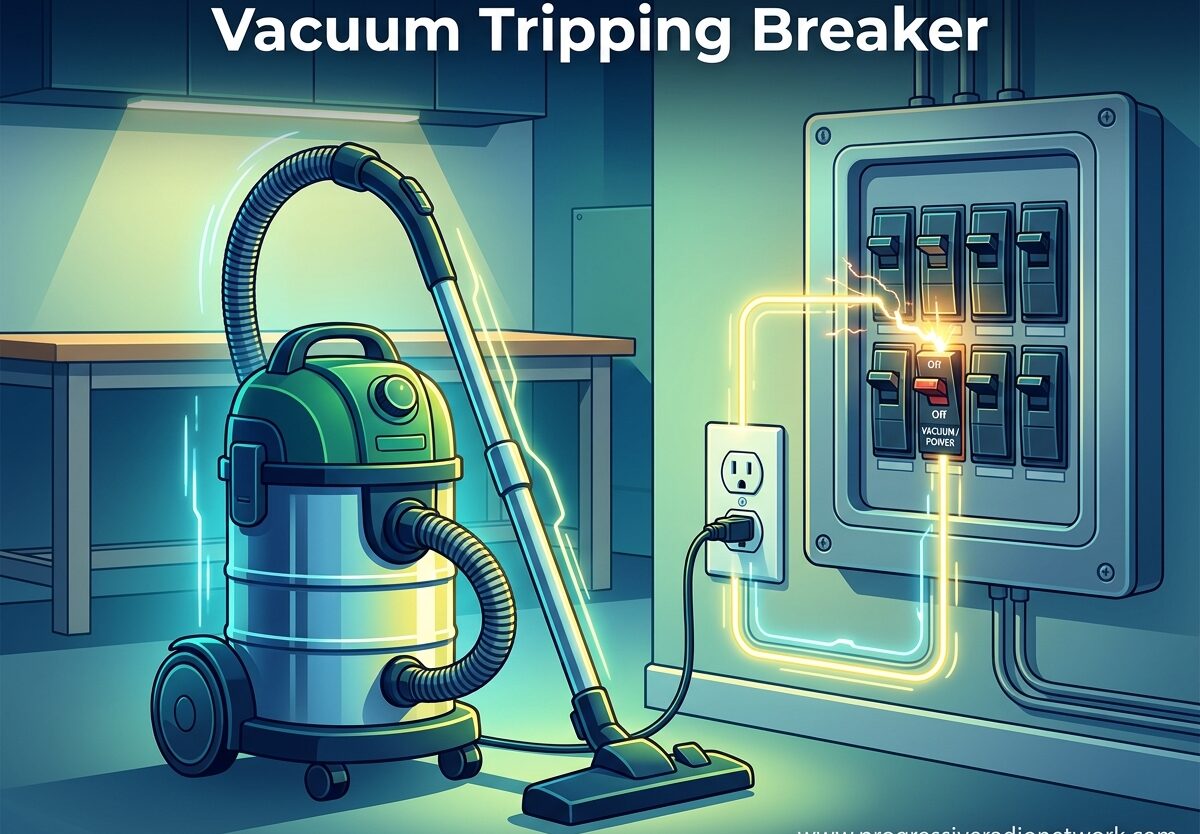
Nothing kills your cleaning momentum faster than your vacuum tripping breaker mid-swipe. You’re in the groove, making progress on your floors, and suddenly everything goes dark. The breaker has tripped again. If this happens occasionally, it’s annoying. If it happens every time you vacuum, it’s infuriating. I’ve researched this issue extensively, and the answer usually comes down to one thing: your vacuum is triggering an AFCI breaker through a phenomenon called nuisance tripping.
In this guide, I’ll explain why your vacuum keeps tripping the breaker, how to tell if it’s a serious electrical problem or just an overly sensitive safety device, and what you can actually do about it. This information matters because while most vacuum tripping breaker issues are harmless nuisance trips, some can indicate real electrical hazards that need immediate attention.
What is an AFCI Breaker and Why It Matters
AFCI stands for Arc Fault Circuit Interrupter. These are specialized circuit breakers designed to detect dangerous electrical arcing – small sparks that can happen inside your walls when wiring is damaged or connections come loose. Electrical arcing is a leading cause of house fires, so AFCI breakers were mandated by the National Electrical Code for most residential circuits starting in the early 2000s.
If your home was built after 2002, you likely have AFCI breakers protecting your bedroom and living area circuits. They look different from standard breakers – usually with a test button and distinctive colored indicator. These breakers are incredibly sensitive by design. They’re constantly monitoring for the signature of electrical arcing, which can occur at microscopic levels that you’d never notice.
The problem is that AFCI breakers can’t always distinguish between dangerous arcing from faulty wiring and harmless sparking from perfectly normal electrical devices. This is where vacuum tripping breaker issues begin.
Understanding Electrical Arcing
Electrical arcing happens when electricity jumps between two conductors through the air. You might picture dramatic lightning bolts, but most electrical arcs are tiny – occurring at the microscopic level where wires make contact. These small arcs generate intense heat that can ignite surrounding materials like wood framing or insulation, which is why AFCI breakers exist in the first place.
Here’s what most people don’t realize: some electrical devices produce arcing as part of their normal operation. Any device with an electric motor creates tiny sparks inside the motor as the brushes make and break contact with the spinning commutator. This is called commutation, and it’s been happening in electric motors for over a century without causing problems.
Your vacuum cleaner is one of the worst offenders for normal sparking. The motor spins at incredibly high RPMs, with carbon brushes constantly riding against the commutator. Each time a brush segment passes, you get a microscopic spark. Multiply that by thousands of revolutions per minute, and your vacuum is producing a constant stream of tiny electrical arcs.
In the days before AFCI breakers, nobody knew this was happening. The sparking was contained inside the motor housing and completely harmless. But AFCI breakers can detect it through the electrical wiring, and they don’t know whether the arc is inside your walls (dangerous) or inside your vacuum motor (normal).
Why Vacuums Trip AFCI Breakers (Nuisance Tripping)
When your vacuum tripping breaker happens, it’s almost always due to what electricians call “nuisance tripping.” This occurs when an AFCI breaker trips because it detects arcing from a legitimate source – like your vacuum’s motor – rather than dangerous arcing from faulty wiring. The breaker is doing its job by being cautious, but it’s being overly cautious.
Why are vacuums specifically prone to this? Several reasons. First, vacuum motors draw significant current – often 10-15 amps on a 15-amp circuit. This high current draw makes any arcing more pronounced and easier for the breaker to detect. Second, vacuum motors have brushes that actively create sparks as part of normal operation. Third, many vacuums have variable speed controls or electronic features that can create electrical noise that mimics arcing patterns.
I’ve seen countless forum posts from frustrated homeowners dealing with this exact issue. Shark and Dyson vacuums are frequently mentioned as repeat offenders. The pattern is almost always the same: the vacuum runs for 5-10 seconds, then the breaker trips. Sometimes it happens immediately upon startup. Move the vacuum to a different circuit, and it works fine.
This is the telltale sign of nuisance tripping. If your vacuum trips the breaker on multiple circuits, it’s likely the vacuum itself causing the issue. If it only trips on one circuit regardless of which vacuum you use, you might have a wiring problem.
Signs Your Vacuum Tripping Indicates a Real Electrical Problem
While most vacuum tripping breaker situations are harmless nuisance trips, there are real electrical problems that can cause a breaker to trip. These are the warning signs that indicate you should stop using your vacuum immediately and investigate further.
First, check your vacuum cord for any visible damage. Look for fraying, cuts, or exposed wires anywhere along the cord. A damaged cord can create dangerous arcing that should absolutely trip your breaker – and it’s a fire hazard if it doesn’t. Pay special attention to where the cord enters the vacuum body and near the plug, as these are common failure points.
Second, notice any unusual smells when your vacuum runs. A burnt plastic smell or electrical odor indicates overheating or short-circuiting somewhere in the vacuum. This is not normal and warrants immediate investigation. The smell might be coming from the motor, the cord, or internal wiring.
Third, look for visible sparks outside the vacuum motor. While small sparks inside the motor housing are normal, you should never see arcing at the plug, outlet, or anywhere along the cord. If you see sparking when you plug in or unplug your vacuum, stop using that outlet immediately.
Fourth, feel your breaker after it trips. If the breaker itself feels warm or hot to the touch, this indicates a problem with the breaker or the wiring in your panel – not with your vacuum. Warm breakers suggest loose connections or overloading that should be addressed by an electrician.
Finally, consider whether your vacuum trips breakers in multiple locations. If it trips the breaker no matter which room you’re in, the problem is almost certainly with the vacuum itself. This could mean worn motor brushes, internal short circuits, or a failing motor.
How to Fix Your Vacuum from Tripping the Breaker
Before you replace your vacuum or call an electrician, try these diagnostic steps to identify the source of the problem. This simple troubleshooting process can save you time and money.
Step 1: Test your vacuum on a different circuit. Plug it into an outlet on the opposite side of your home, preferably one you know is on a different breaker. If the vacuum runs fine there, you’ve confirmed it’s a nuisance tripping issue with the original circuit’s AFCI breaker. If it still trips, proceed to Step 2.
Step 2: Inspect the vacuum cord thoroughly. Run your fingers along the entire length feeling for any kinks, cuts, or soft spots. Look closely at the plug prongs for any discoloration or melting. If you find any damage, the cord should be replaced or the vacuum retired.
Step 3: Check the vacuum motor brushes if your model allows access. Many vacuums have removable brush caps on the motor housing. Worn brushes can cause excessive sparking that triggers AFCI breakers. Replacement brushes are inexpensive and can extend your vacuum’s life significantly.
Step 4: Clean the vacuum thoroughly. Clogged filters and restricted airflow make the motor work harder, drawing more current and creating more pronounced arcing. Empty the bin or replace the bag, clean or replace all filters, and check for any blockages in the hose or intake.
Step 5: Consider the age of your vacuum. Most vacuum motors last 5-10 years with proper maintenance. If yours is older and showing these symptoms, replacement might be more cost-effective than repair.
If you’ve ruled out the vacuum as the culprit and confirmed the problem happens with multiple devices on the same circuit, it’s time to call a licensed electrician. There could be loose wiring connections in your outlets or panel that need professional attention.
Other Devices That Cause Nuisance Tripping
Vacuums aren’t the only devices that trigger AFCI breakers. I’ve seen reports of nuisance tripping with various household appliances and electronics. Understanding this pattern can help you recognize when tripping is normal versus problematic.
Flat screen TVs and computers are common offenders. Their power supplies can create electrical noise that mimics arcing patterns. Treadmills are another frequent culprit – their motors operate similarly to vacuums, with brushes creating internal sparking. Power tools, especially older models with brushed motors, can also trigger AFCI breakers.
The common thread is devices with motors or switching power supplies. These create brief electrical disturbances that AFCI breakers interpret as potential arcing. If multiple devices cause tripping on the same circuit, it’s likely the breaker’s sensitivity rather than a problem with any individual device.
Some electricians recommend replacing problematic AFCI breakers with dual-function AFCI/GFCI breakers from different manufacturers, as sensitivity varies between brands. Others suggest using standard breakers for dedicated appliance circuits where local codes permit. These solutions should only be pursued with professional guidance and code compliance in mind.
When to Call an Electrician
While vacuum tripping breaker issues are usually nuisance trips, there are situations where professional help is necessary. If you’ve ruled out the vacuum as the source and the tripping persists across multiple devices, have an electrician inspect your electrical system.
Call an electrician if: the breaker feels warm after tripping, you notice burning smells from outlets, multiple breakers trip frequently, you’ve recently had electrical work done, or your home has older aluminum wiring. These can all indicate serious electrical problems that require professional diagnosis and repair.
Electricians can test your breakers, check for loose connections throughout your circuit, and determine whether the AFCI breaker is functioning properly or overly sensitive. They may also recommend alternative solutions like dedicated circuits for high-draw appliances.
FAQs
Why would a vacuum keep tripping the breaker?
A vacuum keeps tripping the breaker primarily due to nuisance tripping with AFCI breakers. The vacuum’s motor creates normal sparking during operation, which AFCI breakers detect as potentially dangerous arcing. This is especially common with vacuums that have worn motor brushes or high current draw. Less commonly, it can indicate real problems like frayed cords, short circuits, or a failing vacuum motor.
What is the 80% rule on breakers?
The 80% rule states that circuit breakers should only be loaded to 80% of their rated capacity for continuous loads (3+ hours). For a 15-amp breaker, this means 12 amps maximum. For a 20-amp breaker, it’s 16 amps. This rule prevents overheating and ensures the breaker won’t trip from normal operation. Vacuums often draw close to this limit, which contributes to tripping issues.
What is the life expectancy of a vacuum circuit breaker?
Circuit breakers are designed to last 30-40 years under normal conditions. However, AFCI breakers that trip frequently may wear out sooner. Each trip causes mechanical stress on the breaker mechanism. If your breaker trips regularly from vacuum use, it may need replacement after 10-15 years. Standard breakers typically outlast the vacuum itself.
How do you know if your vacuum breaker is bad?
Signs of a bad breaker include: it trips immediately upon resetting, feels warm or hot to the touch, won’t stay reset even with no load, makes buzzing or humming sounds, or shows visible damage like burn marks. If your vacuum works fine on other circuits but always trips one specific breaker, that breaker likely needs replacement by an electrician.
What to do if an appliance keeps tripping the breaker?
First, test the appliance on a different circuit. If it works fine, the original circuit has an issue. If it still trips, the appliance is the problem. Check the appliance cord for damage, clean filters and vents, and ensure proper airflow. For motorized appliances, check if brushes are worn. If multiple appliances trip the same breaker, have an electrician inspect your electrical panel and wiring.
Is nuisance tripping dangerous?
Nuisance tripping itself is not dangerous – it’s actually your breaker working correctly by being cautious. The arcing that causes nuisance trips from vacuums is normal motor operation contained within the device housing. However, nuisance tripping can become dangerous if you respond by removing safety features or using incompatible equipment. Always address the root cause rather than disabling protection.
Conclusion
Vacuum tripping breaker issues are frustrating, but understanding the cause makes them manageable. Most of the time, you’re dealing with nuisance tripping – an overly sensitive AFCI breaker reacting to normal sparking from your vacuum’s motor. This is annoying but completely safe. The breaker is doing its job by being cautious, even if it’s being a bit overzealous.
Before you blame your vacuum or your electrical system, run through the diagnostic steps. Test on different circuits, inspect for damage, and consider the age of your equipment. Simple maintenance like replacing worn brushes or cleaning filters can resolve many issues without requiring replacement.
Remember that while nuisance tripping is common, you should never ignore warning signs of real electrical problems. Frayed cords, burning smells, visible sparks, warm breakers, or tripping across multiple circuits all warrant professional attention. Your safety is more important than convenience.
If you’ve confirmed it’s nuisance tripping and want to prevent future interruptions, consider plugging your vacuum into a non-AFCI circuit if one exists (like a kitchen or garage outlet), or consult an electrician about solutions appropriate for your home’s electrical setup. With the right approach, you can keep your floors clean without constantly resetting breakers.




Leave a Comment