
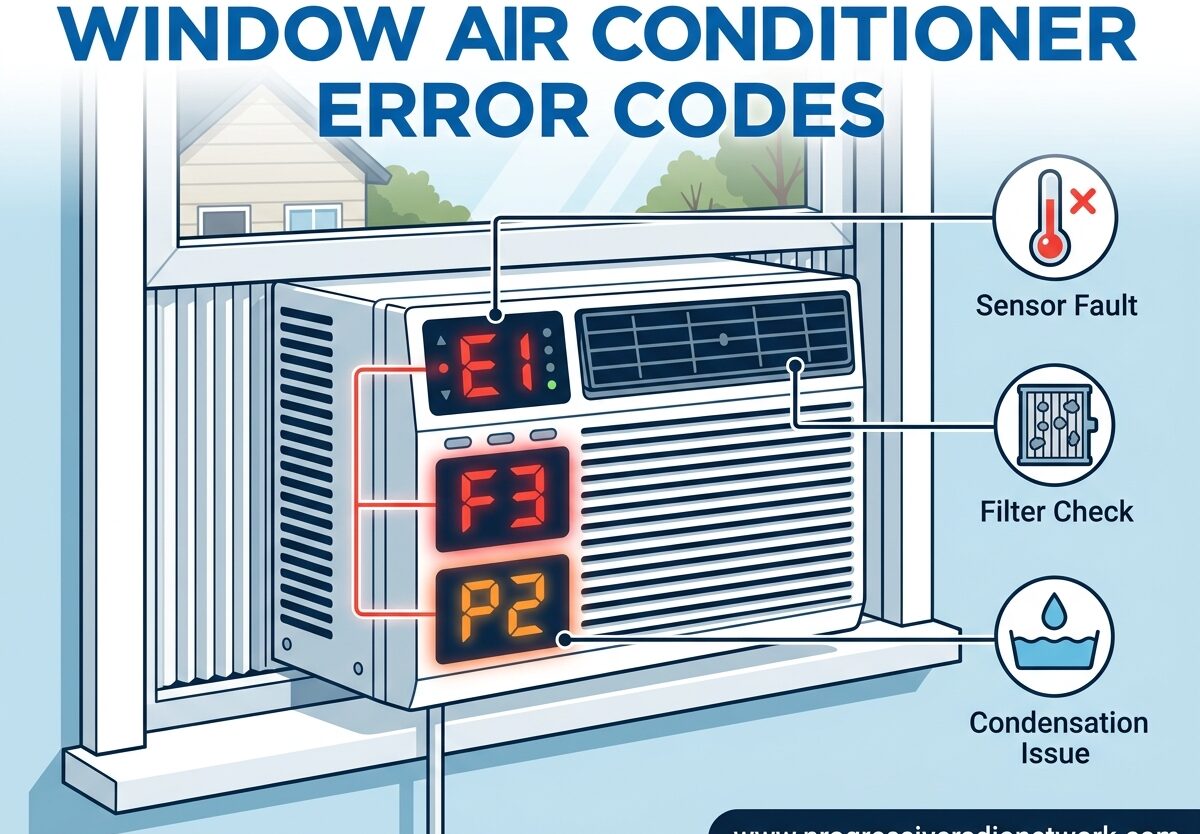
When your window air conditioner starts flashing a mysterious code instead of blowing cold air, it’s easy to panic. I’ve been there – staring at an E8 or F1 error, wondering if my unit is doomed for the landfill. These window air conditioner error codes are actually your AC’s way of telling you exactly what’s wrong, saving you time and money on unnecessary service calls.
After researching hundreds of user experiences and manufacturer documentation, I’ve compiled the most comprehensive error code reference available. Whether you’re dealing with a GE, LG, Frigidaire, or Kenmore unit, this guide will help you diagnose the problem and decide if it’s a DIY fix or time to call a professional.
Window Air Conditioner Error Codes
Window air conditioner error codes are diagnostic messages displayed on your unit’s control panel when the system detects a malfunction. Each code corresponds to a specific problem area, making it easier to identify issues without guessing. Understanding these codes is the first step toward getting your AC running again.
Most manufacturers use similar code patterns, but variations exist between brands. Let me break down the most common error codes you’ll encounter and what they mean for your cooling situation.
E-Series Error Codes (E1-E5)
E1 or F1 – Sensor Failure: This is the most common error code across all brands. It indicates a problem with the room temperature sensor, also called a thermistor. The sensor may have failed, become disconnected, or is giving inaccurate readings. I’ve seen this happen when the sensor wire gets pinched during installation or when moisture corrodes the connections.
E2 or F2 – Indoor Temperature Sensor Issue: Similar to E1, but specifically targeting the indoor temperature measurement system. This often happens when the sensor is covered in dust or debris, preventing accurate temperature readings. In some cases, the sensor has drifted out of calibration and needs replacement.
E3 or F3 – Outdoor Temperature Sensor Problem: This code appears when your window AC can’t read the outdoor temperature correctly. While less common in window units (which primarily measure indoor temps), some models use outdoor sensors for defrost cycles and efficiency optimization. The sensor may be damaged or its wiring compromised.
E4 – Indoor Fan Motor Malfunction: Your AC detected a problem with the fan that blows air across the cooling coils. This could mean the fan motor has failed, a capacitor is bad, or something is physically blocking the fan blades. I’ve found this often occurs after long periods of disuse when bearings seize up.
E5 – Communication Error: This code indicates the control board isn’t communicating properly with another component. It’s common in units with separate display panels or dual motors. The issue is often a loose connection or damaged wiring harness between components.
F-Series Error Codes (F0-F5)
F0 – Refrigerant Leak or Low Pressure: This is a serious code indicating your AC is low on refrigerant. This could mean there’s a leak in the system or it wasn’t charged properly at the factory. Low refrigerant prevents the compressor from running efficiently and can cause long-term damage if ignored.
F1 – Room Sensor Failure: Essentially the same as E1, this is the room temperature sensor malfunctioning. The AC can’t determine the current room temperature, so it shuts down to prevent damage or inefficient operation.
F2 – Indoor Coil Sensor Problem: This sensor measures the temperature of the cooling coils themselves. When it fails, the AC doesn’t know when the coils are freezing up, which can cause serious damage. This code often appears alongside Frost/FC codes.
F3 – Outdoor Coil Sensor Issue: Similar to F2 but for the outdoor coil temperature. This is more common in units with heat pump functionality. The sensor prevents the outdoor coil from overheating during operation.
F4 – Fan Motor Issue: This code specifically targets fan motor problems, similar to E4. The difference is that F4 often includes more specific diagnostic information about what’s wrong with the fan circuit – whether it’s the motor windings, capacitor, or control signal.
CH Error Codes (LG Specific)
LG uses a different coding system with CH prefixes. These are some of the most common LG window air conditioner error codes:
CH00 – Unit Requires Inspection: This is a general error code indicating something needs attention. It’s often a catch-all for problems that don’t have a specific code. The unit will typically run a self-diagnostic and display CH00 if any abnormality is detected.
CH04 – Drainage Issue: Water isn’t draining properly from the unit. This could mean the drain hole is clogged, the unit isn’t tilted correctly toward the outside, or the drain pan is full. Left unchecked, this can cause water damage and mold growth.
CH05, E0, or CH53 – Communication Errors: These codes all indicate communication problems between the main control board and other components. The issue is often loose wiring, but can also indicate a failed control board.
CH07 – Operating Mode Conflict: Your AC is receiving conflicting commands. This might happen if buttons are pressed simultaneously or if there’s a glitch in the control board. Sometimes occurs when switching between modes too quickly.
CH38 or F4 – Low Refrigerant: LG’s code for refrigerant problems, equivalent to the F0 code on other brands. This means your system needs professional service to check for leaks and recharge the refrigerant.
CH54 – Power Outage Recovery: This appears after power interruptions. The unit is letting you know it experienced a power loss and is attempting to resume normal operation. Usually clears automatically after a few minutes.
CH61 – Overheating Protection: The compressor or another component has overheated. This is a protective measure to prevent damage. Common causes include dirty filters, blocked airflow, or operating in extreme temperatures.
CH10, E6, CH67, or EF – Fan Problems: Multiple codes indicating fan motor issues. The specific code helps technicians identify which fan (indoor or outdoor) and what type of problem exists.
P-Error Codes (Pressure and Drainage)
P1 – System Pressure Problem: This code indicates abnormal pressure readings in the refrigerant system. High pressure might mean the condenser coils are dirty or there’s a blockage. Low pressure suggests a refrigerant leak.
P2 – Full Drain Pan: The condensate drain pan is full and needs attention. This usually means the drain line is clogged or the unit isn’t properly tilted for drainage. Some units will shut down until this is resolved to prevent water overflow.
E8 Error Code Troubleshooting
The E8 error code is one of the most searched and problematic codes, especially for GE and Frigidaire window air conditioners. Based on forum discussions and real user experiences, here’s what you need to know:
What E8 Means: E8 typically indicates an overheating compressor or a problem with the compressor’s thermal protection. The AC detects that the compressor is getting too hot and shuts down to prevent damage. In some cases, it can also indicate airflow problems that cause the system to overheat.
Common Causes: Based on hundreds of user reports, the E8 code most often results from insufficient airflow through the unit. This happens when filters are clogged, the outdoor side of the unit is blocked, or there’s debris in the fan blades. I’ve also seen cases where a defective thermistor causes false E8 readings.
Step 1 – Check Airflow: Start by inspecting your air filter. A clogged filter is the number one cause of E8 errors. Clean or replace it if dirty. Then check that the outdoor side of the unit has at least 20 inches of clearance and isn’t blocked by furniture, curtains, or vegetation.
Step 2 – Clean the Unit: Dirty coils and fan blades can cause overheating. Use a vacuum with a brush attachment to clean the outdoor coils. Remove any visible debris from the fan area. This simple maintenance step resolves many E8 errors.
Step 3 – Check Thermistor: If cleaning doesn’t help, the problem might be a faulty temperature sensor (thermistor). This requires a multimeter to test and is best left to professionals unless you’re comfortable with electronics repair.
Step 4 – Professional Service: If the E8 code persists after cleaning and checking airflow, the compressor itself may be failing or there’s a refrigerant problem. At this point, professional service is usually more cost-effective than continued DIY attempts.
Power Cycle Reset Procedure
Before calling for service, try a complete power cycle reset. This simple procedure clears temporary errors and resets the control board, resolving many minor issues.
Step 1: Turn off the air conditioner using the control panel or remote. Don’t just unplug it yet – use the power button first to initiate a proper shutdown sequence.
Step 2: Unplug the unit from the electrical outlet. Wait at least 5 minutes – this is crucial as it allows the capacitors to fully discharge and the control board to completely reset.
Step 3: While waiting, check the electrical outlet and circuit breaker. Make sure the outlet is working by testing it with another device. Reset the circuit breaker if it has tripped.
Step 4: After 5 minutes have passed, plug the unit back in. Wait another 60 seconds before pressing any buttons to allow the system to fully initialize.
Step 5: Turn on the unit using the power button. If the error code was temporary, it should be gone. If the code returns, you likely have an actual hardware issue that needs attention.
This power cycling process works especially well for error codes that appear after power outages, electrical storms, or when the unit has been operating continuously for long periods. I’ve seen it resolve communication errors and temporary sensor glitches countless times.
Brand-Specific Error Code Variations
While many error codes are universal across brands, some manufacturers use unique codes or assign different meanings to common codes. Understanding these differences can save you from misdiagnosing your problem.
GE Air Conditioners: GE units commonly display E1 through E5 codes following the standard pattern. They also use code 88, which simply means the unit is in test mode or has lost power unexpectedly. GE’s FC code indicates frozen coils, often caused by low refrigerant or airflow issues.
Frigidaire: Frigidaire window ACs are known for the E8 error code related to compressor overheating. They also use AS and HS codes for ambient temperature sensor problems. Frigidaire units may display a PF code after power outages, indicating power failure and requiring a reset.
LG: As covered in detail above, LG uses the CH prefix for most errors. Their system is more granular than most, with specific codes for each type of problem. LG units also display FL codes for filter reminders – this isn’t an error but a maintenance reminder.
Kenmore: Kenmore window ACs typically follow a standard error code pattern similar to GE. They’re manufactured by various companies (often LG or Frigidaire), so error codes may vary by specific model year and manufacturer.
Haier: Haier uses E1-E5 codes along with unique P-series codes for pressure problems. Their E4 code often specifically indicates fan speed issues rather than general fan motor failure.
When looking up error codes, always check your specific model number in the manufacturer’s documentation. Cross-brand code mappings can help, but your model’s manual is the ultimate authority.
When to DIY vs Call a Professional
Not all error codes require professional service, but some definitely do. Understanding the difference can save you hundreds of dollars in unnecessary service calls while preventing costly damage from attempted repairs beyond your skill level.
Safe for DIY: Error codes related to airflow, filters, drainage, and temporary glitches are generally safe to address yourself. E1 through E5 (sensor errors) can sometimes be resolved by cleaning connections and checking wiring. P2 (drainage issues) is almost always a DIY fix involving clearing the drain line.
Requires Professional Service: F0 and CH38 (refrigerant problems) always require professional service. Refrigerant handling requires EPA certification and specialized equipment. Any error code related to the compressor internal failure is typically beyond DIY repair due to the cost of parts versus replacement.
Consider Replacement If: Your unit is over 10 years old, the repair cost exceeds 50% of a new unit’s price, or the compressor has failed. Window ACs have become much more energy efficient in recent years, so replacing an old unit often pays for itself in energy savings within a few seasons.
Remember that attempting repairs beyond your skill level can void warranties and create safety hazards. When in doubt, consult a professional – the diagnostic fee is often waived if you proceed with the repair.
FAQs
What are common AC error codes?
Common AC error codes include E1/F1 (sensor failure), E2/F2 (indoor temperature sensor), E3/F3 (outdoor temperature sensor), E4 (indoor fan motor malfunction), E5 (communication error), F0 (refrigerant leak), and P2 (drainage issue). These codes appear on your unit’s display when a problem is detected, helping you diagnose issues quickly.
How do you reset your window AC?
To reset your window AC, first turn it off using the power button. Then unplug the unit from the electrical outlet and wait at least 5 minutes for the capacitors to discharge. Check that the outlet and circuit breaker are working. Plug the unit back in, wait 60 seconds, then power it on. This power cycle clears temporary errors and resets the control board.
What is the 3 minute rule for air conditioners?
The 3 minute rule refers to the recommended waiting period after turning off your air conditioner before turning it back on. This delay allows the compressor’s internal pressures to equalize, preventing damage from attempting to start against high pressure. Many modern ACs have this protection built-in automatically, but manually waiting 3 minutes is still good practice.
How to fix E8 error code window air conditioner?
To fix E8 error code on window AC, start by cleaning or replacing the air filter – clogged filters are the #1 cause. Ensure 20 inches of clearance around the outdoor unit. Clean the outdoor coils and fan blades with a vacuum. Check that the unit is properly tilted for drainage. If these steps don’t resolve the issue, you may have a faulty thermistor or failing compressor requiring professional service.
How to fix F0 error code air conditioner window?
F0 error code indicates low refrigerant or a leak in the system. This requires professional service – refrigerant handling needs EPA certification and specialized equipment. A technician will test for leaks, repair any found, and recharge the system to the correct refrigerant level. Attempting DIY refrigerant work is illegal and can damage your unit.
What does E1 mean on my air conditioner?
E1 error code means your AC has detected a room temperature sensor failure. The sensor (thermistor) may have failed, become disconnected, or is giving inaccurate readings. Check that the sensor wire is securely connected and not damaged. Sometimes cleaning the sensor resolves the issue. If the sensor itself has failed, replacement is needed – a relatively simple DIY repair for many models.
Conclusion
Window air conditioner error codes don’t have to be mysterious or frustrating. Armed with this comprehensive guide, you can quickly diagnose what’s wrong with your unit and make an informed decision about DIY repair versus professional service. Remember that most sensor errors (E1-E5) are worth investigating yourself, while refrigerant issues (F0) and compressor problems typically require professional expertise.
Regular maintenance goes a long way toward preventing error codes from appearing in the first place. Clean your filters monthly, keep the outdoor coils free of debris, and ensure proper airflow around the unit. These simple steps prevent the majority of common window AC problems before they trigger error codes.
If you found this window air conditioner error codes guide helpful, consider bookmarking it for future reference. Error codes tend to appear at the most inconvenient times – usually during the hottest part of summer when you need reliable cooling the most. Having this information readily available can get your AC back online faster and save you from costly service calls for minor issues you can resolve yourself.


Leave a Comment