
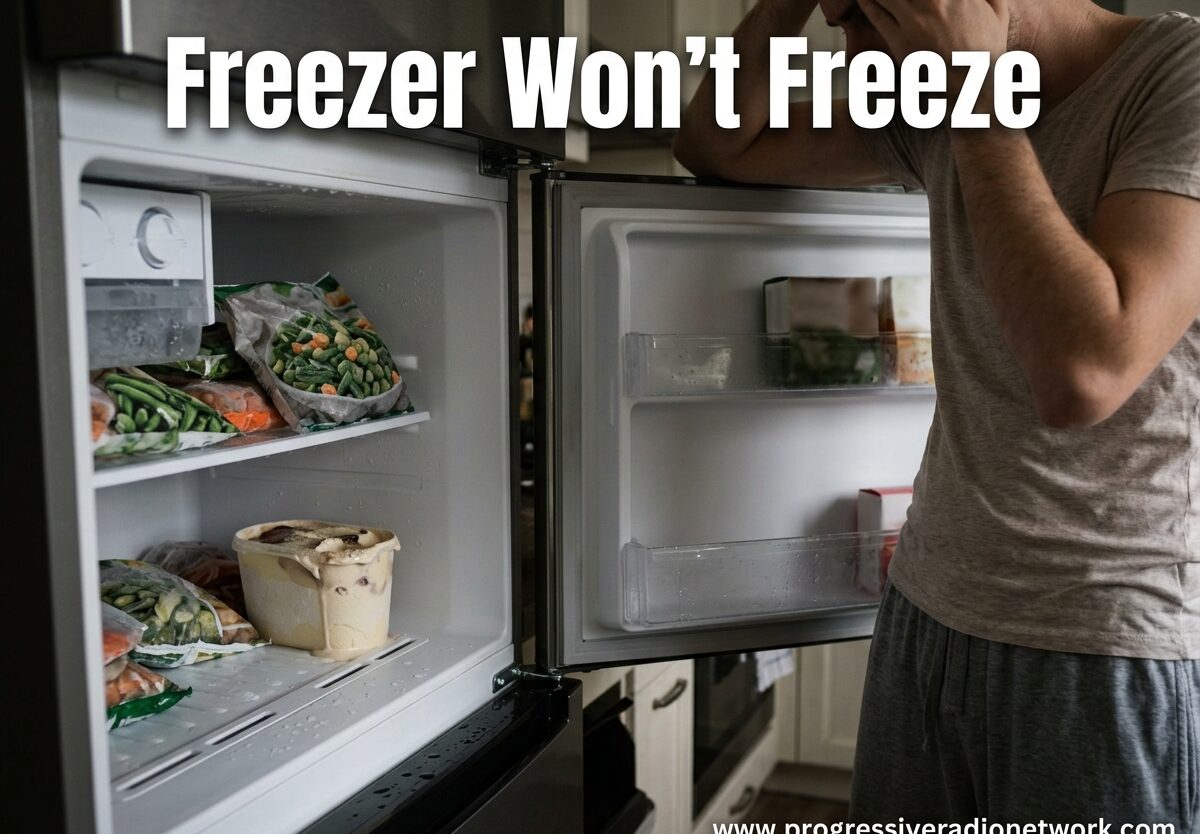
There’s nothing worse than opening your freezer to find melted ice cream and thawed meat. A freezer that won’t freeze is more than just frustrating – it’s a food safety emergency waiting to happen. I’ve spent 15 years repairing appliances, and I’ll walk you through exactly why your freezer stopped working and how to fix it.
Most freezer problems fall into three categories: airflow blockages, component failures, or maintenance issues. The good news? You can fix many of these yourself in under an hour without spending a dime. Let me show you where to start.
Quick Diagnosis: 10 Reasons Your Freezer Won’t Freeze
Here are the most common causes I see, ranked from easiest to fix to most complex:
- Temperature set too high – Someone accidentally bumped the dial
- Overcrowded freezer – Blocking vents and airflow
- Frost buildup on coils – Defrost system failure
- Dirty condenser coils – Can’t release heat efficiently
- Door seal leaking – Cold air escaping constantly
- Evaporator fan failed – Air not circulating
- Start relay broken – Compressor can’t start
- Thermostat malfunction – Not signaling for cooling
- Defrost heater failed – Coils iced over completely
- Compressor failure – Most expensive repair
Check Temperature Settings First
Before diving into repairs, verify your freezer is actually set to the right temperature. This sounds obvious, but I’ve made countless service calls where the only problem was a dial turned to “1” instead of “5” or a digital display showing 40°F instead of 0°F.
Your freezer should be set to 0°F (-18°C) for optimal food preservation and safety. Anything above 10°F puts frozen food at risk. Check both the main control panel and any independent freezer controls if you have a side-by-side unit.
For manual dial freezers, turn it to the coldest setting and wait 24 hours. Digital units may have a “quick freeze” or “max cool” mode – activate it and monitor temperature changes. If adjusting settings doesn’t help within a day, move on to the next steps.
Airflow Problems: Overcrowding and Blockages
Freezers need proper air circulation to maintain temperature. Cold air flows through vents from the freezer compartment into the refrigerator side (on combo units) and circulates throughout the freezer space. When this airflow gets blocked, cooling suffers dramatically.
Common airflow blockers I see:
- Packages pushed directly against back vents
- Overstuffed drawers preventing air movement
- Ice buildup blocking internal vents
- Frost-covered evaporator coils restricting flow
The fix is straightforward: remove items from your freezer and locate the vents (usually on the back wall). Leave at least 2-3 inches of clearance around all vents. Organize food so air can circulate freely – think “aisles and pathways” rather than “packed warehouse.”
I recommend the 70% rule – keep your freezer no more than 70% full for optimal airflow. If you need more storage, consider a secondary freezer rather than overstuffing your primary unit.
Frost Buildup: The Silent Freezer Killer
Frost accumulation on the back wall of your freezer isn’t normal – it’s a sign your defrost system has failed. Modern freezers self-defrost every 8-24 hours using a heating element, timer, and thermostat. When any component fails, frost accumulates on the evaporator coils until they become a solid block of ice.
Symptoms of defrost system failure:
- Frost or ice on back freezer wall
- Temperature gradually rising over days/weeks
- Freezer runs constantly but won’t get cold enough
- You hear clicking but compressor seems to work intermittently
First, try a manual defrost: unplug your freezer for 24 hours with doors open (put towels down for water runoff). Plug it back in and if it works normally for a week before frosting again, you’ve confirmed a defrost component failure.
The defrost system has three parts that commonly fail: the defrost heater ($20-50), the defrost thermostat ($15-40), or the defrost timer/control board ($30-150). Testing these requires a multimeter and some electrical knowledge – if you’re uncomfortable, this is a good time to call a professional.
Dirty Condenser Coils: Hidden Energy Drain
Condenser coils release the heat your freezer removes from inside. These coils (either on the back of your unit or underneath behind a kick plate) get covered in dust, pet hair, and debris over time. When they can’t release heat efficiently, your freezer works harder and cools less.
How to locate and clean your coils:
Unplug your freezer first (safety first). For back-mounted coils, simply vacuum them using a brush attachment. For bottom-mount coils, remove the kick plate at the base and use a coil brush ($10-15 at hardware stores) followed by vacuuming.
I recommend cleaning condenser coils every 6-12 months, or more often if you have pets. A dirty freezer can consume 20-30% more energy and still fail to cool properly. This simple maintenance task prevents many service calls and extends your appliance’s lifespan by years.
Evaporator Fan: When Air Stops Circulating
The evaporator fan circulates cold air throughout your freezer and into the refrigerator compartment. When this fan fails, the freezer may still get cold near the coils, but that cold air won’t reach the rest of the unit. This is especially common in side-by-side refrigerators where the fan serves both compartments.
How to test your evaporator fan:
- Open the freezer door and locate the door switch (the button that turns the light on/off)
- Press and hold the door switch
- Listen for the fan running (it should sound like a gentle hum)
- If you hear nothing, your fan may have failed
A failed evaporator fan motor costs $50-120 for the part and is relatively easy to replace yourself if you’re handy with basic tools. YouTube has excellent model-specific tutorials. If you’re not comfortable DIY, expect to pay $150-250 for professional repair including labor.
Some freezers have a second condenser fan near the compressor – if this fails, your freezer won’t cool efficiently either. Listen near the bottom back of your unit for this fan running when the compressor is on.
Start Relay and Compressor: The Heart of Your Freezer
The compressor is the heart of your freezer – it compresses refrigerant to create cooling. The start relay gives the compressor the electrical boost it needs to start running. When either component fails, your freezer won’t cool at all.
Start relay failure symptoms:
- Clicking sound every 2-5 minutes (relay trying to start compressor)
- Compressor is warm but not running
- Freezer lights work but no cooling whatsoever
Start relays cost only $15-40 and are easy to replace yourself – they simply plug onto the side of the compressor. Unplug the unit, remove the access panel on the back, pull off the old relay, and plug in the new one. This fix takes less than 15 minutes.
Compressor failure symptoms:
- Compressor is completely silent (no clicking from relay)
- Compressor makes loud banging or rattling noises
- Compressor runs continuously but freezer doesn’t cool
A failed compressor is the most expensive repair, costing $300-600 for parts plus labor. If your freezer is over 10 years old, compressor failure usually means it’s time to replace the entire unit rather than repair it.
Door Seal Issues: Cold Air Leaking Out
Your freezer’s door seal (gasket) creates an airtight barrier that keeps cold air inside. Over time, these seals crack, tear, or lose their magnetic grip. Even a small leak forces your freezer to work constantly and can prevent proper cooling.
The dollar bill test:
Close your freezer door on a dollar bill (or piece of paper). Pull it out – you should feel resistance. If it slides out easily, your seal isn’t gripping properly. Test this around the entire door perimeter, paying special attention to corners where gaps commonly develop.
Clean your seals with warm soapy water first – sometimes they’re just dirty. If cleaning doesn’t help and you see visible cracks, tears, or warping, replacement is necessary. Door seals cost $30-80 and attach with screws or spring clips – most DIYers can handle this repair in under an hour.
Freezer Not Freezing But Refrigerator Works?
This is a common scenario that actually narrows down the problem. If your refrigerator is cold but the freezer won’t freeze, you can usually eliminate the compressor and start relay as culprits – they affect both compartments.
Most likely causes when fridge works but freezer doesn’t:
- Evaporator fan failure – Fan only cools freezer compartment
- Freezer-specific airflow blockage – Vents iced over or blocked
- Freezer thermostat failure – Not signaling for additional cooling
- Damper control problem – Not allowing enough cold air to freezer
Side-by-side and French door refrigerators use a damper door to control airflow between compartments. If this damper fails or gets stuck in the “refrigerator” position, the freezer won’t get enough cold air. Test by manually adjusting temperature controls – if the freezer temperature changes when you adjust the fridge setting, the damper may be the issue.
Repair vs Replace: When to Call a Professional
Not all freezer problems are worth fixing. Here’s my decision framework based on repair costs, freezer age, and complexity:
Fix it yourself (under $50, easy):
- Temperature adjustment
- Cleaning condenser coils
- Removing frost/ice buildup
- Replacing door seals
- Replacing start relay
DIY with research ($50-150, moderate difficulty):
- Replacing evaporator fan motor
- Replacing defrost heater or thermostat
- Replacing temperature control thermostat
Call a professional ($150-300):
- Defrost system diagnosis (if you’re unsure)
- Refrigerant leak detection and repair
- Sealed system repairs
- Control board replacement
Replace the unit (over $300 repair, or freezer 10+ years old):
- Compressor replacement
- Multiple component failures
- Repeated repairs adding up to over half the cost of new
- Units over 12-15 years old (parts become unavailable)
New freezers cost $400-1500 depending on size and features. Modern units are 20-30% more energy efficient than models from 10+ years ago, so replacement can pay for itself in energy savings over 5-7 years.
Garage freezer note: If your garage freezer struggles in extreme temperatures, consider a “garage-ready” model designed to work in 0°F-110°F environments. Standard freezers typically fail below 55°F ambient temperature.
FAQ
Why is my freezer running but not freezing?
Your freezer running but not freezing usually indicates either frost buildup on the evaporator coils blocking airflow, a failed evaporator fan that can’t circulate cold air, or a start relay problem preventing the compressor from engaging properly. Check for ice on the back wall first – that’s the most common cause.
How do I reset my freezer?
To reset your freezer, unplug it from power for 5 minutes, then plug it back in. For electronic models, locate the reset button (often inside the door frame) and hold it for 10 seconds. After resetting, set the temperature to 0°F and wait 24 hours for it to stabilize. If problems persist after reset, you have a component issue requiring further diagnosis.
How do you fix a freezer that will not freeze?
Start with the basics: verify temperature is set to 0°F, check that vents aren’t blocked by food, and clean dirty condenser coils. If these don’t help, unplug for 24 hours to manually defrost ice buildup. Still not working? Test the evaporator fan by holding the door switch and listening for operation. Failed fans, bad start relays, and defrost system components are the most common repairable failures.
Why is my freezer humming but not freezing?
A humming freezer that won’t freeze typically means the compressor is trying to start but failing. This is usually a bad start relay – the small component on the side of the compressor that gives it the electrical boost to start. Start relays cost $15-40 and plug onto the compressor, making this an easy DIY fix. Less commonly, a failing compressor may hum but not engage – this usually means replacement is needed.
What causes a freezer to stop freezing all of a sudden?
Sudden freezer failure is most commonly caused by either the door being left slightly ajar (causing rapid frost buildup that blocks airflow), a failed start relay preventing compressor operation, or a power surge that damaged electronic controls. Check door seals first, then listen for compressor clicking. If clicking occurs every few minutes, the start relay likely failed. No clicking at all suggests a more serious compressor or control board issue.
Final Thoughts
A freezer that won’t freeze is frustrating but usually fixable. Start with the simple solutions – temperature settings, airflow issues, and dirty coils – before moving to component testing. Many problems can be resolved yourself for under $50 and an hour of work.
Remember that freezers over 10-12 years old reaching major component failure are often better replaced than repaired. New models are more efficient, come with warranties, and will provide years of reliable service.
If you’re unsure about any diagnosis or uncomfortable with electrical repairs, there’s no shame in calling a professional. A qualified technician can quickly identify the problem and give you an accurate repair quote, helping you make the fix-or-replace decision with confidence.
Leave a Comment