
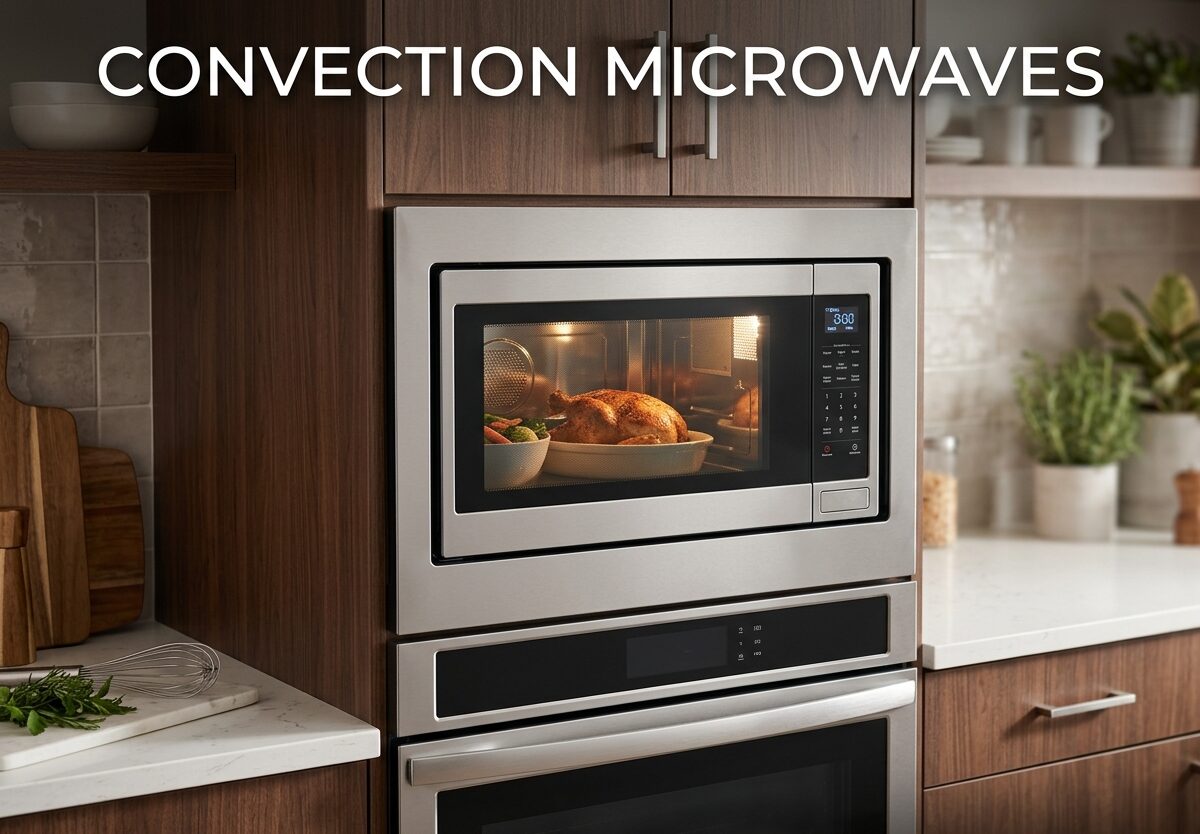
If you’re looking for a kitchen appliance that can do more than just reheat leftovers, convection microwaves might be exactly what you need. These hybrid appliances combine the speed of microwave cooking with the browning and crisping capabilities of a traditional oven. I’ve spent years researching kitchen appliances, and convection microwaves stand out as one of the most versatile options for modern kitchens, especially for anyone working with limited space.
Convection microwaves have become increasingly popular in 2026 as homeowners seek multi-functional appliances that can handle everything from quick reheating to actual baking and roasting. Whether you’re outfitting a small apartment, upgrading your vacation home, or simply want to expand your cooking capabilities without adding a full-size oven, understanding how these appliances work will help you make the right choice for your kitchen.
What Is a Convection Microwave?
A convection microwave is a hybrid kitchen appliance that combines traditional microwave cooking with convection oven technology. Unlike standard microwaves that only use microwave energy to heat food, convection microwaves include a heating element and a fan that circulates hot air throughout the cooking chamber. This dual functionality allows you to bake, roast, and crisp foods while still having the option to quickly heat or defrost using standard microwave mode.
The key difference lies in the convection heating element and fan system. When you activate convection mode, the appliance works more like a miniature oven than a microwave. The heating element warms the air inside, while the fan ensures that hot air circulates evenly around your food. This means you can achieve browned, crispy results that are impossible with a standard microwave, which only heats from the inside out through water molecule excitation.
Convection microwaves typically offer multiple cooking modes: microwave-only, convection-only, and combination modes that use both technologies simultaneously for faster cooking. This versatility makes them particularly appealing for small kitchens where space is at a premium but cooking capability shouldn’t be compromised.
How Does a Convection Microwave Work?
Understanding the technology behind convection microwaves helps you get the most out of this appliance. In standard microwave mode, a magnetron generates electromagnetic waves that cause water molecules in food to vibrate, creating friction that produces heat. This is why microwaves heat food quickly but often leave it soggy or unevenly cooked.
When you switch to convection mode, the magnetron typically turns off and the heating element activates. This element, usually located at the top or back of the cooking chamber, generates heat similar to a traditional oven. The fan then circulates this heated air around the food, cooking it from all sides rather than just heating the water molecules inside. This circulation is what creates the even cooking, browning, and crisping that conventional microwaves cannot achieve.
Many convection microwaves also offer combination or “combi” modes that use both microwave energy and convection heating simultaneously. In these modes, the microwave energy quickly heats the interior of the food while the convection element browns and crisps the exterior. This can significantly reduce cooking times compared to using convection alone, while still delivering better texture and appearance than microwave-only cooking.
Temperature capabilities vary by model, but most convection microwaves can reach temperatures between 225°F and 450°F, with some premium models going even higher. This range covers most baking and roasting needs, though it’s worth noting that convection microwaves generally max out at lower temperatures than full-size ovens, which can affect certain cooking tasks.
Microwave vs Convection Microwave
The choice between a standard microwave and a convection microwave depends largely on your cooking needs and kitchen space. Standard microwaves excel at quick tasks like reheating leftovers, defrosting frozen foods, and cooking simple microwave meals. They’re generally less expensive, simpler to operate, and perfectly adequate if your primary need is rapid heating.
Convection microwaves offer significantly more versatility. In addition to everything a standard microwave can do, they can bake cookies, roast vegetables, cook pizzas with crispy crusts, and even handle small roasts. The convection fan circulates hot air for even cooking, eliminating hot spots that can plague traditional microwaves. This means no more burnt edges while the center remains cold.
For households that do limited baking or want to avoid turning on a full-size oven for small tasks, a convection microwave can be a game-changer. I’ve found them particularly useful during summer months when heating up the kitchen with a large oven is undesirable. They’re also excellent for vacation homes or small apartments where installing multiple appliances isn’t practical.
The trade-offs include higher upfront cost, slightly larger footprint, and more complex controls. Convection microwaves also typically require more energy when operating in convection mode compared to standard microwave operation. However, for many users, the added versatility outweighs these considerations.
Convection Oven vs Convection Microwave
While both appliances use convection technology to cook food, there are important differences between convection ovens and convection microwaves. Full-size convection ovens offer more capacity, typically 4-6 cubic feet compared to 0.9-2.2 cubic feet for most convection microwaves. This larger size accommodates bigger dishes and multiple racks for cooking several items simultaneously.
Power is another significant difference. Convection ovens generally have stronger heating elements and can reach higher temperatures, often up to 500°F or more. This makes them better suited for tasks that require intense heat, like broiling or achieving specific crust characteristics on breads and pizzas. Convection microwaves typically top out around 450°F, which is adequate for most baking but may limit certain high-heat applications.
The cooking approach differs as well. Convection ovens are designed primarily for baking, roasting, and broiling. Convection microwaves are hybrids that must balance microwave functionality with convection capabilities. This means convection microwaves often compromise on pure convection performance to accommodate microwave features. However, they make up for this by offering microwave capabilities that convection ovens cannot provide.
For serious bakers or those who frequently cook for large groups, a full-size convection oven remains the superior choice. But for everyday cooking, small households, or as a supplement to a standard oven, convection microwaves offer remarkable versatility in a compact package.
Benefits of Convection Microwaves
Convection microwaves offer several compelling advantages that make them worth considering for your kitchen. The space-saving benefit is perhaps most obvious—combining two appliances into one frees up valuable counter space or eliminates the need for a second oven. For small kitchens, apartments, and vacation homes, this versatility can be transformative.
The energy efficiency is another significant advantage. Heating a full-size oven for a small batch of cookies or a single chicken breast wastes considerable energy. Convection microwaves preheat faster and maintain temperature in a smaller space, using less energy for small cooking tasks. Over time, this can result in noticeable energy savings, especially if you frequently cook small portions.
Speed is where convection microwaves truly shine. Combination cooking modes that use both microwave energy and convection heating can reduce cooking times by 25-50% compared to traditional methods. This doesn’t mean faster than microwave-only cooking, but significantly faster than using a full oven while delivering much better results than microwave-only cooking.
The versatility expands your cooking options considerably. Foods that would turn soggy or rubbery in a standard microwave—like pizza, roasted vegetables, baked goods, and casseroles—come out properly browned and crisped in convection mode. This capability alone transforms many leftovers and convenience foods into something much more enjoyable.
Pros and Cons of Convection Microwaves
Like any appliance, convection microwaves have their strengths and limitations. Understanding both sides helps make an informed decision about whether this hybrid appliance fits your cooking needs and lifestyle.
Pros:
- Versatility—combines microwave and oven functions in one appliance
- Space-saving design ideal for small kitchens
- Faster cooking than traditional ovens for small portions
- Energy efficient for small cooking tasks
- Can bake, roast, and crisp foods that standard microwaves cannot
- Often includes additional features like air fry mode and sensor cooking
- Reduces kitchen heat compared to full-size ovens
Cons:
- Higher upfront cost than standard microwaves
- Smaller capacity than full-size ovens limits cooking large items
- Maximum temperatures generally lower than traditional ovens
- More complex controls can be confusing for some users
- Learning curve to achieve optimal results with different modes
- Reliability concerns—more components mean more potential failure points
- Air fry functionality often disappointing compared to dedicated air fryers
Forum discussions reveal that some users buy convection microwaves with the best intentions but rarely or never use the convection features. One Reddit user reported owning a convection microwave for nine years without ever using the oven function. This suggests that while the capability is valuable, it only makes sense if you’ll actually use it.
What Can You Cook in a Convection Microwave?
Convection microwaves handle a surprisingly wide range of cooking tasks, though they have limitations compared to full-size ovens. The best foods for convection mode are those that benefit from even heating and crisping—pizza, roasted vegetables, chicken pieces, fish fillets, and baked goods like cookies, muffins, and small cakes.
I’ve found convection microwaves excel at reheating foods that normally lose their appeal in the microwave. Pizza reheated in convection mode regains its crispy crust rather than becoming soggy. Leftover roasted vegetables warm up without turning to mush. Even foods like french fries and chicken nuggets can regain some of their original crunch when reheated with convection.
Baking in a convection microwave works well for small batches. Most can handle a 9-inch cake pan, a dozen cookies, or small casseroles. However, you’ll need to adjust your expectations and sometimes your recipes. The heating element is generally less powerful than in a full oven, so baking may take longer. Some users report needing to lower temperatures by 25°F and extend cooking times slightly.
Foods to avoid include large roasts, multiple pizza stones, anything requiring very high heat (like artisan breads with steam), and tall items that won’t fit with the turntable in place. The limited height clearance is a significant constraint for convection microwaves, especially over-the-range models.
Can You Put Metal in a Convection Microwave?
This is one of the most common questions about convection microwaves, and the answer depends entirely on which mode you’re using. In microwave-only mode, the answer remains the same as for any microwave—no metal should be used as it can cause arcing and damage the appliance.
However, when using convection mode (or combination mode), metal cookware is generally safe and often recommended. Because convection mode operates like a traditional oven with heating elements rather than microwave energy, metal pans and baking dishes work perfectly fine. In fact, metal conducts heat efficiently and can improve cooking results in convection mode.
The key is understanding which mode you’re using and switching cookware appropriately. Many convection microwave users keep two sets of cookware—microwave-safe glass or plastic for microwave mode, and metal baking pans for convection mode. Some even invest in oven-to-table serving pieces that work in both modes, though these must be specifically labeled as microwave-safe.
Always consult your specific model’s owner’s manual for guidance on metal use. Some manufacturers provide specific recommendations about which types of metal are safe and which should be avoided. When in doubt, stick to materials you know are safe for the specific mode you’re using.
Can a Convection Microwave Replace an Oven?
Whether a convection microwave can replace your oven depends on your cooking habits and household size. For singles, couples, or small families who primarily cook simple meals, a convection microwave might adequately replace a full oven, especially if you eat out or order delivery regularly.
However, serious cooks, large families, or anyone who hosts gatherings will find convection microwaves limiting. The smaller capacity means you can’t cook multiple dishes simultaneously or handle large items like Thanksgiving turkeys. Holiday cooking, batch cooking, and meal prep become challenging with the space constraints.
The temperature limitations also affect certain cooking tasks. Artisan breads that require very high initial heat, recipes that need broiling, or dishes that require specific temperature profiles may not turn out as expected. Convection microwaves excel at everyday cooking but struggle with specialized techniques.
Many users find convection microwaves work best as a complement to a standard oven rather than a complete replacement. They handle 80-90% of everyday cooking tasks while leaving the full oven available for special occasions and large meals. For small apartments and vacation homes, this compromise often makes the most sense.
Size, Capacity, and Power Considerations
Convection microwaves come in three main configurations: countertop, over-the-range (OTR), and built-in models. Each has advantages and considerations that affect which will work best in your kitchen.
Countertop models offer the most flexibility—they can be placed anywhere there’s an outlet and moved if needed. However, they consume valuable counter space. Capacities typically range from 0.9 to 2.0 cubic feet. For most households, 1.5-1.6 cubic feet provides a good balance of capacity and footprint.
Over-the-range models install above your cooktop, saving counter space while providing ventilation. However, they’re permanently installed and require professional installation for proper venting. OTR models are slightly smaller, usually 1.7-2.0 cubic feet, and may have less interior height due to the built-in turntable design.
Built-in models integrate seamlessly into cabinetry for a custom look but require specific cabinet dimensions and professional installation. They’re the most expensive option but offer the most streamlined appearance.
Power is measured in watts for microwave mode and temperature range for convection mode. Microwave wattage typically ranges from 900-1200 watts—higher wattage means faster cooking. Convection temperature ranges usually max out at 400-450°F. Look for models with at least 1000 watts microwave power and 425°F maximum convection temperature for the most versatility.
Installation and Venting Requirements
Installation requirements vary significantly between different types of convection microwaves. Countertop models simply require a flat, stable surface near an electrical outlet. No special venting is needed since they’re not capturing cooktop exhaust.
Over-the-range models are more complex. They require professional installation to ensure proper mounting and venting. OTR microwaves can either recirculate air through filters back into the kitchen or vent outside through ductwork. External venting is more effective but requires existing ductwork or new installation. Recirculating mode is easier to install but less effective at removing smoke, steam, and odors.
Built-in models also require professional installation. They must be installed in cabinets with proper dimensions and electrical connections. Some built-in models can be combined with a matching trim kit for a seamless appearance that looks like a custom installation.
For all types, ensure you have adequate electrical capacity. Most convection microwaves require a dedicated 15-amp circuit. Using an extension cord is not recommended as it can create fire hazards and affect performance. Always consult local building codes and the manufacturer’s installation guide before proceeding.
Key Features to Look For
When shopping for a convection microwave, certain features significantly enhance usability and cooking results. Sensor cooking technology automatically detects when food is done by monitoring moisture levels and adjusting cooking time accordingly. This feature reduces the risk of overcooking and produces more consistent results.
Preset programs for common foods simplify operation—look for options for pizza, baked potatoes, popcorn, and beverages. Advanced models include settings for convection baking, roasting, and broiling specific foods. These presets eliminate guesswork, especially for users new to convection cooking.
Air fry mode has become increasingly common in 2026. While not as powerful as dedicated air fryers, this mode uses the convection fan at higher speeds to crisp foods with less oil. It’s adequate for occasional air frying but don’t expect results matching standalone air fryers.
Smart technology features like Wi-Fi connectivity and app control allow you to monitor and control the microwave remotely. Some models can scan package barcodes and automatically program cooking settings. While convenient, these features add cost and complexity—consider whether you’ll actually use them before paying extra.
Other valuable features include nonstick interiors for easy cleaning, removable racks for flexible cooking arrangements, child safety locks for households with children, and automatic keep-warm settings that maintain food temperature after cooking completes.
Maintenance and Cleaning Tips
Proper maintenance extends the life of your convection microwave and ensures optimal performance. Clean spills immediately after they occur—waiting allows food to bake onto surfaces, making removal difficult. For stubborn stains, create a paste of baking soda and water, apply to the stain, let sit for 5-10 minutes, then wipe clean.
The convection heating element requires special attention. Unlike standard microwaves, convection models have actual heating elements that can accumulate food splatters. Allow the microwave to cool completely, then gently wipe the element with a damp cloth. Never use abrasive cleaners or scrubbers on the heating element as this can damage it.
Regularly clean the vent filters, especially on over-the-range models. Grease buildup reduces ventilation effectiveness and can create fire hazards. Most filters are dishwasher safe—check your manual for specific cleaning instructions. Clean filters monthly for heavy cooking or quarterly for light use.
For the interior, microwave a bowl of water with lemon slices for 3-5 minutes. The steam loosens food splatters, making them easy to wipe away. This natural cleaning method avoids harsh chemicals and leaves your microwave smelling fresh.
Is a Convection Microwave Worth It?
Whether a convection microwave is worth the investment depends on your specific situation. For small households, apartment dwellers, or anyone seeking to maximize kitchen functionality in limited space, convection microwaves offer excellent value. The ability to bake, roast, and crisp foods without a full oven is genuinely useful for everyday cooking.
However, if you already have a full-size oven and rarely need additional cooking capacity, or if your cooking primarily involves simple reheating and defrosting, a standard microwave may suffice. The premium you pay for convection capabilities only makes sense if you’ll use those features regularly.
Consider your cooking habits honestly. Do you bake cookies, roast vegetables, or cook small meals that would benefit from convection? Do you hate reheating pizza in the microwave because it gets soggy? Would you use the convection features, or would they go unused like that Reddit user’s nine-year relationship with their never-used convection mode?
For many households, convection microwaves strike an ideal balance between functionality and space efficiency. They won’t replace a full oven for serious cooks or large families, but they provide remarkable versatility for everyday cooking while keeping your kitchen cooler and your energy bills lower.
FAQ
What is a convection microwave?
A convection microwave is a hybrid kitchen appliance that combines traditional microwave cooking with convection oven technology. It features a heating element and fan that circulates hot air to bake, roast, and crisp foods while still offering standard microwave reheating and defrosting capabilities.
What is better, a microwave or a convection microwave?
Convection microwaves offer more versatility and better cooking results but cost more. Choose a standard microwave if you only need to reheat and defrost. Choose a convection microwave if you want to bake, roast, and achieve crispy textures without owning a separate oven.
What are the disadvantages of a convection microwave oven?
Convection microwaves cost more than standard models, have smaller capacity than full ovens, reach lower maximum temperatures, and have more complex controls. They also have more components that can fail and may have a steeper learning curve to achieve optimal results.
Do convection microwaves need to be vented?
Countertop convection microwaves do not require venting. Over-the-range models do require venting either to the outside through ductwork or recirculating through filters. Built-in models also require proper installation clearance but do not need exhaust venting like OTR models.
Is a convection microwave worth it?
Convection microwaves are worth it for small households, apartment dwellers, or anyone who wants oven-like cooking capabilities in limited space. They are less essential if you already have a full oven and primarily use your microwave for simple reheating tasks.
How do you preheat a convection microwave?
To preheat a convection microwave, select the convection mode and set your desired temperature. Most models have a dedicated preheat button or will indicate when preheating is complete. Preheating typically takes 5-10 minutes depending on the temperature and model.
Conclusion
Convection microwaves represent one of the most practical innovations in kitchen appliances, combining the speed of microwave cooking with the browning and crisping capabilities of traditional ovens. For anyone working with limited kitchen space or seeking to expand their cooking options without adding multiple appliances, these hybrid units offer an compelling solution.
While they won’t replace a full oven for serious cooks or large households, convection microwaves excel at everyday cooking tasks. They can handle 80-90% of typical home cooking needs while keeping your kitchen cooler and using less energy than a full-size oven. The key is choosing the right size and configuration for your space, understanding the limitations compared to traditional ovens, and committing to learning how to use both microwave and convection modes effectively.
If you’re ready to transform your cooking capabilities without sacrificing precious kitchen space, a convection microwave might be exactly what your kitchen needs. The versatility to reheat, bake, roast, and crisp in one appliance makes convection microwaves among the most practical options for modern kitchens in 2026.

Leave a Comment