
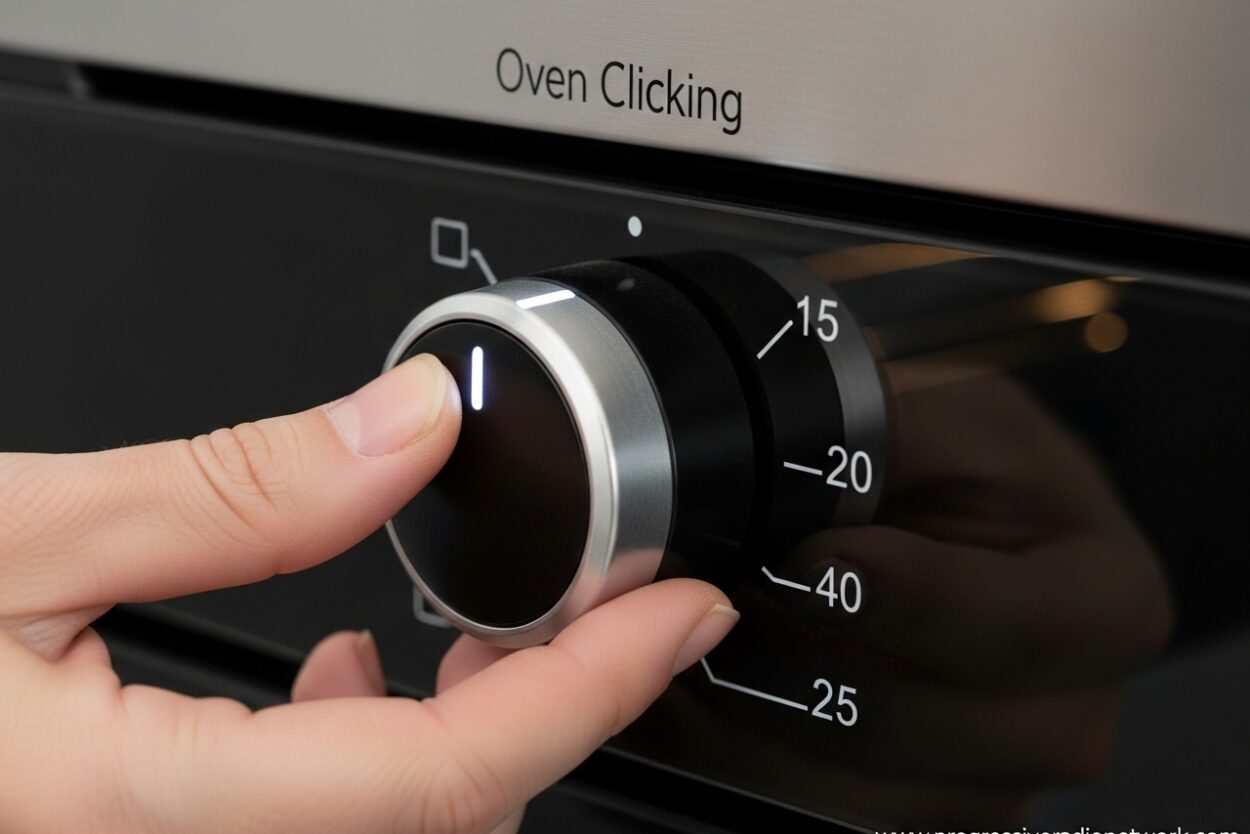
That clicking sound coming from your oven can be annoying, especially when you’re trying to prepare dinner and wondering if something is wrong. Oven clicking is one of the most common concerns homeowners have, and understanding what’s causing it can save you money and stress.
I’ve spent years researching appliance sounds, and clicking noises are usually harmless – but sometimes they signal a problem that needs attention. This guide will help you identify whether your oven clicking is normal operation or a sign of a faulty component.
We’ll cover everything from gas oven ignition systems to electric oven relay cycling, including brand-specific issues with Samsung, GE, and Whirlpool models. You’ll learn exactly when to worry, when to relax, and how much repairs might cost.
What Is Oven Clicking?
Oven clicking refers to the repetitive tapping or snapping sounds that occur when your oven operates. These sounds typically come from specific components within your appliance’s heating or ignition system.
In gas ovens, clicking usually means the spark igniter is actively trying to light the burner. Electric ovens click when relays switch heating elements on and off to maintain your set temperature.
Most clicking sounds are completely normal. Your oven is designed to make certain noises during regular operation. However, persistent, loud, or unusual clicking patterns can indicate a malfunctioning part that needs attention.
Normal vs Abnormal Oven Clicking – How to Tell the Difference
Not all clicking sounds are created equal. Understanding the difference between normal operation and problematic clicking can save you from unnecessary service calls or dangerous situations.
Normal clicking happens at predictable times – when you first turn on the oven, during preheating, or when the thermostat cycles between bake and broil elements. These clicks are usually soft, brief, and stop within a few minutes.
Abnormal clicking persists for long periods, happens when the oven is completely off, or gets progressively louder over time. If your oven keeps clicking for more than five minutes without ignition, or if clicking starts hours after use, something may be wrong.
Pay attention to timing and frequency. Occasional clicks during cooking are normal. Constant clicking that disrupts your conversations or keeps you up at night deserves investigation.
Gas Oven Clicking – Causes and Solutions
Gas ovens use spark ignition systems to light their burners safely. When everything works correctly, you’ll hear clicking for just a few seconds until the flame ignites. Problems arise when clicking continues without ignition.
The spark module sends high-voltage electricity to the igniter electrode, creating a spark that lights the gas. This system includes the spark module, igniter electrode, gas valve, and sometimes a safety shut-off feature.
Most gas oven clicking issues stem from three main causes. A dirty or wet igniter electrode cannot create a proper spark. Misaligned burner caps block gas flow. A faulty spark module sends weak or inconsistent sparks.
Start your troubleshooting with the simplest fix. Turn off the oven and wait five minutes for the system to reset. Inspect the igniter electrode for food debris, grease buildup, or moisture. Clean it gently with a soft brush or cloth.
Check that burner caps sit level and centered. Misaligned caps prevent proper gas flow, causing unburned fuel to accumulate. Remove each cap, clean the sealing surface, and replace it carefully.
If cleaning doesn’t solve the problem, the spark module may be failing. This component generates the high-voltage spark, and when it malfunctions, clicking continues without ignition. Spark module replacement typically costs between $150 and $300 including parts and labor.
Safety is crucial with gas oven issues. If you ever smell gas, leave your home immediately and call your gas company or emergency services. Never attempt to bypass safety features or modify gas components yourself.
Electric Oven Clicking – Causes and Solutions
Electric ovens click for completely different reasons than gas models. Instead of ignition sparks, electric ovens use relays – electromagnetic switches that control power flow to heating elements.
When your oven reaches temperature, the thermostat signals the control board to switch off the heating element. This creates a single click sound. As the oven cools slightly, the relay switches back on, creating another click. This cycling continues throughout cooking to maintain consistent heat.
Normal electric oven clicking happens every few minutes during active cooking. The sound is usually soft – similar to a light switch being flipped. You might notice more clicking during preheating when elements cycle more frequently.
Problematic clicking in electric ovents often indicates relay issues. Sticky relays click multiple times rapidly instead of once. Faulty control boards send erratic signals causing constant clicking. Failing temperature sensors cause rapid cycling.
Test whether clicking is normal by monitoring the pattern. Occasional single clicks during temperature maintenance are expected. Rapid clicking, clicking when the oven is off, or clicking accompanied by heating problems suggest a component failure.
Relay and control board repairs typically cost between $200 and $500 depending on your oven model and whether the control board can be repaired or must be replaced completely.
Brand-Specific Oven Clicking Issues
Different oven brands have unique clicking patterns and common problems. Understanding these brand-specific characteristics can help diagnose issues faster.
Samsung ovens are notorious for clicking even when completely turned off. Many Samsung owners report clicking sounds that continue for hours after cooking ends. This usually stems from the cooling fan system and relay design. While annoying, this is often normal operation for Samsung models – but if clicking persists for more than an hour after shutdown, contact Samsung support.
GE electric ranges frequently experience relay clicking issues, especially in models manufactured between 2018 and 2022. The control board relays may click excessively or fail to disengage completely. GE has issued service bulletins for certain models and may offer repair assistance.
Whirlpool gas ovens commonly develop spark module issues around 5-7 years of use. Clicking becomes louder and more persistent over time. The igniter electrode position can also shift, causing misdirected sparks that click without igniting gas.
Always check your manufacturer’s website for recalls or service bulletins related to clicking issues. Some problems may be covered under warranty or subject to free repair programs.
Basic Troubleshooting Steps for Oven Clicking
Before calling a professional, try these systematic troubleshooting steps. This process works for both gas and electric ovens and helps identify whether you can fix the problem yourself.
Step 1: Turn off the oven and wait. Many clicking issues resolve themselves after a complete power cycle. Turn off the oven at the control panel, wait five minutes, then turn it back on. Listen for changes in the clicking pattern.
Step 2: Perform a visual inspection. For gas ovens, remove burner caps and check the igniter electrode for debris or moisture. For electric ovens, inspect heating elements for visible damage or loose connections.
Step 3: Check your power supply. Electric ovens need consistent voltage – fluctuating power can cause relay clicking issues. Make sure your oven is properly connected and no breakers have tripped.
Step 4: Test with different settings. Run the oven on bake, then broil, then convection if available. Note whether clicking happens in all modes or only specific settings. This helps isolate the problematic component.
Step 5: Listen for timing patterns. Does clicking happen only during heating? Does it continue after the oven turns off? Does it occur in regular intervals or randomly? Timing patterns provide crucial diagnostic clues.
Step 6: Document the problem. Record when clicking happens, how long it lasts, and any other symptoms like uneven heating or error codes. This information helps technicians diagnose problems faster.
Safety precautions are essential during troubleshooting. Never bypass safety features, work on gas components without proper training, or disassemble electrical panels unless you’re qualified to do so.
Repair Costs and When to Call a Professional
Understanding repair costs helps you decide whether to fix your current oven or replace it. Oven clicking repairs range from simple DIY fixes to expensive component replacements.
Gas oven igniter replacement costs $75 to $150 for parts alone, or $150 to $300 with professional labor. Spark module replacement runs $150 to $400 depending on your oven model. Gas valve repairs cost $200 to $450 and often require complete replacement.
Electric oven relay repairs typically cost $200 to $350. Control board replacement ranges from $300 to $600 in premium models. Temperature sensor replacement is more affordable at $50 to $150 including installation.
Consider replacement when repair costs exceed 50% of a new oven’s price, especially if your appliance is over 10 years old. Newer models also offer better energy efficiency that can offset replacement costs over time.
Call a professional immediately if you smell gas, see sparks or flames where they shouldn’t be, or notice burning smells. Electric ovens with tripping breakers or visible wiring damage also need expert attention.
FAQ
Is a clicking stove igniter a fire hazard?
Is electric stove clicking okay to use?
How to stop oven clicking?
How much does it cost to replace an oven igniter?
What does it mean if my oven is clicking?
Is oven clicking dangerous?
Why is my oven clicking when it’s turned off?
Why does my oven click while preheating?
Conclusion
Oven clicking is usually nothing to worry about. Most sounds come from normal ignition processes or heating element cycling. Understanding the difference between normal operation and problematic clicking helps you make informed decisions about repairs.
Remember these key points. Brief clicking during startup and temperature cycling is expected. Persistent clicking without ignition needs attention. Gas odors always warrant immediate professional help. Electric ovens normally click when elements cycle on and off.
Trust your instincts. If clicking seems excessive, unusual, or is accompanied by other problems, contact a qualified appliance technician. Most oven clicking issues are repairable for $150 to $500, far less than the cost of replacement.
Pay attention to changes in your oven’s clicking patterns over time. Sudden differences in sound frequency, volume, or timing often indicate developing problems. Addressing these issues early usually results in simpler, less expensive repairs.

Leave a Comment