
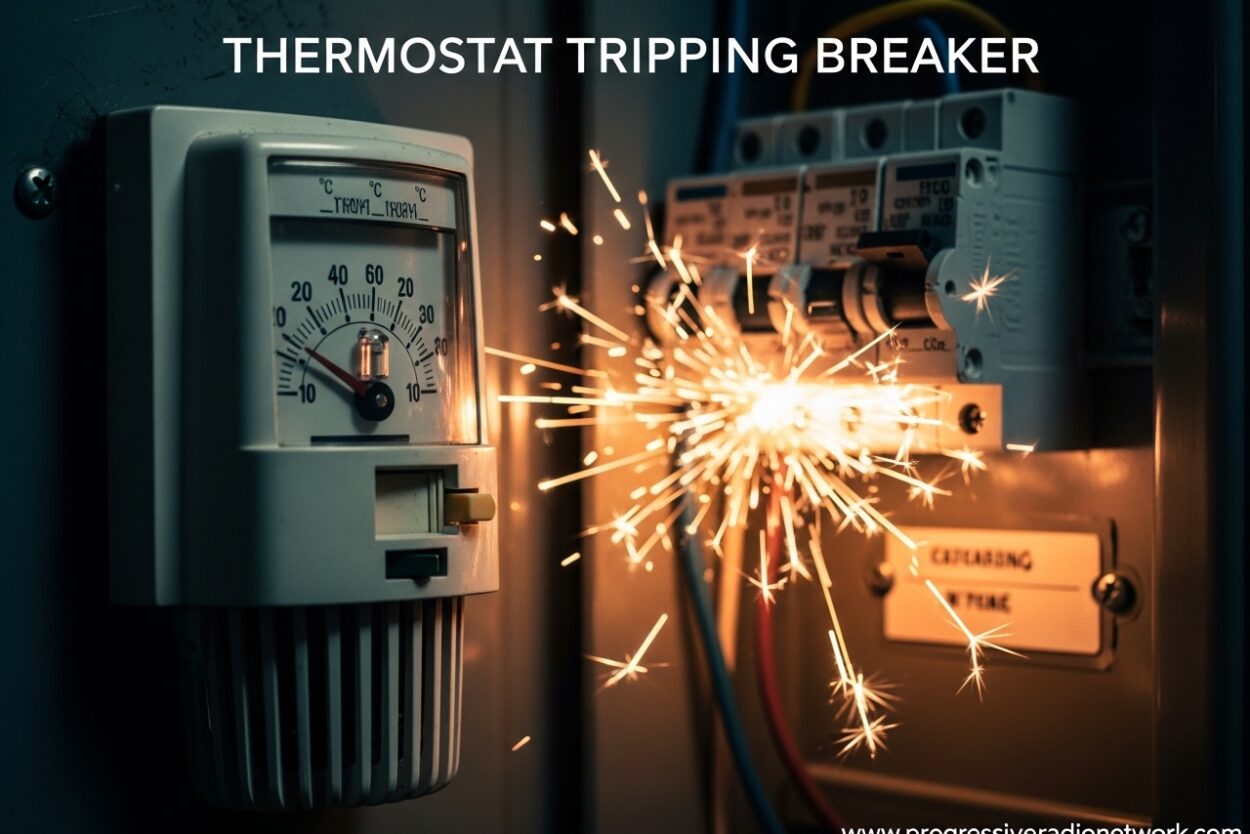
You wake up to a cold house because your thermostat tripping breaker has cut power to your heating system again. This frustrating problem leaves you without heat or AC while potentially signaling dangerous electrical issues that need immediate attention.
When your circuit breaker trips, it’s doing its job – protecting your home from electrical fires and equipment damage. But finding the root cause requires understanding how your thermostat interacts with your HVAC system’s electrical components.
In this guide, I’ll walk you through exactly why your thermostat keeps tripping the breaker, how to safely diagnose the problem, and when you need to call a professional. After 15 years working with HVAC systems, I’ve seen every cause imaginable – from simple wiring issues to complete compressor failures.
Understanding Thermostat Tripping Breaker
A thermostat tripping breaker occurs when excessive electrical current flows through your HVAC circuit, causing the breaker to shut off power automatically. This safety mechanism prevents wires from overheating and potentially starting fires.
Your thermostat acts as the control center for your heating and cooling system. When you adjust the temperature, it sends low-voltage signals (typically 24 volts) to your HVAC equipment’s control board. This board then activates high-voltage components like your blower motor, compressor, or heating elements.
The breaker trips when current exceeds its rated capacity – usually 15, 20, or 30 amps depending on your system. Understanding whether the trip happens instantly (indicating a dead short) or after a delay (suggesting a motor overload) provides crucial diagnostic clues.
Common Causes of Thermostat Breaker Tripping
Based on my experience servicing hundreds of HVAC systems, here are the most common reasons your thermostat keeps tripping the breaker:
- Low-voltage wiring short: The 24-volt thermostat wires have rubbed against metal framing or developed pinholes in insulation, causing a direct short circuit.
- Transformer failure: The step-down transformer that powers your thermostat and control board has internally shorted, drawing excessive current.
- Blower motor problems: The indoor blower motor has seized bearings, shorted windings, or a failed capacitor causing it to draw too many amps.
- Capacitor failure: A failed run capacitor on your compressor or blower motor causes the motor to work harder and trip the breaker on startup.
- Control board malfunction: Your HVAC system’s control board has developed an electrical short or component failure causing excessive current draw.
- Compressor issues: The outdoor AC or heat pump compressor has locked up, shorted windings, or grounded windings drawing massive current.
- Loose wiring connections: Loose wires at the breaker, disconnect box, or HVAC equipment cause arcing and heat buildup that trips the breaker.
- Breaker wear and tear: An old or weak breaker may trip prematurely even when current is within normal range.
- Dirty air filter: A severely clogged air filter restricts airflow, causing your system to work harder and potentially overheat motors.
Safety Warnings Before You Begin
CRITICAL: Never repeatedly reset a tripped breaker without identifying the cause. Each reset sends current through potentially damaged wires or components, creating serious fire risk. If your breaker trips more than twice, leave it off and call a professional.
Electrical work around HVAC systems involves both high-voltage (120V/240V) and low-voltage (24V) circuits. Even low-voltage thermostat wiring can deliver a surprising shock if you touch bare wires while grounded.
Before any troubleshooting, turn off the main power to your HVAC system at the breaker box and the disconnect switch near your outdoor unit. Use a non-contact voltage tester to verify power is truly off before touching any wires.
Step-by-Step Troubleshooting Guide
Follow these diagnostic steps to identify why your thermostat is tripping the breaker. Start with the simplest checks before moving to more complex testing.
Step 1: Turn Off All Power
Switch off the HVAC breaker at your main panel. Locate the disconnect box near your outdoor unit and pull the disconnect handle. Wait at least 5 minutes for any capacitors to discharge before proceeding.
Step 2: Check Thermostat Wiring
Remove your thermostat from the wall plate to expose the wiring. Look for any evidence of burnt spots, frayed insulation, or wires touching each other. The most common culprit is the red (R) wire rubbing against metal behind the thermostat.
If you see exposed copper or signs of arching (black marks), you’ve found a short. For DIY fixes, you can use electrical tape to insulate damaged sections, but professional replacement of the wire run is recommended.
Step 3: Inspect Your Air Filter
A clogged air filter is one of the easiest problems to check and fix. Remove your filter and hold it up to light. If you can’t see through it, replace it immediately. A dirty filter causes your blower motor to work harder, potentially drawing enough extra current to trip the breaker.
Step 4: Test the Blower Motor
Access your furnace or air handler’s blower compartment. Try spinning the blower wheel by hand – it should spin freely with minimal resistance. Any grinding, resistance, or wobble indicates bearing problems that could cause breaker trips.
Visually inspect the motor for signs of overheating: burnt paint smell, discoloration, or oil leaks. A failing blower motor is one of the most common causes of furnace breaker trips.
Step 5: Check the Capacitor
Your HVAC system has capacitors for the blower motor and compressor. These cylindrical components store energy to help motors start efficiently. A failed capacitor causes motors to draw excessive startup current.
Look for a bulging or leaking capacitor – visual signs of failure. For proper testing, you’ll need a multimeter with capacitance testing capability. A capacitor within 10% of its rated microfarad rating is considered good.
Step 6: Evaluate the Breaker Itself
Some breakers become weak over time and trip prematurely. If you’ve ruled out all other causes and your breaker is more than 15 years old, the breaker itself may be the problem.
Listen for buzzing sounds at the breaker box when the system runs. This indicates a failing breaker making poor contact. A licensed electrician should replace any questionable breakers.
Step 7: When to Call a Professional
If these steps don’t reveal the problem, or if you identify issues with the compressor, control board, or major wiring repairs, it’s time to call an HVAC technician. Compressor replacements and control board repairs require specialized tools and training.
Smart Thermostat Issues (Nest, Ecobee)
Smart thermostats like Google Nest and Ecobee can create unique electrical challenges. These devices often require a C-wire (common wire) for continuous power to their Wi-Fi and display features.
If your smart thermostat is tripping the breaker, check these common issues:
- C-wire problems: Missing or improperly connected C-wires can cause the thermostat to draw power incorrectly, creating electrical issues.
- Transformer overload: Smart thermostats may draw more power than your existing transformer can supply, causing it to overheat and fail.
- Improper wiring: Installation mistakes when upgrading from a traditional thermostat can create shorts or overload circuits.
- Compatibility issues: Some older HVAC systems aren’t compatible with modern smart thermostats without additional accessories.
If you recently installed a smart thermostat and started experiencing breaker trips, try reinstalling your old thermostat. If the problem disappears, the smart thermostat is the culprit.
Signs Your Thermostat is Going Bad
While breaker trips usually point to HVAC system issues, a failing thermostat can sometimes cause electrical problems. Watch for these warning signs:
- Your HVAC system short cycles (turns on and off frequently)
- Temperature readings don’t match actual room temperature
- Display flickers, goes blank, or shows error codes
- System doesn’t respond to temperature adjustments
- You notice burning smells near the thermostat
Most thermostats last 10-15 years. If yours is older and showing these symptoms, replacement may solve your electrical issues.
When to Call a Professional
Some thermostat breaker problems require professional expertise. Call a licensed HVAC technician if you encounter:
- Compressor problems – these require specialized recovery equipment and refrigerant handling
- Control board failures – complex diagnostics and soldering may be needed
- Major wiring repairs inside your HVAC equipment
- Any issue involving refrigerant lines or components
- Repeated breaker trips after you’ve attempted basic troubleshooting
Professional HVAC technicians have tools like clamp-on amp meters that measure actual current draw during operation. This testing can pinpoint problems that are impossible to detect through visual inspection alone.
Preventive Maintenance Tips
Preventing breaker issues starts with regular maintenance. I recommend these simple habits:
- Change your air filter every 1-3 months – clogged filters cause strain on motors
- Schedule annual HVAC inspections – technicians catch problems before they cause failures
- Keep your outdoor unit clean – debris restricts airflow and stresses the compressor
- Test your breakers periodically – flip them off and on once a year to ensure proper operation
- Listen for unusual sounds – early detection prevents expensive breakdowns
Frequently Asked Questions
Why is my thermostat tripping my breaker?
Your thermostat trips the breaker when an electrical fault occurs in your HVAC system. Common causes include low-voltage wiring shorts, failed transformers, bad blower motors, capacitor failure, or compressor problems. The breaker trips to prevent fire hazards from excessive current flow. Never repeatedly reset a tripped breaker without identifying the cause.
Can a faulty thermostat cause a fire?
Yes, a faulty thermostat or related wiring issues can cause electrical fires. Short circuits create heat that can ignite surrounding materials. Wiring insulation can melt due to sustained electrical faults. This is why you should never repeatedly reset a tripped breaker. If your breaker trips more than twice, leave it off and call a professional immediately.
Do I need to call an electrician for thermostat issues?
Not always. Simple issues like loose thermostat wiring or tripped breakers can sometimes be resolved DIY. However, you should call a professional for: compressor problems, control board failures, major wiring repairs inside HVAC equipment, or if you’re uncomfortable working with electricity. HVAC technicians have specialized tools like amp meters that provide accurate diagnosis.
What are the signs that your thermostat is going bad?
Signs of a failing thermostat include: inaccurate temperature readings, HVAC system short cycling, unresponsive controls, display flickering or going blank, error codes on screen, and burning smells near the thermostat. Most thermostats last 10-15 years before needing replacement. If you notice these symptoms along with breaker trips, the thermostat may be the culprit.
Conclusion
Thermostat tripping breaker issues range from simple fixes like dirty air filters to complex problems like failed compressors. The key is identifying whether your breaker trips instantly (indicating a short circuit) or after a delay (suggesting a motor overload).
Start with the basics – check your air filter, inspect visible wiring, and ensure your thermostat is properly mounted. If these simple checks don’t solve the problem, don’t risk repeated breaker resets. Electrical fires are too dangerous to ignore.
When in doubt, call a licensed HVAC technician. Professional diagnosis with proper equipment like amp meters saves money in the long run by accurately identifying problems and preventing unnecessary parts replacement.


Leave a Comment