
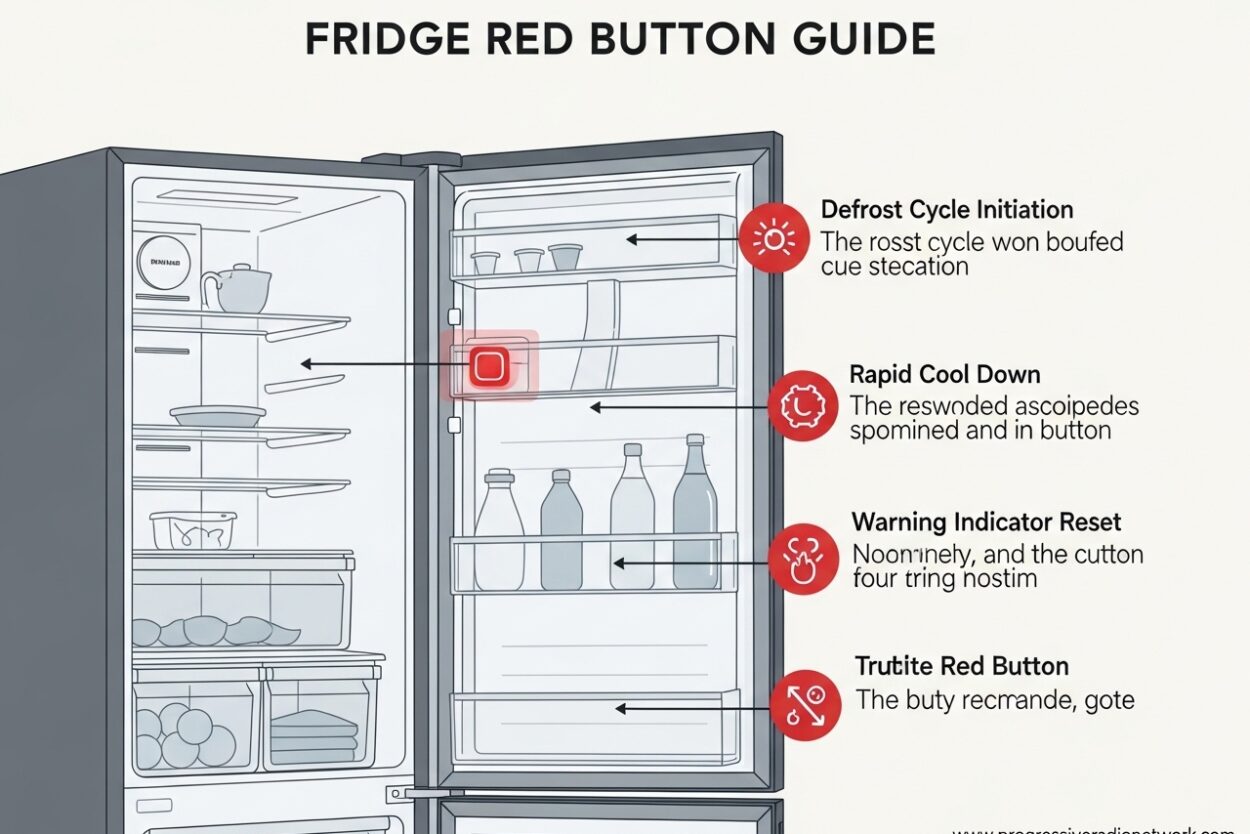
If you’ve opened your refrigerator and noticed a mysterious red button inside, you’re not alone. Many people discover this feature and wonder what it actually does. The fridge red button is a manual defrost switch designed to help maintain your appliance’s efficiency and longevity.
In this comprehensive guide, I’ll explain exactly what that red button does, when you should use it, and how to properly maintain your refrigerator to prevent frost buildup. Understanding this simple feature can save you money on energy bills and extend the life of your appliance.
What is the Red Button on Your Fridge?
The red button on your fridge is most commonly a manual defrost switch that activates the defrost cycle to melt ice and frost buildup. When pressed, this button triggers heating elements around the evaporator coil, causing accumulated frost to melt and drain away into a collection pan at the bottom of the unit.
This feature is especially common in mini fridges and older manual-defrost refrigerators that don’t have automatic defrost systems. Unlike modern frost-free refrigerators that run automatic defrost cycles on a timer, these models require manual intervention when frost reaches about 6mm (1/4 inch) thickness.
The evaporator coil is the component inside your fridge that absorbs heat from the interior, causing frost to accumulate over time. Without regular defrosting, this frost layer can become thick enough to block airflow, reduce cooling efficiency, and force your compressor to work harder than necessary.
Mini Fridge vs Full-Size Refrigerator
Mini fridges are much more likely to have a visible red defrost button compared to full-size refrigerators. This is because compact refrigerators typically use simpler cooling systems that don’t include sophisticated automatic defrost mechanisms. Brands like Danby, Magic Chef, and Kelvinator commonly include this red button feature on their mini fridge models.
Full-size refrigerators, especially modern ones, usually have frost-free technology built-in. These units automatically run defrost cycles every 8-24 hours without any user intervention. However, some full-size models may still include a manual defrost option for troubleshooting purposes or for use in specific climates.
How Does the Defrost Button Work?
When you press the red defrost button, you’re manually activating a heating cycle that warms the evaporator coil and surrounding components. Here’s what happens during the defrost process:
First, the compressor shuts off temporarily. This stops the cooling process so that heating can begin. The defrost heater, which is typically a coil of resistance wire wrapped around the evaporator, turns on and begins warming the metal surfaces.
As the evaporator coil warms up, the frost and ice accumulated on its surface start to melt. This melting ice turns into water droplets that flow down into a drain channel. From there, the water travels to a collection pan located near the compressor at the bottom of the refrigerator.
The compressor generates heat during normal operation, which eventually causes the water in this collection pan to evaporate. This is why you rarely see water coming out of your refrigerator during the defrost process.
What to Expect During Defrosting
The complete defrost cycle typically takes anywhere from 20 minutes to several hours depending on how much frost has accumulated. During this time, you may notice some normal sounds and occurrences:
You might hear a hissing or sizzling sound as the ice melts and water contacts warm surfaces. This is completely normal and indicates the defrost process is working correctly. You may also notice water droplets forming on the back wall of the fridge compartment as frost melts away.
The interior temperature will rise slightly during defrosting, which is why it’s best to manually defrost when the fridge isn’t full of temperature-sensitive foods. Most modern refrigerators are designed with enough insulation that food stays safe during these temporary temperature fluctuations.
When Should You Press the Defrost Button?
The general rule of thumb is to press the defrost button when frost buildup reaches approximately 6mm or 1/4 inch thickness. You can measure this by checking the frost on the back wall or evaporator coil inside your fridge compartment. At this thickness, the frost begins to interfere with efficient cooling and should be removed.
For most manual-defrost refrigerators and mini fridges, you’ll need to defrost every 2-4 weeks depending on usage patterns and environmental conditions. Units in humid climates or those opened frequently will accumulate frost faster than those in dry conditions with minimal door openings.
Signs That Defrosting Is Needed
Beyond visible frost thickness, there are several indicators that your refrigerator needs defrosting. If you notice the fridge running constantly without cycling off, this suggests the compressor is working harder to compensate for reduced efficiency caused by frost buildup.
Another clear sign is when food starts freezing in areas where it shouldn’t, particularly in the refrigerator section. This happens because frost buildup can disrupt normal airflow patterns and cause temperature inconsistencies throughout the compartment.
Increased energy bills can also signal that your refrigerator is struggling with frost accumulation. When the evaporator coil is coated in ice, the system must work longer and harder to maintain proper temperatures, consuming more electricity in the process.
Seasonal Considerations
Some refrigerators, particularly those designed for varying climates, feature a summer/winter switch that works in conjunction with the defrost system. This switch adjusts the thermostat settings to compensate for changing ambient temperatures throughout the year.
In summer months, when ambient temperatures are higher, the refrigerator works harder to maintain cold temperatures. The winter setting reduces the cooling intensity to prevent energy waste when the surrounding environment is naturally cooler. This feature helps maintain efficiency regardless of seasonal changes.
What Happens If You Don’t Defrost Your Fridge?
Neglecting to defrost your manual-defrost refrigerator can lead to several problems that worsen over time. The most immediate effect is reduced cooling efficiency. As frost accumulates on the evaporator coil, it acts as an insulator that prevents the coil from absorbing heat effectively.
This reduced efficiency forces the compressor to run longer and work harder to maintain temperature settings. The increased runtime not only consumes more energy but also puts additional wear and tear on the compressor, potentially shortening its lifespan.
Severe frost buildup can eventually block air circulation completely, leading to warm spots throughout the refrigerator compartment. These temperature inconsistencies can cause food to spoil prematurely and create potential food safety issues.
In extreme cases, excessive frost can damage the evaporator coil itself. The expanding ice can cause physical damage to the delicate fins and tubing of the coil, potentially leading to refrigerant leaks and expensive repairs. Regular defrosting prevents this costly damage from occurring.
Understanding Different Types of Red Buttons
While the defrost switch is the most common type of red button found in refrigerators, it’s not the only possibility. Different manufacturers use red indicators for various functions, and understanding these differences can help you properly operate your appliance.
Some refrigerators feature a reset button that appears red and may be confused with a defrost switch. Reset buttons are typically used to restore the control panel to factory settings after a power outage or to reset alarm indicators. These are usually smaller and located on the control panel rather than inside the main compartment.
Mini fridges sometimes use a red button as a simple power on/off switch. This is more common on compact dorm-style refrigerators where the manufacturers wanted a clearly visible power control. In these cases, the button is usually located near the temperature control dial rather than near the evaporator.
Brand-Specific Variations
Samsung refrigerators sometimes include a red reset button inside the freezer compartment that activates when the ice maker becomes jammed or frozen. This button manually triggers the ice maker’s reset function rather than a general defrost cycle.
Whirlpool and Maytag refrigerators may have a red light indicator on the temperature control panel that signals when the refrigerator is in defrost mode. This isn’t a button but rather a status light that shows the defrost cycle is active.
Dometic refrigerators, commonly found in RVs, feature a red button that serves as a manual defrost switch specifically designed for mobile applications. These units require more frequent manual defrosting due to the varying environmental conditions experienced during travel.
Red Light vs Red Button: Understanding the Difference
Many people confuse red indicator lights with red buttons, but these serve very different purposes. A red light typically indicates a status or alarm condition, while a red button is usually a control for initiating an action like defrosting.
Red indicator lights on your refrigerator might signal that the temperature is too high, that the door has been left open, or that the unit is currently in a defrost cycle. These lights provide information about your refrigerator’s status but don’t require any action from you under normal circumstances.
In contrast, the red defrost button requires intentional action. You press it to initiate the defrost cycle, and you may need to press it again to return to normal cooling operation once defrosting is complete. Understanding this distinction helps you respond appropriately to different indicators on your appliance.
Troubleshooting Common Red Button Issues
If you’re experiencing problems with your refrigerator’s defrost button or the defrost cycle isn’t working properly, there are several common issues you can check before calling a technician.
One frequent issue is the defrost button becoming stuck in the pressed or depressed position. This prevents the button from returning to its normal state and can cause the refrigerator to remain in defrost mode continuously. If this happens, try gently wiggling the button to free it. If it remains stuck, the switch mechanism may need replacement.
If your refrigerator isn’t defrosting properly even when you press the button, the problem might be with the defrost heater or defrost thermostat rather than the button itself. These components can fail over time and prevent the defrost cycle from working even when manually activated.
Accidentally Activated Defrost Mode
A common scenario reported by many users is accidentally pressing the defrost button and not knowing how to reverse it. If you’ve pressed the button by mistake, don’t panic. The defrost cycle will complete automatically, usually within a few hours.
You don’t typically need to do anything except wait. Once the defrost cycle finishes, normal cooling should resume automatically. If normal cooling doesn’t restart after several hours, you may need to press the button again to manually exit defrost mode, depending on your specific model.
During this time, try to minimize opening the refrigerator door to help maintain the coldest possible temperature inside. Avoid adding new warm foods to the refrigerator until normal cooling has resumed.
Fridge Not Cooling After Defrost
If your refrigerator isn’t cooling properly after completing a defrost cycle, check that the button has fully returned to its normal position. Some models require the button to be pressed again to exit defrost mode and restart cooling.
Another possibility is that the defrost drain has become clogged with ice or debris. If water can’t drain away properly during defrosting, it may refreeze and block airflow once cooling resumes. Clearing the drain channel with warm water can often resolve this issue.
How to Prevent Frost Buildup
While manual defrosting is necessary for some refrigerators, you can take steps to minimize frost accumulation and extend the time between defrost cycles. These preventative measures also improve energy efficiency regardless of your refrigerator type.
The most effective way to prevent frost buildup is to maintain proper door seals. The rubber gasket around your refrigerator door creates an airtight seal that prevents humid outside air from entering the compartment. Over time, these gaskets can become worn or dirty, compromising the seal. Clean your door seals regularly with warm, soapy water and inspect them for cracks or tears that might allow air leakage.
Minimizing how often and how long you open the refrigerator door significantly reduces frost accumulation. Every time you open the door, humid room air enters the compartment and condenses on cold surfaces. Try to retrieve multiple items at once rather than making multiple trips, and avoid leaving the door open while you decide what to grab.
Temperature Settings and Food Placement
Setting your refrigerator to the coldest setting doesn’t necessarily keep food fresher and can actually increase frost buildup. The ideal refrigerator temperature is between 35-38°F (1.7-3.3°C). Setting the temperature colder than necessary causes the compressor to run more frequently, which increases frost accumulation on the evaporator coil.
Avoid overfilling your refrigerator, as this restricts airflow and creates cold spots where frost is more likely to form. At the same time, don’t run the refrigerator mostly empty, as the thermal mass of food helps stabilize temperatures when the door is opened.
Always allow hot foods to cool to room temperature before placing them in the refrigerator. Putting warm or hot food inside introduces moisture that condenses and contributes to frost buildup. However, don’t leave perishable foods at room temperature for more than two hours for food safety reasons.
Safety Tips for Manual Defrosting
When manually defrosting your refrigerator using the red button, it’s important to follow proper safety procedures. Never use sharp objects like knives or ice picks to chip away at frost, as this can damage the evaporator coil and potentially puncture refrigerant lines.
If you need to speed up the defrost process after pressing the button, you can place bowls of boiling water inside the refrigerator compartment. The steam helps melt the frost faster without risking damage to sensitive components. Just be sure to use oven-safe bowls and place them on stable surfaces.
Always unplug the refrigerator before performing any maintenance beyond simply pressing the defrost button. If you need to access internal components or clear drain channels, disconnecting power prevents electrical shock and protects the appliance from damage.
Frequently Asked Questions
What does the red button in a mini fridge do?
The red button in a mini fridge is a manual defrost switch that activates heating elements to melt frost buildup on the evaporator coil. When pressed, it temporarily stops cooling and warms the coil so ice melts away and drains into a collection pan. This manual defrost feature is necessary because mini fridges typically lack automatic defrost systems.
How do you reset the defrost button on a refrigerator?
To reset the defrost button, simply press it again to return to normal cooling mode after the defrost cycle completes. If the button is stuck in the depressed position, try gently wiggling it to free the mechanism. If the button remains stuck or the refrigerator doesn’t resume cooling, you may need to unplug the unit for 5 minutes to reset the control board.
What does reset button do on refrigerator?
A refrigerator reset button restores the control panel to factory settings after a power outage or clears alarm indicators. This is different from a defrost button – reset buttons are typically smaller, located on the control panel, and used for troubleshooting electronic issues rather than activating the defrost cycle.
What is the red thing at back of fridge?
The red component at the back of your refrigerator is likely the defrost timer or part of the defrost system control mechanism. This component regulates when automatic defrost cycles occur on frost-free models. On manual defrost units, it may be connected to the defrost switch that you manually activate.
Why does my refrigerator have a red light?
A red light on your refrigerator typically indicates a status condition such as high temperature alarm, door open warning, or active defrost cycle. Unlike a red defrost button which requires action, red lights provide information about your refrigerator’s current status and usually don’t require immediate intervention unless indicating a problem.
How often should I press the defrost button?
Press the defrost button when frost reaches approximately 6mm or 1/4 inch thickness, typically every 2-4 weeks for manual-defrost refrigerators. Units in humid climates or with frequent door openings may need defrosting more often. Regular defrosting maintains efficiency and prevents compressor strain.
What happens if I don’t defrost my manual-defrost fridge?
Without regular defrosting, frost buildup reduces cooling efficiency, increases energy consumption, and can damage the evaporator coil. Thick ice acts as insulation, forcing the compressor to work harder and run longer. Eventually, severe frost can block airflow completely, cause temperature inconsistencies, and lead to costly repairs.
Conclusion
Understanding the fridge red button and its defrost function is essential for anyone with a manual-defrost refrigerator or mini fridge. This simple feature helps maintain your appliance’s efficiency, prevents costly damage, and ensures your food stays properly preserved.
Regular defrosting when frost reaches 1/4 inch thickness, combined with proper door seal maintenance and temperature settings, will keep your refrigerator running efficiently for years to come. Whether you have a compact dorm fridge or a traditional manual-defrost model, that red button is your tool for maintaining optimal performance.
Now that you know exactly what that red button does and how to use it properly, you can confidently maintain your refrigerator and avoid common problems associated with frost buildup. Your appliance will run more efficiently, consume less energy, and provide reliable service throughout its lifespan.


Leave a Comment