
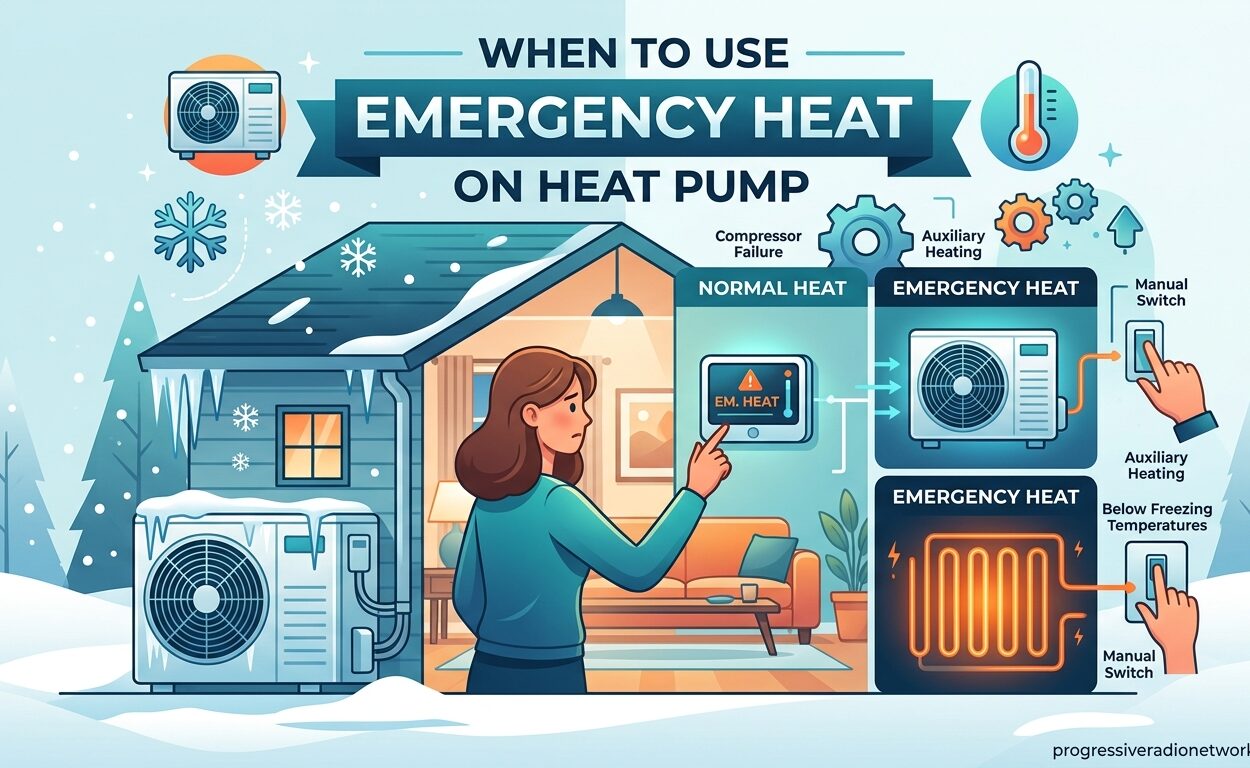
If you own a heat pump, you’ve probably noticed that “Emergency Heat” or “EM Heat” setting on your thermostat and wondered when you should actually use it. You’re not alone—this is one of the most confusing aspects of heat pump ownership for homeowners. Understanding when to use emergency heat on your heat pump can save you money on energy bills and prevent unnecessary wear on your system.
Emergency heat is exactly what it sounds like: a backup heating source designed for genuine emergencies when your primary heat pump system fails or cannot operate safely. It’s not meant for everyday use, and turning it on at the wrong time can significantly increase your energy costs—often by 2-3 times your normal heating expenses.
In this guide, I’ll explain exactly when to use emergency heat on your heat pump, how it differs from auxiliary heat, and the specific scenarios that warrant activating this expensive backup mode. You’ll also learn the warning signs that indicate your heat pump needs help and how to safely switch to emergency heat when necessary.
What Is Emergency Heat on a Heat Pump?
Emergency heat is a backup heating mode that bypasses your heat pump entirely and relies on secondary heating sources to warm your home. When you activate emergency heat, your thermostat signals the heat pump’s outdoor unit to shut down and instead activates electric resistance heating elements (heat strips) in your indoor air handler. In dual-fuel systems, emergency heat may activate a gas furnace as the backup source.
Think of emergency heat as your heating system’s spare tire—it’s there when you really need it, but you wouldn’t use it for everyday driving. The electric resistance coils work like a giant toaster, generating heat directly rather than transferring it from outside like your heat pump normally does. This method is much less efficient but provides reliable heat regardless of outdoor conditions.
Your heat pump works by moving heat from the outdoor air into your home, even in cold weather. However, when temperatures drop extremely low or the system malfunctions, this process becomes ineffective or impossible. That’s when emergency heat takes over as a temporary solution until your primary system can be repaired or conditions improve.
Most modern heat pump systems include emergency heat capabilities, though the exact implementation varies by manufacturer and model. Some systems use electric heat strips exclusively, while others incorporate gas furnaces or other backup sources in dual-fuel configurations.
Auxiliary Heat vs Emergency Heat: Key Differences
Many homeowners confuse auxiliary heat with emergency heat, but they serve different purposes and activate under different conditions. Understanding this distinction is crucial because using the wrong mode at the wrong time can cost you hundreds of dollars in unnecessary energy expenses.
Auxiliary heat (often labeled “Aux Heat”) activates automatically when your heat pump needs extra help reaching your desired temperature. This typically happens when it’s very cold outside (usually below 30-35°F), during the defrost cycle, or when there’s a large temperature difference between your current room temperature and thermostat setting. The heat pump continues running while the backup heat supplements it. This is normal, automatic operation designed to maintain comfort without wasting energy.
Emergency heat is completely manual—you must actively switch to this mode on your thermostat. When activated, it completely shuts down the heat pump and runs only the backup heating source. This is intentional design for true emergencies when the heat pump cannot operate safely or effectively, such as when the outdoor unit is damaged, frozen solid, or has completely failed.
The cost difference is significant. Auxiliary heat is expensive enough (often 2-3 times the cost of normal heat pump operation), but emergency heat is even costlier because it relies entirely on the inefficient backup source. Running emergency heat unnecessarily can easily add $100-300 to your monthly electric bill depending on your climate and home size.
When to Use Emergency Heat on Heat Pump
Emergency heat should be used only in genuine emergencies when your heat pump cannot operate safely or effectively. The primary scenarios include: a broken or damaged outdoor unit, a heat pump that’s completely frozen and won’t defrost, or when you’re waiting for repairs and need temporary heat. You might also need emergency heat if your heat pump has suffered a compressor failure or refrigerant leak that prevents normal operation.
Temperature alone is rarely a good reason to switch to emergency heat. Modern heat pumps are designed to operate efficiently down to 0°F or even lower in some cases. Unless your specific system is rated for higher minimum temperatures or you’re experiencing unusual performance issues, your heat pump should handle normal winter weather without manual intervention.
During ice storms or severe winter weather, you may need emergency heat if your outdoor unit becomes encased in ice and cannot complete its automatic defrost cycle. This is different from normal frost accumulation, which your system handles automatically through its defrost mode. If you see solid ice covering the entire unit or hear unusual noises as it struggles to operate, switching to emergency heat can prevent damage while you wait for conditions to improve or for professional service.
Another scenario requiring emergency heat is when your heat pump is running but not producing any warm air at all. This could indicate a serious problem like a failed compressor, broken reversing valve, or major refrigerant leak. In these cases, continuing to run the heat pump may cause further damage, and emergency heat provides a temporary solution until repairs can be made.
5 Signs You Need Emergency Heat
Recognizing when your heat pump needs emergency heat can prevent system damage and keep your home comfortable during heating failures. Here are the clearest indicators that it’s time to switch to emergency heat mode:
1. The outdoor unit is completely silent while the thermostat is calling for heat. If your heat pump should be running but the outdoor unit makes no sound at all, the compressor may have failed or there could be an electrical issue. Before switching to emergency heat, check your circuit breaker and outdoor disconnect to ensure power is reaching the unit.
2. You’re getting cold air from your vents despite the heat running. This could indicate a refrigerant leak, failed reversing valve, or compressor problem. If the air coming from your vents is noticeably colder than room temperature and the system has been running for more than 15 minutes, your heat pump isn’t producing heat and emergency heat may be necessary.
3. The outdoor unit is encased in solid ice. While frost accumulation during defrost cycles is normal, a thick layer of ice covering the entire unit indicates a problem with the defrost system. Continuing to operate a frozen heat pump can damage the fan and other components.
4. You hear unusual grinding, squealing, or banging noises from the outdoor unit. These sounds often indicate serious mechanical problems that require professional repair. Running a damaged heat pump can cause further damage, so switch to emergency heat and schedule service immediately.
5. Your heat pump repeatedly trips the circuit breaker. This usually indicates an electrical short or compressor failure. Don’t keep resetting the breaker—switch to emergency heat and call a professional technician as continued attempts to run the system could create a fire hazard.
How to Switch to Emergency Heat Mode
Activating emergency heat is straightforward, but the exact process varies by thermostat model. Most programmable and smart thermostats have a dedicated “Emergency Heat” setting accessible through the menu or a physical switch/switch position on older units. On many digital thermostats, you’ll find it under the system settings menu, often labeled as “EM Heat” or “Emergency Heat.”
When you switch to emergency heat, you should notice several changes. First, the outdoor unit should shut off completely—if it continues running, emergency heat hasn’t activated properly. Second, you may see a red indicator light or “EM Heat” message appear on your thermostat display. Third, the air coming from your vents should become warm within a few minutes, though it may feel different than your normal heat pump output.
After activating emergency heat, monitor your system closely. Check that warm air is actually flowing from your vents and that your home temperature is increasing. If emergency heat isn’t working either, you may have a problem with your air handler, heat strips, or electrical system that requires professional attention.
Remember that emergency heat is a temporary solution. Once activated, you should contact an HVAC professional to diagnose and repair the underlying problem with your heat pump. Continuing to rely on emergency heat for days or weeks will result in extremely high energy bills.
Emergency Heat Energy Costs: What You Need to Know
The financial impact of using emergency heat is significant and should not be underestimated. Electric resistance heating is 100% efficient at converting electricity to heat, but electricity is typically 3-4 times more expensive than gas or the energy your heat pump extracts from the air. This means emergency heat can cost 2-3 times more than your normal heating expenses, sometimes even more depending on your climate and electricity rates.
To put this in perspective, if your normal winter heating bill averages $150 per month, running emergency heat exclusively could push that to $300-450 or higher. The exact increase depends on your home’s insulation, outdoor temperatures, how long you run emergency heat, and your local electricity rates. In extremely cold climates, the cost difference can be even more dramatic.
The operating cost difference comes from how each heating method works. Your heat pump moves heat from outside rather than creating it, typically providing 2-4 units of heat for every unit of electricity consumed. Emergency heat strips create heat directly, providing only 1 unit of heat per unit of electricity—this is why they’re so much more expensive to operate.
Smart thermostat users can often track their energy usage in real-time and will notice an immediate spike when emergency heat activates. Some systems even provide alerts when emergency heat runs for extended periods, helping you avoid accidental prolonged use that could result in surprise bills.
When NOT to Use Emergency Heat
Understanding when NOT to use emergency heat is just as important as knowing when to use it. Many homeowners mistakenly switch to emergency heat during normal cold weather, thinking it will help their system work better or faster. This is a costly myth that can significantly increase your energy bills without providing any benefit.
You should NOT use emergency heat simply because it’s cold outside. Unless your heat pump is malfunctioning or damaged, it should handle normal winter temperatures without manual intervention. Modern heat pumps are designed to operate efficiently down to very low temperatures, often 0°F or lower. If your system is running but struggling to keep up, it’s more likely a sizing issue, maintenance problem, or insulation concern that emergency heat won’t solve.
Avoid switching to emergency heat just because you see “Aux Heat” on your thermostat display. Auxiliary heat activation is normal during very cold weather or when your system is recovering from a setback. This automatic operation is much more efficient than manually switching to full emergency mode.
Don’t use emergency heat as a way to “warm up faster” after lowering your thermostat. While emergency heat does produce warmer air at the registers, it doesn’t actually heat your home faster—it just wastes more energy. Your system will reach the set temperature on its own, and the slight difference in time isn’t worth the substantial cost increase.
Finally, never run emergency heat for extended periods unless absolutely necessary. Every hour you spend in emergency mode costs significantly more than normal operation. Make it a priority to schedule repairs as soon as possible after switching to emergency heat, and consider alternative heating sources like space heaters for small areas while you wait.
Frequently Asked Questions
At what temperature should I switch to emergency heat?
You should rarely switch to emergency heat based on temperature alone. Modern heat pumps are designed to operate efficiently down to 0°F or lower. Only consider emergency heat if your system is malfunctioning, damaged, or frozen solid—not simply because it’s cold outside. If your heat pump is working properly, it will automatically use auxiliary heat when needed.
Is it okay to run emergency heat all the time?
No, running emergency heat constantly is extremely expensive and unnecessary. Emergency heat costs 2-3 times more than normal heat pump operation because it relies entirely on inefficient electric resistance heating. Only use emergency heat when your heat pump cannot operate safely or effectively, and schedule repairs as soon as possible to avoid prolonged use.
Should I use emergency heat during an ice storm?
You may need emergency heat during an ice storm if your outdoor unit becomes completely encased in ice and cannot complete its defrost cycle. Normal frost accumulation is handled automatically, but if the entire unit is frozen solid and ice prevents normal operation, switching to emergency heat can prevent damage while you wait for conditions to improve or for professional service.
How long can I leave emergency heat on?
Emergency heat can be left on as long as necessary to maintain warmth while your heat pump is being repaired, but you should minimize usage time due to the high cost. Some homeowners run it for a few days while waiting for service, but extended use can result in electric bills hundreds of dollars higher than normal. Consider using space heaters for small occupied areas to reduce costs during longer waits.
Is auxiliary heat bad for my heat pump?
No, auxiliary heat is completely normal and doesn’t harm your heat pump. It’s designed to activate automatically when extra heating power is needed, such as during very cold weather or defrost cycles. The system runs both the heat pump and backup heat together, which is much more efficient than running emergency heat alone. Concern is only warranted if auxiliary heat runs excessively or constantly.
Conclusion
Understanding when to use emergency heat on your heat pump helps you make smart decisions that balance comfort, cost, and system protection. The key takeaway is simple: emergency heat is for genuine emergencies only—when your heat pump is broken, damaged, or cannot operate safely. Temperature alone, even extreme cold, is rarely a valid reason to switch to this expensive backup mode.
If you’re unsure whether your situation warrants emergency heat, start with basic troubleshooting. Check that your outdoor unit is running and not frozen solid, verify that your air filters are clean, and ensure your thermostat is set correctly. If these basics check out but your system still isn’t heating properly, that’s when emergency heat becomes appropriate until you can get professional service.
Remember that emergency heat is a temporary solution, not a long-term heating strategy. Every hour you spend in emergency mode costs significantly more than normal operation, so make prompt repairs a priority. When in doubt, consult with a qualified HVAC technician who can assess your specific situation and recommend the best course of action for your system and climate.


Leave a Comment