
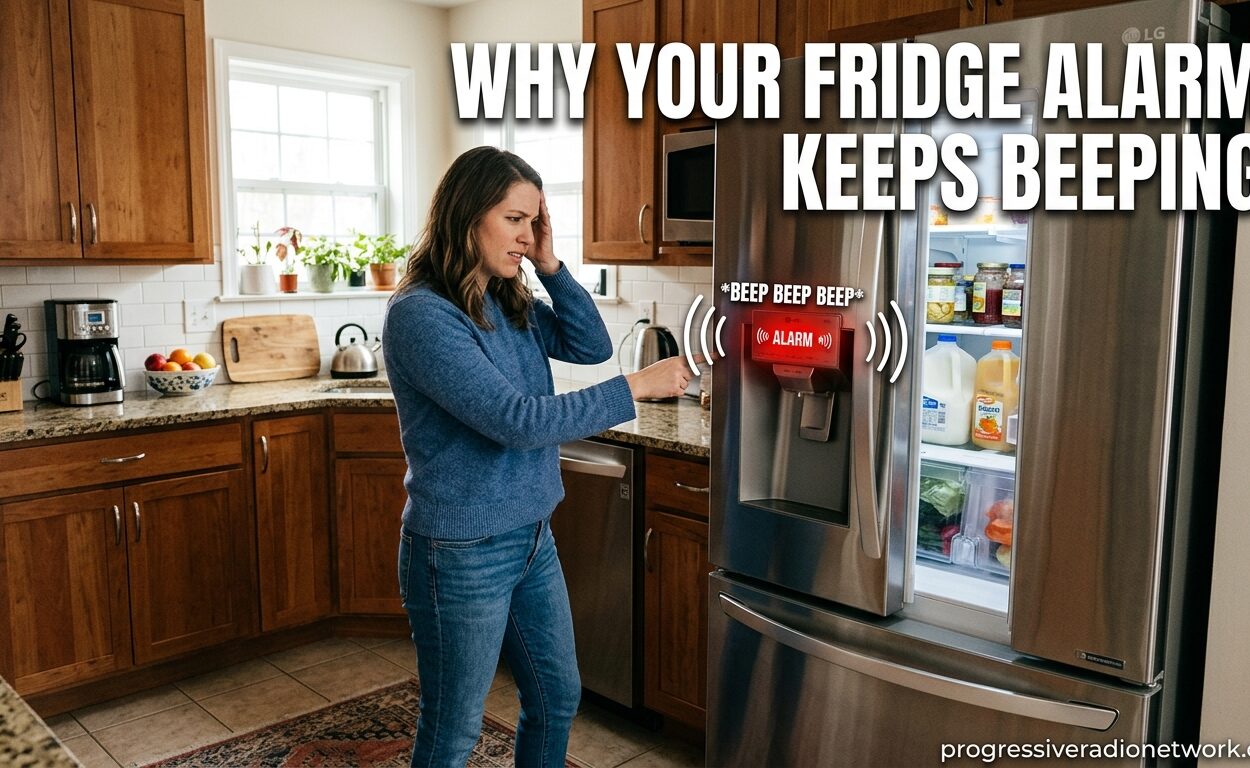
That constant beeping from your refrigerator isn’t just annoying it’s your appliance trying to tell you something important. I’ve dealt with plenty of fridges that won’t stop beeping, and I understand how frustrating it becomes especially when it happens in the middle of the night.
When your fridge alarm keeps beeping, it’s usually alerting you to one of three problems: the door isn’t sealing properly, the internal temperature is rising too high, or there’s a malfunction in the alarm system itself. The good news is that most causes are simple fixes you can handle yourself without calling a technician.
Before we dive into the specific causes, let me share something I learned from years of appliance troubleshooting: many beeping issues can be resolved with a simple control board reset. This is often the fix that works when nothing else seems to make sense.
Quick Fixes to Stop the Beeping Now
If you need immediate relief from that persistent alarm, try these steps in order:
- Press and hold the Alarm Reset button for 3-5 seconds (usually located on the control panel)
- Perform a control board reset: Unplug your fridge for 5 minutes, then plug it back in
- Check both doors: Make sure the fridge and freezer doors are completely closed
- Inspect the door seal: Look for visible gaps or debris preventing a tight seal
- Listen to the beep pattern: Different beep patterns indicate different problems (see below)
These quick fixes resolve most fridge alarm keeps beeping issues within minutes. If the alarm returns, move on to the specific troubleshooting sections below.
Fridge Alarm Keeps Beeping: 9 Common Causes
Understanding what triggers your fridge alarm is the first step toward fixing it permanently. Modern refrigerators have sophisticated monitoring systems that detect various problems and alert you before serious damage occurs.
1. Door Seal or Gasket Issues (Most Common)
A worn or damaged door gasket is the number one reason I see for persistent beeping. The rubber seal around your fridge door creates an airtight barrier that keeps cold air in and warm air out.
Over time, this seal can crack, tear, or simply lose its elasticity. When this happens, cold air escapes even though the door appears closed. Your fridge detects the temperature drop and sounds the alarm continuously.
How to check your door gasket:
- Clean the seal with warm soapy water to remove any debris
- Inspect for cracks, tears, or permanent deformations
- Try the dollar bill test: close the door on a dollar bill and pull it out – if it slides out easily, your seal needs replacement
- Check that the door aligns properly with the frame
Replacing a door gasket costs between $20-50 and takes about 15 minutes. I’ve seen this simple fix solve countless cases where the fridge alarm keeps beeping despite the door appearing closed.
2. Door Not Fully Closed
Sometimes the solution is embarrassingly simple. Items stored in the door can prevent complete closure, or the door might have been bumped slightly ajar.
Check for these common obstructions:
- Bottles or containers sticking out too far from shelves
- Ice buildup on the door edge
- Misaligned door due to uneven flooring
- Faulty door hinge mechanism
Even a gap as small as 1/8 inch can trigger the door ajar alarm after 2-5 minutes. If your fridge alarm keeps beeping randomly throughout the day, start by checking if the door is truly closing completely each time.
3. High Temperature Alarm
Most modern refrigerators sound an alarm when the internal temperature rises above safe levels (typically above 40-45°F). This high temperature alarm indicates your food may be at risk of spoilage.
Common causes for temperature rise include:
- Dirty condenser coils restricting heat transfer
- Faulty thermostat not signaling the compressor properly
- Malfunctioning temperature sensor giving false readings
- Overloaded fridge preventing proper air circulation
- Compressor issues preventing cooling
If you see a temperature warning light along with the beeping, check your fridge thermometer. A reading above 40°F means you need to address cooling issues immediately to prevent food waste.
4. Dirty Condenser Coils
The condenser coils on your fridge release heat from inside the appliance. When these coils get coated in dust and pet hair, your fridge has to work harder to maintain temperature.
Dirty coils can cause:
- Inefficient cooling leading to temperature alarms
- Increased energy consumption (up to 25% more)
- Compressor overheating and potential failure
- Continuous cycling that confuses the control board
Clean your condenser coils every 6-12 months using a coil brush or vacuum. This simple maintenance task prevents many cases where the fridge alarm keeps beeping due to temperature fluctuations.
5. Faulty Thermostat
The thermostat monitors internal temperature and signals the compressor to run when cooling is needed. A malfunctioning thermostat can send incorrect signals, causing the alarm to sound even when temperatures are actually fine.
Signs of thermostat failure:
- Fridge runs continuously or not at all
- Temperature readings don’t match actual conditions
- Alarm sounds even though food stays cold
- Unusual temperature fluctuations
Testing a thermostat requires a multimeter and some electrical knowledge. If you suspect thermostat issues, this might be a repair best left to professionals.
6. Overloaded Fridge
Stuffing your fridge too full blocks air circulation between shelves. This creates warm spots that trigger temperature alarms even though the compressor is working properly.
Proper fridge loading tips:
- Leave space between items for air flow
- Don’t block interior vents with large containers
- Avoid overfilling door shelves
- Organize contents to prevent items from falling out and blocking door closure
If your fridge alarm keeps beeping after grocery shopping, you might simply have too much food inside. Try removing some items to see if the alarm stops.
7. Ice Build-Up Issues
Excessive frost or ice formation can prevent doors from sealing properly or interfere with door switch operation. This is especially common in freezers but can affect the main compartment too.
Ice build-up typically causes:
- Door gasket to become frozen and inflexible
- Door not closing completely due to ice thickness
- Door switch malfunction from ice contact
- Defrost system failure leading to continuous alarms
If you see excessive ice, perform a manual defrost by turning off the fridge for 4-6 hours with doors open. If ice returns quickly, you may have a defrost system problem requiring professional repair.
8. Faulty Door Alarm Switch
The door alarm switch is a small mechanical component that detects when the door is open or closed. When this switch fails, it can send false signals to the control board.
Symptoms of a faulty door switch:
- Alarm sounds even when door is definitely closed
- Interior light doesn’t turn on/off properly
- Alarm doesn’t sound when door is actually open
- Switch feels loose or doesn’t click when pressed
Door switches are inexpensive ($5-15) but require some disassembly to replace. If you’re comfortable with basic repairs, this is a manageable DIY project.
9. Compressor or Control Board Problems
These represent the more serious causes of persistent beeping. The compressor is the heart of your fridge’s cooling system, while the control board acts as its brain.
Signs of compressor issues:
- Loud clicking or buzzing sounds
- Fridge not cooling at all
- Compressor extremely hot to touch
- Burning smell near the back of the fridge
Control board problems typically manifest as:
- Erratic display behavior
- Multiple alarms triggering simultaneously
- Unresponsive buttons
- Alarm patterns that don’t match any documented issue
Both compressor and control board repairs usually require professional service. These repairs typically cost between $200-600 depending on parts and labor.
Brand-Specific Reset Procedures
Different refrigerator brands have unique reset procedures that can resolve many fridge alarm keeps beeping issues. Here are the most common methods:
Samsung Refrigerators:
- Press and hold the “Power Freeze” and “Power Cool” buttons simultaneously for 8-10 seconds
- For newer models: Hold “Alarm” button for 3 seconds
- Unplug for 5 minutes if button combination doesn’t work
LG Refrigerators:
- Press and hold the “Alarm” button for 3-5 seconds to mute
- For full reset: Unplug for 5 minutes, then press and hold “Lock” and “Ice Plus” simultaneously when plugging back in
- Check the door switch located in the door frame for debris
Whirlpool Refrigerators:
- Locate the “Alarm Reset” or “Mute” button on the control panel
- Press and hold for 3 seconds to reset door ajar alarm
- For temperature alarms: Press “Temp Setting” button to acknowledge and reset
- Full reset: Unplug for 5 minutes
GE Refrigerators:
- Press “Reset Filter” and “Light” buttons simultaneously for 3 seconds
- Or: Unplug for 30 seconds, then plug back in while holding “Light” button
Always consult your owner’s manual for the exact reset procedure for your specific model. Incorrect reset attempts can sometimes cause additional issues.
How to Identify Which Alarm Is Sounding
Many refrigerators have different beep patterns for different problems. Learning to distinguish these can save significant troubleshooting time.
Door Ajar Alarm: Usually a single beep every 30-60 seconds, starting 2-5 minutes after the door is detected as open.
High Temperature Alarm: Often a more insistent pattern, like three beeps followed by a pause, repeating every few minutes. May be accompanied by a temperature warning light.
Power Failure Alarm: Typically a distinctive pattern that sounds when power is restored. Different from regular alarms to alert you to possible food spoilage.
Filter Reminder: Often a single beep or chime at regular intervals, not as persistent as other alarms. Usually accompanied by a “Replace Filter” indicator.
Understanding these patterns helps you target the right solution without unnecessary troubleshooting steps.
When to Call a Professional
While most fridge alarm keeps beeping issues can be resolved DIY, some situations require expert help. Here’s when I recommend calling a professional appliance repair service:
- Compressor problems: If you suspect compressor failure, this requires specialized tools and knowledge
- Control board issues: Circuit board repairs are complex and mistake-prone for DIYers
- Refrigerant leaks: EPA certification is required for handling refrigerants
- Severe ice build-up that returns immediately: Indicates a defrost system problem
- Multiple simultaneous failures: When several components fail at once, the root cause may be electrical
Expect to pay $80-150 for a diagnostic visit, with repairs typically ranging from $150-600 depending on the issue. Get quotes from multiple providers and ask about warranty on parts and labor.
Most professionals recommend replacing rather than repairing if the repair cost exceeds 50% of a new refrigerator’s price, especially if the unit is over 10 years old.
Preventive Maintenance to Avoid Future Alarms
Regular maintenance prevents most fridge alarm keeps beeping problems before they start. Here’s what I recommend:
- Clean condenser coils every 6-12 months
- Inspect door gaskets monthly for wear or damage
- Don’t overload the fridge – maintain proper air circulation
- Check door alignment if you notice the alarm sounding frequently
- Keep the interior temperature between 35-38°F for optimal performance
- Avoid placing hot foods directly into the fridge
- Test door seals periodically using the dollar bill trick
FAQ
These simple habits can extend your refrigerator’s lifespan by 5-10 years and prevent most alarm issues from developing.
How do I get my fridge to stop beeping?
To stop your fridge from beeping immediately, press and hold the Alarm Reset button for 3-5 seconds. If this doesn’t work, unplug the refrigerator for 5 minutes to reset the control board. Check that both doors are fully closed and inspect the door seals for any gaps or debris. If the beeping continues, determine which type of alarm is sounding (door vs. temperature) and address that specific issue.
Why is my fridge beeping if the door is closed?
Your fridge may beep even with the door closed due to a damaged door gasket that prevents proper sealing, a faulty door switch sending incorrect signals, or temperature issues causing a high temp alarm. Clean the door seal thoroughly and check for cracks or tears. Test the seal by closing a dollar bill in the door – if it slides out easily, replace the gasket. If the seal looks fine, the issue may be a malfunctioning door switch or temperature sensor.
Is a noisy fridge a fire hazard?
A beeping fridge itself is rarely a fire hazard. The alarm indicates operational issues like door seal problems or temperature fluctuations, not electrical danger. However, if you notice burning smells, see sparks, or the compressor is extremely hot to touch, unplug immediately and call a professional. These symptoms indicate electrical issues that could pose fire risks. Regular beeping without these signs is simply a warning system, not a safety threat.
What are signs of compressor failure in a refrigerator?
Signs of compressor failure include loud clicking or buzzing sounds that repeat every few minutes, the fridge not cooling at all, the compressor running continuously without stopping, or the compressor being extremely hot to touch. You may also notice the compressor trying to start but failing, indicated by a clicking sound. If you experience these symptoms along with your fridge alarm keeps beeping, the compressor likely needs professional repair or replacement.
Can you turn off the fridge door alarm?
Yes, most refrigerators allow you to disable the door alarm temporarily. Press and hold the Alarm or Mute button for 3-5 seconds. On some models, you can access alarm settings through the digital display menu. However, I don’t recommend permanently disabling door alarms as they alert you to problems that could lead to food spoilage. If you need to disable it for cleaning or maintenance, remember to reactivate it afterward.
How to reset fridge freezer alarm?
To reset a fridge freezer alarm, first address the underlying cause (close doors, fix seal, etc.). Then press and hold the Alarm Reset or Mute button for 3-5 seconds. If this doesn’t work, unplug the unit for 5 minutes to perform a hard reset of the control board. For Samsung models, try holding Power Freeze and Power Cool buttons simultaneously. For LG refrigerators, hold the Alarm button. Always consult your owner’s manual for model-specific reset procedures.
Why is my fridge continuously beeping?
Continuous beeping usually indicates a serious issue like high internal temperature, compressor failure, or a malfunctioning control board. Check your temperature display first – if it’s above 40°F, you have a cooling problem. If temperature is normal but beeping continues, try resetting the control board by unplugging for 5 minutes. If the alarm returns immediately after reset, you likely have a component failure requiring professional diagnosis.
Conclusion
Dealing with a fridge alarm keeps beeping issue is frustrating, but most causes have straightforward solutions. Start with the simple fixes: check the door seal, ensure proper closure, and try a control board reset. These steps resolve the majority of cases I’ve encountered.
Remember that refrigerator alarms are designed to protect your food from spoilage and alert you to potential problems before they become serious. Taking prompt action when the alarm sounds can prevent more expensive repairs down the road.
If you’ve tried all the DIY solutions and the alarm persists, don’t hesitate to call a professional. A qualified technician can accurately diagnose the issue and recommend whether repair or replacement makes more sense for your situation.
Regular maintenance and prompt attention to warning alarms will keep your refrigerator running quietly and efficiently for years to come. The next time your fridge alarm keeps beeping, you’ll know exactly what to check first.





Leave a Comment